Home Blog Page 828

African-Americans Win 75 of 121 U.S. Olympic Medals

By David Mark Greaves

There are so many lessons to be taken away from the Olympics: focus, determination, ambition, bravery were all on display showing us mortals, what the human spirit is capable of making the body do. The U.S. led the medal count compiled by these extraordinary individuals with 121. The breakdown by sex was women 61 and men 55, and Stanford was the #1 college with 27. And as long as we’re talking numbers, I went to the Olympic team website and counted 75 of those 121 medals being won by African-Americans. So for those thankful to shout “USA #1”, and particularly those in the Trump base, you’re welcome.

Many in the country are thankful again to African-Americans for making Hillary Clinton the Democratic nominee, and they are depending on a large turnout in the Black community to help turn Red states Blue and ensure that Donald Trump does not become President of the United States.

Without Black Americans on the Olympic team, the U.S. would be 5th, after France, but fortunately not as low if the contests were moved into the classroom. According to the National Center for Education Statistics, the 2012 Program for International Student Assessment showed that compared across the nations of the world, U.S. teenagers went from 25th to 31st in math since 2009; from 20th to 24th in science; and from 11th to 21st in reading, as reported in Business Insider.

With the U.S. national scores in reading and math being so far behind other nations in the world, and with our local schools being so far behind the state and city averages, how can we possibly expect our young people to compete effectively with what’s coming at them from around the world. This is an impending economic genocide, because unless we spend whatever it takes, while we will always have our standouts, the majority of our young people will be essentially prepared to be servants, unless the education system captures their minds and gives them the tools to thrive in the future.

One example of the nation thanking African-Americans for the Olympics and for saving it from Donald Trump, would be to channel into the Black community the education imperatives and economic opportunities embedded in the Democratic platform. With the changeover of the nation’s infrastructure from fossil fuel to renewable resources, there will be aggressive energy conservation, retrofitting and deriving power from the sun, wind and the movement of water. These are all going to create new industries and a need for technical talent, skilled labor, critical thinkers and people adept in the digital age. These industry creators and their workforce are not only scattered around the world, they are living in Brooklyn and working on laptops in Clinton Hill and Bed-Stuy cafés.

There is work to be done and rulebooks thrown out. The country should spend what it takes to tap into the creative genius and intellect in the inner cities and make education a matter of national security. If African-Americans, from the most challenged communities in the country, can achieve what they have at the Olympics, America, can’t you see what you’re missing?


#Blackgirlmagic: African-American Women Take Spotlight at Rio Olympics

Michelle Carter, Shotput

by ASSOCIATED PRESS

Andrea Lawful-Sanders has a ritual for cheering the black heroines of the Summer Olympics.

She gets into her corner of the living room, sets up her chair, demands silence before screaming at the top of her lungs, flails her body wildly and — in keeping with her Jamaican-American heritage — bangs pot covers together to celebrate victories.

From Simone Biles’ gravity-defying flips to the history-making medal trifecta of the U.S. women racing in the 100-meter hurdles, many of the Olympics’ most memorable moments have come courtesy of African-American women. Their accomplishments in Rio have spurred excitement and pride at home in the U.S., particularly for black women who say they are seeing themselves in the Olympic Games like never before.

“While everybody else is talking, we are doing,” said Lawful-Sanders, 50, of Philadelphia. “When we excel, nobody can take that away from us — ever. They may try to marginalize us, but how can you marginalize excellence?”

With competition continuing through Sunday, America’s black female athletes have won more than two dozen of the 100-plus U.S. medal haul.

Black women haven’t just shined in this year’s Olympics, they’ve been ubiquitous — from gymnastics to water polo, fencing to swimming. Previous Summer Games featured black women mainly in track and field and, more recently, in gymnastics. Fans at home had to wait days to cheer on sprinter Florence Griffith-Joyner or gymnast Dominique Dawes.

Nzingha Prescod, Fencing

“It is very interesting to see black women going into areas where you really don’t see black women competing, with all different body shapes, complexions and hairstyles being represented,” said Kaye Wise Whitehead, a professor at Loyola University who studies race and gender. “Black women see and feel that there is no door closed to us … and that we’re not just walking through those doors, but we’re dominating.”

In Rio, the two Simones — gymnast Simone Biles and swimmer Simone Manuel — both stood atop the podium on a night that made history, with Manuel becoming the first black woman to win an individual medal in swimming. In all, she took home four medals and Biles five. Biles was chosen to carry the American flag for the U.S. team in Sunday’s closing ceremony.

Michelle Carter became the first American woman to win gold in the shot put. Fencer Ibtihaj Muhammad, who won a bronze medal in the women’s team sabre event, was the first Muslim-American woman to compete for the U.S. in a hijab.

On the track, Dalilah Muhammad became the first American woman to win gold in the 400-meter hurdles, and three black women — Brianna Rollins, Nia Ali and Kristi Castlin — became the first Olympians from the same nation to finish 1-2-3 in the 100-meter hurdles.

Jacqueline Wills has loved rooting on female gymnasts since she was a child watching the Olympics. During these games, as she lost count of the numerous black women winning, her cheers went beyond just Biles.

Simone Biles, Gymnastics

“At this point, it’s like too many to name,” said the 38-year-old who lives in Brookhaven, Georgia. “It’s the same reason we cheer Michelle Obama when she does something fabulous: It’s (a black woman) doing things well and on their own terms and being unapologetically black. Those images kind of reaffirm us.”

Some said the Olympics also provided a much-needed respite from racial tensions at home.

“It is a good distraction and a good way to celebrate our successes, even as the world may not appreciate us,” said Luvvie Ajayi, a pop culture blogger and author. In a Facebook post, Ajayi quipped: “Black women had a secret meeting before #Rio2016 and the only thing on the agenda was: ‘TAKE ALL THE MEDALS.’ And it was done.”

“Black women are showing that we’ve always been a force to reckon with, but now … we’re showing that we kind of are superheroes that are real,” Ajayi said in an interview. “We are really unstoppable; we can dominate at anything we want to do.”

Black women have also felt the struggles of their athletic counterparts at the games. Many took to social media to defend veteran gymnast Gabby Douglas amid remarks that she lacked patriotism for not placing her hand on her heart during the national anthem, that her hair was not polished enough and that her attitude was unsportsmanlike.

The stereotype of the “angry black woman” was familiar to Wills.

“That is one of the things that comes with being a black woman in this country,” she said, adding that she tried to shrug off the criticism in a Facebook post.

“I said, ‘People are just mad at her bold lip,'” Wills said, referring to Douglas’ lipstick color.

As the games come to a close this weekend, Lawful-Sanders is warming up her pot covers for a few more chances to cheer.

“We have made up our minds that we are going to give it the best that we have, and we are watching it manifest in the Olympics,” she said. “It’s black girl magic. We are tired of being told that we couldn’t or we shouldn’t. … We’re taking no prisoners and I’m enjoying every second of it.”

Errin Haines Whack covers urban affairs for The Associated Press. Follow her on Twitter at http://www.twitter.com/emarvelousand read more of her work at http://bigstory.ap.org/journalist/errin-haines-whack .

Montgomery, Cox Weigh In On Issues Facing Seniors

By Kings County Politics News Service

In the 25th State Senatorial District, 32-year incumbent Velmanette Montgomery is facing challenger Michael Cox in the Democratic Primary in a district that includes the neighborhoods of Bedford-Stuyvesant, Fort Greene, Clinton Hill, Red Hook and parts of Brooklyn Heights, Boerum Hill, Sunset Park, Park Slope and Crown Heights.

Montgomery is one of Central Brooklyn’s most respected lawmakers and has wide institutional political support as the dean of Brooklyn’s Senate delegation. She is currently the ranking Democrat on the Senate Committee on Children and Families.

Cox is among the new class of African-American millennials – young, educated and linked more to the possibilities of the future than the traditions of the past. Originally from Crown Heights, Cox graduated from Syracuse and worked as a public schoolteacher and policy aide in both Congress and the Obama Administration.

Our Time Press posed the following question to both candidates:

The 25th Senate District includes many seniors on a fixed income and no longer in the workforce. What type of issues do you see seniors confronting in the district, and what help would you/do you currently offer to seniors legislatively, funding-wise and through constituent services?

Sen. Velmanette Montgomery: “Based on the latest official population statistics of my Senate District, there are approximately 35,000 to 40,000 residents who are over 65 years of age. Increasingly, people who are above age 80 are becoming the majority of the elderly in my district. These statistics indicate that there needs to be coordinated community planning in order to allow seniors to age in place, reducing the need for costly nursing home care.

“My office is located in the YWCA building in downtown Brooklyn. The YWCA is one of the oldest, largest and most notable women’s organizations in the nation. The YWCA of Brooklyn provides an ideal community which includes affordable housing for approximately 300 women, many whom are seniors. In addition to my support for this organization, I have supported an increase in the number of residential developments that provide affordable and secure housing for the elderly.

“My office has produced a brochure which provides information for services including housing for seniors in the district. Throughout the years, we have held many conferences where federal, state and local officials and not-for-profit service providers have attended to provide information and resources to help seniors navigate complicated issues such as estate planning to protect their property, Medicaid and long-term care planning.

“We have focused special attention on seniors who are homeowners. We work very closely with community partners such as Bridge Street Development Corporation, Bedford-Stuyvesant Restoration Corporation, Neighborhood Housing Services, IMPACCT and others to help seniors protect their property from foreclosure, fraud and theft by unscrupulous and predatory practices.

“Legislatively, I have fought to increase funding and resources to assist grandparents who are the guardians of their grandchildren. Moving forward, I plan to continue to work on these issues and initiatives to assist my aging constituents to remain active members of our community.”

Michael Cox: “Seniors in Brooklyn face incredible challenges, especially related to affordable housing, the rising cost of prescription medication on a fixed income, an increasingly complicated system of support, and the constant threat of predatory practices and elder abuse. As I have listened to seniors across Senate District 25, I have found that many are homeless or facing homelessness, and in desperate need of advocates.

“Our seniors should not have to sleep on couches and in the homes of friends for shelter; the fact that seniors are forced to do so is a failure of our social services and our leadership. If elected, I would fight to make sure any residential construction project that received state tax breaks include provisions for affordable senior housing. I would also provide low- and moderate-income seniors with a voucher they would remit to existing landlords who, in exchange, would receive tax abatements for housing seniors who would not otherwise be able to afford units under their management.

“On the legislative front, one of the first initiatives I would introduce is Starters and Silvers, a program that would allow seniors and people who are “just starting out” to earn a stipend or student loan abatement for assisting individuals and research-based causes in the community.

“Starters and Silvers builds on President Obama’s Senior Corps Program of the Corporation for National Service (CNS) and provides an opportunity for able seniors to supplement their income.

“For example, a senior who was a teacher might volunteer support in a classroom or school and receive a stipend for their work. A senior who served as a mentor to an at-risk child or a co-caretaker to a child would also receive a stipend that would supplement their income.

“Starters” seeking student loan relief would be provided with a menu of qualifying tasks, including working with individual seniors as advocates that could help navigate an unorganized system of resources, serve as technical assistants to prevent against displacement, or support the needs of senior centers and nursing homes.

“This system would ensure a well-deserved added layer of support for seniors who currently are not protected or provided for in a way that we can be proud of as a community. We have had the opportunity to implement these programs for seniors and somehow they only get discussed during elections—we must do better.”


Award-winning Civil Rights Journalist and Black Press Columnist George Curry Passes

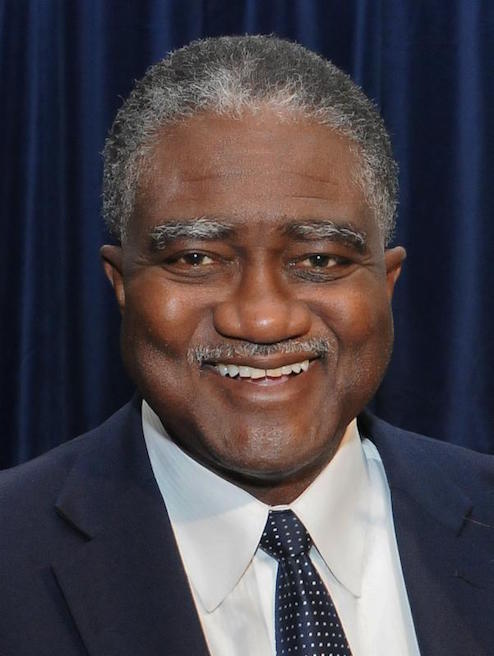
(TriceEdneyWire) – Pioneering Civil Rights and Black political journalist George E. Curry, the reputed dean of Black press columnists because of his riveting weekly commentary in Black newspapers across the country, died suddenly of heart failure on Saturday, August 20. He was 69.

Rumors of his death circulated heavily in journalistic circles on Saturday night until it was confirmed by Dr. Bernard Lafayette, MLK confidant and chairman of the Southern Christian Leadership Conference shortly before midnight.

“This is a tragic loss to the movement because George Curry was a journalist who paid special attention to civil rights because he lived it and loved it,” Lafayette said through his spokesman Maynard Eaton, SCLC national communications director.

Curry’s connection to the SCLC was through his longtime childhood friend, confidant and ally in civil rights, Dr. Charles Steele, SCLC president. Lafayette said Dr. Steele was initially too distraught to make the announcement himself and was also awaiting notification of Curry’s immediate family.

Steele and Curry grew up together in Tuscaloosa, Ala. where Curry bloomed as a civil rights and sports writer as Steele grew into a politician and civil rights leader.

Curry began his journalism career at Sport Illustrated, the St. Louis Post Dispatch, and then the Chicago Tribune. But he is perhaps best known for his editorship of the former Emerge Magazine and more recently for his work as editor-in-chief for the National Newspaper Publishers Association from 2000-2007 and again from 2012 until last year.

His name is as prominent among civil rights circles as among journalists. He traveled with the Rev. Jesse Jackson and appeared weekly to do commentary on the radio show of the Rev. Al Sharpton, “Keepin’ It Real.”

When he died he was raising money to fully fund Emerge News Online, a digital version of the former paper magazine. He had also continued to distribute his weekly column to Black newspapers.

Few details of his death were readily available Sunday morning. Reactions and memorial information will be forthcoming. The following is his edited speaker’s biography as posted on the website of America’s Program Bureau:

George E. Curry is former editor-in-chief of the National Newspaper Publishers Association News Service. The former editor-in-chief of Emerge magazine, Curry also writes a weekly syndicated column for NNPA, a federation of more than 200 African American newspapers.

Curry, who served as editor-in-chief of the NNPA News Service from 2001 until 2007, returned to lead the news service for a second time on April 2, 2012.

His work at the NNPA has ranged from being inside the Supreme Court to hear oral arguments in the University of Michigan affirmative action cases to traveling to Doha, Qatar, to report on America’s war with Iraq.

As editor-in-chief of Emerge, Curry led the magazine to win more than 40 national journalism awards. He is most proud of his four-year campaign to win the release of Kemba Smith, a 22-year-old woman who was given a mandatory sentence of 24 1/2 years in prison for her minor role in a drug ring. In May 1996, Emerge published a cover story titled “Kemba’s Nightmare.” President Clinton pardoned Smith in December 2000, marking the end of her nightmare.

Curry is the author of Jake Gaither: America’s Most Famous Black Coach and editor of The Affirmative Action Debate and The Best of Emerge Magazine. He was editor of the National Urban League’s 2006 State of Black America report. His work in journalism has taken him to Egypt, England, France, Italy, China, Germany, Malaysia, Thailand, Cuba, Brazil, Ghana, Senegal, Nigeria, the Ivory Coast, Mexico, Canada, and Austria. In August 2012, he was part of the official US delegation and a presenter at the USBrazil seminar on educational equity in Brasilia, Brazil. George Curry is a member of the National Speakers Association and the International Federation for Professional Speakers.

His speeches have been televised on C-SPAN and reprinted in Vital Speeches of the Day magazine. In his presentations, he addresses such topics as diversity, current events, education, and the media. Born in Tuscaloosa, Alabama, Curry graduated from Druid High School before enrolling at Knoxville College in Tennessee. At Knoxville, he was editor of the school paper, quarterback and co-captain of the football team, a student member of the school’s board of trustees, and attended Harvard and Yale on summer history scholarships.

While working as a Washington correspondent for The Chicago Tribune, he wrote and served as chief correspondent for the widely praised television documentary Assault on Affirmative Action, which was aired as part of PBS’ Frontline series. He was featured in a segment of One Plus One, a national PBS documentary on mentoring. Curry was part of the weeklong Nightline special, America in Black and White. He has also appeared on CBS Evening News, ABC’s World News Tonight, The Today Show, 20/20, Good Morning America, CNN, C-SPAN, BET, Fox Network News, MSNBC, and ESPN. After delivering the 1999 commencement address at Kentucky State University, he was awarded a Doctor of Humane Letters.

In May 2000, Lane College in Jackson, Tennessee, also presented Curry with an honorary doctorate after his commencement speech. Later that year, the University of Missouri presented Curry with its Missouri Honor Medal for Distinguished Service in Journalism, the same honor it had earlier bestowed on such luminaries as Joseph Pulitzer, Walter Cronkite, John H. Johnson, and Winston Churchill. In 2003, the National Association of Black Journalists named Curry Journalist of the Year.

Curry became the founding director of the St. Louis Minority Journalism Workshop in 1977. Seven years later, he became founding director of the Washington Association of Black Journalists’ annual high school journalism workshop. In February 1990, Curry organized a similar workshop in New York City. While serving as editor of Emerge, Curry was elected president of the American Society of Magazine Editors, the first African American to hold the association’s top office.

Before taking over as editor of Emerge, Curry served as New York bureau chief and as Washington correspondent for The Chicago Tribune. Prior to joining The Tribune, he worked for 11 years as a reporter for The St. Louis Post-Dispatch and for two years as a reporter for Sports Illustrated.

Curry is chairman of the board of directors of Young DC, a regional teen-produced newspaper; immediate past chairman of the Knoxville College board of trustees; and serves on the board of directors of the Kemba N. Smith Foundation and St. Paul Saturdays, a leadership training program for young African American males in St. Louis. Curry was also a trustee of the National Press Foundation, chairing a committee that funded more than 15 workshops modeled after the one he directed in St. Louis.
 

Homeless Drop-In Shelter Proposed Near Heart of Bed-Stuy Gateway BID

By Kings County Politics News Service

The city is exploring putting a homeless drop-in center near the heart of Bedford-Stuyvesant’s bustling commercial corridor along Fulton Street much to the chagrin or the local elected officials, community board and the business community.

Under the proposal, the nonprofit organization Breaking Ground would run the homeless transitional residence and drop-in center at 1217 Bedford Avenue and Halsey Street. If approved, the site will hold 30 beds for transitional residents and a drop-in center capacity for 75 homeless adults.

Drop-in centers provide an al­ternative to traditional shelters for street homeless individuals and offers temporary respite where individuals can shower, eat a meal, see a doctor and rest. Case management and housing placement services are also available for clients at the centers.

The centers are typically placed in areas where homeless are known to congregate, and as there are already 13 homeless shelters in Bed-Stuy’s Community Board 3 jurisdiction, the city seeks out areas of high homeless saturation for the centers.

The rub is that the proposed shelter is in the corridor of the large Bed-Stuy Gateway BID (Business Improvement District) which runs along Fulton Street from Classon to Troy Avenues and includes more than 370 businesses.

It also has local elected officials and CB3 officials thinking that the city is laying much of the homeless issue at the feet of Bed-Stuy instead of sharing the burden of homeless shelters with some of the more affluent neighborhoods in the borough that house few if any shelters.

“This is probably not the best location for placement of such a facility,” said Bed-Stuy Gateway BID Executive Director Michael Lambert. “It takes away from what we’re trying to achieve in terms of keeping the (business) corridor welcoming.”

Lambert said he met with officials from the Department of Homeless Services (DHS) and local City Councilman Robert Cornegy, Jr. last year, where they did a survey of the corridor and did not find a problem of homeless congregating along the corridor, which would meet the key criteria of siting a drop-in center.

“It doesn’t make sense to put a facility there that could create that dynamic that will attract more (homeless) people not currently patronizing the corridor,” he said, noting that some homeless assigned to the large Bedford-Atlantic shelter in the former armory nearby might begin to migrate to the drop-in center.

A CB3 spokesperson said it is hard to understand why DHS providers would continue to look to Bed-Stuy to place any kind of shelters in the community when it already houses 13 facilities. “If the city is truly trying to distribute fairly the burden of the homeless to share in all the communities, they should tell providers to not event look at the Bedford-Stuyvesant community,” the spokesperson said.

Cornegy spokesperson Stefani Zinerman said the council member is in agreement with the community board and concerned residents about the siting of the drop-in center.

“We have a number of shelters in the district as well as three-quarter houses and other services for homeless people. So many that we don’t have any room left for working individuals, and we also have to be able to care for those that want to stay in the community and are being priced out,” said Zinerman.

DHS spokesperson Lauren Gray replied that the agency is committed to engaging communities on these issues, listening to feedback and working to address community concerns.

“This location has been proposed to serve as a drop-in center and safe haven that would bring homeless New Yorkers off of the street into safety and connect them to resources,” Gray said, noting that saturation of homeless is one of many factors considered when siting shelters.

At post time, the timeline is unknown as to when a final decision will be made on the drop-in center.