Home Blog Page 823

55th Assembly District Race: Walker, Mealy Weigh In On Confronting Poverty

 By Kings County Politics News Service

Incumbent Assemblywoman Latrice Walker is being challenged for her 55th District Assembly seat in the September 13 Democratic Primary by term-limited City Councilwoman Darlene Mealy.

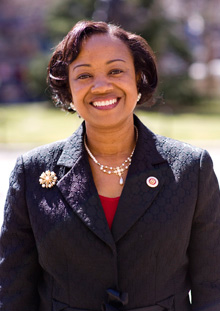
Assemblywoman Latrice Walker

Walker is a lifelong Brownsville native and a product of the New York City public schools before going on to an undergraduate degree from SUNY Purchase College, a law degree from Pace University and was admitted to the New York State Bar in 2007. Her public service career began as counsel to U.S. Representative Yvette D. Clarke. Besides Clarke, she also has the support of Public Advocate Letitia James and Congressman Hakeem Jeffries.

Mealy was born in Detroit and raised in Bedford-Stuyvesant and graduated from George Wingate High School. Following high school, Mealy attended BMCC and entered the workforce, spending 17 years as a New York City Transit Authority employee and member of DC 37. She was elected to the City Council in 2006 and reelected in 2010.

The following question was put to both candidates:


Brownsville and the 55th Assembly District is one of the most economically impoverished districts in the city. What have you done in your tenure as a lawmaker and what do you intend to do further to help the plight of your constituents economically?


Darlene Mealy: “I love and have worked hard for Brownsville. In my first election I ran on a platform of ‘Jobs not Jails’ and as a result, I have been able to deliver on the need for more jobs for our community. One prime example is my work to stop the conversion of the library on Blake and Dumont to a probation center. Instead, I pushed to build a job placement center.

“I worked alongside of the late great community activist Martin Hall to get that done and I am so glad that he was there with me and the mayor to do the ribbon-cutting before he passed. Now instead of having a facility to maintain keeping people in ‘the system’, we made a job placement center to keep them out of it.

“But that’s not all. I worked to turn part-time parks jobs into year-round jobs that provide a real living wage to give people a better chance. I worked to get constituents OSHA training where they earned their certification. This program went on for 3 years. In the council I pushed for $16 million for 6,000 year-round jobs and for $38.5 million in baseline funding for Summer Youth Jobs.”


Latrice Walker: “As a freshman lawmaker in the New York State Assembly, I was elected with an agenda to help the people of the community in which I was born and raised. I voted to pass the historic $15 minimum wage increase and Paid Family Leave that are now law.


“I worked with Governor Cuomo to strengthen health care delivery in Brownsville. Together, we have allocated $700 million to build a stronger hospital, clinics and urgent care centers through a partnership with Brookdale University Hospital Medical Center and a potential bigger, financially stable hospital. This new partnership will preserve current Brookdale-affiliated health care jobs. As the partnership develops architects will be needed, as well as construction workers from a variety of trades. Residents – from apprentice to skilled trades – will be invited to participate in building a bigger, better hospital system for Brownsville and the 55th Assembly District. Once complete, the new hospital system will offer expanded health care services that require additional health care workers. The ultimate goal is to strengthen urgent care and wellness services with jobs as an added benefit.


“As chair of the Assembly Subcommittee on Renewable Energy, I recognized the opportunity to bring 100% clean energy to Brownsville. I worked with the New York State Energy Research and Development Authority (NYSERDA) to create Solarize Brownsville, an initiative to increase the supply of electricity in the Brooklyn Queens Demand Management (BQDM) catchment area while reducing demand on the Consolidated Edison Substation in Brownsville.


“Solarize Brownsville has made an immediate economic impact. Solar panels are installed on qualified homes at no up-front cost, refuting the idea that solar energy is expensive. Each homeowner who has solar panels installed on their home will see a reduction in their monthly electricity bill of up to 25% per kilowatt hour. Since the June 2016 launch, more than 100 homeowners have signed installation agreements. Each of these homeowners has or will receive a special cash rebate of between $250 to $500 – disposable income that the homeowners can use. In addition, each solarized home will receive a $5,000 state energy credit and a $5,000 New York City property tax credit.


“Brownsville’s demand for solar panels has created jobs. I hosted a Job Drive at my district office for Solar and Event Ambassadors. Community residents were hired from this outreach event. Level Solar is currently asking to host another Job Drive to fill openings for Operations Personnel: Solar Panel Installers and Electricians. I encourage community residents to apply.


“Jobs are one of my top priorities. I encourage affordable housing developers to establish community hiring objectives. The new SUNY ATTAIN Lab at St. John’s University provides technology training and job readiness counseling. I worked to expand state funding for Summer Youth Employment Program jobs that increased the number of jobs available for our young people. I support contracting opportunities for M/WBEs.


“I have a demonstrated track record of working to improve economic outcomes for the residents of Brownsville and the entire 55th Assembly District. I pledge to continue bringing economic opportunities to the district.”

Africa Will Build The Future Says Zuckerberg, Visits Kenya On First African Trip

Toby Shapshak ,   CONTRIBUTOR, www.forbes.com

Facebook CEO Mark Zuckerberg meets iHub and BRCK co-founder Erik Hersman in Nairobi.

The future will be built in Africa, Facebook FB +2.03% CEO Mark Zuckerberg said in Nigeria, before travelling to Kenya, the “world leader” in mobile money, on his first visit to sub-Saharan Africa, a surprise trip which has propelled Africa’s entrepreneurial spirit into the news.

“It’s inspiring to see how engineers here are using mobile money to build businesses and help their community,” Zuckerberg said after visiting Nairobi’siHub, the most famous of Africa’s innovation hubs.

He also popped into the office of BRCK, a remarkable internet connectivity device that has since morphed into a clever education system for the developing world. Both have been co-founded by Erik Hersman – who is also the co-founder of Ushahidi, the real-time reporting tool created during the violence following Kenya’s disputed 2008 elections and is considered – along with M-Pesa – as one of Kenya’s greatest tech success stories.

“Just landed in Nairobi! I’m here to meet with entrepreneurs and developers, and to learn about mobile money – where Kenya is the world leader,” Zuckerberg told his 78-million followers on Facebook. Kenya has 5.3-million Facebook users, many of whom access the social network via mobile.

“I’m starting at a place called iHub, where entrepreneurs can build and prototype their ideas. Two of the engineers I met – Fausto [Marcigot] and Mark – designed a system to help people use mobile payments to buy small amounts of cooking gas, which is a lot safer and better for the environment than charcoal or kerosene. It’s inspiring to see how engineers here are using mobile money to build businesses and help their community.” The system is called PayGo Energy.

Hersman told me: “He was very keen about the real-world problems being solved at Gearbox”. An extension of iHub, Gearbox is a maker space with 3D printers and other manufacturing facilities in Nairobi. “Think of it as doing for hardware what iHub did for software in Kenya, which is really concentrating the activity around hardware manufacturing. It is an onramp for manufacturing in Kenya.” Last year there were eight startups working in the Gearbox space, now there are 24.

“He’s interested in cool tech that solves real problems and I think to his credit – which is not him believing his own PR – he really does care about getting the internet to emerging markets and get it out to the edge of the world. Of course they are doing it for commercial reasons, but that’s okay, we need a commercially viable internet everywhere.  He does really care about that though, that’s what came across to me.”

Yesterday in Nigeria, where he praised African entrepreneurs, Zuckerberg said: “The thing that is striking is the entrepreneurial energy. I think when you’re trying to build something, what matters the most is who wants it the most. This is where the future is going to be built,” Zuckerberg said.

Asked what he thought of Lagos, Zuckerberg said: “there’s this energy here, you feel it as soon as you get off the place. The world needs to see that.  Here is Lagos, and across the continent, things are really shifting. Things are moving from a resource-based economy and its shifting to entrepreneurial, knowledge-based economy. It’s not only shaping the country but the whole continent.”

It echoes similar compliments made by US President Barack Obama, who praised Kenya’s tech entrepreneurs during a trip last July: “This continent needs to be a future hub of global growth, not just African growth”.

As of the first quarter of 2016, Nigeria’s monthly active users (MAU) on Facebook had grown to 16-million (from 15-million) which is a 6.67% increase, according tofigures released by Facebook in June. Kenya has 5.3-million (up from 4.3-million or 18.6%). Just less than half of these figures in Nigeria are daily active users (DAU), and just less in Nigeria.

Underlying the mobile nature of the market, about 90% of South Africa’s monthly users are on mobile, and 95% of daily users. Some 8-million people use Facebook daily in South Africa, or 62%. Some 14-million South Africans use Facebook every month, an 16.6% increase in the year since it last released figures in June 2015.

When she visited South Africa last year after the opening of the first office in Africa in June, Nicola Mendelsohn, Facebook’s vice president for Europe, Middle East and Africa, told me: “This is one of the places where our next billion users are coming from. It would be a massive missed opportunity. Africa matters,” she added.

At the time, Facebook said it had 120-million active users, of which 80% (or 96-million) overall use their mobile phones. These figures, from June 2015, were the last full set of numbers for the continent that Facebook released. They were a 20% increase from the previous batch released in September 2014.

Facebook provides free access to a stripped down version of the social network that is better suited to feature phones with poor internet connectivity, called Free Basics. A remarkable South African organisation, run by Gustav Praekelt, is a key provider in these.


Clinton, Trump and Martial Law

By Alton H. Maddox, Jr.

(“Attorney-at-War”)

First and foremost, Donald Trump is a businessman.  His business is marketing. His name: Trump.  Wealth creation is personal.  His family is his only special interest.  As a “mobster”, he is about building a family dynasty.  “Mafia” goes with casinos and construction like a hand goes with a glove in icy Alaska.

Now, he is well ahead of the learning curve.  Trump has already picked off the “cream of the crop” of the Republican field by being “loose as a goose”.  He reminds me of “Johnny Lynch” in my high school “shop” class.  No one could beat Johnny playing “the dozens”.  He was always in your face and it was always about “your mama”.

Trump is now streaking for the goal line.  The worst he can do is to receive the “silver medal”.  This is a valuable prize.  Everyone will be wondering if he could have won the gold.  In the meantime, the value of his “brand” will be going through the roof.  His “dash” in the presidential sweepstakes has to be the best return on his investment.

For time in perpetuity, Trump will be claiming that he was “robbed” if he loses.  His expanded market will be buying his propaganda “hook, line and sinker”.  His favorite argument will be “dangerous Negroes”.  There will be a call for “law and order”.  The “Big Three” is missing in action.  With leaders like these, who needs enemies?  I am not talking about General Motors, Ford and Chrysler.

No group that depreciates HELP has anything to lose, including Mexicans and Muslims.  Propaganda is the first stage of warfare.  Trump’s propaganda was misdirected.  Believe it or not, it is rooted in the “Central Park 7”.  This was a “trial balloon” for the White House.

His shot was nearly perfect.  He hit six out of seven “dead ducks”.  They allowed “hush money” to define them.  Young chicks were thrown under the bus as “sacrificial lambs”.  They depended on their parents for food and warmth but the black community took the “booty” and fled.  Trump knows us.

The black community in New York was “glueless and clueless”.  No one amassed a war chest to fend off predators. There is no “collective” or an “eternal vigilance” even though New York is a one-party state.  When the co-founder of the Democratic Party said “the cost of freedom is eternal vigilance”, he was not talking to “slaves”.  “Negroes” will pervert anything.

In Trump’s world, White Philosophy Matters and Black Philosophy Matters is a “chant” against the police.  Dr. Martin L. King, Jr. was a philosopher who had refused to enroll in either the Republican Party or the Democratic Party.  King: “If a man doesn’t believe in something, he will fall for anything.” This is the sine qua non of philosophy.

Trump is no mental giant.  He does not believe in background checks or fact-checking.  If he did, his campaign would not be replete with contradictions.  On the other hand, blacks refuse to submit a resume to a black person in a position of authority in a political committee.  See “Pro-Trump pastor Mark Burns admits to padding resume”, N.Y. Post (8-14-16).

For example, Trump fell in love with Justice Antonin Scalia for his pro–death penalty ruling for children in Stanford v. Kentucky, 492 U.S. 361 (1989).  Trump was itching to pull the switch in “Central Park 7” minus one.  The NYPD, the Fourth Estate and Central Park Conservancy had his back.

However, Trump slipped up when he attacked Colin Kaepernick for not standing for the national anthem.  Unfortunately for Trump, I was sitting in the Supreme Court as a special guest of attorney William Kunstler when Kunstler successfully argued Texas v. Johnson 491 U. S. 397 (1989).

I saw Justice Antonin Scalia sitting on the bench and he was rooting for the beneficiary, Kaepernick.  Scalia ruled that it was permissible for a “Kaepernick” to burn the American flag and not simply stand for it.  Kaepernick has a constitutional right to torch it on the gridiron while white supremacists are pledging an allegiance to it. Where is Black Lives Matter on Kaepernick?

The white man is “bilingual” and he speaks “legalese” and “military science”.  Blacks must do their homework.  “Every brother is not a brother and every sister is not a sister.”  Under my tutelage at UAM from 1988 to 2008, I even did a background check on all speakers at the Slave Theater.  I believe in professionalism and not the “chitlin” circuit.

I suggest that all blacks major in “legalese” and “military science” and minor in HELP.  The law library is the best laboratory.  Anyone who is coming to court on September 15, 2016 to learn about “homelessness, gentrification and judge shopping” should take some time to read the law in the law library in Manhattan Civil Court.  See CPW Towers, LLC v. Maddox, Index No. L&T 86146 (Civ. Ct., N.Y. Co. 2014).  Wars must be fought in advance of “D-day”.

How History Forgot The Black Women Behind NASA’s Space Race

By  via The Guardian

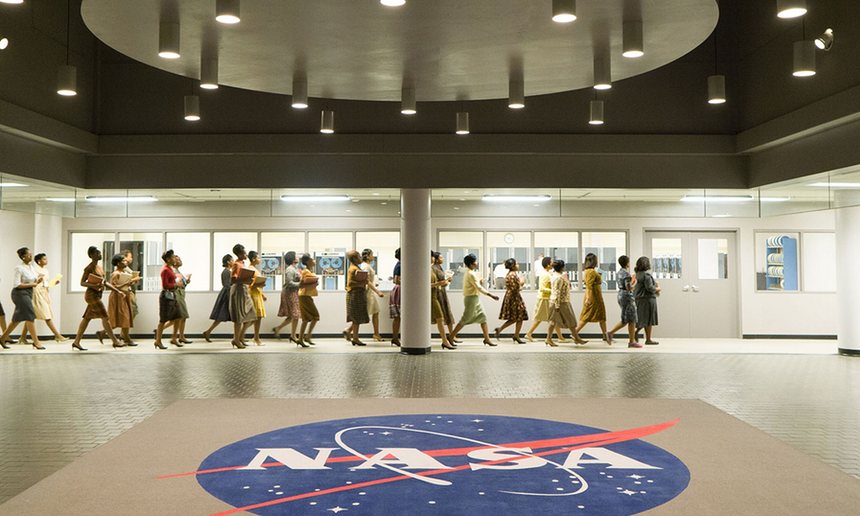
In the 1940s, a group of female scientists were the human computers behind the biggest advances in aeronautics. Hidden Figures, an upcoming book and film tells their remarkable, untold story.

The West Computers, in Hidden Figures. Photograph: 2016 Twentieth Century Fox Film Corporation

Growing up in Hampton, Virginia, Margot Lee Shetterly was surrounded by brilliant female scientists and mathematicians who, like her father, worked for Nasa. “I would see them in the context of community organisations or church, or you’d run into them at the grocery store – they were my parents’ friends,” she says. It didn’t seem unusual to her that, within her community, so many women had enjoyed long careers at Langley, Nasa’s research centre – and so many of them were black women. It was her husband, on a trip back to visit Lee Shetterly’s parents, who pointed out how remarkable it was.

Nasa research mathematician Katherine Johnson at her desk at the Langley Research Center in 1966. Photograph: NASA