Home Blog Page 767

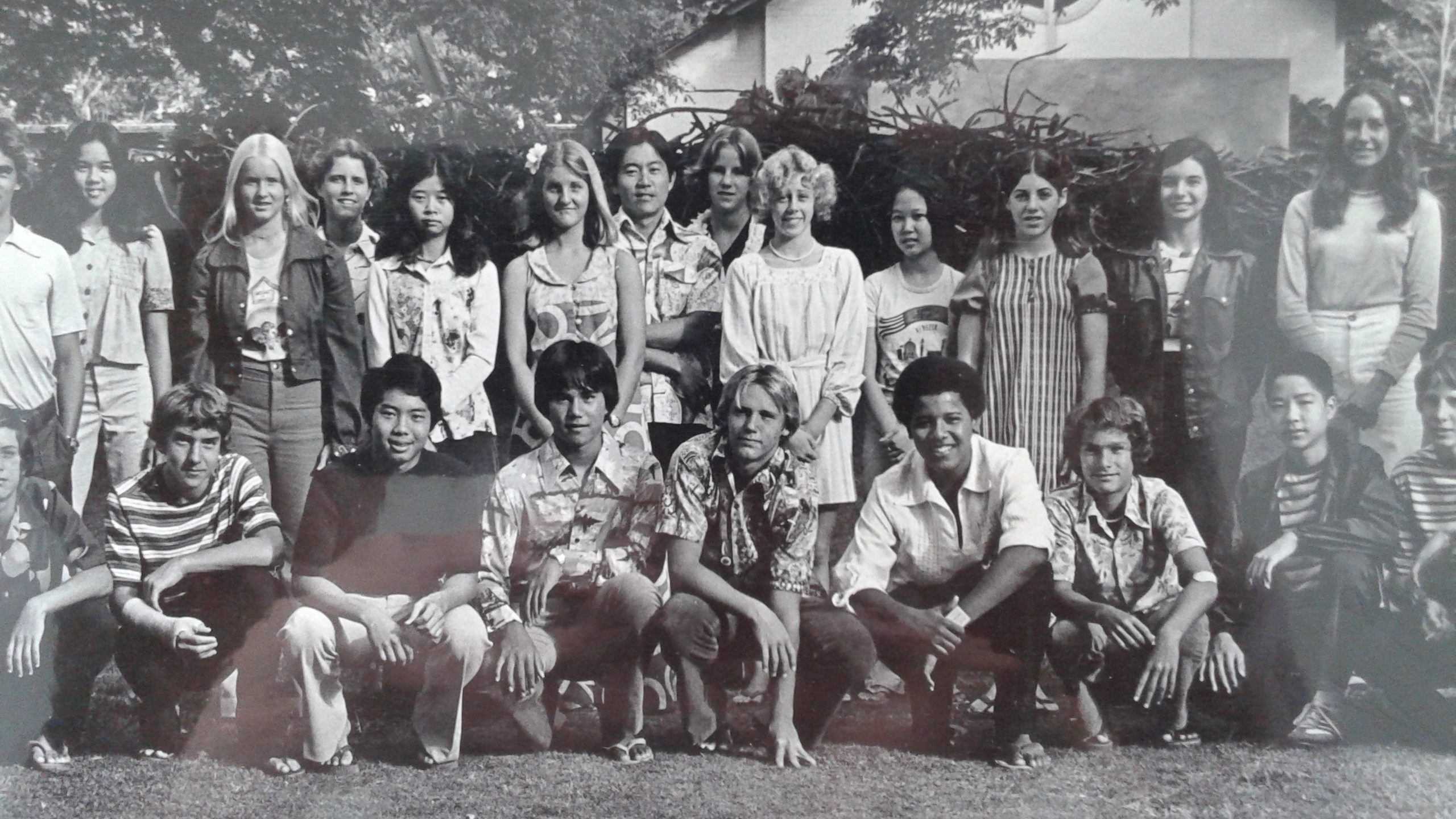
Mr. Kusunoki on Barack “Barry” Obama: High School Years

(As Told to Priscilla Sawsa Mensah)

Eric Kusunoki, educator)

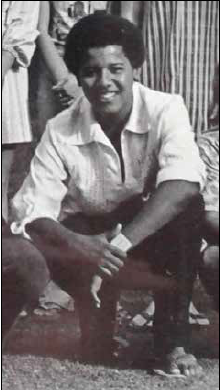
I first met Barack Obama in September or 1975.  Prior to the first day of school, I received our homeroom list and I went over all of the names.  When I got to his name, I asked other teachers on campus, if they knew who he was or how to pronounce his name.  I thought it looked Japanese.  There is a Obama, Japan.  It’s a coastal city with nice beaches, I’ve heard.  Anyway, the people I asked didn’t know him or how to pronounce his name. 

On the first day of school that year, I took roll and when I reached his name, I immediately mispronounced his name, saying Barack like “barrack”. He was sitting right across from me, smiled quietly and said simply, “you can call me Barry”  and it was Barry all through his high school days.  Till today, whenever, he hears someone call him Barry, he knows that it is someone from his high school and his high school days.

All of us in the homeroom, including Barry, stayed together for four years.  We met in the same classroom, pretty much, had the same dean, and did things together everyday for four years, until they graduated in June, 1979.  We met every morning at 8 am, however, I always liked to come in early, around 7 am and open the room up, open the windows, turn on the radio, and get ready for the day.  I was always impressed with how many students arrived at school so early in the morning.  Many of them had to commute and come in with their parents from the other side of the island, so they came in early, caught up with some work, socialized quietly, or even took naps before school started.  Some went up to the snack bar to get breakfast or something to eat.  I would also go up to get coffee and also check my mailbox before the school day began.

This worked out well as the students got to know each other a dn do things together and I had a chance to talk with them individually and casually, too.  Barry lived close by, about four blocks down the street,so he would come to school just before 8 am usually, but he was always on time.  He would always walk in the door with a big smile and great me with a “Good Morning Mr. Kusunoki!  How are you doing?”  He was always very well behaved and very pleasant, not over bearing at all.  

He was always neat and clean, nothing fancy, but dressed for school, not ratty or disheveled. He never sought the spotlight, but he was very well known and popular among all of the students. He was able to negotiate well among the many cliches on campus, yet still had a tight core of friends that he is close with till this day.  They all shared a great love of basketball and were out on the courts every spare minute they had.  Now they spend a lot of time playing golf.  I am glad to see that they are still good friends, ever since high school.

Academically, President Obama, Barry, was a very good student.  He got all A’s and B’s.  I don’t recall him ever getting a C or ever getting an interim fr anything.  He never got into any trouble for behavior, etc. that I can recall and he was pleasant to work with.  Whenever we had class discussions, he would always be a great listener, never dominating the discussions or being argumentative.  He would listen intently to everyone.  Then when all was said and done, he might say something that was very impressive and profound, and we’d all say, “Wow!”  

Barry’s strengths, I would say were in English and History.  Although he did well in Math and Science, I didn’t think personally, he was a Math-Science guy.  He was a good writer but I didn’t know how good a writer he was until I read his books.  He was also a good speaker, but we all never knew how good until he spoke at the Democratic National Convention in 2004, when he blew everyone away.  “Wow!”  all over again.

I felt then that he would be successful.  to me, he had all of the qualities that would enable him to be successful.  He was bright,  articulate, he had great people skills, and he was humble.  Some may argue that because he could be gregarious and outgoing, but deep down inside, he never forgot his friends and family, and he always had a sense of humility.  He never lost that and I was always deeply impressed by that.

 We knew he would successful, but we never knew he would be President of the United States.  However, after he was elected, we could see it.  We could see how he could do it and appeal to so many people.  He was older, more educated, more experienced, but he was the same good person that we all knew while he was growing up.  

Barry had that charisma and the ability to get people to work together when resolution was necessary, whether it was on the basketball courts with his friends or in our classroom.  However, he didn’t do it with a heavy hand, but more with gentle guidance and reason.  People respected Barry because he could also be a good “indian” as well as a “chief”.  We’d always celebrate birthdays, Halloween, Christmas, and Ester in our homeroom, along with other holidays like Valentine’s, Girls’ Day, St. Patrick’s Day, and Boys’ Day, and Barry would always be a willing and helpful participant, helping to set up or clean up and conscientiously involved in the activities we all planned.

Barry loved Halloween and especially loved carving pumpkins.  We’d always carve a couple of pumpkins that we would take after school to the Shriner’s Hospital down the street for crippled children and help them decorate and celebrate Halloween. 

He loved celebrating birthdays during the year.  We always had juice and cookies or doughnuts and he enjoyed them all along with his classmates.  His birthday is in August, so we never had the chance to celebrate his birthday then, so we celebrated during the year.  

 We did all of these things every year for four years and it never got old for these students.  They were a good bunch to work with. I am glad that I had them for four years and got to spend so much time with them.

 As a teacher, when students graduate and leave, you don’t expect them to remember you and if they do, you never know how they will remember you.  It’s part of the job.  You just hope that they will be OK and will have good lives, be good men and women, be good citizens, have nice families, and lead happy, productive lives.  Teachers get satisfaction from seeing how their students have turned out, reading about them, hearing about them, or seeing them on the street once in a while.  

With Barry, we have all been very blessed with what he has done with his life.  We revel in his success quietly and from afar.  He has made us all, very proud, and what is most impressive is, he hasn’t forgotten his roots, and he hasn’t forgotten his old friends and the people back “home” in Hawaii.  No matter what he has done in his life, he is still the same humble guy.  He has “walked with kings” and hasn’t lost “the common touch”.  That’s what has touched me and has impressed me about him all this time.

(Eric Kusunoki’s father, a newspaper photographer, encouraged his son to keep a scrapbook when he became a teacher. Fortunately, Eric did, for his lifetime as a teacher, including the years he knew Barry Obama, 1975 – 1979. “When Barry visited our campus after nearly 25 years away, I never expected him to remember me (such is the life of a teacher), but he asked about me and looked for me, which pleasantly surprised me.”)

Honolulu-based teacher Eric Kusunoki’s April 8 correspondence to writer Priscilla Sawsani Mensah’s about Barack Obama’s high school years reveal so much about student Barry, and just as much about him. We were not surprised that the leadership qualities and scholarship that characterize President Barack Obama were evident in his younger years. We were not surprised about Mr. Kusunoki’s description of Barry’s workmanship and aptitude. Yet, in his description of Barry’s humbleness and generosity, we saw similarities in Mr. Kusunoki’s willingness to be so generous to us. Like most good teachers, Kusunoki spots a student’s singular abilities and gets to work to create a space in which the student can grow. Part of the job for the compassionate educator is to remove the layers obscuring essence and flight. And when their charges “take off,” they stand at a distance, with the understanding that job also requires , expecting not to be remembered. Mr. Kusunoki worked for 41 years in education before retiring in 2015. We suspect that every one of Mr. Kusunoki’s thousands of students remember him.   And we suspect he remembers every last one of them. Bernice Elizabeth Green   
 

The Making of a President

By Priscilla Mensah

Often, when we come across great leaders, whether it be through history textbooks, on the television or in our own lives, we wonder about their beginnings.

One of the questions that we frequently want answered is, who taught them? Who is it that helped to shape, mold and inspire them into the thinkers that they are or were. We want this burning question asked because, perhaps, we can learn from the answers and become great leaders ourselves. In that sense, the answer to a seemingly simple question can be potentially life-changing.

That question for me was, in large part, answered when I was given the opportunity to interview Mr. Eric Kusunoki, a former high school teacher of a young man who grew up to become President of the United States: Barack Obama.

Mr. Kusunoki taught at the Punahou School that Obama attended from 1971-79 for many years. Though he is technically retired he told us, “I still volunteer there and I am on campus nearly every day. It’s hard to leave.”

Kusunoki generously shared his remembrances of the young “Barry” from a teacher’s perspective, from Obama’s class performance to his personality, and the early signs that he would do something great.

My analysis of my interview with Kusunoki is that great leadership requires consistency. Consistently good behavior yields admirable results. I was not in any way shocked to learn that Obama was a great student and excellent classmate. I do not think you can become good overnight.

If you are a highly successful person, it is usually because you have lived a life that is reflective of your success. The person that we see in Obama today seems to be very much the same person that his teachers saw in him many years ago.

But there is something also important about how Barack, the younger, lives his life: he may be the consummate example of why quality leadership is rooted in learning very early in life the importance of valuing roots. Of his impression of the “Barry,” the man, Kusunoki told me :“He never forgot us ‘little guys.’  Whenever we (would) see him, the first thing he asked was, ‘How is everyone back home?’  and the last thing he said was, ‘Tell everyone back home I said Hello and Aloha!’.”

“That’s the kind of guy he is.  He hasn’t changed.  Still having that common touch, still very humble and down to earth.”

And remembering where he comes from.

Priscilla Mensah is an avid reader and scholar who resides in Brooklyn, New York. Her passions include community empowerment and improvement. Priscilla can be reached at pmensahbrooklyn@gmail.com.

So how do we understand the paradox of black officials perpetuating a system that largely disadvantages black people?

Books

 LOCKING UP OUR OWN 

James Forman Jr.

Crime and Punishment in Black America Author: JAMES FORMAN JR.

The past few years have seen an increase in awareness and outrage over the senseless killings of black men and women at the hands of law enforcement, and these deaths have also led to a renewed conversation about race in America’s criminal justice system.

It’s a given in this country that race plays a major role in that system, with black people more likely than white people to be arrested for minor crimes, to be dealt harsher sentences, and to be more unfairly impacted by their criminal records. Yet the criminal justice system is also staffed by thousands of black police officers, judges, corrections officers, and prosecutors.

So how do we understand the paradox of black officials perpetuating a system that largely disadvantages black people?

In Locking Up Our Own: Crime and Punishment in Black America, Yale Law School professor and former D.C. public defender James Forman, Jr. examines the fascinating and tragic historical roots of the war on crime, and the role that African Americans played in its escalation.

Using Washington, D.C., a largely African American city, as a window into America’s response on crime, Forman shows how tougher laws and harsher responses were proposed by the nation’s first black mayors, police chiefs, and city council members. These individuals came to power at a historic moment when poverty, crime, drug addiction, and violence were on the increase, and their stringent law-and-order tactics were seen as necessary to protect and heal these communities. In heartbreaking detail, Locking Up Our Own shows how the black community struggled to respond to rising crime, wrestling with dilemmas that remain pertinent today.

It also reveals how incremental steps taken in the name of the civil rights movement gradually eroded the rights and opportunities of the very people they were meant to help.

As a former clerk for Justice Sandra Day O’Connor and a firsthand witness to D.C.’s draconian criminal justice system during his six years as a public defender, Forman is a terrific and humane guide through the thorny topics presented in his book. Locking Up Our Own is a timely and essential work that begs to be read by anyone who craves a way forward at a time when solutions seem rare and out of reach.

James Forman Jr. is a professor of law at Yale Law School. He has written for The New York Times, The Atlantic, numerous law reviews, and other publications. A former clerk for Justice Sandra Day O’Connor, he spent six years as a public defender in Washington, D.C., where he cofounded the Maya Angelou Public Charter School.

Upcoming Forman Appearances, Book Signings and Conversations with:

ADA Adam Foss, Boston, Mass.

Professor I. Bennett Capers, Brooklyn Law School

 4/26 – NYU Law School / 12pm

Dr. Philip Atiba Goff

4/27 – John Jay School of Criminal Justice / 5pm

Standing-Room Only at “Truth to Power” Journalist Chris Hayes’ book-signing: Not a Surprise.

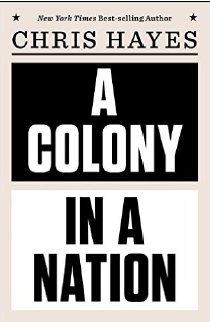
This household starts and closes the weekdays with the MSNBC news family. So, of course, we were in the audience when veteran journalist Chris Hayes discussed his searing new book, “A Colony in a Nation,” last Saturday at St. Joseph’s College in Clinton Hill. Hayes has covered shootings throughout the U.S. Of course, we agreed when he told the crowd that when thousands of people all across America are saying the same thing, there’s got to be some truth in it. But he doesn’t leave the rest of America off the hook: he indicated that racial inequality hasn’t improved over the past 40 years, and all of us – black and white – has a responsibility to work towards a solution that’s not outside of us. Following is information on the latest work , A Colony in a Nation, by this New York Times best-selling author and Emmy Award winning news anchor. Our Take: It’s A Must-Read.

America likes to tell itself that it inhabits a postracial world, yet nearly every empirical measure―wealth, unemployment, incarceration, school segregation―reveals that racial inequality has barely improved since 1968, when Richard Nixon became our first “law and order” president.

With the clarity and originality that distinguished his prescient bestseller, Twilight of the Elites, Chris Hayes upends our national conversation on policing and democracy in a book of wide-ranging historical, social, and political analysis.

Hayes contends our country has fractured in two: the Colony and the Nation. In the Nation, we venerate the law. In the Colony, we obsess over order, fear trumps civil rights, and aggressive policing resembles occupation. A Colony in a Nation explains how a country founded on justice now looks like something uncomfortably close to a police state. How and why did Americans build a system where conditions in Ferguson and West Baltimore mirror those that sparked the American Revolution?

A Colony in a Nation examines the surge in crime that began in the 1960s and peaked in the 1990s, and the unprecedented decline that followed. Drawing on close-hand reporting at flashpoints of racial conflict, as well as deeply personal experiences with policing, Hayes explores cultural touchstones, from the influential “broken windows” theory to the “squeegee men” of late-1980s Manhattan, to show how fear causes us to make dangerous and unfortunate choices, both in our society and at the personal level. With great empathy, he seeks to understand the challenges of policing communities haunted by the omnipresent threat of guns. Most important, he shows that a more democratic and sympathetic justice system already exists―in a place we least suspect.

A Colony in a Nation is an essential book―searing and insightful―that will reframe our thinking about law and order in the year

When Mayor de Blasio released his plans to open over 90 homeless shelters, it sent shock waves throughout the city. Frankly, I felt that shock

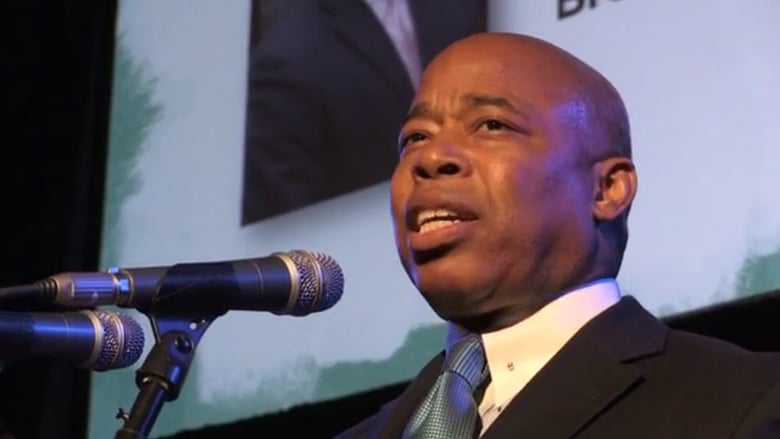
By Borough President Eric Adams

Immediately after his announcement, many residents from the communities of Crown Heights and Prospect Lefferts-Gardens came out to an emergency meeting in order to voice their outrage over another shelter being placed in their area. I shared that concern. When I was a state senator representing the area, I actively fought to ensure the burden of homeless shelters would be carried by all communities.

A short time after the meeting, I received a call from a woman who shared with me that throughout her life she had been on the verge of homelessness at least eight or nine times.  She talked about her son keeping a bag of clothing near his bed out of fear that the City Marshal would come during the middle of the night to throw them out of their home and he would lack clothing to wear to school. Her conversation went on to express the challenges of not having a home and the traumatizing fear that comes with it.

It was her belief that the trauma is compounded when homeless people hear their former neighbors state that they don’t want them around.

After hanging up the phone with that woman, my mother Dorothy, I was reminded how much a mom can give you the proper perspective on life.

Her phone call and her recollection on how I kept a bag of clothing by my bed brought the homeless fight full circle for me.  It brought up old feelings of being teased at school for wearing clothing that was too big, or having to use Tide laundry detergent to bathe because we couldn’t afford to buy fancy bar soap. It also made me reflect on the role that the Salvation Army and other community groups played to assist our family in making it through those challenging years.

I got the message from my mother loud and clear.  Although I still believe the city should have opened the first of their new shelters in communities that don’t currently have any, my mom has assisted me in amending my thinking on this issue.

As a former police officer, I have long advocated that it is not only the job of the NYPD to make our communities safe. I have also stated that it is not solely the role of ACS to fight child abuse. The community “at large” must do their share with these important initiatives.

This also is true for the homeless issue. City Hall has their part to play but we, the community, are also charged with a critical role. We must come up with a supportive plan, and throwing a “rock” of disagreement is not a plan.

The elder who was forced out of her home due to increased rents, and in some cases bad-acting landlords, was the woman that used to babysit our children. The unemployed male who stands on the corner at Bedford and Atlantic Avenues was the same child that once played Little League Baseball alongside us. The woman with three children who can’t find a landlord to take her Section 8 voucher was once the cute little girl with ribbons in her hair who attended our church service. These are not strangers in our midst; these are our brothers and sisters who have fallen on hard times.

I want to use this as a moment to change the conversation on homelessness. Instead of saying “we don’t want them here,” I want to move towards “adopting” shelters. My call is for people of faith to invite homeless families to our houses of worship. High school and college students can show shelter residents how to fill out the forms to get their Social Security cards, driver’s licenses and other documents needed for education and employment. Block associations and civic groups can embrace these sites and help integrate them into the activities of an inviting community. Those of us who have professional skills can assist and instruct. For our way-too-large population of homeless children, we can provide tutoring services so they can be ready for college. Our neighbors who have fallen on hard times can use basic sanitary items such as soap, socks and undergarments; when we go shopping for ourselves, how about adding an extra item for someone in need?

Brooklyn Borough Hall will be gathering local stakeholders to talk about how we can come together and have a community response to homelessness. The goal is not to replace the mayor’s plan, but to complement it in the same manner that we have successfully addressed crime in our city.

We are a safer city because everyday people stood up and said, “let’s get involved.” People did this for my family as a child and, as my mother reminded me, I must do it for others as an adult.

Trump Administration’s ‘Attack on Black Women’ Evident, Says Congresswoman

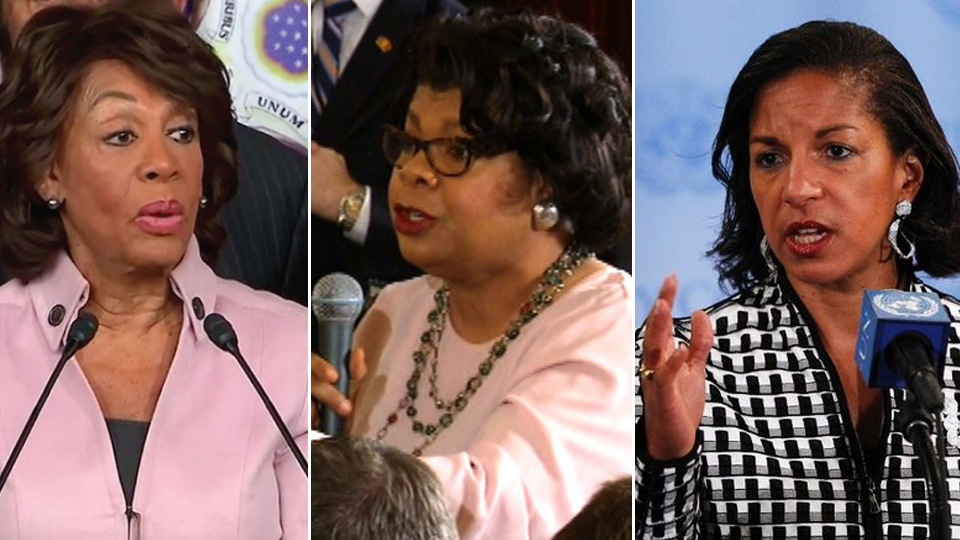
Recent incidents involving Maxine Waters, April Ryan and Susan Rice echo the treatment of Michelle Obama.

By Sheryl Estrada, April 11, 2017

Michelle Obama has spoken candidly about her experience as the nation’s first African-American First Lady, including the racist and sexist insults hurled at her by Republican politicians and pundits.

During her 2015 commencement address at Tuskegee University in Alabama she said:

“Over the years, folks have used plenty of interesting words to describe me. One said I exhibited ‘a little bit of uppity-ism.’ Another noted that I was one of my husband’s ‘cronies of color.’ Cable news once (charmingly) referred to me as ‘Obama’s baby mama.’”

Last week, Rep. Sheila Jackson Lee (D-Texas) suggested that the racist scrutiny the former First Lady was subjected to (during which time Obama nonetheless remained determined to live out loud so that people could see her authentic self) is publicly reemerging.

Lee pointed to a pattern of behavior toward Black women including Susan Rice, who served as former President Barack Obama’s National Security Adviser; Rep. Maxine Waters (D-Calif.) and journalist April Ryan.

Lee tweeted on Wednesday:

Five U.S. intelligence officials have said that Rice followed standard procedure in requesting the National Security Agency to reveal to her the names of American citizens who had been in contact with Russians whose communications were monitored by U.S. intelligence, according to Reuters.

The officials said it is unlikely she would have known that any unidentified American had a connection to President Donald Trump.

 In an interview with NBC’s Andrea Mitchell on April 4, Rice said the allegations made against her are false.

“The allegation is that somehow Obama Administration officials utilized intelligence for political purposes,” she said. “That’s absolutely false.”

But Trump and his allies have focused on unsubstantiated reports that Rice disclosed the names of Trump aides swept up in U.S. surveillance of foreign targets. Republican Sen. Tom Cotton has referred to Rice as “the Typhoid Mary of the Obama Administration.”

The president said on Wednesday he thinks Rice committed a crime, but he declined requests for evidence, The New York Times reported.

He also declined to say in the interview whether he had reviewed intelligence to bolster his claim about Rice but said he would explain himself “at the right time.”

The day before President Trump stated his claim against Rice, Donald Trump, Jr. tweeted that Mike Cernovich, who runs the alt-Right website DangerandPlay.com, deserves a Pulitzer Prize for a blog post he wrote accusing Rice of unethical practices.

Trump, Jr. said Mike Cernovich, known for once tweeting “date rape does not exist,” deserves a Pulitzer for attacking Susan Rice.

Cernovich, who refers to himself as a “lawyer, author, free speech activist and documentary filmmaker,” has a history of racist and sexist tweets. He once tweeted advice on how to “slut-shame” Black women.

According to CNN, he said in February 2016 in a now-deleted tweet:

“Not being a slut is the only proven way to avoid AIDS. If you love Black women, slut-shame them.”

 Cernovich’s articles, which “60 Minutes” called “fake,” have been promoted on Twitter by retired Army Lt. Gen. Michael Flynn, who resigned in February as the president’s national security adviser.

During the same New York Times interview in which Trump made accusations against Rice, he also came to the defense of Fox News’ Bill O’Reilly.

“I don’t think Bill did anything wrong,” Trump stated in regard to the revelation that the TV host, Fox News, and its parent company, 21st Century Fox, paid $13 million to settle claims he sexually harassed them.

The week prior to the Fox News scandal, O’Reilly made a sexist and racist comment against Waters. A veteran politician, Waters was elected to her 13th term in the U.S. House of Representatives in November 2014 and serves as a ranking member of the House Committee on Financial Services.

While watching footage on “Fox & Friends” of Waters giving her speech on the House floor, O’Reilly mocked her by raising his fist and mouthing the words, “Right on.”

And when asked his opinion of the congresswoman’s comments, O’Reilly replied: “I didn’t hear a word she said. I was looking at the James Brown wig.”

The Fox News host’s comment about Rep. Maxine Waters is “no laughing matter,” rather “a well-worn diversion and act of denigration,” a Rutgers women’s and gender studies professor told DiversityInc.

Nikol G. Alexander-Floyd, an associate professor of women’s and gender studies at Rutgers University-New Brunswick, told Diversity Inc, “For people like O’Reilly, a Black congresswoman is read as threatening and counter to his very being.”

The same day Waters was insulted, during a news conference White House Press Secretary Sean Spicer accused April Ryan, a correspondent for American Urban Radio Networks, of having a biased agenda. He told her at one point to “stop shaking your head” as he was answering her question.

As a result of Waters and Ryan’s shared experiences, the hashtag #BlackWomenAtWork began trending on Twitter. Black women used the hashtag to share experiences of racial discrimination while at the workplace.

Waters tweeted: I am a strong Black woman. I cannot be intimidated, and I’m not going anywhere. 

In an interview with conservative radio host Hugh Hewitt, Spicer defended his actions toward Ryan.

“To suggest that somehow because of her gender or her race she’d be treated differently, I think is frankly demeaning to her,” he said.

“She’s a tough woman that fights every day to get out there for her publication and her audience to get the questions that she wants answered and I respect that. I really do.”

In an interview with CNN, Ryan responded to Spicer’s remarks: “Well, I thank him for saying I’m tough, but I still bleed and I hurt too at the same time,” she said.

Ryan, who recently became a CNN political analyst, also noted that, “We all are in there together in this mosh pit trying to ask questions. But you have to remember, this is a male-dominated town.”