Home Blog Page 760

   Families Insure Their Children Against the Changing Sands of Education

By Margo McKenzie

Ariel Gill, a 2013 New York City high school graduate, will defy the odds and graduate from Oswego State University in June 2017 after four years. According to a New York City Department of Education (NYCDOE) website, 78,721 students entered a high school at the same time Ariel did in 2009. Of that group, she was among the 51,970 students who earned a high school diploma in 2013. Another NYCDOE report indicates only 22% of those same diploma recipients were considered college-ready. That is to say that 88% of Ariel’s peers who earned a high school diploma would have to enroll in noncredit-bearing CUNY remedial classes.

When Ariel graduated from high school four years ago, she and all other New York State graduates had to take the following course load: 8 credits in English, 8 credits in history (4 in American and 4 in global, 1 in economics and 1 in government), 6 in math, 6 in science, 2 in foreign language, 2 in art/music, 7 in physical education and 7 electives. In addition, Ariel was required to pass a minimum of 5 regents exams with at least a 65%: English, Global, American History, Math, Science.

Four years of reading and writing in high school served Ariel well. The same could not be said for most of her peers who, according to CUNY standards, were not ready for college and therefore were required to take remedial classes and pass a test to continue their studies.

“This is demoralizing for some students,” according to Beverly Marshack, a former CUNY adjunct professor who taught remedial reading and writing. “Sometimes students fail these exams two or three times. They become frustrated and develop an attitude making it more difficult to learn from their instructors.” Some students are in denial and will say, “I don’t belong here. I just didn’t have enough time.” Others are aware of their gaps and are ashamed. “When students get their diploma, it should mean their college-ready.”

Lori Bennet, former NYC middle school principal and local instruction superintendent who now serves as Outside Educational Expert, assesses high school in the Greater New York area and agrees with Marshack. When a student graduates high school, they should be prepared to embark on the next step in life. When she assesses schools, she looks for “rigor and high expectations.” She likes to see students work, “but I also like to see what the students were required to do.”   She is heartened when she visits schools that provide college readiness and career readiness. During one school visit, a student boasted that when he graduates from his automotive high school he can obtain an entry-level position at a BMW. He’ll have the skills to attend college, but he’ll also be prepared to enter a work world that exists.

A New York Times article (March 20, 2017) indicated CUNY is taking measures to reduce the number of students needing remedial courses. The headline read, “CUNY to Revamp Remedial Programs, Hoping to Lift Graduation Rates (March 20, 2017).” The plan is to drop Compass, one placement test and replace it with ACCUPLACER to determine readiness for college in addition to considering students’ high school grades in “relevant classes. . . or grade point averages.” Compass placed students in remedial courses when they may not have needed them after all. The damage was done, however. The article admits, “Many students, frustrated that they are sitting in class without progressing toward a degree, drop out.” By fall 2018, CUNY will implement their new system for assessing high school graduates. “Over the thirty years I’ve worked for CUNY, the standards have changed at least three times,” says Marshack.

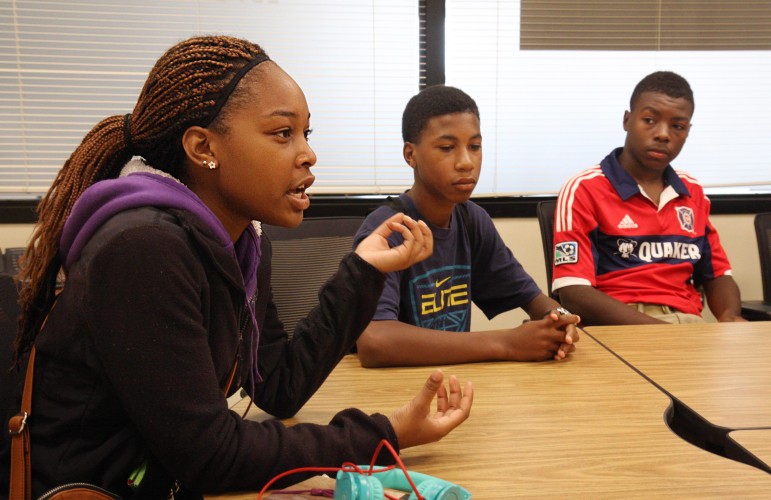
Parents of school students who have long been weary of moving standards have established a system of their own as a hedge against the changing currents in education. Dr. Brenda Williams-Harewood, former principal of PS 20, studied these parents for a dissertation. She compiled a list of students who consistently achieved 3’s and 4’s on state exams and visited their homes and interviewed the parents and their children. She wanted to know the secret of their success and recorded her findings in a book she wrote with James Reed Campbell entitled “Parents as Talent Developers.”

According to Harewood and Campbell, if parents or guardians adopt identified values and practices, they can protect their loved ones from the vicissitudes of the educational system and be assured their children are ready for college or career. Every parent or guardian of elementary school students can implement some or all ninety-two nuggets of wisdom she presents in her book. One “kernel” or value she talks about is getting across the idea, “Your job is school.” If students understood this idea to its core and parents upheld it, students would succeed. When necessary, “Parents should step in when children get their priorities out of line.”

Parents Irmin Wilford and her husband did just that and established their own Wilford Summer Academy. She required her children to read four books, complete an hour of math and a grade-level grammar book. “The rest of the day was theirs.” In high school, the Easter break became Wilford Regents Week. She purchased regents review books for her children to complete. Today, Wilford’s children, a doctor and aspiring lawyer, still laugh about those days in their parent’s academy.

When Ariel graduates in June 2017, she will be the first in her family. Why was she successful? When she looked at a truncated list of Harewood’s kernels, she discovered she was raised on seventeen of twenty of them. Schools are important but “Parents have to pay attention to what’s happening with their children’s education.”

PS 25 Welcomes Spring!

Earlier this month, the entire student body of P.S. 25/The Eubie Blake School participated in a tree-planting on a patch of earth adjacent to the schoolyard. A community leader shared words of hope and books; children’s voices rang out through the neighborhood; and community leaders, corporate representatives and a major nonprofit stood as guardians of the moment with Principal Anita Coley and her staff and faculty.

Perhaps the most poignant moment occurred off-camera. During the last few moments of P.S. 25’s “Salute to Spring”, every child, grades Kdgtn. to 5th, moved forward for the chance to give the two dogwoods — supplied by

community partner the Magnolia Tree Earth Center — water.

In the face of ambivalent, despairing, dream-destroying messages from the Capitol, millions of educators still believe in growing the future; and millions of children believe in planting seeds; millions of families, neighborhoods, public schools understand the value of nourishing faith and positive action in large ways and small. Winston Wharton’s photos tell the story of that special day. This Saturday, June 3, several public schools are hosting open houses.(BG)

Dr. Ronald E. McNair Public School 5 Receives National Principal Leadership Institute School Innovation & Change Award


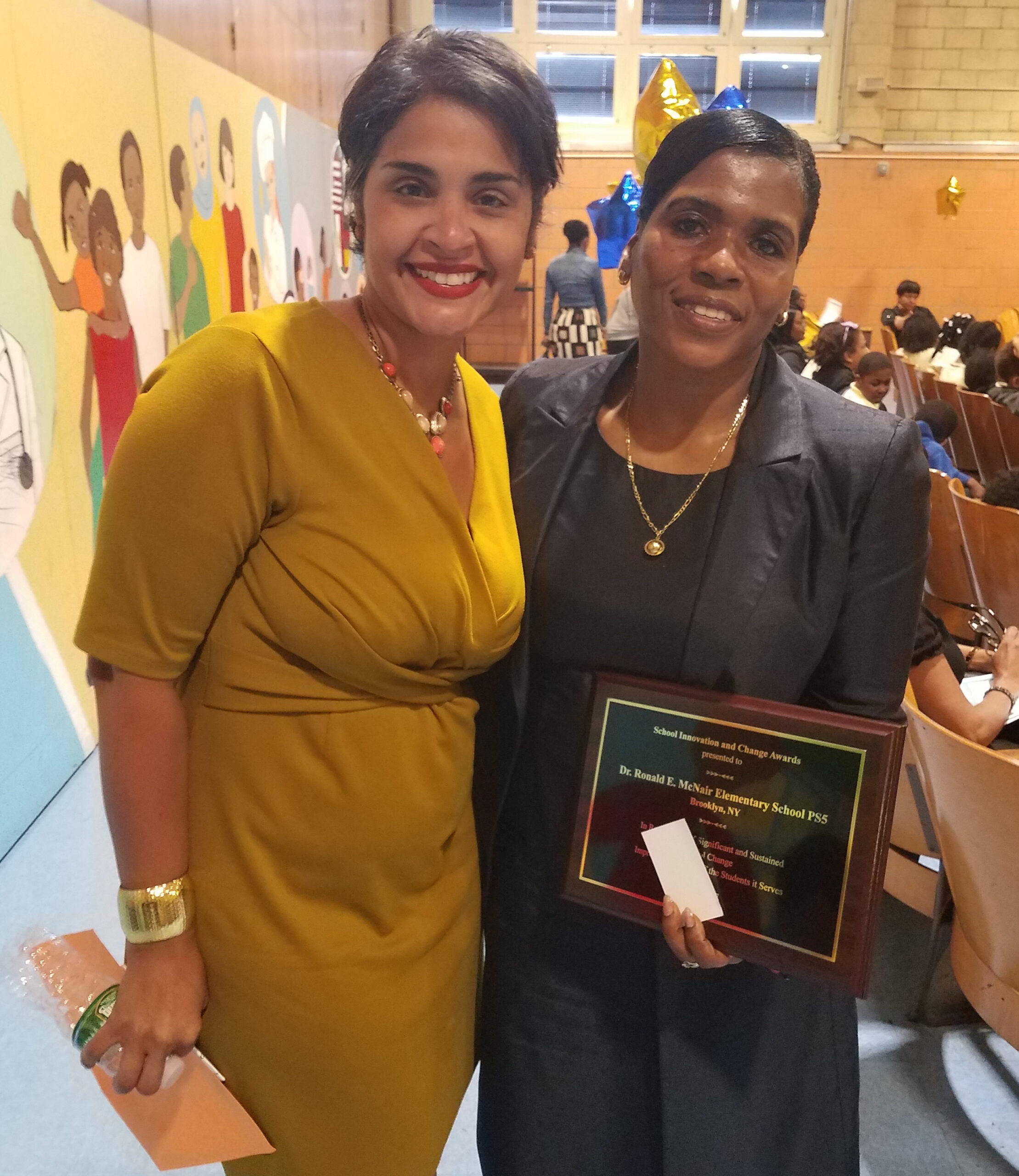
The National Principal Leadership Institute recently presented Dr. Ronald E. McNair Public School 5 with its 2017 School Innovation and Change Award (SICA). “I am tremendously excited about this award today because it is going to a school that is a model of what this award is all about,” shared Dr. Lew Smith. “[Dr. Ronald E. McNair] proved what can be done. He proved it in his own life and the school named after him is proving it as well.” The prestigious award is given annually to recognize schools that rose from underperforming to exemplary. In the 18 years that the award has been in existence over 950 schools from across the 48 states have been awarded. This year, PS5 was 1 of 4 schools to receive the special honor.

The student-led ceremony took place in the school auditorium. It opened with a warm welcome by Ivan DeJesus. Fourth-grade student Ramona Sealy took on the challenge of introducing Dr. Lew Smith and providing the history of the award. Her introduction was proceeded by a formal reading from Adelaide Sanford Oratory Contest participant Cheyenne Walker entitled, “In Honor of Teachers” by Charles Blow.

New York State Senator Velmanette Montgomery was unable to attend. However, she arranged for Community Liaison Jason Salmon to present a proclamation. The honor was followed by a performance by PS5 Dance/Theater Troupe choreographed by dance instructor Chris Cooper and directed by instructor Waliek Crandall. District Superintendent Rahesha Amon was present. She shared with the audience how “committed Principal Gates is to all her students”.

Brooklyn Deputy Borough President Diana Reyna concluded with an exciting announcement that PS5 was selected as one of the schools to receive STEM Education and Technology capital funding of $800K. Attending community leaders included Community Board 3 District Leader Henry Butler, Community Board 3 Chair Richard Flateau, Drs. Renee & Lester Young, Amalgamated Bank’s Andrea Magnus-Thorpe, Material for the Arts Director of Education John Cloud Kaiser and community organizer Melissa Plowden-Norman.

Immediately following the presentation, guests were invited to attend a luncheon where NYC Office of the Mayor, Brooklyn Borough Director Tahirah A. Moore presented Principal Gates with a personalized letter of citation from Mayor de Blasio. “I am proud to join in applauding the ways this vibrant academic community is working towards a brighter future in giving young New Yorkers a gift of education to receive their fullest potential,” stated the citation.

Four years ago PS5, under the leadership of Principal Lena Gates and Assistant Principal Kesha Townsel, set out on a journey to improve the school’s test scores and provide a congenial learning environment for its students and teachers.  With a dedicated staff of educators, committed parents and staff the school joined forces with various community organizations in providing a variety of experiential learning services to its students. This includes the Adelaide Sanford Learning Center that provides peer educational tutoring, a campus book store where students exchange their own McNair Buck currency, dance classes and instructions, a new music program, financial literacy workshops and much more.


Seniors: Home Sharing

BY SELMA JACKSON

What’s old becomes new again. Remember when you moved to New York or you heard stories from your parents about moving to New York? Your relatives would read every letter that you sent back home. They were so intrigued they would ask if they could come to New York and follow in the family members’ footsteps. The family would say sure come on up and stay with us until you can get on your feet. Sometimes you had an extra room or you just made room available in your place to give an opportunity to another family member. That seemed so long ago—bygone days! That was when we were starting out; now in our twilight years, we need that family-friendly support again.

Then I heard the term Home Sharing and I said hmmm! Lo and behold, it’s just a new name and repurposing what we did for family in days gone by!! But now that families are distances apart and individuals are not interested in relocating how do we serve a population in need?

Home Sharing is a program of the New York Foundation for Senior Citizens who have partnered with the Age-Friendly Neighborhood Advisory Board, a group of local leaders whose mission is to help older adults age in place. “For seniors who can no longer afford to remain in their homes, Home Sharing can be an affordable option that will allow them to remain in their community and maintain the ties that bind: friends, church and familiar places of business,” says Richard Trouth, Executive Director of Brooklyn Neighborhood Services. Trouth, along with Michelle Grimes of Quincy Senior Residence and Kenya Johnson of Benenson Capital Partners, are the committee members focused on addressing the housing needs of seniors.

How did they get to this point?

  1. Older adults live on a fixed income, and in most cases, just Social Security.
  2. The cost of living has outpaced the minor increases in Social Security. Seniors find themselves choosing between rent, medicine or food. Their income does not always cover these three basics.
  3. An 18% increase in property taxes on homes is challenging to many older adults. In some cases, properties have been taken over by the government for nonpayment.
  4. Some have applied for senior housing, which offers affordable rents, but the waiting lists are long, as many as three or four years. This waiting list delay is attributed to the baby boomers, coupled with longer life spans of the greatest generation, who are living into their nineties or becoming centurions!!
  5. Finally, family members aren’t around or they are the only surviving member of the family.

For all of the above reasons, Home Sharing becomes a way for individuals who are at risk of losing their residences to remain in a community they call home or have a reentry into Bed-Stuy.

How does this work? Home Sharing is a match of hosts and guests. The hosts are individuals who have extra space either in a home or apartment. They are willing to share with compatible guests.

The guests are individuals who can no longer afford their present housing accommodations. Both hosts and guests are interviewed individually by Home Sharing staff, which includes social workers. Included in the interviews will be financial assessment and social interactions. Think of this as a “marriage”. After hosts and guests are interviewed there is a meeting of both groups and the matches are developed from that meeting.

What does the Home Sharing provide?

¤ Companionship for host and guest

¤ Ability for guests to remain in a longtime neighborhood that feels like home

¤ Affordable rent for guests and modest income for hosts

How can you participate as a host or guest?

  1. If you know someone in need of housing please share this information.
  2. If you have space at your residence please consider offering a guest an opportunity in your home.
  3. Communities continually work at being connected. Home Sharing reminds us to take care of our own.

For more information or to sign up for the Home Sharing program, please call (718) 919-2100 or e-mail rtrouth@bnscdc.org.

View From Here

There is a profound sadness living in this time of Donald Trump, knowing that we will have him, an uncontrollable, dangerous and evil man, occupying valuable space in our consciousness for the foreseeable future, and perhaps for the rest of our lives. We are trapped in his delusions and victims of his tweets until the investigations conclude and we move on to the next level of difficulty, either impeachment and having the sinister Vice President Mike Spence given the power, or he continues in office, continues to tweet and we will continue to fight back. We have to confront the many disasters of his administration, not least of which is his proposed budget. It will never pass, but it does give insight into the essence of the man and his most crafty supporters.

Like the sheriff of Nottingham demanding the serf’s last pig for the king, it doesn’t matter how little you have, this budget demands, in one way or another, that you make do with less. Less health care, less food, less housing, just less in general. It means having to have a side hustle to go with the two jobs that can’t make ends meet, and arguing in the kitchen about not having enough money.

And if you’re rich, it means having more. And to be fair to rich people, they’re all not like DT. He’s a compulsive liar and pathological about money.   He’ll take it from a poor man’s cup and he’ll slit the pockets of a sleeping commuter, but the Russia connection is on a whole different level. Why are so many people around Trump having meetings with Russians and why do they all “forget” to report them?

Were they advising the Russians on how to enhance their efforts on Trump’s behalf? Perhaps Trump’s team was convinced of his losing and were just in it to be paid for the assist in complicating the election and then the plan was to just fade away. But now, like the duo in Mel Brooks’ “The Producers”, they’ve found themselves with a hot potato on their hands and their problems are just beginning.

And soon son-in-law and top presidential advisor Jared Kushner will speak to congressional committees.   And then we will know what assumption of privilege sounds like.