Home Blog Page 756

View From Here

By David Mark Greaves

Health Care’s Three Adversaries

The health care debacle in Washington is because the people are fighting not one, but three adversaries– the insurance industry, those who cater to the rich and the legacy of slavery. Universal Health Care, Medicare for All or single-payer, however you want to call it, is violently objected to by the insurance industry. Because then our health dollars would not be providing the industry profits and paying for all the duplicated CEOs, area managers and their offices.

It’s fought “tooth and nail” by the super-profitable pharmaceutical industry, because they don’t want the government to shop overseas or in Canada for less expensive prescription drugs. And they certainly don’t like negotiating their pricings.

The watchdog group, Public Citizen, reported that pharmaceutical corporations collectively spent more than $150 million lobbying Congress in 2016 and opensecrets.org adds that the insurance industry spent over $147 million in the same year. In a polite society, these dollars are called campaign contributions or issue support, however, in less genteel circles it is known as “grease”, “doing the right thing” or bribery if you can prove it.

What kind of mentality would think it is a good thing to take money from the sick and poor and elderly to give to the already wealthy? A slaveholder would do it without a second thought. The United States is the only country in the industrialized world without a national health program, and the United States is the only country built with slavery in its DNA.

In her dissertation on health care and the slave, “Unfit for Bondage: Disability and African-American Slavery in the United States, 1800-1860”, Dea Hadley writes, “Basically, if they were functional enough to be of any use to the plantation, they were given the tasks they could manage even if those tasks were somewhat small. They were likely treated somewhat like children on the plantation. If they were not useful at all or were a liability, they probably were disabled to the point where their lifespan would naturally be short, whether by illness, lack of the ability to take care of themselves, or accidental death”. In short, when they were of no more use, people were left to die. This was the attitude of the “Planter class” as W.E.B. DuBois called them, and it is the attitude embodied in Republican proposals that the Congressional Budget Office says will force 22 million to go without insurance.

People are fighting back. More and more are finding themselves being relegated to our world, “where their lifespans would naturally be short”, and they don’t like it.

The ranks of the proponents for Universal Health Care will continue to grow as more and more people see the current contortions to make the system work as a mythical Gordian Knot, that only a single-payer sword can cut through.

Congressman John Conyers was prescient with H.R. 676, his Medicare for All Act first introduced in 2003. Maybe now his time has come.

Not Since Pearl Harbor

Not since Japan attacked Pearl Harbor has a foreign power dealt as serious a blow to the American homeland as Russia’s Vladimir Putin. The reaction to the Pearl Harbor attack was one of instant national unification: “A day that will live in infamy” as President Franklin Roosevelt called it. The reaction to the deadly attack on the institution of Democracy itself by the current president, whose victory was the goal of the attack, has been very much different. Either it’s a hoax or it’s Obama’s fault because he should have said something before the election. Of course he did, but was constrained to do more because the Trump/Russian team had put him in a trick bag. Trump would have said, “See, I told you it was rigged!”, as his new slogan and Hillary’s loss, which was her destiny, would have been pinned on Obama and he’d feel inclined to take it. He made the right call.


City Council: Parents Required to Receive Information for DOE Gifted and Talented Programs

Last week the New York City Council unanimously approved Intro 1347, sponsored by Council member Robert E. Cornegy, Jr. (36th District).  The law would require the NYC Department of Education (DOE) to distribute information regarding the DOE’s Gifted and Talented program, exam and application process to the parents of any student enrolled in prekindergarten in a DOE school or in a school that the DOE contracts with to provide prekindergarten by November 1st of each year.

The enacted bill has been sent to Mayor de Blasio for his signature making it NYC’s first legislation enacted into law specifically regarding Gifted & Talented programs.

Brooklyn Borough President Eric Adams stated, “There is a comprehensive solution to this problem [lack of awareness], and passing this legislation is a step toward that solution”.

“During my campaign in 2013, and on my Inauguration Day in January of 2014, it was a priority for me to reintroduce the Gifted & Talented program to Central Brooklyn and other underserved communities around the city. We have lobbied for years, worked with community groups, such as the District 16 Community Education Council, and other lawmakers.  I want to thank my colleagues and other citizens for understanding the importance of educational equity,” stated Council member Cornegy, who also serves as the chair of the Council’s Small Business Committee.


Black Pharmacists Speak Out on Health Care Debate

By Akosua K. Albritton

Two days after the US Senate presented Better Care Reconciliation Act to the US public, this reporter walked along the main thoroughfares of East Flatbush and Flatbush in pursuit of an open pharmacy. Surely, a pharmacist could make sense of a health care policy that would have a far-ranging impact on US citizens’ lives. With the federal subsidy to Medicare set to expire in 2021, millions of low-income Americans will either not have health insurance or insurance that inadequately meets needs.

Louis Jean was behind the plexiglass in his pharmacy on Flatbush Avenue off of Winthrop Street (store name withheld). Mr. Louis described himself as the owner of the pharmacy. When queried about the US Senate’s version of the National Health Care Act, he answered, “So many people will be hurt. With Medicaid going out, many people won’t know what to do”. What he means by “Medicaid going out” is by 2021 the federal government’s financial supplement to Medicaid will expire. Medicaid has been the public medical insurance that covered adults whose incomes are at or below 133 percent of the Federal Poverty Level.

We discussed the estimate that approximately 23 million Americans would be without health insurance coverage. Mr. Jean explained the “23 million estimate was based on the House of Representatives’ health care package. The Senate version is even worse. So many people will be left out because there won’t be Medicaid. People won’t be able to see a doctor or to afford the drugs”.

This gravely impacts Persons Living with HIV/AIDS, high blood pressure and those with diabetes. Jean’s estimation is that “People are going to die. When everyone has insurance, it is better for us; i.e., pharmacies”. His words underscore what President Barack Obama terms “mean-spirited”. When one considers nations such as Canada, France and England have single-payer insurance or “public medicine” and the nationals are adequately served and physicians earn six-digit incomes, it is a wonder why the United States persists with the existing model. When asked about what he thought of the name “Better Care Reconciliation Act”, Jean responded, “I think that the title is inappropriate. It should be Worse Care Reconciliation Act”.

Farther down Flatbush Avenue, off of Clarkson Avenue, was another pharmacy. Pharmacist Jackie Bissah agreed to share her perspective on the US Senate’s proposal. Ms. Bissah explained that she had read the New York Times’ summary of the 142-page document over night. Therefore, it was fresh in her mind.

With little prompting Bissah said, “It seems as though they really don’t care about most people in this country, especially those who are poor and sick. With the Affordable Care Act (ACA), Congress never really wanted us to have health insurance. With this one, they are trying to present it as costing less but this is by taking a lot of meat out of it”. What is the “meat” that Bissah refers to? “It is taking out maternity care, mental health services and opiate dependence treatment.” Bissah characterized it as “costing more for seniors, giving money to the rich—Donald Trump’s cronies. The rich are getting more tax breaks. ACA had the rich pay for the subsidies but now that won’t be the case”.

Ms. Bissah’s response to the question: “What is your impression of the name Better Care Reconciliation Act?” She blurted, “Egotistical…I think it is a joke”. In a world of sound bites, New York Minutes and news flashes, reading and reading for meaning is a lost practice for too many Americans. This short attention span and lack of critical analysis is Bissah’s other concern who explained:

“A lot of people will not read. Rather, whatever they hear on the news, they will accept it and sign up for it. For example, [it will be lost to the American public] that they are trying to make contraceptives an over-the-counter purchase as opposed to prescription.” This means people will pay out-of-pocket rather than through an insurance plan.

Returning to the “need to read” and do one’s own research, Bissah closed by saying, “People need to get the facts by going to secondary and tertiary sources. People are kind of lazy relying on one favorite source…people aren’t going to read the bill”. She may be indeed correct. Search engine optimization operates under the premise that people focus on the first page of results and stop looking after the tenth page of results. It is common to hold one news source above the rest. For some, CNN and C-SPAN are the gospel. Other people go with PBS News Hour or FOX News. Then there are those who take The Gospel as the gospel.

Providing affordable, quality health care is an issue with which the US Government has wrestled for decades. US Rep. John Conyers, Jr. (D-MI, 13) and US Sen. Ted Kennedy have been proponents of it for decades. Again, if such developed nations as Canada, France and England offer it to their citizens and Cuba’s democratic centralist political system can cover its population, what impedes the United States Government from doing so? Some say it is the big white elephant that rambles starkly in and out of the chambers on Capitol Hill. Some say it is the insurance industry lobby. Michael Moore produced, in 2007, a documentary entitled Sicko, which included a segment that listed the amount of donations given to several politicians that included the then-US President.

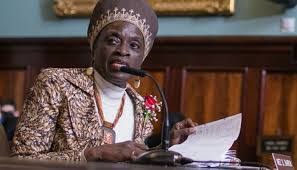
Council Member Inez Barron’s Statement on Proposed CUNY Tuition Hikes

I am adamantly opposed to any and all tuition hikes for students. Masking the gravity of this issue is Governor Cuomo’s Excelsior Scholarship Program, which is being sold to the public as “Free Tuition” to public colleges – it is not. Free tuition, as historically defined, when public colleges had few students of color, meant free tuition came with acceptance to the college – period.

The state budget agreement has in it an annual $200 tuition hike for the next four years. Contradictorily, Governor Cuomo says out of one side of his mouth, “free tuition”, then out of the other side, “raise tuition”. This is clear hypocrisy.

I am calling on you as the Board of Trustees to exercise your power and reject the call to impose any additional financial burdens on students. CUNY family average income is low according to your own documents. Although low-income CUNY students get tuition assistance from TAP and Pell grants, they still need assistance to pay for exorbitant nontuition costs; i.e., textbooks, fees, supplies, room and board, transportation, food and child care, which oftentimes can be twice the cost of tuition.

Many CUNY working students and parent students are excluded from the Excelsior Scholarship Program due to the necessity to work and provide for their families.  These students can only attend school part-time. These low-income students and others would experience raises in their tuition. This is unacceptable. Students should not have to bear the burden of the costs of operations and staff salaries by paying tuition to subsidize these costs.  It is the responsibility of the state to adequately fund the public institutions of higher education.  We know that in the workplace of the coming decade, post-secondary education is to be a requirement for jobs that provide a living wage. Attaining a post-secondary degree is a way to gain entry into the moderate- and middle-income groups.

-Council Member Inez Barron


The Bedford-Stuyvesant Family Health Center CEO, Patricia Fernandez, receives coveted Award.

By Eulene Inniss

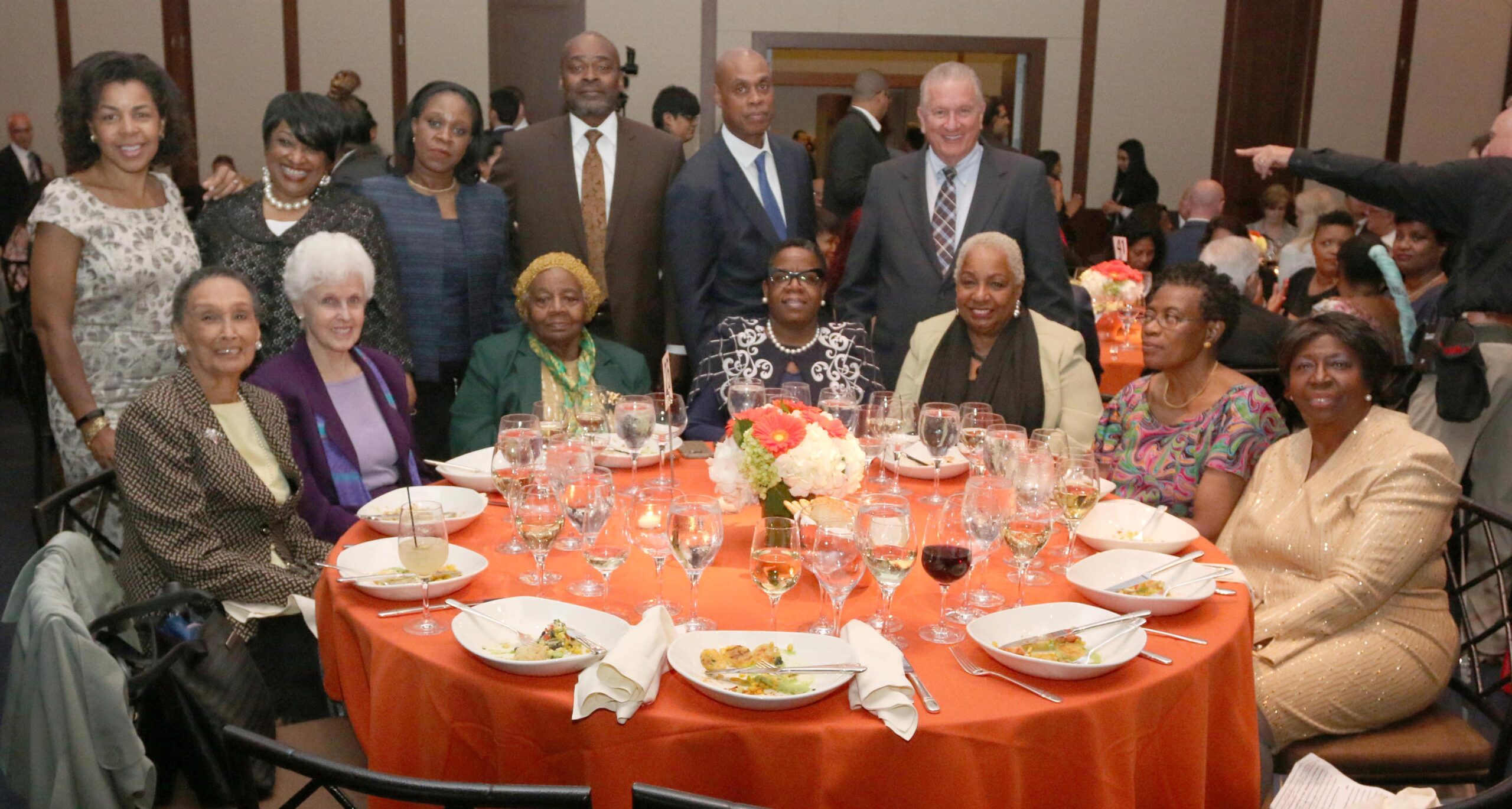
The Primary Care Development Corporation (PCDC) held its 24th Annual Spring Gala at the enchanting Pier 60 in Chelsea on June 5th and honored BSFHC President/CEO Patricia R. Fernandez with the Excellence in Primary Care Award.

PCDC is a national community development financial institution with a history of over twenty years of investing in communities which need them the most. To date, it has invested more than $815 million in such communities. It empowers selected exemplary Primary Care organizations through capacity-building and strategic investment.

This recognition of BSFHC’s CEO was no small feat. It is a testament to the yeoman’s job Ms. Fernandez and her staff has done to highlight the accomplishments of BSFHC as they developed a blockbuster critical care center in the community to address the varied health challenges.

There was wall-to-wall support for Ms. Fernandez and the other two honorees: L. Reuven Pasternak, MD and CEO, Stony Brook University Hospital and Harvey C. Sigelbaum, JD- Senior Advisor, the Riverside Company, first-ever PCDC Lifetime Achievement Award recipient. The BSFHC Board of Directors, staff and community were there as proud representatives congratulating their consummate leader, Ms. Fernandez.

Ms. Fernandez’s success story is one that intertwines with the rigid demands of parenthood, personal drive and ambition. She migrated from her native Trinidad approximately twenty-five years ago and worked herself up from a Medical Assistant to her current CEO position.

Ms. Jean Caston-Black, Chair, Board of Directors of BSFHC, in her introduction of Ms. Fernandez and described her as a “pioneer and maverick in health care, instrumental in transforming the center from a state of bankruptcy to a state-of-the-art new building at 1456 Fulton Street in the hub of the community. Through her leadership, strength, tenacity and dedication, she earned the respect and unshakable trust of her staff, who voluntarily took pay cuts and stayed during the difficult financial period because the community needed them”. Ms. Black also presented Ms. Fernandez with a Certificate of Recognition from the Honorable Bill de Blasio, Mayor of New York City.

Ms. Fernandez believes that her experience as an immigrant, working her way through college, gave her better insight into the needs and struggles of the community she serves. She states that she “understands what’s best for the community. I know the heartbeat and culture of the institutions; BSFHC’s staff is modest, compassionate and determined. We moved from a cramped building to a state-of-the-art location. PCDC established a relationship with BSFHC, and although the road was rocky in the beginning, they took risks and BSFHC was granted its second-largest loan to an organization. They understood the unique needs of the community. I am overwhelmed and blessed to deliver quality health care to everyone who enters our doors”. She concluded.

Quality health care intricately intertwines with the living conditions and survival of a community. As stewards of public health and public trust, BSFHC is fulfilling its mission. Ms. Fernandez’s leadership is the key.