Home Blog Page 744

Cracks in the System: Dorla and Erma Alleyne’s Story


Three years ago, Our Time Press began publishing stories of Central Brooklyn property owners whose homes were damaged by contractor’s work on adjacent buildings.

Photo: Barry L. Mason

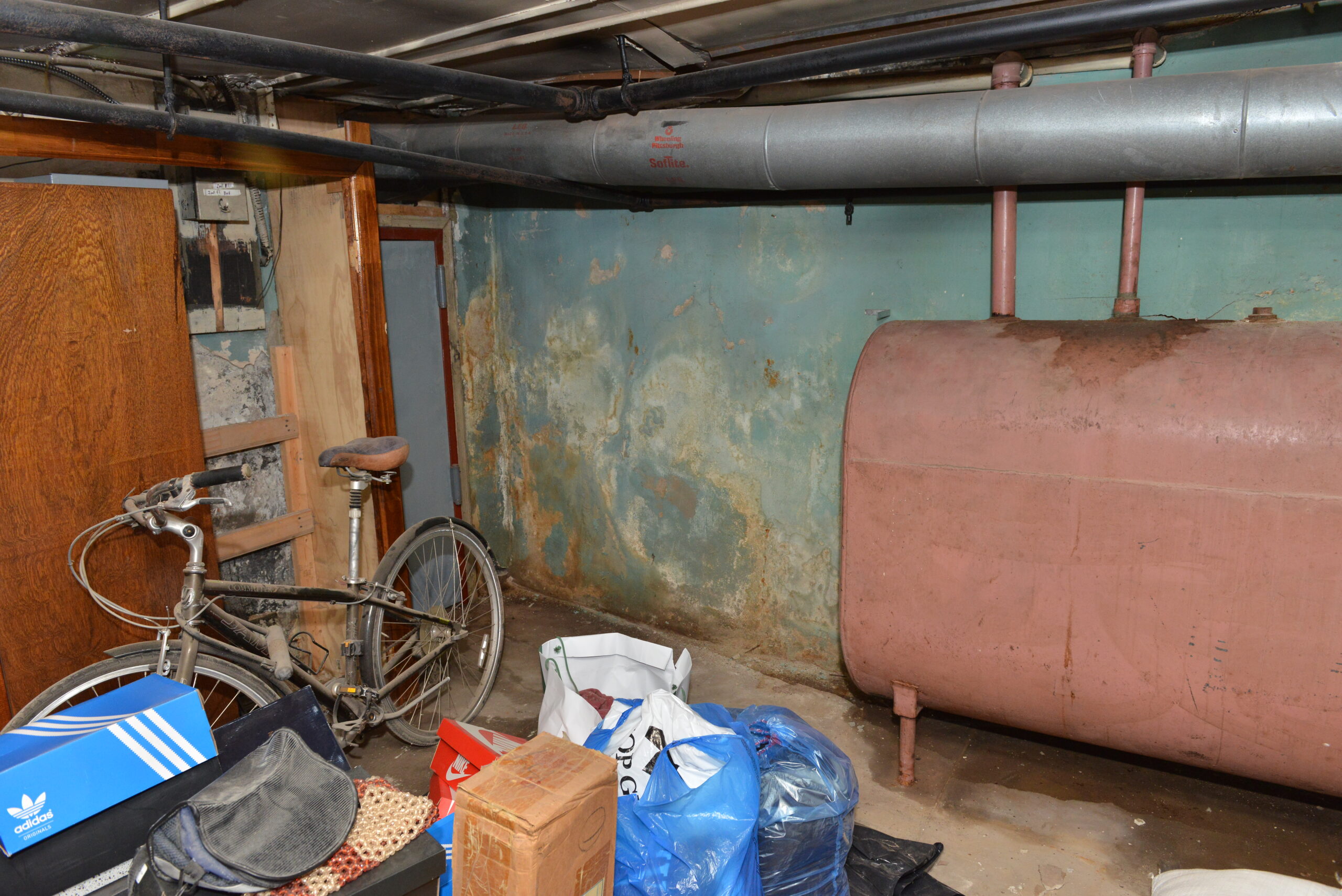
We still receive phone calls from renters and owners, reeling from and sometimes fearful of, the power of dirty developers who break laws, get away with “accidentals”: holes in the wall, the busted pipe releasing water into basements, sometimes foot-long and inches-wide cracks running down interior and exterior walls; foundations loosed (due to hard drilling and massive pounding) from bedrock.

When city agents inspect damage done, the victim is asked if the problem was a fault of the owner’s own negligence. In other words, “prove it”.

Complaints about real estate developers’ “injustices” and misdeeds, they said then, were falling on deaf ears, and blame is still placed, quietly but squarely, as it was three years ago, on the politicians who rely on campaign support by big real estate interests.

Meanwhile, some complainants then still “live with” offenses to their residences. Others resort to the contractor’s “sloppy repairs” or inadequate compensation of damages. Some have bowed to the last resort of selling their homes.

But not Dorla Alleyne, 67, and her mother Erma Alleyne, 91, owners of 434 Lafayette Avenue.

They are “very stressed and distraught about the {ongoing demolition and excavation activity started next door at 436} in 2015”.   Here’s just a partial list of reasons:

1- Wall and floor separations from the cellar to the 1st and 2nd floors at the adjacent property at 434 Lafayette Avenue,

2- Water entering the cellar during rain- and snowfall,

3- Gas line separation at the property line under the stove causing a leak for which we were responsible for the repairs,

4- Crater in the backyard causing the cement and soil to separate toward 436 Lafayette Avenue,

5- Inability to plant our usual crops and flowers due to a large crater in the backyard,

6- Some of the cracks in the wall appear too bewildering,

7- A large crater has not been repaired.

And that’s just for starters.

Dorla says she has “been verbally and physically” attacked by the manager at the 436 construction site. Although they are “intermittently housed by friends”, they will not give up on 434.

They are not only armed with powerful lawyers ready to do battle, they are strengthened by a resolve grown out of their own family connection to Marcus Garvey. But let’s start with Dorla Alleyne’s story, in her own words.

Below is what you submitted to DOI on Monday, May 22, 2017 at 13:10:22

January 27, 2015: Complaint to the Department of Buildings:

On 1/18/2015, water flooded into basement of 434 Lafayette from property at 436 Lafayette. The Fire Dept.78 Ladder 102 was contacted and they inspected 434 Lafayette where they witnessed the water flooding through the wall into the basement. Upon later inspecting the lot at 436 Lafayette, they indicated that the source was either a broken pipe at 436 or pooled water which they saw accumulated on said property which was coming through the wall into 434. DEP rep Joe visited two days later and witnessed men working in the 436 lot but they ran inside when he approached. He inspected basement at 434 where he saw water marks on the wall and the ground at the 90-degree angle but none running through the basement. He stated that he could do nothing at that time as it was no longer running through. He advised that I should call once the water is running again through the basement again.

May 22, 2017: Complaint to the Department of Investigation:

Until a call to the excavation unit a week ago, no inspector from DOB has visited the site at 434 Lafayette Avenue to assess complaints related to damage to its exposure 4 wall, chimney and cellar during demolition and excavation work at 436 Lafayette Avenue. Water continues to drain into the cellar at 434 Lafayette from 436 Lafayette Avenue during rain and snow. Stop work orders were lifted and new permits were issued for resumption of excavation and construction activity. This has caused an additional separation of the soil and concrete which are sliding towards 436 Lafayette adjacent at the back wall of the house extending more than 25 feet into the backyard as well as a wall separation at the southern border of exposure 4 wall.

Complaint to Congressional Representative:

434 Lafayette Ave. compromised foundation and walls

Your assistance is requested in addressing the following damages to property of senior citizens 91 & 67 yrs. old:

– Since demolition of adjacent property at 436 Lafayette, water has consistently drained in my cellar when there is snow or rain,

– Sunlight can be seen from the cellar along that exposure 4 wall,

-When 911 was contacted re:damages, the owner came and offered to buy the property and blasted us for making the call,

– Increased accumulation of mold along damaged wall,

– Wall cracks along wall have not been repaired,

-DOB has been notified since initial damage and during water drainage … into cellar,

– Sunlight can be seen from the cellar along that exposure 4 wall.


Please assist us in preventing further damage to our property and achieving appropriate repairs and remuneration.   Respectfully, Dorla and Erma Alleyne


August 8, 2017: Complaint to the Office of the Brooklyn Borough President

Re: Failure to Repair Seniors’ Property Damages

My name is Dorla M. Alleyne, 67 yrs. old, and my mother, Erma Alleyne, 91 yrs. old. Together, we own and live at 434 Lafayette for the past 22 years. Because of your observable interest in the well-being of the community you serve, we are requesting your assistance with the following:

First, I want to thank P.O.’s Rivero and Santos (79th Pct.), who after a 911 call, the workers at the 436 site admitted to them that they had entered our premises and removed the cement blocks to another site. They ordered them to return them (the cement blocks) to the original site and advised them of having trespassed on our premises. 5/9/17

Also thanks to P.O.’s Calhoun and Chatterton (79th Pct.), who after a 911 call, upon seeing the destruction, which now included my backyard and separation of the kitchen floor and walls, Chatterton placed a call and DOB inspectors came to the premises. 5/31/17

On 6/6/2017, Dorla was physically and verbally assaulted by the manager of the construction site at 436 Lafayette Avenue while I stood at the entry door speaking with my neighbor Mr. Pinnock. This occurred moments after building inspectors had left the premises. He stated during the assault: “What do you want out of this, what do you think you are going to get out of this; if you think this building is not going up, I have news for you, it is going up, you people think you control this place.”

911 was contacted, Officers Navarro and Manley responded. However, they did not submit a report to the 79th Pct. per Desk Officer on 6/7/2017. They had stated then that, “This is harassment, not an assault, where is the injury”? Upon submitting her report of injury, Detective Moody took the case. He took photographs of property damages. The perpetrator was ultimately arrested and charged with a felony.

– Several of their building managers, including the owner, David Snir, have entered our premises at different times and took photographs since the damages began in 2014. They made promises to repair them “after we are finished with our construction”.

Since 2014, several 311 and 911 calls, visits to the DOB on Joralemon, as well as e-mails to the DOB and the commissioner were made, however, none of the DOB inspector visits included premises at 434 Lafayette. Police officer interventions in May 2017 were instrumental in securing active inspector visits to our site.

-After the initial complaint in 2015, David Snir came to our house and while in the foyer stated, “What the f..k are you calling the city for, you are not getting anything out of it, only call us”. He was asked to leave and while going down the front steps asked, “How much do you want for your building”?

DOB inspector Annam of 2 Lafayette St. informed us that, “We cannot force them to do the repairs to your building or comply with our order to waterproof your exposure 2 wall as they were directed in one of the violations. If they don’t agree with your engineer’s report you will have to fix it and then litigate”.

WE LOOK FORWARD TO YOUR OFFICE’S INTERVENTION TO ENSURE JUSTICE IS SERVED AND WE ARE NOT DISPLACED AS HAS BEEN THE CASE FOR OTHER SENIORS.

RESPECTFULLY, ERMA AND DORLA M. ALLEYNE  

My attorney, Leonard Stewart, has contacted the owner David Snir’s attorney and has not received a response.

(Next week: Dorla Alleyne offers a message to the public.)


Speaking Truth: Why We Support Kaepernick

by Sgt. Edwin Raymond

(Part II of a series, Cops Support Kaepernick)

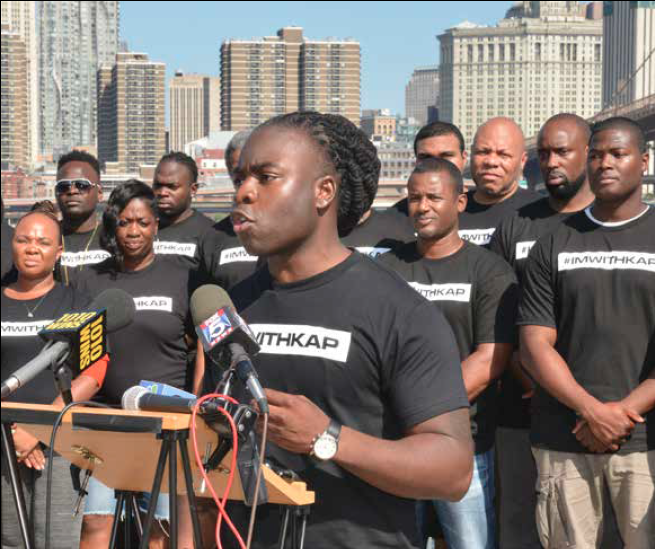
Members of the NYPD, including retired police officers, gathered in Brooklyn Bridge Park on Saturday, August 19 in support for Colin Kaepernick, former quarterback for the San Francisco 49ers.

Organized by Sgt. Edwin Raymond, the rally featured speeches from City Councilman Jumaane Williams, the legendary Frank Serpico and others. They wore black T-shirts reading #IMWITHKAP, with Williams in the red Kaepernick “T” in their message to the world about “Kap”, who has been penalized by the NFL for sitting out the national anthem as a way of protesting police brutality and the oppression of minorities.

The football great told NFL.com in August, “To me, this is bigger than football and it would be selfish on my part to look the other way. There are bodies in the street and people getting paid leave and getting away with murder”.

At the Brooklyn rally, Sgt. Raymond said the cops who are in support of Kaepernick are also standing for the justice in America they have pledged to protect.

“What Colin Kaepernick did is try to bring awareness to an issue that this nation, unfortunately, has ignored for far too long, and that’s the issue of racism in America and policing in America.

“We decided to gather because the way he’s being railroaded for speaking the obvious truth … is not what America is founded on.

“Someone may argue …   that this country was actually founded on challenging injustice.

“As members of law enforcement, we can confirm that the issues he is saying exist in policing throughout the nation’s criminal justice system indeed exist. That is why we support him. As a nation, we have this habit of vindicating people in hindsight. Ali was vindicated in hindsight. Rosa Parks was vindicated in hindsight.

With Colin Kaepernick, we have an opportunity to respect the work as it is happening in the present. We shouldn’t have to wait 20 years to understand the importance of what this man is trying to do. We shouldn’t even have to be here doing this.

 When you see what’s transpiring in Charlottesville and throughout the nation, that’s the bigger version of what Colin Kaepernick is trying to fight against. When you take that type of bigotry and the residue of bigotry and couple it with policing, every so often everything aligns itself and someone pays with their life. Their lives.

So we’re here to support Colin Kaepernick and to let people know that if you want to say he’s anticop, what do you have to say about all of these cops standing here in support of his message.”

Next week, Councilman Jumaane Williams, 46th District.

WHAT’S GOING ON

NEW YORK

NYC residents should know their September 12th Primary polling sites and should be reading the ELECTION AT A GLANCE booklet, which was mailed.   Life becomes unbearable for registered voters for the next two weeks. Look out for robocalls, TV commercials, text messages, media smear stories and all things that attend the September Primary circus. There are not primary elections for uncontested offices like NYC Comptroller and Manhattan Borough President.

ARTS/CULTURE

The Harlem-based National Black Programming Consortium (NBPC) was named a grant recipient of the John D. and Catherine T. MacArthur Foundation to support its 360 incubator + Fund and its newest initiative WOKE!–Broadening Access to Black Public Media. The $750,000 grant is from the MacArthur Journalism and Media Program.   WOKE! is a NBPC initiative aimed at helping storytellers of color working in nonfiction and emerging media.  [Visit blackpublicmedia.org]

Biggest revenues champ last weekend was the Floyd Mayweather and Conor McGregor fight which, according to conservative estimates, generated at least $500 million in pay-per-view USA sales. Guestimates of Mayweather’s take from the fight is $150+ million. Mayweather retires again. His record of 50-0 eclipsed Rocky Marciano’s record of 49-0.

The American Book Awards observes excellence in American literature. The Flores Forbes book, “Invisible Men: A Contemporary Slave Narrative in the Era of Mass Incarceration”, by Skyhouse Publishing, is one of the ABA’s 2017 awardees.

MEDIA MATTERS

Everyone’s talking about the 8/22 NY Times story, MARTHA’S VINEYARD HAS A NOURISHING MAGIC FOR BLACK AMERICA, a glimpse into the lives of the islands’ elite African-American population, many of whom are my NY friends.   The essay intrudes into a summer afternoon at culinary historian/author Jessica Harris, Ph.D., who hosted a “five to seven” soiree on her MV porch, which filled with local muckady mucks like Martha Mae Jones, a fashion designer and fine artist, and Abigail McGrath, founder of Renaissance House writer’s retreat on MV. McGrath is the daughter of Harlem Renaissance poet Helene Johnson and the niece of Dorothy West, who wrote the novel THE WEDDING, which was inspired by Abigail’s nuptials some 50 years ago on MV. Harris is the author of 12 books. Her latest, MY SOUL LOOKS BACK, A Memoir, revisits her life during the 70s and beyond when she did New York’s disco scene and fraternized with literati like Jimmy Baldwin, Toni Morrison and Maya Angelou in France, Africa and all over the United States.

Jessica B Harris

Black Lives Matter advocate Shaun King leaves the NY Daily News as its senior justice writer, another name for resident Black Matters writer. He becomes a writer-in-residence at the Harvard University-based Fair Punishment Project.

EDUCATION NEWS

Howard University appointed James Comey the 2017 Opening Convocation Keynote Speaker and the 2017-2018 Gwendolyn S. and Colbert I. King Endowed Chair in Public Policy. As holder of the King Chair, Attorney Comey will lead and conduct five lectures featuring speakers who will hold forth on a variety of topics. Comey will donate his entire King Chair $100,000 salary to a Howard University fund. Howard is one of America’s most prestigious HBCUs(Historically Black Colleges and Universities). The former director of the FBI, nominated by President Obama, who was dismissed by President Trump, James Comey has gotten several job offers by law firms and he has signed a book deal.

The Nigerian Higher Education Foundation will host its Annual Benefit Gala Awards Ceremony on September 20 at the Pierre Hotel, Manhattan. The 2017 NHEF honorees include Beatrice Hamza-Bassey, Atlas Mara Limited General Counsel; Teresa Clarke, Africa.com, Chairman/CEO/Executive Editor; Jay Ireland, General Electric Africa, President/CEO; and George Ogedegbe, NYU College of Global Public Health Vice Dean. [Visit Thenhef.org]

SEPTEMBER CALENDAR

 September in New York is synonymous with the West Indian Day Parade, Harlem Fashion Week, NY Fashion Week, the autumnal equinox, the Africa America Institute Annual Gala and birthday celebrations for zodiac natives of Virgo and Libra.

 The month opens with the West Indian Day Parade on Labor Day, September 4 in Brooklyn along Eastern Parkway, which celebrates its 50th year.    A rite of passage for the New York City Caribbean-American population, the parade attracts participants from as far south as Guyana, Suriname and Brazil, and draws at least 2 million viewers. Carnival festivities usually begins in late August, on the Thursday before Labor Day, spilling over into local clubs where bacchanal and Caribbean culture hover over the proceedings. The Labor Day Carnival Parade, preceded by J’Ouvert, (which means “I open” or contextually, “daybreak” in French) where streets that border on the parade route are lined with vendors selling foods and Caribbean objets d’art, used to begin around midnight. J’Ouvert 2017 will begin at sunrise.    

West Indian Carnival tradition began in Harlem in the 30s and was held indoors (coincidentally) with the actual Caribbean Carnival days, two days before Lent. In the 40s, the West Indian Carnival got a street permit and continued in Harlem through the mid-60s until it found a new home in Brooklyn. The real beneficiary of the West Indian Carnival is New York City’s hospitality industries. Carnival generates tens of millions of dollars during the Labor Day Weekend! [Visit wiadcacarnival.org]

Celebrate the West Indian Carnival Culture in Harlem at the Cove Lounge, located at 325 Lenox Avenue on August 31 from 6 pm and the Schomburg Center for Research in Black Culture on September 1 at 6 pm.

Hold the date September 9/10 for HARLEM FASHION WEEK and enjoy many of the trappings of downtown’s NY Fashion Week somewhere uptown.   HFW begins with an Opening Night Charity Gala at the Hamilton Landmark Galleries. HFW also boasts a Business of Fashion Symposium.  HFW culminates with a runway fashion extravaganza at the Museum of the City of New York.   HFW is the brainchild of indefatigable mom/daughter-style doyennes Tandra Birkett and Yvonne Jewnell, who are founders of the fashion design company Yvonne Jewnell New York. [Visit HarlemFW.com] 

The Black Women of Influence will host its 10th Anniversary Trailblazers Summit and Luncheon, a celebration of professional women “who are little-known but doing great things”, on September 23, 9:30 am to 5 pm at the W Hotel, located at 541 Lexington Avenue, Manhattan. The 2017 BWOI Trailblazers include Thusand Duckett, Adrienne Gonzalez, Rhonda Joy McClean and Vera A. Moore, cosmetics entrepreneur. [Visit Blackwomenofinfluence.com]

The One Brooklyn Fund is a city-affiliated nonprofit which originated in the Office of the Brooklyn Borough President Eric Adams, which promotes the collaboration and engagement among the borough’s diverse communities through events, programs and services. The One Brooklyn Fund’s Board of Directors will host its inaugural gala on Wednesday, September 27 at 7 pm at the Brooklyn Museum and will honor achievements of the borough’s “cornerstone” businesses which has served the community for upwards of 50 years. [Visit onebrooklynfund.org]

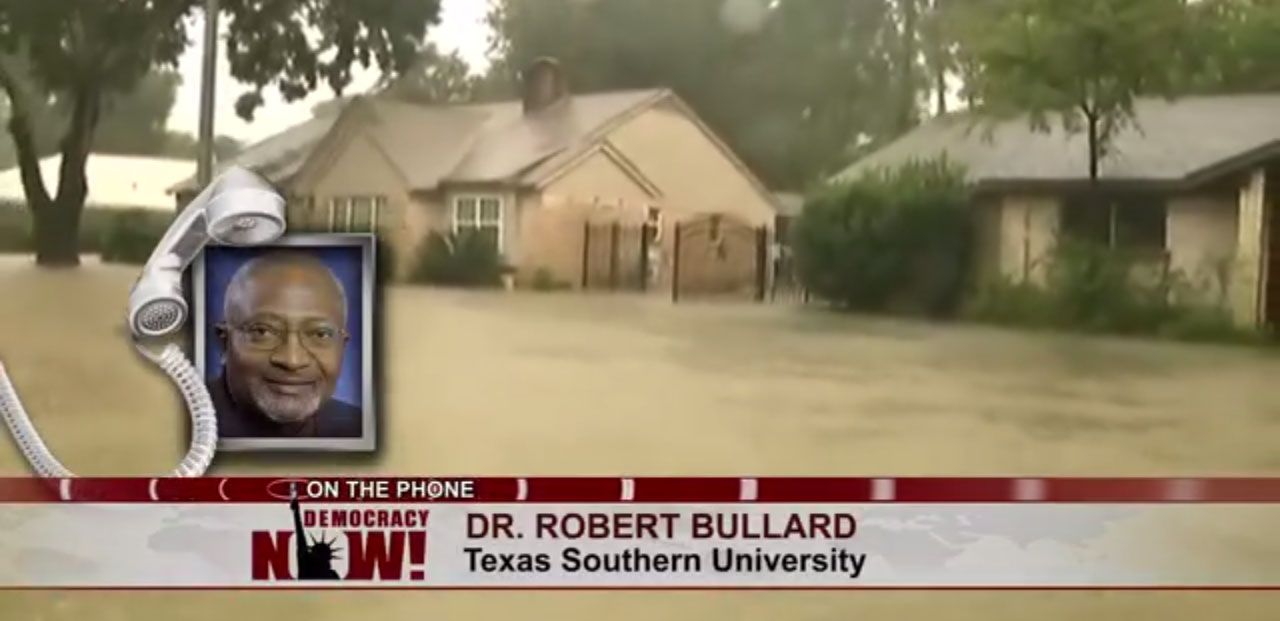
Dr. Robert Bullard: Houston’s “Unrestrained Capitalism” Made Harvey “Catastrophe Waiting to Happen”

“I’ve lost everything.” “I’ve lost everything I owned.” “Only the clothes on our backs.” These are the words of tens of thousands of Texans whose lives have been instantly changed forever by Hurricane Harvey, the storm the National Hurricane Center is now calling the biggest on record. Wet, hungry, tired and dependent on the army of officials and volunteers, life will now be marked and divided between pre- and post-Harvey. For now, they are in despair, facing rebuilding from scratch and standing as yet another warning of the future coming for millions more because as the seas get warmer, they evaporate faster, as the air gets warmer it holds more water and reports are that over 15 trillion gallons has already fallen on Texas and more will be coming in the years ahead.

Disasters strike especially hard on the poor and those who historically have had less. Dr. Robert Bullard, known as the “father of environmental justice”, was interviewed on Democracy Now! by Amy Goodman and Juan Gonzalez. Dr. Bullard is a distinguished professor at Texas Southern University and former director of the Environmental Justice Resource Center at Clark Atlanta University. Dr. Bullard was interviewed by phone from his home in Houston, which he was to be evacuating right after he spoke as the floodwaters were still rising at the Brazos River. Below are excerpts from two interviews, seen in their entirety at: www.democracynow.org DG

AMY GOODMAN: Professor Bullard, thanks so much for being with us. Can you talk about the situation you are in and so many people in Houston are in right now? Describe the scene for us. And then, how you relate it to your life’s work, to the issue of climate change and environmental justice.

  1. ROBERT BULLARD:Harvey and the aftermath, the flooding of Houston and the surrounding areas, it’s of biblical proportions. This is a nightmare. And the images that you see on television and you hear the voices of people who have been just totally destroyed. And this is a situation where I think it’s telling us that we have to change.
    We have to change the way we do business and the way that we as humans interact with our environment.

And this is basically the situation where this storm, this flooding of this city, tells us that there is no place that is immune from devastation. I worked in New Orleans in the flooding after Katrina. New Orleans was only 500,000 people. Houston is 2.3 million people. And then you look at the surrounding areas. You’re talking 5.5 or almost 6 million people. It is historical proportions.

JUAN GONZÁLEZ: And Dr. Bullard, to what degree do you think unchecked development by Houston’s officials over the past several decades has created an even worse possibility for calamity when a natural disaster like this hits?

  1. ROBERT BULLARD:Well, Houston is actually—was a catastrophe waiting to happen, given the fact you have unrestrained capitalism, no zoning, laissez-faire regulations when it comes to control of the very industries that have created lots of problems in terms of greenhouse gases and other industrial pollution. The impact that basically has been ignored for many years.
    And so the fact that—it is a disaster, but it is a very predictable disaster.

And those communities that historically have borne the burden of environmental pollution and contamination from these many industries at the same time are the very communities that are bearing disproportionally the burden of this flooding. So you get this preexisting condition of inequality before the storm, and this inequality in terms of how people are able to address this disaster because of vulnerability. And I think what we have to do is look at lessons—well, not learn from Katrina in terms of the rebuilding, redevelopment and recovery.

JUAN GONZÁLEZ: There has been quite a bit of second-guessing of Mayor Sylvester Turner’s decision not to call for an evacuation of the city. I am wondering what is your take on that, especially given what happened with Hurricane—was it Rita?—a couple of years ago when there was an evacuation effort made, but more people ended up dying—about 100 people—in the gridlock that occurred as people tried to leave a city as large as Houston.

  1. ROBERT BULLARD:Well, it is easy to second-guess, but the fact is that trying to evacuate 2.3 million people on these highways is almost a task that is impossible. And so I don’t think there was anything that you can say, “Well, why is it that the mayor and the county judge decided to go this way?” When you look at the problems of logistics and trying to move this many people on these highways getting out of the city, that probably was not a good choice to make.

So I think the decision to have people shelter in place—and no one could predict what happened afterwards. So I think the best that we can do now, instead of pointing fingers, is pointing to solutions and pointing to ways that we can address the many problems and challenges that we face today. And having to evacuate and leave your home and go out there and not know what is ahead of you. You have your life, and I am blessed that—when you see those images, you can see that this is pain.

AMY GOODMAN: Dr. Bullard, I want to talk about this issue of justice. You live in the fourth-largest city in the country, Houston. The most diverse city in the country, Houston. And it is the “petro-metro”. That’s right, the Houston area is home to more than a dozen oil refineries. The group Air Alliance Houston of warning the shutdown of the petrochemical plants will send more than a million pounds of harmful pollution into the air. Residents of Houston’s industrial communities already reporting unbearable chemical-like smells coming from the many plants nearby.

Yesterday, we interviewed Bryan Parras with the group t.e.j.a.s., the environmental justice group, who said, “Fenceline communities can’t leave or evacuate, so they are literally getting gassed by these chemicals”.

Can you talk about the significance of where people live and the disproportionate impact of climate change on communities of color and poorer communities?

  1. ROBERTBULLARD: Well, the best predictor of health and well-being in our society, and including Houston, is ZIP Code. You tell me your ZIP Code, I can tell you how healthy you are. And one of the best predictors of environmental vulnerability is ZIP Code and race. And all communities are not created equal. Houston’s people of color communities historically have borne the burden for environmental pollution, and also the impact of flooding and other kinds of natural and man-made disasters.

When we talk about the impact of sea level rise and we talk about the impacts of climate change, you’re talking about a disproportionate impact on communities of color, on poor people, on people who don’t have health insurance, communities that don’t have access to food and grocery stores. So you talk about mapping vulnerability and mapping this disaster and the impact, not just the loss of housing and loss of jobs, but also the impact of having pollution and these spills, and the oil and chemicals going into the water, and who is living closest to these hazards?

Historically, even before Harvey, before this storm, before this flood, people of color in Houston bore a disproportionate burden of having to live next to, surrounded by, these very dangerous chemicals. And so you talk about these chemical hotspots, these sacrifice zones. Those are the communities that are people of color.

Houston is the fourth-largest city, but it’s the only city that does not have zoning. And what it has is—communities of color and poor communities have been unofficially zoned as compatible with pollution. And we say that is—we have a name for it. We call that environmental injustice and environmental racism. It is that plain and it’s just that simple.

And so this flood in Houston is exacerbating existing disparities, so that is why I say we have to talk about—when we talk about moving past the flooding part and moving to cleanup and recovery and rebuilding, we have to build in environmental and economic justice into that formula. Otherwise, we will be rebuilding on inequity. We say that’s unacceptable.


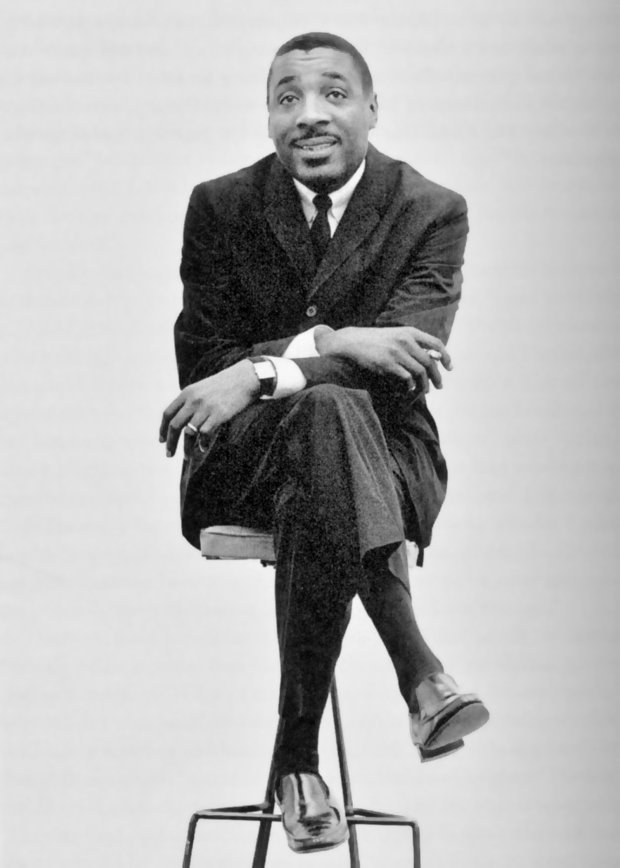
Comedian and Civil Rights Activist Dick Gregory Dead at 84

By Monée Fields-White www.theroot.com

Comedian Dick Gregory—who attacked racism through a biting and satirical style of comedy, and was equally well-known for his civil rights activism and advocacy of an austere health regimen—died Saturday, Aug. 19 at the age of 84. Gregory’s family confirmed his death with a post on Instagram.

Dick Gregory in Greenwood, Miss, April 2, 1963 getting
pushed by police after a voter registration protest.
Only one of Dick Gregory’s many arrests.

Born Oct. 12, 1932 in St. Louis, Gregory grew up in an impoverished community in that city. He helped to support his family from an early age. In high school, he excelled in track and field, earning a scholarship to Southern Illinois University at Carbondale. He set school records in the 1/2-mile and 1-mile races. His college career was interrupted when the U.S. Army drafted him in 1954.

Gregory began to venture into comedy while in the Army, performing various routines in military shows. After briefly returning to Southern Illinois after being discharged in 1956, he moved to Chicago to join the national comedy circuit without finishing his degree. He performed mostly in small, primarily Black nightclubs while working at the U.S. Postal Service during the day. It was at one of those nightclubs that he met Lillian, the woman who became his wife in 1959. She and Gregory would have 10 children.

Dick Gregory with Dr. Martin Luther
King, Jr.

His big break came in 1961 when a one-night show at the Chicago Playboy Club turned into a two-month engagement. Time magazine profiled him and he landed an appearance on “The Jack Paar Show”. Gregory was a new phenomenon: a Black comedian performing for white audiences. He was also part of a new generation of Black comedians, including Nipsey Russell, Bill Cosby and Godfrey Cambridge, who shunned the stereotypical comedic minstrel show. In his routines, Gregory tackled issues of the day—especially racism and civil rights—head-on. A sampling of his stand-up: “Segregation is not all bad. Have you ever heard of a collision where the people in the back of the bus got hurt?”

During this time, Gregory became very active in the Civil Rights Movement. He spoke before the voter-registration drive known as Freedom Day on Oct. 7, 1963, and made appearances at a number of other rallies, marches and benefits. In 1963, he was jailed in Birmingham, Ala. He was also an outspoken opponent of the Vietnam War.

Dick Gregory with Muhammad Ali

In 1964, Gregory released his autobiography “Nigger”, about his experiences with America’s color line, starting in boyhood; it has since sold more than 7 million copies. In response to his mother’s objection over the incendiary title, he wrote in the foreword, “Whenever you hear the word ‘nigger’, you’ll know they’re advertising my book”.

Gregory’s political activism led him to run, unsuccessfully, for mayor of Chicago in 1966 and for the presidency as a write-in candidate for the Freedom and Peace Party in 1968. Of his presidential campaign, he wrote in the 1968 book “Write Me In!” about how one-dollar bills that the campaign had printed with Gregory’s picture on them had made their way into the money supply. The federal government managed to seize most of the bills and Gregory avoided criminal charges.

Throughout his life, Gregory remained outspoken on many issues, including world hunger, capital punishment, women’s rights (he marched for ratification of the Equal Rights Amendment in 1978), health care and drug abuse. In 2005, at a celebration of the 40th Anniversary of the Voting Rights Act, he called the U.S. “the most dishonest, ungodly, unspiritual nation that ever existed in the history of the planet. As we talk now, America is 5 percent of the world’s population and consumes 96 percent of the world’s hard drugs”. As a protester, Gregory never stopped putting himself on the front lines: In 2004, at the age of 73, he was arrested while protesting against genocide outside the Sudanese Embassy in Washington, D.C.


In the 1970s, after moving to Massachusetts, Gregory became very interested in vegetarianism, nutrition and overall fitness, eventually advocating a diet of raw fruits and vegetables (this from a man who once weighed 350 pounds, drank heavily and smoked several packs of cigarettes a day). He was particularly opposed to the typical soul food diet, attributing to it much of African-Americans’ disproportionate health challenges. In 1984, he launched Dick Gregory Health Enterprises, Inc., which sold Slim-Safe Bahamian Diet, a very profitable weight-loss program. The business was shuttered, however, after a conflict with his business partners.

Gregory’s nutritional and political views often found common ground in his sometimes extreme fasting in protest of or support for various issues. During one hunger strike, which he embarked on in Iran in 1980 to obtain the release of U.S. Embassy staff who had been taken hostage, his weight dropped to a reported 97 pounds.

He was also an active proponent of conspiracy theories, no doubt fueled by the assassinations he’d witnessed in the 1960s. Gregory was particularly skeptical about the official U.S. report concerning the Sept. 11, 2001, terrorist attacks in New York City and Washington, D.C.: “One thing I know is that the official government story of those events, as well as what took place that day at the Pentagon, is just that, a story. This story is not the truth, but far from it.”

Gregory announced in 2000 that he’d been diagnosed with lymphoma, but he refused traditional treatment, instead turning to a nutritional regimen, exercise and other alternative therapies, and eventually declaring himself cancer free. “An Evening of Reflections with Dick Gregory,” a gala held at the Kennedy Center in Washington, D.C., honored Gregory that same year. Celebrities in attendance included Bill Cosby, Cicely Tyson, Paul Mooney, Stevie Wonder and Isaac Hayes.

Gregory, who was a member of Alpha Phi Alpha Fraternity, is ranked at No. 81 on Comedy Central’s list of the 100 Greatest Stand-Ups of All Time. He also has a star on the St. Louis Walk of Fame and received numerous awards for his civil rights and health activism. Despite his abbreviated career there, Southern Illinois University at Carbondale awarded him an honorary doctorate in 1989.

Monée Fields-White is a freelance writer and editor based in Los Angeles.