Home Blog Page 739

RestorationART Presents: Ronald K. Brown/EVIDENCE at The Billie Holiday Theatre

DANCE | Ronald K. Brown/Evidence: A Dance Retrospective

Fri Sep 22nd 7:00pm – Sun 24th 5:00pm

     Ronald K. Brown: The Body of Evidence

While attending P.S. 3 in Bedford-Stuyvesant, Ronald K. Brown saw an Alvin Ailey dance concert where as a youngster he discovered that a dance could be made with a chair.

He was entranced.

Several years later, Brown, 19 — who also studied creative writing and journalism in junior high (35) high school and college– formed his Ronald K. Brown/Evidence Dance Company.

There were some bumps in the road to that point but Brown high-stepped them, encouraged by instruction from important fans, including Arthur Mitchell, Bessie Schoenberg, Audre Lorde and others.

The pivot from a possible journalism career to his beloved dancing started with a scholarship to the Mary Anthony Dance Studio on the Lower East side. But, he admits his influences came long before then building from his ancestral family roots, including an array of strong, hearty hardworking landowner and entrepreneurial ancestral grands, greats and great grands- parents.

In an interview with Our Time Press, he talked about the mentors in his life, and how he is happy to be have an artistic home at Billie Holiday Theatre.

This weekend, RestorationART presents Ronald K. Brown/Evidence, the renowned dance company that has made Bed-Stuy its artistic home, will perform for the very first time in The Billie Holiday Theatre with a retrospective concernt of revolution and memory. Join us for a conversation on opening night between two dance greats – Ronald K. Brown and Judith Jamison.

Fri, Sep 22 at 7PM | Opening Night Concert, includes Conversation and Reception: $50

Fri, Sep 22 at 7PM Includes Only Opening Night Concert and Conversation: $35

Sat, Sep 23 at 7PM and Sun, Sep 24 at 3PM | $25

Ronald K. Brown/Evidence: A Retrospective Concert

Opening Night Concert and Conversation, followed by a post-concert reception

Fri, Sep 22, 2017 from 7PM – 9 PM

Friday night, a conversation with Ronald K. Brown and Judith Jamison – explores the legacy of choreographic work shaped by the Civil Rights Movement to the work being created now in the era of Black Lives Matter. This conversation is followed by an evening-length dance concert by the Ronald K. Brown/Evidence Dance Company. Evidence will present excerpts from High Life, inspired by the work of Jacob Lawrence’s The Great Migration, as well as Jesse B. Semple. Tickets are available at RestorationART.org.

He credits relatives, like Aunt May and Aunt Maggie, who gave giving him the inspiration, and a long list of grand begetters with giving him the genes of creativity, expression and self-sustenance.

Brown told us how he incorporates nearly every experience he’s every had – whether from a mountain top in a foreign country where monks lived to the Sumner (now Marcus Garvey) streets where he played or the backwoods of North Carolina where he spent summers, and Cuba, Liberia, Senegal, Ghana, Ivory Coast, the places where he found the universal “human condition” which connect us all.

This evening of inspired words and movement the dance gods and goddesses are likely to be present in the theatre.

Hopefully, there will be time for Mr. Brown and Ms. Jamison to discuss their respective dance mentors of whom Mr. Brown spoke highly.

Schoenberg told him to “speak up” and to “do what you intend to do” and “always make sure people understand where you come from.”     Mitchell encouraged him to maintain fluency in adapting traditional African dance movement, but also to learn “ballet idiom.”

In addition to Ailey and Jamison, Brown is inspired by the work of Dianne McIntyre and Katherine Dunham — all storytellers. Mr. Brown, himself, is working on a collection of essays, short stories and poetry.

In the 1990’s, Mr. Brown visited a convent on a high mountain and lived a few days in one of their cells. The small window allowed him to see sky and observe the village dance festivals far below. He said he connected to a spirit, perhaps the same one he already knew so to speak.

When Mr. Brown visited Ms. Dunham in New York City, before she passed, he told her, “I can dream and do this thing I’m doing because of you.”

She replied, “I don’t know what’s wrong with some of you young people, today. Please don’t let us down.”

Mr. Brown responded, “Miss Dunham, I’m trying not to.”

Mr. Brown, not only dances, creates dances and encourages the community to dance, he also mentors and teaches dance to would-be, emerging and established dancers ranging from six to 79. He told us, “The responsibility of the artist is to tell the truth. I am clear with all my dances and my dancing. What I feel is what you are witnessing.”

He also said once, “What you are and what you think is a product of all the things that have gone into you; the things that are from your culture and your roots as well as the stuff from the outside. You are evidence of all that information.”   And so, too, is Mr. Brown.


ONE BROOKLYN NEIGHBORHOOD IS PRESERVING ITS LEGACY ONE BLOCK ASSOCIATION AT A TIME

By Cyrille Phipps, filmmaker and media educator

Bedford-Stuyvesant, one of the oldest and most prominent African-American communities in NYC, has been plagued with stories of crime and violence in its past, and now faces challenges of gentrification in the present-day. But Bed-Stuy is so much more than that – it is stories of families living and growing old in the same household for two or even three generations, or the stories of small businesses and neighborhood churches becoming local institutions. It’s the home of world-known artists, musicians and politicians who made a mark in the streets, halls and playgrounds of this diverse community.

So it wasn’t surprising that the event hall of St. Phillips Church was packed with neighbors, friends and family members who came to celebrate the honorees for this year’s Stuyvesant Heights Oral History Project. On Wednesday, Sept. 13th, the Stuyvesant Heights Oral History Project, a coalition of members from four block associations, gathered for their 7th annual celebration at the historic church. Honored were six community members who, as lifelong residents of Bedford-Stuyvesant, had plenty to say about the neighborhood they called home. The Oral History Project, spearheaded by Mary Ann Monforton, a member of the Macon-MacDonough-Stuyvesant-Lewis Block Association, said the association was thinking about approaching the Citizens Committee for a grant and instead of focusing on beautification, they decided to do something more. “We were watching before our very eyes a changing neighborhood. Also, it’s a neighborhood that was generationally very deep. And we felt like we needed to preserve some of these stories before they were gone.” She said, “We started with the old-timers in our block association in the first two years, and then we went to other block associations and got their recommendations. Then to churches, and then some of the old-timers’ friends and that is how we got our honorees”.

There was a warm and friendly feel to the event, starting with a meal and then two songs performed by jazz singer and Bed-Stuy resident Patsy Grant.

Charla Harlow, the co-chair of the sponsoring block association, welcomed the audience as well as introduced each honoree.

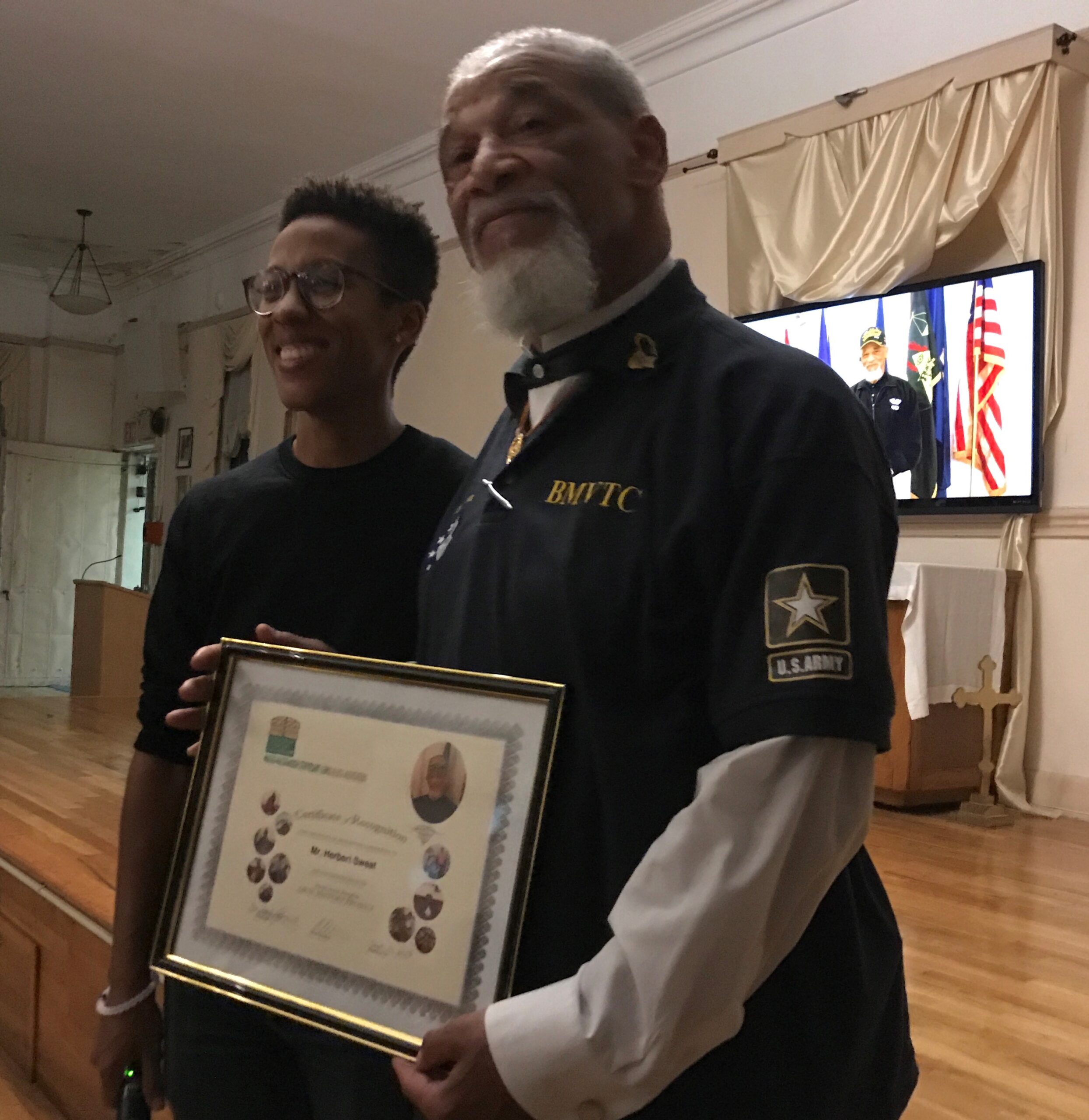
The evening’s first presentation began with Herbert Sweat, a veteran and lifelong resident who shared stories about his childhood. Doreen DeLeon, one of the few non-natives, talked about being attracted to the brownstones and the culture. Eleanor Grant and Geraldine Jordan were both born and raised in Brooklyn and spent the majority of their lives in Bed-Stuy. Ms. Jordan was even married at St. Phillips Church and has been a member since 1932. Each woman received a proclamation by former City Council member Al Vann, on behalf of Borough President Eric Adams.

The final presentation of the night was for Clara Walker and her son Rachiim Ausar-Sahu.

Ms. Walker moved to Bed-Stuy from Georgia so she could go to school. She worked as a waitress at the world-famous McDonald’s restaurant, known for its “homestyle” cooking that attracted celebrities, jazz musicians and politicians in its heyday. After 20 yrs. of employment, Ms. Walker became the owner and managed the restaurant with her children, including her son Rachiim.

Her story, along with the other honorees, showed how each person planted seeds that grew deep into the foundation of this community and will forever be a steadfast part of who and what Bedford-Stuyvesant is to Brooklyn and New York. For more information about the Stuyvesant Heights Oral History Project and to listen to the stories of this year’s honorees and more, visit mystuy.org/oralhistoryproject.

In Conversation: Craig Wilder and Herb Boyd

0

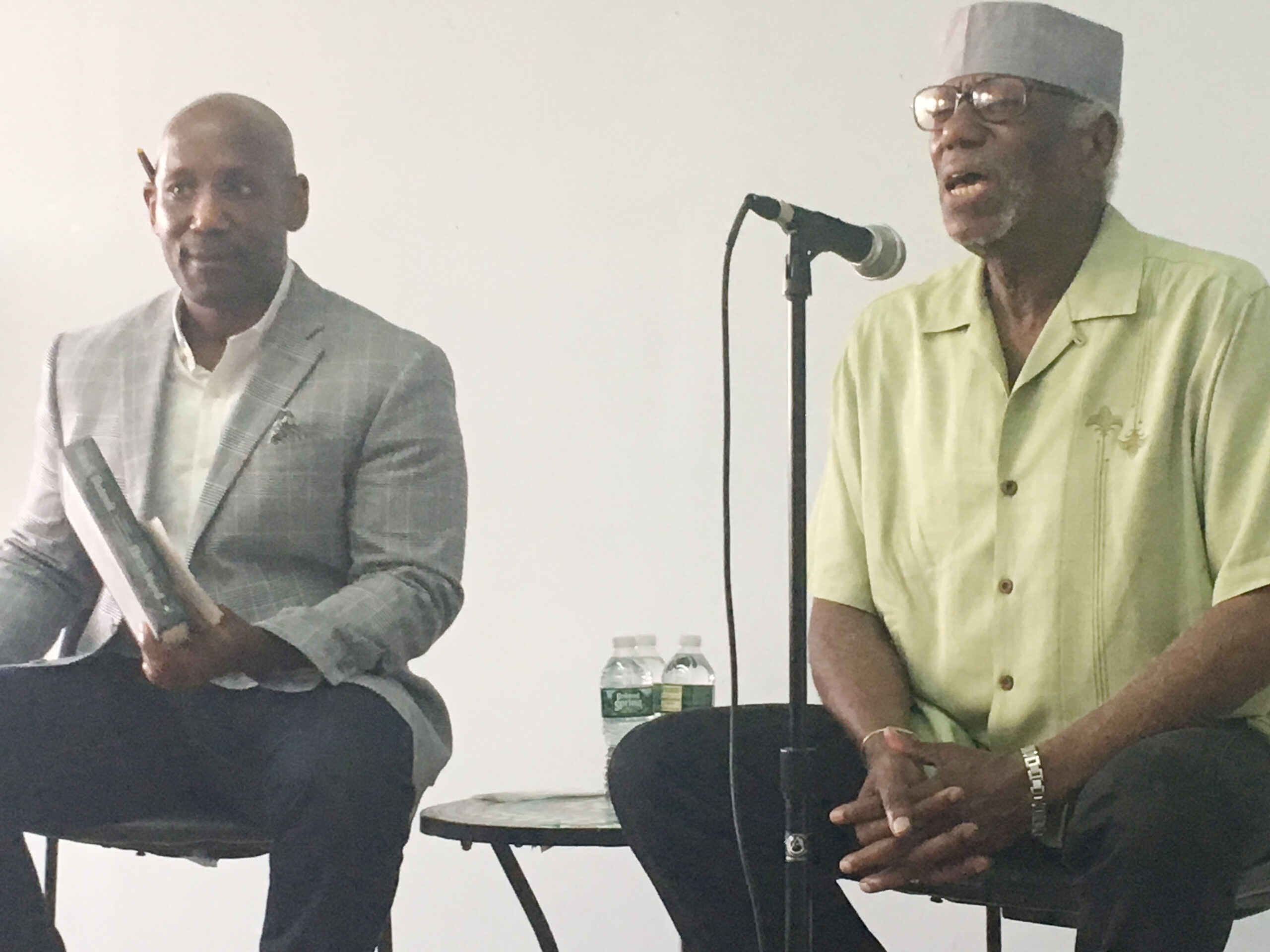
The Skylight Gallery at Restoration Plaza held a gathering of authors, editors, agents and regular literary-minded folks for a conversation between Bed-Stuy native, author and MIT Professor Craig Wilder and author Herb Boyd about Boyd’s 25th book, “Black Detroit: A People’s History of Self-Determination”, now on the New York Times’ Recommended Reading list.

Wilder began by looking for the inspiration for the book, because when reading the introduction, which he confessed he usually does not do, it seemed to be the telling of “a very personal story” wherein Boyd recounts his journey as a 4-year-old holding his mother’s hand as they left the peanut farm of Alabama and rode the train to the factory life of the city.

His mother had left the South in 1941 at the beginning of WWII and before the 1943 riots. They arrived in Detroit “making the voyage from peanut farm and cotton patch, away from the boll weevil and the Ku Klux Klan, moving away from the menace and demons in the South” to a place where Henry Ford was offering $5.00 a day and that proved to have a “magnetism” that drew on Black folks who had heard the stories, bringing them North to join others who had made the journey.

His mother had done two reconnaissance trips to get the lay of the land before she brought the family and then they “bounced around the city” while his mother worked in the factories of WWII, and when the war ended the factories closed and the men came marching home, she worked as a domestic worker for families in the suburbs. Boyd says it was “the kind of common struggle of self-preservation that was similar across the country”.

Wilder noted that the movement of the Boyd’s around Detroit “was about more than just changing apartments”. It reflected “a changing economy and an unstable economy for African-Americans after the war”.

He said, “You’re telling a very personal story about family”, that is as much Boyd’s mother’s story as his. “I think there is something important when Black scholars think about their own families in transformative ways” and he asked how those connections motivated this project. “My personal odyssey is inseparable from this book,” Boyd agreed. “Recounting, recalling and remembering all of the things I learned in Detroit.”

Among the things he learned was how his life in Detroit was reflected in neighborhoods in other urban areas. “I feel the African-American experience [in Detroit] is emblematic of the African-American experience in the whole country”, and that includes slavery and the Underground Railroad. “A lot of people don’t know that slavery was in Detroit and the city had a strong abolitionist movement as part of the web of pathways and byways away from captivity and passage to Canada.”

A lot of history was covered in the conversation, the slave revolts of Nat Turner and Gabriel Prosser, remembering the names of Shields Green and Dangerfield Newby, two of the Black freedom fighters who were tried and hanged because the rode with John Brown in the 1859 raid on the arsenal at Harper’s Ferry.

Wilder said that “as a historian” he was glad to see that the period Boyd covered began in the 1700’s with the Black interactions with native peoples and French traders.

For his deeply-researched book, Boyd had found Black people in those earliest years and Wilder said that telling of them made that history, “an extraordinarily international story with Black people playing a central role” that they are often denied. “We like to start Black history when it’s convenient for other people,” he said. And speaking of other people, Wilder asked about the “choice you make without saying it. It follows Black people–not much about white people in the book. What does that tell us about the story you tell?”

“Our history has to be told,” Boyd said, and the perspectives of Black people are needed. “Our history has to be protected, preserved and then passed on to the next generation. We have that responsibility.”


Boyd has created a lot of history himself with over 30 years at Harlem’s venerable Amsterdam News, but he finds that it conflicts with the time and concentration required as a journalist the time he needs as an author “to reflect and write the books”. he thanked his editorial team, including his wife and his longtime agent Marie Brown For their support, for allowing him into their lives and for giving him the time and guidance he needed for writing this “Part-memoir, part-autobiography, part-biography. My love letter to Detroit: “Some say you can’t go home again, but that ain’t true.”

Herb Boyd went back home and returned with a 300-year history of Detroit as told through the eyes and the lives of Black people. All in attendance for the conversation were glad he made the journey.

(The event was hosted by the Honorable Annette Robinson and Bainbridge Harrison Partners)

Permits Filed for 375 Stuyvesant Avenue, Bed-Stuy, Brooklyn

By Nikolai Fedak

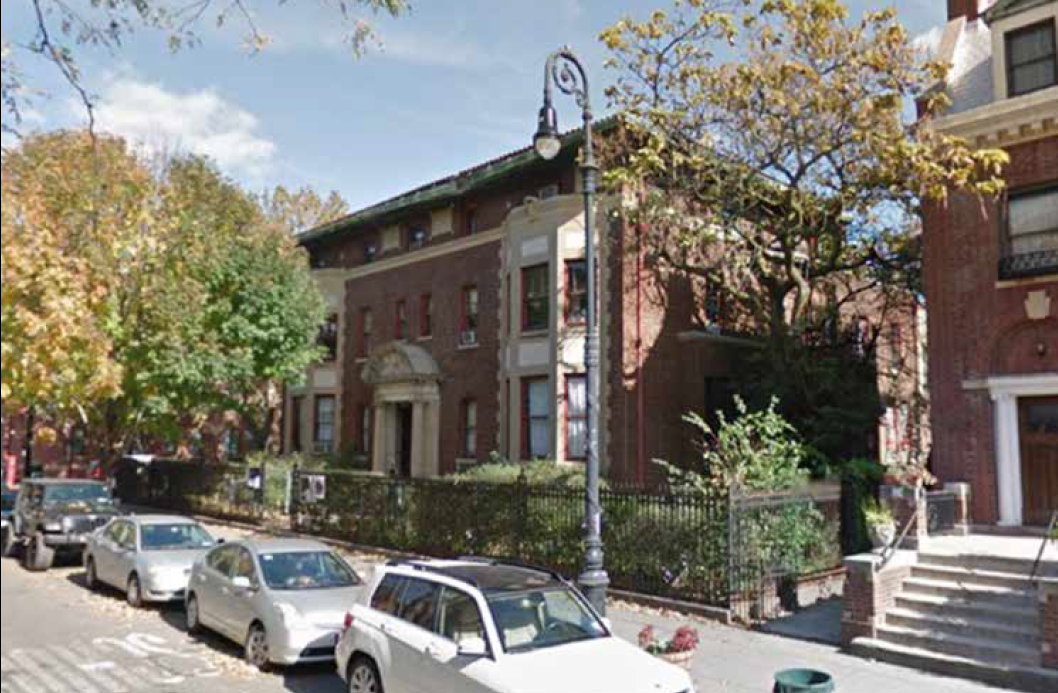
Brooklyn’s Bed-Stuy doesn’t always see the best executions of infill development, but new filings for 375 Stuyvesant Avenue will hopefully provide an example for others to follow. DXA Studio applied for the permits, indicating the new building should be both innovative and attractive, and Oren Evenhar of Pinestone Greene LLC is listed as the developer. The structure will rise five floors and have 7,386 square feet of residential space, to be divided amongst seven units. With a design-minded architect and an average unit size of over 1,000 square feet, condominiums would appear likely. An existing building on the site is landmarked, though there appears to be ample room to accommodate the new structure, which has yet to be reviewed by the LPC.

A New York Donut

0

If someone were to tell me both the Jets and Giants wouldn’t have a single win combined after two weeks, I’d tell that person they are insane. Now maybe I’m not so much of a pro playing the game council, but I’d have a better shot going 0-2 during a season of Madden 2018 than to come to the realization that both of our beloved football teams have not won a game. As I reported a few weeks ago in a recent article about the New York Jets, it is a rebuilding year. The big names such as Ryan Fitzpatrick, Brandon Marshall, Eric Decker, Darrelle Revis, Sheldon Richardson and Calvin Pryor are gone. The team’s defense has given up big plays during their two games against the Bills and Raiders. One of the teams’ Achilles’ heel was their run defense and it continues to be an issue this year. Although the quarterback play of Josh McCown was better against Oakland than it was against Buffalo, the Jets offense has not been able to get in rhythm and as a result of that, “Gang Green” has struggled to put up points. Their defense doesn’t help any cause either giving up 66 points in two weeks. The Jets will have their first home game of the season against division rival Miami Dolphins on Sunday.

As for the Giants, it is pretty easy to say their 0-2 start is a bit of a surprise considering their great defense and their revamped receiving core. Their defense has not been as sharp throughout an entire sixty minutes in a game this year. The teams’ offense is probably the most worrisome question of all. Quarterback Eli Manning has not been sharp through two games then again, his offensive line has not been good at all. An example of that is Manning being sacked five times against the defense of the Detroit Lions last Monday night. Manning has not gotten the time to make plays with the O-line not being able to create time in the pocket for him. Let’s cut the “G-men” some slack, top wideout Odell Beckham, Jr. is still working his way back from a high ankle sprain he suffered in the preseason. Brandon Marshall, who was a ghost in the offensive game plan in last Monday’s loss to the Lions, is still learning the teams’ playbook. Manning and the Giants have a divisional opponent coming up this Sunday when they head to Philadelphia to play the Eagles.

Not to quote NBA rising star Joel Embid, but after 2 weeks for both teams, I urge both Jets and Giants fans to trust the process. It’s only been two weeks and players are still adapting physically during the season. It is too soon to press the panic button for both teams. We’ll just have to see whether both New York teams can break out of the donut column.

Sports Notes: (High School Football) Here are the top varsity high school football rankings, with four Brooklyn teams in the top 10.

  1. Cardinal Hayes (1-0)
  2. Erasmus Hall (2-0)
  3. Lincoln (2-0)
  4. Tottenville (2-0)
  5. Curtis (1-1)
  6. Midwood (2-0)
  7. Fort Hamilton and Fordham Prep tied for 7th at (2-0)
  8. Msgr. Farrell (2-0)
  9. Holy Cross (2-0)