Home Blog Page 732

President Trump’s 2018 Budget Proposal Reduces Federal Funding for Coverage of Children in Medicaid and CHIP

National Political…Local Consequences

52% of Kings County children are covered through Medicaid. The budget cuts being proposed in congress would cause long term, intergenerational harm, affecting all in our community particularly the poorest. What they are debating, is how much health care our children can have.

Kaiser Family Foundation

Medicaid and the Children’s Health Insurance Program (CHIP) are key sources of coverage for children, covering nearly four in ten children (39%) nationwide1 and 44% of children with special health care needs. Medicaid covered over 37 million children in FY2016.2 CHIP serves as an important complement to Medicaid. In FY2016, it covered about 9 million children in families who earn too much to qualify for Medicaid but often lack access to affordable private coverage.3 States provide CHIP by creating a separate CHIP program, expanding Medicaid, or adopting a combination approach. All states have expanded eligibility for children through Medicaid and CHIP (Figure 1). New legislative authority is needed to continue CHIP funding beyond September 2017. If Congress does not extend CHIP funding, it is estimated that all states will exhaust their federal CHIP funds during FY2018.4


President Trump’s FY2018 proposed budget includes fundamental changes to Medicaid that would transition federal financing to a block grant or per capita cap for children and other groups, with reductions in federal funding of $610 billion. These changes are in addition to eliminating enhanced federal funding for the Affordable Care Act (ACA) Medicaid expansion to low-income adults. While the budget does not include many details, the provisions in the American Health Care Act (AHCA) would allow states to impose a block grant or per capita cap for children in Medicaid with requirements to cover mandatory children (under 100% of the federal poverty level (FPL) for school age children and under 133% FPL for children ages 0-5).

Under the block grant option, states could cap enrollment or impose waiting lists for children above minimum levels and would not be required to provide comprehensive benefits.

The proposed budget also would reduce federal funding under CHIP and cap the eligibility level for which states could receive federal funding for children’s coverage at 250% FPL. The budget proposes to extend CHIP funding for two years through FY2019.

However, it proposes several changes to CHIP. It would eliminate the 23 percentage point increase in the federal match that was provided to states under the Affordable Care Act (ACA), which would reduce funding for states. It also would cap the eligibility level for which states could receive federal CHIP matching funds at 250% FPL. In addition, it would eliminate the maintenance of effort requirement that the ACA established to protect existing coverage gains for children.

This provision requires states to keep Medicaid and CHIP eligibility levels at least as high as those they had in place at the time the ACA was enacted through September 30, 2019. Lastly, it would allow states to move children ages 6 to 18 with incomes between 100% and 133% FPL who were transitioned from CHIP to Medicaid under the ACA back to CHIP. These changes would result in net saving in CHIP of $5.8 billion over ten years.

Under the proposed budget, about half of states would lose federal matching funds for children due to the 250% FPL eligibility cap on federal matching funds, which would likely lead them to reduce eligibility for children. As of January 2017, 24 states, including DC, have Medicaid/CHIP income eligibility limits above 250% FPL, including 19 states that cover children at or above 300% FPL. These states would lose access to federal matching funds for coverage of children with incomes above 250% FPL under the proposed changes, which would increase state costs and likely lead to states reducing eligibility for children. In addition, states could further reduce children’s eligibility to the minimum levels (100% FPL for children ages 6 to 18 and 133% FPL for children ages 0-5) since the maintenance of effort provision would no longer apply.

Together, the proposed changes to Medicaid and CHIP would result in significant reductions in federal financing for children’s coverage. In response to these reductions, states will likely need to make program cutbacks, including reductions in eligibility and benefits. Such reductions would likely reverse the recent progress achieved in making affordable coverage available to working families and reducing the children’s uninsured rate to a record low of 5%. Coverage losses among children would lead to reduced access to care and other long-term negative effects for children and increase financial pressure on states and providers.


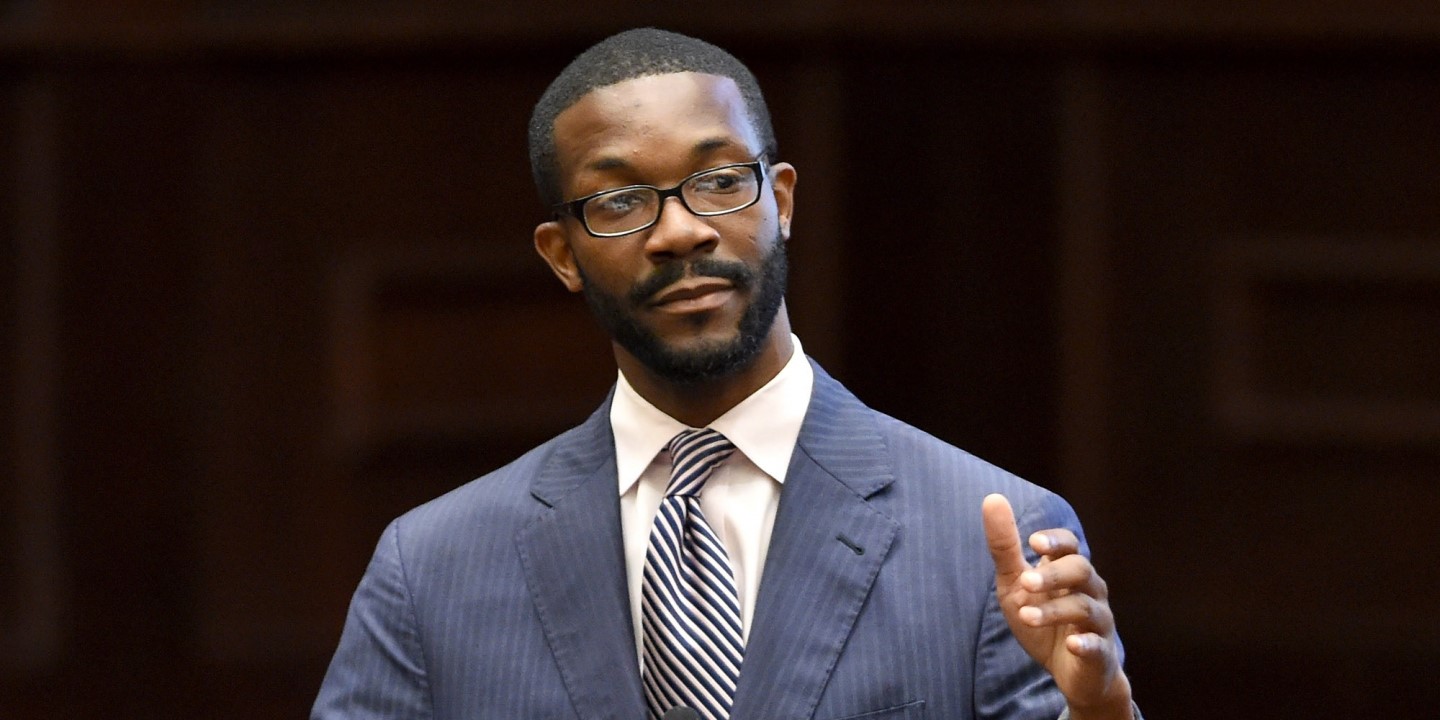
Randall Woodfin, Mayor-Elect: 5th Black Mayor of Birmingham, Alabama

By Bonnyeclaire Smith-Stewart

Personal interest in the recent mayoral election in Birmingham, Alabama could be attributed to three connections. It is the city of my birth. I am an African-American woman who experienced firsthand segregation. My interest in history commands notice of change. As a historian, my vision extends beyond current events to the preceding journey. Therefore, while witnessing the 2017 mayoral race in Birmingham, Alabama, my vision sights how Randall Woodfin has become the fifth Black mayor of that city.

The thirty-six-year-old challenger, Randall Woodfin, unseated the sixty-eight-year-old mayor, William Bell on October 3, 2017 in a nonpartisan runoff election. His defeat was a 58 percent vote lead over Bell’s 41 percent. Woodfin, a Birmingham native, served as a Democratic board member and a city prosecutor. Labeled as a progressive candidate, he has been publically supported by local and national populists and liberals such as Bernie Sanders. Many attribute the national interest in Woodfin as a part of the Democratic campaign to support local and state candidates who will strengthen their position for the 2020 presidential election. Birmingham, as Alabama’s largest city, sets a precedent for the current Democratic climate. After announcing his candidacy a year ago, he charged that Mayor Bell “hasn’t done enough” for residents living beyond downtown, whom he said “deserve better”. His opponent touted his accomplishments towards achieving his goal of changing the city’s “Bombingham image”­­­ locally, nationally and globally – asking for more time to finish the job. One could ponder how their platforms translated to votes and what the outcome of this election means for the citizens who voted.

Some may observe this election simply as “more of the same”. Were Randall’s predecessors simply a continuation of the status quo…merely the putting of a Black face on the same inefficiencies and petty corruption in government …a failure in resolving the pressing needs of the people…getting rich, fat and sassy while the rest of the people of Birmingham, not so much? While others may regard this as a positive “passing of the torch” from those of my generation to my children’s…a young, untainted, progressive, liberal…ready to unseat the status quo?

While these lenses are valid, the historical prism begs for background information on the political path leading to this nationally publicized election. Woodfin will be the youngest mayor of the state’s premier city since David Fox (white) in 1893, also in office at age 36. As the fifth Black mayor of the “first city”, the historical prismatic perspective may provide clarification for some and distortion for others. Hopefully, the facts will shed enough light to afford a truthful transparency.

Woodfin’s four mayoral predecessors were incumbent William Bell (2010-2017), Larry Langford (2007-2009), Bernard Kincaid (1999-2007), and its first Black mayor, Richard Arrington (1971-1999). I served as a volunteer during Arrington’s campaign in two capacities. My dear friend, the late Gussie Harris, phoned me with a call to action for the unannounced candidate. She explained the plan was to run an unprecedented grass-roots campaign utilizing college students in a door-to-door weekend drive for increasing voters and soliciting votes. They needed someone to feed hundreds of volunteers on a zero budget every weekend throughout the election. Accepting the challenge, the drive for a continuous supply of loaves and fishes was solicited within the Black community. As a member of Jack and Jill, I was asked to coordinate members as ushers for the inauguration and hostesses for the mayoral victory reception. The significance of the grass-roots campaign is that Randall Woodfin used the same successful method to mobilize his voter base ushering him to victory. His strategy role model, Richard Arrington, Jr. (1934- ), was inaugurated in 1980 in the city that Dr. Martin Luther King, Jr. once referred to as “the most segregated city in America”, going on to be reelected to five terms. Time will tell if Woodfin will be as popular for successful reelection.

History begs to ask, “Upon whose shoulders did he stand to rise to such heights?” Before mayor, he was a member of the City Council. However, attorney Arthur D. Shores (1904-1966) was the first Black to serve from 1968-1977. And as for mayor, before Arrington was elected in 1971, he was inspired by the first Black mayor of a major U.S. city in 1967, Carl Stokes of Cleveland, Ohio. But wait, hold onto your seats because many Black men were elected to public office after the Civil War during Reconstruction. Pierre Caliste Landry of Donaldville, Louisiana was the first African-American elected mayor of a U.S. town in 1868.

The immediate impacts of the Emancipation Proclamation and the Civil Rights Act of 1964 must be recognized for the political doors opened by Woodfin’s predecessors. However, the cheers of America’s civil rights activists ring backwards to 1619 from the shores of Africa when resistance to slavery began and continued through the now-almost-four-hundred-year-old campaign for equality. The movement for human equality by Americans of African descent has maintained a presence and an insistence throughout the history of this great country. The hope is that all elected officials and especially those of African heritage will carry the legacy of progress for all constituents and in so doing, will improve the plight of Blacks for the short-term current events and the long-term historical perspective.

Bonnyeclaire Smith-Stewart is an independent historian dedicated to researching and telling the stories of ordinary African-Americans. At age sixteen, after being born and raised in Birmingham, Alabama, she traveled North as a participant in the American Friends’ (Quaker) “Southern Negro Student Project”.  After completing high school in Connecticut, she earned a B.A. at Sarah Lawrence College and M.A. in History at Clark Atlanta U. Her goal is to inspire the documentation of Black family history through multiple mediums as reflected on her Web site: 4MillionVoices.com, which is dedicated to the lost voices of the enslaved African-Americans in the United States.


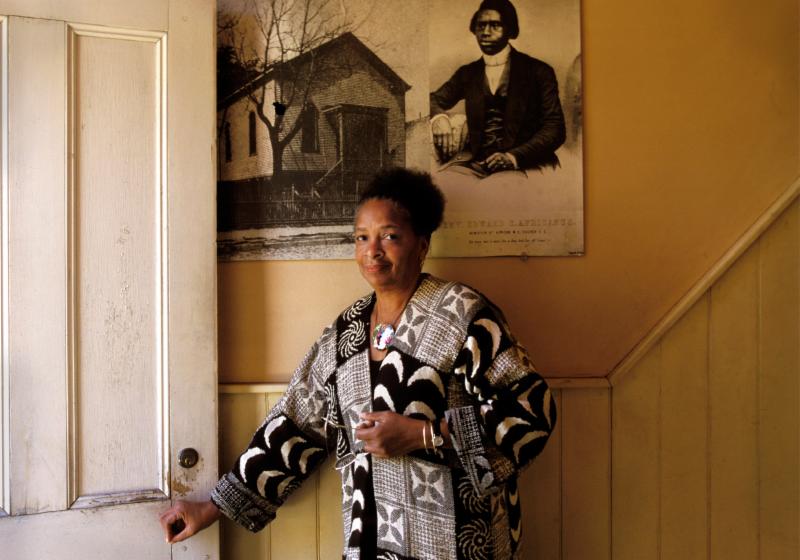
Dr. Joan Maynard Street Co-Naming Ceremony, Saturday, Oct. 14 at Weeksville

The public is invited to a street co-naming for Dr. Joan Maynard, the founding executive director of Weeksville Heritage Center, this Saturday, October 14 starting at 1:00pm at 158 Buffalo Avenue, Brooklyn, NY. (Between Bergen Street & St. Marks Avenue)

Joan Cooper was born in Brooklyn in 1928. Her father, John Cooper, a ventriloquist, and mother Julia (née St. Bernard) told her stories about the oppression of Blacks; she recalled them discussing a newspaper story about the lynching of a pregnant Black woman.

She attended Bishop McDonnell Memorial High School. Upon graduation, she received a scholarship to the Art Career School in Manhattan. Joan was also a Revson Fellow at Columbia University and received an honorary doctorate from the Bank Street College of Education. She graduated from Empire State College of the State University of New York and worked as a commercial artist, including as an art director for McGraw-Hill. She drew covers for Crisis, the publication of the NAACP, among many others.

In 1968, as Pratt Institute historian James Hurley began to hunt down Weeksville’s forgotten location, Maynard became a founding member of the Weeksville Society and served as president from 1972 until 1974, when she became executive director. Due to her efforts, Weeksville was given “landmark status” by New York City’s Landmarks Preservation Commission, and was listed on the National Register of Historic Places.

She raised funds for restoration efforts, taking slides to scores of schools and community groups to win support. She pieced together financing from governments, corporations and children collecting pennies. She donated all her personal savings. Decades of her hard work were rewarded in June 2005 when the houses of Weeksville were opened to the public after a $3 million renovation. At that time, the society changed its name to the Weeksville Heritage Center.

Maynard’s oft-stated mission was nurturing a sense of identity and history among Black children. She said in an interview with the New York Times in 1991, “The kids have to learn they’re not trash”.

Among the many awards she received was the Louise DuPont Crowninshield Award from the National Trust for Historic Preservation, of which she had been a trustee. She retired in 1999, but continued to promote Weeksville.

Maynard was married twice, once to a man named Bacchus and once to one named Maynard, and divorced twice. Her son, Jerome, died before her, and she left no immediate survivors

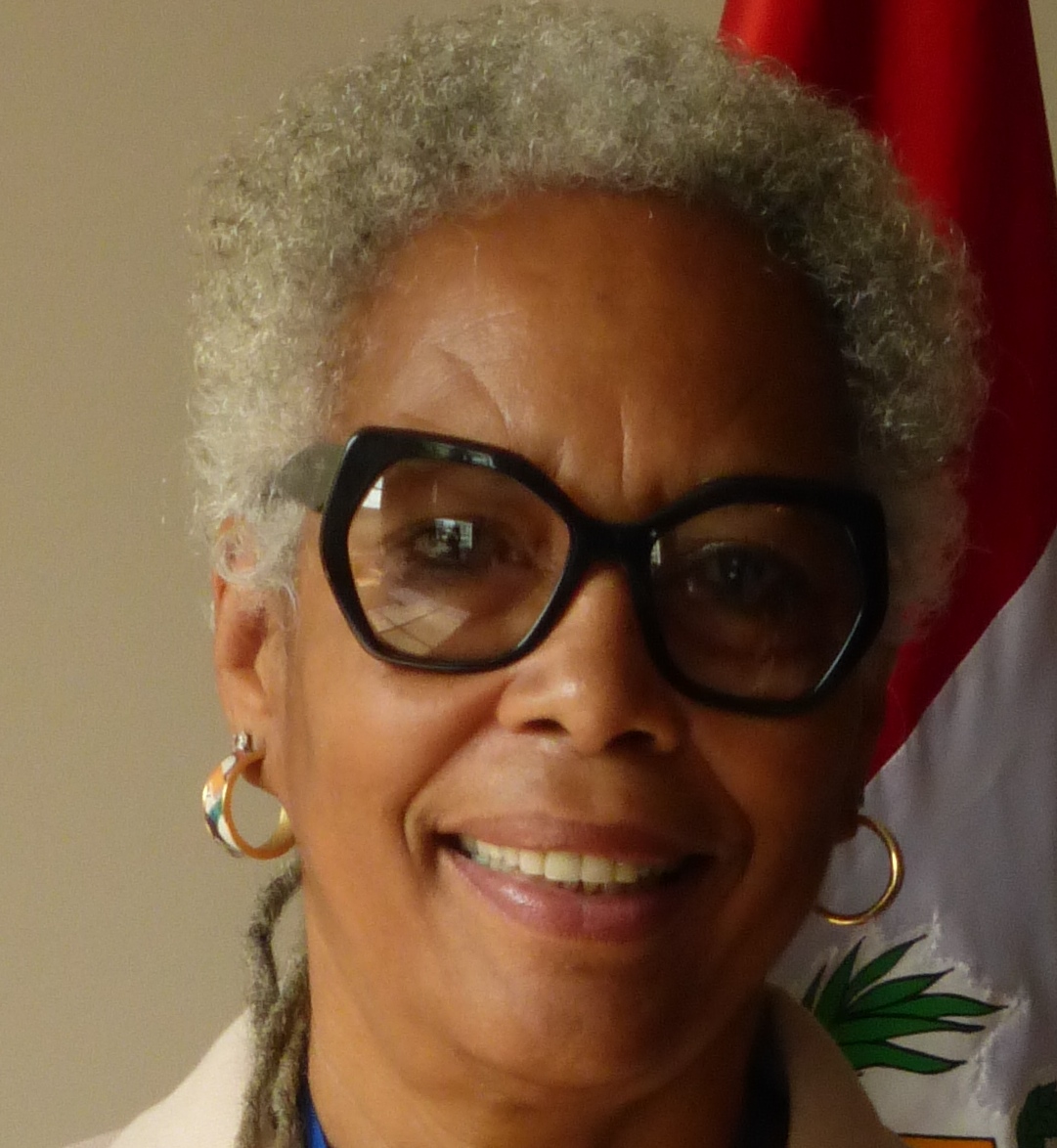
My Mother in Me: MaryLouise Patterson on Louise Alone Thompson Patterson

Known as Weez, Squeeza, Lou or Louise – she was just Mom to me until I reached somewhere around 10 when she became Louise to me also; that is, when I became more fully aware of who else she was besides just being my mother.

Photo of scholars Louise Thompson
and Langston Hughes
in Renaissance-era Harlem graces
the cover of a book
by Evelyn Louise Crawford, a retired
arts administrator and consultant,
and MaryLouise Patterson, a
pediatrician in clinical practice.
From the official press release:
“Letters from Langston is a
collection of unguarded and
candid letters—both personal
and political—between American
literary giant and leading figure in
the Harlem Renaissance, Langston
Hughes, and four of his closest
African-American friends, Louise
Thompson Patterson, William L.
Patterson, Matt N. Crawford and
Evelyn Graves Crawford. The
four exchanged letters with Hughes
for nearly forty years.”

Since I was big enough to run she’d taken me to demonstrations, usually with my father or to meetings with or without him or to the Communist Party headquarters where I’d watch her write a leaflet with a lit cigarette in a nearby ashtray, then type the leaflet, then run off hundreds of mimeographed copies, fold them all, stick them in envelopes, seal and stamp them and make sure it all got to the post office. Then she’d pull together the committee, plan the meeting, discuss and chose the speakers; she’d write the speech she’d give later, get the place, get the refreshments and decorations, make sure the out-of-town speakers had places to stay, often at our house, and afterwards cook a fabulous meal which fueled hours of stimulating table talk, debate and laughter.

I learned many of those tasks at her side and didn’t realize until I had to do some of them how hard they actually were. One of the best lessons I learned from her was the value of “menial” work and to respect those who were relegated to doing it their entire lives.

She stood tall, although she was only 5 feet. She was an impeccable smart dresser thanks to being a keen-eyed bargain shopper plus she recognized the importance given to appearance – especially if one was Black and in “the movement”; she had a generous spirit that took a struggling Black male teenager, Bojack, who delivered groceries from our neighborhood supermarket and guided him over several years to the point where he was off to college. That same spirit brought the actress Beah Richards to live with us after encouraging her to come to New York. Beah stayed with us for many years, becoming a cherished “family member”.

I remember the wonderful parties she threw, bringing all manner of people together for a good time, her and my father playing cards or scrabble with me every weekend, her teaching me to love the arts and culture, her genuine understanding and love of people, especially Black people and her deep intense hatred of any kind of oppression which was the fountain from which flowed the life she dedicated to the noble freedom struggle that Black people forever valiantly waged.

I realize now how much I subconsciously patterned my own life after my mother and how indebted to her I am for the life I’ve made. I’m sure my love for children comes from her. Because of it, I became a general pediatrician.

MaryLouise Patterson

Because of it, I always try to show compassion, with a gentle touch and tender voice and remind my African-American patients how beautiful they are, especially the girls – which invariably brings out a smile. I encourage them to study medicine and to read and stretch their little minds and unleash their dreams.

Because of it, I went to Attica prison; after the rebellion there, to examine a young inmate who’d been shot in the back by the State Police and was paralyzed and had been denied parole. As a result of my examination, he was released. Because of it, I went to Mississippi to examine a young paper mill worker who had lost a hand in a mill machine. My review of the medical records allowed his lawyers to file suit for a sizeable financial compensation, which he won.

How proud I am to be the daughter of my parents and hope they are as proud of me as I am of them.

Louise Alone Thompson Patterson (1905-1999) was an esteemed Civil and Human Rights advocate during the Harlem Renaissance era and close friend of Langston Hughes, who dedicated his “Shakespeare in Harlem: From the Harlem Renaissance to the Red Scare and Beyond” to her.

This recurring series responds to recent derogatory comments from a world figure referencing our starmaker mothers.


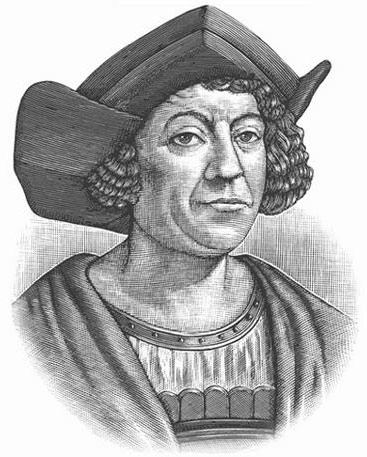
The Real Deal with Christopher Columbus

Mayor Bill de Blasio’s commission on controversial statues met behind closed doors on Tuesday. The main topic of conversation being the statue honoring Christopher Columbus.

I hope behind those closed doors they had a copy of historian Howard Zinn’s “Columbus and Western Civilization” from which the following excerpt is drawn. If they had, they may want to move the current statue to a museum and replace it with a monument to the Indigenous People at the newly-named Indigenous People’s Circle

Howard Zinn: Let me make a confession. I knew very little about Columbus until about twelve years ago when I began writing my book, “A People’s History of the United States”. I had a Ph.D. in history from Columbia University—that is, I had the proper training of a historian, and what I knew about Columbus was pretty much what I had learned in elementary school.

But when I began to write my “People’s History”, I decided I must learn about Columbus. I had already concluded that I did not want to write just another overview of American history—I knew my point of view would be different. I was going to write about the United States from the point of view of those people who had been largely neglected in the history books: the indigenous Americans, the Black slaves, the women, the working people, whether native or immigrant.

And so, how must I tell the story of Columbus? I concluded, I must see him through the eyes of the people who were here when he arrived, the people he called “Indians” because he thought he was in Asia.

Well, they left no memoirs, no histories. Their culture was an oral culture, not a written one. Besides, they had been wiped out in a few decades after Columbus’ arrival. So I was compelled to turn to the next best thing: the Spaniards who were on the scene at the time. First, Columbus himself. He had kept a journal.

His journal was revealing. He described the people who greeted him when he landed in the Bahamas—they were Arawak Indians, sometimes called Tainos—and told how they waded out into the sea to greet him and his men who must have looked and sounded like people from another world and brought them gifts of various kinds. He described them as peaceable, gentle, and said: “They do not bear arms, and do not know them for I showed them a sword—they took it by the edge and cut themselves.”

Throughout his journal, over the next months, Columbus spoke of the Native Americans with what seemed like admiring awe: “They are the best people in the world, and above all, the gentlest—without knowledge of what is evil—nor do they murder or steal…they love their neighbors as themselves and they have the sweetest talk in the world…always laughing.”

And in a letter he wrote to one of his Spanish patrons, Columbus said:

“They are very simple and honest and exceedingly liberal with all they have, none of them refusing anything he may possess when he is asked for it. They exhibit great love toward all others in preference to themselves.” But then, in the midst of all this, in his journal, Columbus writes: “They would make fine servants. With fifty men we could subjugate them all and make them do whatever we want.”

Yes, this was how Columbus saw the Indians—not as hospitable hosts, but as “servants” to “do whatever we want”.

And what did Columbus want? This is not hard to determine. In the first two weeks of journal entries, there is one word that recurs 75 times: GOLD.

In the standard accounts of Columbus, what is emphasized again and again is his religious feeling, his desire to convert the natives to Christianity, his reverence for the Bible. Yes, he was concerned about God. But more about gold. Just one additional letter. His was a limited alphabet. Yes, all over the island of Hispaniola, where he, his brothers, his men, spent most of their time, he erected crosses. But also, all over the island, they built gallows—340 of them by the year 1500. Crosses and gallows—that deadly historic juxtaposition.

In his quest for gold, Columbus, seeing bits of gold among the Indians, concluded there were huge amounts of it. He ordered the natives to find a certain amount of gold within a certain period of time. And if they did not meet their quota, their arms were hacked off. The others were to learn from this and deliver the gold.

Samuel Eliot Morison, the Harvard historian who was Columbus’ admiring biographer, acknowledged this.

He wrote:

“Whoever thought up this ghastly system, Columbus was responsible for it, as the only means of producing gold for export…. Those who fled to the mountains were hunted with hounds, and of those who escaped, starvation and disease took toll, while thousands of the poor creatures in desperation took cassava poison to end their miseries.”

Morison continues: “So the policy and acts of Columbus for which he alone was responsible began the depopulation of the terrestrial paradise that was Hispaniola in 1492. Of the original natives, estimated by a modern ethnologist at 300,000 in number, one-third were killed off between 1494 and 1496. By 1508, an enumeration showed only 60,000 alive…. in 1548 Oviedo [Morison is referring to Fernandez de Oviedo, the official Spanish historian of the conquest] doubted whether 500 Indians remained.”

But Columbus could not obtain enough gold to send home to impress the King and Queen and his Spanish financiers, so he decided to send back to Spain another kind of loot: slaves. They rounded up about 1,200 natives, selected 500, and these were sent, jammed together, on the voyage across the Atlantic. Two hundred died on the way, of cold, of sickness.

In Columbus’ journal, an entry of September 1498 reads: “From here one might send, in the name of the Holy Trinity, as many slaves as could be sold…”

What the Spaniards did to the Indians is told in horrifying detail by Bartolomé de las Casas, whose writings give the most thorough account of the Spanish-Indian encounter.

Las Casas was a Dominican priest who came to the New World a few years after Columbus, spent 40 years on Hispaniola and nearby islands, and became the leading advocate in Spain for the rights of the natives.

Las Casas, in his book The Devastation of the Indies, writes of the Arawaks: “…of all the infinite universe of humanity, these people are the most guileless, the most devoid of wickedness and duplicity…yet into this sheepfold…there came some Spaniards who immediately behaved like ravening beasts…. Their reason for killing and destroying…is that the Christians have an ultimate aim which is to acquire gold…”

The cruelties multiplied. Las Casas saw soldiers stabbing Indians for sport, dashing babies’ heads on rocks. And when the Indians resisted, the Spaniards hunted them down, equipped for killing with horses, armor plate, lances, pikes, rifles, crossbows, and vicious dogs. Indians who took things belonging to the Spaniards—they were not accustomed to the concept of private ownership and gave freely of their own possessions—were beheaded or burned at the stake.

Las Casas’ testimony was corroborated by other eyewitnesses. A group of Dominican friars, addressing the Spanish monarchy in 1519, hoping for the Spanish government to intercede, told about unspeakable atrocities, children thrown to dogs to be devoured, newborn babies born to women prisoners flung into the jungle to die.

Forced labor in the mines and on the land led to much sickness and death. Many children died because their mothers, overworked and starved, had no milk for them. Las Casas, in Cuba, estimated that 7,000 children died in three months.

The greatest toll was taken by sickness, because the Europeans brought with them diseases against which the natives had no immunity: typhoid, typhus, diphtheria, smallpox.

As in any military conquest, women came in for especially brutal treatment. One Italian nobleman named Cuneo recorded an early sexual encounter. The “Admiral” he refers to is Columbus, who, as part of his agreement with the Spanish monarchy, insisted he be made an Admiral.

Cuneo wrote:

…I captured a very beautiful Carib woman, whom the said Lord Admiral gave to me and with whom…I conceived desire to take pleasure. I wanted to put my desire into execution but she did not want it and treated me with her finger nails in such a manner that I wished I had never begun. But seeing that, I took a rope and thrashed her well…. Finally we came to an agreement.

There is other evidence which adds up to a picture of widespread rape of native women.

Samuel Eliot Morison wrote: “In the Bahamas, Cuba and Hispaniola they found young and beautiful women, who everywhere were naked, in most places accessible, and presumably complaisant.” Who presumes this? Morison, and so many others.

Morison saw the conquest as so many writers after him have done, as one of the great romantic adventures of world history. He seemed to get carried away by what appeared to him as a masculine conquest. He wrote:

Never again may mortal men hope to recapture the amazement, the wonder, the delight of those October days in 1492, when the new world gracefully yielded her virginity to the conquering Castilians.

The language of Cuneo (“we came to an agreement”), and of Morison (“gracefully yielded”) written almost 500 years apart, surely suggests how persistent through modern history has been the mythology that rationalizes sexual brutality by seeing it as “complaisant.”

So, I read Columbus’ journal, I read las Casas. I also read Hans Koning’s pioneering work of our time—Columbus: His Enterprise, which, at the time I wrote my People’s History, was the only contemporary account I could find which departed from the standard treatment.

(Teacher) Bill Bigelow did a study of recent children’s books on Columbus. He found them remarkably alike in their repetition of the traditional point of view. A typical fifth-grade biography of Columbus begins: “There once was a boy who loved the salty sea.” Well! I can imagine a children’s biography of Attila the Hun beginning with the sentence: “There once was a boy who loved horses.”

Another children’s book in Bigelow’s study, this time for second-graders: “The King and Queen looked at the gold and the Indians. They listened in wonder to Columbus’ stories of adventure. Then they all went to church to pray and sing.

Tears of joy filled Columbus’ eyes.”

Read more of Howard Zinn’s “Columbus and Western Civilization” and other thought-provoking essays from a variety of contributors in Russ Kick’s You Are Still Being Lied To, available on Amazon and in all good bookstores.