Home Blog Page 728

Thinker’s Notebook: While I’m under the Weather  Brothers are getting together 

0

I thought it was the flu. Then I thought it was a chest cold and a back strain. It turned out to be allergies and a tight back. And while everyone was outside enjoying the Indian summer, this columnist was in his bed, my 2-year-old watching Elena of “Avalor” on my phone while I tried to catch up on “Mr. Robot”. Good show. Check it out. 

 I missed out on a lot this past Sunday. At the Producers Club on W. 44th Street, filmmaker Saquan Jones was screening his newest work, And There Were Four. I’m in the movie. I play the fake Frederick Douglass. Long story.  

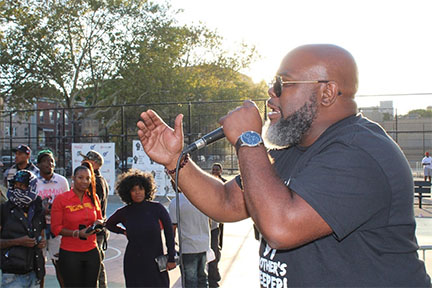
Brothers Block Party Founder Barry Cooper. Photo: Tyrel Pope

I missed another special event this past Sunday. My friend Barry Cooper curated the 2017 Brothers Block Party in Bed-Stuy. The Brothers Block Party is a week-long festival dedicated to celebrating men of color, highlighting their innovative work across industries, promoting small businesses and fostering community development. As Barry puts it, “The lives of men of color in this nation have long been adversely affected by negative public perceptions and portrayals, from being denied jobs and advancement opportunities to negative and often unwarranted police interactions. We aim to debunk these myths by erecting positive images of men of color”. To do this, Barry put together a collective of young men determined to change the negative stigma. The mission of the Brothers Block Party Coalition is to create impactful experiences that shift the narrative and offer a new voice to the table.  

In the short span of 8 weeks, Barry was able to pull off a whole week of events geared towards reinforcing positive images of men of color in our community. Between October 3rd and October 7th, the panel discussions, networking events and mixers set the tone for a week of building new strategies and destroying antiquated myths. Tuesday’s event was The Gentlemen’s Factory, a networking event focusing on how to be groomed for success. Friday’s event was a panel discussion titled “The Provider”, discussing fatherhood. The culmination of the week was the block party. Originally set to take place inside the playground of PS 3 on October 8th, it was rescheduled due to rain and took place this Sunday at Banneker Playground on Lafayette Avenue. Speaking about the week, Barry said, “The week was geared towards giving men of color the tools needed to be a positive impact for their community. Each event was designed to touch the social and emotional thought process, promoting how to be triumphant through your adversity by networking and learning from men who have experienced success. The entire week served as an opportunity to share thoughts with brothers who get it”. Babatunde Akowe, Esq., co-founder of the coalition added, “As an attorney and community leader, this much-needed event is proof that we are actively engaged in changing the narrative of what is expected from our brothers, fathers and sons”. 

Vendors hawked their goods. My friend Raeshawn and his band provided the score. And most importantly, Black men in our community came together for fellowship, instruction and to represent a positive spin on the perceptions set upon us by those focused on propagating overused stereotypes and myths aimed at criminalizing us as an entire group. It was a powerful day indeed, a needed happening put together by sons of the community, a show of responsibility and accountability and love for man, woman and child. In our nation’s current climate, love is the most important ingredient in whatever we set our minds to. Good work Barry. Spreading love has always been the Brooklyn way.

Strong Women Getting Stronger

November 1997

(Winner 1998 New York Association of Black Journalists First Place in Personal Commentary)

The empty buses rolled into Brooklyn early Saturday morning. Across the rain-washed Manhattan Bridge, the Greyhounds came, their empty seats silhouetted against gas station neon, appearing as ghosts through fog-wet windows.   The buses were coming to transport the keepers of the   maternal instinct of the African People. The Mother Wit. The Women.  

It was Saturday, October 25, 1997.   And as if to demonstrate the power of the Sisterhood, two women, known only to family, friends and co-workers, gave life to an event which will stand as a milestone for Africans-in-the-Americas.

As they returned from the March, we saw that over a million women had flexed a spiritual muscle that did not involve the usual power players of big-time media, money, national fame or political clout. This March is another stunning achievement in the legacy that Black women have given America. Whether it was Sojourner Truth, Harriet Tubman, Fannie Lou Hamer, Ida B. Wells, Mary McCloud Bethune or any of the unknown others, March conveners Phile Chionesu and Asia Coney, take their place in the long line of women who saw the need to save the children of our ancestors and acted. It was about women beating a spiritual drum that summoned over a million souls, and by its very existence, told them anything is possible.

This is the spirit that many bring back and put to work in their lives and in their homes. It is a nurturing process, and as the first life-givers, African women have had more practice than most. That shared consciousness of childbearing and nurturing in hard circumstances allows them to communicate and connect on a level that men have to work at to even approach. During the Million Man March, there was hugging and good feeling, and there is no denying that much personal and practical work was done. But from the women who loom large in my life, I have learned that they communicate differently and in more detail than men do. What many men are now learning to do, many women have mastered long ago. Now they are moving to some other level of spiritual connectivity that we will learn more of as we watch it take shape and crystallize into actions. And that is what makes this coming together of women so potentially powerful.

Women are convening the Mother Wit. They are focusing it on a series of goals. And we at OUR TIME PRESS are not going to miss the opportunity to record embryonic stages and chart the progress.   It is necessary that this be done so that proper credit can be given. We have experienced the effects of the Million Man March on the men and on their communities in ways subtle and unknown. Businesses were born, attitudes were changed and lives were touched. This paper itself was helped by the energy after that March.

In urban centers across America, crime has been going down. We know intuitively that the work of the men returning from our March had a large role in that. But because there was little charting of the effects of the individual work that the returning men did: the tutoring, the mentor programs, the lives that they touched, the result of their efforts is a prize that others are claiming.

This will not happen with this Million Woman March. Partly because it follows the Million Man March and lessons have been learned, but mostly because it is women who did it. Over the next few months, there may be profound changes in our communities; and while others will be recording them, OUR TIME PRESS would like to record them also.

Now that the March is over, as plans are made and actions are taken, we will be continuing this mission.   Readers may want to write us about what they have been doing and the results of those actions: whether it is nurturing businesses, or nurturing the diverse elements of the home and the village, write about it. OTP will be taking periodic looks at these efforts, and like a stop-action camera, trained on a flower in bloom, we will attempt to record a small part of the achievement.


A Reflection of Reel Sister’s Film Festival Production, “And Call Her Blessed: A Portrait of Janie”

0

Community members listened intently as Janie Green told her story of activism and resiliency in a film written by her daughter and Our Time Press Publisher Bernice Green entitled “And Call Her Blessed: A Portrait of Janie.” In listening to Janie Green speak in the film production at the Reel Sister’s Film Festival this past Sunday is to know that the information that you are receiving is valuable, insightful and historical, all in one. Janie quickly establishes herself as a no-nonsense, dedicated community activist who made it her business to ensure that those in her community prospered. It was evident that the audience was enthralled by Janie’s candor and sagacity from the minute she started talking. Personally, I was blown away by Janie Green’s intelligence, poise and distinctive voice and left the Magic Johnson AMC Theater that much wiser because of the rich life that she lived.     

Janie opened the short film in which she was featured by talking about her ancestors. Particularly, Janie spoke to the difficult circumstances of her family members but highlighted how, despite it all, her family members were dignified people. Her father, she noted, could not read or write but “was a man.” The ability to “be a man,” or resilient, was an important recurring theme in the brief yet highly informative audiovisual of Janie Green. At one point in the story, Janie recollects going to the Office of Social Services to ensure that the youth in the Eleanor Roosevelt Housing Complex, where she lived, had access to conveniences that many took for granted such as breakfast, dinner or even educational enrichment programs.   

Given Janie’s wisdom and commitment to her community, it comes as no surprise that the importance of education was instilled into her by her mother at a young age. Case in point, Janie recalls that “she owed her mother one thing, and that was that piece of paper on the wall,” in referring to her high school diploma. It goes without saying that things were much different in Janie’s day and a high school diploma was an even bigger deal than it is today (and today it is a big deal).  Though Janie has a high school diploma, in serious jest, she refers to herself as being a Ph.D. holder from the “School of Hard Knocks.” In describing herself this way, we get to see Janie’s humor, yes, but something else can be gleaned from that reference.  Though some in the audience may have laughed at her statement, in reflecting on the moment, Janie was not laughing at all while she said it, hence my use of the phrase “serious jest” to describe it. Can you blame her though? I mean she only met the likes of Jacqueline Kennedy-Onassis and worked closely with Shirley Chisholm. She was only actively involved through formal civic organizations in the betterment and upliftment of the larger Bedford-Stuyvesant community long before it was popular. Frequently, Janie’s track record made it so that community officials and politicians called on her to handle important matters pertaining to the community. If I had half of Janie’s credentials that were accumulated through her seamless record of community involvement, I, too might say that I was a Ph.D. holder from the “School of Hard Knocks.” The moving and shaking at the grassroots level that Janie took part in was noteworthy enough that Jacqueline and Robert Kennedy visited the Bedford-Stuyvesant community to see what the ruckus was all about. Their visit was captured in a photo in which Janie is front and center.  

From “And Call Her Blessed: A Portrait of Janie,” several conclusions can be made, and even more lessons can be learned. First and foremost, we are reminded of the resiliency of our people. Janie Green is a prime example of just how resilient African-Americans are and continue to be in the face of great odds. Secondly, and arguably just as important, it is evident that there are many unsung heroes in the extended fight for African-American equality. Many people on the ground, or grassroots level, have tilled the soil for the groundwork of the liberation of African-Americans and have historically been unrecognized. In telling Janie’s story, Bernice Green allows for one of the many stories of triumph and resiliency to be told and consequently acknowledged.   

Telling Our Stories Through Griot Eyes


Rev. David P. Butts

On the closing day of Reel Sisters Film Festival presentations, Sunday, October 21, a discussion moderated by  ImageNation co-founder Moikgantsi Kgama  circled into great stories untold, lost or forgotten within our own families and networks.  Stories that would make great films.   


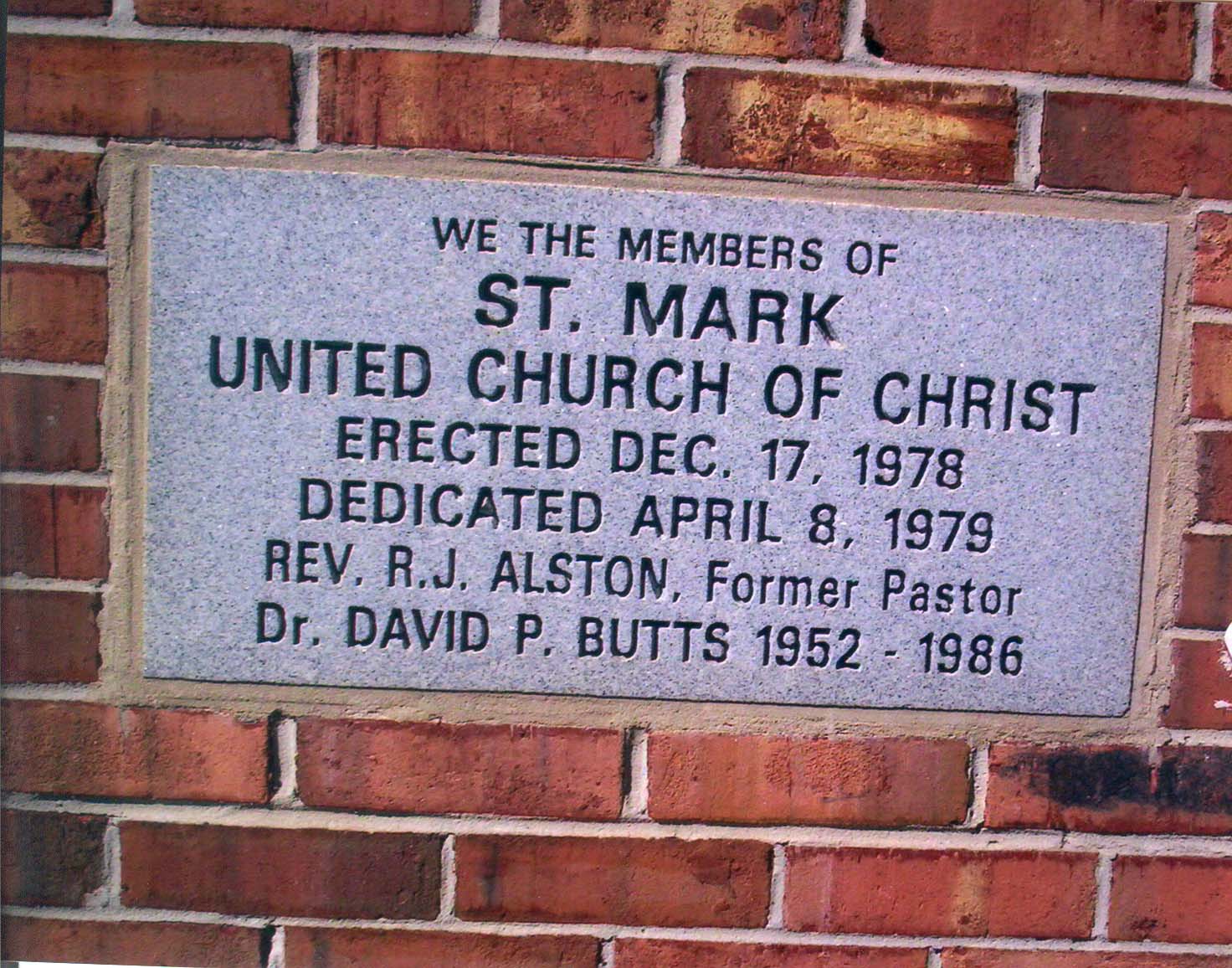
That topic was inspired by Reel Sisters’ founder Carolyn Butts response to one of our questions in the last issue concerning what stories she would like to film. She quickly cited her grandfather, The Rev. David P. Butts, who was the pastor and builder of St. Mark United Church of Christ in Norfolk, Va.  

The Butts Family portrait (L to R.): Doris Butts, David Butts, Jr. (Booster),
Naimo Butts, Frank Butts (My dad), Raymond Butts, Margaret Butts, Rev.
David Butts and Minnie Butts (Carolyn’s grandmother).

In sharing these images of her grandfather and his work, Carolyn reminds us how images – still and moving – are story-keepers, and particularly for people of color, they document the essence of legacy redefined.   

In celebrating the founding 20 years ago of “Reel Sisters” and 25 years ago of the acclaimed “African Voices,” we zoom on the face of Rev. Butts or the folded hands of a family member and we understand that what these people passed forward from several generations before them helped put in motion Ms. Butts’ founding of “Reel Sisters” and “African Voices”. 

Carolyn Butts,
Founder of Reel Sisters
A young Carolyn Butts with her grandfather.
A photo of the church being built


Within the context of the headlines of these times, we know these are no average people; they exude dignity, strength, courage, wisdom, grace and beauty in the face of the ongoing subplot of the struggle to survive and carry on.

  Yankees Wrap-up

0

Some may call it insane, but the 2017 New York Yankees had a season to remember. No, they didn’t win their division; no, they did not make it to the World Series, but they did a lot of positives that many didn’t think they would achieve. Going into the 2017 campaign, the Yankees had many question marks as far as their team as a whole. Their starting pitching was a big question mark. Led by their star pitcher Masahiro Tanaka, the rotation did not look like a playoff-caliber-like pitching staff. After a roller coaster season Tanaka had, another pitcher stepped up in 23-year-old Luis Severino. Last year, Severino went 0-8 as a starter, but seemed to have found his mojo when he was placed in the bullpen. This year, he was arguably the most consistent pitcher for the team. On offense this year, it was all about the “Baby Bronx Bombers” featuring rookie Aaron Judge, Gary Sanchez and Didi Gregorious. Judge set a single-season rookie record for home runs with 52. Sanchez picked up right where he left off last year, this time having a full Major League season to put up sensational numbers. Shortstop Gregorious was probably the most consistent hitter for the Yankees all year long. Known more for his impeccable glove on defense, Didi had a breakout year offensively, breaking the Captain Derek Jeter’s record for most home runs by a Yankee shortstop. Gregorious hit 25 of them this year, a career high for him. All and all, the Yankees won 90 games this year, which was good enough for a surprising second-place finish. 

After not making the playoffs last year, the Yankees returned to the postseason as a Wild Card. Their first task towards the road to the World Series was a Wild Card game against the Twins. The Yankees were down early, but found a way to put up good at-bats and seal a win. The team then came face-to-face in an American League Divisional matchup against the Cleveland Indians, one of the best teams in the AL. The Yankees dropped the first two games, but was able to rally facing elimination to defeat the Indians winning three straight games. The Yankees then faced off against the Houston Astros, arguably the best team in the American League. Once again, the Yankees dropped the first two games in a hostile crowd in Houston. Manager Joe Girardi was able to rally his team as the Yankees won three in a row in front of their home crowd. The team headed back to Houston needing one win for their first World Series appearance since they won it all in 2009. Unfortunately, the Yankees ran into a better ball club as they were unable to win a road game and ultimately lost the series in seven games. 

For the Yankee fans out there, be proud of this 2017 team. They were supposed to be in a “rebuilding mode” this season for 2018. It is safe to say, the team overachieved as far as how far they were able to go. Joe Girardi, whose contract ends this season, should be back as the team’s skipper. Judge, Sanchez, Gregorious and Greg Bird will only get better with the team’s youth movement. The bullpen is one of the team’s strengths and will be again next year. Not to mention, the Yankees minor league system is one of the best in baseball. It is safe to say that the Yankees will only get better and with the moves that General Manager Brian Cashman has made, this Yankee current core is set up to win for the foreseeable future!