Home Blog Page 689

The Week That Was

0

The 2018 Major League Baseball season is underway and for the New York Yankees physically, it’s been a tough one out the gates. One big concern for the team has been their starting pitching rotation. After one week through the five-man rotation, pitchers Luis Severino, Masahiro Tanaka, C.C. Sabathia, Sonny Gray and Jordan Montgomery all had quality starts. The Yankee bats have been what we all thought they would be, just not from the players we expected. We all heard about the dangerous hitting trio of Giancarlo Stanton, Aaron Judge and Gary Sanchez. Although it’s only been a week, it has been Yankee shortstop Didi Gregorious who has been swinging a hot bat in the first week. In the team’s home opener, Gregorious hit 2 home runs and 8 RBI, becoming the first Yankee shortstop to ever record 8 RBI in a game and second-most RBI in a game for the team since Alex Rodriguez’s 10 RBI game 13 years ago.

The team’s first issue to deal with in the young season is the injury bug. The team is thin as far as their outfielders go. Starting outfielder Aaron Hicks went down this week with an oblique injury, Jacoby Ellsbury is dealing with an oblique and hip issue, and Clint Frazier is still recovering from a concussion he suffered in a game in spring training. The team called up outfielder Billy McKinney, but he was put on the disabled list after injuring his shoulder. Thus, leading to veteran Brett Gardner having to be relied on more as far as playing time; Aaron Judge playing more right field without rest and Stanton playing left field, a position where he struggled during spring training.

For now, the injuries the Yankees have suffered do not appear to be serious, but are nagging ones. Ellsbury did suffer a bit of a setback, Hicks should be back in the lineup in another week, Frazier will begin playing minor league games next week. The season is very young and if a team were to have a “minor” injury, the best time would be the month of April rather than a key player being out as the team is pushing for a playoff spot. So far, so good for the Yankees. We shall see what this team is really made of once they get their outfielding core back where Manager Aaron Boone can then rotate some days off for his players.

ARIKE AIR: Notre Dame Junior Ends 17 Years of NCAA Women’s Championship Losses with a Buzzer-Beater

The Fighting Irish were given a fighting chance – and then a historic victory – by a woman of Nigerian descent. Arike Ogunbowale first earned a place for her team with her game-winning shot in the semi-finals. Later that weekend in the finals, she would bring the national championship home for her team with three-point buzzer-beater, with 0.1 seconds left on the clock. Oh, and while at it, she just happened to also win for Notre Dame the distinction of making the biggest comeback in women’s NCAA history!

Kobe Bryant gave her love after the semifinals, tweeting: “Big time shot Arike. We are a @UConnWBB family but we love seeing great players making great plays… Good luck on Sunday.”

When Arike responded that her life was complete now that Kobe had reached out, he responded with, “Nah… it’s complete by finishing the job on Sunday.” After the championship game, he tweeted again, ”WOW! #LifeComplete!

Other NBA comment were from players Dwyane Wade: Wow. She’s a bad Woman!!!, JJ Watt: Arike Ogunbowale is cold blooded!!!!, Frank Kaminsky III: Clutch gene is outta this world!

Why can’t we talk about reparations? A congressional candidate broaches an “unmentionable” topic

I’m running for Congress in Indiana, and I’ve been warned to stay away from “radical” issues. This shouldn’t be one.

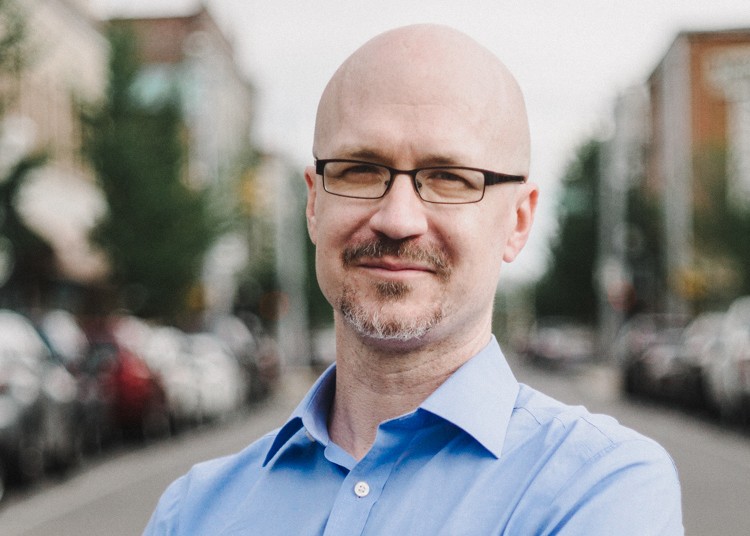
Dan Canon

VIA SALON.COM

Editor’s note: Dan Canon is a candidate for the Democratic nomination in Indiana’s Ninth Congressional District. We welcome submissions from his opponents, or from candidates in other districts.

In 2016, two years after Ta-Nehisi Coates’ eye-opening article in the Atlantic, “The Case for Reparations,” Bernie Sanders was asked if he would support paying reparations to the descendants of American slaves. Sanders had written and spoken a lot about issues of racial inequality, but still his answer was no. “Its likelihood of getting through Congress is nil,” he said. The real problem, Sanders insisted, was the rigged economy.

That seemed true enough, so the conversation ended. There was no serious national dialogue on the topic in the 2016 election cycle because no serious politician would touch it. If the left-most Democratic presidential candidate in recent memory wouldn’t make reparations a part of his platform in 2016, why should congressional candidates in 2018? Wouldn’t that brand you as a radical?

Last year, when I began my run for Congress in Indiana’s Ninth District, I was told what many middle America candidates are told: You need to run a “safe” campaign. What this basically means, in practice, is that if someone asks you about guns or abortion, you pivot to economic issues. “I get that you’re concerned about being drone-bombed for owning an AR-15, but wouldn’t you rather talk about how to protect your 401(k)?” I’m still getting that advice today. So a couple of weeks ago, when I put a blurb on my campaign website in support of a commission on reparations, some called it a suicide run.

The advice to run a milquetoast, whitewashed campaign comes mainly from D.C. types who fetishize flyover states, but also tend to underestimate the people who live in them. People here in Indiana value honesty and forthrightness, from both the Right and the Left. We are also predisposed to thinking of politicians as liars. Economic weasel words might work for some candidates in some places, especially if that candidate is concerned with little other than getting elected in a wave year. But as a long-term strategy, it’s not good to hide from tough topics around here. We won’t trust you.

More importantly, in light of the monstrosity that is the Trump Administration, many of us recognize a different set of priorities. With the greed of those in power finally on full display, unashamed of itself or its aims, my generation now has an opportunity to do what the baby boomers would not: make a better world. Not just for ourselves and our own families, but for everyone. We need more than a banner midterm year. We need real, lasting change.

The precursor to this real change is real discourse. We cannot play defense and expect to win any victories for the people who need them most. We must have the courage to take the moral high ground, especially where it can easily be seized. Reparations is one of those areas.

Our history of slavery, segregation, redlining, selective policing and mass incarceration has left an ever-widening racial wealth gap. Closing this gap should be a critical part of a mission to improve America. We can’t get it done by pivoting to the economy whenever race comes up. Take, for example, the recent study from Brandeis University determining that external factors do nothing to correct the racial wealth gap. Education, full-time work, a stable family life — none of these things narrow the chasm between Black and white.

Another study shows that Black people who are born into wealth fare worse than white kids born into poor families. White wealth is now, on average, at least 10 times that of Black wealth. For the 12 percent or so of our population whose ancestors were brought here to be property, raising wages and offering free college, without doing more to rectify these enormous imbalances, isn’t likely to “unrig” the economy. Even the most aggressive affirmative action program — which would almost certainly be unconstitutional in the eyes of this Supreme Court — would not do the job.

The data suggests that different measures might need to be taken if we are to seriously address economic justice between the races. These measures may, at first, appear radical. But here’s the thing: reparations are not at all a radical proposition. Former Rep. John Conyers, D-Mich., pushed a reparations commission bill for nearly 30 years before retiring in 2017, and at one time had the support of around 70 other members of Congress. Before that, the Reagan Administration paid reparations to Japanese families who had lost everything they owned when they were sent to internment camps during World War II. In fact, many ethnically motivated atrocities in the recent history of the industrialized world have resulted in compensation paid by the wrongdoers. Ultimately, assessing the feasibility of reparations is the right thing to do. We shouldn’t hide from it. We should talk about it. We should normalize it.

When I proposed marijuana legalization at the beginning of this campaign, I lost support among many Old Guard Democrats who insisted that I wasn’t a “serious candidate.” Now, nearly a year later, candidates all over the Midwest are openly calling for the removal of cannabis from the Controlled Substances Act. A few months ago, I was the first candidate to openly advocate the abolition of ICE. Now, there are at least 13 congressional candidates who support the idea. A guaranteed jobs program, which was considered “too Left for Sanders” as recently as last year, is now being supported by Sen. Kirsten Gillibrand, D-N.Y. and other mainstream Democrats who would not have touched it in elections past. This should be ample proof that we can make a better world just by being brave enough to talk about a few good ideas.

A reparations commission can become a serious topic of national conversation. And it should. Like marijuana legalization, like the abolition of ICE, like a guaranteed jobs program and like Medicare for all, it’s a good idea even if it seems radical at first. In fact, one might reasonably suggest that continuing to criminalize a plant, maintaining a brute squad to break up families, denying medical care to people who can’t afford it or refusing to atone for a brutal, centuries-long regime of apartheid, are “radical” positions relative to the rest of the world in 2018. If we never talk about these issues, we never get to talk about why our ideas are good, or why the old ways are bad. Contrary to popular belief, people here in Indiana (and elsewhere) can recognize a good policy proposal, no matter who or where it comes from. It’s a candidate’s job to make sure they actually hear it.


 

No Progress!

African-American Scholar Sharon Austin: “We are still fighting many of the same battles as Dr. King did in his day.”

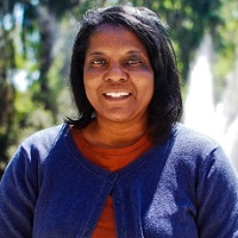
By: Sharon Austin theconversation.com

On Apr. 4, 1968, Dr. Martin Luther King, Jr. was assassinated in Memphis, Tennessee while assisting striking sanitation workers.

From Occupy Wall Street to Black Lives Matter, many modern
social movements decry the same inequality Dr. King did.
Lawrence Bryant/Reuters

That was 50 years ago. Back then, the wholesale racial integration required by the 1964 Civil Rights Act was just beginning to chip away at discrimination in education, jobs and public facilities. Black voters had only obtained legal protections two years earlier, and the 1968 Fair Housing Act was about to become law.

African-Americans were only beginning to move into neighborhoods, colleges and careers once reserved for whites only.

I’m too young to remember those days. But hearing my parents talk about the late 1960s, it sounds in some ways like another world. Numerous African-Americans now hold positions of power, from mayor to governor, to corporate chief executive – and, yes, once upon a time, president. The U.S. is a very different place than it was 50 years ago.

Or is it? As a scholar of minority politics, I know that while some things have improved markedly for Black Americans since 1968, today we are still fighting many of the same battles as Dr. King did in his day.

Read More

https://www.salon.com/2018/03/31/why-cant-we-talk-about-reparations-a-congressional-candidate-broaches-an-unmentionable-topic/

Linda Brown, 76: Her Father’s Love Forced a Lawsuit and A Legacy

0

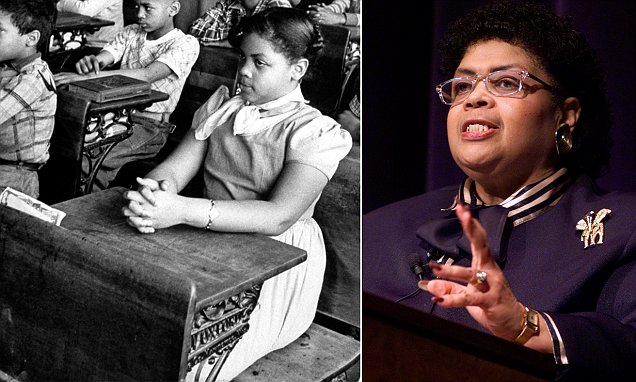
Once the focus of the landmark Brown v. Board of Education ruling desegregating public schools across the United States, Linda Brown has passed away at age 76. The Topeka, Kansas native’s father, Oliver L. Brown, the central plaintiff, was incensed that his nine-year-old should have to pass the nearby, and all-white Sumner School that would not accept her, to travel miles away to a colored school that would. Brown, an assistant pastor at St. John African Methodist Episcopal Church, collaborated with other parents and the local NAACP to sue the Topeka Board of Education and soon several states across the nation filed their own lawsuits with the Supreme Court. The Brown decision overturned Plessy vs. Ferguson, which maintained the legality of segregation in the classroom and beyond.

Although Brown was a small child at the time, she says she clearly felt that something was wrong the day her father tried to enroll her in the local Sumner School, only to be turned away. She did not understand, despite her parents’ attempts to help her understand, the ugly realities of racial hatred. And although she would never attend the Sumner School after the historic ruling of 1954, both she and her sisters would later attend desegregated schools, as would a nation of Black children, all beneficiaries of her father’s activism, and of her bravery.

Linda went on to become an activist as well, filing a lawsuit in 1978 to help uphold her father’s legislation. She and her sister Linda also founded the Brown Foundation to facilitate discourse nationwide about rights and racial wrongs.

Author and professor Melissa Harris Perry said of Brown,

“The passing of Linda Brown is yet another stark reminder of how our nation has long relied on the sacrifices of our school children to catalyze change.”

Rep. Barbara Lee remembered Brown with fondness.

“Even as a young girl, Linda fought to show our country that separate is never equal. She persisted. She ended school segregation, and she permanently changed life for the better for children across America. Rest in Power.”