Home Blog Page 53

Trump Fills His “Enemies List” with Black People

By Mary Alice Miller
Trump’s 21st century version of President Richard Nixon’s ‘enemies list’ is filled with Black people and Black people’s interests.
Federal Reserve Governor Lisa Cook was notified that Trump called for her to resign via his social media app over allegations of mortgage fraud. Later, Trump wrote a letter stating, “You are hereby removed from your position on the Board of Governors of the Federal Reserve, effective immediately.”


“President Trump purported to fire me ‘for cause’ when no cause exists under the law, and he has no authority to do so. I will not resign. I will continue to carry out my duties to help the American economy as I have been doing since 2022,” said Cook in a statement.
Trump has turned his attacks on museums he considers ‘woke’, including the Smithsonian Museum of African History and Culture. Trump said “they are out of control, where everything discussed is how horrible our country is, how bad Slavery was, and how unaccomplished the downtrodden have been.”


In preparation for the 250th anniversary of the country’s founding, Trump has ordered a review of the nation’s museums to ensure they “celebrate American exceptionalism, remove divisive or partisan narratives, and restore confidence in our shared cultural institutions.”
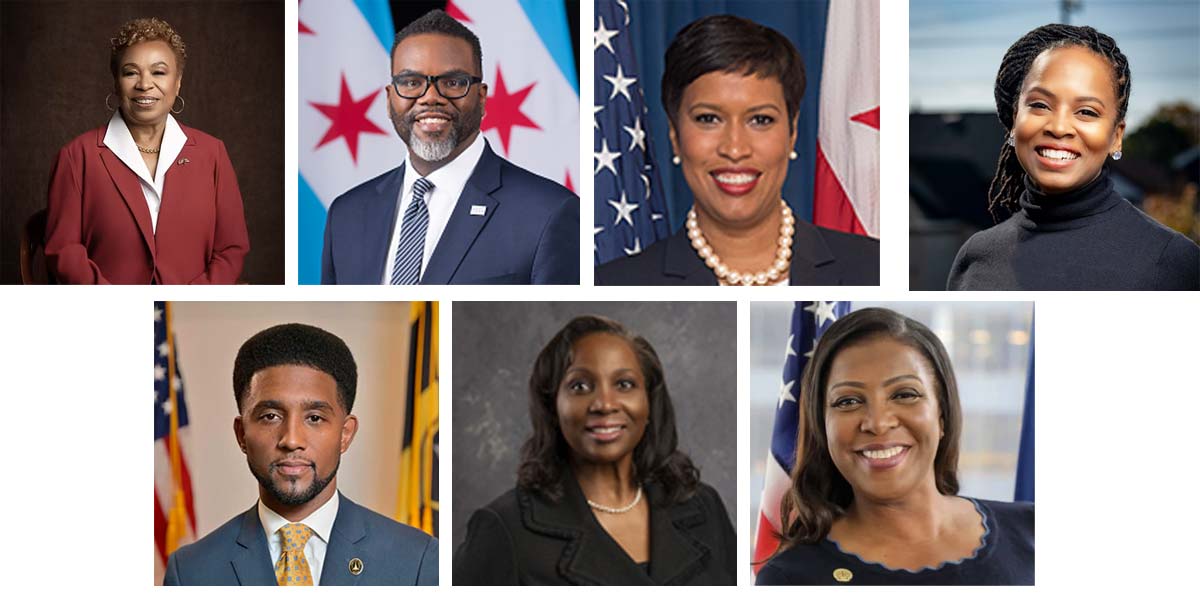
First it was Los Angeles. Then it was Washington, D.C. Next on Trump’s list is Chicago, Baltimore, and New York City. Trump has visions of using the National Guard to take over cities that happen to be led by Black mayors with large Black and Brown populations.
Trump claims the National Guard is needed in these cities to address crime. But crime is statistically down in these cities. Trump has developed a plan to create Guard units to quell civil unrest.


Trump brought the National Guard to Los Angeles allegedly to protect ICE agents who were sweeping up perceived undocumented immigrants. Many caught in the sweep were United States citizens, so much so that a federal judge ordered ICE to not arrest people based on their skin color, language or place of employment.
The National Guard was deployed recently in Washington, D.C. purportedly to reduce crime, but Trump also railed against homelessness in the nation’s capitol.
The American Constitution Society (ACS), based in Washington, D.C., issued a statement condemning “President Trump’s misuse of law enforcement and our military to create a federal police state in our Nation’s capital and undermine civil liberties and constitutional rights.”


“The administration’s attempt to take over the D.C. Metropolitan Police and its deployment of the National Guard and federal law enforcement agencies undermine the civil liberties and constitutional rights of those living in and visiting our Nation’s capital,” the ACS stated on its website.


The ACS statement continued, “We commend D.C. Attorney General Brian Schwalb for suing to block the administration’s takeover of the Metropolitan Police Department, and U.S. District Judge Ana C. Reyes for pushing the city and Justice Department to reach an agreement that allows D.C. to retain control of its police department. This doesn’t resolve all the issues with Trump’s efforts to exert control over the Metropolitan Police but demonstrates that the judiciary is taking seriously its role in holding the administration accountable.”


The Leadership Conference on Civil and Human Rights issued an open letter on behalf of 126 organizations expressing “profound concerns with the recent decision by President Trump to assert control over the District of Columbia Metropolitan Police Department (MPD) and to deploy the National Guard throughout the city. This unprecedented and needless takeover of a local government’s law enforcement mechanisms poses a dire threat to public safety as well as to civil and human rights, not only of the people who live in D.C., but ultimately throughout the entire country.”


The open letter continued, “President Trump has once again declared a false emergency to access executive powers that were not meant to be used as political tools to amass power. It is a terrible precedent that could harm cities, communities, and people well beyond D.C. What he is able to achieve in D.C., he will try to do elsewhere. He has already threatened to do the same in other major cities around the country. Time and time again, he has shown that his real goal is to create a police state, as he has repeatedly weaponized law enforcement to quash dissent and to serve his own personal and political ends.”


“This is exactly the type of overreach that our country’s founders warned against. What Trump is doing is unprecedented and unwarranted. It is illegal. It is unconstitutional. It is un-American,” said Illinois Governor J.B. Pritzer, calling Trump a “wannabe dictator.”
Pritzker added, “We have made no requests for federal intervention. None. We found out what Trump was planning the same way all of you did. We read a story in the Washington Post.”
“The guard is not needed. This is not the role of our military.

The brave men and women who signed up to serve our country did not sign up to occupy American cities,” said Chicago Mayor Brandon Johnson. “What he’s proposing at this point would be the most flagrant violation of our Constitution in the 21st century. The city of Chicago does not need a military occupation.”


Edwin Yohnka, American Civil Liberties Union director of communications and public policy for the Illinois branch, said Trump will need a valid reason to deploy the National Guard in Chicago.


“There’s a higher barrier for the president to send National Guard into Chicago [than into D.C.], because there has to be a reason or he has to have the agreement of the governor of the state of Illinois,” said Yohnka. “And clearly, from what we see, he’s not going to have that. He’s going to have to articulate a reason for doing it. I think that reason will be challenged by the state of Illinois.”
“The president listed cities that are all led by black mayors. It’s no coincidence, though, that these are cities that have large populations of black and brown people,” said Oakland Mayor and former Congresswoman Barbara Lee. “These are cities, all of these cities where the crime rates are going down. These are the cities that happen to be led by black mayors. What is this about?”


Oakland Council member Carol Fife said, “If you care about safety, Mr. Convicted Felon in the White House, if you can, if you care about law and order, you would know that the safest cities have the most resources.”
‘Regarding Trump floating the idea of bringing the National Guard to New York City, Governor Hochul said, “I will look at all my powers. But I have a feeling that right around that time, my National Guard might be really busy on other issues.”


“This is the safest big city in America. And you are seeing the numbers continue to decrease,” said Mayor Adams. “If the federal government wants to partner with us to go after some real laws to stop dangerous people from having guns, those with mental health issues getting access to guns, we look forward to having that coordination.”
“Trump is trying to do whatever he can to set Black people off,” said Dawson, a central Brooklyn building maintenance manager. “But, we are not falling for it.”

Adams’ Campaign Rocked by Indictments, Loyalists Remain

0

By Nayaba Arinde
Editor-at-Large

“If only there was an Eric Adams for Eric Adams,” retired New York City detective Marquez Claxton told Our Time Press. “It is disappointing that some in the very community that Eric Adams has worked with and served, for decades, find themselves susceptible to propagandists working to undermine a hugely successful administration.”
The loyal longtime Adams ally made these comments even as last week the Adams administration/electoral campaign was dealt two new blows, as two former members of his cabinet faced additional bribery and corruption charges.
Last Friday, Ingrid Lewis Martin, the so-called Lioness of City Hall, and Adams former chief advisor turned herself into Manhattan D.A. Alvin Braggs at the New York County Criminal Courthouse.


This, on top of her December, 2024 indictment. Despite that she remained a volunteer on Adams’ reelection campaign.
The new indictments unsealed were by prosecutors on Friday, Aug. 21st, 2025.
District Attorney Bragg said, “We allege that Ingrid Lewis-Martin engaged in classic bribery conspiracies that had a deep and wide-ranging impact on City government.”
“Ingrid is like a sister to me. I love Ingrid,” Adams told the press. “She’s worked with me for over forty years. I served as a police officer with her husband. I know her son, and I know her, and I know her heart. And she and her attorney will deal with the case that’s in front of her. My prayers are with Ingrid, and I wish her the best.”


Yet, Adams swiftly distanced himself from former Asian community liaison Winnie Greco, who was accused of stuffing a potato chip packet with a red envelope filled with money and giving it to a reporter from The City after Adams opened his Harlem office last Thursday. Greco called it a misunderstanding and was suspended from the re-election campaign.


Surrendering to authorities on Friday, August 21st, Lewis-Martin pled not guilty, alongside her son Glenn Martin II (known also as Suave Luciano), as she was charged with bribery in exchange for curtailing bureaucratic red tape for lucrative city contracts and permits.
D.A. Bragg’s prosecutors and the city Department of Investigation charged the Martin mother and son, alongside seven co-defendants in four other indictments.
Lewis-Martin is charged with acquiring $75,000 in bribes by flexing her favor-trading influence by giving city contracts and fast tracked permits for shelters and bars, from March 2022 to November 2024.


She is accused of taking a bribe to have the Department of Transportation cancel a bike lane on McGuinness Boulevard in Greenpoint, Brooklyn, and speed up other development contracts. The indictment noted that part of the bike lane deal led to her $806.31 speaking role with actor Forest Whitaker in the Godfather of Harlem, and the receipt of thousands for catering a Gracie Mansion event from co-defendants Gina and Tony Argento. They are the sibling owners of the Broadway Stages production company, who argued against the bike lanes to keep the two-lane traffic flow by their property.


The indictment said that Tony Argento offered to get her into the Screen Actors Guild with more roles on The Godfather of Harlem and Blue Bloods, often shot at his studio.
Lewis-Martin allegedly received a $2,500 payment for the deal. The pitch led to Adams ultimately withdrawing support for the Department of Transport bike lane plan.
As the Department of Administrative Services deputy commissioner for real estate services, former state senator Jesse Hamilton immediately resigned. He was also accused of offering the fast-tracing of City contracts on behalf of Lewis-Martins and having their abodes renovated.
Glenn Martin II, her son, allegedly received $50,000 after she granted businessman Tian Ji Li a $12 million contract for an asylum seeker shelter, giving him $1.2 million.


Li is also accused of repeatedly receiving help from Lewis-Martin regarding building his V Show karaoke bar and FDNY and Department of Buildings issues.
The charges claimed in exchange for work at her home, and that of co-defendant Hamilton, supporting developer Yechiel Landau, Lewis-Martin got various city agencies to push a variety of his projects for him.
She pleaded not guilty, as did Yechiel Landau and Li.
Saying “she has broken no laws and she is not guilty,” Arthur Aidala, the podcaster, and Lewis-Martin’s attorney, said the indictments were “a troubling example of politically motivated lawfare.”


Gothamist reported that in 2020, Adams’ son Jordan Coleman, was given a role as a personal assistant to Forrest Whitaker in the Godfather of Harlem show, and had a job with Broadway Stages co-defendants.
Adams disputed detractors and opponents who questioned whether the city is for sale and whether “It’s Tammany Hall all over again.”
He replied, “No, they’re in their political season.”
Addressing the political headwinds at a press conference, Adams proclaimed, defiantly and determinedly, “Eric is stepping down, no. That cannot happen…I’m never going to quit on the City of New York. We’ve worked too hard to get here.”


Roger Toussaint told Our Time Press that Adams operatives are the cause of the new political commotion, “The latest developments pertaining to the Eric Adams campaign, even if with or without his knowledge and involvement, is the product of desperation. The greater the alienation from the concerns of New Yorkers, the greater the desperation.”
“From this moment until election night will be the rockiest and most testing period for the campaign and supporters of Mayor Adams,” grassroots and religious activist Sheikh Musa Drammeh told Our Time Press. “The real takedown of the mayor will accelerate with frenzied media assistance. Suppressing his poll numbers to create unpopularity will continue because there’s so much at stake.”


Engaged Black observers are in flux about whether to support the City’s second Black mayor, with two months of hardcore campaigning left until the November 4th New York mayoral election.
So many elected officials and community leaders do not want to go on record, but they are privately stating that the mayor has lost his Black base.
With Adams still in the single digits in the polls and front-runner Zohran Mamdani still keeping Independent candidate Andrew Cuomo and Republican Curtis Sliwa at bay, the current mayor is dancing on every set trying to convince the electorate that he is still a viable candidate.


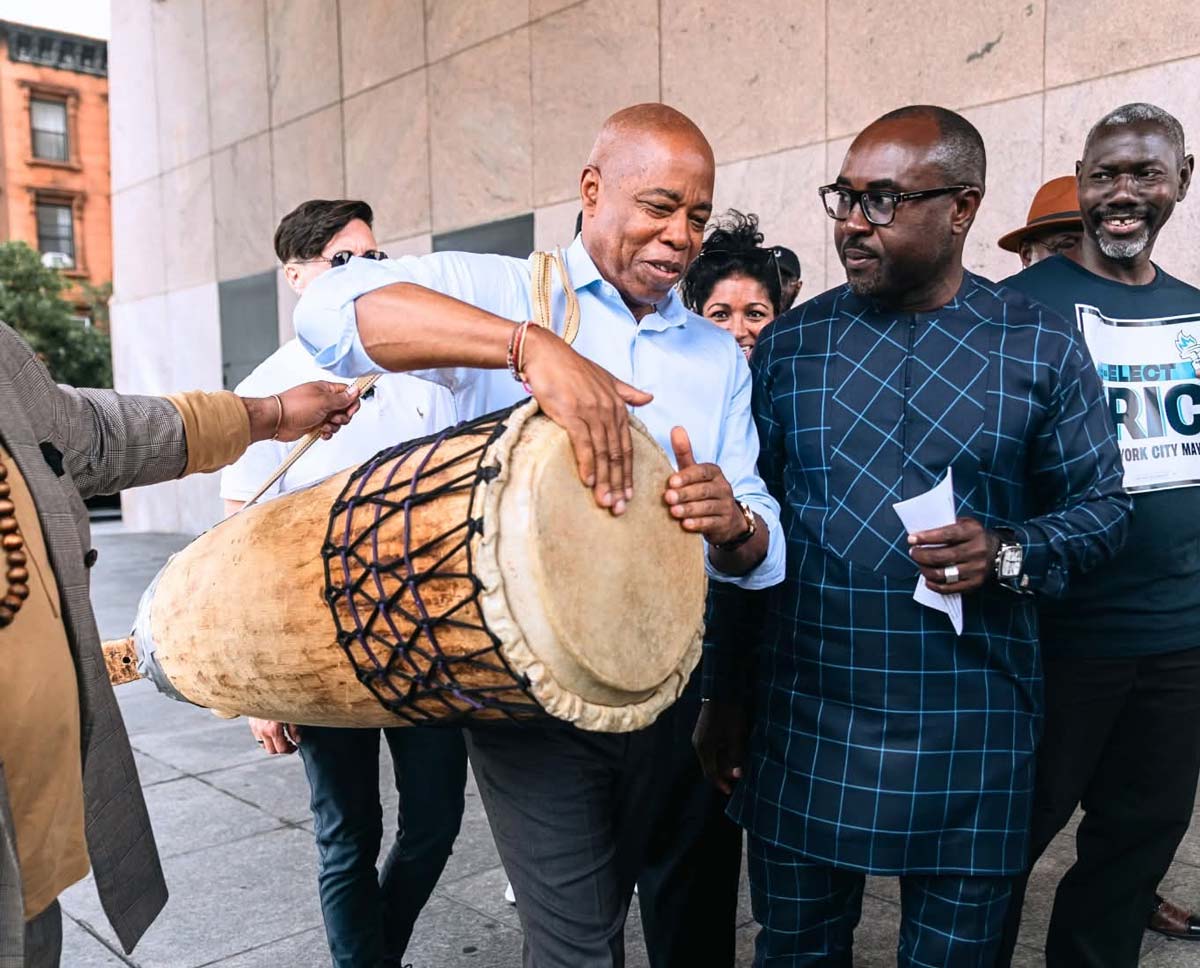
This past week alone, Adams rallied the members of the African business community in Harlem, met with members of the Haitian community at Gracie Mansion, and bench-pressed 135 lbs in Crown Heights at the 500 Men Making a Difference Men’s Day.
Teamsters Local 831, the sanitation workers union, endorsed Adams on Tuesday. Mamdani met with Congress Members Yvette Clarke and Hakeem Jeffries at Cornerstone Baptist Church in Bed Stuy, alongside 20 Black clergy.
“I think it was a great meeting from the feedback I’ve been getting from the pastors,” Clarke told NY1. “They wanted an intimate setting where they could really speak to their lived experiences, the lived experiences of their congregants. And I think there was a very meaningful exchange.”

A Mother and Son’s Shared Path to Better Health

By: Amanda Barrett
Since settling in the Crown Heights neighborhood of Brooklyn, Denise Owens has spent the last 33 years receiving care through One Brooklyn Health Interfaith Medical Center and now its care, Bishop Orris G. Walker, Jr. Health Care Center. A trusted, neighborhood-based multispecialty facility, Bishop Walker partners with culturally diverse communities to provide high-quality, patient-centered care that meets the needs of both individuals and families.
She receives primary care, eye care, hematology, physical therapy, and social work services—
and has never looked back.


“I really have no complaints,” Denise says. “They really look out for you.”
Now living in Red Hook, Brooklyn with her son, Diallo Owens, who also serves as her health aide, Denise continues to receive care at Bishop Walker. Despite the relocation, she remains committed to Bishop Walker because of the staff, the personalized care, and the long-standing relationships she has built there that keep her rooted.
“They are very concerned,” she says. “They go out of the way. They put your best interest in it. They are very attentive and encouraging.”


Bishop Walker Health Care Center is more than a collection of services. As part of the Patient- Centered Medical Home (PCMH) model, the care center offers coordinated, comprehensive care that addresses the whole person. It is a place where trust is built, and where the team, made up of caring, culturally competent professionals, works closely with patients and their families to navigate care with dignity and respect.


For years, Diallo focused on managing his mom’s care. But during that time, he struggled with his own health. Earlier this year, he was diagnosed with full-blown diabetes and high cholesterol at another hospital and was placed on insulin. Despite treatment, he continued to face serious challenges managing his condition.


“My sugar used to drop below 20,” he recalls. “Even on insulin, it wasn’t getting any better.”
One day, while pushing his mom in her wheelchair on the street, Diallo became so disoriented that Denise began yelling, “You’re pushing me into the bus!” He hadn’t realized how far his condition had deteriorated.
Soon after, Diallo was hospitalized. That experience, along with constant encouragement from the Bishop Walker team, motivated him to finally bring his medical records to Bishop Walker and seek care.
When he arrived, the welcome was heartfelt.


“I didn’t expect red-carpet treatment when I got there,” he says. “But the staff said, ‘Finally, you showed up.’ Then they told me, ‘We really appreciate your mom as our patient, and now we’ve got you too.’ That felt good to hear.
Diallo began seeing Dr. Ma Lwin Moe, his mother’s primary care provider. With coordinated support and a personalized plan, Diallo was taken off insulin and placed on a new treatment that stabilized his blood sugar and improved his overall health within a few weeks of becoming a new patient.
“Everything is good to go now,” he says. “Everybody’s working together on one accord.”
Bishop Walker makes it easy to manage their different health needs. Diallo specifically said, “Everything is basically getting done at Bishop Walker now for the both of us.” He described it as a “one-stop shop” that makes managing their healthcare convenient and supportive.
Bishop Walker’s approach of knowing and caring for both him and his mother makes him feel comfortable and appreciated.


Both Denise and Diallo now receive medical care at Bishop Walker, and they attend physical therapy together three times a week. For them, it is more than a routine—it is shared healing.
“We joke that it’s our little workout date,” Denise says. “But really, we’re getting stronger together.”
And even beyond appointments, the staff show up with genuine care.
” You know, they’re more involved, even spiritually wise…” Denise says. “And to tell you the
truth, even if you don’t have an appointment, and they see you, they still talk to you— ‘How are you doing? What’s happening?”


When asked if she would recommend Bishop Walker, Denise doesn’t hesitate.
“I would,” she says. “They’re kind, they care, and they treat you like family, that’s why I keep going.”
For the Owens family, Bishop Walker Health Care Center is more than a healthcare provider. It is a home for healing, a trusted partner in their well-being, and a community that continues to walk alongside them every step of the way. To schedule an appointment at Bishop Walker call us at 718-613-6800 or visit onebrooklynhealth.org for more information.

About One Brooklyn Health
One Brooklyn Health (OBH)—comprising Brookdale Hospital Medical Center, Interfaith Medical Center, and Kingsbrook Jewish Medical Center—is nationally recognized for high-quality care in heart failure, stroke, and diabetes, among other acute care.
The system includes 12 ambulatory care centers, two nursing homes, an assisted and independent living facility, a transitional housing program, an urgent care center, and a retail pharmacy.
OBH’s mission is to expand access to quality medical care for Brooklyn’s most vulnerable communities and beyond. For more information, please visit their website for more information, please visit their website at www.onebrooklynhealth.org.

Leadership at ASALH: Trump Administration Will Not Erase Black American History

0

Fern Gillespie
The Smithsonian’s National Museum of African American History and Culture is under attack from the Trump administration as “anti-American.” Our Time Press spoke to the leadership of the Association for the Study of African American Life and History, the founding organization of Black History Month for insights. Leading Black History historians Dr. Karsonya “Kaye” Wise Whitehead, the president of the ASALH and a professor of communication and African and African American Studies at Loyola University Maryland and Brooklyn resident Dr. Zebulon Miletsky, an associate professor of Africana Studies at Stony Brook and ASALH Chair of Communications discussed their concerns that this presidential administration is attempting to erase the legacy of African American history.

OTP: Trump, who supported the Smithsonian’s National Museum of African American History and Culture during his first administration, now complains that “Everything discussed is how horrible our Country is, how bad Slavery was, and how unaccomplished the downtrodden have been.” What is the Association for the Study of African American Life and History (ASALH) comments on his statement on slavery?
Dr. Whitehead:
To be clear, slavery was bloody, it was brutal, it was horrific. So in that truth, it’s also an essential part of the American historical narrative. I think that that’s where we differ with 47 (Trump). His belief is that if you hide the history, if you erase the history, then essentially that means the history did not happen. We stand on the opposite end. We say you talk about the issue and discuss the history. So, people can understand and can learn the lessons from that. So, we can make sure that that particular narrative does not repeat itself. That we see indented in this belief that we don’t want to talk about the horrible things of America and slavery.

What is embedded in that is an intentional erasure history of Black people in this country. That’s an essential part of the American historical thread. Black history is American history. You cannot just take one section of it to erase it. Then say as long as we erase that, we’ll make sure that people feel good about history. About wrestling with the negative and the positive, because that is the story of America. America’s story is written in blood. It is written in brutality. It is also beautiful and it’s also poignant. And it’s a place of departure for young people to understand, to accept, to learn from, and to move forward from it.

What does ASALH think about the challenge by the Trump administration that the African American Smithsonian Museum has “anti-American” exhibits?
Dr. Miletsky:
I was thinking about Dr. Lonnie Bunch, who founded the African American Smithsonian and now heads the Smithsonian. I read part of his memoir called “A Fool’s Errand.” He really tiptoed carefully around Trump the first time, when he was president, so that he could continue cultivating this amazing resource at the African American Smithsonian. Institutions like the Smithsonian definitely subscribe to the African American history is American history model.

I can’t think of a better example, a more fair, balanced approach to African American history. Now of course, Dr. Bunch oversees all of the Smithsonian museums. What’s happening now is clearly out of the page book of Project 2025 and the Heritage Foundation. We’ve seen Trump do it with the universities and that’s what he’s basically doing now coming round to the museum space. In this case, museums under the federal government. I hope that that Trump will find a way to work with Dr. Bunch the way they worked together in the first in his first term.

Dr. Whitehead: Dr. Bunch recently put out on social media that he will defend the Smithsonian with every breath that he has. He said the Smithsonian will outlive those that are seeking to destroy it. ASALH stands firmly against any attempts to erase our history. Any attempts to change the narrative. We know we know that history is important. If you control the medium, you control the message. If you rewrite history it may not matter for the generations that are here now, because we still have that kind of oral narrative. We still have the books out there. But I’m thinking 50 to 75 years now when you are rewriting history and you’re removing history, you’re banning books, you’re taking words out of all of the narrative, and now you’re talking about removing artifacts and moving stories from the museums that are really tasked with holding our history. It is a long-term impact that of what we’re looking at this moment.

OTP: The federal government has already taken away some grants from Black cultural institutions. Do you think that more institutions will be cautious about dealing with Black historical issues?
Dr. Whitehead:
I think more universities and institutions will be cautious. I think that that’s the other part that’s really concerning. Because of the ripple effect, I also think this might be a good time when we start looking at more state level and local museums of African American history. Where are they in terms of holding some of the history? Is moving and keeping these materials to more state level museums? We don’t want anything to get lost. We don’t want anything to be packed away. We don’t want anything to be erased. So there are places that perhaps we can look at that can hold this history for us. I think this is work for organizations like ASALH and the African American museums that are state level that can step in in this moment and do the heavy lifting that needs to happen now.

OTP: Do you think that the Trump administration’s acts against “diversity” are rooted in racism?
Dr. Whitehead:
There is a through line between what is happening here and the rise of both white supremacy and anti-Blackness. Work is being done to change the narrative and change the history of race, and even erase anything that connects to the diversity, equity and inclusion that America has been building on and building toward for years. There’s an immediate erasure that is rooted in anti-Blackness. It’s very intentional. When you are banning books with over 75 percent of them being written either by or about people of color, well, that that’s an intentional act. If you banned diversity, equity, inclusion and education and science research and universities, that’s very intentional. You can begin to unpack what that means when its an intentional attack on the stories and the lives of Black people.

Like when you occupy Washington, DC, even though DC is not a state, it’s still very Black and very blue. It sends a show of what power is when it’s collated into hands that have an intentional act against Black people and Brown people. The work that we are doing at ASALH is we are trying to help people connect the dots. You can’t just see one act and assume that it’s not connected to the small steps that have taken place that have gotten us here. The question remains what comes next. At ASALH we are sending the alarm.


Dr. Miletsky: The Association for the Study of African American Life and History will be holding our annual meeting and conference from September 24th to 28 in Atlanta focusing on “African Americans and Labor.” We’re going to have Chris Smalls from Amazon, who organized the Amazon Black workers. Joe Trotter, who wrote the book on Black labor and urban studies will be speaking. Also journalist Joy Reid will be at the conference. To register, contact: www.asalh.org

Brooklyn Borough President Antonio Reynoso Hosts ‘United With Haiti’ Solidarity Rally as Trump Seeks to End Vital Legal Protections for Haitian Immigrants

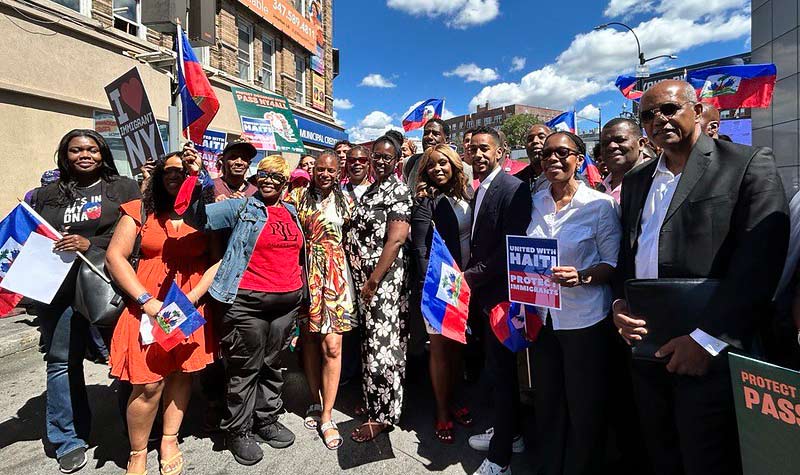
Brooklyn, NY – Yesterday, Brooklyn Borough President Antonio Reynoso hosted a rally in Flatbush’s Little Haiti alongside advocates, faith leaders, and elected officials in solidarity with Haitian immigrants. The rally took place days before the Trump administration initially sought to terminate Temporary Protected Status (TPS) for an estimated 500,000 Haitians who lack permanent legal status, a move that would revoke their work authorization and protection from deportation.

“In Brooklyn, when you come for one of us, you come for all of us,” said Brooklyn Borough President Antonio Reynoso. “Our neighbors from Haiti came here in need of refuge from an intense string of disaster, crisis, and political instability, and we stand proudly by their side in calling for an end to the Trump administration’s effort to revoke TPS for Haiti. TPS for Haiti has allowed thousands of Haitian immigrants to find a new beginning in our borough, and Brooklyn is better for it. The Haitian community will always have a home here.”

TPS allows immigrants from designated countries experiencing turmoil to legally live and work in the United States. Haiti was initially conferred TPS status in response to the catastrophic earthquake that devastated the country in January 2010, killing more than 300,000 people and displacing more than 1.5 million. Since then, TPS for Haiti has been redesignated and extended under multiple administrations because of additional natural disasters, public health crises, and political instability.

In February, the Department of Homeland Security announced it would terminate Haiti’s TPS status effective September 2, 2025. Following a lawsuit from the Haitian Evangelical Clergy Association, whose leadership spoke at today’s rally, the United States District Court for the Eastern District of New York temporarily extended TPS for Haitians until February 2026. TPS’s uncertain future has caused confusion and anxiety for TPS recipients who are now in legal limbo. With more than 150,000 Haitian residents in New York City, most of whom live in Flatbush, Brooklyn is particularly vulnerable to the economic and cultural impact of this decision. In neighborhoods like Little Haiti, Haitian immigrants have put down roots and built vibrant, multigenerational communities. The revocation of TPS threatens to split up families with mixed-legal status and upend local economies.

“Brooklyn’s Haitian community is deeply rooted and plays an integral part to the borough—from educators and healthcare professionals to small business owners and essential workers. Stripping TPS would jeopardize these contributions and destabilize countless lives,” said Congresswoman Yvette Clarke. “TPS holders often have U.S.-born children and interwoven family networks. Revoking their legal protections could fracture homes, schools, and community institutions, creating widespread hardship. Deportations would impact local economies—labor forces, neighborhoods, and small businesses would feel the strain. TPS holders contribute significantly through taxes, commerce, and community engagement, and sending them back into an unsafe and unstable environment could have disastrous consequences—becoming a life-or-death situation for many Haitians in Brooklyn and across this nation.”

“The cancellation of Temporary Protected Status for Haiti is another move in Donald Trump’s racist and xenophobic mass deportation agenda,” said New York City Comptroller Brad Lander. “This catastrophic decision strips more than 500,000 people across the country of work authorization and protection from deportation, including thousands in New York City—home to the second-largest population of Haitians in the U.S. While advocates continue to fight these terminations in court, it is our duty as elected officials to use every tool at our disposal to ensure that New Yorkers have access to the legal services and assistance needed to defend themselves against these cruel policies.”

“Brooklyn will never stay silent while our immigrant neighbors are under attack by the Trump administration. ICE is tearing our communities apart, and now more than ever, we must fight relentlessly to protect Haitian immigrants in this city. I’m proud to stand with the Brooklyn Borough President and fellow Brooklyn leaders in rejecting anti-immigrant policies and defending the dignity of every New Yorker,” said Council Member Chi Ossé.

“Ending TPS would rip apart Haitian families and devastate neighborhoods that rely on the workers who care for our loved ones in hospitals, build our homes, and support our small businesses. TPS is a legal, humanitarian program that allows people to live and work here with dignity. In fact, statistics show that TPS recipients are more likely to be employed than the general U.S. population, filling critical labor shortages in health care, construction, and service industries. These are people who did things the right way, and sending them back to Haiti, a country in crisis, would amount to a death sentence. We are stronger when we embrace our immigrant roots, not when we ignore them,” said Council Member Mercedes Narcisse.

“Our city is so strong, vibrant, and culturally impactful because of the immigrant communities that have made Brooklyn their own. That includes, in large part, Haitian immigrants who have thrived under temporary protective status—a protection that is meant to support those whose countries of origin are experiencing turmoil. Today, we are rallying in support of our Haitian neighbors and against the violence of the Trump administration’s deportation agenda. I will always fight for a Brooklyn that puts the needs of working people first and foremost. Threatening our immigrant communities hurts us all,” said Council Member Alexa Avilés.

“As the daughter of Haitian immigrants, I stand in full solidarity with our Haitian community against this cruel attempt to strip away Temporary Protected Status (TPS). TPS has allowed families to live with dignity, contribute to our economy, and strengthen neighborhoods like Little Haiti Brooklyn – home to one of the largest Haitian communities in the nation. Threatening hundreds of thousands of Haitians with deportation is not only inhumane; it is an attack on the cultural and economic fabric of New York City. I commend Borough President Reynoso for bringing us together in unity, and I will continue to fight alongside advocates and families to protect TPS and defend immigrant rights. We will not stand by as hundreds of thousands of Haitian communities are threatened with deportation!” said Assemblymember Rodneyse Bichotte Hermelyn.

“The Trump administration has taken action to roll back TPS protections for Haitian immigrants, many of who have been living in New York for decades. This cruel and heartless action will threaten hundreds of thousands of hardworking people. As the proud daughter of Haitian immigrants and chair of the Assembly Task Force on New Americans, I am proud to stand with Borough President Reynoso and my other colleagues to fight back against these actions,” said Assemblymember Phara Souffrant Forrest.

“New York City is a better place because of the cultural and economic contributions of our Haitian immigrant community. Haitian New Yorkers own business, provide essential healthcare services, and enrich the cultural tapestry of our city. Our neighbors deserve stability and safety. The Trump administration’s deplorable decision to end TPS for Haiti is meant to destabilize and attack our communities. We call on Congress to act immediately to provide permanent protections for all TPS holders, and fight back against Trump’s attacks,” said Murad Awawdeh, President & CEO, New York Immigration Coalition.

“HAFFD is proud to stand with Borough President Antonio Reynoso and our elected leaders to defend Haitian families. Protecting TPS is a matter of justice and humanity,” said Jocelyn McCalla, Executive Director of the Haitian American Foundation for Democracy. “As long as Haiti faces a crisis, we will continue to use our advocacy arm to ensure our community is heard and protected. Brooklyn is the heart of the Haitian diaspora — when we speak together, America must listen.”

“Behind every TPS designation are mothers, fathers, children, and grandparents who simply want the chance to live in peace, work with dignity, and build a future without fear. At HAUP, we see every day the sacrifices and contributions of TPS holders, neighbors who care for our elders, teach our children, and keep our city thriving. To stand with them is to stand for the very soul of New York,” said Elsie Saint Louis, CEO, Haitian Americans United for Progress (HAUP).

“The Haitian community needs solidarity, investment, and a genuine TPS commitment for a sustainable future. TPS is more than a policy — it is a lifeline for countless families who deserve safety, dignity, and the opportunity to pursue the American Dream. As Haitian Brooklynites, we must stand together in solidarity, ensuring our Haitian neighbors are protected, respected, and heard. We call on the American government to immediately reverse these life-altering actions and to prioritize policies that save lives, promote stability, and uphold our shared values of dignity and human rights,” said Porez Luxama, Executive Director of Life of Hope.