Home Blog Page 50

L.A. and D.C. Grand Juries: More Than One Way to Protest

By Mary Alice Miller
When ICE commenced its June sweep of undocumented immigrants in Los Angeles, protesters hit the streets. Trump sent in 2,000 federalized National Guard Troops and 700 Marines, purportedly to protect a federal detention center and other buildings after Los Angeles was asked to assign local police to protect masked ICE agents.


Protesters were tear gassed during clashes with law enforcement. Cars were set on fire, stores were looted, and major roadways were blocked with cinder blocks and shopping carts, including near a Home Depot where undocumented immigrant day laborers were detained. The Los Angeles mayor issued a curfew.

During the siege there were numerous detentions in the Los Angeles garment district and outside Home Depot, including United States citizens caught Prominent labor leader David Huerta was among those arrested while protesting, charged with conspiracy to impede an officer.

The use of the military to do policing and law enforcement work is not allowed without a very specific exception: the invocation of the Insurrection Act.
The National Guard was not activated by Governor Gavin Newsom. Estimated costs of Trumps’ deployment of the National Guard in Los Angeles was approximately $120 million, according to Gov. Newsom.

Last week a federal judge ruled that the Trump administration illegally instructed the National Guard to perform law enforcement duties – a violation of the 1878 Posse Comitatus Act – during the anti-ICE protests. The judge ordered the 300 remaining National Guard personnel deployed in Los Angeles cannot be used to engage in law enforcement activities like conducting immigration raids or immigration arrests, and crowd or traffic control.

Days later, a federal appeals court judge temporarily lifted a judge’s order that limited the operations of National Guard troops that Trump activated in Los Angeles, permitting them to continue to protect federal buildings.

Citizens have watched all of this. They had no choice: the vivid images were on their nightly news.
Those called to grand jury service are beginning to make their displeasure heard.
In the aftermath of the Los Angeles protests against ICE, and Trump’s deployment of the National Guard and Marines, several felony charges related to the anti-ICE immigration raid protests were dismissed or downgraded to misdemeanors. The few indictments that did stick involved people attacking federal agents with weapons.


It is rare for a grand jury to refuse an indictment. Prosecutors have sole control over evidence introduced to grand juries and can use their digression to persuade a grand jury to indict almost anyone. The person being charged is not allowed to have their attorney present during grand jury proceedings. In addition, grand jury proceedings are secret.
As New York Court of Appeals Chief Justice Sol Wachtler said in 1985, “Any good prosecutor can get a grand jury to indict a ham sandwich.”
Not anymore.

In the wake of protests in Los Angeles and the Trump administration takeover of law enforcement in the nation’s capitol, grand jury members in Washington, D.C. have begun to question cases brought by over-zealous prosecutors related to the National Guard.
One most notable case that went viral was an incident where former DOJ employee Sean Charles Dunn allegedly called a federal agent a fascist and threw a Subway sandwich at the officer. Dunn was arrested by 20 federal agents in riot gear for assaulting a federal officer. A grand jury returned a no-bill.

A woman recording video of the transfer of inmates into the custody of Immigration and Customs Enforcement agents outside the city’s jail in July was subjected to three separate grand juries accusing her of assaulting a police officer. All three voted against indicting her.
In another case, a man was arrested on an assault charge by a U.S. Park Police officer with the assistance of National Guard members. A grand jury rejected an indictment against him.


In another arrest, Torez Riley, a Black man, was charged with unlawful possession of a weapon while he was on his way to a Trader Joe’s. Riley was stopped by law enforcement who searched his bag with no probable cause. After admonishment from Federal Magistrate Judge Zia Faruqui over the unconstitutionality of the arrest, a federal prosecutor dropped the case.
Jeanine Pirro, U.S. Attorney for the District of Columbia has instructed prosecutors to maximize criminal charges on street arrests.

Perhaps grand juries are acting as the conscience of the people.
Grand juries in Chicago, New York, and Baltimore might take note.
NYC Mayoral Race : Boots and Baggage

By Nayaba Arinde
Editor-at-Large

The NYC mayoral race may come down to questions over boots and baggage. CUNY constitutional law professor Gloria J. Browne-Marshall told Our Time Press that the electorate has a choice of a candidate with President Donald Trump’s boot on their neck, or others with a whole bunch of political baggage.

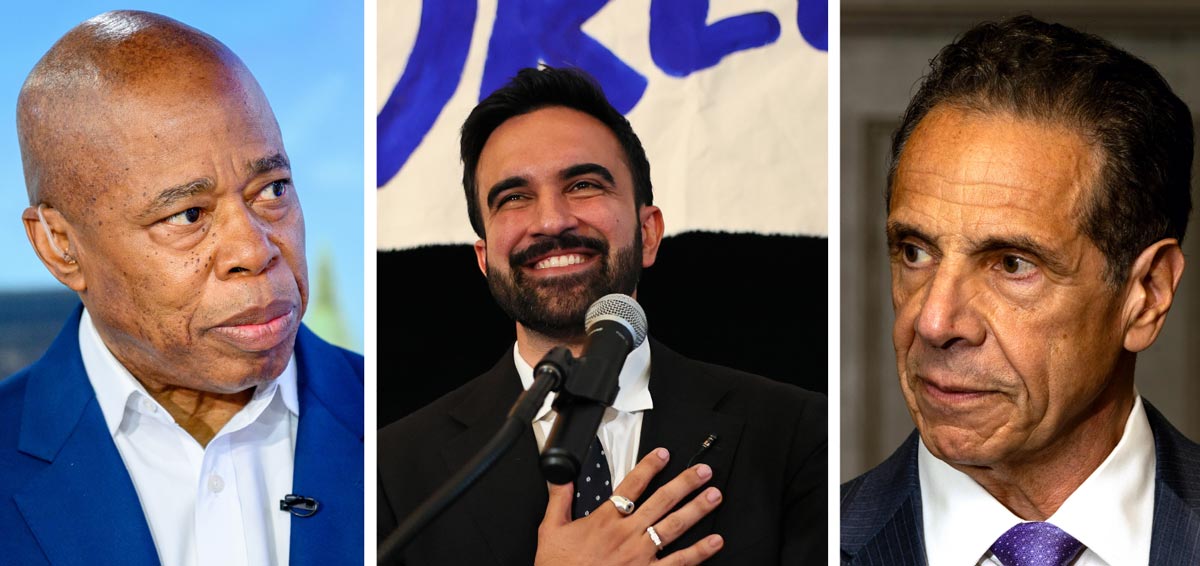
She posed the question regarding frontrunners Queens Assemblyman Zohran Mamdani and former NYS Governor Andrew Cuomo, “Do you want to go with the questionable parts that you already know, or the questionable parts that you don’t know?”
On Tuesday, the New York Times published a poll calculating a Zohran Mamdani win if current percentages remain. The Democratic nominee is 20 points ahead currently, in the four man race. In the polling of 1,284 likely New York City voters from Sept. 2-6 the Times/Sienna College Poll has Mamdani at 46%, Cuomo at 24%, Sliwa at 15%, and Adams at 9%, and don’t-knows/won’t-says at 5%.

But the numbers shift dramatically if Cuomo becomes the solo opponent. Mamdani at 48%, Cuomo at 44%.
Inserting himself in the race with less than 2 months to go, Republican president Trump reportedly wants Adams or Sliwa to drop out of their Independent and Republican-line runs respectively, in order to give Cuomo a clear one-on-one run against Mamdani.

The traveling Adams and Trump show had the media in a flux last Friday, when news was floated that the President’s associates had offered him the job of Ambassador to Saudi Arabia in exchange for him obviously dropping out of the race for NYC mayor; clearing the way for Democrat-turned-Independent candidate Cuomo to go head-to-head with 20 points ahead frontrunner DSA member, and Democratic Party nominee Mamdani.


Published reports also suggested that Trump’s team could possibly offer Sliwa a job in his administration. Adams denied that any such ambassador offer existed. “No one made an offer to me,” he said.

Trump also said he had not offered the mayor anything but stated once again that he does not want New York to end up with a “communist mayor,” even though Mamdani is indeed a democratic socialist. The president said that everything comes through the White House, so Mamdani is probably not going to be able to do the things he said he is going to do.
Cuomo, 67, said, “In reality for voters, there will be two viable candidates who can win: me and Mamdani. And you could not have a more stark choice. Mamdani is a socialist. I am a democrat.

“I am improving,” Sliwa said, “I am not moving.” The lone Republican third place contender Sliwa maintained that he is staying in the race, ”Under no circumstance, you can’t bribe me, you can’t lease me, you can’t rent me, you can’t motivate me to leave this race.”
Opening a Brownsville satellite office last Friday, the 71-year-old Brooklynite said, “I’m running to be the People’s Mayor for all.”

Casual observers citywide are speculating that Adams may still be offered another federal government job, or a private or a corporate business opportunity. This has folk asking will he or won’t he stay in this heated mayoral race? Either response has the stamp of Trump lingering over his reputation.


Adams said, “While I will always listen if called to serve our country, no formal offers have been made. I am still running for re-election, and my full focus is on the safety and quality of life of every New Yorker.”
Last Friday, in the wake of the frantic ambassador job speculation, and blaming his opponent for fueling the rumor, Adams stated, “Andrew Cuomo is a snake and a liar. I am in this race, and I am the only one that can beat Mamdani.”

Adams, 65, has been denied public matching funds almost a dozen times reportedly due to the five federal corruption charges, which Trump allegedly made go away in return for cooperation with his administration, particularly his controversial immigration policy. He said, “Serving New Yorkers as their mayor is the only job I’ve ever wanted.”
Heavily defeated by Mamdani in the July primary, Cuomo predicted on Tuesday that “People will gravitate to the natural choice.”

Civil Rights attorney Professor Browne-Marshall told Our Time Press that with the Adams administration, “We have so many issues of corruption within the administration, and even if it does not include him personally, then it shows a judgment that is questionable in his hiring practices. If you have so many people under indictment or pleading guilty to charges, it comes down to why we should trust the second term of someone who can’t choose the right people for his administration. It overshadows any good he is doing.”

Teaching Constitutional Law at CUNY’s John Jay College of Criminal Justice, the educator continued, “The lack of independence, and the sword hanging over his head from the Trump administration, means it is hanging over the head of the entire city, not just him. So that means another four years of us living under the boot of somebody who’s living under the boot.
All of this reflects on us as a city, and it’s not just him in his personal and professional life. Trust has been broken. I’m not quite sure if he can get it back by November, and how would he get it back? In what ways can he rebuild trust?”


As for Mamdani, Browne-Marshall said, “I think right now he’s a bit of a wild card. But, there are such extreme differences between the candidates that I think there are a lot of people who are willing to take the chance on a wild card.
“When we look at Cuomo, the country was so indebted to him during the pandemic, and his leadership during that time. However, once again, there’s been a breach of trust, with the allegations of the abuses of power regarding the women and other issues that had him step down in the first place. He left office under a cloud, and once again we have a breach of trust, and can that trust be redeemed by November?’

The political law expert assessed, “People bring certain things to the table, but they’re also bringing their baggage to the table.”
Will this flawed “perfectly imperfect” candidate reality keep folks home on election day?
“No, I think that it will make them go vote, because our destinies are tied together, and right now we need someone who’s gonna stand up to Trump…I don’t think that Eric Adams is in a position to stand up to Trump, at least that has not been shown so far. Mamdani and Cuomo can, and they then each come to the table with aspects of their administration that are seen as a wild card. They both have questions, with the more liberal point of view that Mamdani has, or is it understood leadership, but with a great deal of baggage that Cuomo brings?”

Apparently wealthy NYC developers and Cuomo held an emergency closed door meeting on Tuesday, September, to find out how they can combat the Mamdani wave, by escalating the Cuomo campaign.

Elizabeth Yeampierre: The Environmental Justice Warrior Who Leads UPROSE

0

Fern Gillespie
For almost 30 years, Elizabeth Yeampierre, an internationally recognized Puerto Rican attorney of Black and Indigenous ancestry, has been on the frontline advocating environmental justice for Black and Brown communities. As the executive director of UPROSE, Brooklyn’s oldest Puerto Rican community-based organization (established in 1966), Yeampierre has been advocate and trailblazer for community organizing sustainable development, environmental justice, community-led climate adaptation, multi-generation advocacy and community resiliency.


Yeampierre, a lifelong New Yorker who has lived in neighborhoods from the South Bronx to Brooklyn, holds a bachelor’s degree from Fordham and law degree from Northeastern University. Her expertise and impact on environmental justice has made her a popular featured speaker at local, national and international forums including Sage Paris 2015, 2016 GRI Amsterdam, White House Forum on Environmental Justice, Yale, Harvard, Cooper Union, Columbia, and universities, colleges, and conferences all over the country and spoke at the opening climate rally for Pope Francis at the National Mall, The Battle for Paradise at Cooper Union with Naomi Klein.

Her work is featured in several books, in addition, being featured in Latina Magazine, VOGUE, Vanity Fair, The Guardian, Grist, American Prospect, Al Jazeera, Huffington Post, Democracy Now, The Intercept, and a variety of media outlets throughout the United States, Latin America, and Europe.

She has operated in leadership roles with national environmental justice organizations and received multiple honors for her innovative advocacy for environmental justice for Black and Brown people. She was recently honored by Time Magazine with The Closers 2025, honoring 25 Black leaders working to end the racial and equity gap.

This summer, UPROSE had New York City’s first community LED solar project in collaboration with Working Power. Located in Sunset Park, the headquarters of UPROSE, the solar project will serve 200 families that have subscribed. The some of the proceeds will go back into the community. Members of the community will determine how the funds are reinvested to of climate change.

During Climate Week, UPROSE will host the event Climate Justice Lives Here in Sunset Park from September 22 – 26, 2025. It’s a free community-driven event on climate action, education, and advocacy. Special programs include the hip hop caucus discussing Katrina: 20 Years Later. A panel on how Caribbeans support each other from Haiti to Jamaica when there is an extreme weather event in the Caribbean.

A program on Full Fashion focusing on alternatives to inexpensive clothes laced with carcinogen that abuse the environment, workers and violate human rights. Instead, Full Fashion explores repurposing and recycling clothes into something elegant and beautiful, which will be featured in a fashion show. There’s singer Diana Assini and blessing of the Four Corners with medicine men and women from the Southwest.


Our Time Press spoke with Elizabeth Yeampierre about Climate Week and this new era of environmental justice.
OTP: People are coming from around the world to New York City’s Climate Week. Last year, UPROSE held their Climate Week event in Manhattan. Why was it important to bring your event Climate Justice Lives Here to Brooklyn?
EY:
Climate Week has become this corporate-led big green event in New York City. But, the city is surrounded by Black and Brown people who are living in the midst of environmental burdens and have solutions to climate change. We can’t be invisible in our own city. UPROSE thought it was important to remind people who are coming into New York that climate justice is in community, that the solutions are in community, that we are changing the landscape in community, that we’re putting down infrastructure, we’re passing legislation and we’re building leadership.

OTP: What is the major environmental justice challenge for Black and Latino communities in Brooklyn?
EY:
In Brooklyn, I think it’s a number of things. One is extreme heat. Also, poor air quality. You know, we’ve been having yellow skies from the burning in Canada. Then the lack of vision for looking at our significant maritime industrial areas and repurpose them to address our climate and economic needs so that we have great jobs. Instead of doing that what happens is that you see these sectors being turned into opportunities for the privileged. When you disrupt families and the connections they have in the neighborhood, you increase the chances that they’re not going to survive the extreme weather events.

OTP: The Trump Administration’s deregulation of the Environmental Protection Agency (EPA) was not only a major setback to the Climate Change movement, it was devastating to Black, Brown and poor communities who face hazardous pollutions daily. What impact has it had on UPROSE?

EY: All the funding and a lot of the support, legislation and regulations that came out of a legacy of the environmental justice movement were deregulated by January. Decades of work done by the environmental justice movement was deregulated. Now we’re in a very different position. Now what we’re doing is thinking about how do we take care of each other on the ground as if the federal government doesn’t exist because. We know that they’re going to remove FEMA and that those supports won’t be available. We know that they are investing in more fossil fuel extraction.

So, they are literally complicit in accelerating climate change. That they are moving away from the resources that existed for solutions that would address not only our environmental health, but our environmental future. So what do we do in a situation like that? Those of us who are descendants of extraction, colonialism and enslavement can’t just sit down and say, it’s all over for us. What it means is that we lean into each other, we lean into community and we try to figure out how to hold the line in the face of political disruption. That’s what we’re doing in Brooklyn and Sunset Park and that’s what the movement is going all over the country. We’re all working with each other, sharing resources, and holding the line because the lives of our people are at stake.

OTP: So, UPROSE and the environment justice movement had to readjust in terms of not depending on federal government grants or government programs?
EY:
We have to recalibrate. Think about as war. You know, our ancestors were people who didn’t get health care. Who lived out through the worst conditions. Who were mistreated on a regular basis. And they had the ability to imagine us. To do everything they needed so they could feed each other, support each other, take care of each other.

UPROSE is part of coalitions and movement spaces. We’re members and part of the leadership of the Climate Justice Alliance, which is a national organization of frontline leaders across the country. We’re also part of the New York City Environmental Justice Alliance, which is a citywide organization. On the state level, we are co-founders of NY Renews, a coalition of 400 group members across the state. We are all working with each other to support each other to make sure that we’ll be able to get through this.
For more information on getting involved with UPROSE or attending UPROSE programs and events, please visit www.uprose.org

Yankee Boy Barber Shop’s Block Party Brings Community Together

0

by Pojanee Fleury
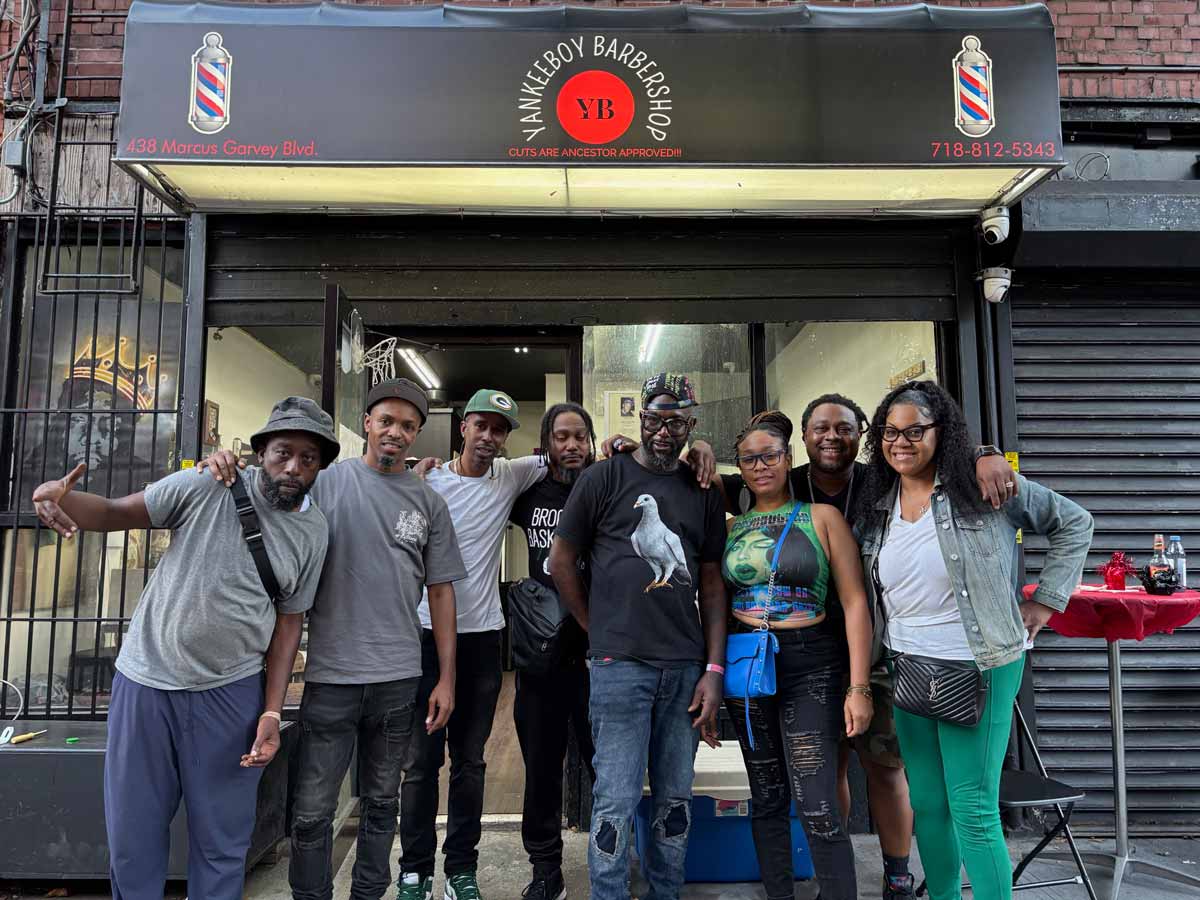
The stretch of Marcus Garvey Blvd between MacDonough Street and Decatur Street shut down for the block’s first party. What started as one barber’s vision to bring people together became a testament to the power of local initiative.

Mike Ife, the owner of Yankee Boy Barber Shop, explained that it began with wanting to celebrate a friend’s birthday that quickly transformed to a block wide party that everyone could come out to enjoy.

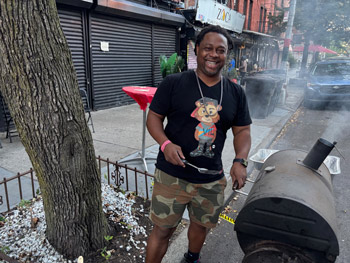
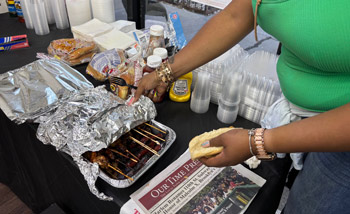
The aroma of grilled corn, jerk chicken, and fresh baked cookies filled the air as activities and games were set up for the children. Ife commented on the legacy he carries, growing up right around the corner from the barber shop he now operates, recalling fond memories of hanging out with friends and learning from the elders.


Yankee Boy’s motto is, “Cuts are Ancestor Approved.” It is clear that Ife and his fellow barbers pay homage to those that came before them, continuing to build and pass on wisdom to the youth. “As a barber, I am like a community counselor,” Ife explained.

He spoke passionately about the barbershop’s role as a safe space, a place where people from all walks of life could come together to share stories, seek advice, or enjoy a lively discussion. Ife shared that he and other barbers in the shop give cuts weekly at shelters and senior centers. Although a small stipend is provided, it is commendable that – as Ife put it, “we can’t forget about those that are in different stages in life, we all deserve to have a good cut and feel good about ourselves.”


For many in the neighborhood, Yankee Boy’s isn’t just a place to get a haircut—it’s a hub of connection and mutual support. Ife believes that creating this atmosphere is essential to fostering a sense of belonging and pride within the community.

“It’s bigger than just cutting hair,” he said, emphasizing the importance of preserving community. Whether it’s a conversation about local events or life advice passed down over generations, the barbershop thrives as a cultural centerpiece.

Ife talked about gentrification, sharing a positive shift in the neighborhood, “we can be outside now.” The comment referring to more police presence and less crime that used to grip this area of Brooklyn. The future of Brooklyn is bright, “we all have to do our part,” he said.
The block party felt like a celebration of resilience and unity.

Neighbors of all ages mingled together, enjoying music, food, and laughter that echoed down the street. Tables lined the sidewalks, selling everything from handmade jewelry to art that depicted the community’s rich history. It was a reminder that amidst change, the heart of the community continues to beat strong, fueled by the connections and traditions that make it unique.

The Organization Us Celebrates Its 60th Anniversary

0

By Dr. Segun Shabaka – Part I

On Sunday afternoon, September 7, the Organization Us celebrated the 60th anniversary of its founding. This historic event took place at the organization’s headquarters, The African American Cultural Center, in South Central Los Angeles, California. This community has been its home and the center of its work and struggle since its inception. The Organization Us was founded on September 7, 1965, when Dr. Maulana Karenga called its founding meeting with seven other brothers and sisters at his home. It is one of only a few Black Power organizations from the 1960s that remains intact and active while still unapologetic and unbudging in its Blackness. We have to ask ourselves why?

The answer is in the three characteristics that defines the Organization Us: Leadership, Doctrine and Organization. The leadership speaks to the central vision, values and work of Dr. Karenga and the leadership group called the executive circle; the doctrine is Kawaida, a philosophy of life, work and struggle; and the organization is the advocates(members) and their relations and practices directed towards “cultural revolution within and political revolution without, resulting in a radical transformation of self, society and the world”.

Seba Dr. Maulana Karenga, the organization’s founder and chair, was thanked by many throughout the celebration for the positive effects he, the Organization Us, the Nguzo Saba and Kawaida have had on their lives and the overall movement for African and human freedom and good. Having joined the Black Freedom Movement in the 1960’s, sixty years after he remains a force in local, national and international struggles of African people.

Dr. Karenga is currently the Chair of Us and the National Association of Kawaida Organizations(NAKO), the executive director of the African American Cultural Center and the Black Community Clergy and Labor Alliance(BCCLA).Moreover he also serves as professor and chair of the Department of Africana Studies at California State University, Long Beach.
A PowerPoint presentation on the organizations’ history and contributions to the local, national and global Pan-African struggle was given by Dr. Karenga with input from current and former members during and after the presentation.

Among their contributions that formed the foundation and framework of their transformative work and struggle are Dr. Karenga’s creating and the Us members’ teaching, practicing and promoting Kawaida philosophy and its guiding principles, The Nguzo Saba (Seven Principles – Umoja- Unity, Kujichagulia – Self-Determination, Ujima – Collective Work and Responsibility, Ujamaa – Cooperative Economics, Nia – Purpose, Kuumba – Creativity and Imani – Faith) and the Pan-African holiday Kwanzaa celebrated by millions of African peoples throughout the global African community on every continent, uniting African peoples in a way no other principles and practices do. It brings together African people from December 26 thru January 1 from all walks of life, faiths, cultural and religious backgrounds in every major African community from various corners of the world.

The Us organization was born out of fires of the Black Power phase (1965 to 1975)of the Black Freedom Movement of the 1960s after the Civil Rights phase (1955 to 1965) exhausted itself. Under Dr. Karenga’s leadership the Organization Us has played a major role, directly and/or indirectly, in the major movements over the last six decades, e.g.: all three Black Power Conferences (Dr. Karenga was the leading theorist and a principal organizer), the independent Black school movement(Council of Independent Black Institutions/CIBI) which used and taught the Nguzo Saba), The anti-Apartheid and African Liberation Movements, the Black Studies Movement (Dr. Karenga is one of the founding scholars of the discipline of Black Studies and wrote Introduction to Black Studies/IBS, one the most widely used text in the field), Black independent politics of the National Black Assembly, Ancient Egyptians Studies (The Organization Us initiated the call and hosted in Los Angeles the founding conference of the Association for the Study of Classical African Civilizations’ (ASCAC) 1984, giving it its name, logo, and writing and publishing its initial literature, and introducing a new field in Black Studies, Ma’atian Ethics.

In addition, Us has made important contributions to the development of African cultural festivals, rites of passage programs, the Reparations Movement, Black liberation theology etc.

Despite the revisionist history in circulation, some of the major Black Power organizations and leaders of that era that adopted Kawaida and the Nguzo Saba, which guided and aided them when they made their most profound and significant contributions to the Black Liberation Struggle, were: the Committee for a Unified Newark (CFUN) under Amiri Baraka; The East Cultural and Educational Center for People of African Descent, under the leader of Jitu Weusi (This writer was a part of the EAST organization almost from its beginning, first as a volunteer, then a teacher and administrator and later as its executive director until its demise); Ahidiana Institute, under Kalamu Ya Salaam; and, the Institute of Positive Education/IPE under Dr. Haki Madhubuti, (This year, Dr. Madhubuti and IPE is celebrating its 58 anniversary). These groups were the strongest Kawaida institution builders among many others.


What made these and many other Kawaida institution builders so unique was that they built powerful independent, self-determining and self-reliant institutions of service and struggle while following Kawaida’s model of drawing on the best of African history and culture as the central source of paradigms. In addition, each of these Kawaida based institutions had a profound effect on the local level with full time schools and daycares, coops, cultural institutions, music and concert venues, community development programs, newspapers, publishing houses and other services. And they also worked together in several organization structures under the Kawaida concept of “operational unity, unity without uniformity, and unity in principle, purpose and practice.” Some of these formations were the Congress of African People (CAP – a united front of Kawaida organizations), The African Liberation Support Committee (ALSC), the National Black Assembly, CIBI, among others.