Home Blog Page 5

Resident felt treated as an “Angry Black Lady” after confrontation at Bed Stuy Gym

By Nayaba Arinde

Editor-at-Large

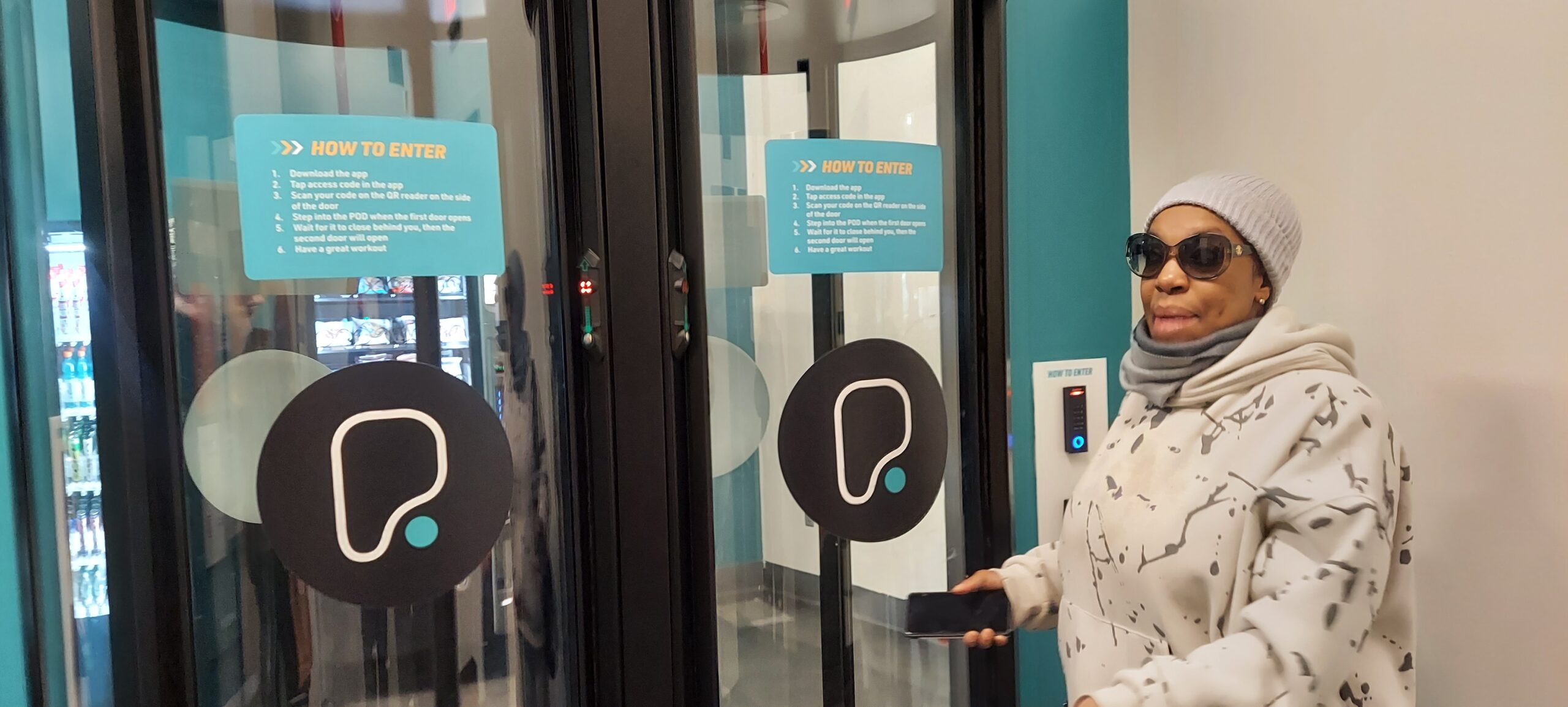
All MTA worker Tanya Ridley wanted to do was exercise quietly at PureGym, her local Bed Stuy gym. It was part of her fitness and self-care regime. But then came a senior white member, who she said propositioned her.

She told Our Time Press that she felt violated, but staff seemingly dismissed her concerns.

“When I first reported this man in the early fall last year, the gym was still Blink Fitness. I was working out, he said he wanted to take pictures and videos to send to his friends in Russia, so they can see how American women work out in the gym. I was stunned. I told him ‘No.’ I went to the manager who told me that I wasn’t the first woman to complain about him, and they were going to keep an eye on him.”

Ridley said the alleged harassment occurred again with the same individual, at what was now PureGym, 1413 Fulton Street, during the first week of Women’s History Month.

“I was on a machine, he walked over to me as if we were cool, and stood in front of me, blocking me,” she told Our Time Press. “When I was screaming for my life for him to go away he said ‘What’s wrong with you?’ So, I’m being treated like the crazy Black lady. Everybody froze. He just stood there. He didn’t move, and the manager came out to me, and instead of trying to protect me, she was annoyed by me, and wanted me to shut up. She was angry, and the man just started working out again. I started to record. She asked me if I wanted to file a complaint and call the cops. I said yes, and I did. They came, and he is still working out like it is no big deal to him. The police took my statement, and said maybe I should consider going to another gym.”

Ridley said PureGym staff belittled her concerns, as the accused harasser “moseyed on over to the police when he decided to, and had a jolly conversation, as they were laughing, and then he went back to working out. They told me the lie that they could not remove him from the gym. I have seen police remove Black people from their homes.”

The NYPD did not respond to an Our Time Press inquiry by press time.

When this reporter went to the Fulton Street location this Tuesday morning, staff refused to answer any questions stating that, “The manager is not here yet.”

A current Local 100 member, and MTA conductor, Ridley was a former Local 46 ironworker who said she helped to build the fourth tower at the World Trade Center location. Yet, she said that she is nervous to go back to workout at her local gym.

On March 7, Ridley posted an Instagram video, which has garnered 69,000 views, 375 reposts, and 2,593 shares. In a corner of the gym, she declared, “I am at PureGym in Brooklyn, this man in the grey is a predator. Here is a man who walks up to Black women and asks them if he can record them, and send them to his friends in Russia. I have dialled 911, and reported him to the authorities. They are reasoning with this man. This man is crazy, he’s a creep.”

Responding to an Our Time Press inquiry, a UK-based PureGym media representative called to ask about the story, responding in an email; “We work hard to ensure that our members feel safe at PureGym and do not tolerate any form of harassment…We are aware of allegations made against a member at PureGym Bed-Stuy. A thorough investigation has been undertaken, including a review of all available evidence, and the appropriate action has been taken. Throughout these events our team have followed our processes, offered support to the member reporting these matters and have reached out to her in an attempt to discuss the findings.”

Ridley said that she had received a few emails, and one phone call from a blocked number, “They have treated me like I was the problem. Instead of taking real action, they gave him a verbal warning.”

UK-based PureGym bought Blink Fitness for $121 million. They plan to expand their U.S footprint, with about 67 locations in New York and New Jersey.

“PureGym goes against everything that we value as a community in Bed Stuy. Here you have,” an international business, “swallowing up our community gyms, tearing away the staff and creating an environment that is dystopian and downright dangerous,” said Marlon Rice, longtime community advocate. “Ms. Ridley is a longstanding member of this community,” who feels her rights were violated in this establishment and it has been weeks since Ms. Ridley has felt comfortable enough to return to the gym to work out.”

“No one should have to report harassment more than once to be taken seriously,” Assemblymember Stefani Zinerman told Our Time Press. “The concerns raised in this incident — particularly the lack of response after the initial complaint — are deeply troubling and point to a clear breakdown in accountability.

Every business in our community has a responsibility to ensure a safe environment, respond promptly, and involve the appropriate authorities when necessary. Inaction is not an option — it puts people at risk and undermines public trust.”

PureGym reps told Our Times Press, “The appropriate action has been taken in line with our Harassment and Inappropriate Behaviour Policy.”

Zinerman stated that, “Far too often, women — especially women of color — are dismissed when they come forward. That must change. I am calling on all establishments to review their policies, properly train staff, and take every report seriously.”

Marlon Rice continued, “We have to be more critical of corporations that look to set up shop in our village. The protection of our women, of our elders, of our children – these things are non-negotiables. Puregym has shown that it is incapable of protecting the women in my community, and so this,” internationally-owned, “establishment has no place in my community.”

“The only way to stop this kind of behavior, discrimination and harassment is by shining a light on it. It is clear Pure Gym is neither equipped nor concerned enough to provide a safe environment where members do not feel harassed, objectified or preyed upon,” Civil Rights lawyer, and NAACP member Benjamin Pinczewski told Our Time Press. “It is appalling that this man, a clear stalker who cares nothing about a woman’s right to privacy, remains a member free to harass, video, photograph, and objectify women of color without their permission or authorization. Staff at the club treated Ms. Ridley, a long standing member, as the ‘angry Black woman.’ Had management acted properly and interceded she would not have been subjected to his continued harassment. Then there is the NYPD’s response which was to blame the victim. Pure Gym needs responsible and caring staff to ensure that women members feel comfortable and safe working out at the gym.”

UPDATEDED 3/27/26 Based a response from PureGym, this article has been updated to clarify that they are not a hedge fund, and notes there has been no sexual harassment charge.
Electeds & Activists say,”Tax the Rich! Help the City”

By Nayaba Arinde
Editor-at-Large

“Tax the Rich,” some elected officials and NYC activists are calling for racial and economic justice. Too many New Yorkers say they face the dilemma of paying for food, rent, childcare, or medicine, or being forced to relocate from the city.
With New York City facing a $5 billion deficit, Mayor Zohran Mamdani, in agreement with fellow Democratic Socialists of America elected officials, has asked the state to increase taxes by 2% on New Yorkers earning over $1 million annually.
Mamdani has also proposed a possible property tax hike.
“It’s a disproportionate tax,” activist Brother Paul Muhammad told Our Time Press. “Black, oppressed, and poor people pay taxes. Rich people pay tax lawyers and tax accountants.”


Gov. Kathy Hochul has reiterated her opposition to taxing millionaires and billionaires. “I’m going to be smart about this budget and care about affordability,” she declared. “New Yorkers can’t pay anymore. We have to cut their cost of living. Job number one in this budget.”
“The wealthiest New Yorkers [should] give just a little bit more, so that we can cover the basic needs, and keep the city operating,” said Brooklyn City Councilmember Sandy Nurse.

Declaring the need for financial accountability and equitable contributions as opposed to continued harsh economic austerity measures, Nurse continued, “The cost of living is extremely high and our wages are extremely low, and we need those who can–to kick in a little bit more, so that everybody can enjoy life, everybody can make their basic needs, and ultimately that helps the business community.

It helps our state economy. So, we really need to see some action here at the state level. I’m hoping that the governor supports a proposal to tax the rich, and the Fair Share Act.”

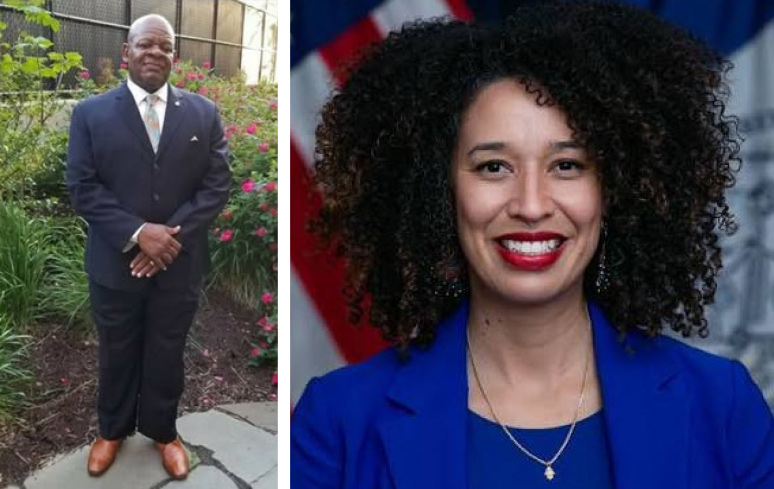
Paul Muhammad, left, and City Councilmember Sandy Nurse


Comptroller Mark Levine is projecting a NYC $2.2 billion gap for Fiscal Year 2026, and a much larger $10.4 billion gap for FY2027. Mamdani has estimated a $12 billion gap over two years, prompting proposals for tax hikes and potential service reductions.


If the state does not agree to a tax increase on wealthy earners to tackle the $5.4 billion city budget gap, Mamdani has proposed a “last resort” 9.5% property tax increase in the preliminary FY 2027 $127 billion budget. Hochul has refused to consider the plan, citing her affordability agenda instead.


With incomes static, or even worse, declining, opponents, fixed-income, and property and homeowners decry the property tax proposal, stating that it could disproportionately affect Black middle-class property owners. Property tax critics add that homeownership is how many Black middle-class families have built their relative wealth.


Hochl constantly refers to her affordability agenda.
“No New York senior should lose their home because they can no longer afford their property taxes,” said Hochul. “We are working to make New York more affordable for our seniors on fixed incomes and empowering them to age in place, at home, in the communities they know and love.”
Hochul’s affordability agenda also includes a Middle-Class Tax Cut for about 8.3 million New Yorkers, bringing middle-class taxes to their lowest levels in 70 years.


With a Tale of Two Cities narrative, to balance the obvious economic inequality, Nurse is supporting resolution 0240-2026, requesting that the state enact legislation requiring the wealthiest in the city to pay their fair share to support working-class New Yorkers.

She suggests that even minimally raising taxes on millionaires and large corporations can invest with noticeable results in public infrastructure and help fund city services like housing, transit, healthcare, and schools. Last year, Nurse sponsored legislation to create more affordable housing by targeting newly constructed city-funded units for very low-income households.


Representing District 37: Cypress Hills, Bushwick, City Line, Ocean Hill, regarding the property tax hike speaking with Brooklyn News 12 Nurse said, “Certainly, we don’t want to balance the budget on the backs of homeowners, particularly in districts like mine in the outer boroughs, Black communities, Latino communities that have worked really really hard to secure the American dream of a home.

But the reality is, we are facing a tight budget. I am not in favor of raising the property tax; I am in favor of raising the taxes a little bit more on the wealthiest New Yorkers. We are a state that is home to over 100 billionaires. They can afford to peel off a little bit to help us all out.”


If Hochul says no, Nurse replied, “We’re fortunate enough to have a Mayor who is thinking very thoughtfully about this, as opposed to the previous administration which just did broad cuts. So hopefully, between the Council, the administration, and the state, we can look for ways to generate revenue. We can look for effective cost savings that don’t hurt the people who need it the most.

We have a strong social services network. We need to make sure that our services are there to protect the most vulnerable New Yorkers, and so we’re going to be having that conversation over the next few months about what we are going to do. I’m optimistic that with the leadership we have across. the board, across these institutions, that we will come to some kind of agreement, but as of right now, we’re just starting the conversation.”


Community activist Muhammad told the paper, “The Black Community needs a Black Prioritized Agenda. Black people are barely hanging on from the scourge of COVID, and landlords like me became unpaid adjunct shelters with non-paying tenants. Now you’re going to tax us less than five years later, and there is a disproportionate slide rule when it comes to the Black community.”


The East New Yorker continued. “The tax laws proportionately have the Black community suffering more when it comes to tax increases proportional to our wealth–$700–800,000, that’s our community, $2.3 million, that’s Park Slope. The tax laws would hit us disproportionately, causing hardship. A property tax increase would further destabilize generational wealth and homeownership in the Black community.”


As for taxing the rich, Muhammad suggested “Tax by zip code,” he explained that lawmakers “should eliminate those large extended tax abatements for the developers. Stop giving 20 years tax-free. They are not paying their fair share, and the burden is falling on us. They should change the current tax structure when it comes down to taxing certain zip codes that mainly holds Black and brown. Taxes in Park Slope are different from taxes in East New York.”


At a Tax the Rich rally, Queens District 36 Assemblywoman Diana Moreno declared, “I am sick and tired of the lies of hearing that it is the wealthy that are leaving this great city when we tax them, because we did in 2021, and guess what, we have more millionaires now than we did then. Who is leaving the City? It is working New Yorkers, specifically working parents with young children.”

Saturday@Harlem Is… Presents the Savoy Centennial and the Institutional Legacy of Harlem Social Dance

0

By Enoch Naklen
Multimedia Journalist

The line formed on the second floor of the Harlem Hospital Center by 12:15 for Saturday@Harlem Is… Presents Savoy 100 Harlem, a free touring service that brought students from Children’s Aid Milbank and longtime Harlemites into the heart of a 100-year legacy.

This floor houses the Harlem Is… Theatre, Music, and Dance exhibition, where ceiling-high murals immortalize a lineage stretching from the 1806 African Grove Theatre to modern legacy keepers.

Award-winning director Daniel Carlton opened the afternoon by challenging the young audience to look past the clinical nature of the building. “When you think about the hospital, what do you think?” Carlton asked. The answers ranged from doctors to death, but he quickly used the murals as evidence that the building is also a sanctuary for the neighborhood’s institutional memory.


Barbara Horowitz, founder of Community Works, explained that the exhibition was built through young people interviewing local legends about the part they play in preserving the culture. The event was a collaboration between Community Works and the New Heritage Theatre Group, spearheaded by legacy keeper Voza Rivers.

Among the crowd was Joe Porter, a lifelong Harlemite and local public school graduate who stood as a living testament to the exhibit’s mission. “I am just so thankful for the village of Harlem for raising me and teaching me how to carve out a way for myself,” Porter said.


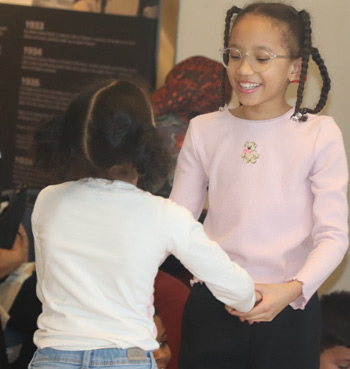
The program moved downstairs to the Mural Pavilion for the main centennial celebration of the Savoy Ballroom. While the second floor houses the massive murals, the Pavilion featured the Harlem Is… Timeline, an intensive visual and textual installation that flanked the audience with bulleted references to celebratory figures in Harlem since 1900.

In this immersive setting, Barbara Jones, branding her efforts as Savoy 100 Harlem, introduced the afternoon’s panel and film. As a guardian of the Savoy’s history, Jones framed the event as a bridge between the legendary 1926 ballroom and the preservationists of today.


The panel featured Judy Pritchett, longtime collaborator of Frankie Manning, and former swing dancer Nikki Davidson. They presented clips from Pritchett’s documentary work, which interrogated the 1937 Big Apple craze and the rapid global migration of Black dance. Pritchett offered a blunt critique of the economic disparity within the movement.

“The next thing you know it’s copied not so well and imitated by white people in the rest of the world,” Pritchett noted, tracing the shift from Black clubs to the White House. She questioned the systemic exclusion of the originators from the profits, asking, “Why is it that the black people that are starting these movements are not making money from it?”


The day concluded with the physical spirit of the Savoy led by Hamed, a dance instructor from NYU. His presence served as proof of how embedded swing culture remains in contemporary academic and social spaces. Hamed guided the room through the foundational movements of the Big Apple, noting his desire to “just have a good time, spread good vibes, and conjure the past and present spirits” of the Savoy’s 100th year.

As leads shifted to their partners for a collective choreography, the Pavilion was filled with a mix of laughter and focused rhythm. Between the timeline boards and the moving bodies, the spirit of the Savoy proved to be an unbroken continuity. Photos by Enoch Naklen

Valerie Gladstone: Creating Black Art Dolls and Hollywood Hair Styles

By Fern Gillespie
Whether it’s her day job as an acclaimed hair stylist and wigmaker for television, film and theatre or her passion project as a renowned doll artist, Brooklyn resident Valerie Gladstone creates memorable images with style.


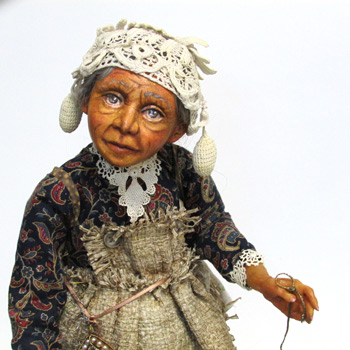
As the founder of Brooklyn Dollworks, her one-of-a-kind (OOAK) artistic Black dolls are sought after by collectors. Launched in 2012, her unique Black dolls range from magical and whimsical to dramatic and historic. Her eclectic doll collections of span ballet, circus, voter dolls and more. Gladstone’s dolls have faces and limbs that she sculpts using polymer clay.

The dolls are costumed individually in fashions depicting their individual personalities. The fabrics used encompasses a range of textiles and accessories including vintage lace, trims, buttons, silks and linens with embroidery, sequins and beading. She even drapes dolls in outfits using velvet from curtains, yarn from sweaters, and leather salvaged from old boots and handbags.


“I wanted to put all my craft skills in one place,” she told Our Time Press. “My sisters, and I all knew how to sew and make quilts. We all knew all the handicrafts that were passed down by our mother, grandmothers and aunts.”


Gladstone grew up in Manhattan, the youngest of seven children. She was trained in costume design, sculpture, wigs and dance. “I tried to be a dancer, but I could never make a living at it,” she said. “What I could do was sew. I worked with the Dance Theatre of Harlem. I was a wardrobe person and did some millinery work for almost 10 years.”


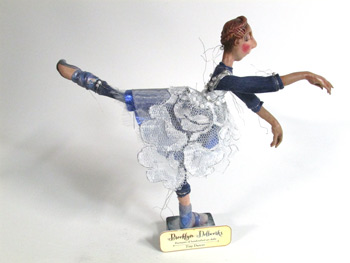
Her love of ballet is reflected in her whimsical, languid line of unique dancing dolls. This series of male and female ballet dolls range in stages from graceful poses to spectacular leaping. “I was around ballet dancers for a long time and watching them flex and see how they move,” she explained.


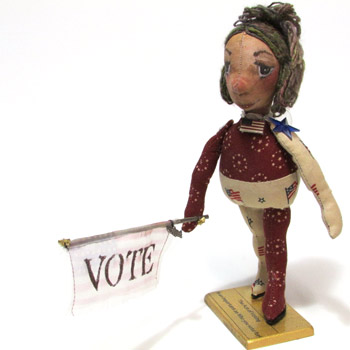
The Brooklyn Dollworks Vote Doll collection ranges from tiny dolls draped with VOTE banners to larger scale Black Victorian Suffragette dolls. “I had to get people out to vote. The dolls started before Trump’s first time in 2016,” she said. “There were Black women in the Suffragette movement. You don’t see them, but yes they were there.”


The Brooklyn Dollworks’ Circus Dolls are a tribute to women circus performers from the 19th century. “I didn’t know that woman circuses started in New York in the 1800s,” said Gladstone. These dare devil independent circus women were entrepreneurs. In their honor, she created a collection Black female circus performers wearing embellished period corsets, skirts, shorts and jewelry.


Gladstone majored in photography at the International Center of Photography and did her undergraduate work at SUNY New Paltz and Brooklyn College, where she studied costume design. She’s a member of the Board of Trustees for Local 798 of IATSE, makeup artist and hair stylist union.


Working as a hair and wig stylist has earned her accolades. She’s an Emmy nominee as key hairstylist for The Marvelous Mrs. Maisel and an Emmy nominee for hairstylist for HBO’s movie The Normal Heart. Gladstone has over 45 television and film credits as a hair stylist. “My day job is hair and make up for film and television,” she said. “I did The Night Agent for two seasons. I did the hair for the principal stars. A new season just started on Netflix.”


Recently, she worked on the Meryl Streep film The Devil Wears Prada 2. “I just did hair for the background actors on The Devil Wears Prada 2 and not the principles,” she said. “I’m about to start working on background actors with The Gilded Age. The Gilded Age is a big machine. It’s fun. It’s a big job.” Other TV and film high profile credits as hair stylist include: Gossip Girl, Dickinson, For Colored Girls, Sherri, Sex and the City, Black Swan, The Wolf of Wall Street and Welcome Home Roscoe Jenkins.


One of her favorite film experiences was working as a first assistant hair stylist on the 2007 film The Great Debaters, directed by and starring Denzel Washington. It was based on the 1935 true story about a professor at HBCU Wiley College in Texas who inspired his students to challenge Harvard in the national debate championship.

It co-starred Forest Whitaker and Jurnee Smollett. “It was great working on The Great Debaters,” Gladstone said. “It told a different story. It’s not just a Hollywood version of the period and what people were doing. It was about how normal people looked.”


Gladstone has an amazing creative life that balances designing both unique dolls and theatrical hair styles. Her motto is: “My work is not political. It is humanistic and bears witness to the timeless social echos that are heard, seen, and felt as tremors in our souls – causing us to act.” To visit the showroom for Brooklyn Dollworks, visit www.brooklyndollworks.com

Community Works to Save a Treasure on Stuyvesant Avenue

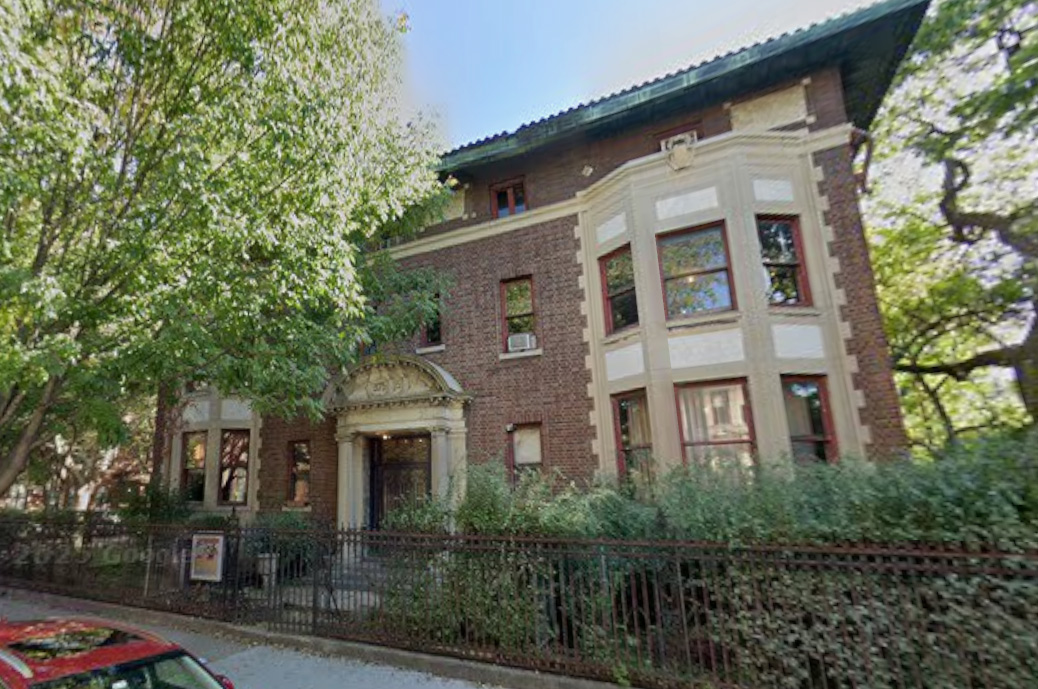
Historically, in black communities, there are sacred spaces. Not just churches, not just schools, but buildings that hold our footsteps, our struggle, our brilliance, and our first victories. Places that provide space for healing, radical thought, youth development, elder support, safety, art, and liberation. 375 Stuyvesant Avenue in Brooklyn is one of those places. And right now, its story stands at risk of being erased.

It is not only the bricks and beautiful architecture that will be erased, but Memories, Legacy, and Community culture. Right now, a group of concerned community members are taking action to prevent this from happening, because they adamantly oppose allowing another piece of Black history to quietly disappear in the name of profit.

This group, led by black women who are former stewards of the Mansion, organizers, and neighborhood entrepreneurs know that at the heart of this story is Dr. Josephine English, a trailblazing Black woman whose life represents exactly why this building matters.

Balancing act at the mansion


Shanna Sabio founder of Growhouse and BLAC, Monique Scott, Founder of Freebrook Academy, and Karyn Wyche, founder of Gombo Workshop know well the history of this Mansion and the significance of the leadership of Dr. Josephine English and have spent the last few months working with the community and ensuring that the Mansion stays front of mind.

375 Stuyvesant Ave
Represents Black Firsts

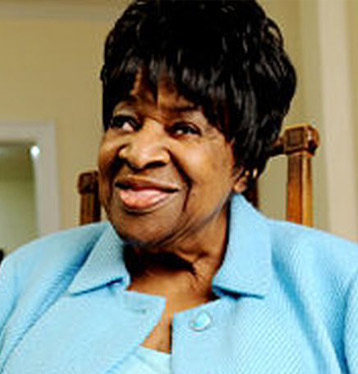
375 Stuyvesant Ave was built in 1914. In 1973, it was purchased by Dr. Josephine English. She was a pioneer. She became the first Black woman to open an OB-GYN practice in the state of New York at a time when racism and sexism tried to block every door—so instead of waiting for permission, she built her own. She cared for generations of Black families. She delivered over 6,000 babies, including the children of Malcolm X and countless Bed Stuy residents. She supported mothers. She provided dignified healthcare when many hospitals treated Black patients as afterthoughts.


Beyond her practice, Dr. English purchased multiple buildings including the Paul Robeson Theater at 40 Greene Ave. She believed in art. She believed in paving the way for future young leaders. She inspired artists, doctors, and more. She also put money in the hands of people who needed it. She gave funding to people who were trying to do something good, but repeatedly faced closed doors.


In the 1970’s to 1990’s, the Mansion operated as the Bed Stuy Senior Center run by former director Verda Olayinka. It was a place where elders could nourish themselves, let loose, be creative, and find camaraderie. As she became older, she ensured that the building could continue to support the community, entrusting it to her children.


In 2011, three neighborhood women Shirley Paulino, Ginger Spencer, and Monique Scott came together and re-activated the space. The primary tenants included Freebrook Academy, a small developing private school. Scholar League developed its programming, supported interns and participants with a balance of academic support and athleticism, while supporting outreach for the Mansion.

Dr. Josephine English,
Trailblazer


Then Brooklyn Movement Center joined as the doors opened. Brooklyn Movement Center (BMC), one of the oldest tenants, developed local organizers and advocates. BMC organized youth and adults alike around food justice, education, and street harassment.


The Carriage house was first used by Seasons (Plant Nursery) with pine trees for the holidays. After Seasons, Breadlove, (formerly Breadstuy) created a community gathering space with their cafe, movies, and fun family setting. People would work, meet, and become inspired there. There were community members of all ages connecting and caring for one another.


For some time, Baileys operated out of the space as well with intergenerational afterschool and summer programming. Ancient Song Doula Services found a home at the mansion where there could be focused Doula training, reproductive justice programs, and advocacy. Kweb Collections by Khalilah Williams-Web used space for styling and then short retail projects and then outgrew the Mansion.


Cultural Erasure Comes Quietly
Too often, cultural erasure doesn’t come with headlines. It comes quietly on the wings of a sale; a redevelopment plan; a renovation that removes the story; a luxury conversion that forgets who came before.
In late October of 2025, Freebrook Academy, Brooklyn Movement Center, Growhouse, and Gombo Workshop were informed that the court ordered the Heirs of Dr. English to sell all the properties left by Dr. English in advance of foreclosure due to liens. These parties were subsequently asked to stop programming and remove all their property by the end of the month. The Mansion market price was $4.6 million.


Scott, Sabio, and Wyche recognized the path toward erasure. They knew that to sell the building meant to invite developers with little cultural reverence or community commitment. They solicited over 8,000 signatures for a petition, reached out to multiple public officials, and held the first of two Town Halls where the local community and those connected to the Mansion could discuss next steps. The result was proof that the community opposed this path toward erasure.


Afterwards, there were protest signs, visits to Community Board Meetings, Street Teams, Meetings with elected officials, and bi weekly (weekly at first) organizing meetings, fundraising, and more. “I know that this means very little unless we can garner the funds to buy the building or convince local officials to commit to ensuring that the building ownership will be transferred to the community. This is not like pie in the sky wishing. We have a plan,” says Scott. These women and community members taking action are not doing so without being practical by identifying the resources, strategy, and coordination necessary.


One of the key strategies being advanced to protect 375 Stuyvesant Avenue is placing the building into the BLAC Land Trust (Black Land Access Community Land Trust) – a community land trust created to preserve culturally significant Black spaces and ensure they remain permanently rooted in community stewardship.


Community land trusts (CLTs) are a proven model used across the country to prevent displacement and protect neighborhood assets from speculative markets. In this structure, the land is held by a nonprofit trust on behalf of the community, while the buildings and programming remain stewarded by local organizations and residents. By removing the land from the private real estate market, a CLT ensures that spaces like 375 Stuyvesant cannot be flipped, luxury-converted, or quietly erased over time.


The BLAC Land Trust is being incubated by GrowHouse Design and Development Group, Inc. a nonprofit co-founded by Shanna Sabio and Warner Sabio, Jr., lifelong Brooklyn residents alongside collaborators in the GrowHouse ecosystem, as part of a broader effort to reclaim and steward Black cultural and economic spaces in Brooklyn.

The CLT focuses on spaces in historically Black Brooklyn (Bed Stuy, Crown Heights, Clinton Hill, Fort Greene) to create housing, commercial corridors, and to preserve sites that carry deep community meaning – places where generations gathered, organized, learned, and built institutions that served Black life in the face of exclusion from mainstream systems.


“Too many of our historic spaces disappear the same way,” Sabio explains. “A building that held community memory becomes financially distressed, the market steps in, and the story is erased. The land trust model interrupts that cycle by putting the property under community stewardship so that it cannot simply be sold to the highest bidder.”


For 375 Stuyvesant Avenue, the goal is to bring together philanthropic partners, community investors, and public resources to acquire the property and place it into the BLAC Land Trust. Once secured, the Mansion would operate under a community-informed stewardship model that can include cultural programming, educational initiatives, workspace for local organizations, and spaces for intergenerational gathering – ensuring that Dr. Josephine English’s legacy continues to serve the people she dedicated her life to.


Rather than treating the Mansion as a piece of real estate, the CLT approach recognizes it as something far more valuable: a living cultural institution. Through the BLAC Land Trust, organizers hope to create a permanent structure that protects the building, honors Dr. English’s legacy, and ensures that future generations of Bed-Stuy residents can continue to learn, gather, and build community within its walls.


The Bed Stuy community and those touched by Dr. English and 375 Stuyvesant Ave are not willing to let this culture and history go quietly, they are fighting for this legacy to remain, inspire, and teach the future. As realtors and developers exchange culture for dollars, the community – elders and youth, entrepreneurs and creatives, lose something deeper than property. In this case, they lose the proof that a black woman can lead the way and they can follow their dreams despite the odds. Our youth lose a foundation to stand on.


The team is not moving recklessly, but with a concrete and community informed use plan to address funding issues of the past. With the advice of business and organization leaders, neighbors, legal teams, and more, they have developed a plan that provides event rentals, co-working space, a school, a makerspace, art honoring Dr. English’s legacy, cafe, long term rentals and more.


What Is Next?
The courts and heirs to Dr. English’s estate have found their prospective buyer—Joseph Safdie of JSAF Management, infamous slumlords who have been in the news most recently for depriving Brooklyn residents of heat during this past winter. Joseph himself currently occupies #62 on Public Advocate Jumaane Williams’ “100 Worst Landlords” list.


However, in early 2026 Pinestone Green LLC, a development corporation whose plan to demolish the Mansion’s historic carriage house for luxury condominiums was struck down by neighborhood organizers and the Landmarks Preservation Commission in 2017, has re-emerged to dispute the sale of 375 Stuyvesant and the Paul Robeson Theater claiming that the agreements made with them by the Heirs to Dr. English’s estate entitle them to partial ownership of the properties.

“Their suit against the estate for claim to the properties has put a freeze on the court’s ability to sell them, and with the judge assigned to the case ruling in favor of hearing both sides out, the estate v. Pinestone case and active bank foreclosure have been adjourned to early May 2026.” Wyche explains.


In the meantime, the Bed Stuy community continues to rally around saving the Mansion, stopping the sale, and preserving Dr. English’s legacy. In March, a second town hall meeting was held at the nearby Gladys Books & Wine on Malcolm X boulevard, where community members were brought up to speed on the developing legal situation as well as paths to acquisition and plans for the usage and operation of the Mansion as a community center.


Even in the midst of adversity, Bed Stuy continues to dream of its “Black Utopia”. This tragic tale has unfortunately become synonymous with Black communities across the country: land and legacy is fought to be secured, is carefully cultivated and passed down, and then lost or stolen—most famously in Bed Stuy and Crown Heights, through predatory deed theft—but just because we’ve seen it before does not mean we should allow it to happen again.

Stopping the sale of 375 Stuyvesant Ave can become an integral part in strengthening a new era of communities rallying around their support systems in the face of disenfranchisement and displacement, organizing to save their histories, and staking their claim on the cultures they’ve created in defiance of those who seek to exploit the aesthetics of Blackness for profit.