Home Blog Page 48

Likely Voters Want Policy and Action From the Mayoral Candidates

By Nayaba Arinde
Editor-at-Large

There are three testy months before the NYC mayoral election day, with likely voters demanding policy ideas, not platitudes, real fleshed-out agendas, not pandering affirmations.
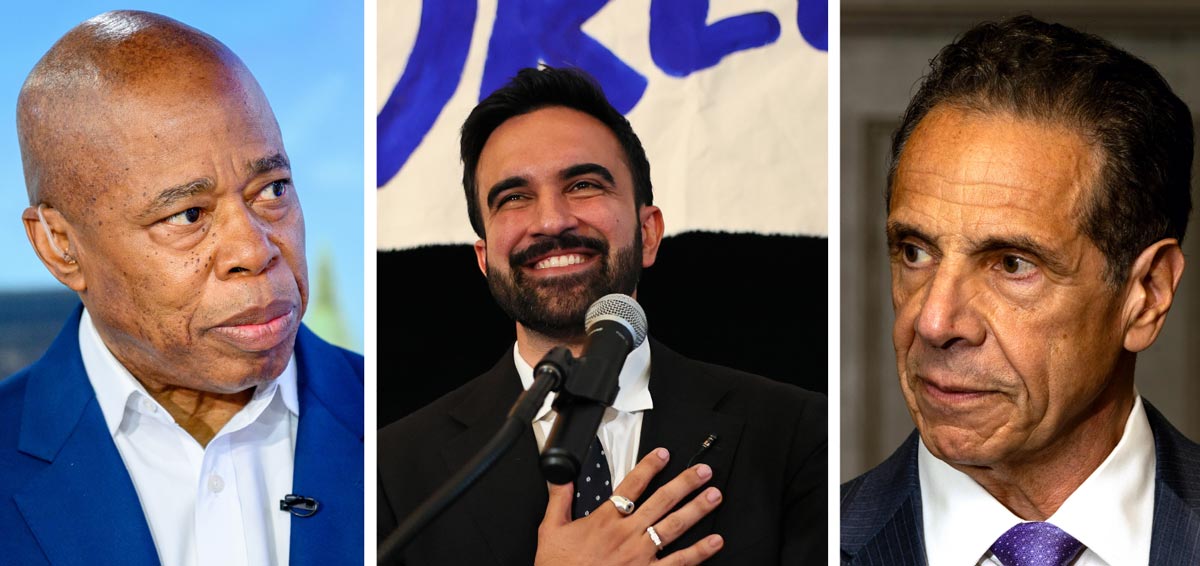
Lead candidates, such as Democratic-line Zohran Mamdani, former Democrats-turned-Independents, current Mayor Eric Adams, and former governor Andrew Cuomo, are the main focus.


With the public considering the legal issues that pursued both candidates–leading to a Cuomo conundrum and Adams’ adversity—voters are being asked to forget or forgive past not-made-it-to-trial tribulations and vote their informed choice. Curtis Sliwa supporters remind the undecided not to discount their Republican candidate, while the Mamdani-decided want to coast to November 4th, 2025, as if it were an election won.


“This NYC mayoral election is six of one, and half a dozen of the other,” a veteran Black journalist told Our Time Press. “People feel disappointed by Eric. That is the talk in the streets. He has been well known in the community, both professionally and personally. We expected him to do more for the neighborhoods, which he knows have been underserved for decades. Not these campaign community actions.

We thought he would take police harassment more seriously. You see, the neighborhoods are complaining that the ‘tan-pants boys’ will jump out and push somebody to the wall, or on the sidewalk. There is high unemployment, and the kids need something to do. People are saying that nothing has gotten better under his administration in general. All we have is chaos and confusion. The benefits he is always discussing on TV have not trickled down to the average person on the streets.”


Longtime Adams ally Rev. Conrad Muhammad told Our Time Press, “Candidates will say anything to be elected. They will speak in vague generalities. Eric has proven his specific commitment to Black folks. Eric has made City Hall Blacker than it has ever been, with sisters and brothers from The South Bronx, Harlem, the Black Belt of Queens, Bedford Stuyvesant, East New York, and Brownsville top-tier leaders in the City of New York. New York has never had African-American participation in city government and doing business with the city as it has in the past four years. Eric will do even more specific Black empowerment in his second term, and he is going to win, I guarantee it.”


Adams, who again did not respond to the Our Time Press response to a statement, speaks daily about his commitment to helping the City on all community levels. Crime, he said, is down by 1% from last quarter. Yet, there was a stabbing on the C-Line subway on Tuesday, numerous deadly shootings in the last two weeks–including the Park Avenue mass shooting and reported violence, which keeps communities on edge.


Running on the ‘End Antisemitism’ and ‘Safe & Affordable’ independent ballot lines, Adams dismissed the Gothamist report that his campaign included a number of fake signatures in his independent-line ballot bid. He alluded that it was his volunteers and opponents to blame for any discrepancies.

“Everyone who knows about petitioning is well aware that you even have some of your opponents who come and do tricks, you know, to try to sabotage your campaign.”
Gothamist said that over 50 people charged that their signatures were forged or gained under false pretenses. Now over 50,000 signatures will be examined.


Timothy Ford of Afrikans Helping Afrikans told Our Time Press, “When it comes to the mayoral race Eric Adams isn’t going to win…he lost the Black vote…not because he’s a fraud, more because of his pardon by Trump.

Black people can accept his charges and going to trial–what they can’t accept is a sellout and a puppet for Trump. They all know he owes Trump, and will do anything that Trump demands. If he couldn’t stand up to Trump’s attorney general, how can he stand up for Black people? No vote for Eric Adams.”


Speaking on the Tavis Smiley radio show, Adams said that as the incumbent, “The reason people can critique me is because I have a record.” He touted successes in “developing more affordable housing…putting $30 billion back into the pockets of working-class people, everything from no income tax for low-income New Yorkers…more jobs in our city’s history… decrease in unemployment…particularly for Black and Brown New Yorkers.”


As for the recent incidents of gun violence, he said, there are the lowest shootings this year, and “Our subway system is the safest it has ever been.”
As he reintroduced the controversial quality-of-life teams this week, New Yorkers did not feel safe.
Adams once again blamed the media for reinforcing an unrealistic narrative, “You pick up your newspapers…if we focus on the worst thing that could happen in the city of 8.5 million people… then it’s going to tend to make people feel unsafe.”


In actuality, many subway riders simply have to weigh up real safety fears against necessity and convenience. Last week saw failed transformers, which left passengers on hot and delayed trains and platforms, some alongside a dead body at a Prospect Park station not moved for hours, then there were the flooded rains and stations, which saw commuters scrambling to get out, not to mention the fire underneath a train at Coney Island this week. But it is the media reporting, according to Adams, not the actual facts.


Meanwhile, the Staten Island Democratic Party endorsed Mamdani, saying, “The voters have spoken.” Earlier this week, Mamdani sat with Senator Elizabeth Warren and DC37 Executive Director Henry Garrido at DC37 union headquarters in Manhattan.


The Queens assemblyman who said he will see the building of 200,000 affordable homes, freeze rent, and make buses free, reinforced his other mayoral campaign affordability mantra, and pledge to deliver universal childcare, “We know that it is our responsibility to move beyond the broken politics of the past, of our city and our state, and start to offer an alternative across this country to what it could look like to be a people that fight for the families that raise us.”


The Democratic Socialist, who in recent polls is primed to win the November 4th election, showed up at the Grand Army Plaza National Night Out 78th Precinct event, saying of the very same police department that he once called “a major threat to public safety,” he is “not running to defund the police.” Instead, “I am looking forward to working with the rank and file of our police department, the union leadership that represents those same police officers.”


Cuomo’s people did not respond to an Our Time response for an interview/statement, but pre-primary, attuning his tone to the Cultural Christian Center in Flatlands, the former governor told the crowd that affordable housing, more cops, safer streets, and transportation were all part of his political schematic. Plus, he said, “The question on election day—who can get the job done?… I know how to make the government work.” Unprompted, he added, “I can’t sing. I can’t dance. I don’t play golf. But I can make the government work. I can turn the city around.”

Things to Like, and Not Like, in FY2026 NYCHA Annual Plan

0

By Mary Alice Miller
Among those who gave testimony at the recent public hearing on the NYCHA Fiscal Year 2026 Annual Plan, amendments to the FY2025 Plan, designated plan for Elderly Only Developments and Buildings, and changes to the Tenant Selection and Assignment Plan, disapproval outweighed approval.
Moderator Shauna Castillo, senior director of resident initiatives, gave a brief overview of the annual plan and significant amendments.


On June 13, 2025, NYCHA released the draft fiscal year 2026 annual plan and the draft significant amendment to the fiscal year 2025 annual plan for public review. The amendment is for the following disposition and conversion activities. FHA repossessed houses, FHA homes. NICHA’s FHA homes portfolio consists of 149 FHA units across 123 properties under Baisley Park Management.

Most properties are occupied and located in the borough of Queens with single-family homes. The maintenance of these homes is costly and inefficient for NYCHA property management, and many of the homes are in poor condition.


NYCHA intends to dispose of the 104-unit residential building currently operated by Henry Street Settlement as an NYC Department of Homeless Services, DHS shelter in the Lower East Side. DHS will work with Henry Street Settlement to renovate the building and continue its operation as a shelter site. disposition through section 18 and renovation timelines are to be finalized.


NYCHA has prepared a newly designated housing plan for its current portfolio of elderly-only developments and buildings and requests authorization to extend the designation for 5 years. This proposed designation encompasses 7,378 units in buildings originally constructed for and intended to be occupied by elderly families. These units are in 31 elderly-only developments and 11 elderly-only buildings throughout the five boroughs of New York City. All the units located in NYCHA’s elderly-only developments and buildings are in federally aided public housing developments.


NYCHA CEO Lisa Bova-Hiatt outlined improvements “that most impact residents, like lead-based paint, mold, heat, elevators, pest and waste management, and apartment inspections, as well as top-to-bottom building and apartment revitalizations carried out through major housing preservation programs. The results are tangible and they’re making a difference for residents and their quality of life across our hundreds of developments in all five boroughs.”

She acknowledged that more work needs to be done. “We’re proud of the progress we’ve made and we’re confident about our roadmap for continued improvement,” Bova-Hiatt said. “Resident safety remains a core focus through programs that serve our youth as well as our collaboration with other city agencies that foster safety in creative and comprehensive ways.”
NYCHA employee Matine Sarsy shared her experience as a current employee.

“We have over 600,000 work orders and more than 8,000 vacant units as a direct consequence of multiple NYCHA departments independently entering work orders inflated to unimaginable levels,” said Sarsy.

“My proposal is straightforward. I say boost the number of neighborhood planners and refocus their roles on unit repair management. This would not only cut down on duplicate, outdated or mismatched trade skill orders, but also improve repair coordination without having a painter show up before covering a hole, for example.”


Neon Walters, resident of Van Dyke Houses for 44 years, spoke of people who urinate in elevators being moved from building to building, delivered packages getting stolen, absentee maintenance workers, and drug dealers who distribute drugs like they are giving our free government cheese.


Van Dyke Resident Association President Lisa Kenner suggested a size limit on pet dogs. Fifty-pound pit bulls impede maintenance workers from entering resident apartments.


“I love Van Dyke. I was born and raised there. My mother taught me, “This is your home, and if you don’t take care of it, nobody else is going to take care of it,” said Kenner. But, she added, I’m not going to be here forever. I’ve been here 20 years. I ain’t know I was going to be here that long as the president.

But you can’t leave because if you leave, our development will fall. So I’m trying to train somebody because these are going to be my last three years. I’m trying to train somebody so I can sit down. When I started, I didn’t even have any gray hair. Look at the gray hair I got now.”


Sariah, a new tenant at Seth Low Houses in Brownsville said, “My daughter and I, we live in a one-bedroom and we do know that in our building certain apartments are getting lead abatement, but it’s extremely noisy and we hear a lot of banging on the walls and we don’t know where the noise is coming from.” Sariah added, she also complained about smoking and roaches in the building.


Council member Gail Brewer, representing the Upper West Side, spoke about the housing affordability crisis and challenges NYCHA faces. “The federal government is a disaster. Housing-assisted units could be cut based on the budget bill by 42%,” said Brewer. “The issue is, how does this plan prepare us?”


Miss Kasanova, a tenant at Vladeck Houses in Manhattan, said, “When I first moved here, we had great caretakers and everything. And I would say ever since the pandemic in 2020, I haven’t had my hallway floor mopped or shined. Literally, it was dirty for years to the point where I myself started cleaning up in the development, me and a few of the other neighbors.”
Elizabeth Valdez from LaGuardia Houses on the Lower East Side spoke of vandalism and the seemingly lack of effective use of surveillance cameras to address the issue and hold tenants accountable.


Joel Cuperman from the Environmental Justice Initiative spoke of the lack of an effective alarm system at the Smith Houses.
Selma Legree, Tenant Association President for Brownsville Houses, spoke about irresponsible dog owners who leave dog waste, the need for working intercoms, and assistance for elders who need help with their annual recertification and paying rent.


Stacy Torres, District Leader Layla Law-Gisiko, and architect David Hoka were among many who gave testimony against the demolition of approximately 24 buildings comprising Fulton and Elliot Chelsea Houses that were to undergo planned renovation.
NYCHA board chair, Jamie Rubin said, “NYCHA’s history, particularly in the last several decades, has been a difficult one. The federal government, state, and city have all disinvested from NYCHA over the years.”


NYCHA board members and representatives from the NYPD were in attendance.
The purpose of this public hearing is to obtain the views, comments, and recommendations of the public on the draft fiscal year 2026 annual plan. The Plan is not final and may be amended before submission to HUD.


NYCHA’s Final Agency Plan will be submitted to the U.S. Department of Housing and Urban Development (HUD) by October 18, 2025. Following NYCHA’s submission, HUD has 75 days to review and approve the plan.

Lloyd Williams Passes

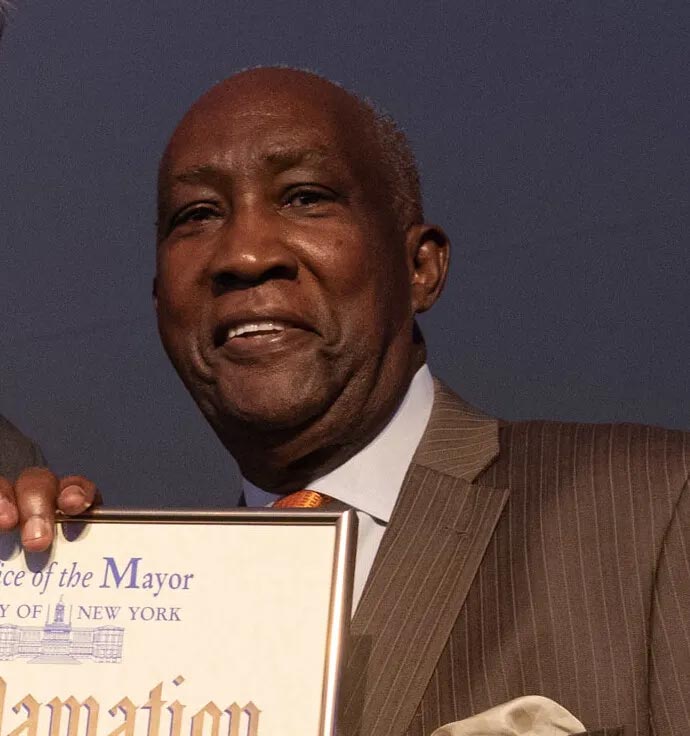
“It is with profound sadness that The Greater Harlem Chamber of Commerce and the family of Lloyd Williams, President and CEO of The Greater Harlem Chamber of Commerce and Co-Founder of HARLEM WEEK, passed away peacefully overnight, surrounded by loved ones, following a private and courageous battle with cancer. He was 80 years old.


“For more than 50 years, Lloyd has worked tirelessly to improve the quality of life and shape both the cultural and economic identity of not just Harlem but the city as whole.
“While we mourn his loss, HARLEM WEEK will continue as planned. Our theme this year is “Celebrate Our Magic,” which is fitting because Lloyd always celebrated the magic of his beloved community.


“Funeral service details will be forthcoming. Kindly keep our family in your thoughts and prayers.”
-Winston Majette, Executive Director of The Greater Harlem Chamber of Commerce

The Power of Stories

0

“Families, as my suddenly silenced uncle used to say, expand like ripples in a pond… Family is not only made up of your living relatives. It is elders long buried and generations yet unborn, with stories as bridges and potential portals.”

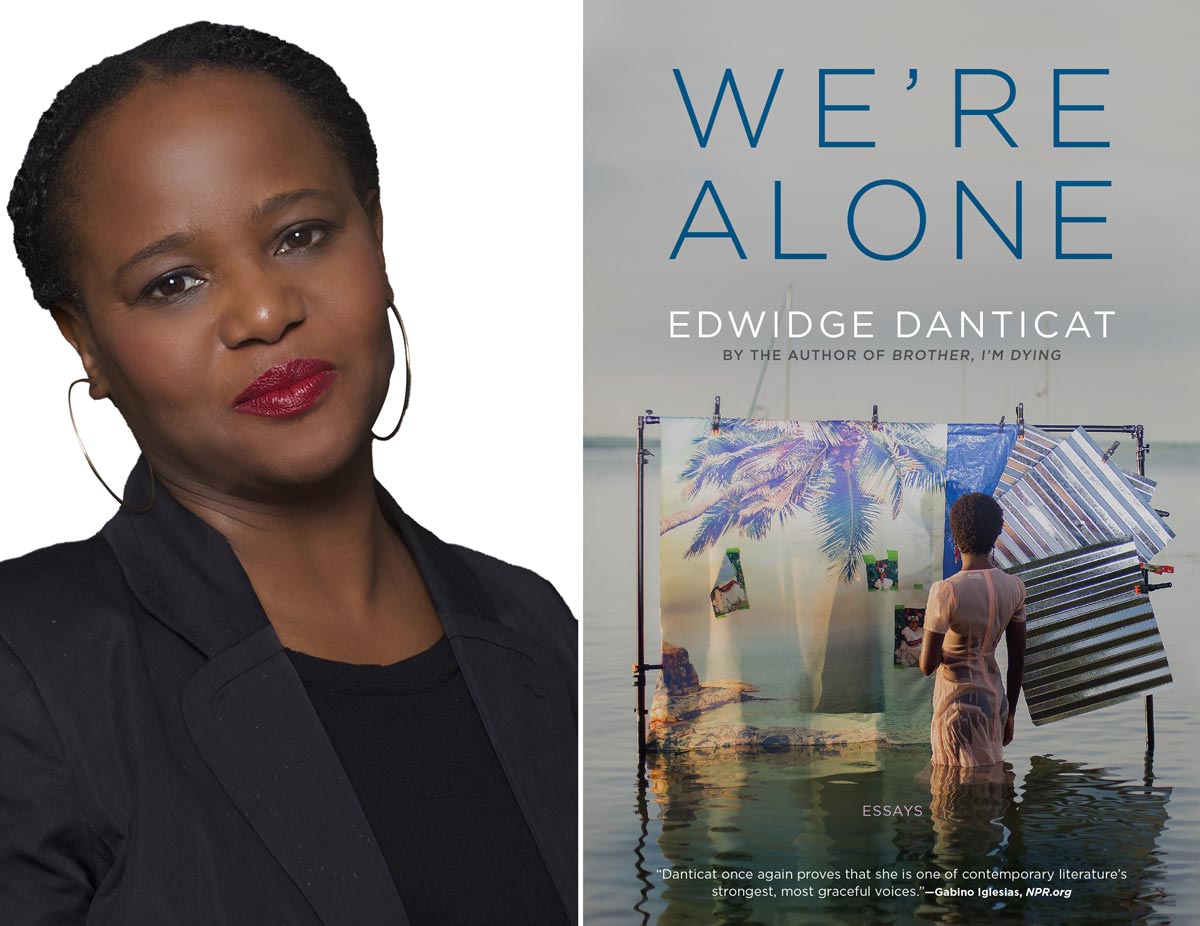
Edwidge Danticat, We’re Alone
Edwidge Danticat’s book We’re Alone (Graywolf Press, 2024) is a collection of compelling stories that connect readers to the lives of those whose stories do not get told because of circumstances beyond their control. Literary inspired chapter titles such as: “Children of the Sea,” “A Rainbow in the Sky,” “By the Time You Read This,” “This is My Body,” and “Chronicles of a Death Foretold” attest to Danticat’s powerfully rendered experiences depicting the lives and struggles of people in Haiti, Maimi, and New York.

As the narrator of the stories in We’re Alone, Danticat crosses geographical boundaries and is both a participant and a witness.
The people described in We’re Alone may have succumbed to the forceful pounding waters of devastating floods that have wiped away their homes and sometimes their entire village. They may be buried under tons of rocks and bricks, unable to move as they gasp for air after an earthquake.

They may have been deported or been victims of laws denying their birthright and citizenship after living for years in a country where they were born. They may have been detained in a prison barrack because they sought asylum and citizenship. They may have caught cholera, aids, tuberculosis or other infectious diseases and received no medication or aid.


We’re Alone highlights the fact that people will be alone if their stories are not told and are not get passed on to their families, communities, and future generations. Danticat also connects readers to writers who tell stories. These include Lorraine Hansberry, Audre Lorde, Gabriel Garcia Marquez, Paule Marshall, Toni Morrison, and James Balwin. Her reference to Zora Neale Hurston’s autobiography, Dust Tracks on a Road captures the motivation and her goal in writing We’re Alone.

She recounts Hurston’s desire to travel to many different places. After her mother Lucy dies. Zora Neale Hurston travels to places previously unknown to her and finds that “all that geography was within me. It only needed time to reveal it.” Like Hurston, Danticat captures the geographical spaces contained within herself.


In “Children of the Sea,” Danticat references her 1995 short story collection, Krik? Krak! which describes the story of a group of Haitian refugees trying to reach the United States by boat after a US-supported 1991 military coup d’ état against Haiti’s first democratically elected president, Jean-Bertrand Aristide.

She also cites a Haitian proverb: “The sea does not hold dirt” and suggests that this saying may have been carried by the combined knowledge of indigenous ancestors who ate from the sea their whole lives and from those African ancestors who were forced to undergo the horrors of the Middle Passage and found ways to resist their entrapment on the seas. In “not holding dirt,” the sea welcomed and cleansed those who jumped overboard.


The effects of global warning and the results of a dramatic rise in climate refugees are a theme throughout the stories in We’re Alone. Danticat references the United Nations’ Intergovernmental Panel on Climate Change findings that by the year 2025, oceans will rise high enough to wipe out low lying cities like Miami and that hurricanes, extreme heat, droughts, floods, and wildfires will displace over a quarter billion people.


In “By the Time You Read This,” Danticat refers to the impact of COVID on the Haitian community, the 1989 murder of Yusuf K. Hawkins, and the marches held after the attacks and murders of Abner Louima, Amadou Diallo, Patrick Dorismond, and Sean Bell.


“Chronicle of a Death Foretold” is a chapter that references Gabriel Garcia Márquez’s novella where people know that a man will be killed and do nothing about it. As in Márquez’s novella, Danticat chronicles a death foretold. The Haitian president Jovenel Moise is assassinated after he forecasts his own death. The assassination happens in 2021 and as of August 2025 there is still no elected president in Haiti.


We’re Alone is an emotionally stirring testimony on the importance of family legacy, community, and storytelling in our lives. Resistance, persistence, and resilience are woven into each of Danticat’s stories. She closes We’re Alone with the words: “I too have been lost, but eventually, words, stories, find me. Once again, I have entered this body of water. I am no longer alone on the shore.”


Edwidge Danticat is the author of numerous books and the winner of many literary awards and fellowships. She is the Wun Tsun Tam Mellon Professor of the Humanities in the African American and African Diaspora Studies Department at Columbia University.

Dr. Brenda M. Greene is Professor of English, and Founder and Executive Director Emeritus of the Center for Black Literature at Medgar Evers College, CUNY. For more information, visit https://www.drbrendamgreene.com

Voza Rivers: Harlem’s Cultural Icon

0

By Fern Gillespie
Harlem is always on Voza Rivers’ mind. Born and raised in the heart of Harlem, Rivers has blended his love of the arts and his managerial skill to showcase Uptown as a leader in Black culture. Whether it’s his leadership at Harlem Week, Greater Harlem Chamber of Commerce, New Heritage Theatre or the Apollo Theatre, Rivers is acclaimed as a creative innovator.
“Wherever I travel, people are asking me about Harlem,” Rivers, 82, told Our Time Press. “We inherited the reputation for being the cultural capital of Black America.” Rivers has presented Harlem productions across the United States and worldwide in Japan, South Africa, Togo, Nigeria, Cuba, Canada, and the United Kingdom.


A man of many accomplishments and many power positions, a few of his many Harlem-based titles include: first vice president of The Greater Harlem Chamber of Commerce; co-founder, executive producer and vice chairman of Harlem Week; founding member and executive producer of the New Heritage Theatre Group, the oldest Black theatre company in New York State; chairman of the Harlem Arts Alliance; chief operating officer the Apollo Records; executive producer for the Apollo Theater in Japan; executive producer and co-founder of IMPACT Repertory Theatre; former chairman of the board of directors of arts nonprofit Community Works; executive producer of Harlem’s Gertrude Jeannette’s The H.A.D.L.E.Y. Players theatre and . vice chair of the Coalition of Theatres of Color.


When Our Time Press spoke to Rivers, it was three days before the death of his lifelong friend and colleague Lloyd Williams, age 80. Over the last 50 years, these two men have been instrumental in promoting and nurturing Harlem. “I’ve known Lloyd almost 70 years when we were Boy Scouts together St. Martin’s Church.

His godfather was Malcolm X,” said Rivers. “In terms of the partnership that we’ve had over all these years with the Greater Harlem Chamber of Commerce, where he is the president and I’m the 1st vice president.” The Greater Harlem Chamber of Commerce focuses on economic development. It owns 12 affordable housing buildings between 124th and 136th Streets.


Both Rivers and Williams were part of the founding team for Harlem Week in 1974, under the leadership of Percy Sutton. Williams was the chair and Rivers is the co-chair. “It is a tribute to our way of honoring our role models being Percy Sutton, Charlie Rangel, Hazel Dukes, David Dinkins and Basil Paterson.

These guys were mentors to us,” said Rivers. “This is our 51st year. It’s an opportunity for Lloyd Williams and I to look back at the journey that we have taken from being connected to Percy Sutton as of one day event. Last year, for our 50th anniversary, we wanted to capture the significant cultural, social, educational and spiritual events that happened over that period of time.

We have grown tremendously from that initial one-day Sunday afternoon when we renamed Seventh Avenue in honor of Adam Clayton Powell Jr. Changing Seventh Avenue to Adam Clayton Powell Boulevard was the first time in the history of New York City that a street would be named after a person of color.”


Rivers is mentoring the next generation for Harlem Week productions. “When you think about what is Harlem Week, you think about the leadership and all the young people that came through and worked with us,” he said.

“We feel very pleased that we had the foresight and the energy to create something that captures our past and present.” Since COVID, Harlem Week has showcased the event both virtual and on stages across Harlem. The virtual component has landed a phenomenal 3.6 billion views.


During Apartheid in South Africa, Rivers who is the longtime executive producer at New Heritage Theatre, in Harlem and reached out to South Africa’s leading Black theatre companies. “We were very, very successful because the first play we did opened up the door. It was “Woza Albert.” Because of that play, the Lincoln Center and Joseph Papps Public Theatre people came up to Harlem to see the work.

The second play was “Asinamali!” I was denied an opportunity to go to South Africa by the South African government to see the play, because they said that I supported the dismantling of their apartheid system. So, they didn’t allow me to get a visa.

The South African theater group, Committed Artists, was relying on me to bring a second play into the United States. I brought “Asinamali!” into the United States sight unseen–just based on listening over the telephone to their rehearsals in South Africa.

I brought the show to our small theatre in Harlem on 125th and Lenox Ave sight unseen.” Harry Belafonte, Quincy Jones and Miriam Makeba came to Harlem to see the came to the South African performers. Within a year, “Asinamali!” went to Broadway and earned a Tony Award nomination.


Working with Lincoln Center and the South African Company, Committed Artists, Rivers helped bring the acclaimed “Sarafina” to Broadway. “Sarafina” was a South African musical by Mbongeni Ngema about the 1976 Soweto uprising against apartheid by young students who protested the mandatory use of speaking White South Africa’s language Afrikaans in the school. On Broadway, it earned five Tony nominations. Rivers had a ten-year producing relationship with Lincoln Center.


Currently, like many Black leaders in the arts, he is concerned about the impact of the Trump anti-DEI movement on Black culture and grants. “Right now, during this particular time our government is putting an “X” on DEI programming. Most of our cultural organizations produce DEI productions and presentations,” he said.

“That’s what we are about. That’s a part of our history and legacy. And yet we find ourselves being penalized if we continue to do that because the government has put a moratorium on our type of programming.”


Together with producer Jamal Joseph, Rivers continues to promote and nurture young Black talent. They created Harlem’s IMPACT Repertory Theatre for people between the ages of 12 and 19. Several years ago, the talented teens created a song for the movie “August Rush,” that was nominated for a best music Oscar and Grammy.


“It’s a kind of institutional memory of what’s we’ve done. We have been connected to the young people and teaching them grandma and grandpa values and sharing our stories,” he said. “That’s part of the existence for us.”


To celebrate “The Magic of Harlem Week” through August 17, visit www.harlemweek.com and for more information on New Heritage Theatre, visit www.newheritagetheatre.org