Home Blog Page 42

Monae Priolenau-Jones Fifth Generation Brooklynite Co-Leads Historic Brooklyn Community Services

0

Fern Gillespie
When Monae Priolenau-Jones was appointed to a top leadership role at Brooklyn Community Services (BCS), it was like destiny. Her family have been Brooklyn residents for over 100 years, and she had a passion for community outreach. Now, she is Interim Co-President & Executive Director and Chief of Staff for one of the oldest social service non-profits in the U.S., established in 1866 after the Civil War.


“There has been some aspect of community service in my life in one way or another,” she told Our Time Press. “I was working for the City of New York for a while and for organizations that are service oriented. I love the Brooklyn community that I live in and wanting to help is just second nature to me.”


At BCS, Priolenau-Jones works with her colleague Jodi Querbach, Interim Co-President & Executive Director and Chief Operating Officer, in directing over 50 award-winning programs. Spread in over 28 locations across Brooklyn, BCS serves over 20,000 individuals annually.

It empowers low-income Brooklyn residents of all ages: from early childhood to adults in their senior years. Programs span education, youth development, family services, community building, workforce development, healthcare, homeless shelters, mental health, developmental disabilities and job placement.


One of the organization’s most unique programs is the BCS Shower Bus. The mobile bus has two private bathrooms that are fully equipped with a hot shower, sink and toilet. “We have a mobile shower bus that goes around Brooklyn and serves people who might be unhoused and or even if they’re not unhoused, maybe they live in a building where the water isn’t working.

It has counselors and basic healthcare like signing up for Medicaid, HIV testing and referrals to other resources. People deserve to have the dignity of a shower regardless of who you are or what situation you’re in,” explained Priolenau-Jones. “

It is the only legally operating shower bus in the entire state of New York. The state saw our program and supported us with allocating some funding to support the operation of that bus. In last year’s state budget, the state allocated $2,000,000 to see if this shower bus was something that could be replicated in other parts of the state.”


The BCS education outreach ranges from day care at the Laurie A. Cumbo Children’s Enrichment Center to after school at Gary Klinsky Children’s Centers to the Brooklyn High School for Leadership and Community Services. “We have an after-school program that has a direct impact other than the run-of-the-mill after school programs.

It’s almost like an extension of the school day with projects like music or STEM programming,” she said. “The school administrators have been able to tell the BCS kids from the kids who didn’t attend our after-school programs, because they were just so much farther ahead than their peers.”

Through the East New York Family Center, BCS helps underserved families remain together. “We have a program that that makes sure that families can stay together and that children are not removed from the home. Separating families is extremely traumatic,” she said. “We supports the family staying together so that the trauma that they’re experiencing that got them in contact with the system of the child welfare system at ACS is not further compounded.”


There are also two BCS homeless shelters focusing on the needs of women. “At the BCS Young Women’s Shelter for ages 18 to 25, we help them obtain permanent housing, develop independent living skills and gain access to other services to make sure that once they leave our shelter, they are able to be successful,” she explained.

“Our Transitional Living Community, TLC, works with women who have severe mental illness or are dealing with domestic violence or other kinds of trauma. We have counseling and assistance to secure permanent housing for them. It’s a safe space for women who are dealing with this trauma and these mental health issues. And we also have a garden there where they have therapeutic activities.”


BCS has earned honors for its unique mental health clubhouse programs for adults. During COVID, BCS observed there was a tragic increase in suicides by young Black men. So, BCS created CHAMP (Community Health and Mindfulness Program) to outreach to young Black men from teen years up to the age of 25. “It’s a program for youth who are maybe contemplating suicide or experiencing suicidal ideation.

Through the pandemic, young people were committing suicide at higher rates. And a lot of the populations were not on the radar of this epidemic of youth committing suicide –especially young black men,” she said. “At CHAMP they can come in and have conversations with mental health counselors. They go on trips and activities to make sure that they’re engaged and socialize, because that’s part of the problem.”


Prior to joining BCS two years ago, Priolenau-Jones served for nine years at New York City Administration for Children’s Services, where she provided technical assistance and improvement strategies for nonprofit agencies. She earned a Master of Public Administration degree from John Jay College, an undergraduate degree in government and politics from St. John’s University and graduated from A. Phillip Randolph High School in Harlem. “My mother wanted me to experience different parts of New York,” she said.


Priolenau-Jones’ family dates back five generations living in Brooklyn. “I have a very long history of being a Brooklynite on both sides of my family, and I’m very proud of that. I have my great-great grandparents on my mother’s side who lived on Nostrand Ave and Herkimer Street in the early 1920s. On my father’s side, they lived in Albany Houses in the 60s,” she said. “I was born in Flatbush. We moved around to different parts of Brooklyn. I ‘ve lived in Park Slope, Clinton Hill, Brownsville, and we settled in Bed Stuy. I’ve lived in Bed Stuy now for about 20 years.”


“I’ve been in Brooklyn my entire life and don’t ever want to leave. So being born and raised here and to be able to combine the service-oriented nature of who I am with the love of Brooklyn for Brooklyn Community Services was just a no brainer for me,” she said. “I work with an organization where the work that I do directly impacts my neighbors and my family in a positive way.”


For more information on Brooklyn Community Services, visit www.wearebcs.org
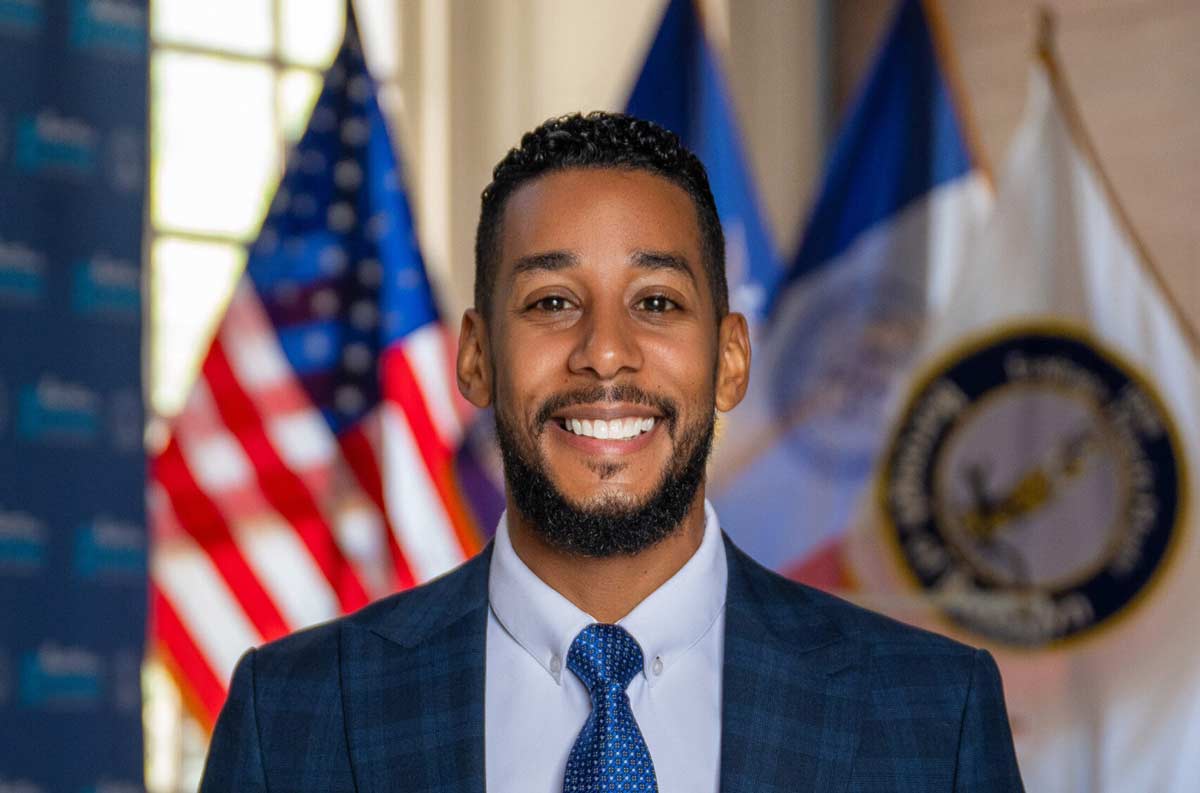
Brooklyn Borough President Antonio Reynoso Unveils”2025 Comprehensive Plan for Brooklyn”

BROOKLYN, NY (August 19, 2025) – Today, Brooklyn Borough President Antonio Reynoso unveiled The 2025 Comprehensive Plan for Brooklyn – a roadmap for long-term, equitable growth across the borough. Building on the first Comprehensive Plan for Brooklyn, released in 2023, The 2025 Plan offers a deeper analysis of existing inequities in the borough as well as an expanded set of policy priorities that outline a blueprint for ensuring every Brooklynite is healthy, housed, and supported.

The 2025 Plan will guide the Borough President’s land use recommendations and serve as a tool for other elected officials, city agencies, community boards, local organizations, and community advocates fighting for change.


“From worsening climate change to skyrocketing rent, many of the challenges we face in New York City are the same challenges cities around the world are experiencing. But while cities like Los Angeles, Shanghai, and Rio de Janeiro respond by building comprehensive plans for the future, New York City simply hopes for the best,” said Brooklyn Borough President Antonio Reynoso. “It’s time for us to rethink how we manage this city. For too long, New York City has defaulted to zoning as our primary mechanism for planning – leading to the crisis loop we’ve been stuck in for decades.

Comprehensive planning, however, allows us to simultaneously respond to our most pressing challenges while creating a long-term, forward-looking vision that ensures New Yorkers today, and those yet to arrive, have the resources they need to access opportunity. Brooklyn is leading the way to bring comprehensive planning to New York City, and I am so proud to offer this resource to advocates and organizers fighting for a more equitable city.”


New York City is one of the only major cities in the world that does not have what is known as a Comprehensive Plan. There is no holistic, long-term vision that guides the City’s growth, investments, or how resources are directed. Instead of planning, New York City zones. This incremental, piecemeal approach has contributed to displacement and record-breaking levels of inequality. Today, New York City is home to the world’s highest concentration of millionaires.

At the same time, New York City’s poverty rate is twice the national average with a staggering 2 million New Yorkers, or 25% of the city’s population, unable to afford basic necessities. A majority of renters in New York City are rent burdened and over 30% are severely rent burdened, spending more than half of their earnings on rent.

New York City public schools remain among the most segregated in the country and more than half of NYC families with children aged four and under cannot afford child-care. All of these inequities are interconnected and compound upon themselves, yet they are often treated individually in the absence of comprehensive planning.

Mapping Opportunity in Brooklyn
Among the most notable additions to The 2025 Plan is the creation of an Access to Opportunity Index. The tool weighs five major elements – education, transit, jobs and job resources, health and active living, and climate risk – to paint a picture of where opportunity is and is not in the borough.

This visualization will help Borough President Reynoso, advocates, and community organizations identify areas in need of interventions, ensuring that investments in healthcare, economic development, and social services are directed where they are most needed.


“The thing about a borough, a neighborhood, a block – it’s not just a geographic location. It’s a gateway to a suite of resources – to schools, to jobs, to trains, buses, healthcare facilities, parks, libraries – all of the things that shape our daily lives and our future possibilities,” said Brooklyn Borough President Antonio Reynoso.


The neighborhoods with the highest access to opportunity include parts of Greenpoint, Williamsburg, Downtown Brooklyn, Park Slope, Carroll Gardens, and Boerum Hill. Mapping higher-opportunity areas can inform how the borough understands its housing needs and priorities. In many of Brooklyn’s higher-opportunity communities, housing growth has lagged despite strong access to jobs, transit, and essential services – revealing missed opportunities for equitable development.

By increasing housing in these areas, more Brooklynites can gain access to resources that promote upward mobility.


Neighborhoods with less access to opportunity include Coney Island, Canarsie, and Red Hook. Understanding lower-opportunity areas informs where deliberate investment is required to address systemic disparities. For example, The 2025 Plan finds that the proposed Interborough Express (IBX) transit line would significantly improve access to opportunity in southern and eastern Brooklyn by providing a more direct link to job centers, educational institutions, and economic hubs.

By reducing travel time and connecting historically underserved communities to employment opportunities, the IBX would have a transformative effect on more than 900,000 residents and 260,000 workers who live and work within a half-mile of the line and are currently underserved by our transit system.


“What this index makes clear is not where Brooklyn is failing, it’s where government is failing Brooklyn. And we can use this index as a tool of advocacy, accountability, and planning to build opportunity into the neighborhoods long deprived of it,” said Brooklyn Borough President Antonio Reynoso.


Navigating The 2025 Plan
The over-350-page Plan with more than 100 maps opens with a Framework that provides a thorough analysis of existing conditions to identify what the borough’s challenges are and where The 2025 Plan’s priorities are most urgent. The Framework offers a big-picture view for how to improve conditions, manage growth, and advance health across the borough.
Following the Framework are a series of eight Elements that outline how to advance The Plan’s vision and goals.

Through this set of Elements – Housing; Health; Climate; Jobs; Education; Public Realm; Transit + Freight; and Community Infrastructure – Borough President Reynoso offers hundreds of coordinated policy recommendations that combine original and already existing but siloed work (i.e., work underway at individual City agencies).


The 2025 Plan is not a substitute for a citywide comprehensive plan or ongoing local planning efforts. It is not a rezoning proposal, and it is not something the Borough President can implement on his own. However, it is intended to inform the Borough President’s land use decisions and recommendations, and to provide shared data and information to all Brooklyn stakeholders. It is a living document, intended to be updated and responsive to new needs in Brooklyn’s many communities.

Reynoso Renews Call for Citywide Comprehensive Planning
For years, Borough President Reynoso has championed citywide comprehensive planning. As a Council Member, Reynoso introduced legislation that would have created citywide comprehensive planning. In 2023, Borough President Reynoso took matters into his own hands by creating The 2023 Comprehensive Plan for Brooklyn which was then New York City’s largest borough-specific planning effort – surpassed only by The 2025 Plan.

This year, Reynoso testified before both Charter Revision Commissions to call for a Charter Amendment mandating citywide comprehensive planning. Specifically, the proposal would require the City of New York to create and update a comprehensive plan every 10 years that includes a citywide needs assessment and a 10-year capital plan that prioritizes investments in response to said needs. With the newly released 2025 Plan, Borough President Reynoso hopes to model how City leaders can scale comprehensive planning citywide.

Notes from Clinton Hills’ Akuro Imbu: Entrepreneur, Artist and Dog Walker

Entry 1: Inspiration-
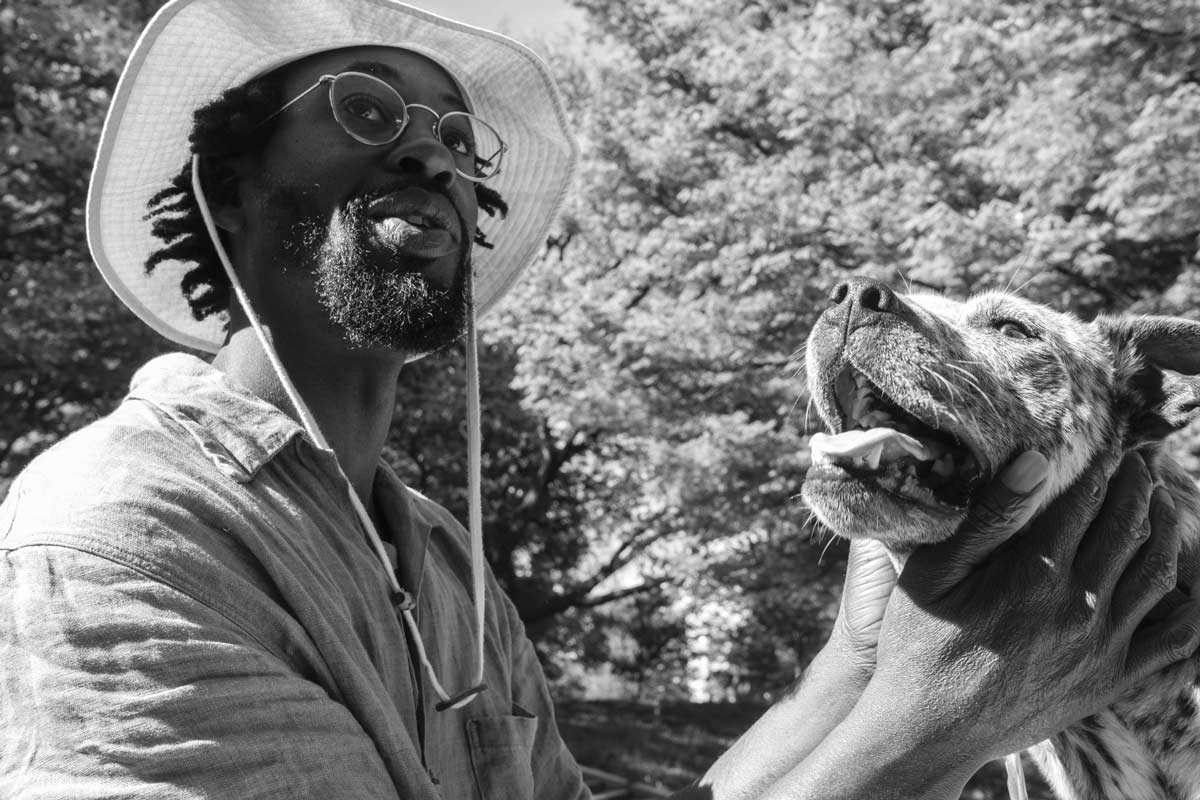
Last Spring, I was strolling in Underwood Park, between Dekalb and Lafayette Avenues, in Clinton Hill, along a normal path I would take to drop off dogs I walk. Something catches my attention. First, it’s the dogs wanting to eat the sticks on the ground. Then, as I command them to “leave it,” someone sparks a conversation about the joy of seeing my well-trained companions and encourage me to keep a Journal of Reflections about my day-to-day dog lifestyle.

Entry 2: The Start-
Today, I thought back to my youth when my family had a dog, Diamond, my best friend. I was responsible for him. Even though it was a duty, I was happy to have the task of over seeing his growth. I remember on one Christmas I accidentally stepped on his foot. He yelped and hopped around in pain, trying to balance on his other three legs.

I was devastated! It broke my heart! I thought he was severely injured. It was so hard for me to look at the puppy, so I locked myself away in my room at the time. Family members banged and pleaded for me to open the door. “Akuro, let us in. He’s ok” After a while, I opened the door, and there was my pit wagging tail, letting me know, in his way, that he was ok; he was no longer limping. He seemed to forgive me; by wagging his tail and confirming he was still my best friend. On my daily walks with my clients’ dogs, I can’t help but remember that time in my life when Diamond was at the center of it.

The memory makes me feel as if I am doing the right thing now, with the creation of my dog-walking pet brand. the memory of Diamond encourages me to find better ways to be a dog keeper and being there for them as much as possible.

Entry 3: Remembering why-
It was important to write the beginning of my pet brand journey. I think that was the first and it helped remind me why I’m doing this. Not for money but companionship. It just led me to finding a way to make money and running another business as an entrepreneur. Meeting Our Time Press/Bernice was a blessing; God did that for a reason.

She informed me about making a visit to the New-York Historical Society Museum in Manhattan to see the “Pets in the City” exhibition centering around pets and their owners from the 18th to the 20th centuries in NYC and how times have changed. Excited to take the knowledge I get from it and pit it into the business.

It ended last April. The next few weeks were busy ones: I had Bruno and Lulu with me. Then Dora entered the picture.

Entry 4:The Day-to-Day-
Yesterday, was total dog walking and running with Thrasher, Coco, Lulu, Sabrina. I started out with an active run in Bed-Stuy. Thrasher enjoyed it; keeps him active in the morning so he can rest up before afternoon to start again.

I walked Lulu and energetic Coco, who is always so ready. Coming out, we ran into her enemy in the complex, resulting in a slight melee. Got through it, though. Then got back around my way to add Bruno to the mix. He doesn’t usually need a long walk but always poops. Today, he didn’t but Sabrina mentioned he did a lot of walking at the park that morning. So, he probably got a lot out then. Dropped everyone off aside from Coco, then it was her turn to get home.

After that, I hopped right on the train to a meeting. That all lasted about an hour and a half from walking the pups to getting Coco and finishing up. I began thinking I would like to add more time to the walks weekly.

Another hour or more would be fine, but only if it was just walks. Otherwise, I’m thinking of ways to get them out to a farm or open area just for them to run around. Outside of that I want to get more boarding clients. It’s always good pay and helps the branding/marketing side of the business.

Diary 5: Routine
As an entrepreneur, there can always be a lot of uncertainty, and lots of ups and downs with periods of no cash flow. But by time the routine and time management kick in to your benefit, all that time it took for you to build up a schedule with clients/ dog walks should work to your advantage.

When things slow down, if they do (hopefully they never do), there’s a frame to work within to help keep you busy and on top of things, and you’re always ready to pick back up. Right now, I am working toward receiving seven streams of income for my pet service including walks, boarding, treats, day trips, clothing and accessories, and more.

Perhaps, the most unexpected thing to come into my life was making a living by walking dogs. It has led me to be more understanding of animals in general, and protecting wildlife and keeping nature, top of mind.

Aminisha Black: A Legacy Preserved on the Block where she once lived

.. working with neighbors, she saved a house; working with people in the community, she inspired a love for words.

Next year marks the 20th anniversary of the appearance of Aminisha Black’s Parent’s Notebook in Our Time Press. The esteemed late writer-educator’s column was hugely popular with Our Time Press readers in Brooklyn and beyond. But there was more to Aminisha.

She loved her community, and worked to preserve what was good about it. In 2006, Aminisha, a former Block Association president, worked with Lefferts Place past presidents, writer David Conrad and Raymond Harris, along with friends, supporters and community leaders, such as then-City Councilwoman Letitia James, Al Vann, Patti Hagan and the organizational descendants of Father Divine’s International World Peace Mission to save the James W. and Lucy S. Elwell House, pre-Civil War mansion, from complete demolition.

The house was owned and occupied for some years by IWPM for more than two decades, purchased from the family of the original owners. David Conrad wrote the story of his block’s elevation of the property to historic landmark status in an essay for Our Time At Home’s premier Winter 2006-2007.

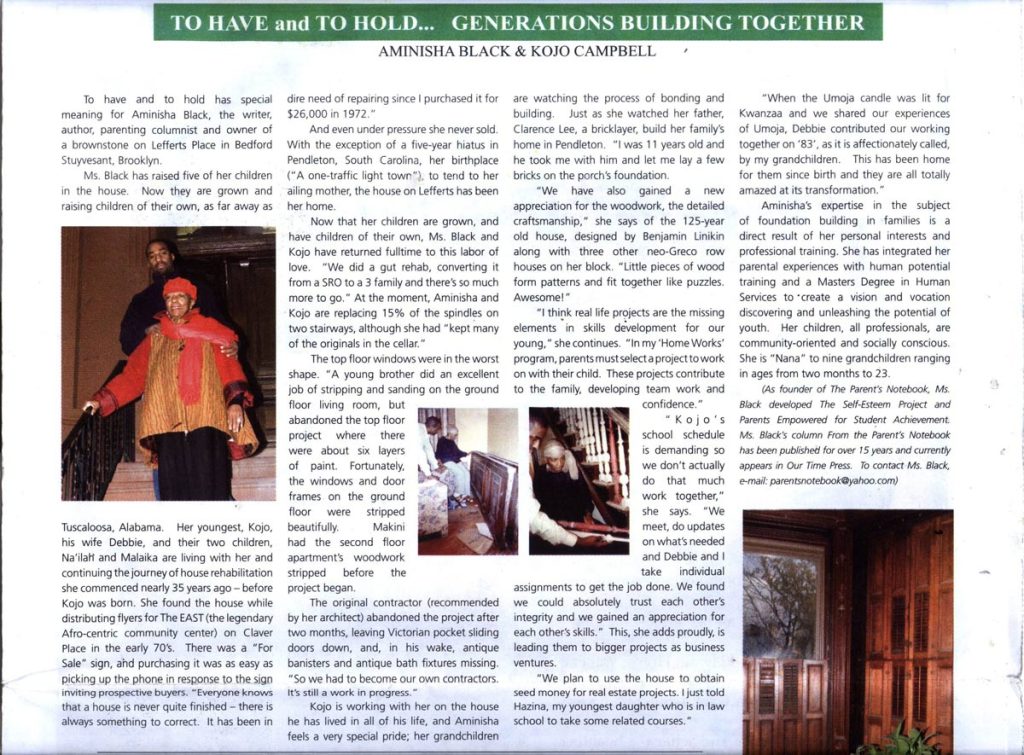
The issue featured a story, To Have and To Hold … Generations Building Together by Aminisha Black & Kojo Campbell (Aminisha’s grandson). It is reprinted below. Aminisha touched lives. She originated and led a Scrabble Club for young people and their parents at the Magnolia Tree Earth Center of Bedford-Stuyvesant. We met her through Professor William Mackey in the basement of 850 St. Marks, where she held workshops for mothers.

-B.Elizabeth Green

Block Party on Quincy Street

0

By Pojanee Fleury
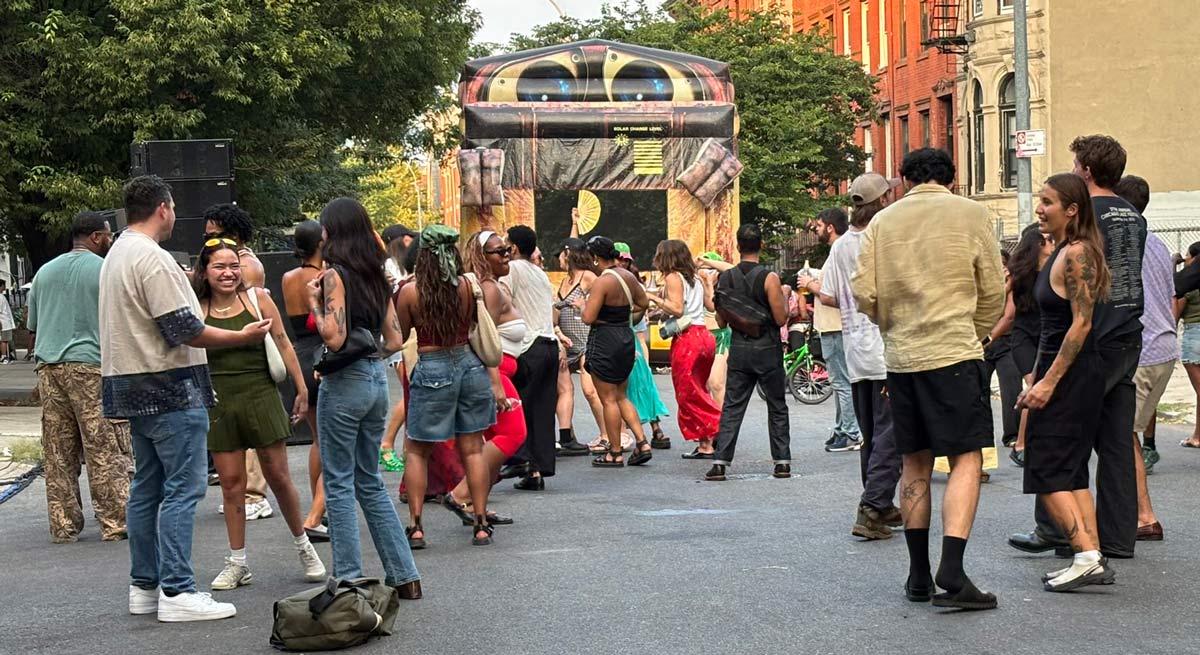
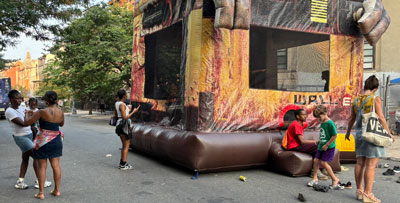
On August 17, 2025, the stretch of Quincy Street between Bedford and Nostrand Avenue transformed into a dance floor making this more than just a regular ‘ole block party – there was a massive bouncy castle, a lively soccer match, an exciting basketball game, food on grills and so much more made it clear that this block didn’t come out to play, they came PARRRTAY!


200 Quincy Street Block association member Denise Bain shared that she has lived on this block her whole life and grew up having fun at the block parties each and it was important for her to keep the tradition going. She explained that the block association mission has been to “build community on the block and make sure we have check points and ways to communicate issues on the block.”

As she spoke, a young person playfully ran up behind and bumping her before running off laughing with excitement. It wasn’t hard to discover that this block was one big family, a united group living their lives not as separated neighbors but together as an interconnected community.


From early morning, the familiar sounds of car horns and traffic gave way to laughter, music, and the excited chatter of neighbors greeting one another. The organizers ensured there was something for everyone as fun activities lined the street.

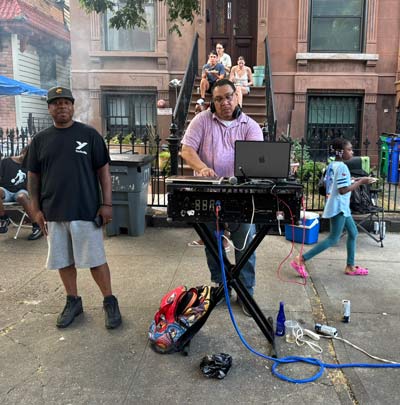
But it was the dance party that made it unique. For hours, a large crowd in the middle of the street grooved to the beat of Caribbean and Hip Hop music and although there were huge speakers blaring, they asked several times for the volume to be turned up!! They turned the street into a true dance hall!


Ms. Bain explained this is how they do it every year, “this is like “Crooklyn” and the vibe we have seen portrayed in other movies and culture. This is how I grew up, having the best time of my life right on my block!”


This gives a new perspective on the tradition of block parties. You don’t need to go all the way to Manhattan or another borough to have a great time, it can happen right on your own block! By taking part, you’re not just creating a fun event to have a good time, but you are building something lasting, a strong community of people who support each other.

In a world where traditions seemed to be fading, the block party remains strong as an invaluable, historical community building tool.


The event truly captured the heart of the community, bringing together to celebrate the unique spirit of the neighborhood. It left everyone who attended with cherished memories and a renewed appreciation for the vibrant culture and close-knit block that has come to define Brooklyn.