Home Blog Page 4

NAKO Hosted Forum on Mayor Mamdani and Black New York

By Mary Alice Miller
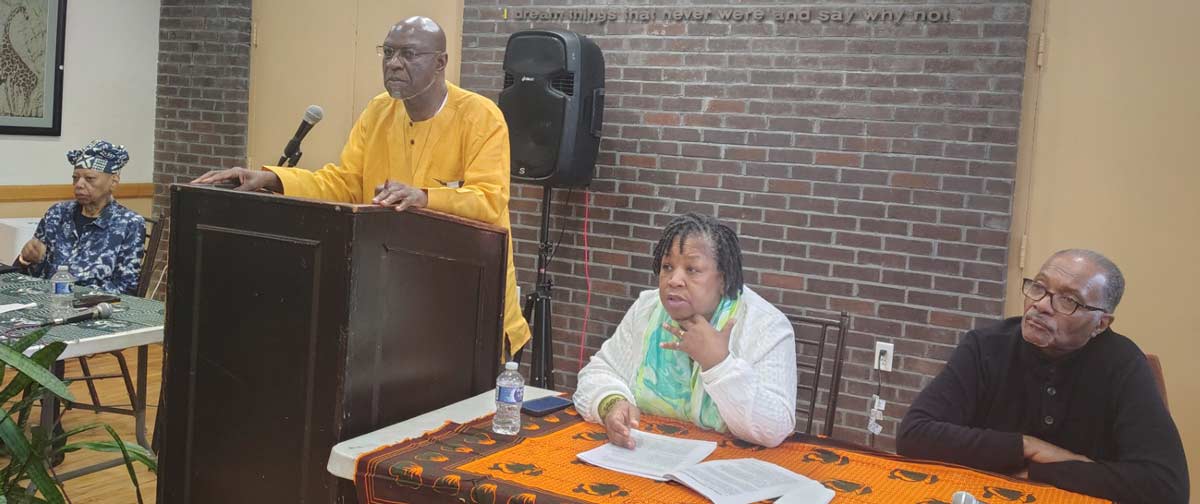
The National Association of Kawaida Organizations (NAKO) in conjunction with the International African Arts Festival hosted its monthly forum entitled ‘Mayor Zohran Mamdani and Black New York: Expectation and Possibilities’ at Restoration Plaza.


The guest speakers were Dr. Esmeralda Simmons, Esq., founding Executive Director of the Center for Law and Social Justice at Medgar Evers College and Dr. Roger Greene, former NY State Assemblyman and current professor at CUNY Law School.


Both Attorney Simmons and Professor Greene worked with Mayor Mamdani’s campaign to bring his message to the Black community throughout New York City. Their efforts helped get Mayor Mamdani elected as the first Muslim and Indian mayor based on a progressive agenda, not one that bowed or caved to the powers that be.
Dr. Esmeralda Simmons and Dr. Richard Greene are founding members of a new coalition called Coalition for a Democratic and Just New York.


“We challenged then candidate Mamdani to come to the Black community in Brooklyn, meet with savvy community activists. We presented him with a full agenda for Black people in Brooklyn and the rest of the city,” said Simmons.


“To someone coming from a Democratic Socialist background, none of this should have been shocking. In fact, we felt we were just informing and building out some of the rhetoric being tossed around,” said Simmons. “We all heard about the city-owned grocery stores and the free buses and housing limits on rent, some of which we knew he could do and some he would have a hard time doing – not because it is not doable, but because there is major opposition.”


Simmons said, “We presented him with our agenda at the Major Owens Wellness Center. Dr. Greene dialoged with Mamdani and got him to promise that he was going to come back to the Black community and say what he was going to do. “


Simmons issued a warning: “I want you to understand that you have three years and nine months to get some change in New York City government because in the next election the powers that be are going to throw every thing they have to make sure he is not re-elected.

The chances of him being re-elected in very, very slim.”
She continued, “It is up to us to come up with the agenda. Why? Because it is very clear talking with members of his administration and him that them came in without a plan. They knew how to campaign and run an election, but they knew nothing about governing the City of New York.”


Simmons added, “For those of us who have been in city government, or state government, we know it is not for a lack of ideas or good intentions. It is the fact that there is a permanent government that is aligned to the wealthy in this city that stops anything progressive from happening, and particularly around two things: real estate in any form (rent, mortgages, property taxes), anything that has to do with real estate gets sidestepped. And the second thing they want to do is to keep labor, workers at bay. Even though there are powerful unions in this city, those unions have been tamed. No offense, I am a proud union member.”


“We are asking you to become community activist,” said Simmons. “Either you are a community activist or a victim. Either you are fighting for your life, or you are waiting for them to push you out.”


“Dr. Simmons is talking about purging us from our communities via displacement,” said Dr. Segun Shabaka. “This government, unlike European governments, feel that they made a mistake that Europe did not make. They did not let the poor people control and dominate the cities by population and otherwise.

So now the city’s gentrification is spurned by whites knowing that they want to control cities because cities are still the centers of power in this country. That is why you see people being forced out of our communities. They are vulcanizing and breaking up our political power, our economic power and our cultural power.”


Dr. Greene explained the impetus for the new coalition.
“When we decided to create the Coalition for a Democratic and Just New York, we were thinking about the Coalition for a Just New York that was organized around Jesse’s first presidential campaign in 1984 that served as a basis to get David Dinkins elected.”


He said, “When this election was coming up and we had our brother in office who I feel had some serious contradictions in terms of how he was approaching governance, particularly as related to our communities, and he began to topple. I began to get phone calls from other elected officials about what should we do.

I said we should organize. Where is our agenda.? You didn’t have an agenda when Eric Adams was running. They didn’t put a Black agenda together. There was no criteria for leadership. There was no definition of a public policy framework that would respond to the crisis that we are in as a community.”


Greene continued, “So, I said who is the candidate, win or lose, that the Black community can organize around with an agenda to force the powers that be to address the crisis that we are confronting. Crickets. I looked around and said what are we leaving for our children? There was not succession planning, no intergenerational strategy.”
Greene explained, “The crisis we are facing is related to last stage capitalism, how it is configured in the economy and how it is impacting us.”


Greene’s solution is “a concept of African socialism that was grounded in the family. You would have a form of socialism that was not based upon command economy of Marxism, but was based upon something that was decentralized down to the local level within the family and community.”


“We began thinking about how do we do this in Brooklyn and New York City?,” said Greene.
“The healthcare sector in New York City (both voluntary and public health system) is valued around $40 billion in purchases that they make, from laundry to pharmaceuticals, food, detergents, light bulbs, etc.,” Greene said. “None of that is being recirculated in our communities via contracts. All of those products and services are primarily being developed in the global south as unregulated corporations attempt to exploit labor in the global South and Right to Work for Less states.”


Greene continued, “We went to Governor Cuomo reform the deformed supply chain to redirect opportunities back in the local economy. And we wanted to do it with a new definition of what an enterprise should look like in production of those products.

The ability in our communities to co-create enterprises that would build furniture for the health care sector, do laundry for the health care sector, produce food for the health care sector organized as unionized worker coops, a concept called economic democracy with the boards of those corporations a strong percentage of the board should be comprised of the workers themselves.”


“They got promises from Cuomo, with laws signed and budgets,” said Simmons. “They delivered on nothing and blamed COVID.”
The Coalition for a Democratic and Just New York has developed a detailed Public Policy Platform that can be obtained at cdjny2025@gmail.com.
Elizabeth Van Dyke is Producing a New Legacy for New Federal Theatre

Fern Gillespie
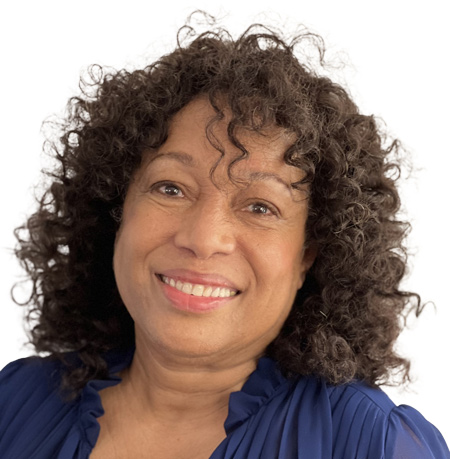
As Producing Artistic Director of New Federal Theatre, renowned theatre actress and director Elizabeth Van Dyke and the theatre are entering a new era. It’s the loss of Woodie King, the iconic founder of New Federal Theatre, who died in January.


“I was married to Woodie for nearly 30 years. We were together a long time. For me, he was a major mentor and comrade,” Van Dyke, who was named Producing Artistic Director in 2020, told Our Time Press. “Woodie could see potential in people that they couldn’t even see in themselves. And nurture it. So, he gave me and several other people like LaTanya Richardson opportunities to direct plays when we didn’t even have it in our bucket list.”


In 1981, she received a major directing credit as part of a theatrical historic event. Woodie King’s New Federal Theatre produced two biographical plays by Laurence Holder. The famous double bill was When the Chickens Came Home to Roost, starring Denzel Washington as Malcolm X and Zora, starring Phylicia Rashad as Zora Neale Hurston.


“Those were milestone productions. They were lines down the block. To this very day, people are still talking about that show. Both of those shows were so luminous,” she said. “I directed Phylicia Rashad in the one woman show Zora. It was so impactful that that is still resounds to this day.

It was then that Zora and I began our relationship. Years before that, Lynn Whitfield had given me one of Zora’s novels Jonah’s Gourd Vine. It started my love affair with Zora.”


Van Dyke’s name became attached to Zora. In 1990, Holder wrote a play for Van Dyke, Zora’s Neale Hurston: A Theatrical Biography, about the men in Zora’s life. It was co-produced by American Place Theatre and Woodie King’s National Black Touring Circuit. The tour went throughout the US and Africa.


“I think an historical character chooses their vessel. They might choose many people to portray them. But I believe the spirit is choosing who will portray them,” she said. “I am one of Zora’s vessels.”


At the Zora Neale Hurston Festival for the Arts and Humanities, she became the nonofficial artistic director. She’s been involved for over 20 years advising the festival. In 2023, Van Dyke portrayed Zora in the Wesley Brown drama Telling Tales Out of School, about several women from the Harlem Renaissance meeting in 1954. Woodie King directed it. “It was Zora in another time in her life and another writer envisioning her,” she said. “But it was still Zora from another perspective.”


Van Dyke won acclaim bringing the Lorraine Hansberry to the stage. She wrote and starred in the one person play on legendary Raisin in the Sun playwright Lorraine Hansberry in Love to all Lorraine. “I was fascinated by Lorraine Hansberry. I became known for playing both Zora Neale Hurston and Lorraine Hansberry.”
In 1999, she co-founded Going to the River, to mentor Black women playwrights.


“I wanted to tell the stories. I wanted to find the stories and nurture the stories by Black women for Black audiences,” she said. After 50 years, she revived the drama The Wedding Band by legendary Black playwright Alice Childress. Van Dyke portrayed Fanny at the Theatre for a New Audience in Brooklyn. Her performance received raves.


As an only child growing up in Oakland, California, Van Dyke’s parents exposed her to the arts. “From my earliest childhood, I was taken to the ballet, opera, and the theater. It was magical. In school, I would be in the drama club and glee club. I believe I always had an artist spirit,” she said. “It seemed like theatre acting was my initial entrée. I loved acting. When I began to study, I loved the craft of acting. I believe it’s a calling.” She moved to New York and earned BFA and MFA degrees from Tisch School of the Arts at New York University.
Her work as an actress and director spans theatre and television.

As an actress, Van Dyke appeared in Woodie King’s Broadway production of Checkmates starring Denzel Washington. Her television acting credits include Law & Order and Law & Order: SVU and The Cosby Show. Some of her director theatre credits are Sophisticated Ladies; Great Men of Gospel: SPIRIT INTO SOUND (2004); Sweet Mama Stringbean (2008); Gee’s Bend (2011); The Ballad of Emmet Till (2011); and August Wilson’s Gem of the Ocean (2014).

She’s earned honors that include the President’s Award from the Black Theatre Network; an ONYX Award for Best Director for Sophisticated Ladies; Audelco nominations for Best Director for Great Men of Gospel: SPIRIT INTO SOUND (2004) and Sweet Mama Stringbean (2008). For her impact on Black theatre, Van Dyke received the 2022 Audelco Lifetime Achievement Award.


Under Van Dyke’s administration, New Federal Theatre’s plays are performed Off Broadway at the Woman’s Project Theatre. However, New Federal Theatre will move its office organization base to a 6700 square foot location on Christopher Street. “It will be our offices, our workshops, and rehearsal for readings, salons, poetry, conversational round tables and small event presentations, we are quite excited about that,” said Van Dyke.
“We are Black theater. I think many of our heroes, and sheroes are forgotten.

In this climate, they are trying to be erased. So it’s important to remember who came before. Whose shoulders we stand upon,” she said. “Slavery displaced families, but we find pieces of ourselves on that stage, the commonalities on that stage, dignity on that stage, healing, upliftment, entertainment, information and the beauty of ourselves on that stage. Our stories told by our point of view.”


New Federal Theatre, founded by Woodie King, launched the careers of legends—from Issa Rae and Chadwick Boseman to Denzel Washington and Ntozake Shange. Elizabeth Van Dyke is an important part of that theatre heritage from being an actress and director to being a board member. “With Woodie and the board passing the baton,” she said. “They were saying you are the next Producing Director of New Federal Theater. You must build on this legacy.”

Sister, Who Do You Think You Are?

“Dress Your Spirit” by Celestine Wilson,
Owner, The Celestine Collection

The goal of my Celestine Collection of gemstone jewelry and nourishing beauty products is to uplift and empower through products that allow people to “Dress ‘the’ Spirit” — inside and out.


My journey to entrepreneurism began as a youngster, observing brilliant, powerful women in my family create beauty and beautiful things with passion. I grew up in a household that revered music, art and nature, respected family, embraced our indigenous culture, and balanced hard work with an appreciation for elegance.

My mother, Carole, and maternal grandmother, Nana Celestine, were craftswomen, culinary and couture artists. Nana made cakes from scratch and played the piano.


When Nana transitioned, we went through her belongings and you could see how much of a fashion queen she was; every bag had its scarf, leather gloves, shoes and hat to match.

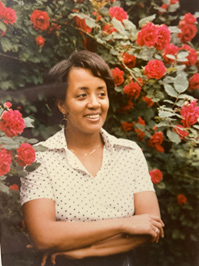
My mother, Carole


“Big Mama,” my paternal grandmother, a loving, spiritual and church-going lady, also migrated from South Carolina to North to escape segregation, racial injustice and economic inequality. In the back yard she grew fruit and vegetables like tomatoes, cherry’s collards and a concord grape vine. She was often in the kitchen cooking or baking.


I am a beauty products creator, jewelry designer, and teacher who learned from those family matriarchs the importance of paying attention to life’s small things.


Outside the family, friends with shared interests, played a major role, too, in encouraging my interests.
I started making jewelry just by asking a family friend, jazz cellist Nioka Workman, a crafter, about beads and supplies. I transformed hand-painted cowrie shells into fine jewelry and sold them to friends and family, before selling them to markets, churches and beauty salons. Working with gemstones and glass beads brought healing and meditation to me, and more clients.

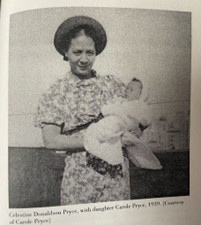
Maternal Grandma Celestine & my Mom (as a baby)


Other businesses, business owners and business collectives encouraged my entrepreneurial dreams.
I was inspired by entrepreneur Lisa, creator of the Carol’s Daughter enterprise. Her work with beauty products expanded my creativity and inspired my interest in developing a line of beauty products of my own.


She inspired many other entrepreneurs, too! My family used hair oil, hair creams, shampoos, conditioners, body jellies and body butters. When I participated in street fairs and sold Carol’s Daughter products, customers would say to me “Are you Carol’s daughter?” I would respond and say, “Yes, I am Carole’s daughter but not the Carol’s daughter who you are thinking of because my mom’s name is Carole too. Carole with an ‘e’.”


I admired Lisa and her husband because they had a niche in a market that was not tapped into. They made products that addressed our specific needs and they really worked. There was no other melanated entrepreneur that I knew that made products for us during that time period.

She was in “da hood” and I had access to her.
Then, I connected with Brenda Brunson-Bey. She invited me to carry my products at 4W Circle of Art & Enterprise, the Ft. Greene-based business collective. “4W”, run by Selma Jackson, allowed me to have a permanent space, there.


Brenda, Selma and 4W allowed me to be me whether it was through modeling in the fashion shows with the “Diaspora Art Collective,” filming the other artists on social media, being featured in one of the spring shows, supporting the Cooperative concept or just simply displaying my wares and supporting my products in a quality venue.


My family, the Brooklyn business community, and sisters helped shape who I am today as a teacher, designer, entrepreneur and one who dresses the spirit — inside and out.

How OBH Drama Therapy Supports Emotional Wellness

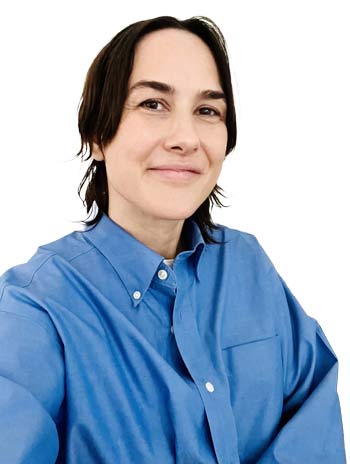
By Caelum A’Hearn, MA, Creative Arts Therapist – LP,
Psychiatric Rehabilitation
One Brooklyn Health-Interfaith Medical Center

There is so much to share about drama therapy as a Licensed Creative Arts Therapy! First, let me share some of my story. I come from an interdisciplinary arts background. Before I became a drama therapist, I was making interactive, improvised performances rooted in community engagement. When a mentor told me about drama therapy, I saw similarities between where my practice was headed and what was happening in the field. The more I learned, the more excited I was, and I was in graduate school studying drama therapy within the year.


I received my MA in Drama Therapy from New York University. During graduate school, I was able to work with and learn from many amazing organizations including Kings County Hospital, AHRC, The Animation Project, and Breaking Ground. My undergraduate education is in journalism, communication, and design, so finding different ways to tell a story is a significant part of my background.

In the decade plus gap between undergraduate and graduate school, I spent time facilitating and working in education and was also able to participate in several non-hierarchical, horizontally organized spaces like School of the Alternative in Black Mountain, North Carolina, and School for Poetic Computation in New York City. All these experiences helped form both who I am and how I relate to my practice as a drama therapist.


I have worked with folks across age, race, gender, sexual orientation, dis/ability, diagnostic, social, and class spectrums. Currently I work with people living with severe and persistent mental illness in an inpatient behavioral health setting. I work in acute care which means our team focuses on stabilization and helping patients get back to their lives as quickly as possible.


Drama therapy uses performance and theater processes to support people in moving towards their goals. It can help people find new ways to frame or reframe personal and collective stories, express feelings, process emotions, heal from trauma, and improve overall wellbeing.

Drama therapy allows people to try out different behaviors, engage with creativity, explore new ways of communicating, increase cognition, and forge deeper connections with themselves and others.


The most common misconception I run into as a drama therapist working in inpatient behavioral health is that because the interventions, I do tend to be dynamic and engaging, the purpose of drama therapy is to keep patients entertained.

While drama therapy can be fun, it is also an evidence-based, credentialed, clinical profession. When Licensed Creative Arts Therapists work with groups and individuals, a lot of care, skill, and training go into everything we do.


Another assumption that people sometimes make when I tell them I am a drama therapist is that I only work with children, perhaps because they associate drama or acting with “play.” Play is a language that we are often taught to stop using as we grow, even though it’s one of the first tools we have to understand and make meaning of the world around us. Play has an immediacy in terms of accessibility that can mirror the nature of thought itself, making it a powerful therapeutic medium for people at any age.


In groups, I use a lot of storytelling, roles, and improvisation. I design my weekly group schedule so that one group builds on the next, starting from “Flip the Script,” where we read through and discuss a popular script, to, once the group is more warmed up, “Role With It,” where we engage in Improv based exercises that build towards the creation of collaborative, two-minute-long scenes.


In “Flip the Script,” patients get to step into a role as an actor or audience member, sometimes even as the director! The group practices being in a relationship with one another in a safe, structured way while having the communal experience of creating something together, a powerful source of self-esteem.

We also use the script as a basis for discussion, pausing after each scene to consider what the characters might be feeling. Finally, each group member shares one thing they related to in the script as well as one thing they didn’t. These last two interventions are designed to support emotional awareness and integration by allowing group members space to explore and gain insight into their own feelings and situations without emotional overwhelm or detachment.


In “Role With It,” the group again engages with a shared creative endeavor. Improv-based exercises help build spontaneity, flexibility, and resilience. The scaffolding of the script is removed, and now participants are tasked with creating a scene together using elements chosen by the roll of a dice.

Improvisation requires listening to and building on what your scene partner is saying and staying with the present moment without trying to completely change or control it, which allows participants a chance to practice mindfulness skills. Acting in front of a group can be stressful and exciting, so engaging with scene work in a time limited and contained way gives group members the chance to practice self-regulation techniques in a potentially dysregulating situation and then reflect on that experience in a supportive setting.


There are so many examples I have of patients struggling to interact with peers due to their symptoms who are able to step into a role and play the social butterfly with ease, or who are not ready to join in the action their first few days on the unit but are quickly integrated into the group through the role of witness or director.

But mostly, I notice that healing occurs in the small moments when we let things unfold in the communal here and now; in the awkward, unresolved complexity of creation where we practice sitting with the uncertainty of “what happens next”. When we expand our capacity to tolerate and move through the discomfort of the unknown, we grow.


Creative arts therapies are important for overall mental and emotional health because they are accessible, providing therapeutic services via the universal languages of art, dance, music, storytelling, drama, and play. They support patients in exploring and defining their own healing goals while fostering relationships, community, and care.


Creative arts therapies also facilitate the exploration and reconstruction of personal narratives through creative expression, helping people make sense of their experiences, and find meaning in their journeys. One Brooklyn Health remains a trusted healthcare partner, committed to advancing patient care through innovative approaches like drama therapy. To learn more about how One Brooklyn Health supports mental and emotional well-being through its behavioral health services, visit onebrooklynhealth.org.

So Nice To Do It Twice

0

By Eddie Castro
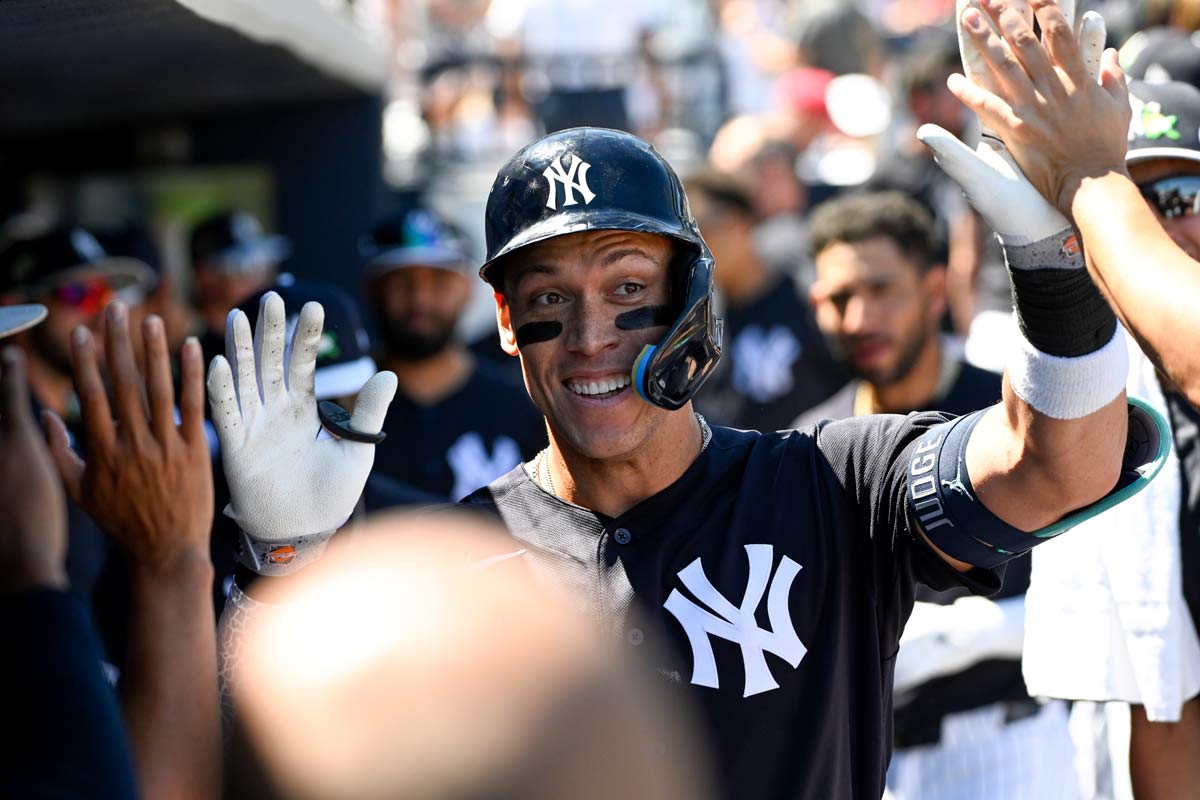
Good news Brooklynites, baseball returns to our TV screens tonight as the 2026 Major League season kicks off. After an exciting World Baseball Classic tournament in which Venezuela was crowned champions with a 3-2 victory over the United States, it is now time for Aaron Judge to swap his USA jersey for the Yankees pinstripes.

The Yankees will look to avenge a five-game divisional series loss against their division rival, the Toronto Blue Jays. Going into Opening Day 2026, the Yankees are the No. 2-ranked team according to CBSsports.com. power rankings, the Orioles, Blue Jays, and Red Sox making upgrades to their respective rosters during the off-season. The Yankees weren’t as active as many fans thought they would be.

The big question this season will be whether the current roster is enough to go head-to-head with the top-tier teams in the American League let alone a possible World Series match up against the two-time reigning and defending Champions the Los Angeles Dodgers?


Unlike the New York Mets, the Yankees did not make many moves to their roster, bringing back the same offensive lineup that was assembled in 2025. Trent Grisham accepted the team’s $22.5 million qualifying offer to be the Yankees centerfielder for 2026, Cody Bellinger could be the team’s most important free agent signing of the off-season bringing him back on a new five-year deal batting behind Judge. The Yankees were able to swing a deal with the Miami Marlins for starting pitcher Ryan Weathers.

The Opening Day rotation for at least the first two months for the Yankees will be Max Fried, who will take the ball tonight against the San Francisco Giants), Cam Schlittler who became one of the Yankees most fascinating stories toward the end of the year especially with his eight inning/ twelve strikeout postseason performance against the Boston Red Sox. Will Warren will get the ball in Game 3 followed by Weathers for Game 4.

Due to the early off days in the schedule, the team has elected to go with a four-man rotation with 2024 Rookie of The Year pitcher Luis Gil being the odd one out after struggling in Spring Training. The rotation is expected to get stronger when Ace pitcher Gerrit Cole and Clarke Schmidt who are both expected to return after missing all of last year with Tommy-John Surgery.

Carlos Rodon (Surgery to remove loose bodies and bone spurs) is also expected to return sometime in the Summer. This obviously will lead to a crowded six-man rotation with the odd man out probably being sent down to AAA or traded. It will be interesting to see if the Yankees’ rotation at the beginning of the season is good enough to contribute to the win column.


Although this Yankees team did not win it all last year, barring health of course, this Yankee team has the capability of being one of the most protective teams in the league. The only key departures the team had were Devin Williams and Luke Weaver, both of whom ironically signed with the Mets in the off-season. The Yankees’ offense is the same as it was in 2025, an offense that led the league in home runs (274) and total runs at 849. Manager Aaron Boone knows that this year could very well be his make-or-break season with the team. The Yankees will be under a microscope all year long.

Every team within their division has gotten better. Can the Yankees improve from what they were a year ago? Everything obviously factors with a healthy and productive Aaron Judge in what will be his age 33 season with the team. The championship window is closing.

Despite minor changes and promising players down at AAA that could play a role on the team come September and October just like Schlittler did last year. Can New York finally get over the hump and win their first World Series title since 2009? The chase for championship No. 28 begins tonight in San Francisco.


Sports Notes : (Baseball) The New York Mets will begin their season this afternoon in their home opener as they will send out their new Ace pitcher Freddy Peralta to the mound. It will not be an easy task as the team will oppose the 2025 National League Cy Young award winner Paul Skenes and the Pittsburgh Pirates this afternoon.