Home Blog Page 32

Crossing Paths with Assata Shakur

by Segun Shabaka
Assata Shakur’s passing last week was a bittersweet moment in that we lost a Black freedom fighter who joined the ancestors but will more so be remembered as the Black woman who escaped captivity to live free for four and a half decades out of the reach of a $2 million United States bounty on her life.

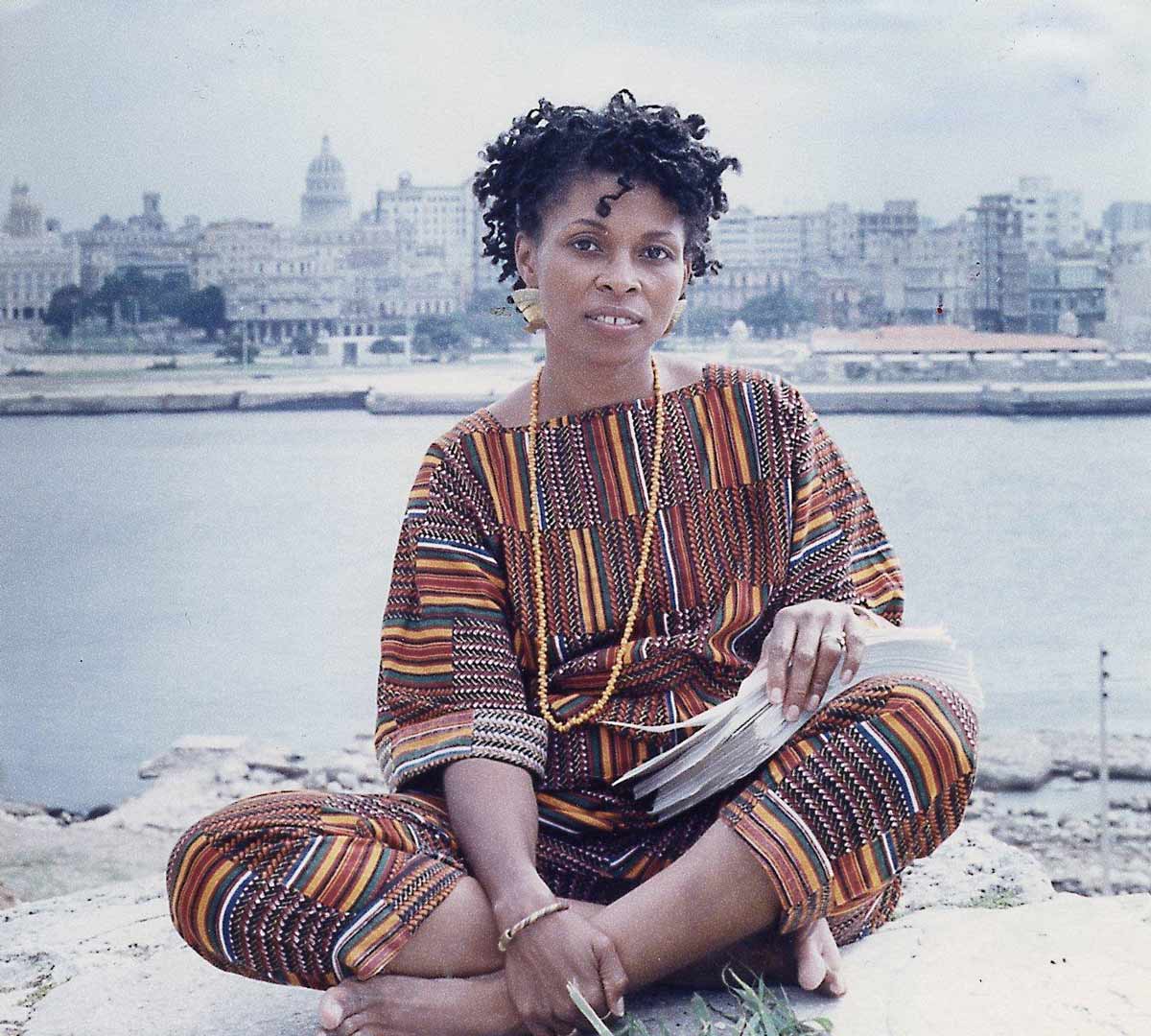
I met Assata Shakur once in Cuba, while traveling there in 1985 as an undergraduate student with City College. If one were to see the photo we took, you would think we were old comrades (and in some ways we were). As many of us visiting students and staff sat to take a picture with iconic sister, the unexpected happened when my turn came.

Assata put her head on my shoulder. The noise and words of surprise that ensued from crowd could be heard throughout the venue. I smiled. I often wondered who had a copy of that picture. It, in addition to photos I took with Prime Minister Maurice Bishop of Grenada a few years earlier, are pictures I wish I had copies of. Because of her safety I never tried to connect with Assata again on my many visits to Cuba.

It wasn’t as if Assata Shakur and I did not have some history. While teaching at the EAST’s Uhuru Sasa Shule, under the direction of the visionary headmaster and institution builder, Jitu Weusi, we took a group of students to her trail in New Jersey. We were in the back of the courtroom where she was barely visible.

The East’s history was rich with supporting all segments of our community, including our forgotten incarcerated family. (Remember what Haji Malcolm X taught us – “America means prison.”) At the East, we not only sent free copies of Black News, but also offered employment once freed and allowed for memorial and funerals at our facilities.

But it was when Sister Assata was incarcerated that I as editor (from 1978-1985) of Black News and Executive Director of the East became more involved and entangled in her case. When Assata was freed from prison I received and published in volume 4 Number 11 edition of Black News a statement from The Movement, another from the Black Liberation Army Coordinating Committee as well as a Black Solidarity Day Statement from Assata herself, along with her picture on the cover with ASSATA LIBERATED.

This put us on the Joint Terrorist Task Force list. A few years later we received a letter on the Justice Department’s stationary that they had tapped our phone for 2 years. The East organization had already experienced a number of spies and infiltrators.


This was heightened when Bibi Angola, who was part of Assata’s legal team came to my office in the early part of 1979 for assistance in putting out a book on Assata’s writings entitled, Assata Speaks, which was published several years before Assata’s autobiography (’87). The FBI was further under the false impression, based on the agent/informant Sayeed they planted into Bibi Angola’s life by flattening her tires that Assata Shakur was being harbored in the Uhuru Cultural Center at 357 Marcus Garvey Blvd., formerly Sumner Avenue. This would lead to a late April of 1980 massive conversion and raid by the FBI on the Harlem home of nurse Ebun Adelona.


These plans started as agent/informant Sayeed continued to lie that Assata was being harbored in the Black News office in the armory over several weeks we were working on the book. With these lies, he stayed out prison and was given money, several vehicles (he crashed) and other resources. It came to a head when former EAST member Shukuru came to town.

She made several calls on the Black News phone to plan a gathering with her nursing friends on that Saturday evening at the Harlem home of Ebun. We are pretty sure they mistook Shukuru to be Assata.

Earlier that day while in a class at the Uhuru Center I received an urgent call from Afeni Shakur (Tupac’s mother) warning me that ‘if I had anything in the Uhuru center, I needed to get it out because the FBI was about to raid it.’

Later that day the Harlem raid took place. That raid in late April of 1980 was supposed to take place at the Uhuru Center but the hundreds that gathered every Saturday at the armory and fear of a community backlash delayed it. Sayeed went back to prison and Assata would surface to safety in Cuba in 1984.
Ben Crump Pledges $50K to the Black Press, Challenges Others to Follow His Lead

By Stacy M. Brown
Black Press USA
Senior National Correspondent
The Conrad Hilton Hotel in Washington, D.C., pulsed with history and urgency as the Black Press of America gathered for its Annual National Leadership Awards and Reception. The evening honored House Minority Leader Hakeem Jeffries, Congressional Black Caucus Chair Yvette Clarke, and Communications Workers of America President Claude Cummings Jr. Cummings, who now serves on the executive committee of the Democratic National Committee, put the night into sharp focus.

Speaking to the Black Press’ Let It Be Known morning news show hosts on the Red Carpet, Cummings declared, “Democrats need to spend money now with the Black Press. The Black Press has always been that vehicle in our community that we’ve all needed and that has always been the trusted voice. With what’s happening in Washington and what they are trying to do to our community and our history, everyone should be supporting the Black Press of America.”

The words carried the sting of truth. For decades, the Black Press has stood as the trusted voice for African Americans, telling stories ignored or distorted elsewhere. It carried the mutilated image of Emmett Till when white newspapers looked away.

It published Dr. King’s words when others labeled him a troublemaker. It guided families through Jim Crow’s terror and chronicled the triumphs and tragedies of migration, struggle, and resilience. Today, two years before its 200th anniversary, this institution is fighting for its life. Then Attorney Ben Crump, known as “Black America’s Attorney General,” took the stage.

He did not come to flatter. He came to help, and he came with fire. “I will ask for personal privilege because I see my leaders in the room. The National President of the NAACP, Derrick Johnson, and Chair of the Board, Leon Russell,” Crump began. “The men who i stand with this evening, I want to come and demonstrate my appreciation to them and the Black Press. Right now in America we’re under attack like we’ve never been in our lifetime.”

The weight of his words fell heavily. “So now more than ever, we have to make sure that we have institutions that are disseminating information to our people, being the clarion call for us to be able to be ready to stand up for our children and our communities, to be ready to speak up for our children and communities, and to be ready to fight for our children in the community. And nobody carries the Black narrative and the Black information to Black communities more passionately than the Black Press.”

Crump then turned to those seated in the room. “Y’all, right now, y’all know this attack on DEI and everything, they’re cutting funding to all our institutions. And it isn’t right, but part of me says that’s okay. We don’t need them to save us. We are going to save ourselves. We are all we need.”


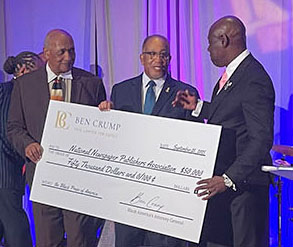
He reminded the room of the lessons of struggle and obligation. “Everybody got to give a little more when they can. If you’ve been blessed, you got to pass the blessing on. You just can’t keep it to yourself,” Crump told the packed ballroom. “Our fraternity teaches us we must lift as we climb. So tonight, I’m trying to lift as we climb to make this donation, and I pray that others will join us if you’re able to. If you’re able to.” “Because, like Dr. King said, we all got a role to play.

He pointed the way for others. With the bicentennial of the Black Press approaching, supporters are being urged to step forward through sponsorships, advertising, and partnerships to ensure that the Trusted Voice of the Black Community remains alive.

Even for Let It Be Known, ever rising in its import to the Black Press and its growing audience, survival is paramount. There’s an official GoFundMe at https://gofund.me/240152783.
“That’s why I’m making this donation to the Black Press,” Crump declared, his words cutting with urgency. “Because right now the Black Press is needed more than ever before.”

Twitter /Handles:
@AttorneyCrump @DrBenChavis

Ghana & Kenyan Leaders Demand African Representation on the U.N. Security Council

0

By Jeffery Kazembe Batts
IG: @kazbatts
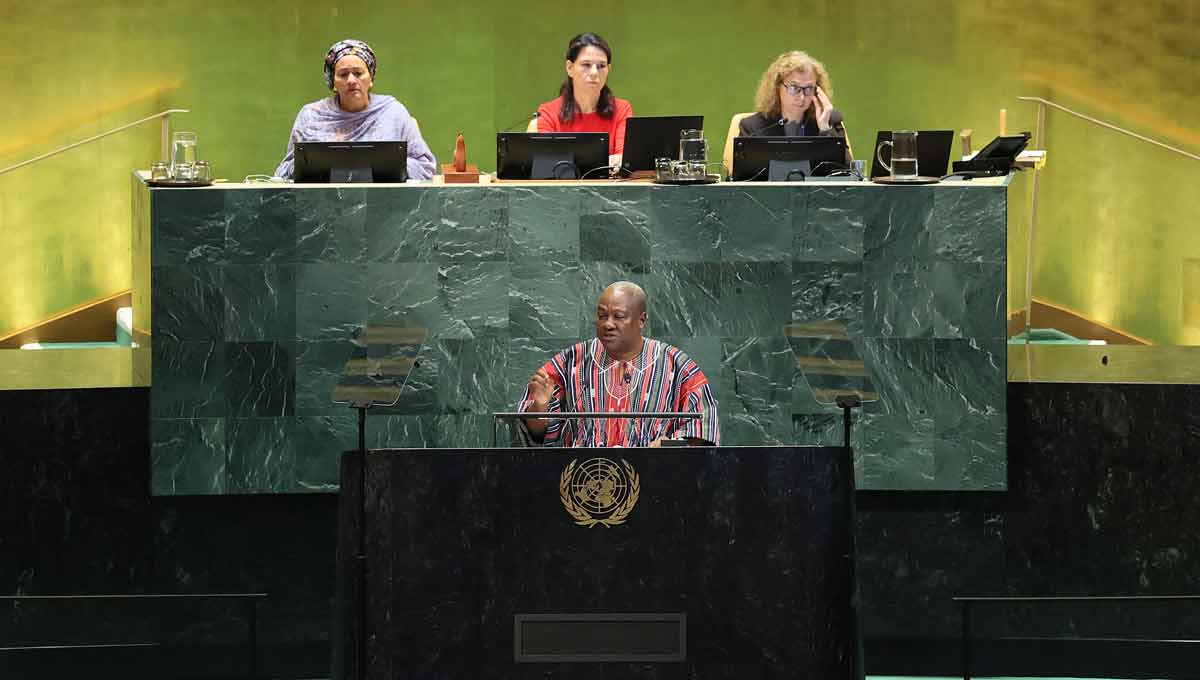
President of Ghana John Dramani Mahama and President of Kenya William Ruto came to NYC to address the assembled diplomats at the General Assembly among other agenda items. The Ghanian and Kenyan leaders took advantage of the stage and came with words that if manifested into policy, could change the socio-political conditions of millions of people around the world by adding African nations to the highest decision-making body of the world’s most inclusive institution.


Wearing a mostly red with blue, grey and white striped dashiki Ghanian President Mahama said in 1945 the role of African nations in the founding of the United Nations was insignificant with only Egypt, Ethiopia, Liberia and South Africa at the table. Prior to the United Nations and formed because of World War 1, the League of Nations was set up to prevent major wars in the future. It failed miserably as World War 2 evolved during the 1930’s.

Mahama then went back further recalling the Berlin Conference and the “scramble for Africa” among the European nations. This imperialist burden of exploitation during the 19th & 20th centuries weakened Africa and led to the miniscule African input during the founding of both the League and the U.N. Mahama urged the diplomats to now recognize that “the future of the world is African” he enthusiastically repeated. “When it comes to representation in this august assembly the most powerful post-World War 2 nations are still being rewarded with an almost totalitarian guardianship over the rest of the world.” he pleaded.

Hands clasped in front, the president then humbly asked for one permanent seat on the security council for Africa with full rights and an end to veto power being absolute and restricted to only five nations. Mahama then reminded the diplomatic delegations that 30 years ago at the same podium former South African President Nelson Mandela said “the United Nations has to reassess its role, redefine its profile, reshape its structures, it should truly reflect the diversity of our universe and ensure equity among the nations and the exorcise of power within the system of international relations in general and the security council in particular.”

Clad in a blue blazer with white shirt and red tie, early in his speech Kenyan President Ruto also reminded all about the failure of the League of Nations. He then declared the purpose of the U.N., eighty years ago, was to promote collective global security, disarmament, peaceful dispute resolution, and build cooperation on social and humanitarian issues between the nations of the world. Ruto also explained the urgent need for change that allows for African leadership at the highest levels within United Nations decision making.

Ruto then added “History is a lesson and a warning. Institutions rarely fail because they lack vision or ideals, more often they drift into irrelevance when they do not adapt, when they hesitate to act, and when they lose legitimacy, to remain relevant institutions must be reimagined, must be reformed, renewed and aligned with emerging realities.”

Continuing Ruto asked “Is the United Nations relevant to the demands of our time? Can it continue to serve humanity in the face of current realities or has it become a relic of a by-gone era?” He reminded the gathering that twenty years ago the continent was unified on the way forward. Adopted in early 2005 by the African Union, the Ezulwini Consensus demands two permanent and five non-permanent African seats on a reformed UN Security Council, with full veto powers for all permanent seats. In an assertive tone Ruto’s was forceful in demanding that the Ezulwini Consensus be respected.

Both presidents highlighted the enormous suffering by the people of Sudan where currently a humanitarian catastrophe with 12 million refugees is happening while garnering insignificant global media attention. Ghana president Mahama stressed the need for the U.N. to help the suffering refugees.

“It is not a mystery that when leaders of Western nations complain of their migration problems they are often referring to immigrants from global South” Mahama said in comparing global response differences between Ukraine and Sudan refugees. Hoping for peace in Sudan Ruto stated, “We fully endorse the QUAD, consisting of Egypt, Saudi Arabia, the United Arab Emirates and the United States in affirming that there cannot be a military solution and only political dialogue provides a viable path forward.”

Although climate change & the urgent need to reform and create fair global financial institutions were mentioned the urgency of Security Council reform was the common demand by the two statesmen. Both said the time for building African empowerment by joining the Security Council is long overdue.

So how can Africans force the overdue issue of permanent security council membership to be dealt with? Although strongly implied as to what might happen, neither of the two presidents during their presentations offered a specific action plan for the African Union or a timeline for responses from the current security council.


It has been 30 years since Mandela stated the need and 20 years since Ezulwini codified the process, yet the continent and leaders are still asking the same question. Can the current security council members ever agree to African seats at a table of power? Next year will African leaders and nations even want to speak and attend the 81st United Nations General Assembly?

A Mets Mess

0

By Eddie Castro
The 2025 New York Mets could very well go down as one of the biggest disappointments in Major League Baseball history. A team with so many expectations coming into the season especially with the addition of Juan Soto.

The team with a $340 million payroll has officially been eliminated from playoff contention with their loss against the Miami Marlins in the final game of the season. The Mets needed to win and a Cincinnati Reds loss to the Milwaukee Brewers to secure the final Wild Card spot in the National League. What plagues this Mets team pretty much the entire second half of the season once again reared its ugly head.

This disappointing season for Met fans has led to many questions about the team’s future. The biggest question of the season Met fans would ask Is how could this happen? Why did it happen? Entering the month of June, the Mets had the best record in baseball. There were 21 games over .500.


Since June 14, the season took a left turn as the Mets posted a win-loss record of 38-55. There were several factors that led to this collapse. Although the Mets pitching had the best ERA in baseball to begin the year despite missing key players Sean Manaea, Tylor McGill, Kodai Senga and Griffin Canning due to injury eventually those injuries caught up. When Senga and Manaea did come back, they did not perform well as both pitched to an ERA near 6.00 in the final months.

The mid-season acquisitions for the team did not pan out well as Manager Carlos Mendoza thought they would. Relief pitcher Ryan Helsley who was one of the players the Mets acquired at the trade deadline was not the dominant pitcher he was in St. Louis. Cedric Mullins an outfielder the team also picked up, could not replicate his performance at the beginning of the year he had with Baltimore. Last but not least was the team’s offensive production. Although Juan Soto had a slow start to his first year with the Mets, he eventually put together an MVP-like year as the season progressed.

However, it was the overall offense of the team that remained inconsistent all year long. In fact, the Mets were the only team to not be able to win a game in the 8th inning or later. They went 0-70 when trailing after the 8th inning.

To wrap it up in one word, the 2025 season for the Mets was simply inexplicable. The expectation is there are going to be many changes to the coaching staff and perhaps even the lineup. One of those changes could very well be the departure of former All-Star Pete Alonso. After the game against the Marlins, Alonso announced that he will opt-out of his three-year deal with the Mets and test the free agent market this winter.

Pitching should without a doubt be the team’s number one priority. It’s good to hit home runs as an offense, but you need a good pitching rotation to hold leads that the offense may produce. After the game, Mets Owner Steven Cohen issued an apology to Met fans that was posted on “X” simply stated “you (the fans) did your part with your ongoing support, we didn’t do our part.” To put it all in a nutshell, a team that had World Series on paper written all over it cannot have a repeat of what 2025 was. It was simply disappointing.


Sports Notes: (Baseball) As we go to press, the New York Yankees began their quest for a 28th World Championship this past Tuesday in a best-of-three Wild Card series against the rival Boston Red Sox in the Bronx.

Tonight, could perhaps be the deciding Game 3 or we could be talking about the Yankees divisional Match up against another division rival the Toronto Blue Jays. Tune in to tonight’s All-New episode of Sports Talk with Eddie tonight on the Our Time Press You Tube for an update on the future scenarios for the Yankees.

(FOOTBALL) New Giants quarterback Jaxson Dart was electric in his first start against a tough Los Angeles Chargers team. However, the team received some unfortunate news as their top-receiver Malik Nabers will miss the rest of the season with a Torn ACL.

The Giants play the New Orleans Saints this Sunday. After another loss that was highlighted by bone-head penalties and turnovers, the Jets will head back home hoping to avoid an 0-5 start to the season as they battle the Dallas Cowboys.

Local Voices Drive Change

0

Onward: On Sunday, according to news reports, a crowd of 900,000 turned up for the 56th African American Day Parade wending through the streets of Harlem, along Adam Clayton Powell Jr. Boulevard from 111th to 137th Streets.

Brooklyn’s Dr. Patricia Ramsey and Dee Bailey were among the throng of prominent leaders enjoying the marching bands, floats and revelry. Annually the parade celebrates the unity, culture, heritage and achievements of the African American community.

The theme of this year’s event — hosted by Parade chair Yusuf Hassan — spoke to these times and issues in its call for a recalibration of focus to make “Education” as “Our #1 Priority.”

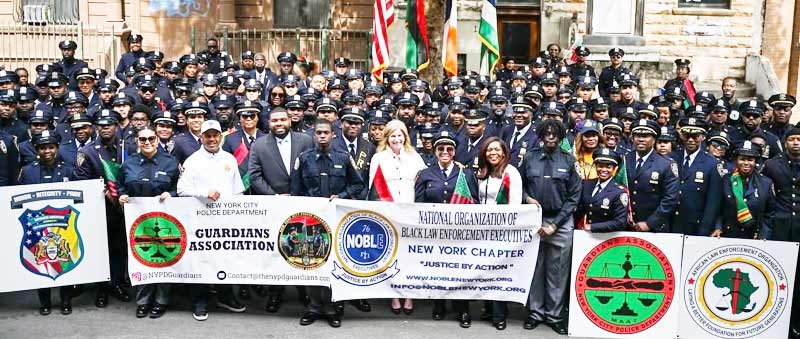
This photo, sent by Ms. Bailey, captures public servants and community leaders who, as Ms. Bailey said, “work on the frontlines for law, justice, safety and community preservation.”

In this crowd are NYPD Guardian President Patrick T. Gordon, Police Commissioner Jessica Tisch, NOBLE NY President Besemah Rogers, Deputy Commissioner Lisa White, Assistant Commissioner Kenneth Morgan, Assistant Commissioner Alden Foster, Deputy Chief Victoria Perry, Deputy Chief Aaron Edwards and Deputy Chief Hugh Bogle, among many others.