Report: Half of NYC families lack enough income to survive without assistance
NEW YORK (WABC) — A new report from the United Way of New York City and The Fund for the City of New York is shining a light on how hard it is to make ends meet.
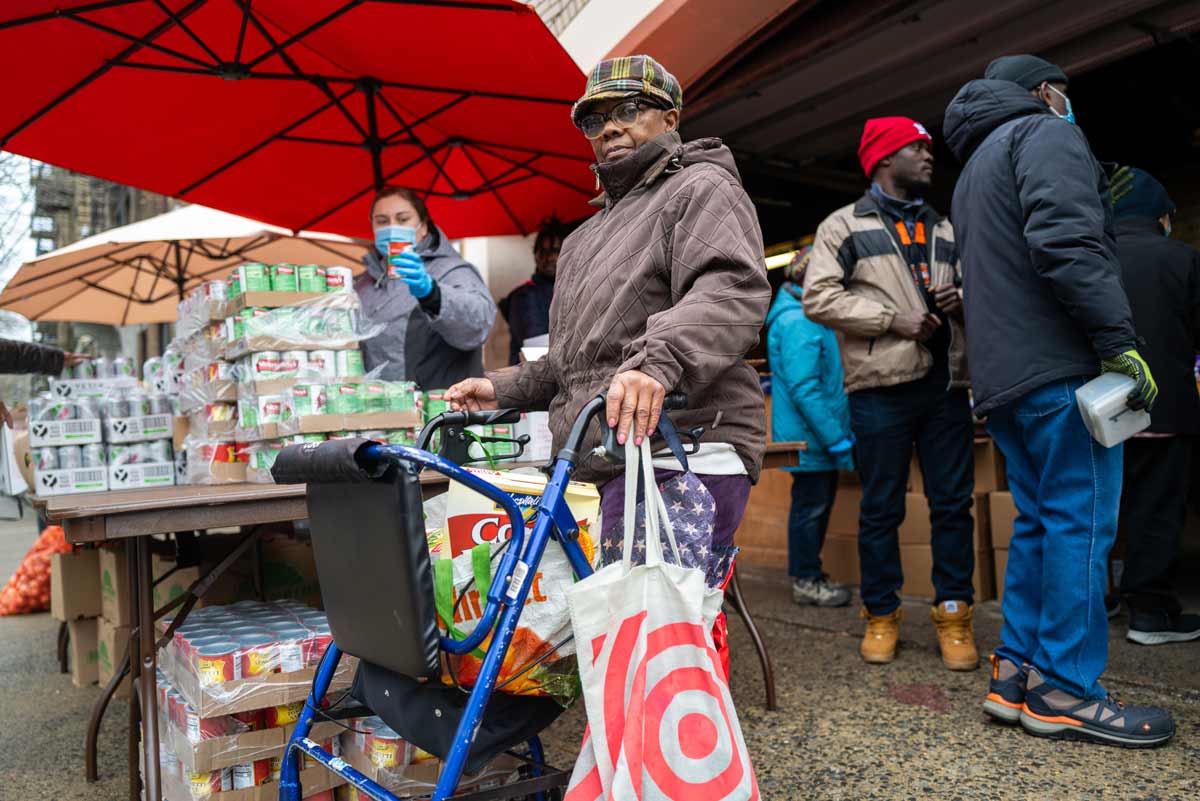
The report released Tuesday, titled “The True Cost of Living,” shows half of all families in New York City lack enough income to survive without assistance from the government, family or community.
Childcare costs have become problematic for middle-class New Yorkers. For example, one mother says she pays almost $2,700 a month for daycare – which can be staggering when factoring in rent and all the rest.
According to the report, costs have increased 131% while median earnings have increased 71%. And 36% of households lacked enough income for basic needs in 2021. The latest findings show 50% of working-age New Yorkers are struggling to cover costs. And roughly 3 million New Yorkers struggle to afford healthy food.
Erasmo Nieves is a father from Queens who works as a paralegal; his wife is a supervisor. He says they make a decent salary, but it’s not enough to survive in the city. They’re considering moving with their three kids to Tennessee.
A new survey by the Citizens Budget Commission shows New Yorkers generally rate the quality of life as “not good” and much worse than in 2017. Only half of more than 6,000 New Yorkers surveyed plan to stay… if they can.
Policy recommendations put forth on Tuesday include: -Support the JustPay campaign to increase wages for human service workers. -Support the Community Land Act to enhance housing affordability. -Improve public housing and child care subsidy programs. -Improve access to preventative health services to decrease future costs. The report shows the true cost of living is more expensive in Lower Manhattan at $7,956 a month.
The least expensive is in the Bronx. But an adult and two school-age children still need close to $5,000 a month to survive.
“Families are finding that between housing, between child care, transportation, it is almost impossible, and what we know from every news report that we see, families are voting with their feet, the middle class is leaving the City of New York because they are paying more for child care than they are for rent,” said Grace Bonilla, president of United Way NYC.
Policy recommendations put forth on Tuesday are a blueprint for action to be taken by local, state and federal governments, but the organizers of the report say private sector employers also have to make significant changes in light of wages not catching up to the cost of living.
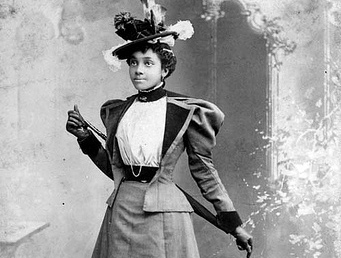
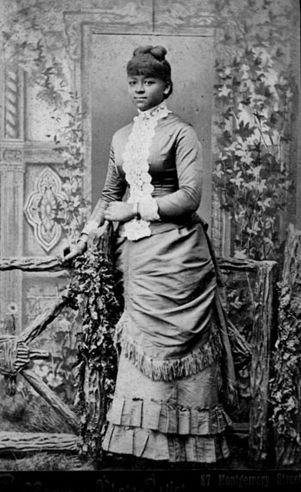
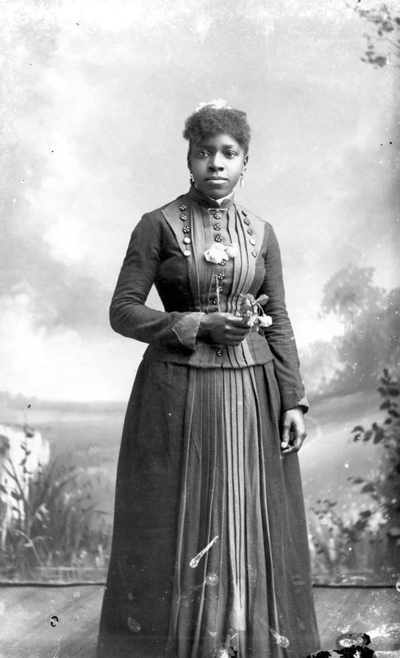
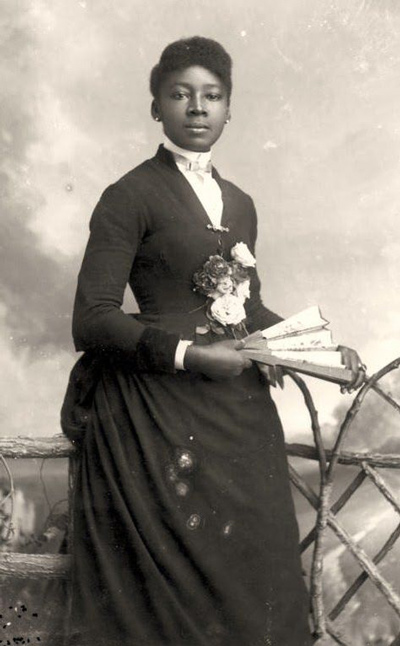
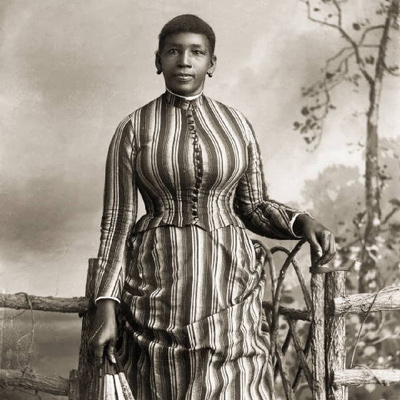
by Bernice Elizabeth Green Before the hot comb and smoothing ointments became the must-have hair products for women of color at the end of the 19th century, black women primarily wore their hair in its natural state. The evidence can be seen in a formerly lost now historic of images of men, women, and children taken by white Tallahassee photographer Alvan S. Harper.
His remarkable body of work is owned by the State of Florida, and a portion of it is on view at the Florida Museum, in the exhibition, “Portraits of African Americans: From the Alvan S. Harper Collection (1884-1910).”
Described as capturing Leon County’s middle-class Black community of entrepreneurs, local leaders, teachers, and others, the exhibition reveals more. It shows a people of regal beauty exuding pride of culture, all hues, standing strong though caught between two trying periods — the end of the Reconstruction Era and the beginning of the Age of Jim Crow.
When Harper opened his studio in the late 1800s, men and women of color rushed to it, taking with them, their unshackled crowns of raw, rich glory. These images, and other photos, art and journals — recently discovered in the dust of American History’s floor — are the missing memory chips for the 20th-century’s Black is Beautiful and 21st-century’s Black Lives Matter movements.
Today’s community-based collaborations formed by such organizations as the Natural Hairstyle and Braiding Coalition, BKLYN Commons and NYBeauty Suites, noted in the above story, come naturally honest and are inspired: although separated by more a century, the professionals of today and yesterday share a basic objectives: to prosper and to pass the legacy of a rich heritage legacy on to the next generations.
At the heart of the shared mission of those 19th century professional and business leaders in northwest Florida is the quest to preserve culture. culture preservation. Which is the reason we should support them.
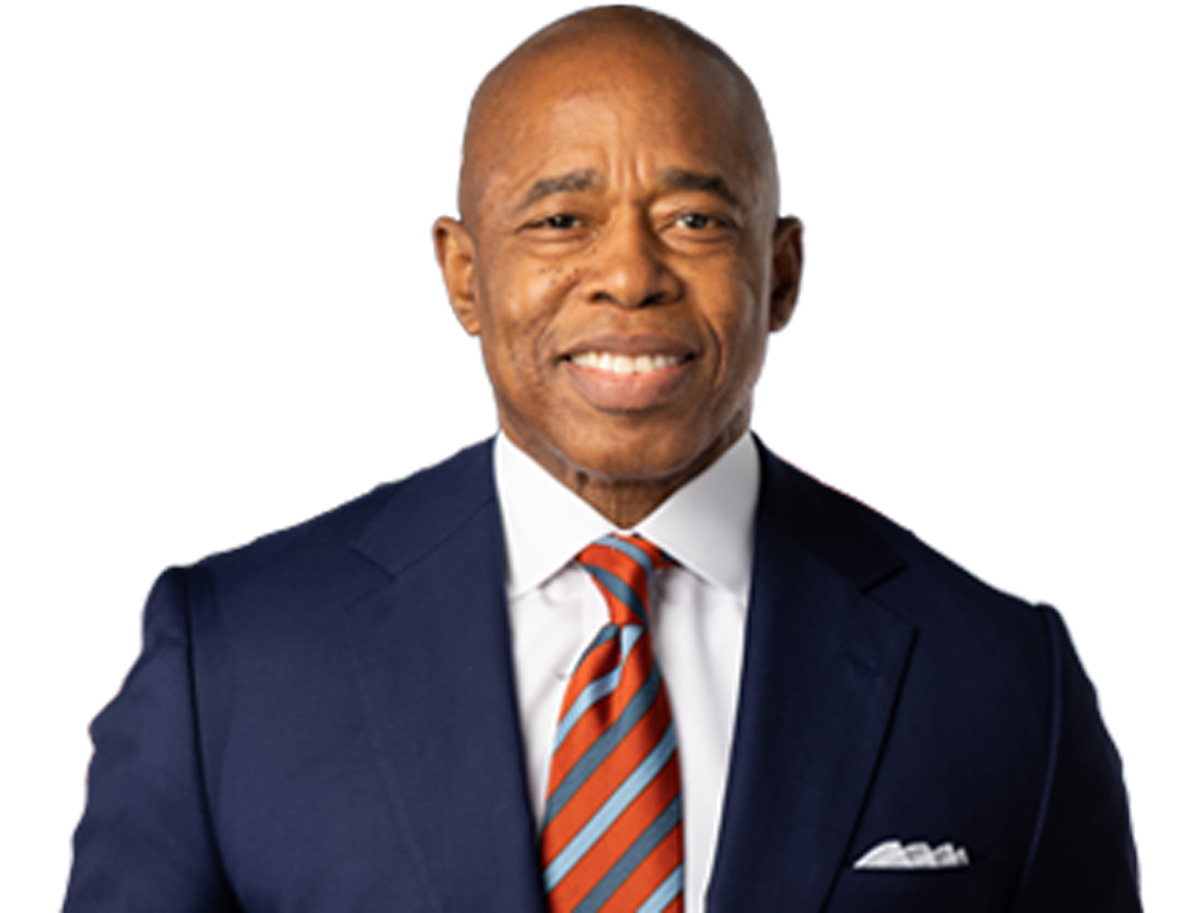
At a Tuesday in-person media availability, Mayor Eric Adams began with the promises he made and those kept. “Two years ago when we came into office, we had a clear vision: protect public safety, rebuild our economy and make the city more livable for all New Yorkers in general, but specifically, working-class New Yorkers. And we’re delivering on all three every day and each week we roll out our focus on that.”
The mayor went over the deliverables his administration achieved and before opening for questions, he addressed the elephant in the room.
“Everybody’s familiar with the allegations that were made in November of last year, and I want to immediately respond to that as I did in November when they first came out on Thanksgiving Day.
“This did not happen. It did not happen. I don’t recall ever meeting this person. During my time in the Police Department back in ‘93, many of you know, those who have followed me, I was one of the most outspoken voices for fighting not only police abuse, but also for the rights of people. My life has been dedicated and committed to that.
“I’m sorry that Tracey and Jordan, my family, is going through this right now, but I have been very clear on fighting on the rights of behalf of women, and I’m going to continue to do that.“My life has been a clear open book for almost 40 years now.
I have been one of the most public faces in the city, and I have always carried myself with a level of dignity that New Yorkers expect from me.“And I want to say to New Yorkers, I’m going to continue to do my job of navigating the city out of the crisis that we have been in, just as we navigated out of Covid, the asylum seeker crisis, public safety, the housing crisis. I’m focused on doing that.
I’ve given three comments over and over again: stay focused, no distractions, and grind, and the legal team will handle the other aspects of this.”
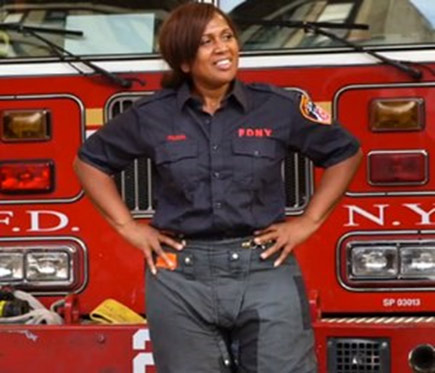
Not all sheroes wear capes! Firefighter Regina Wilson wears massive boots, a ginormous helmet, and a heavy fire-resistant jacket – in 80-degree heat and more. She has been with the FDNY since 1999 – 25 years putting out fires and deflecting grandfathered-in isms like racism, sexism, misogyny, and frat-boy mentality.
Born in East Flatbush, the child of a young, drug-addicted, abusive mom, Regina went to stay with her grandmother Alma in Los Angeles. Coming back to Brooklyn as a pre-teen, changing her life was a trip to a convention at the Jacob Javits Center where a recruiter asked if she would consider joining the FDNY.
Ms. Wilson asked herself: “Why not me? Why can’t I be a Black woman firefighter.” She is an advocate for bringing more Black women to the FDNY and more Black and brown people in general on the job. This is despite a white male-dominated department of over 10,000 that still sees the city’s 200 firehouses only having 200 women firefighters; with only 36 -40 being Black or brown.
Not one house has two Black female firefighters, she said. There’s a way to go.
Last week, Thursday, 14th March, in Starrett City’s Christian Cultural Center, Attorney General Letitia James was heckled by firefighters chanting “Trump” during a graduation ceremony. “Oh, come on, we’re in a house of God…Simmer down,” said AG James. None of the top brass present did anything to stop the booing said Ms. Wilson. She slammed those who “disrespected, desecrated, and violated that church. They booed her because they felt that they were privileged to do so.”
Later, FDNY Commissioner Laura Kavanagh said, “We have decades of training and discipline that none of us want to see tarnished by the unprofessional behavior of a few.” In a statement, the FDNY said, “We’re looking into those who clearly broke department regulations.”
Ms. Wilson replied, “I don’t know why Commissioner Kavanagh or many of the chiefs who were there did not discipline them. They said something in the press. But, that was too late, and too far and in-between.”
Now in her third term as President of the Vulcan Society, the national Black fraternal organization, Firefighter Wilson continues to use her platform to highlight what is needed to increase diversity, equity, and equality in the FDNY.
She told Our Time Press, “This department is 159 years old, and we are dealing with the same things that we were dealing with when I first came on a job in 1999. We are still experiencing racism, sexism, homophobia, and xenophobia…We all came on this job with a lot of passion to help and save people, and our focus shouldn’t be on whether or not we’re working in a healthy environment.”
The former president of the United Women’s Firefighters, continued, “And what kind of ism, and how far does that ism go? How deep is that person’s hate? Issues of your own safety. I’m just very much concerned about the level of stress that people can be under in this job; dealing with suicides and domestic violence at home; or drug and alcohol abuse to try to cope with just coming to work; and the PTSD that is the overall outcome of the traumatic experience that we have working in the firehouse.”
She continued, “They come in with this hate or these ideas of what we are. And then you spend your time at work trying to deconstruct them so they can understand that not everything you see on TV is who we are. “It’s exhausting. And then having to work,” Ms. Wilson sighed heavily. The FDNY’s response?
“We’ve had these conversations for a number of years, and I’ve never said to you, ‘Hey, we’ve overcome! It’s getting better.’ But this is a way for us to express some of the things that are happening, and we hope that the public is listening.”
What is the fire department doing to resolve these issues? “They’re doing nothing. I asked for the diversity and inclusion plan. There is none. There is nothing that has changed the dynamics of the firehouse. We had a climate survey, and the chiefs went around to the firehouse. Was there discrimination? What is the atmosphere of the firehouse? Some encouraged them to do better on the next climate survey.”
The veteran firefighter told Our Time Press, “The 2018 climate survey showed that women and Blacks were discriminated against 3 times more than any other group in the department. With that information, the department still has not done anything to fundamentally change and shift the course of this department.”
The FDNY did not respond to Our Time Press regarding charges of racism and sexism within the department by press time. Ten women graduated last week to become members of the Fire Department. Only two of them are Black.
Is that progress or not?
First responder Wilson said, “It is because right up until the 2007 Vulcans and US government versus the FDNY lawsuit – we would have 3 or 4 in a class. I was the only woman in my class. So 10 in a class is not great either, for women we should be at 10 to 15% – we’re at like one and a half.” Ms. Wilson wants the Vulcan Society “to let the City Council, the Governor, the Assembly members, and the State Senators, know that we continue to advocate for equality, for equity, and diversity within the Fire Department of New York.”
The Vulcan Society’s “goal is to make sure that we are taking care of our community with fire safety; and we keep giving back by way of charity and clothing, toys for kids and haircuts, and book bags. Just so that we can kind of take the load off of the people in our community that are struggling to make it every day.” On September 11, 2001, Ms. Wilson’s Park Slope Ladder 105/Engine 219, responded to the collapse of the South Tower and lost 7 members.
Almost 3000 people were lost, including 343 firefighters. Every year the Vulcan Society holds a community ceremony for their 12 Black members who perished at the World Trade Center. FF Wilson is currently working as an Operations Liaison personnel with the “New York City Emergency Management, responding to people when they get burnt out of their buildings, and helping them get back on their feet.” Known for her spectacular voice, Ms. Wilson is also part of the ceremonial unit, singing at FDNY events. She told our Time Press, “I am doing both careers that I love to do. Who can ask for anything more?”
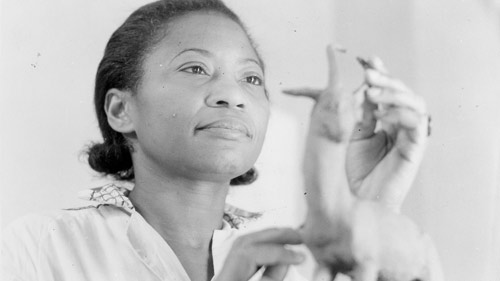
By Fern E. Gillespie Although the great sculptor Augusta Savage was a pivotal force in the creation of the Black fine arts movement of the Harlem Renaissance era, for decades she was a footnote in Black History.
No more. There is currently a renaissance swirling around her and her work. Most notably, during this February and March, Augusta Savage’s milestone cultural impact has been celebrated through a major PBS documentary, the Metropolitan Museum of Art Museum exhibition, a multi-faceted 3D education program, and the creation of a new department at the Smithsonian in Washington, D.C., devoted to the artist’s life and work.
Art historian Dalila Scruggs has been appointed The Smithsonian American Art Museum’s first curator of African American art with the position Augusta Savage Curator of African American Art. It was created through an anonymous $5 million endowment gift to the museum in honor of sculptor Augusta Savage.
Sculptor Augusta Savage
The PBS American Masters documentary Searching for Augusta Savage, available online, is directed by Charlotte Mangin and Sandra Rattley and narrated by art historian Jeffreen M. Hayes, Ph.D., who curated the touring exhibit Augusta Savage: Renaissance Woman from 2018 to 2020. The documentary explores Savage’s life and legacy, and why her artwork has been largely erased.
At New York’s Metropolitan Museum of Art, audiences have been thrilled by the groundbreaking Harlem Renaissance and Transatlantic Modernism exhibition. Under the direction of MET curator-at-large Denise Murrell, a popular piece is Gamin’, Savage’s historic sculpture of her nephew on loan from Schomburg.
At the center of this Augusta Savage whirlwind is Tammi Lawson, curator of Arts & Artifacts at the Schomburg. Lawson, who holds a master’s in library science from Queens College, has worked at the Schomburg since 1989 and joined the Arts & Artifacts Department in 2013. Since 2018, she’s led the department as curator.
She’s been the touchstone with all of these Augusta Savage projects including the award-winning young adult book by poet Marilyn Nelson, Augusta Savage: The Shape of a Sculptor’s Life, for which Lawson wrote the afterward.
“I’m always pushing Augusta Savage. She’s remarkable. Her story should be told because there’s no artist like her. She was intentional with her work and her vision,” Lawson told Our Time Press.
Augusta Savage (1892 – 1962) was born Augusta Fell in Green Cove Springs, Florida, the seventh child of 14 children. As a child, she would sculpt animals from red clay found in the area. In the 1920s, she ventured to New York City to study art at Cooper Union. Although she received financial support from the college, she still had to work as a domestic to support herself.
By 1923, Savage received a summer scholarship to the prestigious Fontainebleau School of Fine Arts in France. The award provided travel and study for 100 women artists. However, when the school discovered she was Black, the offer was rescinded. There was an uproar from the Black arts community, including WEB DuBois. In 1929, her famed bust of a Black boy, Gamin’, earned her a Julius Rosenwald Fellowship to study in Paris.
August Savage was the first African American artist elected to the National Association of Women Painters and Sculptors. In 1932 she opened the Savage Studio of Arts and Crafts and in 1935 became a founding member of the Harlem Artist Guild.
Then, in 1937, she helped establish and was the first director of the Harlem Community Art Center, which received funding from the Works Progress Administration (WPA), which was instrumental in nurturing some of the Harlem Renaissance’s most famous artists.
Tammi Lawson, curator of Arts & Artifacts, Schomburg Center for Research in Black Culture. Photo courtesy Schomburg Center
“At the Savage Studio of Arts and Crafts, she taught the kids and when they learned enough she was able to hire them as teachers. Then the WPA came along and she was made Director of the Harlem Community Art Center.
She took her students with her,” explained Lawson. “Along with Mr. Schomburg, Norman Lewis, Charles Alston and others, she started the Harlem Artist Guild, which fought for Black artists to be put on WPA projects. Those same students, who became teachers now became directors of the mural project at Harlem Hospital.”
Augusta Savage was an artist, activist and administrator who was about getting jobs for Black artists. “During the latter part of the 20th century, a lot of the artists went on to be famous like Norman Lewis, Jacob Lawrence, Selma Burke, Ernest Crichlow and Bob Blackburn,” said Lawson. “They all owe a debt to Augusta Savage. They all say she was instrumental in their careers.
Jacob Lawrence has said he wouldn’t be an artist if it wasn’t for Augusta Savage, because she actually took him down to the WPA and had him sign up. She told him ‘you should be paid for the work that you do. You are an excellent artist.’ He would not have done that. He said that. She’s remarkable.”
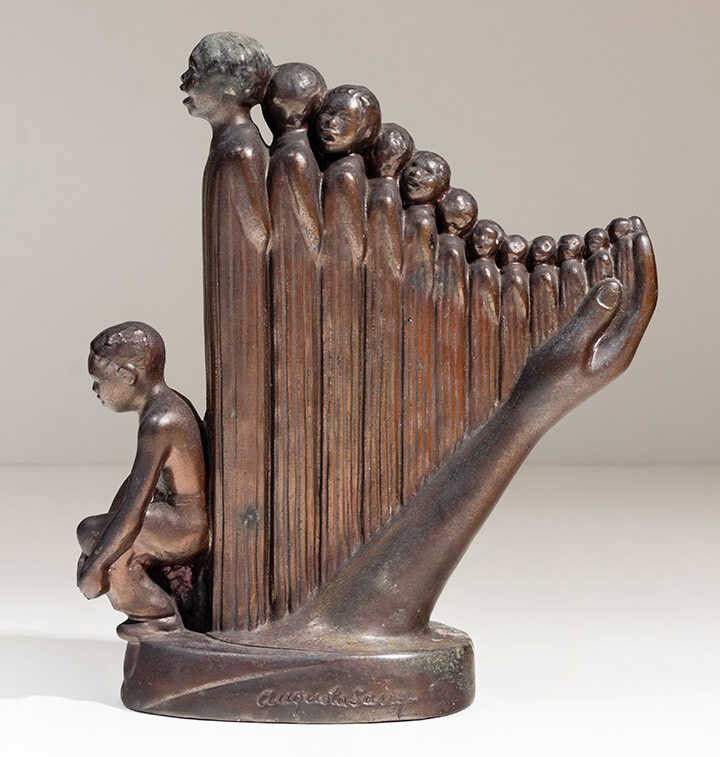
In 1939, she had two career milestones. She opened the Salon of Contemporary Negro Art, the first gallery in the United States dedicated especially to exhibiting and selling works by African American artists. That same year, her magnificent, monumental 16-foot sculpture Lift Every Voice and Sing, was exhibited at the 1939 World’s Fair.
The harp-shaped sculpture featured faces of actual Black models, including the father of the Schomburg’s former curator George Murray. Tragically, it now only exists in photographs and miniature sculptures. It was destroyed.
“While it was on display it was part of the design commission for the World Fair. When it was over, the artist could take their work back. But there was a deadline. So, if you didn’t get your work by the deadline it would be removed,” explained Lawson. “In her case (it was) demolished because it was so big. It was 16-feet tall. Fisk University had an interest and also an insurance company in Florida.
She not only did not have the money or storage to have it moved from Queens. Then it would have to be shipped by boat or whatever to Florida or Tennessee. She did not have the money. By the time they expressed their interest, it was past the deadline.”
Augusta Savage was married three times and she had a daughter. Her last husband was Robert L Poston, a journalist and Secretary-General to Marcus Garvey, who died in 1924. By 1945, Savage left Harlem and moved to a farmhouse in Saugerties, New York.
She developed a new science career in STEM. While still creating artwork, she worked as a laboratory assistant in cancer research.
Through her step-granddaughter, Lorraine Lucas, Augusta Savage’s legacy continued at Harlem’s Schomburg. “Lorraine Lucas donated most of the artwork that we have in our collection,” said Lawson. “She knew that Augusta Savage’s daughter Irene wanted them to come to the Schomburg. Lorraine lived in Brooklyn and she was part of Harlem’s honey and bears swim team for seniors.”
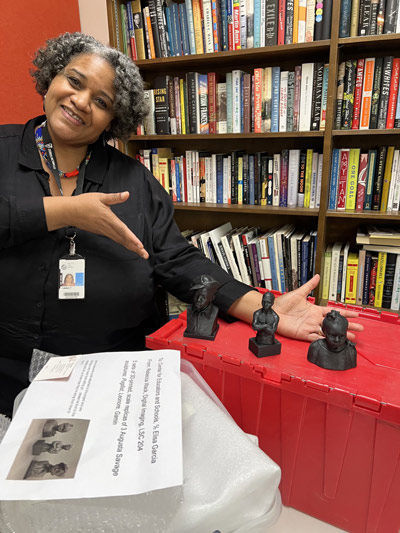
This month, Lawson headed a project that gives students a hands-on touchy-feely experience of holding August Savage’s sculptures. It’s 3D statues and curriculum created through a collaboration between The New York Public Library’s Schomburg Center for Research in Black Culture, NYPL Digital Imaging Services and the Center for Educators and Schools.
The interactive set features 3D-printed replicas of original artworks by Augusta Savage from the Schomburg’s Art and Artifacts Division at the Schomburg Center. The set includes laminated photos of Savage at work at the Schomburg and multiple copies of poet Marilyn Nelson’s young adult book “Augusta Savage: The Shape of a Sculptor’s Life,” a young adult book that tells the story of her life in poems and photographers with an afterward by Lawson.
“We are so excited to share this new interactive teaching resource as it continues Savage’s legacy as an educator and provides students the opportunity to personally experience her artwork through the use of 3D printing technologies,” said Kimberly Henderson, Digital Curator, Schomburg Center for Research in Black Culture, who headed the Schomburg’s involvement with Lawson.
“These stunning 3D printed replicas of original artworks by Savage give students the chance to learn more about the artist while interacting with a replica of her work. It also welcomes them to visit and explore the collections at the Schomburg Center, which holds the largest public archive of Savage’s work.”
This tool is available as a Book Club Set from MyLibrary, a program that offers more than 10,000 Teacher Sets from NYC public libraries. “This is Black Girl Librarian Magic!” said Lawson. “Now we are doing what Augusta Savage wanted us to do. She said: ’If I can instill something in these children and bring out the talent I know they possess, that’s my legacy.’ So, I feel that I am advancing the legacy of Augusta Savage.”