Home Blog Page 176

Dr. Martin Luther King, Jr. and the Environment

by Wildtomorrow.org
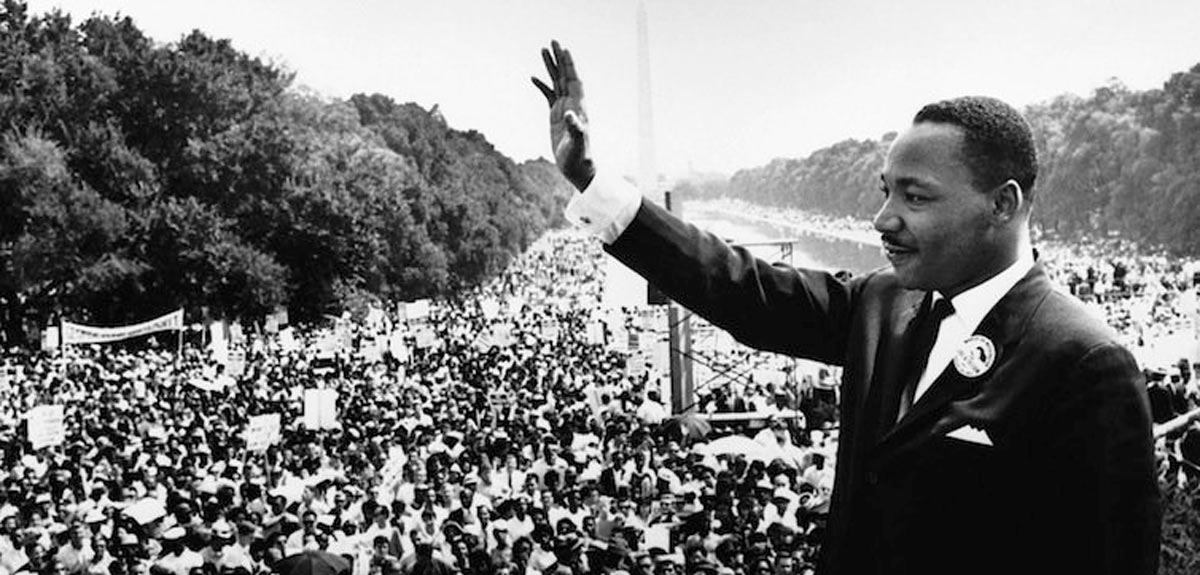
Ecology and the environment aren’t the first things that we think of when reflecting on the life and legacy of Dr Martin Luther King Jr. However, an important part of Dr King’s legacy was to set in motion the beginnings of the environmental justice movement, and to raise awareness of the interconnectedness of all life on earth.

Dr King’s all-encompassing vision of justice was one where the nations and peoples of the planet are one. He saw social, economic and environmental injustices as interlinked – including poverty, racism, and environmental justice.

”All of these problems are tied together.” In Letter from Birmingham Jail, Dr King wrote, “We are caught in an inescapable network of mutuality, tied into a single garment of destiny. Whatever affects one directly, affects all indirectly.”


Dr King and the beginnings of the environmental justice movement
Environmental Justice is defined as “the fair treatment and meaningful involvement of all people regardless of race, color, sex, national origin, or income with respect to the development, implementation and enforcement of environmental laws, regulations, and policies.”

It is an issue that reverberates as strongly today as it did in the 1960s, from climate change and its disproportionate impact on people of color, to the battle led by indigenous peoples around the world to protect their forests and defend their land rights.

“ One cannot be concerned just with civil rights. It is very nice to drink milk at an unsegregated lunch counter—but not when there’s Strontium 90 in it.”
— Dr Martin Luther King, Jr.

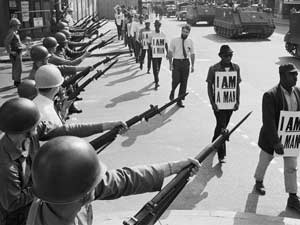
The first action in the environmental justice movement in the United States was the Memphis Sanitation Strike in 1968, a protest against unfair treatment and justice for sanitation workers in Memphis, Tennessee after two garbage collectors were crushed to death by a malfunctioning truck.

It was the first time African Americans mobilized nationally to oppose an issue of environmental injustice, and marked the beginning of this intersectional movement. Dr King addressed the crowd of approximately 25,000 people in person. It was the largest indoor gathering the civil rights movement had ever seen.

Speaking to this diverse crowd of labor and civil rights activists, and members of the black church, King spoke about the power of unity: “You are demonstrating that we can stick together. You are demonstrating that we are all tied in a single garment of destiny, and that if one black person suffers, if one black person is down, we are all down”.

Dr King’s overarching view of justice expressed itself on the social level as human solidarity. Racism and white supremacy are opposites of connectedness and unity. Dr King predicted the “inevitable decay of any system based on principles that are not in harmony with the moral laws of the universe.”

He believed that, “the universe is on the side of all that’s moving toward justice and dignity and goodwill and respect.” He was assassinated just a few days after his address to the crowd, on the evening of April 4, 1968.


With his life cut far too short, Dr King did not live to see the groundswell of 20 million Americans participating in Earth Day 1970, or the very first pictures of our fragile ‘blue marble’ planet earth from space, sent from the Apollo space mission.

Yet in his work and recorded speeches, we can hear echoes of his ecological & environmental consciousness: “The cities are gasping in polluted air and enduring contaminated water,” he warned in 1967.

He also opposed nuclear technology and the existential threat it posed to people and planet: “We’ve played havoc with the destiny of the world. Somewhere we must make it clear that we are concerned about the survival of the world.”
Ida B. Wells Barnett’s Legacy of truth-telling inspires journalists to this day

Her Life and Legacy Honored at Columbia Journalism School Symposium

Distinguished national voices in media, scholarship and the arts joined the Columbia Journalism School in commemorating the life, legacy, and journey of Ida B. Wells, last Monday, March 25 –the 93th anniversary of the activist journalist’s passing.


The celebratory event, hosted by Dr. Jelani Cobb, Dean of the Columbia Journalism School and Henry R. Luce Professor of Journalism., was held in Pulitzer Hall, and explored her contributions to journalism, the Civil Rights movement and American history.

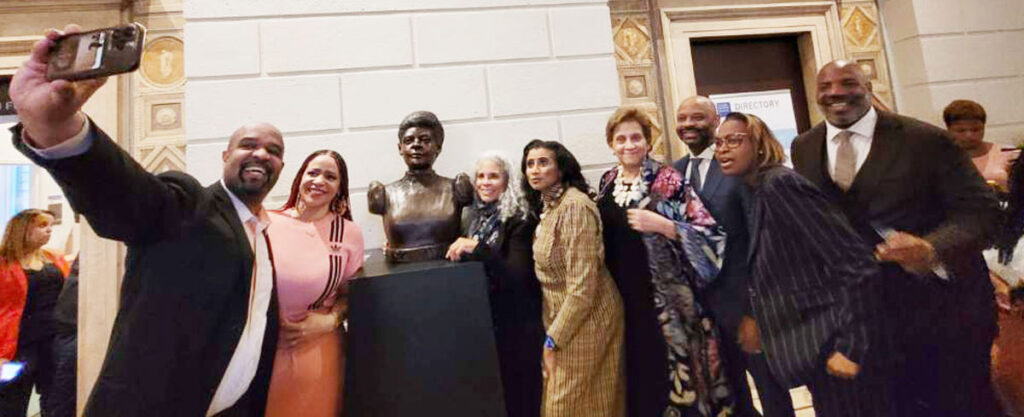
It was a day of insightful and revelatory conversations, culminating in the unveiling of a bronze statue of Wells by West Coast artist Dana King, a former broadcast news anchor. The bust, a gift of Mark Mason and Carolyn Mason, is located in the lobby of Pulitzer Hall.

The panelists included: Dean Cobb; Kimberlé Crenshaw; June Cross, Fred W. Friendly Professor of Media and Society; Dan Duster; Paula Giddings; Dorothy Butler Gilliam, ‘61 M.S.; Errin Haines; Nikole Hannah-Jones; Dana King; Marquita Pool-Eckert, ‘69 M.S.; Joy-Ann Reid; and Jacqueline Woodson.

Ida’s Heirs: Dr. Jelani Cobb, far right, Dean of Columbia Journalism School, hosted the university’s inaugural Ida B. Wells Symposium. “She stands as an icon,” he said.
Photo: Bernice Elizabeth Green


Attended by Columbia Journalism School alums, faculty, and students, the symposium also explored the ongoing opportunities and challenges facing the journalism industry around representation and inclusion.

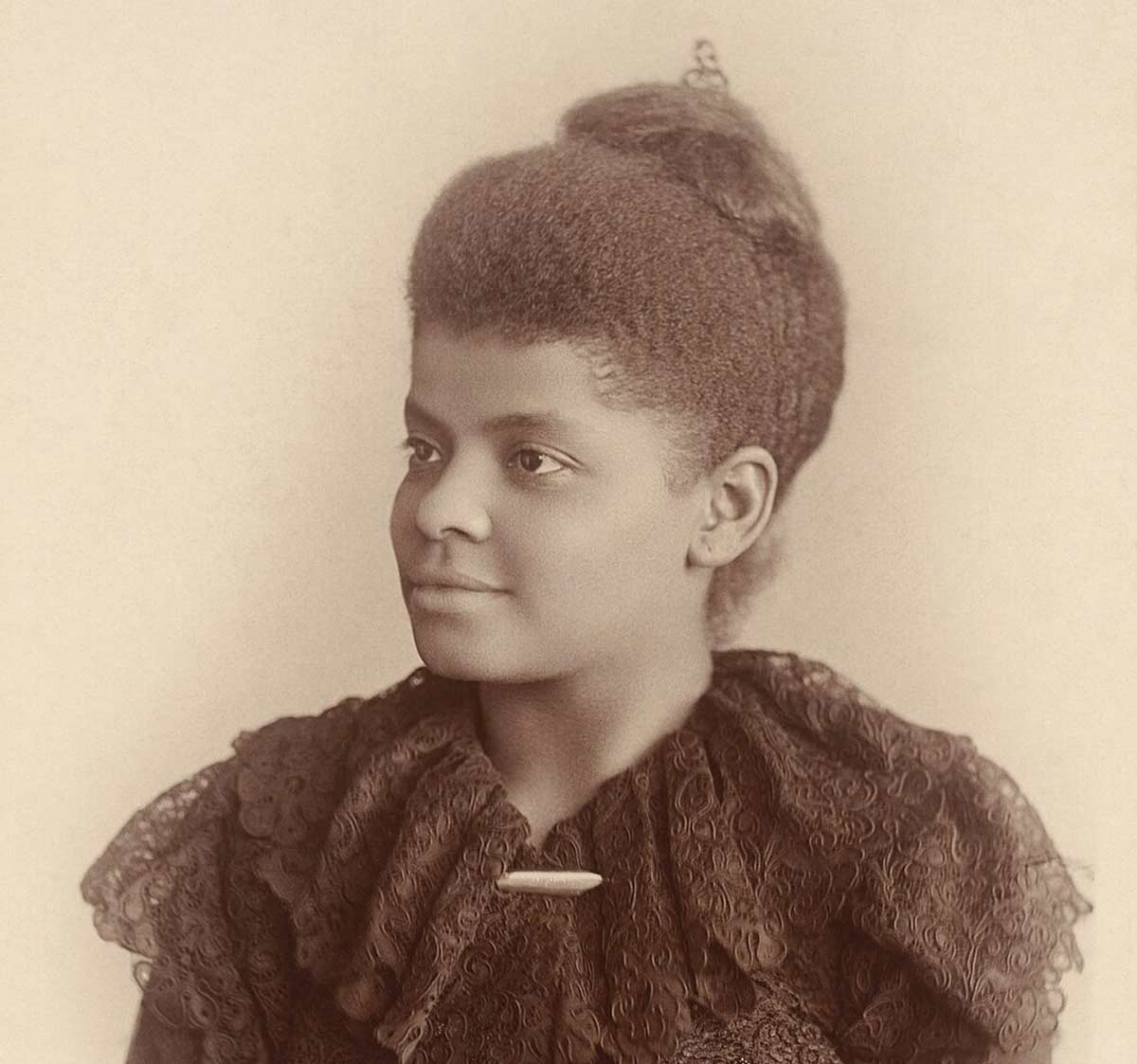
Wells was born in Mississippi three years before Emancipation became a fearless investigative journalist before age 30, in Memphis, Tennessee, and later a leader in the early Civil Rights Movements.

For her journalism work, it is reported she traveled throughout The South interviewing witnesses and gathering news reports of incidents, which were published in the newspaper she edited and co-owned, The Memphis Free Speech and Headlight.

During her career as a journalist, Wells published her work in T. Thomas Fortune’s New York Age, The Red Record, the Chicago Conservator (which her husband founded), and other local journals.

Her community advocacy work included: seeking equity in suffrage, housing, criminal justice, and education. Her legacy of truth-telling inspires journalists to this day. As a secretary of the National Afro-American Council, she participated in the Niagara Movement, which led to the founding of the National Association for the Advancement of Colored People.

She founded the National Association of Colored Women, which aided migrants from the South, and founded Chicago’s Alpha Suffrage Club, possibly the first Black women’s suffrage group and the Negro Fellowship League.

Giddings, author of The Prescient Life of Ida B. Wells, noted that Ida B. Wells seems to say “Follow me and I will lead you to where you need to go. She embodies the energy we feel now.”
Even her “willful independence” as a young woman in her late 20’s and early 30’s making in shaping a career around her community’s needs made her a woman ahead of her times.

She speaks to us today, said Giddings, and our willful determination to survive, to, in effect, “Fight for our rights.”

“Her work not only remains relevant today,” Dean Cobb referenced in a statement last week. “But actively inspires the next generation to follow in her footsteps.”

A question centered around how we engage Black girls in conversations about Wells’ legacy. Ms. Gilliam, the first African American female reporter hired by The Washington Post (1961) said, “We must tell them, we can’t let ourselves be hemmed in by fear. Ida B. Wells did not let herself be led or dominated by fear.”


Other panelists reminded that at a young age, Ida B. Wells, armed with knowledge and skill, knew what she wanted to do, and she did it alluding to the fact, as Joy Reid said, “If there’s a story, and you’re the only one in the room who knows that story, then you must tell that story.” Another journalist said, “You also must have people around you who support you. You must have your posse, to survive.”

Another panelist said girls should be encouraged to read more about Ida B. Wells, and other historical greats, noting Giddings’s book, “Ida B. Wells: A Sword Among Lions,” and Woodson’s books, as a good start.

The Symposium panel discussions covered the current struggle for racial and gender equality, and how Ida B. Wells impacted both areas through her tenacious “truth-telling” journalism and forceful civil and human rights advocacy.

Dean Cobb said in a press announcement, “There is a tradition in this country of the advocacy journalist, and within that long history Ida B. Wells stands as an icon.”

In 2020, Wells was awarded a posthumous Pulitzer Prize for her reporting on the lynching of African Americans.

Next week, Our Time Press looks at Ida B. Wells’ Brooklyn legacy and features more images from the conference.

It was noted that the Symposium was made possible by the generosity of Betty Baye, ʼ80 M.S., Wayne Dawkins, ʼ80 M.S., Cheryl Devall, ʼ82 M.S., Karen Gray Houston, ʼ73 M.S., Michelle Johnson, ʼ82 M.S., David Peterkin, ʼ82 M.S., Randall Pinkston, Gayle Pollard-Terry, ʼ73 M.S., Janelle Richards, ʼ10 M.S., Reginald Stuart, ʼ71 M.S., and Linda Wright-Moore, ʼ73 M.S..

Jeanne Parnell: Living a Life of Education and Entertainment

By Fern Gillespie
The glam, sophisticated ladies of Harlem have recently been popularized on contemporary “girlfriend” television series like “Harlem” and “Run the World.” While the shows are fabulous fun, these successful young women are light years from the mature doyennes like Jeanne Parnell, who have “run the world” in Harlem for decades.


A couple of years ago, when Jeanne Parnell, a retired assistant principal, veteran radio personality, and Harlem socialite celebrated, her 85th birthday, Harlem’s ultimate “girlfriend group” gathered to help her celebrate the milestone. These were longtime friends who had smashed glass ceilings and created new cultural inroads.

Ladies like legendary TV anchor and reporter Melba Tolliver, iconic fashion show producer Audrey Schmaltz, renowned business leader Harriet Michel, veteran Broadway publicist and producer Irene Gandy, “Mama, I Want To Sing” creator Vy Higgensen, pioneering music publicist Barbara Harris, acclaimed Harlem cultural historian and fashion stylist Lana Turner, Jazzmobile, Inc. chief Robin Bell-Stevens, artist-photographer Coreen Simpson, creator of the original Black Cameo pin and Jean Wells, co-founder of Positive Community Magazine.


Like these ladies, Jeanne, now 87, is still working and creating. Although retired from the Board of Ed, her popular WCHR talk radio show is heard on Wednesdays from 8:00 am to 10:00 am from CCNY’s Harlem studios.

Jeanne, a longtime Harlemite, was born in Harlem. At age six, her parents moved to Brooklyn. “My father began to work at the Brooklyn Navy Yard and we got a two-bedroom apartment at the Fort Greene Projects,” Jeanne told Our Time Press. “In Harlem, I was sleeping in the dining room, but my mother made my new bedroom look like a princess lived there.”

Attending Brooklyn’s PS 67 and PS 254, she performed in school shows. By age 10, Jeanne’s mother enrolled her in popular the Mary Ruth Dance Studio in Harlem. She traveled from Brooklyn to Harlem to take tap dancing and acrobatics.

“I loved it. One day Bill Robinson asked for some kids to be in his show at the Apollo just for one day and I was one of the seven children that they chose, “ she recalled. “You would’ve thought that I was going to Hollywood!”

In the early 1950s, she auditioned for the High School of the Performing Arts.
“I was standing online and everyone who was taking the auditions was White. Then this Black kid came up to me and guess who he was? Arthur Mitchell.

I was in the ninth grade, and he was in the 10th grade. He said ‘I see you have silver shoes on. We don’t do tap dancing here. They only do ballet and modern.’

I said what’s that?” she laughed. But, the teachers liked her dancing and enthusiasm and she was admitted. In her sophomore year, the school gave her a scholarship to the Katherine Dunham School of Dance so she could learn ballet and modern.

“When I was in the High School of the Performing Arts, there were five Black people in the whole school,” she said. “I remember Diana Sands, who went to Broadway (in “Rasin in the Sun”) and Arthur Mitchell, who founded Dance Theatre of Harlem.”

Although she was accepted to Juilliard, Jeanne attended Howard University and majored in art. She studied with artist and art historian Dr. James A. Porter, renowned author of the 1943 book Modern Negro Art. “I became an artist. I can paint and I’ve given away a lot of my works,” she said. Jeanne graduated in 1958 and returned to New York City to teach.


Jeanne owned a dance studio in New Rochelle for almost seven years. “Because I was teaching school in New York City, at 3 o’clock I would jump in my car and ride up to New Rochelle. Ruby Dee had enrolled her children in the school. She got to know me she had me over for lunch and we became great friends,” said Jeanne. “She was so fabulous.”

In the 1960s, Jeanne married her second husband, Richard (Dickie) Habersham-Bey, a famed New York nightclub owner. She had known him since they were teenagers in Brooklyn.

Habersham-Bey owned 12 clubs during his career, including: the Blue Coronet in Fort Greene, Count Basie’s in Harlem, Dickie’s Monterey, The New World On Flatbush and The Uptown Lounge. He gave a stage to such greats as Miles Davis, Max Roach, McCoy Tyner and Thelonius Monk. “Jazz musicians from all over the world have played in his places.

Miles Davis used to sit up there with his grouchy self, but he was so much fun,” she laughed. “I was a party girl. I was educated, but I could hang out all night.”

Earning a scholarship to Columbia University Teaching College, Jeanne received a masters degree in education. At PS 31 in Manhattan, she was an assistant principal who taught a gifted class for kindergarten students. There was a waiting list, because her students would be skipped to the second grade.

“I would do the dance drama and the music,” she said “I would do the alphabet and numbers.” One of her students was Alicia Keys “She was smart. She could dance and sing and do math and writing,” she said. Jeanne became a close family friend and watched Alicia grow up and graduate high school. “She was ahead of her time.”


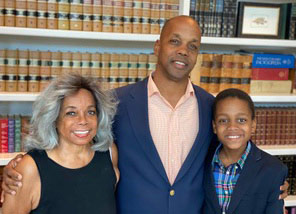
During the 1980s, Jeanne started her sideline career in entertainment broadcasting. She had radio shows on WWRL, WBLS and WLIB for many years. Entertainment and education were duo careers. In fact, Jeanne’s son Richard Parnell Habersham became a child star during this time. On Broadway, he originated the role of Reuben in the original production of August Wilson’s Joe Turner’s Come and Gone co-starring Angela Bassett and Delroy Lindo.

In film, he played the kid Eddie in Spike Lee’s Do the Right Thing and Whoopi Goldberg’s teen son Theodore Cotter in the Civil Rights segregation drama The Long Walk Home. Today, Richard is president and founder of the Harlem nonprofit Solutions Now.

“I didn’t consider myself a stage mother,” said Jeanne. “I would drop Richard off and go to work at the school. I remember when I dropped Richard off over at Do the Right Thing set, Spike Lee said ‘You’re not staying? Who’s going to take care of him?’ I said ‘I got to go to work!”

At age 87, this former dancer can still glam it up in a mini skirt. “When I think about the life that that I’ve had like theatre mom, artist, teacher, principal, supervisor, owner of a studio, a dancer, it goes on and on,” she explained. “I believe life is for the living and we have to live it.”

The Business of Black Women Pushing Through Barriers

By Nayaba Arinde
Editor-at-Large

Hollis Barclay is owner of Bleu Fin Bar & Grill and the CEO of Hbar Holdings LLC. Her Crown Heights Bleu Fin seafood restaurant has a unique Guyanese flair. She came from a secure world as operations manager of CareOne Staffing, “procuring multi-million-dollar contract-based commodities and services within public sector agencies,” to deciding in 2019, to open a restaurant.

“After COVID and the employment checks stopped coming in, most of our customer base changed and came from the community, the kids on the block. We had to reduce the cost of everything. The new consumers do not have that disposable income, as opposed to people who traveled in from different boroughs.”

They did this amid the rising cost of food.
“You had to reduce your prices, and you had to absorb that cost. We all know how food prices spiked after COVID-19, with all the food supply issues in the country. You couldn’t pass on the cost to the customer.”

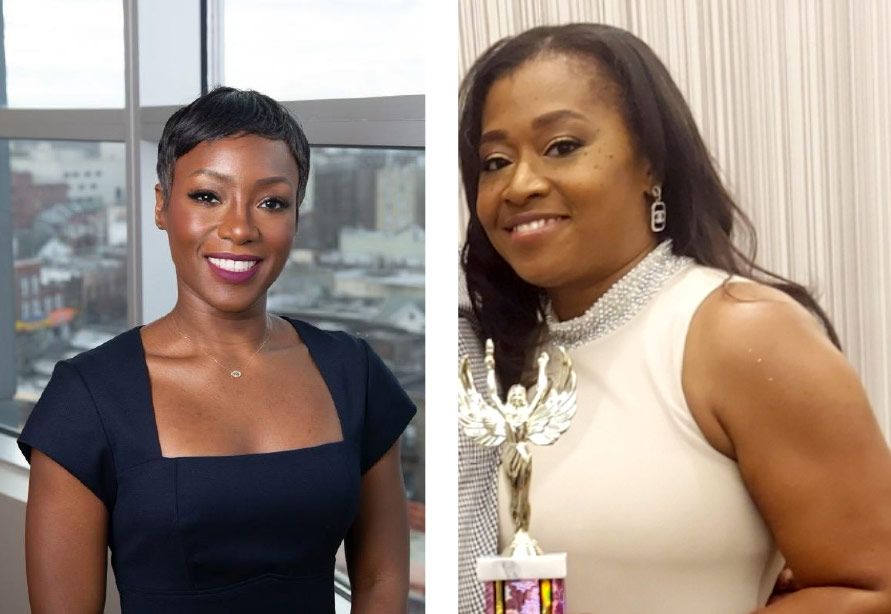
PR Consultant Sharon Leid Devonish photo: NetStruc Media


It is a Guyanese /Caribbean restaurant. Seafood, meat and plant-based, and customer faves; lobster, mac’n’cheese, chicken curries, and Rasta Pasta.

Great food, hard business.
“The biggest obstacle as a woman restaurateur is the lack of funding,” Ms. Barclay told Our Time Press. “You go for a loan, and most banks will give you $50,000, but you never really get that big push. You have to have creative marketing.”

Meanwhile, the change to the neighborhood is having an ill effect. “On my block alone on Nostrand Avenue, they have 7 weed spots. Four restaurants closed, including myself. People wanted to spend their money in the weed stores.”

Surely they wanted to eat thereafter?
“Yes, but they went to the delis for a sandwich and Chinese food. They were no longer buying good food.”
Circumstances have had her moving from Nostrand Avenue in Crown Heights to Bushwick, opening next month.

The move, she acknowledges, has her tweaking the menu for a whole new clientele; from Caribbean and African American, to probably more European-American.

“A slight twist. But, this market has a higher disposable income. They tend to spend more money than regular Caribbeans. We’ll have to adjust the spice just a little bit for the consumer. But, I don’t want to lose our flavor. It’s unfortunate that for us to survive in this industry we have to cater to the European market.

“You don’t want to lose your identity because you want to get the money in. If only our people fully recognized what we have and supported us, then you wouldn’t need to even cater to different segments of the population. Most restaurants cater to the ones who spend the money.”


Board-certified gastroenterologist Dr. Cynthia Quainoo loves nothing better than to be knuckles-deep in some intestines, or someone’s ailing gut. Really.
Born to immigrant parents from Ghana, Dr. Quainoo has over 10 years of experience in Gastroenterology/Hepatology.

“I find that older patients don’t use Google as much as younger patients, so they don’t know who they are meeting. So, because my last name is sort of ambiguous to some people, they are shocked when they meet me as a Black woman. They kind of cloak their shock by saying that I look young.”

The 47-year-old partner at Gastroenterology Associates of Brooklyn definitely does. “They ask me, ‘How many of these procedures have you done?’ Or, ‘What do your parents do for a living?’”

Why that question?
“They are trying to make it make sense – how is this Black woman a physician? They are trying to reconcile their thoughts with what they are seeing. At the beginning of my career, I would bring all those microaggressions home with me, and they would eat at me. But, now I have a different way of dealing with it.”

She found an older successful Black woman doctor and took her as a mentor because she “must have some pearls of wisdom. And the first pearl she gave me was it’s not your problem that they dislike or distrust you because you are Black and you’re a woman. It’s their problem to work out, and you can always politely give them an option, ‘Please if you don’t feel comfortable, feel free to see my colleague.’”

Dr. Quainoo said that she has been working at the practice since 2020, and became a partner in January 2024.

There are nine doctors, only two women, and only one Black woman. Dr. Quainoo.
During her residency, she looked after patients with liver transplants. “And I kind of fell in love with liver diseases, and that is part of the digestive tract, and so that led me into gastrointestinal disorders.”

She wants to encourage folk to consider becoming a physician. “I think Black men and women make up 2 to 4 % of all the doctors across the nation.”

Meanwhile, the physician said, “It makes me happy to know that there are Black women who travel from New Jersey, Philly to come to Brooklyn to see me because they are looking for a Black female gastroenterologist.

I wish there were more of us out there. I would encourage any of my young counterparts who are thinking of GI as a space to come and join us. It is rewarding.”

PR Consultant Sharon Leid can take someone from “What’s your name again?” to “The phone just won’t stop ringing.”

The publicity strategist is the founder of NetStruc PR and Ladies of 3rd Thursday, a Brooklyn networking and Black business building event.

Ms. Leid told Our Time Press, “Black women are always on the lower spectrum, but we’re always helping people, and giving out our services, and our work for free, with the perception that we will get it back. This happens in business – we are always the last ones to get funding.”
The good news is that Black women “are being more innovative.

Black women are thinking outside of the box, and how we can get business. How we can make connections. So I am always connecting with other Black women, and let’s see what type of partnerships we can do to help build each other.”


But there must be a change in tactics, she added, “People will go to my white male counterpart first because they think he has more connections than I do, and then they realize I have the same amount or more. Then they come to us when all their money is gone, and say ‘Hey listen, I need to use your services.’”

The moral of the story is, said the Netstruc Talks podcast host, “I encourage people to reach out to Black businesses. Reach out to women in business.

We know how to make things happen. We know the struggle. Although we have everything on our shoulders – with our families, we might have a 9 to 5. We take on all of that, and still make sure that our clients get top-notch.”

Ms. Leid started her Netstruc PR boutique in 2015 after being laid off from her City job in 2013.

She told Our Time Press, that what she learned doing public relations for the City was, that “small businesses were not getting exposure because they did not understand how the media thinks. So I decided to focus on small businesses and entrepreneurs.”

Ms. Leid set up Ladies of Third Thursday, to “build relationships and see who needed services from me, and the other women in the group. So because of that my network has grown with Black women businesses, Blacks and businesses. All walks of life.

And it led me to really appreciate Black media. People want to get on these mainstream networks not realizing that Black people are reading, and listening to Black media. I have to educate my clients.”

Surgeon Brings Anti-Gun Message to Brownsville Students

By Mary Alice Miller
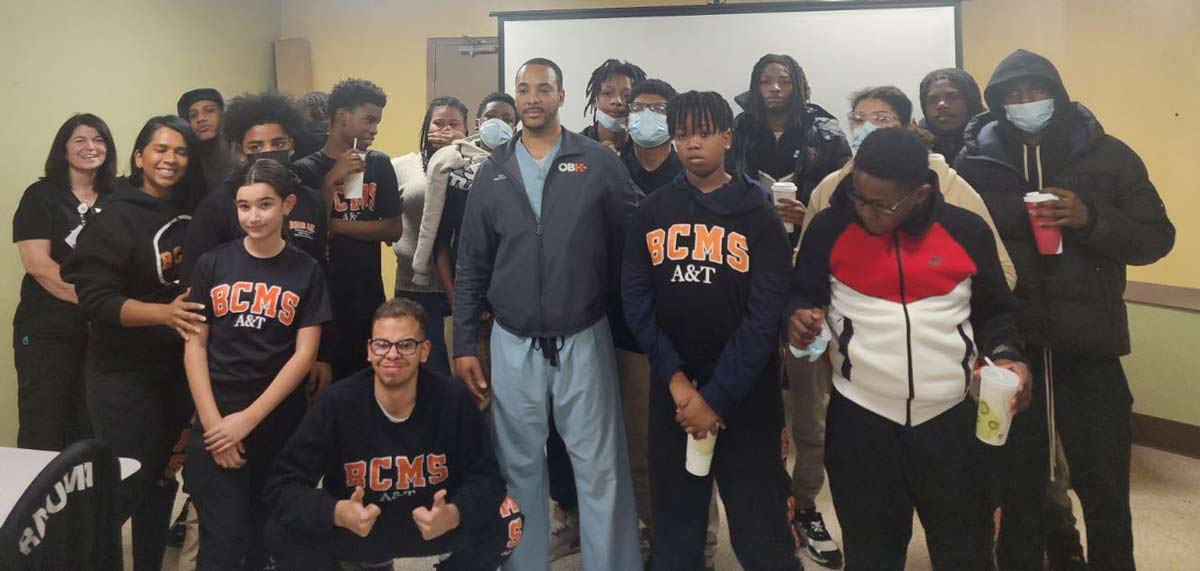
A group of students from Brownsville Collaborative Middle School and Brownsville Community Justice Center had the rare opportunity to engage with Dr. Roy Lacey, one of Brookdale Hospital’s trauma surgeons.

The students ages 11-22 asked Dr. Lacey about how to become a doctor and his day-to-day experiences.


Dr. Lacey, age 37, told the students he knew he wanted to become a doctor at age 10. First in his family to become a doctor, Dr. Lacey said his family provided a strong support structure. “In school sometimes they may tell you that’s a long road, that’s hard to do.

They may tell you that you may want to become a physician assistant or nurse instead,” said Dr. Lacey. “But my parents told me if this is what you want to do, then go for it.”

He went into high school knowing what he wanted to do and gravitated toward the life sciences. When he dissected a frog, Dr. Lacey knew that was what he wanted to do for the rest of his life. Dr. Lacey told the students to “Read a lot. It doesn’t necessarily have to be medical things. Just read. Read for fun.

Get used to it because there will be a lot of reading for the amount of school you have to do.” Dr. Lacey also played video games to train his hands.
Dr. Lacey made the decision to specialize in trauma during training. He added, “The desire has to be there. It is a long road. But it is worth it.”

The students asked a lot of questions. How long have you been a doctor? Can mental trauma physically affect the body? What happens if you get shot or stabbed and you get air in your wound? What is the most tragic thing you have seen as a doctor? What happens if you get shot in the genital parts? What does spreading the ribs do to the body?

Dr. Lacey’s presentation included a slide show of graphic and sometimes gruesome gunshot injuries in various parts of the body: the brain, neck, chest, abdomen, and thighs.
“The most common cause of death from toddler to middle-aged adult is trauma, unintentional injury,” said Dr. Lacey. “The reason why we are here is to try to prevent that.”

When someone comes to the hospital Dr. Lacey said, “We do whatever we can to help them. We have all the facilities you need to take care of a critically wounded person. We have trauma surgeons like me on call, we have specialist doctors like vascular for bleeding, and we have brain surgeons for gunshots and skull fractures. We have set up very specific protocols and services to help a critically injured patient.”

Sadly, he added, “The fact remains 30-60% of patients who suffer injuries die before they even get to the hospital. So a lot of times they come in and there is really nothing I can do and I have to pronounce them as soon as they get here.”

Dr. Lacey emphasized that “Prevention is the best course of action.”
The students were fascinated by pictures of an open chest with a doctor’s hands around the heart to manually pump it.

One student said, “You held their heart? You feel somebody’s life in your hands.” Another student asked “What does it feel like?” And yet another student asked, “You can cut somebody’s chest open in 20 seconds?”

Dr. Lacey explained that the heart feels like a muscle that is empty on the inside. He told the students that manually pumping someone’s heart is a “dire circumstance.

If you have to open somebody’s chest in the emergency room, that is because that person has already died and you are trying to bring them back to life. And even if you get the heart beating again then they still have to recover.”

The students were told of courses of action to address serious trauma injuries, like sewing closed a hole in the small intestines or attaching a colostomy, dealing with serious infections, applying a shunt as a bypass between two parts of an injured artery, or using catheters.
“The bottom line is,” said Dr. Lacey, “don’t get shot.”

The program called “It Starts Here” is a Brookdale Hospital initiative to reduce gun violence and its negative effects on the community. It Starts Here educates young people on the real-life consequences of firearms and blunt trauma.


Judith Lussier, PA-C, Dept. Of Surgery presented Stop the Bleed, Save a Life, a hands-on presentation during which groups of students used a model to learn how to apply pressure or a tourniquet to curtail bleeding until medical can be obtained. Each of the students received a Stop The Bleed certificate of completion.

Central Brooklyn Economic Development Corporation partnered with Brookdale to provide ongoing mentors and internship opportunities to save lives. The students explore career interests and interact with guest speakers. High school students can volunteer at the hospital or work there through the Summer Youth Employment Program.

The Brownsville Collaborative Middle School students were accompanied by Ms. Francina Drepaul (social worker) and Tanjanique Williams, a BCMS alumni who works at the school as a paraprofessional.