Home Blog Page 175

Yvonne Rubie: From Huggy Bean Dolls to Expert in Holistic Nutrition

Fern Gillespie
Having a holistic, positive outreach to Black communities has always been the personal and professional philosophy of Brooklyn resident Yvonne Rubie. During the 1980s and 1990s, she was nationally known as the creator of the popular Huggy Bean doll, which promoted a positive self-image to Black children through dolls, playthings and books.

For the last 20 years, Jamaican-born Rubie, who holds a Master’s in Public Health from Hunter College, has specialized as a certified health education specialist. At Rev. Daughtry’s House of the Lord Church, she volunteers as the longtime head of the Health Ministry that meets monthly with the congregation. In 2009, her healthcare advocacy earned Rubie an invitation to meet with President Obama at the White House for the first Healthcare Summit of his presidency.

Her work as a healthcare advocate and race walker was also spotlighted on the PBS series “America’s Walker.” A cancer survivor, she has been a vegan since 1995 and is a Cornell University Certified Plant-Based Nutrition Specialist. Vegan diets are growing in popularity in Black communities. According to the Pew Research Center, 8 percent of Black Americans are strict vegans or vegetarians compared to 3 percent of the general population.

The Gallup Poll discovered that 31 percent of non-white Americans had reduced their meat consumption compared to only 19 percent of White Americans. As the founder of You are Highly Valued, she conducts health education workshops with individuals, companies and community groups. Our Time Press spoke with Yvonne Rubie about the value of vegan and vegetarian diets.

OTP: What are some of the reasons that eating vegan and vegetarian is growing in popularity in the Black community?
YR:
“One of the key principles of being a vegan is not to have anything that is animal-based. There are people who may eat plant-based and want to be healthier. And, they are happy that they are not hurting the animals and want to be improving their health. It’s not mutually exclusive.

There are also people who have fallen ill with diabetes or high blood pressure or are overweight and are trying to figure out another way to help. I think people are making a conscious effort to make a change. Do I want to be healthier? What is eating doing to my body?”

OTP: What is the difference between vegan and vegetarian?
YR:
“A vegetarian can be a lacto-ovo vegetarian. That means you’re not having milk and you’re not having eggs, but you’re having fish. There are a lot of variations. But being a vegan is very specific. You’re not eating any flesh.”

OTP: Are all prepackaged vegan and plant-based foods healthy to eat?
YR:
“Anything that’s packaged should really be looked at properly– especially foods that are packaged and that can last on the shelf for more than five days. Most foods are on the shelf for over a year. There are common factors within packaged foods. You want to look at how much sodium is in there.

Whether it’s labeled vegan or plant-based or just regular food. It doesn’t matter about the front label. What matters is on the back label. The nutrition and the ingredients.”

OTP: Why is it important to read the back label ingredients on all packaged food?
YR:
“You have to look at how much sodium is on the label. How much saturated fat. How much trans-fat. How much added sugar. That’s what makes the difference. You have to read the whole back label even for plant-based food.

There is no uniform serving size. If a tablespoon of saturated fat in a plant-based butter has 8 grams of saturated fat, that’s almost as much as three ounces of beef. That’s juxtaposed to a plant-based butter that has just .5 grams of saturated fat per tablespoon. A particular brand of oat milk for example has a certain amount of saturated fat.

Another brand of oat milk has no saturated fat. You have to turn the package around and read the label. Also, there is a difference between sodium and salt. Sodium is something that really doesn’t carry a taste to it. So, you really don’t know that it’s in there.

Whereas, table salt is sodium plus chloride. The chloride mixture gives it the taste of salt. So, it would be hard to believe that something that you’re drinking has 570 mg of sodium in it.”

OTP: For people interested in exploring a plant-based diet, what foods and recipe books would you recommend?
YR: “There are a key food groups that vegan and plant-based people eat. There are grains, leafy beans, lagoons, fruits, nuts and seeds, and root vegetables.

Some of the books that I recommend are AFRO-VEGAN by Bryant Terry, which has recipes influenced by African, Caribbean and Southern cooking. What I particularly love is that Bryant, who is a well known outstanding chef, recommends soundtracks you can listen to while cooking.

VEGAN AFRICA by Marie Kacouchia has recipes that are plant-based and range from Ethiopia to Senegal. NATURAL FLAVA by Craig & Shaun McAnuff has the authors sharing quick and easy plant-based Caribbean recipes. HEALTHIER STEPS by Michelle Blackwood is for people interested in having gluten free vegan recipes. These cookbooks amazingly present very different ways of eating delicious, healthy, vegan and plant based foods!

Subway Strife

By Nayaba Arinde
Editor-at-Large
The MTA posts ‘Don’t be a subway story,’ but an encounter with someone experiencing a severe mental episode — a violent outburst, hunger or homelessness leading to aggressive panhandling — may take the decision away from a commuter.

Mayor Eric Adams’ default position has been, “We’re fighting a perception issue.”
Is there a gaslight on?


The recent reality, not perception: a woman attacked on the F-line in Queens; a subway train conductor slashed on the C line; and a commuter shot on the A-train.
Ruth Smith, a criminal and social justice professor at Adelphi University and Monroe College, told Our Time Press, when there’s an incident on the train, riders do not usually interfere because of “an internal fear and a healthy paranoia; you don’t know what may happen.”

Finally, after months of blaming the press for fear-mongering reporting on subway crime (and even stating to this reporter in 2022 that “It was a perception, not reality”), this week Mayor Adams said, “We have over 4 million riders a day in a reliable system, and we know that we have approximately six felonies a day out of those 4 million riders. But … stats don’t matter if people don’t believe they are in a safe environment.”

“It means you have lost control of the city,” Brooklyn activist Caleef Cousar, founder of Transitions, a community advocacy group, told Our Time Press. “They have now brought in the National Guard to monitor a situation that the City should be capable of handling.”
Last month, Gov. Kathy Hochul sent 750 National Guard members to major New York City subway hubs.

But the mayor, a retired NYPD captain, insists, “The presence of a uniform makes people feel better, and if the National Guards or the state police want to add to that presence, I applaud that.”

Adams said there are “three problems that we must correct in this city: recidivism…severe mental health illness…. random acts of violence. Those three aspects are sending the message that our city is out of control. Our city is not out of control.”

In February, the Mayor said that he deployed 1,000 additional police officers into the subway every day, resulting in a 16% decrease in crime in March. He just announced the NYPD’s new electromagnetic weapons detection systems from the much-criticized Evolv company.

Mayor Adams actually said, “This is a Sputnik moment when President Kennedy said we were going to put a man on the moon and everyone responded. We are going to bring technology that could identify guns and other dangerous weapons…We’ve got to wait 90 days. But think about it, 90 days idealism collides with realism.”


As for “our extreme mental health crisis,” the mayor said his solution is, “We are ready to start hiring more clinicians for our Subway Co-Response Outreach Teams, also known as SCOUT. Governor Hochul has announced $20 million to expand the program to 10 teams by the end of 2025.”
The teams comprise clinicians and police working together to swiftly move individuals with untreated severe mental illness out of the subway system and into care.

Prof. Smith, also a licensed clinical social worker, told Our Time Press,” some of the people causing concern on the trains are the dual-diagnosed once, known as Mentally Ill Chemically Addicted (MICAs).
Those who are having an episode, she said, “shouldn’t be locked up, but they should be apprehended. People who are mentally ill have to work with a lot of so-called mental health professionals, who have different levels of skill sets. Cultural sensitivity and cultural awareness are mandated training that everyone has to take, but that doesn’t mean they get it.

“A lot of the people on the train are not getting the right help, because the professionals say, ‘Ok, my job is to get you to the hospital and put you on some medication, (and then) stabilize you. Once I get you stable, I’ll send you over here.’ Now when you get over there, they don’t do the work that they need to do to keep you stable…those are the ones who will push you on the tracks. There must be consistent, comprehensive help for those who need it.”

Danny Pearlstein from the Riders Alliance said the mental health focus should be greater. “We haven’t seen it at the scale that we need,” he told Our Time Press.

As for the proposed weapons detection system, he said, “The subway really can’t turn into the airport terminal. You can’t have people on line waiting to go through metal detectors. It’s not realistic. It’s not a worthwhile investment. It seems impractical.”

Meanwhile, Deputy Mayor David Banks, “The reason why we looked at Evolv is that it is designed for crowds. That’s why stadiums use them. You can walk through this and never have to stop.”


“If someone is coming into the subway system, they see this machine, they turn around, they [walk] away, that’s their right,” Deputy Commissioner of Legal Matters, Michael Gerber, “No one is required to go through the machine…If someone chooses to go through the machine, to go into the transit system, and the machine alerts on a potential weapon, officers will then search for that particular area.”

He added that the “crime panic” is fueled by “seductive sensationalism” by some tabloid media makes people nervous, and others “foolish” But, he said that the Mayor ran on “‘I’m a transit cop, and only I can fix it,’ but, had to dramatize it into a crisis. There’s a real collateral consequence of that, in that people are more nervous than they should be.

What are we doing constructively to improve the situation and stop violence from happening?”

He added that the “crime panic” is fueled by “seductive sensationalism,” by tabloid media making people nervous, and others “foolish” But, he said that the Mayor ran on ‘I’m-a-transit cop-and-only-I can-fix-it,’ and dramatized it into a crisis.
“There’s a real collateral consequence to that — people are more nervous than they should be.”

Federal Monitor’s Oversight of NYCHA Not Renewed, Blasts the Housing Authority

By Mary Alice Miller
Another day, another crisis at the New York City Housing Authority.
The federal monitor appointed to oversee NYCHA issued a final 100-page report excoriating NYCHA, calling the housing authority’s management incompetent.

Bart Schwartz and Guidepost Solutions recently completed a five-year term as federal monitor of NYCHA. Schwartz applied for an additional five-year term but was replaced with the Jenner and Block law firm.


The federal monitor was first appointed under a consent decree prompted by the allegation that NYCHA knew it had a problem with lead-based paint and lied about it. HUD’s agreement with NYCHA did not give the monitor day-to-day management authority. Instead, the monitor was to work with NYCHA and its stakeholders to improve conditions and provide a safe and healthy quality of life for residents.

NYCHA has long been operating under a deficit that impedes its ability to effectively maintain and improve its infrastructure for the half a million residents living in its properties. Schwartz’s report claims lack of money is not the problem. Instead, the outgoing federal monitor charges that NYCHA and its governing board lack internal controls and external oversight.

The report points to well-known issues in NYCHA: Heat, elevators, lead-based paint, pests and vermin, safety and security, water, waste management, and corruption.

Some of the report’s criticisms are legitimate, but others seem petty.
One allegation is that the NYCHA board created several new subcommittees but the monitor claimed he did not know whether those subcommittees met or conducted business. The monitor could have attended NYCHA’s board meetings and pressed for the answer.


NYCHA livestreams its monthly board meetings on YouTube and NYCHA’s website. Executive members of the board publicly speak about new and ongoing projects. The meetings are open to the public and accept public commentary. Schwartz could have publicly demanded the information he sought.

Admittedly, NYCHA needs more oversight. But city, state, and federal governments all have a stake in the sprawling housing authority.
The New York City Council Committee on Public Housing, chaired by Councilman Chris Banks, has municipal jurisdiction over the NYCHA.

The NYC Council has filed a resolution calling upon the New York State Legislature to pass, and the governor to sign, legislation authorizing the NYC Council to oversee the activities of NYCHA. Adopted was a resolution calling on the state legislature and Dept. Of Housing and Urban Development to increase NYCHA accountability by auditing the responsiveness of NYCHA managers to tenants. In 2021, the City Council enacted a local law to amend the administrative law of NYC regarding NYCHA complaints and requests for service.

During the past five years, the City Council has held numerous oversight hearings on issues as diverse as investigating lead-based paint in NYCHA apartments, the well-being of seniors living in NYCHA, security systems, tenant participation funds, mold, permanent exclusion policy, Sandy recovery and resilience, recycling, elevator safety, domestic violence preference policy, violent crime in public housing, downsizing policies and practices, capital spending, winter preparedness, rent certification for seniors, chronic heat and hot water failures, summer preparedness, air quality, contracting and hiring processes, sanitation, Rental Assistance Demonstration conversions to Section 8, and bribery and extortion in micro-purchase contracts.

The federal government, through HUD, has provided millions for improvements at NYCHA during the past five years. HUD funding has been allocated to abate lead, improve safety and security, promote employment and self-sufficiency for public housing residents, and repair, renovate, and modernize roofs, plumbing, and electrical systems.

Permanent Affordability Commitment Together- Rental Assistance Demonstration (PACT-RAD) is a HUD initiative that allows NYCHA to convert Section 9 traditional public housing subsidy to Section 8 project-based vouchers. The goal is to generate funds for capital repairs of the aging housing development while ensuring permanent affordability and maintaining residents’ rights and public housing protections.

New York State also has an interest in the maintenance of NYCHA. The state has expanded the Emergency Rental Assistance Program by almost $400 million, bringing public housing resident eligibility to parity with other renters.

In addition, state legislators have long negotiated state funding for major capital repairs, such as boilers and safety and security improvements.

Despite the federal monitor’s report, NYCHA continues to serve its residents.

A recent initiative is the launch of an online portal to provide information about major capital projects. NYCHA’s Capital Projects & Needs Tracker is an interactive resource that has projects planned, ongoing, and completed since 2017. Information is available about locations, timelines, and progress of projects, budget and financing sources, and explanations of delays. Now, when funding is obtained for capital improvements at NYCHA, the project can be tracked.

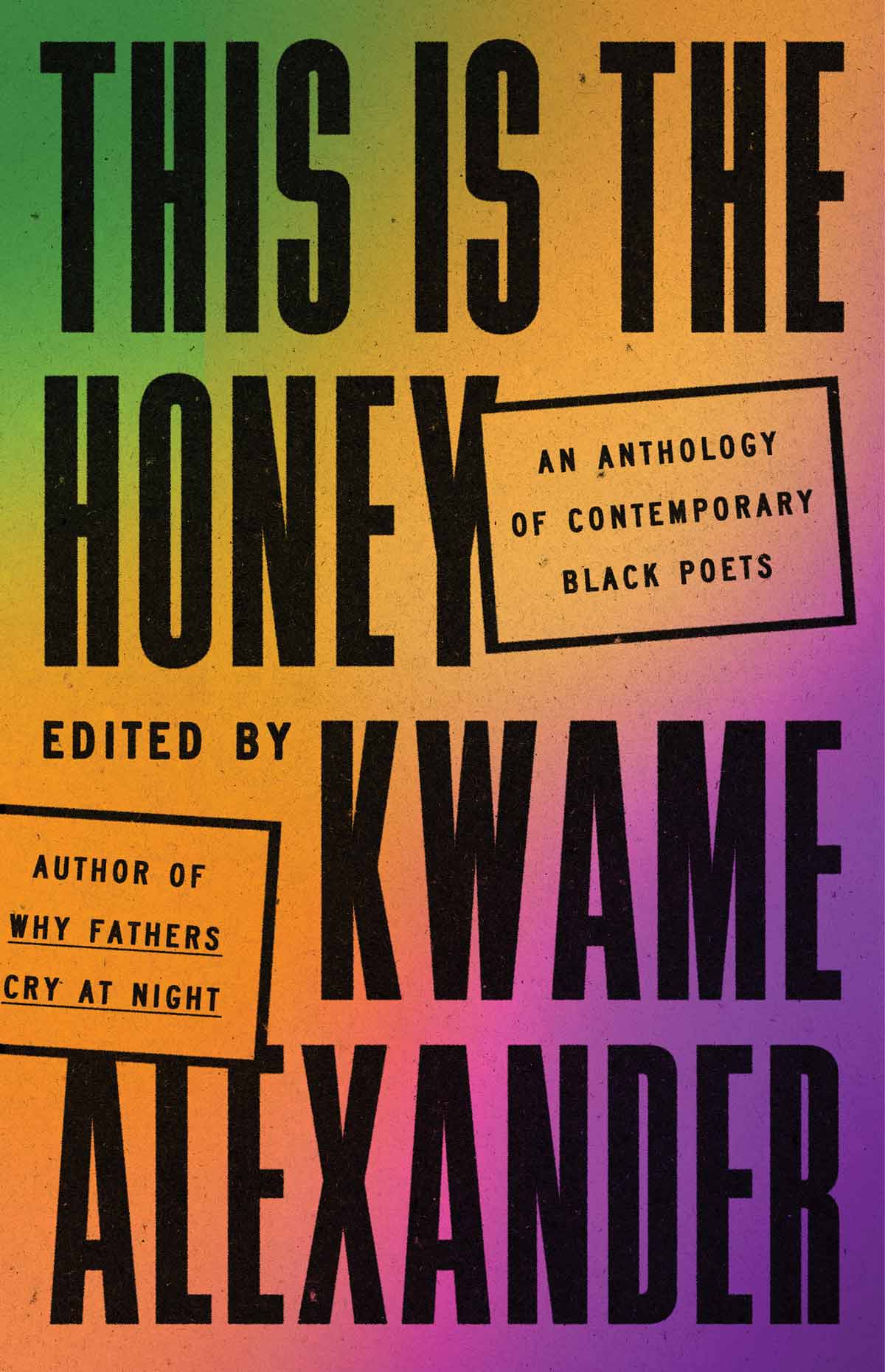
This is the Honey

An Anthology of Contemporary Black Poets

Kwame Alexander’s anthology This is the Honey: An Anthology of Contemporary Black Poets (Little Brown and Company, 2020) features poems from an intergenerational group of over 140 poets who represent different parts of the African diaspora.

Poets include those from the Black Arts Movement, the Hip Hop Generation, and those have emerged in the last two decades. The rich, vibrant, and varied voices in this collection are a testament to the joy and indomitable spirit of Black poets who in the words of Kwame Alexander represent the in-between.

Alexander asks readers to view this anthology as “a gathering space for Black poets to honor and celebrate. To be romantic and provocative. To be unburdened and bodacious.”

This is the Honey is in the tradition of Dudley Randall’s seminal collection of poetry The Black Poets: A New Anthology (1971) and E. Ethelbert Miller’s In Search of Color Everywhere: A Collection of African American Poetry (1994).

The anthology is divided into six sections: “The Language of Joy;” “That’s My Heart Right There;” “Where I’m From;” “Devotions;” “Race Raise Rage: The Blackened Alphabet;” and “When I See the Stars: Praise Poems.” These sections represent the breadth and complexity of poetry beginning in the Black Arts Movement and continuing to the present.

Readers will spend hours reading and reflecting on the subjects of the poems and how these poets have inspired them to think about joy, love, healing, rage, and grief.

They will recall the lives and accomplishments of iconic musicians, writers, artists, and leaders. Poets Lawson, Johnson, Mullen, Medina, Blackman, and Betts provide examples of the subjects explored.

The speaker in Len Lawson’s poem Elegy for Chadwick Boseman portrays Boseman as:
Our Ambassador of Blackness
When our own country
allows our genocide
When our protectors keep blasting,
Our bodies into the ancestral plan.
A hero who gave us black
icons on screen

Brooklyn-based poet Jacqueline Johnson in Black Gold Redux (for Nina Simone) expresses the impact of Nina Simone on her listeners:
Vocalized anger of a generation
Lived in your throat
Sometimes you left yourself
While still at the piano.

In We Are Not Responsible, the speaker in Harryette Mullen’s poem states:

We are not responsible for your
lost or stolen relatives,
We cannot guarantee your safety
if you disobey our instructions.
We do not endorse the causes or
claims of people begging for handouts.
We deserve the right to refuse
service to anyone.
The speaker in the poem closes with
the ominous words:
You were detained for interrogation
because you fit the profile.
You are not presumed to be innocent
if the police have reason to suspect
you are carrying a concealed weapon.
Step aside, please, while our officer
inspects your bad attitude.
Please remain calm, or we can’t be
held responsible for what
happens to you.

Tony Medina acknowledges the nature of Black boys who represent three dimensions of beauty: “Black boys like to sit in their quiet and think about things.” The speaker reflects on how: “We celebrate their preciousness and creativity. We cherish their lives.”

Toni Blackman’s poem Grief
urges readers to:
make your grief earn its place
don’t allow it to take up space
without
gifting you something
your existence, your presence
a present
be present
make sure your grief is
worth the pain

The voices of those in the criminal justice system also appear in these poems. In Reginal Dwayne Bett’s poem On Voting for Barack Obama with a Nat Turner T-Shirt On, the speaker provides the mindset of people in prison who upon being released realize that they have an opportunity to vote for a man who connects with them. He states:

In prison, people don’t even talk
about voting,
About elections, not really, not
the dudes you remember . . .
But your freedom hit just in time to see this brother high-stepping with the burden, with the albatross, willing to confess that he knew people like you.

Poets in This is the Honey: An Anthology of Contemporary Black Poets use evocative and metaphorical language to gain a deeper understanding of our experiences as readers in a world constructed by race and to reflect on our joys, longings, grief, politics, culture, and societal issues.

The poets provide a window by which we can examine the world in critical and creative ways. This is an anthology that readers will want in their collection of Black literature.

Kwame Alexander is a poet, educator, publisher, two-time Emmy-nominated writer-producer, and #1 bestselling author of 39 books including Why Fathers Cry at Night: A Memoir in Love Poems, Recipes, Letters, and Remembrances; The Door of No Return; and Light for the World to See: A Thousand Words on Race and Hope. Find him online at KwameAlexander.com.

Dr. Brenda M. Greene is Professor of English, Founder and Executive Director of the Center for Black Literature, and Senior Special Assistant to the Provost at Medgar Evers College, CUNY. For more information, visit https://www.drbrendamgreene.com

Solar Eclipse 2024 coming, April 8

This coming Monday, April 8, 2024, a total solar eclipse will be seen in the US from Texas to Maine; In Brooklyn this eclipse will peak at 3:25pm, covering about 90% ofthe Sun. The total eclipse will last from 2:10pm to 4:36pm.


What is a Solar Eclipse? During a solar eclipse the Moon passes between the Sun and Earth and blocks all or part of the Sun. During a total solar eclipse, the Moon lines up perfectly to fully block the Sun; in a partial solar eclipse, the Moon only blocks part of the Sun; and during an annular eclipse, alignment is perfect but the Moon is too far away from the Earth to completely obscure the Sun. Solar eclipses happen all over the world at least once a year. However, the next total solar eclipse over North America won’t occur until 2044.

How can I view a solar eclipse? Even if you are in a place where the sun is completely blocked out: Never look directly at an eclipse without protection.The safest way to view an eclipse is wearing eclipse glasses, which will protect your eyes. Make sure the glass lenses do not have any tears or holes before using them, especially if you are reusing ones from a previous eclipse.