As Nation’s Week-Long (Apr 11-17) Awareness Initiative Begins
Nation-wide initiatives to attract attention to Black maternity health matters begin today in observance of Black Maternal Health Week (BMHW), today, Thursday, April 11 and running through Wednesday, April 17.
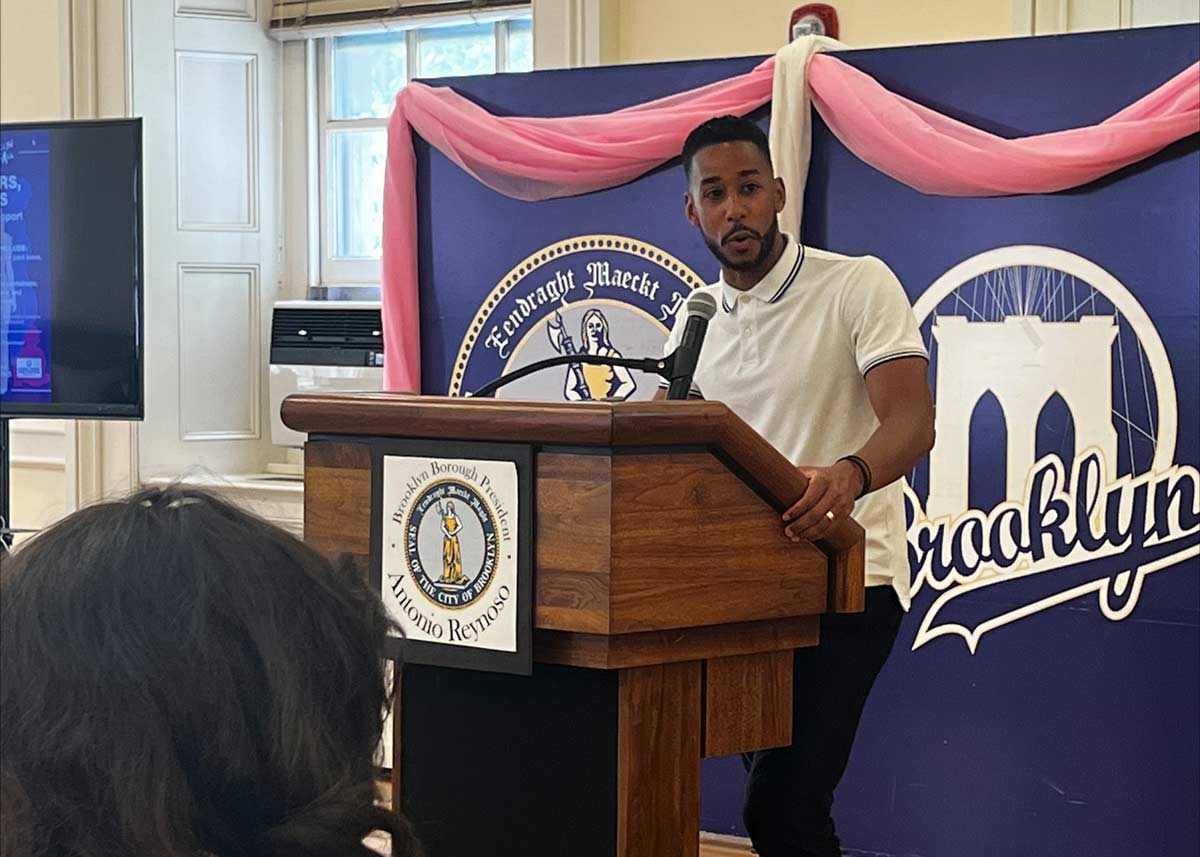
Yesterday, Borough President Antonio Reynoso spoke to Our Time Press about the need for enhanced maternal health care: “Black women are about 8 times more likely to die of pregnancy-related complications than their white counterparts. It’s one of the greatest injustices that our city is bearing witness to and an issue that is deeply personal for me.
I remember the feeling of helplessness when my wife was pregnant with my first son, and I learned just how severe of an inequity we faced. It’s a feeling no family should experience. Pregnancies are supposed to be happy, healthy, celebratory times, but because of challenges that range from infrastructure and staffing, to historical disinvestment and neglect, Black and Brown families all too often are faced with complications and consequences.
When I began my administration, I set out to change that by investing in our public hospitals, bringing together experts in maternal health, and championing the comprehensive measures that can turn the tide on the maternal health crisis.
Access to state-of-the-art tech, excellent OBGYNs and health personnel, culturally competent midwives, and prenatal and postnatal resources are only the beginning of the work that my office is pursuing as we seek to make this borough the safest place in the city to have a baby.”
B. Elizabeth Green BAM’s DanceAfrica 2024: The nation’s largest salute to African and African Diasporic dance, music, arts traditions and their global impact, returns to the Brooklyn Academy of Music for its 47th year, in month-long events, culminating on May Memorial Day Weekend (Saturday, May 25, Sunday, May 26 and Monday, May 27).
DanceAfrica is a tumultuous celebration of life, through its fusion of movement, music, cultural memory, spirit-magic and The Drum sound track.
This year, the artistry of the acclaimed Cie La Calebasse dance troupe of Cameroon, founded by choreographer/dancer Merlin Nyakam, fuses on stage with the Dance Africa Spirit Walkers, The Billie’s Youth Arts Academy Dance Ensemble and The Women of the Calabash ensemble.
BAM’s tribute from early May leading to the ticketed on-stage event features workshops, exhibits and talks for all ages in venues familiar to borough residents and fans: From Weeksville to The Billie theater at Bed-Stuy Restoration.
Also featured are visual art displays, the FilmAfrica cinematic series, the iconic outdoor village bazaar — part of the “choreography” staged more than four and one-half decades ago by the great Grandmaster Baba Chuck Davis who passed seven years ago.
The mantle is now carried by Baba Davis’s heir-designee, Baba Abdel Salaam, who, like his Grand-Baba visited the Motherland, and danced with the Cameroonians in their home villages. This quest for authenticity of the aesthetic is a motivator for all DanceAfrica choreographers and production creative crews as they merge the body-narratives of two continents into one story on BAM’s Gilmore Opera House stage.
The intentions of the ancestors, whose kingdom now includes Baba Davis, are not betrayed. The expressions of the dancers in the poster above reflect the intensity of the message: Do not Forget us. Teach the steps. Keep it Moving.
By Nayaba Arinde Editor-at-Large It is Black Maternal Health Week. Mamas gather here. The joy, the trials, the innovation, the sheer magic of it all. Carrying and raising the babies is the most important job in the world. Black Maternal Health Week though takes all aspects into account; including prejudice tainting the duty-of-care, and violating the Egyptian physician Imhotep inspired oath to ‘do no harm.’
Race and racism are key components on all levels of life in the Black community. Uncomfortable conversations notwithstanding, it is just as true in the life-changing field of Black maternal health.
What can already be a precarious experience, could unfortunately be compounded by bad attitudes, behaviors, belief systems, and conscious and unconscious bias by healthcare practitioners and administrators.
“As a member of the New York City Council and a mother I stand firm in my commitment to championing the health and well-being of all our communities,” City Council Member Rita Joseph told Our Time Press. “Black Maternal Health Week is not just a moment, but a movement—a crucial reminder of the urgent need to address the disparities faced by Black mothers in our healthcare system.”
Dr. Sophia Lubin
The Brooklyn elected added, “This week serves as an opportunity to amplify their voices, advocate for equitable access to quality care, and work tirelessly to ensure every mother receives the support and respect she deserves.”
Citing it as “one of the greatest inequities of our time,” with Black women reportedly 9.4 times more likely to die of pregnancy-related complications than their white counterparts, and one-third of all pregnancy-related deaths in NYC happening in Brooklyn; Borough President Antonio Reynoso launched a maternal health agenda in April 2022. Part of that was establishing a Maternal Health Task Force of eight Black women OBGYNs, nurses, midwives, mental health advocates, “to guide efforts to improve pregnancy outcomes for Black and Brown people in Brooklyn.”
He then allocated his entire FY2023 $45 million capital funding budget to Brooklyn’s three public hospitals for maternal healthcare improvements. NYC Health + Hospitals/Kings County received $15.625M to renovate the newborn intensive care unit (NICU) and mother-baby units.
NYC Health + Hospitals/South Brooklyn Health received $18.5M to renovate the outpatient care center, labor and delivery rooms, postpartum recovery rooms, and NICU.
NYC Health + Hospitals/Woodhull received $11M to build a state-of-the-art birthing center. “Equity in every birth, a call to advance Black maternal health,” was the panel with Attorney General Letitia James, that Dr. Sophia Lubin sat on during the Black Caucus weekend in February.
Currently practicing at Symphony Medical in Yonkers, and with affiliation at Maimonides Medical Center, Dr. Lubin advocates for a confident and informed doctor/patient relationship. She told Our Time Press that it extends from “Once they find out that they’re pregnant, during the pregnancy or prenatal care, to actual labor and delivery, and up to one year postpartum.” Prior, patients must, “Interview your providers whether that’s your midwife, or physician.
It’s making sure that you actually are in partnership with the person who’s going to be taking care of you. It’s knowing the statistics of the hospital that you’re going to, knowing that you’re going to a hospital that is very well equipped with dealing with Black mothers, the issues that can arise, and making sure that they have a fully functional labor and delivery that can take care of any situation. Making sure that once you have a team in place that they are always working as your advocate.”
An OBGYN for over 15 years, she said a woman’s doctor or care provider should be present to be able to spot any mistreatment whether it be the nurses, techs, or even the clerk who registered her. She said that when a patient walks through the door they are fully aware of the “emotions and implicit bias of the person who is receiving us.
That is so pervasive in the medical system, in medical education, and in general in racism as a whole in terms of American culture.”
The JAMA – Journal of the American Medical Association says that “mistreatment by health care professionals during childbirth is a common experience in the US, affecting more than 1 in 8 individuals with a live birth in 2020.”
In 2019, the Giving Voice to Mothers (GVtM) first patient-designed study found that “Black, Hispanic, and Indigenous mothers were statistically significantly more likely than white mothers to experience mistreatment.” In 2023, the Centers for Disease Control and Prevention (CDC) said that “mothers with children younger than 18 years; 20% reported mistreatment during pregnancy and delivery, with higher rates among Black (30%).”
Dr. Lubin, a mother of two sons, told Our Time Press, “We know that we are being looked at differently, so we have to approach the situation differently. It can be as simple as ‘Hi, my name is such and such, and I’m aware of the different statistics when it comes to Black maternal health. I’m scared and I don’t want to be a statistic. How can we work together?” Black women have the burden of dealing with someone else’s preconceived notions about them.
That is why having an accompanying support person in attendance is pivotal, the doctor said, be it a partner, family member, or a doula so that “the person who is pregnant doesn’t have to be the loudest person in the room.
“When your provider or the medical establishment sees that you have that support, that you’re not alone – not that you’re less likely to be taken advantage of, but there is another person in the room that is paying attention. And when you can’t speak up for yourself, they can speak up for you.”
Dr. Lubin suggested that “Black women are told that we don’t have agency, we do. You have full agency over yourself. You know your body… If you’re not being heard by one provider, then move on to another. It’s a doctor-patient relationship and it has to go both ways.”
The host of “Dr. Sophia, ObGyn Podcast,” and a former teacher said, “I had a Black OBGYN who took exceptional care of me, and that is part of the reason why I decided to become an OBGYN.”
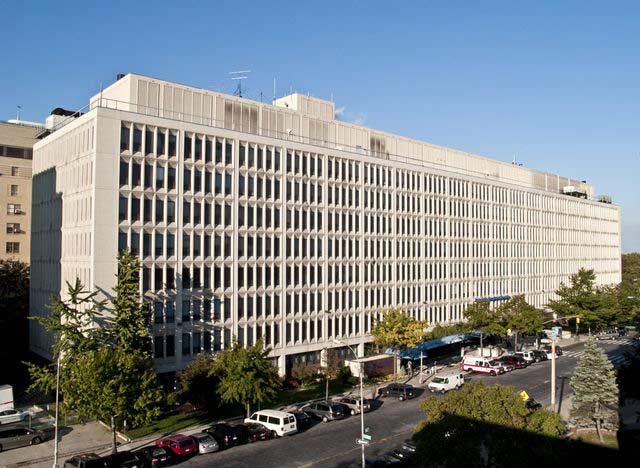
By Mary Alice Miller Every now and then Gov. Hochul seems to forget who helped her get her slim margin of victory in her first full term election. She opened the year by announcing a ‘restructuring’ of SUNY Downstate Medical Center. The ‘brand transformation’ would be funded by a proposed $300 million for capital funding and operating costs. In-patient beds would be transferred across the street to over-capacity Kings County Hospital, part of NYC’s Health and Hospital Corporation, while SUNY Downstate would expand urgent care and ambulatory surgery services.
Hochul’s rationale is a $100 million annual deficit and buildings that sorely need maintenance and upgrades. SUNY Chancellor John King and Downstate President Wayne Riley support the plan.
SUNY Downstate has been a valued community resource since its inception. It is the only academic medical center in Brooklyn. Elder activists recall when Malcolm X came to the site to stand with CORE and Black construction workers in 1963 to protest racial discrimination in the construction trades, demanding jobs to help build the facility.
More NYC physicians have trained at SUNY Downstate than any other medical school – 36% are Brooklyn residents; 70% are NYC residents. 57% of undergrad and graduate Downstate students are minorities (27% white, 25% Asian, 24% Black or African American, 13% Hispanic or Latino, 2% other, including American Indian or Alaska Native).
There are currently 2,300 employees at SUNY Downstate; 20% or more could lose their jobs due to the restructuring. The 342-bed hospital serves a patient population of 75% African American/African Caribbean, 12% Hispanic/Latino, 7% white, and 2% Asian.
SUNY Downstate houses Brooklyn’s only kidney transplant program and is one of two Regional Perinatal Centers in Brooklyn, providing care for high-risk pregnancies and deliveries.
United University Professions President Fred Kowal calls Gov. Hochul’s plan “the wrong choice for patients, students, and the community. Rather than heeding the call of local patients and community members asking for a meaningful discussion about the future of the institution, Gov. Hochul seems poised to plow ahead with this destructive agenda – devised in secret and presented as a fait accompli – which will undoubtedly harm the health of the Central Brooklyn community.”
Kowal “looks forward to working with the Legislature to correct this plan’s complete disregard for Downstate hospital’s thousands of employees, tens of thousands of patients, and even more community partners.”
The Assembly supports Gov. Hochul’s funding request while establishing a commission to study the preservation of hospital services to underserved central Brooklyn residents. The Senate wants a commission that plans for SUNY Downstate’s future.
“Protecting SUNY Downstate is personal for me: during the darkest days of the pandemic, their staff treated me and so many of my constituents,” said Senator Zellnor Myrie. “In 2022, we wrote a law requiring a report on Downstate’s infrastructure needs.
The State has not complied with that law, yet they are basing their entire plan to close Downstate on its alleged ‘capital needs’”.
Myrie held a rally attended by 1,200 healthcare workers and community members in support of SUNY Downstate which is located in his district. “The message has been and continues to be clear: this community opposes any plan to reduce healthcare access where it’s needed most in central Brooklyn,” said Myrie.
Senator Kevin Parker called on Brooklyn’s Congressional delegation to secure an allocation of $1 billion in capital funding to support the transition of SUNY Downstate Health Sciences University Medical Center into a predominately outpatient facility.
The funding would fund extensive renovations and upgrades to existing facilities, the acquisition of cutting-edge medical technology and equipment to enhance diagnostic and treatment capabilities, support innovative healthcare programs and research projects aimed at improving patient outcomes and community health and expand educational and training opportunities for the next generation of healthcare professionals.
“The transformation of SUNY Downstate is not just a vision; it’s a necessity,” said Parker. “As Brooklyn continues to grow and evolve, we must adapt our approach to healthcare delivery. We have a unique opportunity to redefine what community healthcare looks like and it starts with ensuring SUNY Downstate has the resources it needs to succeed.”
Senator Parker also called on NYS Comptroller Thomas DiNapoli to undertake a thorough and detailed audit of SUNY Downstate’s finances and operations. “The potential impact of arbitrary layoffs and reducing headcounts at SUNY Downstate could be detrimental; not just to the employees, but more critically, to the provision of healthcare in our community,” said Senator Parker.
“It is our duty to protect the public’s interest by verifying the financial health and operational efficiency of this institution through a comprehensive audit. We must prevent the erosion of healthcare services and the possible negative outcomes that may arise from improper staffing decisions.”
Assemblywoman Latrice Walker expressed her support for legislation that will allow for improved public notice and public engagement when hospitals and certain unit closures are threatened, and to strengthen state review of such closings.
“I remember when I was a patient at SUNY Downstate. It was critical. I had pancreatitis. Nothing I could have by mouth other than the ice chips that my NYSNA nurse would bring for me every day,” said Assemblywoman Walker. “We have been in this fight before. Billions of dollars have been given in federal aid based on a federal Medicaid waiver.
When we asked for some of these resources, they said it’s not for SUNY Downstate. The dollars that you are saving by not having to pay back the federal government can be used for our hospitals. Yes, Brooklyn needs Downstate.”
Walker stated, “No matter how many public announcements, no matter how many public forums that we may have to combat the closure of hospitals across New York State, the fact remains that our hospitals are being starved particularly in communities like mine where 90% of patients at hospitals are on Medicaid and/or Medicare who as we know are paying 30 cents on the dollar for all healthcare costs.
So, it doesn’t matter what type of hearings are being held when our hospitals are not receiving the type of resources that they need in order to provide quality healthcare.”
She added, “We are facing the closure of SUNY Downstate in our community. We are 100% fighting back against it.”
Rev. Dr. Raphael Warnock preached at Grace Baptist Church in Mount Vernon, New York, last Sunday (April 7), for Grace’s Senior Pastor Rev. Dr. W. Franklyn Richardson’s 49th anniversary. Sen. Warnock has been, since 2005, the senior pastor of Atlanta’s Ebenezer Baptist Church, where The Rev. Dr. Martin Luther King Jr., once pastored.
In 2021, Warnock became the first African American elected to represent Georgia as U. S. Senator.
Our Time Press is reminded of trailblazer and thought leader Warnock’s first speech on the Senate floor as a newly elected legislator. He called for the protection of voting rights. He described voting as a “kind of prayer.” Warnock said, “As a man of faith, I believe that democracy is the political enactment of a spiritual idea — the sacred worth of all human beings, the notion that we all have within us a spark of the divine and a right to participate in the shaping of our destiny.” Photo credit: Barry L. Mason