Home Blog Page 159

Medgar & Myrlie

Medgar Evers and the Love Story That Awakened America.

Book Review by Brenda Greene

Joy-Ann Reid’s Medgar & Myrlie: Medgar Evers and The Love Story That Awakened America (Mariner Books, 2024) is a stirring portrayal of the life of Medgar Wiley Evers and Myrlie Evers-Williams. Readers may think that they know the story of Medgar Wiley Evers.

However, Reid notes that when the Oprah Daily published its list of 30 Civil Rights leaders of the past and present in 2023, Medgar Evers was not listed: 30 Civil Rights Leaders to Know from Today and the Past (oprahdaily.com). The website cites Dr. Martin Luther King, Jr., Malcolm X, W.E.B. DuBois, Julian Bond, A Phillip Randolph, Ella Baker, and Roy Wilkins among others.

Brooklyn NAACP Achieves Victory in Lawsuit Against NY Line Warming Ban

Statement of L. Joy Williams, President, Brooklyn NAACP
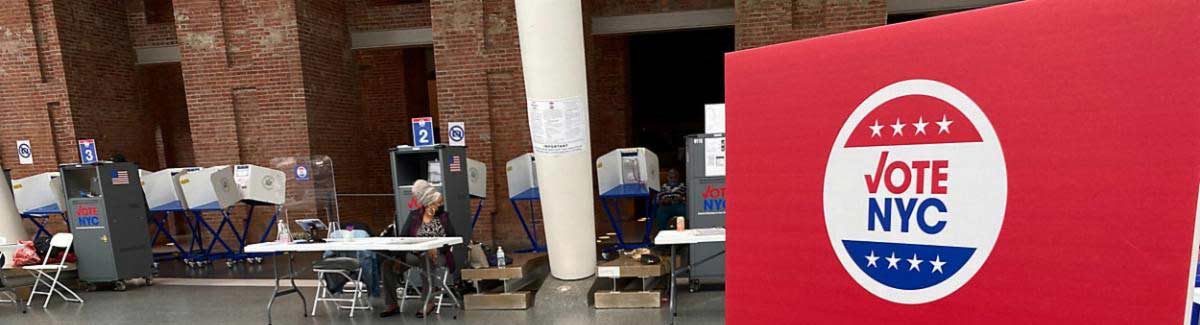
“I am elated to share that we have successfully challenged New York State’s line warming ban, securing a critical victory for voter rights. The line warming ban prohibited the distribution of food and water to voters waiting in line at the polls. The U.S. District Court’s decision overturning this ban reaffirms our belief that every voter deserves the dignity of support while exercising their right to vote.


While this victory is a significant milestone, our work is far from over. After learning of our victory, we immediately began discussing ways we can provide comfort and support to voters for 2024 voter mobilization efforts. Additionally, we will continue to monitor and challenge any policies that threaten voter rights and work tirelessly to ensure that every voice is heard.”
www.brooklynnaacp.org

Background:
In September 2021, Brooklyn NAACP filed a lawsuit against New York State challenging -warming ban, which prohibits nonpartisan groups from providing food and drink to voters waiting in line. Our amended complaint alleged that the ban violates the First and 14th Amendments because it is overbroad, vague, places unconstitutional restrictions on free speech and the political process and criminalizes protected free speech, burdening the plaintiff’s right to participate in the political process, and it is unconstitutionally overbroad and vague.


Earlier this year, the presiding judge denied the state’s motion to dismiss allowing the lawsuit to move forward. The trial was set for March 4, 2024 at the Thurgood Marshall United States Courthouse, 40 Foley Square, New York, NY 10007.
In April 2024, the City Board of Elections and the State Board of elections proposed findings and conclusions of law.


RESULT: On May 30, 2024, the U.S. Southern district court struck down the line warming ban.

Dr. Adelaide L. Sanford Honored with Lifetime Achievement Award at The Neighborhood Technical Assistance Clinic (NTAC) 17th Annual Gala

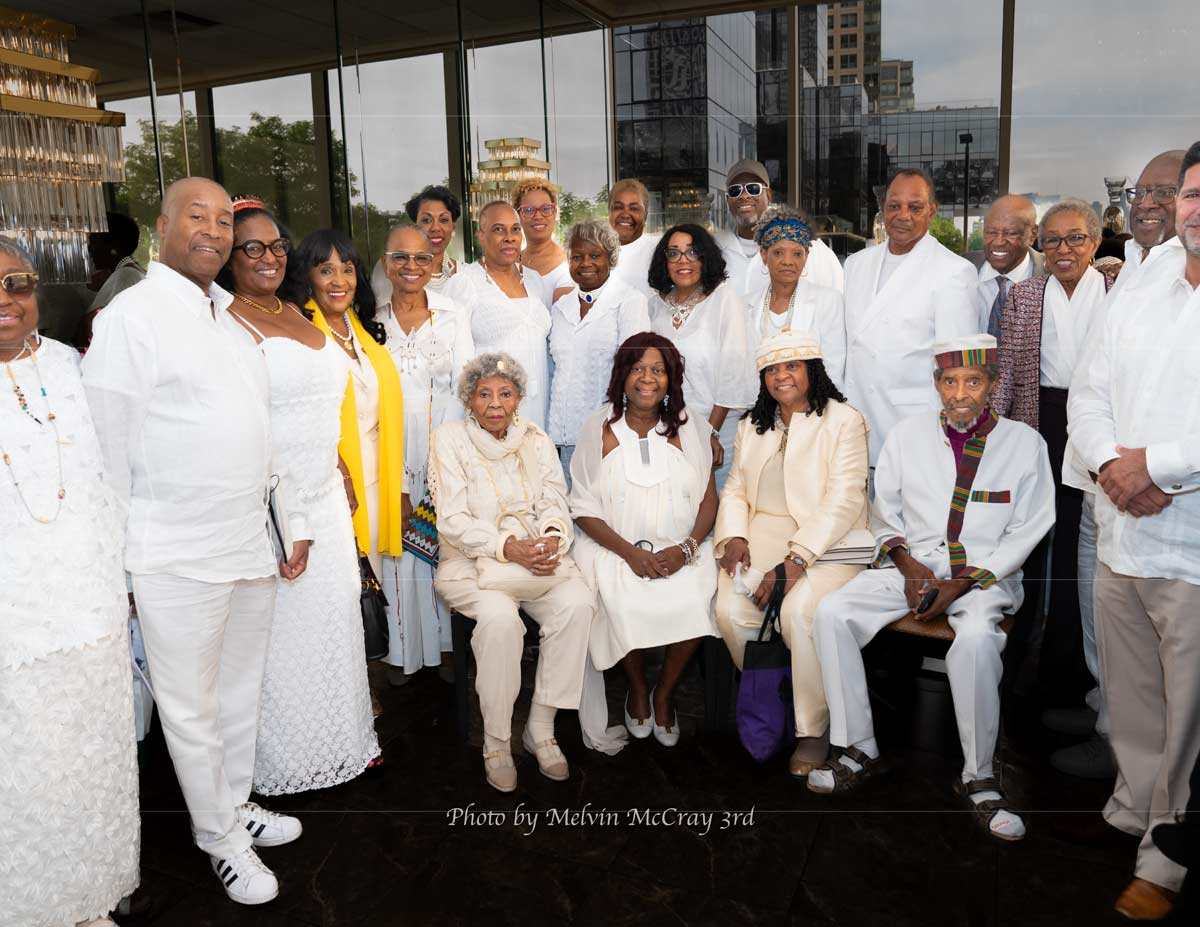
Dr. Adelaide Luvenia Sanford, passionate national advocate for African-centered education for students of African descent, guiding light for families and educators, and compassionate leader of leaders, was honored recently with a Lifetime Achievement Award by the National Technical Assistance Clinic, surrounded by honored guests, loving family, and associates from an array of fields. The Hon. Eric Adams, Mayor of the City of New York, presented the award.


Under the leadership of The Rev. Dr. Valerie Durrah, NTAC is a strategic partner and advisor to philanthropists, foundations, government and political entities, public institutions, grassroots nonprofits, faith-based institutions, and more. NTAC’s annual White Gala is in its 17th year.


In the photo above, Dr. Sanford, foreground, far left, is seated with: back row, from far right: Rev. Dr. Kanyere Eaton, Rev. Adriene Thorne, Carla Hunter Ramsey and MetroPlus Board member; middle row, from far left, Cassandra Grant, Gregorio Mayers, Esq.; Onida Coward Mayers, Dr. Evelyn Castro, Dr. Jan Robinson McCray, Hon. Wavny Toussaint, Edna Wells Handy, Esq, Rev. Sylvia Kinard, Esq, Deborah L. Johnson, Gregory Anderson, the Hon. Ed Towns, Gwen Towns, Anthony Wells, Counsel General Elias Levy; and foreground (from Dr. Sanford’s left), Rev. Dr. Valerie Oliver Durrah, Rev. Dr. Karen Daughtry, and Rev. Dr. Herbert Daughtry.


Details of the event and a transcription of the wise words Dr. Sanford delivered to NTAC guests will be placed in an upcoming issue of Our Time Press, for whom Dr. Sanford has been a lifeline in the early years of struggle and a source of constant inspiration for nearly three decades. The impact of her work with Brooklyn’s public school system can be seen weekly in these pages.

-Bernice Elizabeth Green
& David Mark Greaves

Response to a Reader

Reprint from November 4, 2010
To the Editor:
I love the Bedford-Stuyvesant community. My family and I are newcomers and would like for our local politicians to stop using and abusing the words “black community.” Yes, we know Bed-Stuy is mostly black, but that will not be the case for very long. We wish you would include others like Hispanics, whites, and Asians as well when it comes time to speak about improving the community. We are all doing what we can in these tough times.


This community will come to fruition when all people are mentioned as an important part of this community. We live in New York City, a place surrounded by all different groups, does Al Vann really believe Bed-Stuy will continue to be mostly a black community.


Wake up sir, we all care about the neighborhood and want to live next to decent people without regard to their racial makeup. When you mention the fact that blacks can’t let go of Bedford-Stuyvesant, you create tension between different groups.


That is not what our politicians should be doing. Why not just refer to all community members of Bed-Stuy simply as that, because that is what we are.
Steven,
Brooklyn


Dear Steven,
As far as I can tell, you do not love the Bedford-Stuyvesant community. What you love about Bedford-Stuyvesant are its amenities: the transportation infrastructure, the tree-lined streets, and the brownstones. There is the Brooklyn Academy of Music, the Brooklyn Children’s Museum, Prospect Park, the Brooklyn Botanic Gardens, and the Brooklyn Museum, all within a nice walk; that is what you love. The inhabitants, however, are an entirely different matter.


Bedford-Stuyvesant has had many ethnicities pass through it over the years. Now, it is a mostly African-American community with roots stretching back over two hundred years. The Weeksville Houses, still standing, date from 1840. Bridge Street African Wesleyan Methodist Episcopal Church was organized in 1766 and incorporated in 1818. So yes, that sentence fragment was right. You are a newcomer. Beyond that, you suffer from what we can call Post-Traumatic Slave State Syndrome (PTSSS).


Dr. Joy DeGruy has written about Post-Traumatic Slave Syndrome, the transgenerational transfer of emotional trauma arising out of the terror needed to hold African-Americans in chattel slavery for 400 years. This period also produced a state apparatus as well as a state of consciousness in European Americans arising out of hundreds of years of superiority and relating to African Americans as property. What you are experiencing here is an example of PTSSS, a condition brought on by vestiges of slavery that are with us every day.


For example. There are weekly and daily publications in many languages all around you, all referring to their “community” of Polish-Americans, Russian-Americans, Korean-Americans, Pakistani-Americans, and many more. They are of no interest to you because you do not speak their language.

And if Our Time Press was written in Swahili, you would also pay it no mind. It is written in English because Africans were captured, transported as cargo and sold as property to provide the cheap mass labor needed to convert raw land into the economic engine that jump-started this United States.


As a part of that, the slave system took away the languages of the Africans and substituted its own, giving slave owners access and control over the Africans’ thoughts. And now, as you continue that legacy of eavesdropping, you are overcome with umbrage that the property has misbehaved, but you take a gleeful solace in projecting that we won’t be here very much longer.


It is impossible to know which of the echoes of slavery you feel will take us out but given the combinations and the multitude I can understand your feeling of confidence. There are the foreclosures resulting from racist predatory lending driving people from their homes and depression-era unemployment plus a 50% dropout rate, all intertwined with emotional distress, most obviously acted out in self-hating crimes of gunfire and dysfunction at home.


As African-Americans work to cure these problems, you feel empowered to object, which were it not for the PTSSS diagnosis, would be an astonishing impertinence. But I guess such malevolent arrogance is not unexpected, and the rewards for stealing another’s language, the ability to meddle, keep coming in.


Of course you are right again, it is nice to live next door to decent people. A person I would have liked to have lived next to was the family of Louisa May Alcott. In the biography Louisa May Alcott: The Woman Behind Little Women, Harriet Reisen writes this about the capture of Louisa’s family hero, the militant abolitionist John Brown: “We are boiling with excitement here,” Louisa wrote to Alf Whitman a few weeks after the raid, “for many of our people (Anti Slavery, I mean) are concerned in it.

We have a daily stampede for papers and a nightly indignation meeting of the wickedness of our country & the cowardice of the human race. I’m afraid Mother will die of spontaneous combustion if things are not set right soon.” Later, after a harrowing description of Louisa’s experiences in a Civil War hospital was this: “The night before she had celebrated the Emancipation Proclamation by leaping from her bed at midnight and racing to the window to add her own cheer to the hollering and singing in the streets of the embattled nation’s capital.

She waved her handkerchief to a crowd of black men gathered below and returned to bed to savor the bursts of firecrackers and choruses of ‘Glory, Hallelujah’ that sounded all night.” These passages and many others show me that Miss Alcott and her people, “Anti Slavery, I mean,” are people I’d like to live next to. And I know their descendants and legacies are here also, luckily offsetting those such as yourself.


(It would be better if abolitionist fire still burned with indignation, decrying white control of African-American education and demanding fairness in city contracting, but the vote for Obama showed there were still some embers there and maybe they just have to be fanned.)


You, however, are a different matter. Your words on African-Americans remaining in Bedford-Stuyvesant, “that will not be the case very long,” spring from a different source, one captured by Claude McKay in his poem “The Lynching”:

Day dawned, and soon the
mixed crowds came to view
The ghastly body swaying in the sun:
The women thronged to look,
but never a one
Showed sorrow in her eyes
of steely blue;
And little lads, lynchers that were to be,
Danced ’round the dreadful thing
in fiendish glee.

And here you are, the “little lads” heir all grown-up and smugly snuggled in your white privilege, a critic of African-American conversations to combat the remains of the slave experience, strengthen our community, and be a full partner in the future.


The fact that you find the methods and manner objectionable is heartening. I take it to mean we are on the right track, and as a sort of mile marker on our journey, I ask a favor of you: please let us know when you become apoplectic, and then we’ll know we’re almost there.

David Mark Greaves

Baby Boomers Predicted to Transfer a Staggering $84 Trillion in Wealth, One Family at a Time

By Mary Alice Miller
During the next two decades, 78 million baby boomers will transfer $84 trillion in wealth. Of that amount, 85% of this wealth transfer, or $72 trillion, will go directly to their children and grandchildren, not taking into account end-of-life care.


Baby boomers, born between 1946 and 1964, hold half the nation’s $140 trillion in wealth. The Silent Generation, born before 1946, holds $18.1 trillion. The Silent Generation is now in its 80s. Their wealth transfer will accelerate as they pass away.


Inheritance doesn’t need to wait until someone passes. Heirs are increasingly benefiting for family wealth from elders due to the popularity of ‘giving while living’, including property purchases and repeated tax-free cash transfers of estate money.


The top 10% of wealthy households will give and receive the majority of collective wealth transfers. However, for those in the working class, the bottom 50% of households will account for only 8% of wealth transfers. The transfer of a paid-off home or a small amount of money can boost lower-income workers.


Due to government policies like redlining and house covenants, the vast majority of those who hold and transfer wealth are white. Black people and other people of color have managed to acquire comparatively smaller amounts of wealth through home ownership and retirement pensions due to collective bargaining.


It is important to educate your heirs to nurture and preserve their assets for important causes and their heirs.
Recently, Assemblywoman Latrice Walker hosted an event on estate planning conducted by Mitch Mitchell, Associate Counsel for Trust&Will.


Mitch Mitchell emphasized the importance of setting up how you want your assets distributed so that your family members don’t have to deal with the logistics while they are grieving. The plan should also include naming caregivers for minor children, people with disabilities, and pets. Most important, said Mitchell, is setting up an advance directive and appointing someone to carry out your wishes in the event you become sick or incapacitated.


Mitchell explained the difference between a will and a trust. “A will is a legal document that determines what happens to our property when we die. A named executor takes the will to probate or surrogate’s court. The court validates the will, and the court appoints the named executor. The executor can gather assets like bank accounts, and once they receive the funds they pay expenses and creditors, then distribute assets,” said Mitchell.


“But,” he added, “Probate can be slow. Often, it takes 9-10 months before you get a hearing to see a judge. Often, people hire an attorney to help them through the process.”
A trust, on the other hand, “doesn’t have to go to court,” said Mitchell. “A trust is created then assets are funded into the trust. The trustee has the authority to manage the trust. The trust can be active while you are alive. It is a tax benefit and an incapacity tool. Trust beneficiaries get any assets in the trust, and the trust can set conditions such as if you have younger children and you don’t want them to get access all at once.”


Will are public documents while trusts are non-public, said Mitchell.
“Everyone over the age of 18 needs an estate plan, especially for health issues,” said Mitchell. “Make an estate plan when big life events happen, such as getting married, having children, accumulating business assets, purchasing real estate, and medical concerns.


Mitchell cautioned that people need to make sure their plans are current and updated. Without a big life event, the estate plan should be revisited every three years.
“I think it is important for people to do succession planning. A lot of times many in our families, particularly our seniors, die without a will and their property has to now go through the City (Surrogate’s court). If they don’t have any children, many times the property will go to the public administrator and then it gets owned by the City and the City does whatever they want to do with the property,” said Assemblywoman Latrice Walker.


“We believe we can do more successive planning related to setting up a trust, putting things in your trust for your family, extended family members, or leaving it to your church. In a lot of other communities, their institutions are able to acquire property because people leave endowments to the institution. I think it is time that we learn and we build our own institutions so that our property doesn’t just get bought,” she added.


The state legislature is “trying to make estate planning affordable and easier. You have to make sure you do it right; otherwise, people will contest your will,” said Walker. “We have a bill that would allow people to do electronic wills. We are working on the signing and notarization portion. We have electronic notaries, but not for wills.”