Home Blog Page 155

NYC Segregated School System Is Still An Issue

By Nayaba Arinde
Editor at-Large

Talking about public school segregation in 2024 seems dated. On May 17, 1954, the Brown v. Board of Education, the United States Supreme Court determined that public school segregation was unconstitutional.
Here in 2024, 60 years later, it is not a state in the Deep South, but New York, which holds the dubious title of having one of the “most racially and socio-economic segregated” public school systems in the nation.
Incredible, but unfortunately true.
Racial equanimity is a ways off it appears.


The City says that in 2022-23, there were 1,047,895 students in New York public schools, in 1,870 schools within the Department of Education, by autumn 2023, including 274 charter schools.
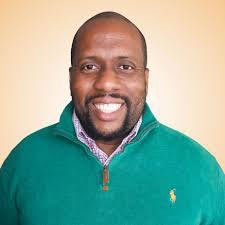
EduColor is a student and educator empowerment organization. Co-founder Jose Vilson told Our Time Press that New York has earned its reputation with the segregation not just seen in the school population, “But in strength and power. I would say that generally, Black people don’t have the same level of power as their white counterparts no matter who’s in charge.”
Asked if she agreed, college professor and psychotherapist Ruth Smith told Our Time Press, “I would say yes. I’m a product of New York City public schools, and New York City higher education I received my bachelor’s from CUNY’s Hunter College.”
Students’ education is suffering, Dr. Smith said since “Teachers are frustrated, and they are burnt out, because they are not being heard, and salaries are definitely, definitely a big part of it.”


Meanwhile, publicly lambasted for his November 2023-proposed budget slashings, particularly his $500 million cuts to the education budget, Mayor Eric Adams recently announced that he would restore $127 million to school coffers.
On Monday, June 24th, Adams and Schools Chancellor David Banks announced their new education initiatives for a “more equitable vision for [the] future of New York City public schools.”
Adams slammed “the dysfunctionality of education, and it impacts all children, but specifically Black and brown children.”


With seemingly campaign-mode fervor, Adams announced new math and English initiatives, securing the Summer Rising program for 110,000 students, more money for teachers, and adding 57 gifted and talented programs citywide.


With 66 percent for Black and 64 percent for Latino students, math and reading proficiency is below average; Banks introduced “NYC Solves – Illustrative Math, supported by intensive teacher coaching, just like we are providing for NYC Reads.”
Literacy National nonprofit Reading Partners stated, “There is an undeniable connection between literacy skills and incarceration rates.”


The New York Civil Liberties Union said, “The School to Prison Pipeline is a nationwide system of local, state, and federal education and public safety policies that push students out of school and into the criminal justice system.”
Remembering teachers misunderstanding her drive as a highly intelligent pupil and mislabeling it as disruptive behavior, Clinical Social Worker Professor Ruth Smith told Our Time Press, “I have colleagues and friends who work with the Board of Education, and the things they talk about in terms of how education goes bothers me so much.”


She said that when her now grown son was offered an opportunity to attend Gifted and Talented public school, she said no and sent him to prep school “because I was afraid of the New York City public school system, because I know what they did to me.”
Now, with the marked influx of migrant children, particularly the West African Muslim population, Dr. Smith ponders if the correct accommodations have been made.
“I don’t know if the teachers are required to take cultural diversity. Do they understand equality and diversity? And who are the new teachers who are coming in? I know the ones who are going out. They are taking early retirement and everything because of safety issues and salary.”


Children were supposed to go to any school that they wished – ranking 12 schools, Vilson said, “and go to the one they thought was the best. Unfortunately, as we have seen on multiple occasions, there are certain parents who are able to get into the more wealth-resourced schools, the so-called best schools. And there are children who are zoned into their local public school, which is okay.”


It should be about choice, Vilson told Our Time Press.
“Then we recognize these premier specialized schools, where only a handful of Black and Latinx children are allowed into those multiple resourced schools, although they make up the vast majority of New York City public high school population.”
The education activist said folk “don’t realize that most schools in the south were mandated to integrate, whereas most schools in the north opted not. So there is legacy to this.”

Solutions?
“We should do away with the Gifted and Talented program. ‘ said Vilson. “They try to attract more middle class – particularly white parents, but unfortunately…there were predominately whites on the first few floors, and the bottom floors had all the immigrants and Asian students. That’s not integrated. That’s segregation by another way. And we need to do better from the high school perspective like specialized high schools like Brooklyn Tech.”
That high school, he said, used to have “a plethora of talented Black and Latinx kids, but what happened over time was that as Brooklyn became more gentrified people saw a school that they were able to push their kids into, and now it is less diverse than ever.”

Options?
“We need to figure out ways to bolster our other high schools, and make sure that people feel that they are getting a great education regardless of what school they go to.”
Public school parent Vilson concluded, “We can’t just leave it to the advantages that people have or not. Education should be more communal in the best city in the world – but unfortunately, there are deep racial issues.”
The Department of Education did not respond to Our Time by press time.
Ann Tripp: A Leading Voice in Black Radio News

0

By Fern Gillespie
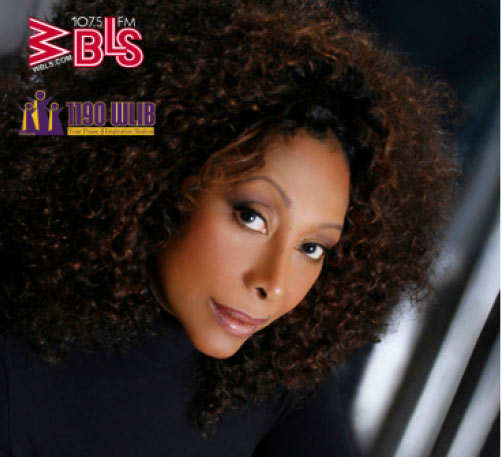
For decades, journalist Ann Tripp has been a leading source of Black news and information in the New York metro area. As New Director at WBLS, millions of listeners from New York, New Jersey, Connecticut, and around the globe tune in to hear her voice of information. Born in Crown Heights and raised in Flatbush, radio has been her career since she was a 14-year-old announcer at WNYC for a show produced by the Police Athletic League.

A graduate of City College, Ann has also performed as an actor and singer. Throughout her career as a radio journalist, her impact on New Yorkers has been seen in many honors and awards. Our Time Press spoke with Ann Tripp recently for a reflection on her career, which spans decades of informing New Yorkers.

When you began your radio news career at WHN, a general market station, were you the only woman in the news department?
At WHN, a sports station, I was in the newsroom. I listened and studied under some really great journalists who were white men. They actually taught me the business of news and how to write. They gave me books to read.

They gave me the history of journalism and taught me the journalism inverted pyramid. I had to go out to cover stories at City Hall and places like that. Then, come back and cut them for the news person and write a story around it. I learned a lot from these older White men.

When you joined KISS-FM, you were well-known as a general market news person at WHN, WNEW, WKTU and K-ROCK. What was it like being at KISS-FM focusing on news to Black listeners?
It was important. Because a lot of Black stations were not heard as widely as we were, and we wanted to make sure that the community knew that we were there for them. Bob Slade was an excellent newsman. He encouraged me to speak my real mind on radio.

Bob said “We have a political show and I’d like for you to be on it. I want you to say what you really think. We want the real you.” It made me popular with my own people.

At KISS-FM, you were the morning co-host of the top-rated Isaac Hayes and Friends Morning Show. What is your favorite memory of him?
Isaac Hayes was raised by his grandmother Rushia Wade in Tennessee. She fished him out of a well when his natural mother, who had mental problems, threw him in the well. When his grandmother died everybody expected him to be there.

He didn’t go. He told me “I knew they were there to see me. I went later when everybody went home. Then I paid my respects to my grandmother. Because it was between she and I. I didn’t want to be the story.” You learn things about people that are so touching.

As a Black journalist, what do you feel is a major issue facing Black New Yorkers?
Unfortunately, police brutality. It’s not as bad as some other cities, but it’s still very brutal. They still don’t know how to treat people of color, particularly those having problems of disorientation or mental issues. The last thing you need to do, in most cases, is call a policeman. Police are not psychologists.

They are not sociologists. Whenever something is done like that they say “We are going to be retraining the police.” But how much retraining can you do? It’s not just about retraining, it’s about who you hire and it’s about how the written test. How the questionnaires are done for people who want to be police officers. Why are so many Blacks not admitted to the police department? Who is giving these questions? Who are evaluating the answers?

Do you think the general market press is covering racism in New York?
No. Because it’s not important to them, we are left to fend for ourselves pretty much. If you want to find out what’s going on with Black people you have to look to Black media and Black newspapers, because that’s where they’re going to write stories that tell you what’s going on in this country as far as we are concerned.

The general market media would rather talk about Ukraine, which is valid, but you see more about Ukraine, Russia even Gaza than you see about what’s going on in Florida. That’s where Black parents have to send a permission letter to allow their children to be taught Black History.

What do you like about being on the radio?
When you’re on the radio, they know when your birthday is. People on the radio really enter the homes of the people who listen to them. Unlike TV people. I don’t take that closeness lightly. I don’t take it for granted.

I feel blessed to have access to the airwaves at this time, because its an important year and an important Presidential election. If I didn’t have access to something, I would be hitting my head against a wall.

JUNETEENTH…

… is considered the real Independence Day in the African American community.

By Bernice
Elizabeth Green
Photos by Barry L. Mason

The Federal holiday marks the day (June 19, 1865) enslaved Africans in Galveston, Texas, learned they had been enslaved for 2 1/2 years beyond the issuance of the Emancipation Proclamation.


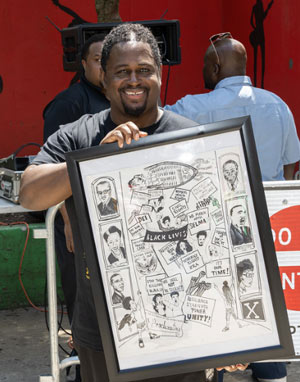
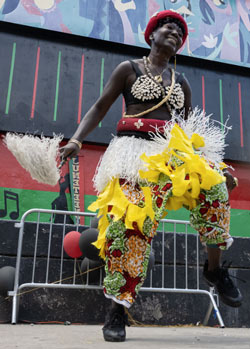
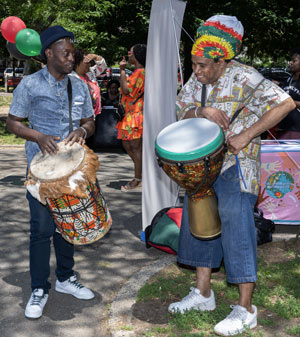
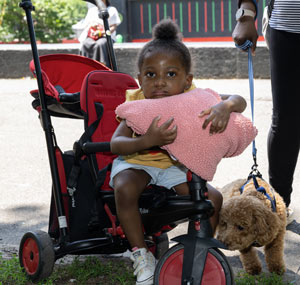
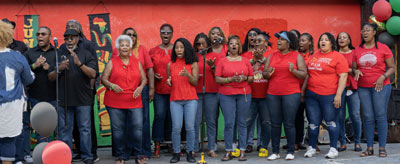
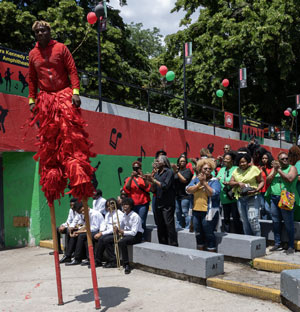
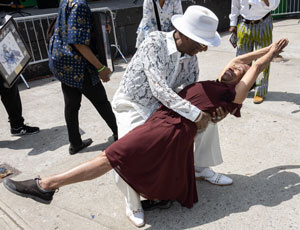
Juneteenth 2024 celebrations nationwide focused on culture and liberation — with great food, singing, dancing, and cultural arts activities. The recent 23rd Annual Brooklyn Juneteenth Arts Festival held on Saturday, June 15, at Herbert Von King Park event, was hosted by Brenda-Brunson Bey, Tribal Truths, and Spring McClendon, founding chairs of the borough’s Cooperative Culture Collective. CCC opened the door to new themes, among them an expansion of the concept of Freedom Day as an open-air university for all ages.


In successive weeks, Our Time Press will present images and speeches from memorable on-stage presentations hosted by award-winning choreographer-dancer-educator Baba Obediah Wright. We will also highlight the events’ awardees, performers, special guests and moments as we progress to Black August and the 2024 back-to-school season, spurred by Baba Wright’s life-long beliefs in “paying homage to those who came before us for the sacrifices they made that enable us to stand where we are now as artists and as a people.”

Annual One Brooklyn Health Fair Draws Strong Community Participation

By Lyndon Taylor
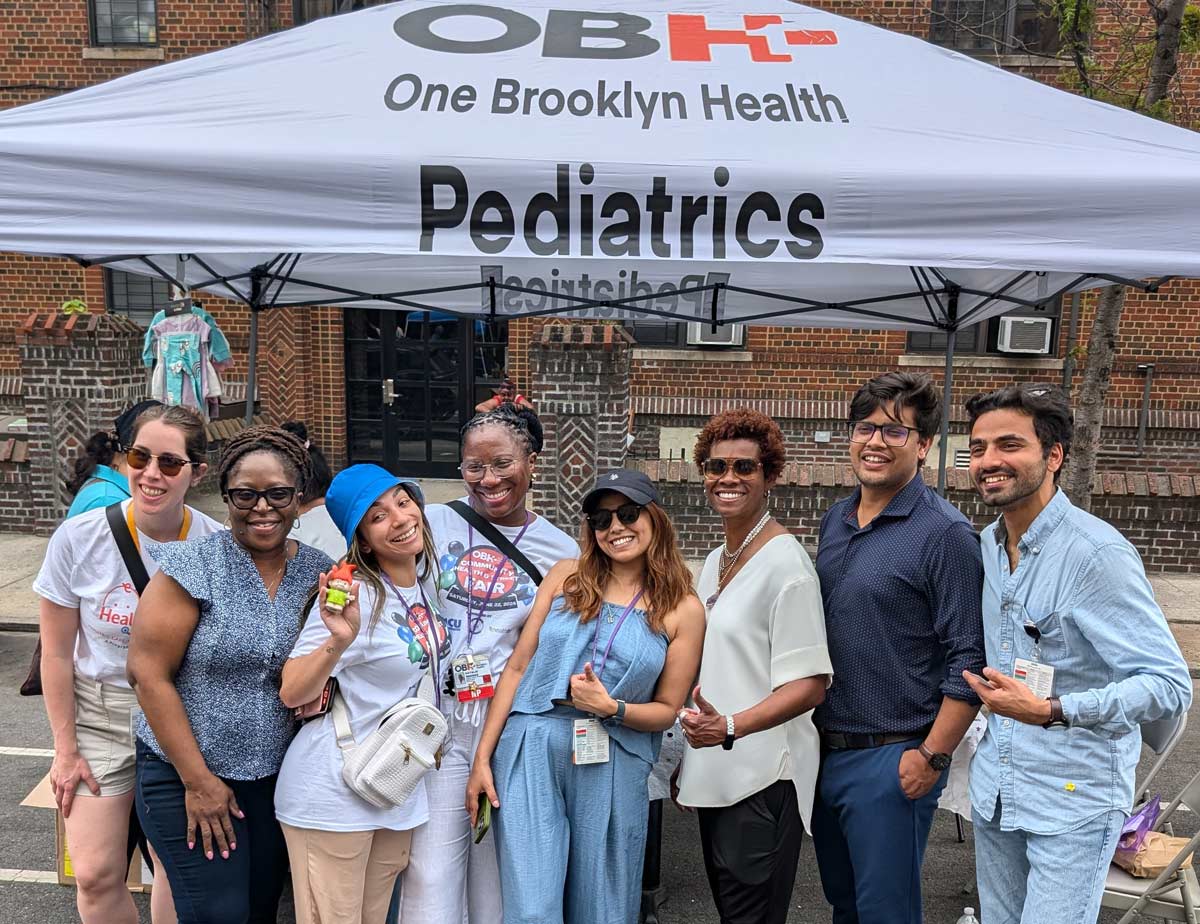
On Saturday, June 22nd, the Annual One Brooklyn Health Fair transformed the community into a hub of health and wellness, as residents flocked in large numbers from 11 a.m. to 4 p.m. Held at Brookdale Hospital Medical Center, the event marked a significant milestone for health engagement in the borough, with a primary focus on providing essential health screenings and educational resources to attendees.

Marisol Walker, VP Ambulatory Care, OBH 1


The fair, a flagship initiative by One Brooklyn Health, featured a spectrum of health services to enhance community well-being. Among the most popular offerings were free blood pressure checks, where medical professionals provided personalized insights and advice. Participants also took advantage of various other health assessments and consultations, ensuring they received comprehensive care in a convenient setting.

Resident Olivia Burke of East Flatbush noted that “it is very important as that’s when you get to make your choice for a leader who is looking out for your interest.”


Sandra Scott, Interim CEO of One Brooklyn Health, underscored the event’s importance, stating, “This annual fair is not just about medical check-ups; it’s a vital opportunity for our staff to directly engage with the community we serve. It allows us to build relationships, foster trust, and empower residents to take charge of their health.”


Beyond screenings, the fair boasted interactive booths and informational sessions covering diverse health topics such as nutrition, mental health awareness, and preventive care strategies. Local organizations and partners joined forces with One Brooklyn Health to offer insights and resources, further enriching the event’s impact.


For many attendees, the fair was more than just a health check-up; it was a community gathering that promoted a proactive approach to health and provided valuable resources to residents.

Sandra Scott CEO, OBH 1


Council Member Farah Louis, who represents the 45th District in which the hospital falls, was among the elected representatives in attendance. The Council Member, who is the daughter of a healthcare worker, underscored the importance of such an event to the community.

She indicated that the district has been seeing a spike in diabetes, high blood pressure, and strokes, especially during the pandemic, in addition to mental health episodes due to the loss of family many residents faced. She pointed out that her office has been deploying teams to go out in the community to assist residents in accessing care, noting that her office has also funded a department at Brookdale Hospital to support mental health services.


The Annual One Brooklyn Health Fair provided crucial health screenings, strengthened community bonds, and encouraged ongoing dialogue about health. As it concluded for the year, its impact resonates as a testament to the power of collaborative healthcare initiatives in fostering healthier communities.


With 2024 being an election, we spoke with two seniors about the importance of voting. Olivia Burke of East Flatbush noted that it is very important as that’s when you get to make your choice for a leader who is looking out for your interest.


Gloria Rancine also believes it’s important to vote as that is when residents get an opportunity to decide who is the best candidate to represent them and ensure the community get the necessary services including sanitation, education, skills training, summer programs and a better quality of life.

Willie Mays Passes at 93,Leaving More than a Legacy for Young People to Catch

by Bernice Elizabeth Green
Baseball legend Willie Mays passed Tuesday at 93, leaving more than a legacy for young people to catch.

Minor Division Commissioner Zabrina Adams


Nicknamed “The Say Hey Kid,” the baseball center fielder who played 23 seasons in Major League Baseball was regarded as one of the greatest baseball players of all time. For many who watched him play during his heyday and observed him off-field, Mr. Mays kept all his bases covered, bringing a special kind of grace and dignity to wherever he called home.

His arena included baseball fields in Birmingham, San Francisco, New York, and throughout the U.S., where he scored Olympian feats. He also was at home, and himself, in the company of a President who gushed appreciation for the giant’s role in laying a foundation for his ascension to world leader. Barack Obama awarded Mays the Presidential Medal of Freedom.

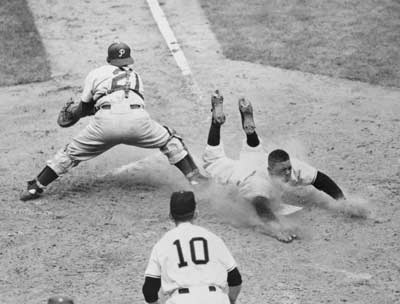
Willie Mays of the New York Giants slides safely into the plate on Wes Westrum’s bases-full single in the sixth inning of the game with the Philadelphia Phillies at the Polo Grounds, New York.


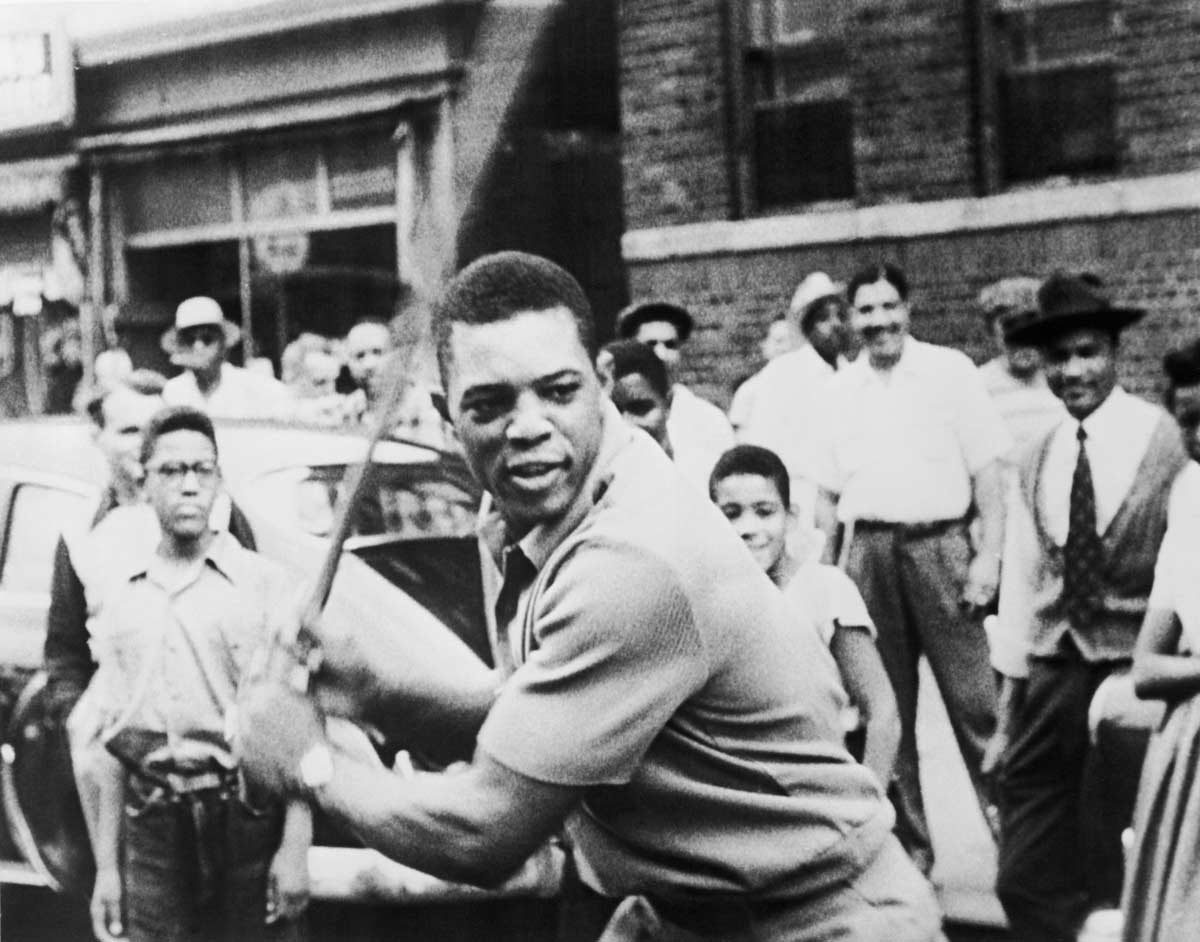
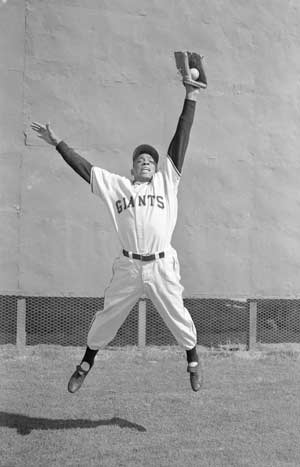
The “Say Hey Kid” made 24 All-Star teams, won two NL MVP awards and had 12 Gold Gloves. He ranks sixth all-time in home runs (660), seventh in runs scored (2,068), 12th in RBIs (1,909) and 13th in hits (3,293). Not to mention that over-the-shoulder catch (see video at MLB.com). But for Our Time Press, his greatness is preserved in black-and-white footage of Mays playing stickball with Harlem teenagers, in their neighborhood.


The film clips reflect how deeply Mays caught the hearts of those young people, as well as onlookers. We can only imagine that his slams on the street where they lived were as remarkable a feat to them, as his over-the-shoulder catch in the bottom of the 1954 World Series game was to the world.
So does Mays, who started his career in 1947 as a teen, resonate today with young people? In an interview with Our Time Press yesterday afternoon, Zabrina Adams offered her perspective on Mays’ importance. Ms. Adams was first interviewed in Spring of 2011 for OTP’s “A Field of Dreams in Bed-Stuy” by then-OTP reporter Steve Witt about a Herbert Von King Park Little League baseball team.

Willie Mays, is shown here making an outstanding catch for the New York Giants.


Witt’s story highlighted Von King Park’s “center of attraction,” the Little League Field, where the Inner City Sports Little League hosted a Minor Division game between the Diamondbacks and the Giants. Ms. Adams, the league’s Minor Division commissioner, told Witt how parents and elder relatives supported “one of Central Brooklyn’s most successful programs (where) several hundred kids from Brownsville, Bushwick, and Fort Greene gathered and encouraged each other, and everyone pitched in.”


Yesterday, Ms. Adams told Our Time Press, “Willie Mays was a historical figure for the African American community. Kids didn’t have that many heroes to look up to. He was prominent and showed his courage to pursue something he loved openly, and he lived a life that sent a message: Don’t stop. Don’t give up. Go after what you want.


“His example encourages parents to push their children to pursue different outlets, do as many things as possible, and realize there’s so much more in life. Even beyond their dreams.” Ms. Adams’ son went on to play with the Brooklyn Knights football team. At Christ the King Church H.S., he played football for four years.


“When you consider the climate where Mays excelled, and the racism that prevailed when we were considered ‘less than,’ it was tough, but Willie Mays pushed forward. He was fearless,” Ms. Adams told Our Time Press, “He showed talent, strength, and endurance. It’s so important for our children to feel they are part of this history. It’s so important we keep his story and legacy alive.”


Mays is being honored today with a Negro Leagues tribute game between the Giants and the Cardinals at Rickwood Field in Birmingham, where he started his career with the Birmingham Black Barons.