
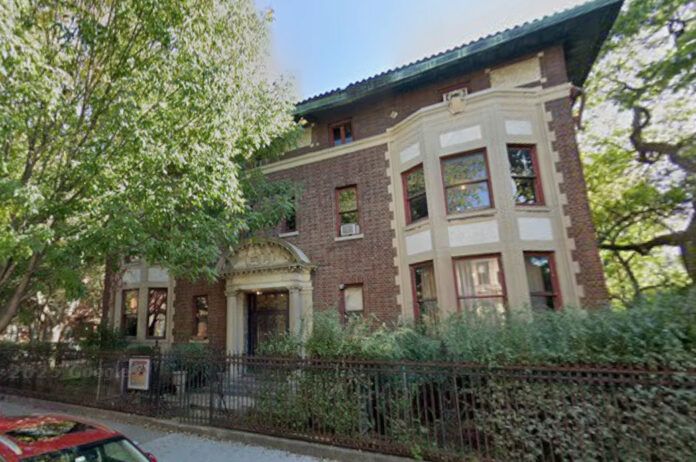
Historically, in black communities, there are sacred spaces. Not just churches, not just schools, but buildings that hold our footsteps, our struggle, our brilliance, and our first victories. Places that provide space for healing, radical thought, youth development, elder support, safety, art, and liberation. 375 Stuyvesant Avenue in Brooklyn is one of those places. And right now, its story stands at risk of being erased.
It is not only the bricks and beautiful architecture that will be erased, but Memories, Legacy, and Community culture. Right now, a group of concerned community members are taking action to prevent this from happening, because they adamantly oppose allowing another piece of Black history to quietly disappear in the name of profit.
This group, led by black women who are former stewards of the Mansion, organizers, and neighborhood entrepreneurs know that at the heart of this story is Dr. Josephine English, a trailblazing Black woman whose life represents exactly why this building matters.
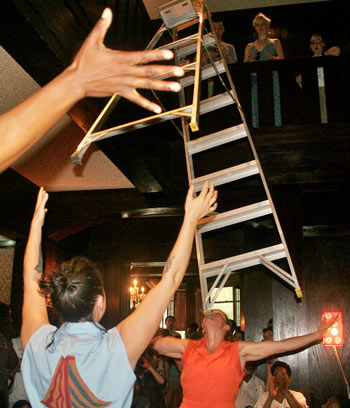
Shanna Sabio founder of Growhouse and BLAC, Monique Scott, Founder of Freebrook Academy, and Karyn Wyche, founder of Gombo Workshop know well the history of this Mansion and the significance of the leadership of Dr. Josephine English and have spent the last few months working with the community and ensuring that the Mansion stays front of mind.
375 Stuyvesant Ave
Represents Black Firsts
375 Stuyvesant Ave was built in 1914. In 1973, it was purchased by Dr. Josephine English. She was a pioneer. She became the first Black woman to open an OB-GYN practice in the state of New York at a time when racism and sexism tried to block every door—so instead of waiting for permission, she built her own. She cared for generations of Black families. She delivered over 6,000 babies, including the children of Malcolm X and countless Bed Stuy residents. She supported mothers. She provided dignified healthcare when many hospitals treated Black patients as afterthoughts.
Beyond her practice, Dr. English purchased multiple buildings including the Paul Robeson Theater at 40 Greene Ave. She believed in art. She believed in paving the way for future young leaders. She inspired artists, doctors, and more. She also put money in the hands of people who needed it. She gave funding to people who were trying to do something good, but repeatedly faced closed doors.
In the 1970’s to 1990’s, the Mansion operated as the Bed Stuy Senior Center run by former director Verda Olayinka. It was a place where elders could nourish themselves, let loose, be creative, and find camaraderie. As she became older, she ensured that the building could continue to support the community, entrusting it to her children.
In 2011, three neighborhood women Shirley Paulino, Ginger Spencer, and Monique Scott came together and re-activated the space. The primary tenants included Freebrook Academy, a small developing private school. Scholar League developed its programming, supported interns and participants with a balance of academic support and athleticism, while supporting outreach for the Mansion.
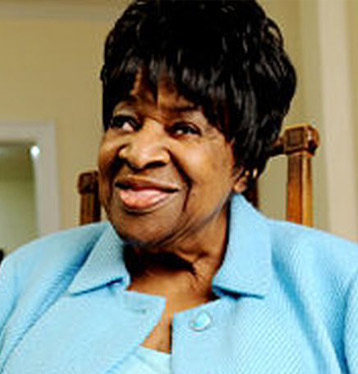
Trailblazer
Then Brooklyn Movement Center joined as the doors opened. Brooklyn Movement Center (BMC), one of the oldest tenants, developed local organizers and advocates. BMC organized youth and adults alike around food justice, education, and street harassment.
The Carriage house was first used by Seasons (Plant Nursery) with pine trees for the holidays. After Seasons, Breadlove, (formerly Breadstuy) created a community gathering space with their cafe, movies, and fun family setting. People would work, meet, and become inspired there. There were community members of all ages connecting and caring for one another.
For some time, Baileys operated out of the space as well with intergenerational afterschool and summer programming. Ancient Song Doula Services found a home at the mansion where there could be focused Doula training, reproductive justice programs, and advocacy. Kweb Collections by Khalilah Williams-Web used space for styling and then short retail projects and then outgrew the Mansion.
Cultural Erasure Comes Quietly
Too often, cultural erasure doesn’t come with headlines. It comes quietly on the wings of a sale; a redevelopment plan; a renovation that removes the story; a luxury conversion that forgets who came before.
In late October of 2025, Freebrook Academy, Brooklyn Movement Center, Growhouse, and Gombo Workshop were informed that the court ordered the Heirs of Dr. English to sell all the properties left by Dr. English in advance of foreclosure due to liens. These parties were subsequently asked to stop programming and remove all their property by the end of the month. The Mansion market price was $4.6 million.
Scott, Sabio, and Wyche recognized the path toward erasure. They knew that to sell the building meant to invite developers with little cultural reverence or community commitment. They solicited over 8,000 signatures for a petition, reached out to multiple public officials, and held the first of two Town Halls where the local community and those connected to the Mansion could discuss next steps. The result was proof that the community opposed this path toward erasure.
Afterwards, there were protest signs, visits to Community Board Meetings, Street Teams, Meetings with elected officials, and bi weekly (weekly at first) organizing meetings, fundraising, and more. “I know that this means very little unless we can garner the funds to buy the building or convince local officials to commit to ensuring that the building ownership will be transferred to the community. This is not like pie in the sky wishing. We have a plan,” says Scott. These women and community members taking action are not doing so without being practical by identifying the resources, strategy, and coordination necessary.
One of the key strategies being advanced to protect 375 Stuyvesant Avenue is placing the building into the BLAC Land Trust (Black Land Access Community Land Trust) – a community land trust created to preserve culturally significant Black spaces and ensure they remain permanently rooted in community stewardship.
Community land trusts (CLTs) are a proven model used across the country to prevent displacement and protect neighborhood assets from speculative markets. In this structure, the land is held by a nonprofit trust on behalf of the community, while the buildings and programming remain stewarded by local organizations and residents. By removing the land from the private real estate market, a CLT ensures that spaces like 375 Stuyvesant cannot be flipped, luxury-converted, or quietly erased over time.
The BLAC Land Trust is being incubated by GrowHouse Design and Development Group, Inc. a nonprofit co-founded by Shanna Sabio and Warner Sabio, Jr., lifelong Brooklyn residents alongside collaborators in the GrowHouse ecosystem, as part of a broader effort to reclaim and steward Black cultural and economic spaces in Brooklyn.
The CLT focuses on spaces in historically Black Brooklyn (Bed Stuy, Crown Heights, Clinton Hill, Fort Greene) to create housing, commercial corridors, and to preserve sites that carry deep community meaning – places where generations gathered, organized, learned, and built institutions that served Black life in the face of exclusion from mainstream systems.
“Too many of our historic spaces disappear the same way,” Sabio explains. “A building that held community memory becomes financially distressed, the market steps in, and the story is erased. The land trust model interrupts that cycle by putting the property under community stewardship so that it cannot simply be sold to the highest bidder.”
For 375 Stuyvesant Avenue, the goal is to bring together philanthropic partners, community investors, and public resources to acquire the property and place it into the BLAC Land Trust. Once secured, the Mansion would operate under a community-informed stewardship model that can include cultural programming, educational initiatives, workspace for local organizations, and spaces for intergenerational gathering – ensuring that Dr. Josephine English’s legacy continues to serve the people she dedicated her life to.
Rather than treating the Mansion as a piece of real estate, the CLT approach recognizes it as something far more valuable: a living cultural institution. Through the BLAC Land Trust, organizers hope to create a permanent structure that protects the building, honors Dr. English’s legacy, and ensures that future generations of Bed-Stuy residents can continue to learn, gather, and build community within its walls.
The Bed Stuy community and those touched by Dr. English and 375 Stuyvesant Ave are not willing to let this culture and history go quietly, they are fighting for this legacy to remain, inspire, and teach the future. As realtors and developers exchange culture for dollars, the community – elders and youth, entrepreneurs and creatives, lose something deeper than property. In this case, they lose the proof that a black woman can lead the way and they can follow their dreams despite the odds. Our youth lose a foundation to stand on.
The team is not moving recklessly, but with a concrete and community informed use plan to address funding issues of the past. With the advice of business and organization leaders, neighbors, legal teams, and more, they have developed a plan that provides event rentals, co-working space, a school, a makerspace, art honoring Dr. English’s legacy, cafe, long term rentals and more.
What Is Next?
The courts and heirs to Dr. English’s estate have found their prospective buyer—Joseph Safdie of JSAF Management, infamous slumlords who have been in the news most recently for depriving Brooklyn residents of heat during this past winter. Joseph himself currently occupies #62 on Public Advocate Jumaane Williams’ “100 Worst Landlords” list.
However, in early 2026 Pinestone Green LLC, a development corporation whose plan to demolish the Mansion’s historic carriage house for luxury condominiums was struck down by neighborhood organizers and the Landmarks Preservation Commission in 2017, has re-emerged to dispute the sale of 375 Stuyvesant and the Paul Robeson Theater claiming that the agreements made with them by the Heirs to Dr. English’s estate entitle them to partial ownership of the properties.
“Their suit against the estate for claim to the properties has put a freeze on the court’s ability to sell them, and with the judge assigned to the case ruling in favor of hearing both sides out, the estate v. Pinestone case and active bank foreclosure have been adjourned to early May 2026.” Wyche explains.
In the meantime, the Bed Stuy community continues to rally around saving the Mansion, stopping the sale, and preserving Dr. English’s legacy. In March, a second town hall meeting was held at the nearby Gladys Books & Wine on Malcolm X boulevard, where community members were brought up to speed on the developing legal situation as well as paths to acquisition and plans for the usage and operation of the Mansion as a community center.
Even in the midst of adversity, Bed Stuy continues to dream of its “Black Utopia”. This tragic tale has unfortunately become synonymous with Black communities across the country: land and legacy is fought to be secured, is carefully cultivated and passed down, and then lost or stolen—most famously in Bed Stuy and Crown Heights, through predatory deed theft—but just because we’ve seen it before does not mean we should allow it to happen again.
Stopping the sale of 375 Stuyvesant Ave can become an integral part in strengthening a new era of communities rallying around their support systems in the face of disenfranchisement and displacement, organizing to save their histories, and staking their claim on the cultures they’ve created in defiance of those who seek to exploit the aesthetics of Blackness for profit.