As we still mourn the deaths of 17-year-old Tyreke Borel and 22-year-old Tiarah Poyau who were shot and killed last week during J’Ouvert, the early morning celebration that precedes the West Indian Day Carnival in Brooklyn, N.Y., many have used the tragic events to hold fast to uninformed positions in regards to the future of the event.
After a grassroots campaign promoting safety during the Labor Day weekend and a coordinated allocation of resources including police, community violence interrupters and clergy there was a tremendous shared sense of disappointment following the shootings. The response from some was to call for a cancelation of the event. This, while offering what appears to be an easy solution, regrettably shows ignorance of what J’Ouvert (pronounced zhoo-vay) is and to the overall problem of gun violence.
First, let us remember that real families are mourning and should be given support and time to grieve. Also, we must recognize the victims who survived are recovering from trauma as well. There will be time to really asses what needs to be done.
When we do reconvene and ask the primary question on whether to “cancel” or “suspend” J’Ouvert, we must ask if we are calling to cancel the organized parade that happens at 5am? If so, therein lies the problem.
There is a misconception that J’Ouvert is an organized event; rather it is more of a celebration similar to how we observe Independence Day and Memorial Day. J’Ouvert is not an event. It literally means dawn or daybreak; for Carnival purposes it means “the morning of.”
But canceling it will leave tens of thousands of people on the street covering several miles in Brooklyn and would require martial law or at minimum imposing a curfew.
This leads to a follow-up question to those who would push forward: where is the call to cancel Memorial Day and 4th of July weekend celebrations? Just as these holidays are embedded within American culture, and cannot be tied to one specific event, J’Ouvert is an integral part of the West Indian community and cannot simply be canceled.
Cancelling J’Ouvert is an overly simplistic response, particularly given the number of deaths we accept on other summer holiday weekends. This past Fourth of July weekend, 20 people were shot in 12 separate incidents in New York. Memorial Day weekend faired slightly better, with one teen killed and 16 others injured. Unfortunately it is almost assured that on these holidays this type of violence will occur. All of these numbers have names attached to them, with families and communities who are torn apart, including those killed on J’Ouvert.
Understand that none of this condones the violence or lives that were lost during J’Ouvert. Quite the opposite, we all share the goal of preventing violence on J’Ouvert, Independence Day and Memorial Day. We also sincerely wish we could bring back the lives lost on the days leading up to J’Ouvert and the days following it. But let us not be insincere by offering a solution that sounds good yet is impractical and does not deal with the body count plaguing these communities.
Someone willing to shoot another in front of a cadre of police in a well-lit area is a danger to us all, and will most likely harm someone in our community
Yes, we must all welcome suggestions to make J’Ouvert morning safe. We must also work to make weekends in the summer safe. At the same time suggestions must be more than just we don’t want someone to die on this particular block at this specific time. It must at least guide us to the goal of not wanting any block to have to deal with this trauma at any time.
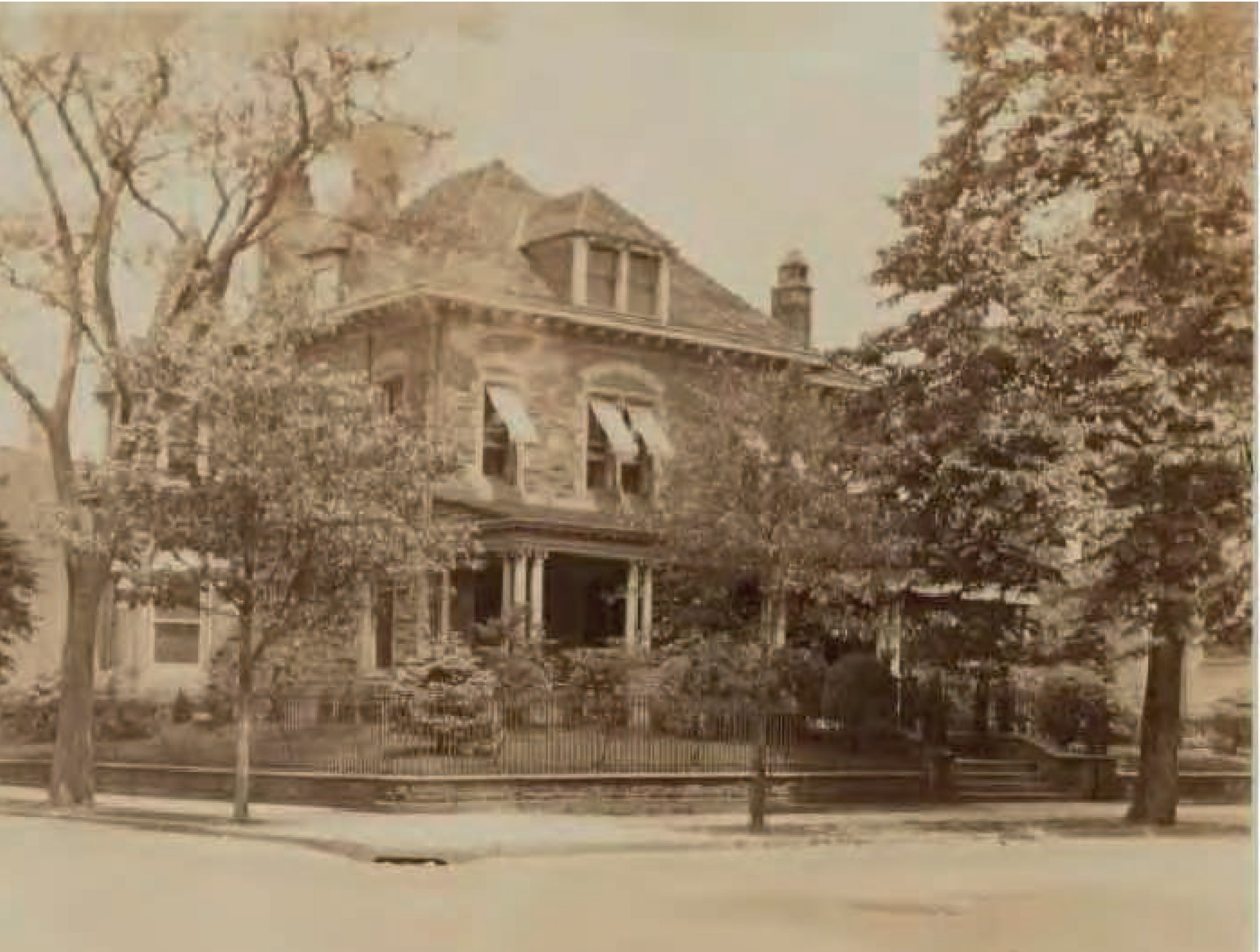
I grew up on the same block as the Dean Sage Mansion. I never knew the name, we only thought of it as the house where the nuns lived. My mother told me how she enjoyed watching them in their habits, walking in a line up Brooklyn Avenue to St. Gregory’s School and Church on St. John’s Place. The surrounding fence and ledge were part of the play world of the kids on the block, among them Clarence, Nathan, Ricky, Junior and myself.
Back then, on the more well-to-do side of the block, there were elegant homes with elaborate woodwork that were torn down and replaced by an elementary school. Opposite the mansion was one of the two Victorian buildings that housed the original Brooklyn Children’s Museum. The curator, Mr. Oakes White, would show us the exhibits and animals and let us use the museum as our water stop, allowing us to quietly come and go as we pleased. That’s also gone and replaced by a large structure that’s modern and energy-efficient.
The proposal for 839 St. Marks Ave. not only leaves the mansion intact, it exposes a back end unseen since the 30’s, and uses the former nun’s residence and garden to provide independent living for adults with mental illness and for low-income adults and families. I remember looking through the fence and watching the nuns walking through the garden and I cannot believe they would object to the space being used to provide increased space for the least fortunate in society as opposed to giving comfort to the comfortable. I think it is a fitting use of the property and the families should be given free passes to the museum and not just during the current free time on Thursdays, 2-6.
The Spirit of the Drum Continues: American-Born Father and Son Installed as Chiefs in Nigeria…A First!
By April Ronee Silver
In the world of African music, there are few American-born percussionists who have mastered traditional drumming in the way that Neil Clarke has. Born in Bedford-Stuyvesant, Brooklyn in 1951, Clarke is highly regarded as a world class musician. He has been involved with traditional African drumming and the percussive arts for more than half a century and has made it his mission to continue the pioneering work of his mentors and trainers. It’s noteworthy that those collective of elders played a pivotal role in bringing African cultural traditions to North America, South America, and the Caribbean in the late 1950’s and early 1960’s.
Ayanda Clarke Photo Credit: Rachel NevilleChief Baba Neil Clarke, Alufopejo Awo of Osogbo photo credit: Jason Miller
To many students and peers alike, Clarke is a living legend. The accolade didn’t emerge over the years simply because he has studied and performed with giants whose artistic mastery helped shaped his own career – giants like “Chief” James Hawthorne Bey and Baba Ishangi – but because of his own impressive accomplishments. Clarke, for instance, has performed on almost every continent, in too many countries to name, and has a discography totaling more than a hundred African-influenced recordings. World renowned artists such as Miriam Makeba and Letta Mbulu (from South Africa), and currently Jazz Master Randy Weston (from Brooklyn) are just a few who have invited Neil Clarke to work or tour with them for extended periods of time. Notably, Clarke had the honor of serving as the resident percussionist for Mr. Harry Belafonte for nearly 15 years.
Much of this percussionist’s success can be attributed to him continuing the ground-breaking work of the talented artists who came before him. Using that foundation, Clarke co-founded Omi Yesa, the oldest African American Orisa music group in the United States. He is also a founding member of the International African American Ballet which, during its time, was considered by many as “the best representation of Africa in America.”
Beyond his musical skills, Clarke is a meticulous researcher on African culture and on the significance of the drum, in particular. When it comes to the percussive arts and the variety of African cultural expressions around the globe, few musicians or scholars have endeavored to make the bold case that Neil has made regarding the relevance and merit of the African drum. His scholarship, research, and most importantly his practical experience is unmatched. He is loved as a dynamic and passionate educator and has created artist residencies and programs for all educational levels, from elementary school to higher education. He has taught master classes at Harvard University, Duke University, Rutgers University, and many other institutions across the United States and internationally. Regionally and nationally, his engaging lectures and drum workshops serve to inspire and educate those who may have thought that the instrument was merely a noise-maker, something to bang on.
All of these achievements combined have helped clear a path for Clarke’s latest accolade from last month. It’s not a stretch to say that Clarke’s latest journey is the achievement of a lifetime. Not long after this drummer was honored with the Jazz Impact award from the Central Brooklyn Jazz Consortium (CBJC) this spring, Neil Clarke made a historic trip to Nigeria (which was not his first time to this West African country). In August, Clarke was installed as a chief in Osogbo, the capital city of Osun State. The highest ranking priests conferred the chieftaincy title upon Clarke in a day long ceremony that was attended by a welcoming group of children, youth, adults, and seniors. Clarke is now Chief Baba Neil Clarke, Alufopejo Awo of Osogbo. There, his long list of accomplishments as a master percussionist were read to the community, first in Yoruba and then in English. His long-standing dedication to the people of Osogbo, and to African people-at-large, was highlighted throughout the program. It was clear that his chieftaincy was birthed from his untiring commitment to promoting African cultural aesthetics. He is now charged with continuing his work but on a higher level. That could mean more frequent drum lectures and workshops; more productions and historic re-enactments such as The Pinkster Festival; and/or more from the Neil Clarke Trio Plus ensemble.
One of the highest ranking priests at the ceremony made a keen observation about the historic event. He informed the audience that, in a sense, Baba Neil (as he is affectionately known) was being honored twice on that day, for his eldest child, Ayanda Clarke, received a chieftaincy title as well.
Like both his parents, Ayanda’s life reflects a full embrace of traditional African culture. But for Ayanda, a GRAMMY® Award winning master percussionist, this journey has been a bit atypical. He was born and raised in Bed-Stuy and went on to graduate from The Dalton School on the Upper East Side of Manhattan and later from Wesleyan University in Connecticut (with a degree in ethnomusicology). While thriving in multi-racial environments during his formative years, Ayanda always identified proudly as an African. Effortlessly, this prodigious-child-turned-chief maintains these values in all aspects of his life. And after 35 years of study, training, and performing around the world, he has emerged as one of the most outstanding percussionists of his generation, according to his peers and elders. Ayanda is now Ajibilu Awo of Osogbo, Chief Ayanda Ifadara Clarke.
After the ceremony in Osogbo, there was a joyful procession in the streets where the new chiefs walked amongst the established chiefs as the drummers kept everything festive. That was followed by a high energy celebration at the compound of Chief Fakayode Faniyi, Agbongbon Awo of Osogbo. Well-wishers of all ages sang, danced, and praised the new chiefs well into the night.
Perhaps the greatest significance here is in how powerfully these chieftaincies demonstrate the unity and sacred bond among people of African ancestry. Hosted by High Priest Ifayemi Elebuibon, Araba Awo of Osogbo, at his palace, the honors also set a precedent. Never before have American-born father and son percussionists been installed as chiefs in Osogbo.
And Osogbo, Nigeria is an ideal place for all this to have occurred. This ancient city hosts the annual celebration of the Osun Festival at the sacred Osun Grove. It is this grove, because of its centuries-old history, that was designated as an UNESCO (United Nations Educational, Scientific, and Cultural Organization) World Heritage site in 2005. It is this city where indigenous African art and tradition are highly revered and protected. It is this sacred place that the Clarke family will continue to honor and support, all in appreciation for its significant role in our ancestral and cultural linage.
It appears that former Secretary of State Colin Powell, a Republican, isn’t the biggest fan of Donald Trump, according to emails accessed by Buzzfeed News.
In the emails, which Buzzfeed reports were sent from Powell to journalist and ex-aide Emily Miller, the retired four-star general called the GOP nominee a “national disgrace” and “international pariah.”
The report:
The remarks came in a June 17, 2016, email to Emily Miller, a journalist who was once Powell’s aide. In that same email Powell also said Trump “is in the process of destroying himself, no need for Dems to attack him. [Speaker of the House] Paul Ryan is calibrating his position again.”
The website DCLeaks.com — which has reported, but not confirmed, ties to Russian intelligence services — obtained Powell’s emails. It may be the latest example of a Russian entity potentially trying to influence the US presidential election — in July, the FBI said it believed Russia was behind the hack of the Democratic National Committee’s internal emails right before they party’s convention.
In the emails seen by Buzzfeed News, Powell also slammed Trump for his role in perpetuating the “birther” myth about Barack Obama’s citizenship and legitimacy as president.
“Yup, the whole birther movement was racist,” the former Secretary of State wrote in an email last month.
Of his comments, Powell told Buzzfeed News, “I’m not denying it.”
According to the internet news platform, Powell also repeated his stance that “there is a certain level of intolerance in parts of the Republican Party,” in an email from May of this year.
Powell had previously expressed that sentiment prior to the presidential election of 2012, but it’s unbelievable just how far the Republican Party has come in proving him right by nominating Donald Trump, a man who has built an entire candidacy on racial resentment.
Powell has yet to officially endorse a candidate for president, but it’s abundantly clear that he will not be supporting this year’s Republican nominee.
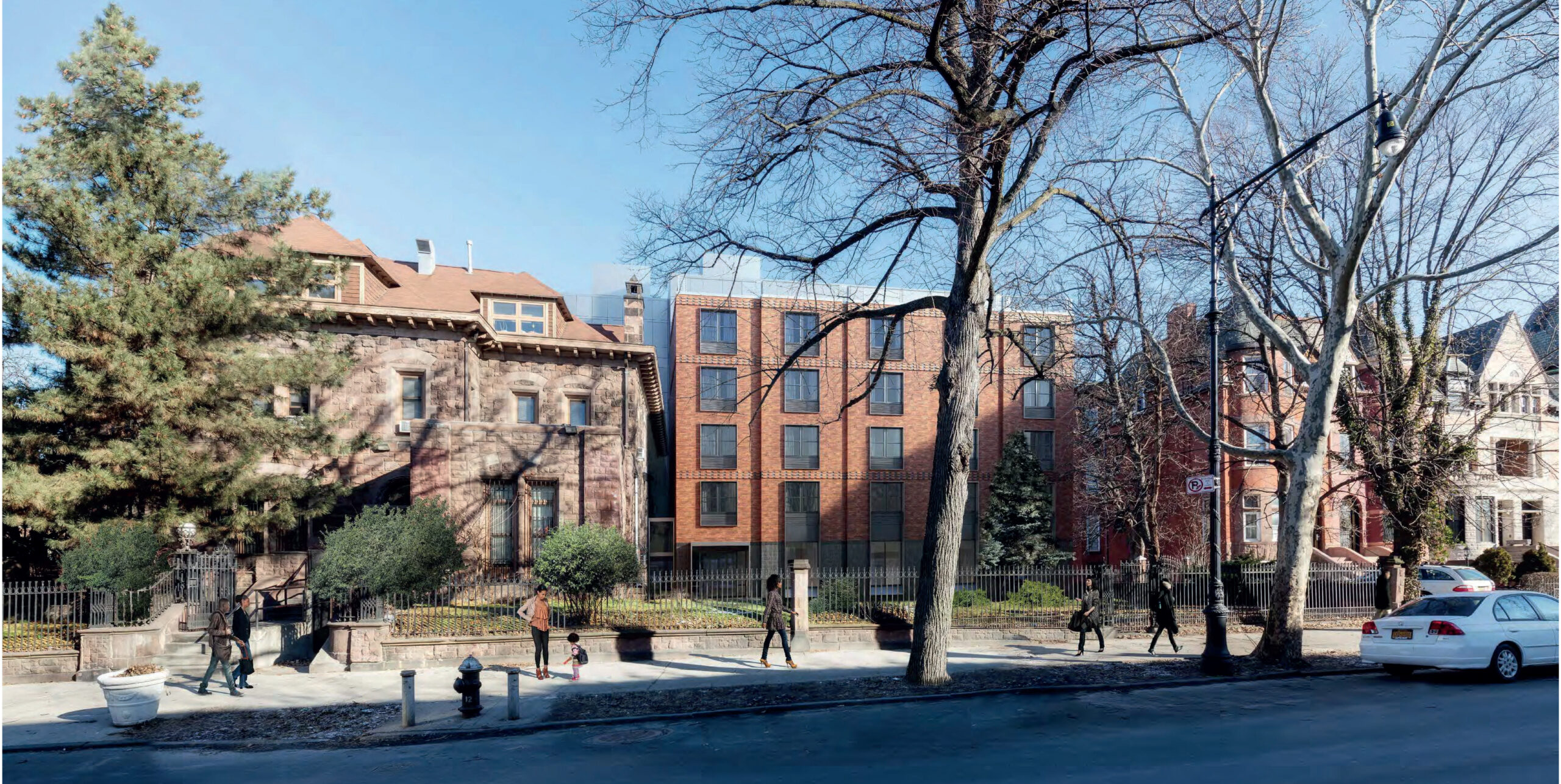
Deemed one of the oldest and most important 19th century mansions in the Crown Heights North Historic District, the Dean Sage Mansion, along with the convent for the St. Gregory the Great R.C. Church and the garden at 839 St. Marks Avenue (Block 1222-Lot 1), has served Brooklyn as supportive housing for mentally ill people since 2005. So why has the NYC Landmarks Preservation Commission (LPC) approved demolishing the convent and tearing up the garden to surround the mansion on two sides with an apartment building about two stories taller and of starkly different architecture? Why has LPC approved the construction of 48 units of affordable housing on this lot when the owner, ICL Real Property Holdings (ICL), has a contract with the NYS Department of Mental Health and Hygiene (OMH) to provide housing for mentally ill people there for 25 years? The deed specifies the lot will be used for this purpose for 25 years commencing October 27, 2005.
Proposed Modification
On March 1, 2016 Crown Heights North Association’s President Deborah Young sent a letter to the Institute for Community Living (ICL) objecting to “attaching a architecturally inconsistent building to the Dean Sage Mansion”. This was followed by the online petition—Petition to Stop Irresponsible Development at one of Brooklyn’s last Historic Landmarks—going live in the same month. The petition’s authors are Robin Burland, member of the St. Marks Independent Block Association (SMIBA), and SMIBA President Shirley Mondesir.
SMIBA and the Crown Heights North Association (CHNA) are joined by Brooklyn Community Board No. 8 (Brooklyn CB8), Crown Heights North Historic District (CHNHD) and Friends of SMIBA in the effort to maintain the current configuration and use of Block 1222-Lot 1.
“839 St. Marks Avenue is not only supportive housing for the mentally ill but provides other services to the community. It has been a place for block association meetings for the past 15 years and the mansion’s garden is used to display artwork during the annual block fair,” explained Shirley Mondesir. Mondesir wants to bring attention to LPC’s decision so that the public is aware of the situation. She said that she wants “to fight to the end with the satisfaction of having made the effort rather than just acquiesce to the decision”. Mondesir believes the average New Yorker has the power to positively affect his community.
Why does LPC forego the area’s historic landmark district designation and the existence of a historic and architecturally distinct building such as the Dean Sage Mansion and the convent? Perhaps, it is the sign of the times. One executive committee member of Brooklyn Community Board No. 8 sees the new LPC Chairwoman Meenakshi Srinivasan “to be unsympathetic to historic landmark districts…Srinivasan stated previously her desire to dump all backlogged historic landmark districts’ applications and have them reapply”.
The fact is 95 properties that were placed on LPC’s calendar before 2010 are part of a fast-track initiative wherein review, comments and disposition will occur between July 2015 and December 2016. Seven of the 95 properties are located in Brooklyn.
Signs of the times include Crown Heights and the rest of Central Brooklyn that has become sought-after residential addresses. Adjacent 4-story brownstone town houses are knocked down to make way for 10-story and taller residential elevator buildings where rent for studio apartments start at $2,000.
Derrick Hilbertz, another SMIBA member, is of the mind that “LPC is under pressure, certainly by City Hall, and likely also by the development lobby, to reduce the backlog of historic landmark district applications to permit more construction, and quickly”, Hilbertz said. “It seems as if LPC has been stacked with people to undermine its own mission.”
Given that ICL has 14 other sites in Brooklyn—a number of which are in Crown Heights—that are not located in a historic district—why trouble 839 St. Marks Avenue? In separate conversations, Shirley Mondesir and Derrick Hilbertz points out the project reduces the number of supportive housing units for the mentally ill if the convent is demolished. Further, tearing up the garden destroys a natural therapeutic venue for the residents. Community leaders ask, “Does OMH agree to these changes?”
Depending on one’s viewpoint, 839 St. Marks Avenue’s passage through LPC’s review and garnering political support to maintain its present use and configuration is disappointing:
On March 22, 2016 Derrick Hilbertz and Shirley Mondesir speak before LPC to oppose the construction of 48 units of affordable housing. Other defenders of the current usage and lot configuration in attendance were Robin Berlind, CHNA’s Ethel Tyus, Brooklyn CB8 Chairwoman Nizjoni Granville, Neville Bryan, Dr. Kinshasha Shabaka and Dr. Rosemarie Phillip. Contrastingly, Flatbush resident Diana Foster spoke in favor of the addition. LPC Chairwoman Srinivasan was in favor of ICL’s proposed changes and requested that the architects return to LPC with modifications of the drawings.
June 23, 2016: Shirley Mondesir, Robin Berlind, Nizjoni Granville, Ethel Tyus and Dr. Shabaka met with City Council member Robert Cornegy and his Chief of Staff Stefani Zinerman to present the case to keep 839 St. Marks Avenue as is and requested a letter of support from CM Cornegy which he agreed to give. However, the support letter was not provided that month.
August 21, 2016: CM Cornegy attended the memorial program for the Crown Heights Riots at Brower Park. Shirley Mondesir talked to Cornegy about the missing support letter. CM Cornegy directed Mondesir to call his office the next day to obtain the letter.
August 22, 2016: Mondesir called CM Cornegy’s district office to be informed that he is out of the office. The staff member who took the call referred Mondesir to a City Council committee; however, Mondesir was not dissuaded from requesting the support letter from her CM.
August 24, 2016: Mondesir called CM Cornegy’s district office again but is able only to leave a message.
This writer approached ICL to weigh in on this land use controversy. ICL Director of Communications Nancy Nisselbaum submitted responses to four questions on September 7, 2016 which follow:
ICL Real Property Holdings has over a dozen land parcels in Brooklyn. What factors led to selecting 839 St. Marks Avenue for construction of 48 units of affordable housing, given the Dean Sage Mansion at 839 St. Marks Avenue is a historic and architecturally significant building, and located within the Crown Heights North Historic District?
ICL evaluated each of its buildings in Brooklyn and other locations to determine whether there were potential development opportunities for supportive and affordable housing. 839 St. Marks Avenue has approximately 31,650 square feet of available development rights, which is what made this site attractive for our project that aimed to include mixed-use housing. We knew going in that any changes needed LPC approval. We have identified other properties that can be leveraged for additional, much-needed supportive and affordable housing and are pursuing those opportunities as well. For the most part, ICL’s properties are fully built out and cannot be expanded.
ICL has worked with a team of talented architects – Dattner Architects and Easton Architects – for upwards of a year to come up with a plan that was sensitive to the context. ICL fully recognizes that this is a very special building and block and is restoring the mansion well beyond what would be required by the LPC (e.g., restoring the interior, returning the front porch, replacing the roofing with slate-like material). We also worked closely with the LPC’s staff to arrive at the plan that the LPC ultimately approved as appropriate to their standards.
Is it true that ICL/ICL Real Property Holdings has a contract with the NYS Office of Mental Health and Hygiene (OMH) to provide [supportive] housing for persons with mental illness at this block/lot for 25 years which expires on or about October 26, 2030? If yes, when did OMH give written consent to the affordable housing construction project?
ICL currently operates 839 St. Marks Avenue as a Community Residence, which is supported by an OMH operating and services contract. The project is also supported by a DASNY bond, which expires in June 2026. ICL has been working with OMH on the planned redevelopment of 839 St. Marks Avenue for over a year. The contract would be reprogrammed and the bond would be paid off upon the new use as permanent supportive housing. The planned financing for the redevelopment has a regulatory agreement that restricts the use to supportive and affordable housing for at least 60 years. The renovated permanent supportive housing will sustain ICL’s mission while offering dignified independent living opportunities for adults with mental illness as well as low-income adults and families. The new public financing will enable ICL to modernize and expand this important housing resource and operate it as supportive and affordable housing for decades to come.
Is it true that the construction project involves demolishing the convent which is used for housing for the mentally ill? If yes, is OMH in written agreement to the demolition?
The LPC-approved plans call for the demolition of the 1930’s extension and that is ICL’s intention. OMH does not separately approve the demolition as this is an LPC matter.
The drawings of the proposed completed project appear to surround the mansion on two sides by a brick rectangular building that is 2 stories taller than the mansion. Will you please explain the decision for choosing the material and building style? Some critics say it is architecturally discordant.
After extensive discussions with LPC’s design staff and two meetings with the Landmarks Preservation Commission, the current plan was approved. The planned new construction is a single building that is fully integrated with the mansion, and it does not wrap around the mansion. Instead, it touches the mansion at one corner and exposes more of the mansion than has been on view since the 1930s. In the new design the mansion will be able to be viewed “in the round”. This site plan shows this skylight glass connection.
Determined to stop the project, Derrick Hilbertz retained an attorney to challenge the LPC decision by submitting an Article 78 against it. An Article 78 is a legal challenge to a ruling from a New York City agency. This document was filed before August 12, 2016 in City Hall: LPC vs. Derrick Hilbertz. It is being amended to add the St. Marks Independent Block Association and Bergen-Kingston Block Association, which are opposed to LPC’s ruling on 839 St. Marks Avenue.