Home Blog Page 8

Beverly Tillery: Rebuilding Grassroots Activism at Brooklyn Movement Center

0

Fern Gillespie


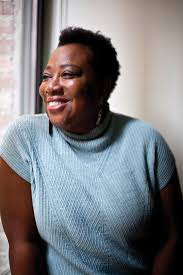
For Beverly Tillery, Interim Executive Director of Brooklyn Movement Center, the origin of her work in social justice organizing began over 30 years ago challenging the food deserts in Brooklyn. Since then, the Washington DC native has earned a national recognition as a social justice organizer in racial and economic justice, LGBTQ+ liberation, gender justice, human rights, and labor.

Prior to joining BMC, she served for nine years as the Executive Director of the New York City Anti-Violence Project (AVP), an organization that empowers LGBTQ communities to end all forms of violence through organizing and education and supports survivors through counseling and advocacy.

A former Deputy Director of Education and Public Affairs at Lambda Legal, she led national educational and advocacy campaigns on discrimination in employment, healthcare, and the criminal legal system, and to build support for marriage equality efforts nationally. Earlier in her career, she worked at Amnesty International, Service Employees International Union (SEIU) 1199 E-DC in Baltimore, MD and ACORN.

A former Johns Hopkins undergrad, she is a renown LGBTQ activist and lives with her partner and her 19-year-old daughter in Harlem. She recently spoke with Our Time Press about the importance of Brooklyn Movement Center and the impact of community organizing.

OTP: Why did you decide to join Brooklyn Movement Center as Interim Executive Director?
BT:
Brooklyn Movement Center has been a really important force and voice. Not just in Brooklyn but across the city. This is a perfect opportunity to support the rebuilding of an organization that has been so important to the community. There are so many issues that the organization has worked on are unfortunately still there. Issues around gentrification and housing.

How do we keep the community affordable for the Black community that has such a rich history there? Issues of food justice and food insecurity. Issues in education and safety, childcare issues. Issues that connect to the Mayor’s agenda around affordability. How do we maintain a Bed Stuy in which the Black community can continue live and thrive and live full lives.

OTP: For over 30 years, you have been a frontline community organizer. Why is this work especially important in Black and Brown New York City communities?
BT:
Community organizing is how communities can come together to demand that those who are making decisions are listening to our voices. That we have a place at the table. That we can shape the way the policies are impacting our communities. Community organizing gives power back to folks on the ground who are actually living the experiences that need to be highlighted.

They are central to all the decisions that are made to our neighborhoods. It’s really vital for people to get engaged in community organizing. To understand that collectively we might not have all the power in terms of financial resources, but we have the ability to shape policy and make decision makers listen to us. To hold them accountable when they are not listening to us.

OTP: You are a well-known LGBTQ activist, are you going to be involving that community at BMC?
BT:
I think that the LGBTQ community is already involved in Brooklyn Movement Center. It’s an organization for everybody in the neighborhood. There are LGBTQ people living in Bed Stuy who care about all the things that or folks in Central Brooklyn care about. I am embracing and making sure there is space for LGBTQ voices at Brooklyn Movement Center. It has always understood that of acknowledging that all of us are impacted by oppression.

OTP: Are you still teaching a course on social justice at Wesleyan University?
BT:
I co-teach a class at Wesleyan on “Theories of Social Change” with a former colleague who attended Wesleyan. It energizes me to have conversations with young people who are thinking about it and struggling with how do they make a difference in the world? So, we expose them to and introduce them to lots of different movement strategies and also lots of different movements. We take them down the path of studying and learning those movements.

And get them thinking about what are the things they want to change right now in our society and how would they go about building campaigns and tackling issues. What are some of the concrete things they can do and how do they learn from the lessons of the movements that have gone on before us. This is a long game. What we’re building now is not only going to affect their future, but will impact their children’s future, and the next generation, and the next generation.

OTP: Under this current anti-diversity administration, are grassroots organizing tactics changing?
BT:
I think we’re going to find new ways of organizing and building power. What it takes to address the rise of authoritarianism, what we are experiencing right now in our country. We have to do in really local ways. It’s what I’m really thinking about and doing at the Brooklyn Movement Center. How that helps the larger movement around anti-authoritarianism.

We really need people in central Brooklyn, who are connected to each other, so they have the power to make change. It needs to be replicated in other communities and across the country. We need to sustain in the long big fight to take down the rise of authoritarianism. It’s much more in people’s faces that we are living in a time, in a situation, in which these issues are really life and death.

There are efforts to disenfranchise our communities. I’m talking about Black and brown communities, LGBTQ communities., immigrants, marginalized people. These are concerted and very organized efforts. That ultimately will result in the harming and trying to erase our communities.


OTP: Why should Black Central Brooklyn residents get involved with Brooklyn Movement Center?
BT:
People are now saying what can we do about it and how can we plug-in? Where can I plug in in a way that feels meaningful and that doesn’t feel too good disconnected from my everyday life. We must remember that these larger efforts that are trying erase us right now started with small organizing in local communities that hammered on about anti-DEI work.

It started locally with people on their school boards, who felt that children were forced to learn these things. Also, local city councils. That’s how we have to build now to fight it and remember it’s been years in the making. Our work has to be really focused. Grass roots organizing about building power and gaining control over the institutions that make decisions about us on a local and national level.

We are looking for people who are interested in being involved in the Brooklyn Movement Center and live and work in Central Brooklyn. That care about the future of Brooklyn’s Black residents and care that people can afford to live in the community and have the resources to thrive and not just survive and be safe.


Brooklyn Movement Center will have community listening sessions in April and May. For more information, connect with Brooklyn Movement Center at www.brooklynmovementcenter.org and on Facebook and Instagram.
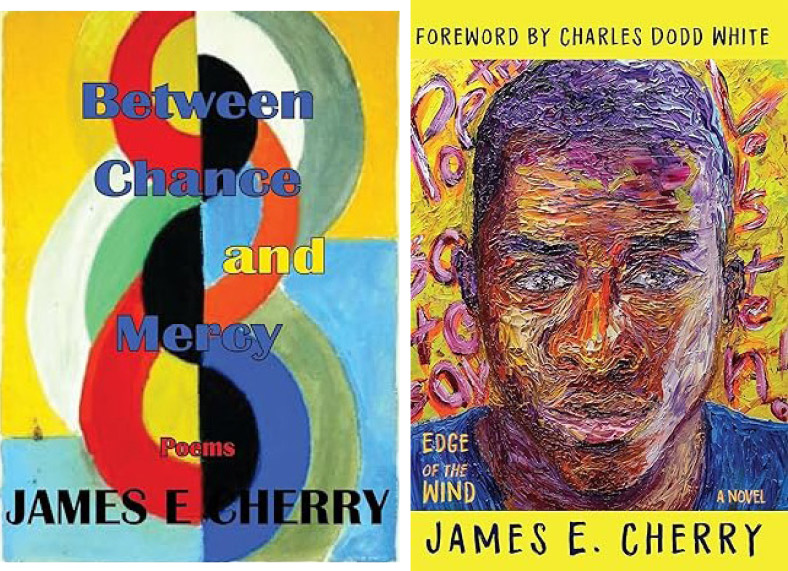
Book Review: The Work of James E. Cherry

0

Reviewed by Dr. Brenda M. Greene
Between Chance and Mercy: Poems
Edge of the Wind: A Novel
By James E. Cherry

James E. Cherry, a socially and politically conscious poet, novelist, and author of Between Chance and Mercy: Poems (Willow Books, 2024) and Edge of the Wind: A Novel (Stephen F. Austin Press, 2022), reminds us that, in the words of the feminist poet, essayist, and activist Audre Lorde, silence cannot protect you.

Influenced by the Harlem Renaissance, the Civil Rights Movement, Black Arts Movement, Black Lives Movement, and the current state of this nation, his writing is a reflection on what it means to be a Black man in these United States of America.


In Between Chance and Mercy, Cherry calls out incidents of social injustice and the effects of racism in the lives of Black people. He invites readers to witness the devastating impact of environmental disasters in“After the Storm;” to cherish the legacy of our fathers in “The Toolbox;” to celebrate Black soldiers who have given their lives in“Freedom (After the 61st Regiment of the US Colored Troops); to remember the Black men and women who have been victims of racial profiling and killing in “I Can’t Breathe” and “Trayvon;” and to recall the ways we were forced to live when COVID dominated our spaces in the poems “Social Distance” and “Love in the Time of Covid.”


An avid admirer of Amiri Baraka, Cherry highlights Baraka as a poet immersed in the blues and bohemia who transitioned from Greenwich Village to Harlem and became more politically conscious after the assassination of Malcolm X. In “The Prodigal (for Amiri Baraka),” the speaker writes:

You left behind a wall of Beats
and Bohemia,
went searching for your life
with nothing
but the poems on your back
and found it
on the doorstep of 125th Street.
Blues people
pulled your coat on corners
of consciousness.
You crafted masterpieces of
their anger, doubts, dreams,
hung them on the wall of a movement.

In Cherry’s novel, Edge of the Wind, the protagonist, Alex, is a mentally unbalanced young Black man who takes a poetry professor and her students hostage at a state community college. Cherry’s prose is poetic; his description of the landscape surrounding the school is layered with metaphors.“The morning wore a cloak of many colors: verdant grasses, maples, dogwoods all ablaze upon the canvas of the earth.”
As the story unfolds, Langston Hughes’ poem “Harlem” comes to mind.

The protagonist Alex watches the morning unfold: “the crispness of the day, the colors in the landscape, and the blueness of the sky reminded him of a dream.” Like the speaker in Hughes’ poem “Harlem,” Alex dreams, and readers may be reminded of what happens to a dream deferred.


The drama of the hostage situation heightens, and Cherry takes readers into the minds of characters in the classroom who include the protagonist Alex who is determined that the instructor teach him to become a poet; a man who has been forced out of his job as he nears retirement; a woman who has been diagnosed with cancer; an aspiring blues singer; and a young man who yearns to become a major baseball league player.

These multiple voices of non-traditional college students reflect on their dreams while being held hostage.
Mrs. Verdell, the classroom teacher, plays a significant role in helping Alex to realize his dream of becoming a poet. She then guides him in the steps he should use when composing poetry.


Let the images in your poem be so stark and striking and compelling that words like ‘frustrated’ won’t be necessary. . . . Employ rich and vivid metaphors and similes in your work to make the language powerful enough to light a fire on the page.
It is clear that Mrs. Verdell understands Alex’s passion and sees him as a young man who desperately wants to be a poet. She does not try to quiet this desire or his dream.


Readers will come away from Edge of the Wind with questions: How do you inspire young people to hold onto dreams? How do we treat mental illness? And how many incarcerated young Black men and women are really victims of a system that does not deeply probe their mental state? This novel reminds us that we must carefully interrogate the nature of mental illness in our nation.

James E. Cherry is the author of four books of poetry, two novels, and a collection of short fiction. For more information, visit www.jamescherry.com

Dr. Brenda M. Greene is Professor Emerita and Founder and Executive Director Emerita of the Center for Black Literature at Medgar Evers College, CUNY. For more information, visit https://www.drbrendamgreene.com

16 State Attorneys General Sue HUD for Unfair Housing Rollbacks as Congressional Black Caucus Warns Against Housing Discrimination

By Charlene Crowell


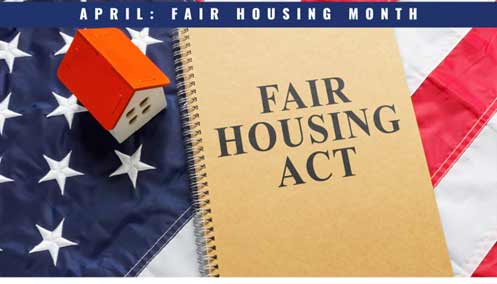
(TriceEdneyWire.com) – For nearly 60 years, April has observed Fair Housing Month. But this year, attorneys general (AGs) from 15 states and the District of Columbia recently filed a joint lawsuit seeking to ensure state and federal agencies will continue to fully enforce the landmark federal Fair Housing Act (FHA), first enacted in 1968 to protect people from unlawful housing discrimination and to punish bad actors.


Filed on March 16 in the U.S. District Court for the Northern District of California, the lawsuit alleges violations of the U.S. Constitution and the Administrative Procedure Act. It also challenges a Trump administration executive order that directs HUD to end consideration of a crucial mechanism for combating housing discrimination: disparate impact.


“HUD, without legal authority, is effectively undermining state laws that offer stronger protections than federal law,” said California Attorney General Rob Bonta, who co-leads the effort. “My fellow attorneys general and I are united in our answer: not on our watch. HUD’s guidance is unlawful and would only roll back the progress we’ve made to keep our families safe from discrimination that limits where they can live.”
Illinois Attorney General Kwame Raoul, the lawsuit’s other co-lead, offered similar comments.

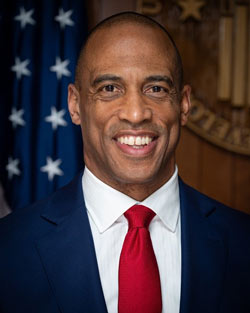
HUD Secretary Scott Turner


“These actions are part of a broader, ongoing effort by the Trump administration to subvert the legal protections our country has put in place to combat discrimination and to tear down the hard-fought progress we have made for civil rights,” Raoul said. “I will continue to fight for fair access to housing for all Americans and for the rule of law.”


In response to the lawsuit, HUD Secretary Scott Turner said, “Leftist state attorneys general have run to a San Francisco courthouse in a desperate attempt to obstruct President Trump’s America First agenda through political lawfare. Their latest stunt will not succeed.”
But for the thousands of people taking time and effort to file fair housing complaints, the law – not Trump’s agenda – remains the valid concern.


According to the National Fair Housing Alliance, 32,321 fair housing complaints were received in 2024, the most recent data available. Of these complaints, only 0.14 percent were processed by the Department of Justice and 4.85 percent were processed by HUD. The bulk of these complaints – 74.12 percent – were processed by only 82 private, non-profit fair housing organizations. Although this year’s approved HUD budget is $77.3 billion, only $86 million is allotted for fair housing, according to the Bipartisan Policy Center.


From the law’s inception, HUD and state and local agencies have operated in partnership through the Fair Housing Assistance Program (FHAP). HUD’s FHAP funds support investigations of housing discrimination complaints, lawsuit filings, staff training, and community outreach.


The landmark law prohibits discrimination based on seven protected traits: (1) race, (2) color, (3) national origin, (4) religion, (5) sex, (6) familial status, (7) disability. Now HUD has threatened to decertify agencies wherever state laws expanded federal protected classes. In such locales, both complaint referrals and funding would be cut off.


But state AGs say the FHA Act and its later amendments establish a floor — not a ceiling — for protection against housing discrimination.
The administration began fair housing rule rollbacks in January, when HUD published its intent to remove its discriminatory effects regulations and leave to courts questions related to interpretations of disparate impact liability under the Fair Housing Act.


That move took its cues from an April 2025 executive order (EO) entitled, Restoring Equality of Opportunity and Meritocracy that states in part, “It is the policy of the United States to eliminate the use of disparate-impact liability in all contexts to the maximum degree possible to avoid violating the Constitution, Federal civil rights laws, and basic American ideals.”


After analyzing the EO, the Congressional Black Caucus issued its detailed opposition saying in part, “Without disparate impact liability, the agencies will now have to prove malicious intent in order to punish bad faith actors, which requires a much higher burden of proof and will lead to more instances of unchecked discrimination.”


Procedurally, proposed federal agency rules must allow a 30-day public comment period. As comments are reviewed, agencies can gain additional insights and opportunities to modify changes before finalization. By the time the 30-day public comment period on disparate impact expired, a total of 607 comments were filed – most in opposition to the change including the NAACP Legal Defense Fund (LDF).


“It’s clear the attacks on disparate impact are part of the administration’s broader efforts to undermine civil rights law,” said Demetria McCain, LDF’s Director of Policy. “Rather than fulfilling the promise of the Fair Housing Act and making housing affordable and accessible to everyone, HUD is abdicating its responsibilities and leaving communities at risk of deep social and economic harm… And we call on HUD to immediately reverse course with its gutting of the regulation and fulfill its duty to enforce it.”


Charlene Crowell is a senior fellow with the Center for Responsible Lending. She can be reached at Charlene.crowell@responsiblelending.org.

Knicks Feast on the Weak, Fold Against the Elite

0

By Eddie Castro


As we go to press, the New York Knicks have just a few games left in the regular season in what has been quite the Rollercoaster year in Mike Brown’s first year as Head Coach. The team is currently on a two-game winning streak albeit their two victories came against short-handed teams like the Memphis Grizzlies and the Chicago Bulls.

The Knicks scored 130+ points in both contests doing what nearly 50-win teams are supposed to do against weaker opponents. The team is currently trying to catch the Boston Celtics for the No.2 seed in the Eastern Conference. The past few weeks for the team have been very strange to say the least.

After their recent 7-game winning streak, the Knicks would go on to lose the next three games in a row all by double-digits against the Thunder, Rockets, and Hornets. All three teams are currently playoff-bound if the season ended today. In fact, capturing a win against the league’s best teams has been a thorn in the Knicks’ side all year. Aside from their down-to-the-wire win in Atlanta on Monday, the last notable win the Knicks had against a team with a winning record was back on March 6, a 142-103 blowout victory versus the Denver Nuggets.


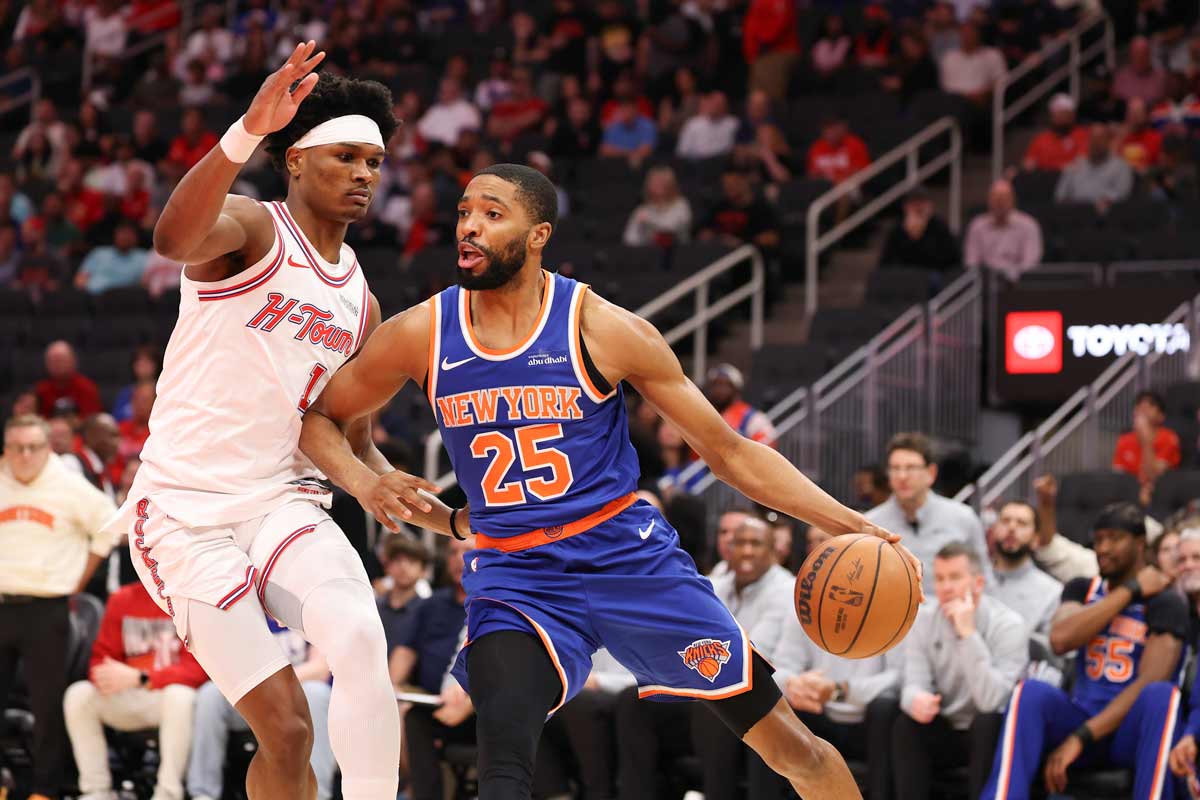
New York currently has a 10-13 win-loss record against top-tier teams with a winning record, particularly on the road in which they are 1-9. A lot of the team’s struggles this year are the inconsistent play of players in the lineup not named Jalen Brunson and OG Anunoby. Players like Karl Anthony-Towns and Mikal Bridges have been inconsistent as both players have not adapted fully to Coach Brown’s system.

There are games where Towns takes just six shot attempts which is very uncanny for a guy who has not only been a six-time All-Star, but a player who can average 20 points and 10 rebounds in his sleep. Getting him into his preferred spots especially in the painted area is going to be a major key if the Knicks plan to make a deep run. The Bridges situation is quite different from Town.

Both are vastly diverse types of players. Bridges has shown that he can score at will if necessary. He did that during his time in Phoenix and he was the “Guy” during his short stint in Brooklyn. This year has been quite the challenge for Bridges adapting to Brown’s system, which is vastly different from what former Knicks Head Coach Tom Thibodeau had in place the past few seasons.

Bridges has not had the season that many feel live up to his potential and of course Knick fans will always have him under a microscope considering New York sent five first-round picks to Brooklyn for him. For what it’s worth, Bridges’ best moments in his career, let alone in a Knick uniform have come in the playoffs, most recent the two huge defensive plays he had had in the ending of the first two playoff games against the Celtics.


The Knicks’ season is coming to an end, and there are many questions about the team’s consistent play. There are days when they look unstoppable led by Brunson. Whether it’s big-time threes or their tenacious defensive efforts by players of the likes of Josh Hart, OG Anunoby or Mitchell Robinson snatching another offensive rebound providing the Knicks with a second-chance possession. Then there are nights preferably against the better teams in the league where the Knicks can go ice cold offensively and have many defensive break downs. For the Knicks to be the Eastern Conference this year, the must put out a consistent effort for 48 minutes.

Let us face it, teams like the Celtics, Pistons and now you can add the Hornets and Hawks to the list of dangerous teams. No matter how great Batman was, he needed his Robin in the most pivotal moments. The question for the Knicks is who’s going to be Brunson’s Robin to battle against the villains in the East? This is without a doubt the best roster the Knicks have put together to possibly have a deep playoff run and perhaps reach the NBA Finals, a feat the team has not been able to reach since the lockout year in 2000. It’s been a Wild run for New York, but the playoffs are around the corner and that’s when we’ll really see just what this team is made of.


Sports Notes: (Baseball) The New York Mets wrap-up a three-game set with the Arizona Diamondbacks tonight at Citi Field. The Yankees will wrap-up their own three-game set tonight against the Athletics at Yankee Stadium. The team will then head to Florida to battle the Tampa Bay Rays to begin a three-game set tomorrow.

OP-ED: Black America’s 2026 Urban Challenges: Mayor Mamdani Case Study

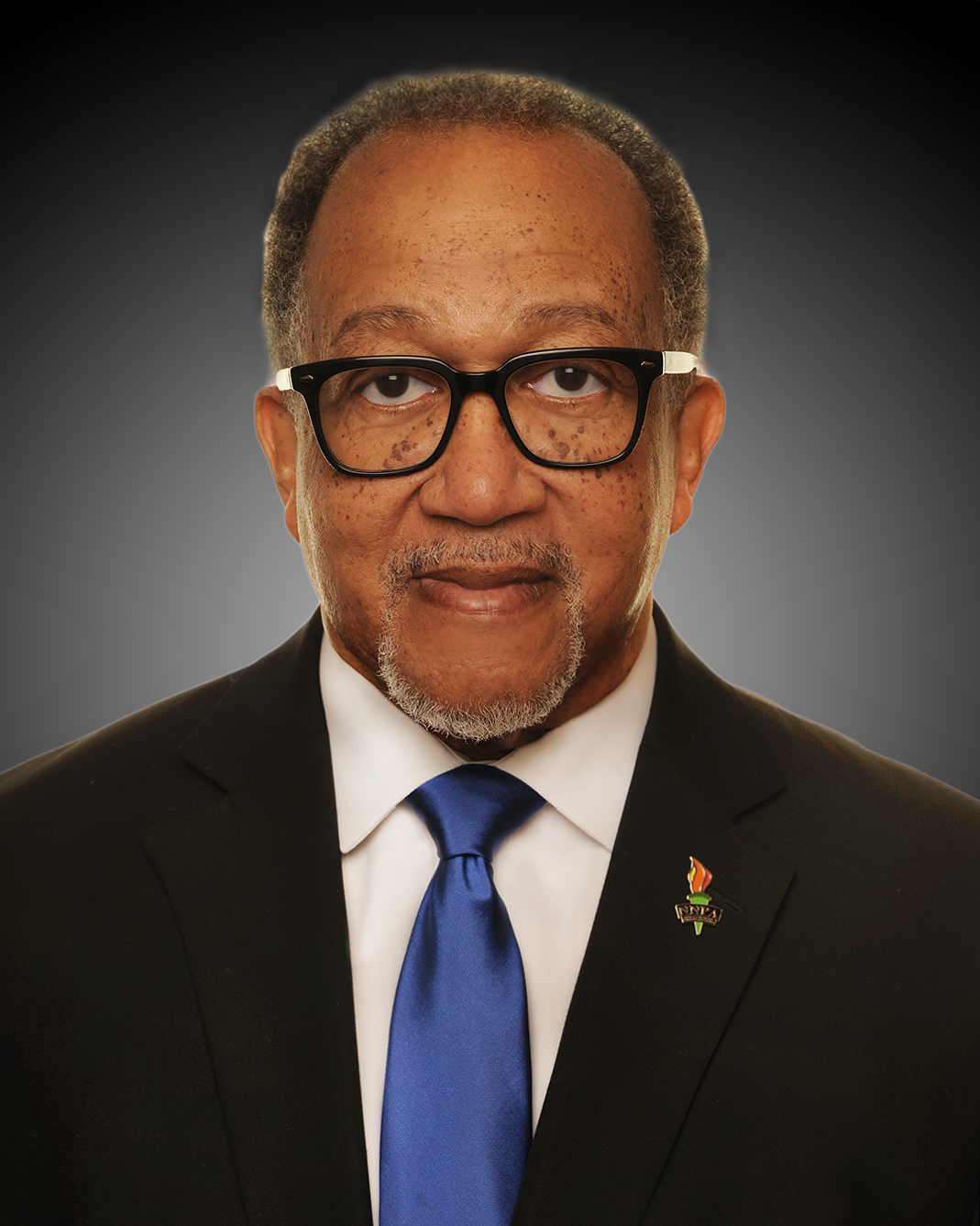
By Dr. Benjamin F. Chavis Jr.

Today, across the United States of America, in some of the largest urban cities, Black Americans are having renewed nightmares about being taken for granted, ignored, and being erased in history and in the public square.

Ethnic cleansing is an insidious form of systematic racism. In response to the increasing “Browning of America,” concerns are raised about the unfulfillment of prior commitments intended to ensure racial equality in municipal politics, economics, and urban revitalization.

New York City is the nation’s largest city. The presence and contributions of African Americans to the city’s centuries-long development and evolution are rarely highlighted or saluted.  The election of Zohran Mamdani would not have been possible without the huge turnout of African American and Latino voters.  Yet the interests of Black America in the nation’s largest metropolis appear to be triaged routinely by the Mamdani Administration.

We are the Black Press of America.  For the past 199 years, since the first publication of Freedom’s Journal in New York City in 1827, we have had to call out those who pretended to be our political allies.  Accountability by those we help to elect is a fair and just demand.

Voters of color – both Black and Latino New Yorkers – backed Andrew Cuomo heavily in the primary, but then ultimately decided to give Zohran Mamdani a chance: overcoming their skepticism on housing, transit, and public safety, and reportedly moved by his affordability agenda.

This trust, on the part of Black voters in particular, may have been misplaced. Why? Several troubling early signs that the new mayor is disregarding New Yorkers of color and treating them like Ralph Ellison’s iconic Invisible Man.

Thus far Mayor Mamdani has appointed no Black deputy mayors.  This is a glaring signal to Black voters who voted for Mamdani on the promise of racial equity in the city’s administration.  Does Mamdani value our insights, lived experiences, or our voices in crafting critical policies in City Hall?

Mamdani was forced to apologize to Black New Yorkers for overlooking the historical contributions of enslaved and indigenous people to building the city when he talked about a city “built by immigrants” in his inauguration speech.

The Mamdani administration is holding a series of “Rental Ripoff” hearings, spearheaded by Cea Weaver, the director of his Office to Protect Tenants, who called homeownership a form of white supremacy.  The mayor is reaching out to help private landlords rather than prioritizing fixing public housing (NYCHA), which has a dismal track record of poor conditions (no heat, year-plus waits for repairs, rampant pests and mold).

90 percent of the more than 511,000 NYCHA residents are Black and Latino, which is part of a larger trend in which 95 percent of Black households in New York State live in highly segregated buildings and/or neighborhoods. NYCHA is the largest landlord in NYC, so the Mamdani administration telling residents to wait even longer for a solution to their long-standing sub-standard living conditions has to be challenged.

The unfolding case study of Mayor Mamdani in New York City reveals that we must keep voting, with record voter turnout.  But after the elections, we must hold mayors and other elected officials accountable.  Mamdani still has time to ensure greater equity in NYC.  But will he do the right thing at the right time?

Rev. Dr. Benjamin F. Chavis, Jr. is President and CEO of the National Newspaper Publishers Association (NNPA) and can be reached at dr.bchavis@nnpa.org