Home Blog Page 754

Q & A with Brooklyn Acting District Attorney Eric Gonzalez

Building upon the legacy of DA Thompson:

  1. What, in your opinion, will be the legacy of DA Thompson within the annals of Brooklyn history?
  2. Ken Thompson’s impact on Brooklyn and on the country was important and historic. Running on a platform of making the criminal justice system fair to all, and with no experience as an elected official, he defeated an incumbent District Attorney who had more than 20 years in office. Voters were appreciative of Ken’s commitment to criminal justice reform and fundamental fairness. They recognized him as a man of integrity who would fulfill his promises of reform when he got into office. And in the short time he had in office, he did fulfill those promises: one of his first acts as the new DA was to start a Conviction Review Unit, which he asked me to set up. Our CRU has to date vacated 22 wrongful convictions and we have another 100 cases under review; the unit has become a model for the country.

Ken created the “Begin Again” program to vacate low-level summons warrants that leave people with outstanding summonses for things like walking a dog without a leash at risk of being arrested and put through the system at any time. That program has since been replicated in Manhattan and the Bronx. I would like to take it a step further and dismiss all summons warrants outstanding in Brooklyn that are 10 or more years old. DA Thompson also kept his promise to stop prosecuting people charged with possessing small amounts of marijuana, noting that these arrests disproportionately affect young Black and Latino men, even though marijuana usage by whites is equal to or even greater than that of people of color. And again, a similar policy was adopted by the city and the NYPD within months. Ken’s legacy will be that he led the city in a new direction in reforming the criminal justice system and proving that we can have far-reaching reforms of the system without compromising public safety.

  1. How do you plan to build on DA Thompson’s legacy?
  2. I worked closely with Ken in creating the marijuana policy and “Begin Again”. I actually took him to the Summons Court at 346 Broadway so he could witness the dysfunction, the long lines, the lack of due process and the mostly Black, Latino and poor defendants. Since his death, I have continued to implement meaningful reform with an eye toward treating everyone fairly and repairing broken trust with the community. One way we are doing that is with our Brooklyn Young Adult Court Bureau, which I was instrumental in bringing to Brooklyn. It is only the second in the country to handle misdemeanor cases of defendants up to the age of 24. It offers risk-needs assessment, counseling and a host of services tailored to the specific needs of this age group, including substance abuse, mental health, anger management, GED and vocational and internship programs. The objective is to set these young offenders on the right path, reduce recidivism and enhance public safety, all while helping them avoid criminal records if possible.
  3. What areas of the criminal justice system are you addressing?
  4. It is important to me that we reduce our reliance on incarceration as the first response in every case, which I believe we can do without compromising public safety. And the system should be fundamentally fair. We have implemented several important new initiatives this year. One is bail reform: The overwhelming majority of the people housed at Rikers Island have not been convicted of a crime, and they are there because they can’t afford the bail set on their cases. This is unfair. I have implemented a new policy that instructs ADAs that in most misdemeanor cases, the default position is not to request bail, but to consent to release. Bail should not be requested when we don’t intend to seek jail time, and must never be used as leverage to obtain a guilty plea. There are some exceptions to this policy of presumptive release, such as cases of domestic violence, sex crimes and those with a history of convictions or bench warrants. But even in these cases, ADAs may still consent to supervised release in lieu of bail in the appropriate circumstances. Brooklyn has a robust supervised release program that started as a pilot program and was so successful it has since been expanded citywide.
  5. What has been the effect of your policy of no bail for most misdemeanors?
  6. The policy was implemented in April. We are still measuring the effect, but already we are changing the assumptions regarding when people should be incarcerated pre-trial. In many of these cases, the defendant is not looking at a substantial jail sentence in the case so it’s not fair for them to be incarcerated while the case is pending.
  7. Can you tell us about the immigration policy that you implemented earlier this year?
  8. We have to stand by our immigrant community in Brooklyn. I am committed to equal and fair justice for all Brooklyn residents, non-citizen victims of crimes and defendants. Now more than ever, we must ensure that a conviction, especially for a minor offense, does not lead to disproportionate collateral consequences, such as the deportation of undocumented immigrants, which can tear families apart and destabilize communities and businesses. Sometimes a plea to different sections of the penal law for the same crime can lead to very different results. If I feel that the appropriate sentence for a minor nonviolent crime is community service or probation, then we should not put that defendant in a position where the actual sentence becomes expulsion from the country. That is why I have hired immigration attorneys who can advise the office on ways to resolve cases that hold people accountable without their suffering enormous and disproportionate consequences for a low-level offense.

I consider the protection of non-citizens to be a public safety issue as well. If people are afraid of being deported, they might not report a crime or be willing to testify as a witness, or they may become easy targets of crime.

Protecting Property Owners, Tenants and Construction Workers in Brooklyn’s Robust Real Estate Market:

  1. Many of our readers are homeowners, what can you tell us about deed theft in Brooklyn?
  2. I am committed to protecting Brooklyn’s long-term residents who have been the backbone of the community for decades, and who were here, dedicated to their neighborhoods, when crime was much higher and others were fleeing for the safety of the suburbs. These homeowners, many of whom are now seniors, have seen their property values skyrocket over the last decade as Brooklyn soars in popularity. At the DA’s Office, we have an active Real Estate Fraud Unit that has been aggressively prosecuting deed theft and other real estate crimes. One of the most egregious crimes over the years has been scammers who promise to help people facing foreclosure by having them sign over the deed to their homes with the promise of clearing the debt and returning the deed. A relatively new scheme involves identity theft where impostors sell other people’s houses. Susceptible properties are abandoned houses as well as family homes with deeds in the name of relatives who have passed. We have investigated recent cases where scammers have transferred or attempted to transfer properties into their own names, forging the property owner’s name and then selling or attempting to sell the property. Here is my advice to homeowners when someone is offering you anything having to do with your home: Do not sign anything unless you have your own attorney look at it first.
  3. How do you learn of these crimes and what can property owners do to protect themselves?
  4. We learn of these crimes a number of ways: we have had homeowners report them directly to our Action Center at 718-250-2340; some are brought to us by attorneys representing homeowners who discover the theft when trying to sell a property or write a will; others are brought to us by the Sheriff’s Department. Since 2014, the Department of Finance automatically notifies owners if a new deed has been filed. One thing every homeowner should do is register with the Automated City Register Information System (ACRIS) so that they are alerted of documents such as a deed, deed-related, mortgage or mortgage-related document recorded on their property. Do this by visiting www.nyc.gov/finance or the ACRIS website, www.nyc.gov/acris and click on the “Recorded Document Notification” link. Finally, even without e-mail alerts, owners should be diligent about tracking routine mailings (tax bills, utility bills, etc.). If any of these stop coming, the owner should check with the city and with the utility companies. The Unit Chief of our Real Estate Fraud Unit, Assistant District Attorney Richard Farrell, speaks at various forums including at a half-dozen immigration forums that we have had in recent years, warning people to protect themselves and informing them of popular scams. And we are available and willing to come out to the community to speak about this important topic.
  5. Do deed theft victims have their properties returned to them?
  6. We have been successful in assisting victims of deed theft to regain control of their homes by obtaining court orders nullifying the forged deeds. In some cases, the victims themselves get court orders in civil actions that they initiated in tandem with our criminal prosecutions.
  7. Do tenants, especially those in rent-stabilized buildings, have any recourse against landlords who are eager to get rid of them and collect soaring market rents?
  8. I intend to hold unscrupulous landlords accountable for trying to illegally evict tenants. I recently met with tenants in Bushwick who stood up to landlords who tried to destroy their apartments in an effort to get rid of them. We were able to convict the landlords, which is a rare thing because of a high legal bar to prove criminality, and as part of their sentence they paid $248,000 in restitution to be shared among tenants who were harassed while they lived in their rent-regulated apartments. I personally handed them the checks last week. The landlords were also required, as part of the plea, to fund a Tenant Compensation Monetary Fund with an additional $100,000 to compensate tenants, to hire an independent monitor who will oversee the defendants’ rent-regulated properties for five years, ensure they comply with the rent laws, and report to the District Attorney’s Office. We are going to continue to protect tenants, many of whom are on low or fixed incomes, who lived and worked in these communities before market rents exploded.
  9. What progress has been made in ensuring that developers maintain safe work sites?
  10. Developers are too often taking shortcuts to cash in on Brooklyn’s lucrative housing market. They are ignoring safety protocols and hiring cheap, unskilled labor to maximize profits, putting workers, passersby and neighboring structures at risk. We recently announced a manslaughter indictment of a developer who ignored repeated warnings that his work site (he was replacing a one-story building in Bedford-Stuyvesant with a five-story building) was unsafe. Unfortunately, a young man who was working on the site died when a wall that had not been properly shored up collapsed. I will continue to bring these cases to hold exploitive developers accountable. Additionally, we have an active Labor Frauds Unit and I am committed to protecting working people and vulnerable populations that are too often cheated, such as the unskilled, the undocumented and recently released inmates who are preyed upon by employers who put them in dangerous work sites, pay them low wages and at times, withhold wages altogether.

Reducing Crime, Keeping Brooklyn Safe:

  1. What is the overall picture of crime in Brooklyn?
  2. As Brooklyn continues to get safer we are focused on the areas with pockets of crime that are at unacceptable levels. We have had our safest year ever in Brooklyn in 2016 and it looks like for the first six months of this year we are continuing to see a drop in crime. And this drop occurred while we were implementing criminal justice reforms like the marijuana policy, summons forgiveness and others that critics predicted would make people less safe. That is simply not true. In 2016, we had reductions in serious crime in 22 of 23 police precincts in Brooklyn. Our goal is to eradicate those pockets of crime continuing in 2017.
  3. How can Brooklynites – whether seniors, homeowners, subway riders, etc.–keep safe?
  4. I know that we all watch the news and see various crimes being reported but I cannot emphasize enough how much safer Brooklyn, and all of New York City for that matter, is compared with the last two decades. And I assure you we are working to further reduce crime. I think many people can avoid becoming a crime victim by using a common sense approach – keep your wits about you, be aware of your surroundings, travel in pairs or in groups when possible, especially seniors. Always make sure your doors and windows are secured. If you believe you have witnessed or been a victim of a crime call 911 – or if it is not urgent, report it to your local precinct or call the DA’s Action Center. At the end of the day, it is about remaining vigilant.
  5. How is your office working with other agencies to reduce crime?
  6. We are working closely with the NYPD on several joint crime reduction initiatives. Our Violent Criminal Enterprises Bureau conducts long-term investigations targeting all criminal activities by gangs such as shootings, robberies, narcotics sales and financial fraud. They also investigate gun traffickers, and have especially focused on those who bring guns from states with lax gun laws for sale on the streets of Brooklyn.
  7. How has the approach to fighting crime changed over the years?
  8. I think a good way to describe what we are doing is being smart on crime. We are focusing on those individuals who we call the drivers of crime. A very small percentage of the population is responsible for the majority of violent crimes committed. We created the Crime Strategies Unit to focus on those drivers of crime and keep them off of the streets. The unit also studies crime patterns and when it identifies an area experiencing a spike in violence, it works with the police to address that. This year I established a Public Housing Crime Suppression Unit to help us drive down crime in NYCHA housing developments which are so often the places where violence driven by territorial gang warfare takes place, disrupting the safety of the majority of law-abiding residents. The unit works closely with our Crime Strategies Unit using data-driven intelligence to root out crime. It also works closely with resident associations, community members, NYCHA and the New York City Police Department to proactively suppress crime and violence, maintain safety and develop trust.
  9. What are your objectives for the future?
  10. I am a career public servant dedicated to keeping the people of Brooklyn safe. I was born and raised in Brooklyn and I am raising my family here. I am committed to justice and would like to continue the reforms that Ken and I began. I want to keep examining the system and improve the way we do things to be more fair and just. I believe that we can continue to make Brooklyn safer while reducing our reliance on incarceration. I became the Acting District Attorney as a result of the tragic death of DA Ken Thompson, who honored me by asking me to be his second-in-command. As Ken’s chosen successor, it has been extremely gratifying to get out across the entire borough and meet the residents of Brooklyn, to visit every neighborhood and hear about people’s concerns. I hope to gain the trust of the people of Brooklyn and continue on as District Attorney for years to come.
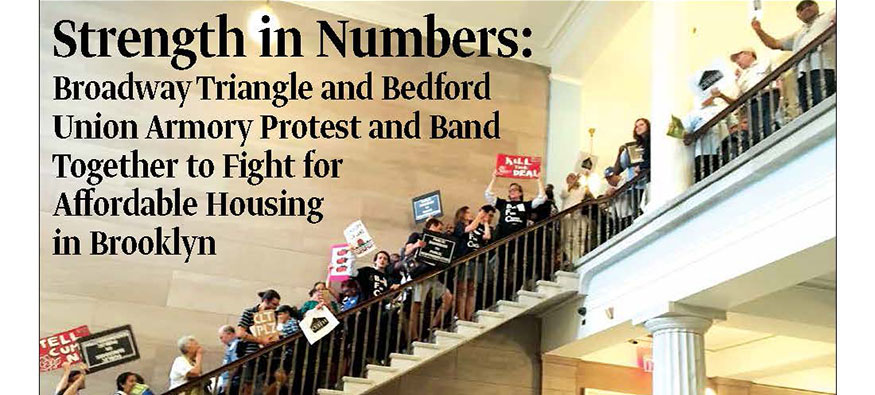


Strength in Numbers: Broadway Triangle and Bedford Union Armory Protest and Band Together to Fight for Affordable Housing in Brooklyn

By Kelly Mena/Kings County Politics

The room was small but their voices were many at Brooklyn Borough Hall Monday as hundreds of local residents and advocates banded together to fight for affordable housing and against displacement across Brooklyn.

“Fight! Fight! Fight! Housing is a Right!” rang out through the halls of The People’s House and echoed into the street.

Hundreds of members from Churches Hundreds of members from Churches United For Fair Housing and Los Suros-Southside United were joined by another hundred members from the Crown Heights Tenants Association and union members from 32BJ who were protesting the Pfizer site (Broadway Triangle), rezoning and the redevelopment plan of the Bedford Union Armory, respectively, at the Brooklyn Borough President’s Uniform Land Use Review Procedure (ULURP) Public Hearing at Borough Hall.

Brooklyn Deputy Borough President Diana Reyna presided over the meeting while Brooklyn Borough President Eric L. Adams was away attending a service in memory of slain Police Officer Miosotis Familia.

The night’s docket included approval for an Emergency Management Warehouse in Bushwick, approval for an amendment to rezone the Pfizer building site and approval for the rezoning of the Bedford Union Armory site.

Year ’round activist: Juan Ramos, Chair
of the Broadway Triangle Coalition,
speaking at a Christmas demonstration
against the Broadway Triangle rezoning
proposal.

The meeting was going as planned until the announcement of the second item on the docket, the Pfizer site rezoning, at which point Juan Ramos, Chair of the Broadway Triangle Coalition, stood in protest of the submission presented by The Rabsky Group.

Ramos forced the meeting to an abrupt close, refusing to silence himself and claiming the Broadway Triangle rezoning plan serves to discriminate and push out the local Black and Latino communities of South Williamsburg.

“On behalf of the hundreds of people who came out today to this gathering, we firmly object to this meeting even taking place because we feel that this plan went through our community in a way that was unfair to our community, and the way the community saw no plan at the community board meeting. We firmly oppose the development at the Pfizer site and the Bedford Union Armory. Both of which stand to displace thousands of long-term community members,” said Ramos.

Alex Fennell, CUFFH Network Organizer (young woman) with Ausar Burke, community organizer Photo: Bernice Green

Other protestors within the community room then joined in chanting “El pueblo unido, jamas sera vencido”, or “the people united will never be defeated”, as peace officers started forcing protestors out of the chambers.

City Council member Antonio Reynoso(D) stood united with the protestors and supported the actions of Ramos at the meeting.

“They made the decision to shut this [public hearing down] and it looks like they did shut it down. We had over 400 people from just Community Board 1 here fighting the Pfizer site [rezoning plan] who took time out of their day to volunteer and be out here marching and fighting. Do 400 voices like that have any value? We will see through this process. I work on behalf of the constituents of my district and if they decided that shutting down the meeting was the best thing to do, then that’s the right thing to do,” said Reynoso.

Reynoso went on to note the lack of diversity in Community Board 1, claiming that the board isn’t “demographically representative of the community” of South Williamsburg. On June 21, CB 1 issued a recommendation of approval for the Pfizer rezoning plan with conditions. Reynoso’s district doesn’t include the Pfizer site but he has been a staunch opponent of the proposed plan, committing himself to blocking the project on the grounds of its lack of community input and affordable housing units.

The Rabsky Group, who were set to make a detailed presentation to the Borough President’s Office, were blocked in their efforts for the evening. However, they are still committed to the project and believe it is in the community’s benefit to move forward with their plan.

“While we are disappointed that a small group of people insists on stifling public discourse, we will encourage key decision-makers to follow the lead of those closest to the site – the Community Board – which voted overwhelmingly to support this plan. We will continue to make the case that this project, which will create 287 new affordable apartments, and create well-paying jobs and open space, is right for the long-vacant site,” said Tom Corsillo, spokesperson for The Rabsky Group, the developer of the Broadway Triangle Project.

For the protestors, the early close to the meeting was a small victory in a bigger battle for the vacant lot. The project has been a contentious issue for local officials and community advocates, who have been fighting over the site for nearly a decade. Community members, citing discrimination issues, sued the city for an earlier 2009 rezoning plan they claim favored the Hasidic community over Blacks and Latinos. The case has yet to be resolved in the State Supreme Court and is in ongoing negotiations.

Shekar Krishnan, the lead attorney in the case, praised the united front presented by the Broadway Triangle Community Coalition and other local residents and advocates.

“This was the community making their voice heard: about how we will not accept, at all, these discriminatory housing plans being pushed through that will only exacerbate residential segregation in an area that has been segregated for far too long.”

Krishnan continued, “The city cannot approve a rezoning like this because it is then culpable also in violating fair housing laws, in perpetuating this pattern of housing discrimination in the Broadway Triangle. Our community is not going to accept a plan like that where, truthfully, there was no plan for this area and what was produced will only force out more residents of color in one of the most heavily gentrified neighborhoods in New York City,” said Krishnan of Brooklyn Legal Services, Corporation A.

The plan, located on a two-block section site between Harrison and Union Avenues, from Walton Street to Gerry Street, and will include 1,146 mixed-income residential units, 65,000 square feet of neighborhood retail, a half-acre of public open space and 405 parking spaces.

Though the protestors against the Bedford Union Armory redevelopment project weren’t able to make their voices heard within the chamber, they did join in with the Broadway Triangle Coalition to demand the “deal be killed” and lent their numbers to the cause.

United on the steps of Brooklyn Borough Hall before the meeting both groups chanted together, “If we don’t get it, shut it down!” and shared in their plight for affordable housing.

“They got a developer in Williamsburg in the Broadway Triangle called Rabsky. You know what I call them, ‘Rob-sky!’ You know why, because they are trying to rob you and me! Robbing us of our home! Robbing us of our jobs! Segregating us! Injuring us! Displacing us! These guys are as bad as BFC!,” said Bertha Lewis, affordable housing advocate and founder of The Black Institute.

Lewis went on to state, “We want to show that our coalition is growing and that more and more groups are coming on. We also want to send a message to other groups around the city. Brooklyn is ground zero and if they can do it to us, they will do it to you”.

Adams will be expected to make a recommendation for approval or denial within the coming weeks for both the Pfizer site rezoning and the Bedford Union Armory. In the past, Adams has already stated his lack of support for the Bedford Union Armory deal but will be expected to make a formal recommendation during the ULURP process.

After Adams, both plans will move onto the City Planning Commission and then to the City Council for a final vote.

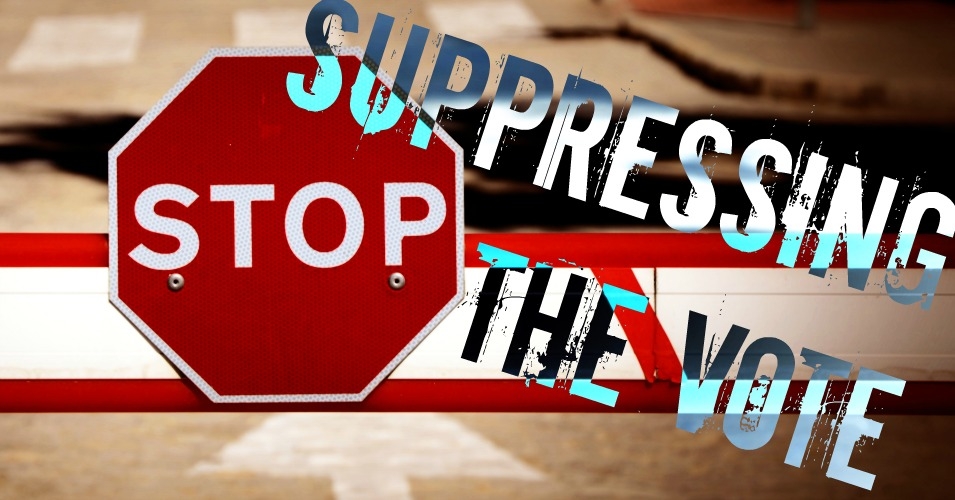
Making Voting Accessible to the People

By Akosua K. Albritton

On May 11, 2017, US President Donald Trump signed an executive order to establish the Presidential Advisory Commission on Election Integrity. POTUS calls it the “Voter Fraud Panel.” With increasing numbers of American citizens choosing not to vote in either local or national elections, would it not be more appropriate to establish a Presidential Advisory Commission to Drum Up Voters instead?

The Center for Law and Social Justice Founder and Executive Director Esmeralda Simmons said very recently, “The United States has the lowest turnout of all the developed nations.” Using New York–the Empire State–as an example, there may exist significant voter apathy or voter hostility. The New York State Board of Elections maintains databases on registered New York voters by county, election district, Senate District, Assembly District and Congressional District. The latest information is as of April 1, 2017.

Besides segmenting the voters by party affiliation, there are the statuses of “active” and “inactive”. The statewide total of registered voters is 12,376,815, of which 859,226 are “inactive”, which leaves 11,517,589 “active” voters. Given New York State’s total population is roughly 19.865 million people, there are over 7.5 million who chose not to register to vote. Adding the “inactive” voters to that figure brings the number to roughly 8.359 million New Yorkers choosing not to participate in the election process.

So, New York State counts 11,517,589 “active” voters to participate in local, state and national elections. The reality is a drastic drop in voting from the national level to the lower levels of government. We will use the 2016 56th Assembly District race between Ms. Tremaine Wright and Ms. Karen Cherry as an example. There are 88,821 total registered voters of which 79,718 are designated “active”. The voting results for the 2016 NYS Assembly election here were 3,679 for Tremaine Wright and 2,577 for Karen Cherry, which means 6,256 voters came out to the polls in this Assembly District. That is approximately 8% of local registered voters.

This reporter invited Center for Law and Social Justice Executive Director Esmeralda Simmons, League of Women Voters of New York City President Catherine T. Gray and The Black Institute Executive Director Bertha Lewis to respond to five questions relating to voter participation. Ms. Lewis was unavailable to comment.

Why is New York State and New York City falling short in voter turnout?

Simmons: Actually, New York City is a little lower than normal but on par with the 25-year trend in US low turnout. There are several options that aren’t being used to reverse the situation. The options include same-day registration and voting, online voting and absentee ballots. It’s strange that we’re not doing online voting. Then there is the one-and-a-half-year wait between changing party affiliations and voting.

A cause of the low turnout is that people believe that their vote does not matter because the politicians are bought. The American public is aware of the millions of dollars being distributed to have various policies carried forth.

Gray: People have feelings that their vote does not count. For example, in Brooklyn, Council member (CM) Lewis Fiedler conceded to Storobin after several recounts and lost by a few votes, something between 17 and 21 votes. Registration takes work, New York has restrictive voter laws. Some examples include New York issues voter identification cards and only hard-copy registration forms are acceptable. There is the reality of a dislike of the candidates from which to choose and lack of information on what the candidates stand for or the impact of an issue in the voter’s daily life. Lastly, gerrymandering is problematic because it results in an advantage to one party.

What rules do you believe suppress the vote whether at the point of registration, processing or at the polls?

Gray: Voter identification laws, the closing of voter registration sites and the reduction of the hours that voters have to register [are just a few to mention].

Simmons: Every single step of the way there is suppression of the vote. Registration is difficult. Enrolling into a party is difficult. Voting is difficult. (Dr. Simmons is referring to what actually occurs at local polling sites wherein voters form or go into existing long lines to sign a register, collect the paper ballot and another to submit the paper ballot or go into a voting booth.)

There are unnecessary barricades. There are nine bills up in Albany now to improve the voting process that passed the Assembly but haven’t passed the state Senate due to the Republicans and the Independent Democratic Caucus. I would say these nine bills are designed to make New York State a voter-friendly state.

Will you suggest some measures for immediate implementation to correct this situation?

Simmons: Online registration and that registration occurs automatically. Assembly member Latrice Walker is sponsoring the New York State Voter Protection bill and federal Voting Rights bill. This federal bill would cover Asians and Latinos in this part of the nation. The Native American Voter Protection is included in other parts of this nation.

Gray: Early voting: 37 states have early voting; automatic voter registration: six states have automatic voter registration; electronic poll books: 34 states instituted electronic poll books and no excuse absentee voting.

What role can pre-collegiate schools assume to form strong positive impressions about voting and increase the probability of doing so as an adult in New York City’s youth?

Gray: I suggest education on why their votes/voices are much needed in the political dialogue and semester-long civics class. The League of Women Voters of the City of New York has voter registration drives in Green Markets around the city. [Schools may contact] the Voter Services Unit to get trained…to run their own drives.

Simmons: 1) High schools could ramp up voter registration of 17-year-olds who would turn 18 by the end of the year or before the November election. 2) Do mock elections within the classrooms, starting in grammar school. Get the students aware and informed of the voting process, the candidates and their issues. This would have a tremendous impact on teens.

Right now, it is our seniors who are the most reliable voters. Young voters have a poor record of turning out to vote in New York State. It somewhat improved during the 2016 Presidential Election.

Will you share your views on the formation of the Presidential Advisory Commission on Election Integrity which President Trump calls “Voter Fraud Panel”?

Simmons: I think it should be called The Voter Suppression Panel. There is scant evidence of voter fraud. This Presidential Commission is an attempt to manufacture fraud, thereby having an excuse to create and suppress voter registration. There is no validity at all in its creation.

The fraud we should be concerned about is people tampering with voter registration. Look at the New York State and New York City Board of Elections: the company that supplies the software to manage the voter databases was compromised by people in Russia—not the Russian Government. However, neither the NYC Board of Elections nor NYS Board of Elections have made a statement about the compromise. This silence concerns me.

A comment from this writer is that when called on June 10, 2017 to obtain voter statistics for this story, the NYC Board of Elections employee fielding the call stated the computer system had been down since July 7, 2017 and had not received a estimate of when the computer system would be operational.

Gray: From the National League of Women Voters:

President Trump’s ‘Election Integrity Commission’ is an unnecessary distraction from the real work to protect against foreign hacking and interference in our electoral process. The real purpose of this effort is to justify President Trump’s false claims of widespread voter fraud in the 2016 election.

“This effort begins with a deep credibility gap. Commission members’ views on elections are well-known and have been discredited as political ideologues with dangerous agendas. This is part of a wider effort to suppress the vote, keep certain politicians in power and undermine our elections by spreading falsehoods.

“Today’s announcement is just another distraction from the real issues and we expect that any findings or recommendations from this commission will only be used to make it harder for people to vote in the future.

“The White House is attempting to bury this commission at a time when the nation and Congress are consumed with this administration’s own Russia scandal.

“The real problems with our electoral system are the suppressive laws that prevent eligible voters from access to the ballot. False claims of voter fraud have been used to push through more restrictive voting laws including voter ID, proof of citizenship requirements and limiting or reducing early voting opportunities.

“This administration is laying the groundwork to usher in widespread discrimination in our systems of voting and manipulate our democracy.”


WHAT’S GOING ON

By Victoria Horsford

David Dinkins

I attended the 90th Birthday Celebration for David Dinkins, 106th Mayor of the City of New York, which was hosted by Mayor Bill de Blasio and First Lady Chirlane McCray at Gracie Mansion on July 10. Like the honoree, it was an elegant affair attended by about 400 members of the city’s gorgeous mosaic.   Muckady mucks and A-listers were ubiquitous. Public Advocate Letitia James, Rev. Al Sharpton, Rev. Herbert Daughtry, former Congressman Charlie Rangel, Medgar Evers College President Dr. Rudy Crew, Columbia University President Lee Bollinger, hedge fund titans Ed Lewis and Frank Savage, UNCF’s David Walker, Dr. Janet Bell, NYC Small Business Services Commissioner Gregg Bishop, Harriet Michel, Dr. Hazel Dukes, Attorney Wallace Ford, Faye and Karl Rodney, Jeanne Parnell, Dinkins’ wife Joyce and their children David and Donna were in attendance.   Dinkins was in rare form, a happy but humble 90-year-old public servant who conjured up nostalgia for the Dinkins era. I thought about that memorable night on November 8, 1989 as I raced to the Sheraton Hotel to celebrate our first Black mayor-elect and all of the hope and promise that his new office would embrace. I also recommend the highly informative Dinkins memoir, “A Mayor’s Life: Governing New York’s Gorgeous Mosaic”. Happy Birthday Mr. Dinkins.

NEW YORK CITY

Phillip Banks

NYC Mayoralty: According to the NY Daily News, Philip Banks, 54, former NY Police Department’s Chief of Department, is considering a NYC Mayoral run.  Banks, a 28-year veteran of the NYPD who left after being appointed first deputy commissioner, which was the result of some falling out with then-Police Commissioner Bill Bratton. Last year, he was named in a federal probe about local businessmen who traded gifts for favors with NYPD brass, which seems to be commonplace in NYC. However, he was never questioned by the feds. Married with three children and living in Queens, if Banks decides to run for the mayoralty, it would be the first for a current or former NYPD member.

The jury is still out about the fine print that accompanied the final NYS Legislature vote in favor of extending NYC Mayoral Control of the schools. There were concessions made that satisfy the charter school advocates, which have not been formally disclosed by Mayor de Blasio’s office. More on the school deal next week.

NEWSMAKERS

Joy Ann Reid

The May issue of Essence magazine’s cover story, “100 WOKE WOMEN: How We Rise Up, Speak Out and Push the Movement Forward”, is a good read which includes bios and pictures of the elite, distaff multigenerational group.  Essence says that “these women are change agents as part of a new guard of activists, educators, journalists, thinkers and creators who are more than conscious – they are ever-vigilant about creating a nation in which we all have seats at the table”. Joy-Ann Reid, Shonda Rhimes, Tamika D. Mallory, Opaki Tometi, Sybrina Fulton, Linda Sarsour, Brittany Packnett, Michelle Alexander, Viola Davis, Yamiche Alcindor, Ava DuVernay, Kamala Harris, Michelle Obama and Maxine Waters are some of the 100 WOKE WOMEN, an informative essay.

 CARIBBEAN JOURNAL

The twin island nation of Antigua/Barbuda is poised to host the Caribbean’s biggest summer carnival, which runs from July 28 to August 8. This year is also the 60th Anniversary of the Antigua Carnival, a multigenerational tradition which taps into the island’s culture. Since its 1957 debut, the Antigua Carnival had a twofold purpose. It was a tourist attraction and a commemoration of emancipation from slavery. Calypso, Antigua’s indigenous music, dominates the carnival season, as does its carnival royalty, its dukes and lords, steel pans and drums. Beauty pageants, music competitions and nonstop cultural immersion are some of the Antigua Carnival trappings.  [Visit Antiguacarnival.com]

NY Carib News will host its 22nd Annual Caribbean Multinational Business Conference in the American Virgin Islands from November 9-12. Conference brings together more than 300 American business and corporate leaders, elected officials and thought leaders to brainstorm and develop strategies for economic and social empowerment and how to make the world a better, more sustainable place. E-mail rodneyfaye@aol.com or call 212.944.1991. 

SUMMER 2017

The David Dinkins Tennis Club is held every Saturday from July 1 to August 19, from 9 am to 11 am, free for children under 10 years old, at the tennis courts of Fred Johnson Park, aka The Jungle, on Seventh Avenue at 150th Street in Harlem. Balls, racquets and books are provided. An initiative to honor David Dinkins, tennis enthusiast, and to honor the late Dr. Bernadette Whitley Penceal, co-founder of the DDTC, with her husband and educator Sam Penceal. [Call 917.301.9303 to register]

Danny Simmons

Danny Simmons and the Rush Philanthropic Arts Foundation presents ART FOR LIFE: Midnight at Oasis, its annual summer fundraiser in Bridgehampton, NY on July 15 at 6 pm. The benefit calls attention to the Rush Foundation’s mission and the fine artists who bring its work to light. Gala honorees are Sanford Biggers as the Art for Life 2017 featured artist, as well as Essi Eggelston Bracey, Chuck D and Bozoma Saint John. Cocktails, dinner and a special performance by “The Color Purple’s” Tony Awardee Cynthia Rivo are some of the benefit highlights. [Visit artforlife.rushphilanthropic.org]


Alyson Williams

JAZZMOBILE 2017 is up and running at a NYC park near you. The music festival runs from July 5 to August 25. Music virtuosos Wycliff Gordon, TK Blue, Solomon Hicks, Alyson Williams, the Jimmy Heath Big Band and Allan Harris are among Jazzmobile 2017 headliners. Jazzmobile was founded in 1964. For more info, visit jazzmobile.org.

HARLEM WEEK 2017 is a “Celebration of Harlem Continuum, its past, present and future” which includes a series of family-friendly summer events, indoor/outdoor music concerts, an Upper Manhattan Auto Show, a film festival, a health fair, 5K run sporting event, fashion shows, youth programs, an HBCU Fair and Expo, and much more. Harlem Week 2017 opens on Sunday, July 30 with its “A Great Day in Harlem” marathon festivities at the US Grant National Memorial Park and continues through Saturday, August 26.  Launched in 1974 as “Harlem Day”, a one-shot promotion to bolster the spirits of local residents, Harlem Week has evolved into a monthlong cultural festival which attracts millions of people, locals and tourists.  Harlem Week is a permanent fixture in the NYC summer festivals calendar.  [Visit Harlemlocal.com/harlem-week]


RESTAURANT WEEK/NYC Summer 2017 runs from July 24 to August 18. At participating restaurants, lunch is $29 and dinner is $42, which includes a three-course meal. For Restaurant Week directory, visit nycgo.com/restaurant-week.


A Harlem-based management consultant, Victoria Horsford is reachable at Victoria.horsford@gmail.com.

NATIONAL BLACK PROGRAMMING CONSORTIUM SCORES NEA GRANT

National Endowment for the Arts Award, one of 1,029 new grants supporting arts projects nationally, to help back ‘AfroPoP’ TV series, 360 Incubator + Fund

NEW YORK (June 27, 2017)—The Harlem-based National Black Programming Consortium (NBPC) has been awarded funding from the National Endowment for the Arts (NEA) for its signature public television series and incubator for broadcast and Web series. The NEA is the only funder in the country to support arts activities in all 50 states and five U.S. jurisdictions, helping Americans to connect with creativity.

The grants of $40,000 for the 10th season of AfroPoP: The Ultimate Cultural Exchange and $45,000 for the third 360 Incubator + Fund are among the more than $84 million that NEA Chairman Jane Chu has approved to fund local arts projects across the country in its second major funding announcement for fiscal year 2017. The NEA will make 1,195 grants ranging from $10,000 to $100,000. This is the sixth year the NEA has supported AfroPoP and the third year it has supported NBPC’s 360.

“The arts reflect the vision, energy and talent of America’s artists and arts organizations,” said NEA Chairman Jane Chu. “The National Endowment for the Arts is proud to support organizations such as the National Black Programming Consortium in serving their communities by providing excellent and accessible arts experiences.”

“The NEA is vital to the American artistic landscape. It is a key partner in ensuring that diverse stories about the Black experience are shared with the American public, building tolerance and inclusion,” said NBPC Executive Director Leslie Fields-Cruz. “Through its vital support of our 360 Incubator + Fund, the NEA is also helping to train the next generation of African-American storytellers, ensuring that these accounts continue long into the future.”

Produced by the National Black Programming Consortium (NBPC) and distributed by American Public Television (APT), AfroPoP is the nation’s only public television series of documentaries on contemporary life, art and culture across the African Diaspora. Hosts of the series have included Idris Elba, Anika Noni Rose, Gabourey Sidibe, Wyatt Cenac, Anthony Mackie, Yaya DaCosta, Jussie Smollett and Nikki Beharie.

The 360 Incubator + Fund is a competitive initiative offering producers development funds of between $50,000 and $150,000 for their innovative pilots of broadcast and Web series or transmedia projects.

To join the Twitter conversation about this announcement, please use #NEASpring17. For more information on projects included in the NEA grant announcement, go to arts.gov. For more information on the National Black Programming Consortium, visit www.blackpublicmedia.org, or follow us on Twitter @BLKPublicMedia, or on Facebook.