Home Blog Page 71

Noel Pointer’s Music Mentoring Legacy Lives

Fern Gillespie
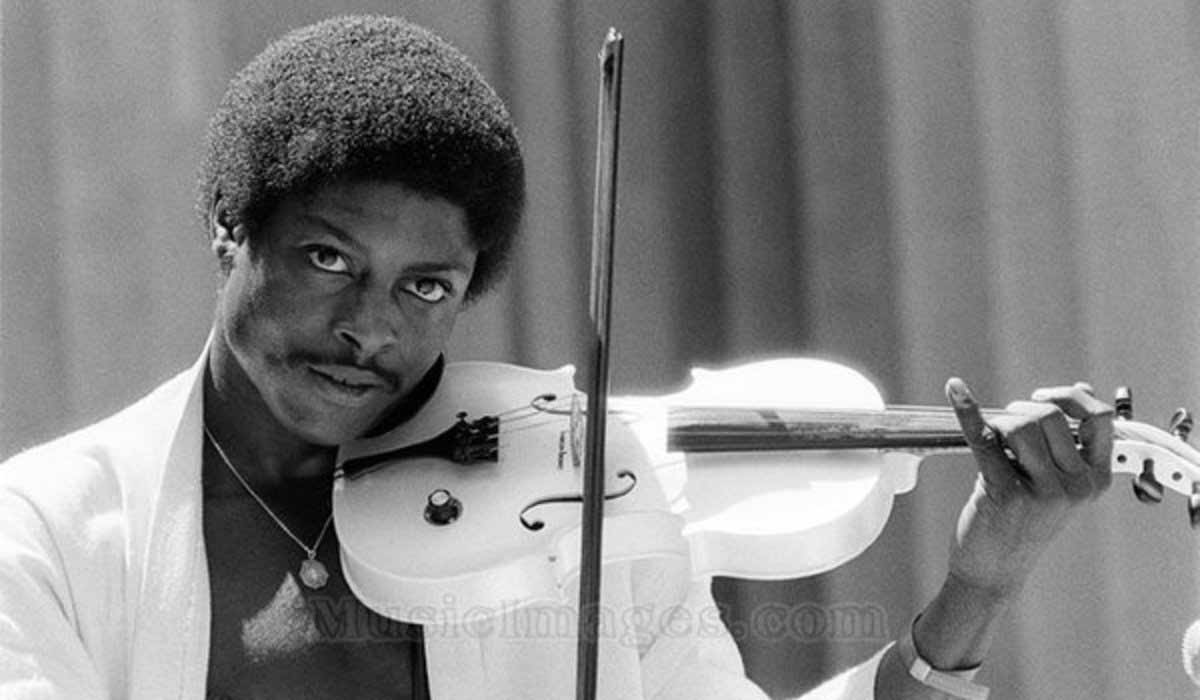
Noel Pointer burst on the music scene in the 1970s as a young brilliantly talented jazz violinist. The Brooklyn-born musician had studied classical violin at the High School of the Performing Arts and at the Manhattan School of Music. By 1982, radio stations from jazz to R&B were playing his melodic smooth jazz-fusion sound.

His albums All My Reasons and Direct Hit were nominated for Grammy Awards. His debut album, Phantazia went platinum and five albums were listed on Billboard’s jazz chart. As a freelance musician, his credits included the Apollo Theater Orchestra, Love Unlimited, Dance Theater of Harlem Orchestra and Broadway shows, including Guys and Dolls and Dreamgirls.


A community activist, Pointer was an early advocate for the African Burial Ground in New York. He also received special citations from the United States Congress, the US Congressional Black Caucus, and the African National Congress. In 1994, at age 39, he suddenly died of a stroke leaving his wife Chinita, a school administrator, a widow with three children.


In 1995, with the support of the Pointer family, Chinita Pointer founded the Noel Pointer Foundation. It continues to provide music instruction and performance opportunities for Black and Hispanic children ages 3 to 18 in New York City public schools and out of school programs. Over the years, its music professionals have worked with 37,000 children in 50 Title 1 schools and daycare centers who have learned to perform with a string musical instrument. Headquartered in Bed Stuy Restoration Plaza at 247 Herkimer Street, the Noel Pointer Foundation also holds professional music classes for children and adults.


The Noel Pointer Foundation’s young alumni have been accepted at New York City’s specialized middle schools and high schools and have gone to America’s prestigious colleges like Juilliard, Berklee College of Music, Harvard, Yale, Howard, Syracuse, Duke and Amherst. Many have returned as mentors and counselors to work with the young students.
Our Time Press spoke to Chinita Pointer, President and CEO of the Noel Pointer Foundation about the impact of introducing Black and Hispanic youth to the world of string music.

OTP: What makes The Noel Pointer Foundation program unique?
CP:
Our program is unique because the majority of our students are of color. That’s what I wanted. My goal was to make sure students of color received quality music education.

OTP: The Noel Pointer Foundation specializes in teaching string instruments to Black and Hispanic youth –violin, viola, cello, double bass, piano and classical guitar. Why is it more complex to learn to play string instruments?
CP:
Noel used to always say that learning how to play a string instrument is the hardest instrument. There’s coordination and the dexterity of having to play a string instrument. Not only are you having to use your hands and your eyes, but you have to be able to be able to have one hand holding the bow. The other hand is holding the instrument.

Then you have to be able to read the music and have your hands positioned in a way where the intonation is clear. You’re doing three things at one time to create a piece of music. You have to make sure that the bow is in a certain position so that it’s not out of tune. Because if you don’t have that bow in that certain position, that’s when you hear that screeching noise. It just sounds horrible. So intonation is very important, and technique is very important when it comes to playing the string instrument.

OTP: The Noel Pointer Foundation Players are known as an elite chamber ensemble of Black and Hispanic youth. What has been the impact of the NPF Players?
CP:
Our Noel Pointer Foundation Players are the string ensemble that we send out to represent the Noel Pointer Foundation. They played at Lincoln Center, Carnegie Hall, political inaugurations and special events. They have performed all over the New York metropolitan area. We’re looking forward to bringing in more students to join that ensemble.

Not only do they do classical music, our kids are learning different genres of music. We do a Fiddle Fest concert every year. What we do for our Fiddle Fest concert is choose a theme. Last year, our theme was Motown, so the kids got to play pieces from Motown. Which was amazing. This year, we’re doing musicals that were on Broadway. They get a kick out of it.

The music is familiar to familiar with some of the kids. It gives them an opportunity to play not just play classical, but to be able to play the other genres of music, which makes it more exciting.

OTP: What type of life skills do children learn by performing music?
CP:
Classical music is our foundation because it’s very important that our kids learn how to read music. It’s important that they understand intonations, understand that they know technique and poise. It builds character, learning how to play with your peers. Even if it’s a duet or a quartet or a larger ensemble, you have to listen to your peers while you’re playing. You’re able to blend those sounds and that melody and able to project.

You’re building character and developing your self-esteem along the way. We do studio recitals every year as well so that kids can perform solo. It’s difficult getting in front of the audience and speaking and performing. I don’t care how old or young you are.

It’s a bit nerve-wracking. This is something that really helps our children develop their skills and their confidence by playing and performing in front of other people. For the studio recitals, its small audience that’s made up of their parents and special guests that takes place in on our campus at Bedford Stuyvesant Restoration.

OTP: The Noel Pointer Foundation teaches string musical instruments to youth ages 3 to 18. How do you teach music to a 3-year-old?
CP:
They say you have 20 minutes to work with a three-year old. If you keep them engaged, you’re great. You must have games. You must have exercises and repetition in order to keep their attention. They learn quickly and they retain information quickly. It has to be hands on. So, if you have a tambourine or you have a piano, you can use clapping and stomping exercises and singing exercises.

They love to sing songs that they are familiar with. You do those things that they are familiar with in order for you to teach them. Then you incorporate the instruments and different sounds, counting and numbers. You’re telling a story as well. You have “Twinkle, Twinkle” and they do it in variations. They start off with one note and then they’ll develop that one node into a song. There are other variations that our teachers use.

It’s pretty much the Suzuki method in terms of teaching them the fundamentals of music. Then as time goes on, you want to teach them what the notes are because the notes are very important. Posture is very important, technique is very important, intonation is very important, and having fun is really, really important.


The Noel Pointer Foundation has received a $11.6 million grant from New York City to restructure a firehouse in Cobble Hill as it’s new headquarters. For more information on the music program, visit www.noelpointer.org

Poets Speak of Impact of War on the Youth

For Gaza’s Children: Black, Brown, and Jewish Writers and Poets Speak Out
Marc Lamont Hill, Haki R. Madhubuti and Keith Gilyard, Editors
Third World Press Foundation, 196 pages, 2025.

What they don’t tell you
What’s not recorded for news
Is the screaming drowned
Out by bombs that rattle bones
Burst eardrums steal parent’s breath.

  • -From “Gaza Suite” by Tony Medina

The words from Medina’s poem “Gaza Suite” make clear how the sounds of war remain etched in the minds of parents who have lost their children in the Gaza War. Marc Lamont Hill, Haki R. Madhubuti, and Keith Gilyard, editors of For Gaza’s Children: Black, Brown, and Jewish Writers and Poets Speak Out (Third World Press Foundation, 2025), have compiled a powerful collection of essays and poems that provide personal stories, observations, and historical documentation of the impact of the war in Gaza on its children.

As Haki Madhubuti states in his opening essay, “Dare to Accurately Name the Horror of Gaza,”, “. .. it is often the poets who bring clarity, who warn us to think beyond the possibility of one’s own life and death.”
For Gaza’s Children is divided into three sections, each section containing approximately twelve essays and poems depicting the complexity, history, impact, and harrowing details of the war on the children of both Israel and Palestine.

As of May 25, 2025, more than 50,000 children have reportedly been killed or injured since October 2023. Images and videos of burned and dismembered children are part of a list of unimaginable horrors that we continue to witness as we view the effects of this war. ‘Unimaginable horrors’: more than 50,000 children reportedly killed or injured in the Gaza Strip.


Hill’s essay “The Denial of Palestinian Childhood,” reminds readers that the attacks on Gaza’s children must be measured in trauma as well as in death and injury. He adds that schools, universities, libraries, museums, and monuments have all been destroyed in what is in essence a conscious attempt to erase the history and culture of the Palestinian people.

Lara Friedman, president of the Foundation for Middle East Peace (FMEP) opens her essay by describing how in July 2014, an Israeli gunboat fired at a group of Palestinian boys playing soccer on a beach outside of the hotel where she was staying. She notes that the Israeli response following the investigation of this attack was “the attack process in question accorded with Israeli domestic law and international law requirements.”


Award-winning novelist, short story writer, poet, and activist Alice Walker reminds us that women are very much a part of the resistance in the Gaza War. The speaker in her poem “Talking to Hamas” expresses surprise upon learning that the dreaded terrorist that she has been told to fear is actually Huda Naim, a woman with whom she has spoken with about wanting a sane world for the children. Brian Gilmore, a poet and public interest lawyer posits the complicity of the United States in prolonging the war.

He points out that the last 75 years of Palestinian history would have been different if America had pulled back its support.


After being called an anti-Semite by a Jewish person for comparing the situation in Israel to the Native Americans in the United States and citing it as settler colonialism and ethnic cleansing, Gilmore conducted research by academic historians and scholars who knew the history of the conflict.

His findings and his friendships with Palestinians, Jewish people, and others affirmed his belief that many young people from various backgrounds: Jewish, Palestinian, Arab American, Asian, and Latino were in support of the Palestinian struggle for equal justice, peace, and human rights in the world.


A major outcome of this book is that support of the struggle in Palestine does not mean that one is anti-Semitic. Hip hop activist and writer Talib Kweli Greene reiterates this in his essay, “The Sin of Neutrality or the Tail of the Mouse.” He states:
As hate crimes against Jewish people to continue to rise, I will continue to stand in solidarity with Jewish communities against all anti-Jewish ideology and action. I also continue to support a free Palestine and I always will. These are not mutually exclusive concepts.


Scholar, poet, and short story writer Keith Gilyard also emphasizes this in the Addendum of For Gaza’s Children. He argues that we must recognize anti-Zionism and anti-Semitism as false equivalents. Expressing opposition to the Zionist project espoused by people such as Herzl and Ben-Gurion is to reject a policy and proposal of conquest.


This is not anti-Semitism. Speaking out against mass deportation of immigrants who have followed the rules of law, denying free speech to immigrants and all Americans, and critiquing Islamophobia, and xenophobia does not equate to anti-Semitism. People who speak for the children and against the war in Gaza have refused to be silent and are human rights advocates for peace and social justice throughout the world.


For Gaza’s Children: Black, Brown, and Jewish Writers and Poets Speak Out is a poignant reminder of our responsibility for the children from a diverse range of scholars, poets, and public intellectuals.

Dr. Brenda M. Greene is Professor of English and Founder and Executive Director Emeritus of the Center for Black Literature at Medgar Evers College, CUNY.

36th Annual Symposium Postponed – Why?

By Segun Shabaka
The 36th annual NAKO Symposium on Community, Culture and Struggle will be postponed due to the noncooperation of the principal of Public School 287. No adequate reason was given for the refusal to allow the use of the school’s auditorium after several months of numerous attempts to contact her in person, by email as well as by phone.


Too many of these new jack, recent arrivals to principalship are individuals who don’t understand the turbulent history and struggles of the 1960s and 70s that made it possible for them to be in the positions they occupy.

They act like gangster overseers running ‘massa’s’ plantations. Some even think and act like they are ‘massa.’ Part of those struggles were to open up these community schools for community use; ‘bringing the community to the schools and the schools to the community.’

Those that fought in those struggles for ‘Community Control’ understood the lack of institutional space available to our oppressed community and marginalized neighborhoods coming out of the Holocaust of Enslavement.

Not much has changed. Unlike many other communities, Africans in America still do not own or control in any significant way the space we occupy. Thus, our labor today is much like the old plantation system, it goes towards enriching and empowering others to our own demise.


The Symposium has served as the intellectual component of the International African Arts Festival (IAAFestival) which will celebrate its 54th year July Fourth weekend. The exact dates of the IAAFestival are Friday, JULY 4, thru Sunday, JULY 6, 2025. For information and to support the IAAFestival go to www.iaafestival.org.


The symposium has brought together major Black thinkers from across the world to share their ideas and solutions around the myriad issues facing the world African community. Scholars, intellectuals, activists, leaders and experts from various fields discuss vital issues that affect the African American and African diaspora communities using the 7 areas of culture as defined by Kawaida Philosophy which was developed by Dr. Maulana Karenga (History; Religion/Spirituality and Ethics; Social Organization; Political Organization; Economic Organization; Creative Production {art, music, literature, film}; and Ethos- psychology or Collective Consciousness). In these times of mass uncertainty, suppression and racism Black people need to be dialoguing more than ever.


The Symposium has been tentatively rescheduled for September of 2025, and will take place at Brooklyn’s Restoration Plaza. The exact date and location will be announced within the next few weeks. For further information contact: nakoinfogroup@yahoo.com or 718-789-3264.

Congo & Rwanda Sign Peace Deal

By Jeffery Kazembe Batts
IG: @Kazbatts
On Friday, June 27, 2025, Rwanda and the Democratic Republic of Congo signed a U.S.-facilitated peace agreement to end the fighting between the two African nations and stimulate regional economic cooperation. President Trump sat and was flanked by VP Vance, Secretary of State Marc Rubio, Congolese Foreign Minister Thérèse Kayikwamba Wagner, and Rwandan Foreign Minister Olivier Nduhungirehe, as they all stood at the White House ceremony.

After referencing his recent peacebuilding skills in India & Pakistan, Israel & Iran, Serbia & Kosovo, Trump proclaimed, “in the months ahead my administration will continue to work closely with all the parties in this deal and ensure the agreements are fully taken care of, and your gonna do what’s in the agreement. We’ll say – you better do what’s in the agreement. If somebody fails to do that, BAD things happen!”


Earlier this year, Rwanda-backed rebels M23 seized the regional capital, Goma, the city of Bukavu, and two airports. This troop movement created new urgency, and Qatar sent envoys to both capitals to urge de-escalation.

Congo President Tshisekedi and Rwanda President Paul Kagame then met in Doha and established a working committee, supported by the Trump administration.

Before the White House signing inside the State Department, Secretary of State Marco Rubio hosted the foreign ministers of the DRC and Rwanda in advance of a planned July visit to Washington by the two nations’ respective heads of state.


With dozens of different armed groups, especially M23 in Congo, postdoctoral researcher at the University of Pretoria in South Africa, Dr. Samuel Igba explains that “over the years, there is a disconnect between the high-level peacebuilding, such as the Qatar & African Union-led processes, and the grassroots peacebuilding on the ground.”


Queens Representative Gregory W. Meeks, Ranking Member of the House Foreign Affairs Committee, issued the following statement “I welcome today’s announcement of a peace deal between the DRC and Rwanda, which includes a prohibition of hostilities in eastern Congo and an agreement between both parties to facilitate full humanitarian access and the return of refugees and internally displaced persons.

For too long, Congolese civilians in the east have been subjected to displacement, extreme violence, sexual abuse, and intimidation by armed groups. This brutality must end immediately.’’


Exploited by many for generations, the Congo Basin is rich in vital minerals such as cobalt, copper, diamonds, gold, tantalum, and tin, which are necessary for various industries, including electric vehicles. 70% of the world’s cobalt is mined in this part of Africa. Millions have died in what some consider the world’s most deadly conflict area since World War 2.

According to reporter Hariana Veras, the only accredited African-based reporter to the White House who participated in the ceremony, President Tshisekedi is “very thankful for Trump’s involvement and the Congolese people are now hopeful.”

To many, the Trump administration and the U.S. government’s overt focus on assisting in peacebuilding and economic integration in the “heart of Africa” is a welcome, serious, yet curious development in world affairs.

Free Agent Frenzy 2025

0

By Eddie Castro
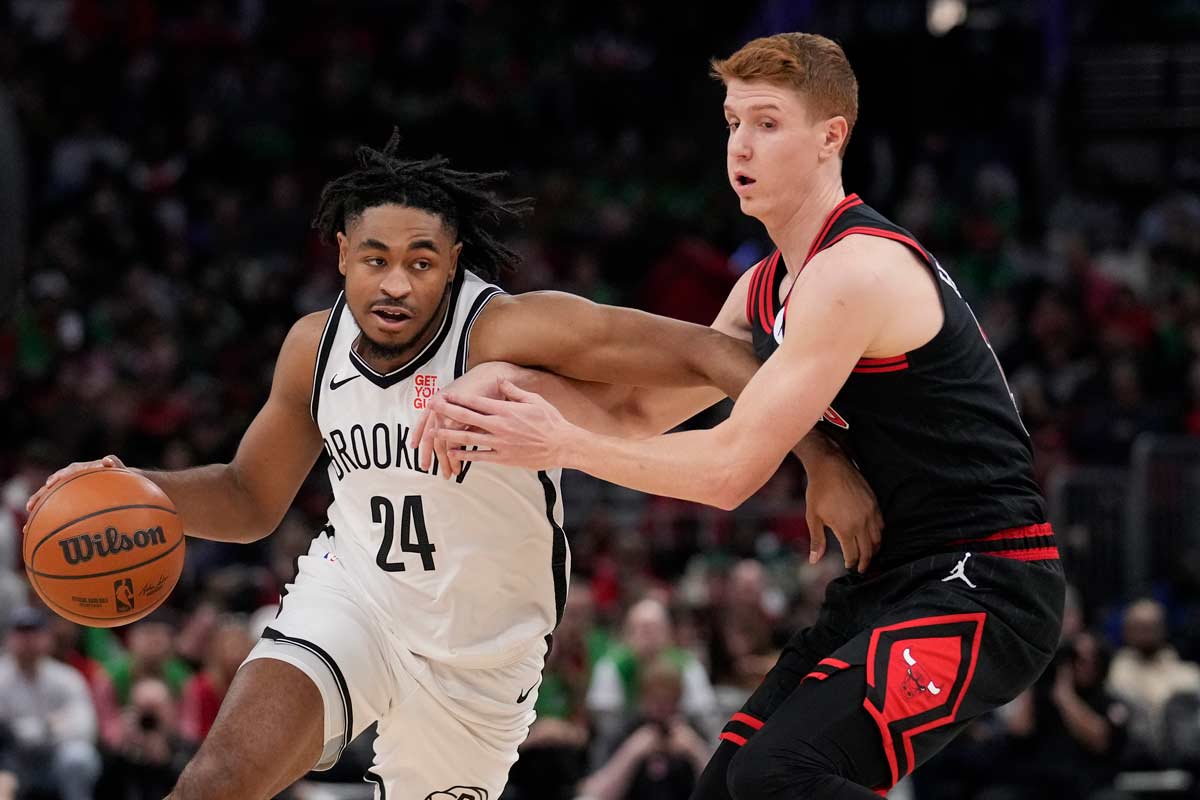
For our beloved New York teams, the 2024-25 NBA season has come to an end. The NBA Draft has come and gone. The Nets elected to keep all their five first-round picks they selected. Unfortunately for the Knicks, they did not have a first-round pick and traded away their 50th overall pick in the second round.

Both teams will now shift their attention to NBA free agency which officially begins on July 6th at noon. Negotiations with free agents are allowed to begin on June 30.


For the Brooklyn Nets, the team is in the middle of a rebuild. Many people were surprised that General Manager Sean Marks decided to keep all of his picks instead of dealing a few of the picks in hopes of landing a superstar player.

The priority for Brooklyn’s rebuild is to develop their home-grown players. That doesn’t necessarily mean they are out as far as making a splash in free agency.

The Nets have more cap room than any team in the league this summer, so it is expected the team will be in conversations when it comes to the coveted free agents on the market. Nets fans can expect players such as Jonathan Kuminga and Quentin Grimes to be in the mix for Brooklyn. Although Kuminga missed some time during the season due to injury, when he is healthy, he is simply instant offense.

Still at just 22-years old, Kuminga can finally receive a fresh start and a opportunity to prove himself. Perhaps that place can be Brooklyn. Grimes is a familiar name to New Yorkers as he spent some time with the New York Knicks. After a short stint with Dallas, Grimes was traded to the Philadelphia 76ers in which he had a career season. In 28 games played, he averaged 21.9 points per game.

Aside from Cam Johnson and Cam Thomas, it would not hurt Brooklyn to acquire a player who can shoot the ball. Shooting is one of the many team needs and both players can fulfill that. Speaking of Cam Thomas, Brooklyn would like to retain him as well.

Thomas is a restricted free agent which means any team that attempts to sign him, Brooklyn has the right to match any offer. Thomas has arguably been the team’s best player the past two seasons.


As far as the Knicks go. unfortunately they are not as cap-savvy as Brooklyn is. The team traded away their lone pick in this year’s draft which had Spike Lee pulling his hair out once again. There was some noise about Kevin Durant, but we all seen what transpired with that.

It was quite the Blockbuster when we heard the news that Karl Anthony-Towns was traded to the Knicks just before the beginning of this past season.

Maybe General Manager Leon Rose has another move up his sleeve? As I reported on the most recent episode of Talk Sports with Eddie, the Knicks had many issues as far as why they eventually fell to the Indiana Pacers.

One was defense, two was the lack of another consistent scoring option to compliment Jalen Brunson and three was lack of depth. I would not expect the Knicks to go after a high-level free agent but, they could use some shooting.

One player that can check that box off for them is Gary Trent Jr. Trent Jr can be quite the fit in New York whether you start him or have him come off the bench. He’s an elite shooter at 39% for his career. He is less of a liability on defense and he’s just 26-years old.

Al Hortford and Malcolm Brogdon can also be other options the Knicks can look at. It should be a very exciting summer for both teams. Will be see our New York teams in the middle of the free agent madness? We shall see.

Sports Notes: Talk sports with Eddie will return with a All-New episode on Thursday July 10th. In the meantime, please continue to watch previous episodes on the Our Time Press YouTube channel. Please like and subscribe to the page and most importantly thank you!