Home Blog Page 40

A Mother and Son’s Shared Path to Better Health

By: Amanda Barrett
Since settling in the Crown Heights neighborhood of Brooklyn, Denise Owens has spent the last 33 years receiving care through One Brooklyn Health Interfaith Medical Center and now its care, Bishop Orris G. Walker, Jr. Health Care Center. A trusted, neighborhood-based multispecialty facility, Bishop Walker partners with culturally diverse communities to provide high-quality, patient-centered care that meets the needs of both individuals and families.
She receives primary care, eye care, hematology, physical therapy, and social work services—
and has never looked back.


“I really have no complaints,” Denise says. “They really look out for you.”
Now living in Red Hook, Brooklyn with her son, Diallo Owens, who also serves as her health aide, Denise continues to receive care at Bishop Walker. Despite the relocation, she remains committed to Bishop Walker because of the staff, the personalized care, and the long-standing relationships she has built there that keep her rooted.
“They are very concerned,” she says. “They go out of the way. They put your best interest in it. They are very attentive and encouraging.”


Bishop Walker Health Care Center is more than a collection of services. As part of the Patient- Centered Medical Home (PCMH) model, the care center offers coordinated, comprehensive care that addresses the whole person. It is a place where trust is built, and where the team, made up of caring, culturally competent professionals, works closely with patients and their families to navigate care with dignity and respect.


For years, Diallo focused on managing his mom’s care. But during that time, he struggled with his own health. Earlier this year, he was diagnosed with full-blown diabetes and high cholesterol at another hospital and was placed on insulin. Despite treatment, he continued to face serious challenges managing his condition.


“My sugar used to drop below 20,” he recalls. “Even on insulin, it wasn’t getting any better.”
One day, while pushing his mom in her wheelchair on the street, Diallo became so disoriented that Denise began yelling, “You’re pushing me into the bus!” He hadn’t realized how far his condition had deteriorated.
Soon after, Diallo was hospitalized. That experience, along with constant encouragement from the Bishop Walker team, motivated him to finally bring his medical records to Bishop Walker and seek care.
When he arrived, the welcome was heartfelt.


“I didn’t expect red-carpet treatment when I got there,” he says. “But the staff said, ‘Finally, you showed up.’ Then they told me, ‘We really appreciate your mom as our patient, and now we’ve got you too.’ That felt good to hear.
Diallo began seeing Dr. Ma Lwin Moe, his mother’s primary care provider. With coordinated support and a personalized plan, Diallo was taken off insulin and placed on a new treatment that stabilized his blood sugar and improved his overall health within a few weeks of becoming a new patient.
“Everything is good to go now,” he says. “Everybody’s working together on one accord.”
Bishop Walker makes it easy to manage their different health needs. Diallo specifically said, “Everything is basically getting done at Bishop Walker now for the both of us.” He described it as a “one-stop shop” that makes managing their healthcare convenient and supportive.
Bishop Walker’s approach of knowing and caring for both him and his mother makes him feel comfortable and appreciated.


Both Denise and Diallo now receive medical care at Bishop Walker, and they attend physical therapy together three times a week. For them, it is more than a routine—it is shared healing.
“We joke that it’s our little workout date,” Denise says. “But really, we’re getting stronger together.”
And even beyond appointments, the staff show up with genuine care.
” You know, they’re more involved, even spiritually wise…” Denise says. “And to tell you the
truth, even if you don’t have an appointment, and they see you, they still talk to you— ‘How are you doing? What’s happening?”


When asked if she would recommend Bishop Walker, Denise doesn’t hesitate.
“I would,” she says. “They’re kind, they care, and they treat you like family, that’s why I keep going.”
For the Owens family, Bishop Walker Health Care Center is more than a healthcare provider. It is a home for healing, a trusted partner in their well-being, and a community that continues to walk alongside them every step of the way. To schedule an appointment at Bishop Walker call us at 718-613-6800 or visit onebrooklynhealth.org for more information.

About One Brooklyn Health
One Brooklyn Health (OBH)—comprising Brookdale Hospital Medical Center, Interfaith Medical Center, and Kingsbrook Jewish Medical Center—is nationally recognized for high-quality care in heart failure, stroke, and diabetes, among other acute care.
The system includes 12 ambulatory care centers, two nursing homes, an assisted and independent living facility, a transitional housing program, an urgent care center, and a retail pharmacy.
OBH’s mission is to expand access to quality medical care for Brooklyn’s most vulnerable communities and beyond. For more information, please visit their website for more information, please visit their website at www.onebrooklynhealth.org.
Leadership at ASALH: Trump Administration Will Not Erase Black American History

0

Fern Gillespie
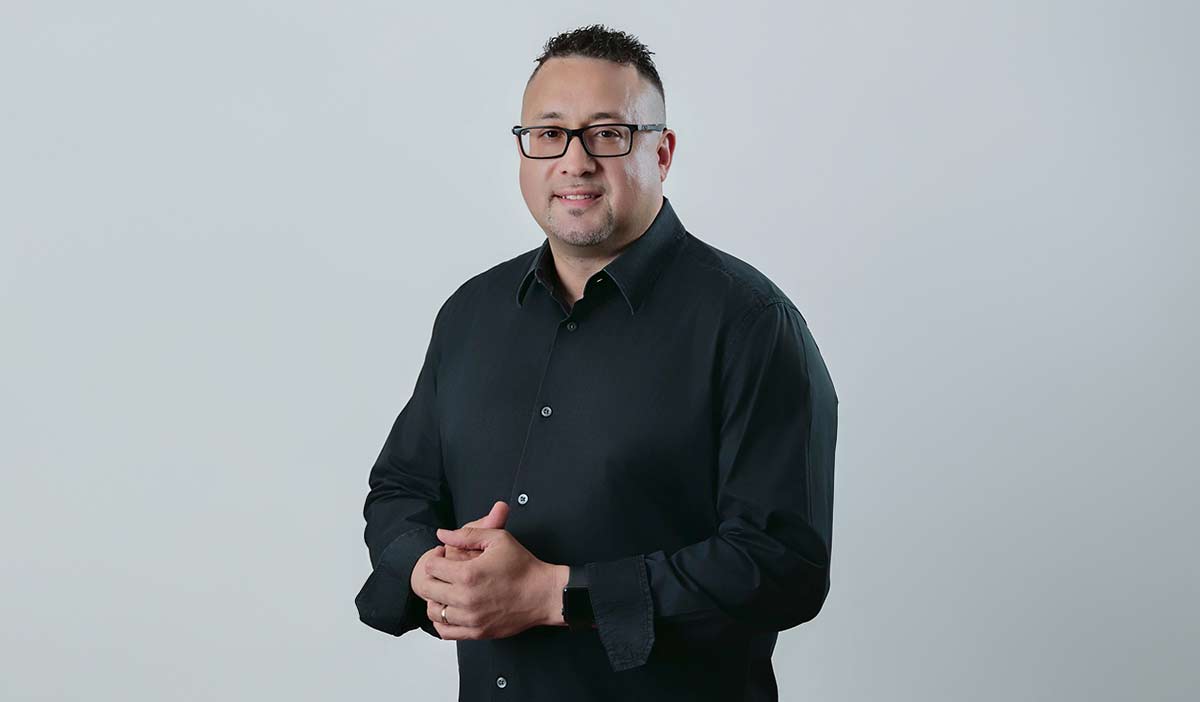
The Smithsonian’s National Museum of African American History and Culture is under attack from the Trump administration as “anti-American.” Our Time Press spoke to the leadership of the Association for the Study of African American Life and History, the founding organization of Black History Month for insights. Leading Black History historians Dr. Karsonya “Kaye” Wise Whitehead, the president of the ASALH and a professor of communication and African and African American Studies at Loyola University Maryland and Brooklyn resident Dr. Zebulon Miletsky, an associate professor of Africana Studies at Stony Brook and ASALH Chair of Communications discussed their concerns that this presidential administration is attempting to erase the legacy of African American history.

OTP: Trump, who supported the Smithsonian’s National Museum of African American History and Culture during his first administration, now complains that “Everything discussed is how horrible our Country is, how bad Slavery was, and how unaccomplished the downtrodden have been.” What is the Association for the Study of African American Life and History (ASALH) comments on his statement on slavery?
Dr. Whitehead:
To be clear, slavery was bloody, it was brutal, it was horrific. So in that truth, it’s also an essential part of the American historical narrative. I think that that’s where we differ with 47 (Trump). His belief is that if you hide the history, if you erase the history, then essentially that means the history did not happen. We stand on the opposite end. We say you talk about the issue and discuss the history. So, people can understand and can learn the lessons from that. So, we can make sure that that particular narrative does not repeat itself. That we see indented in this belief that we don’t want to talk about the horrible things of America and slavery.

What is embedded in that is an intentional erasure history of Black people in this country. That’s an essential part of the American historical thread. Black history is American history. You cannot just take one section of it to erase it. Then say as long as we erase that, we’ll make sure that people feel good about history. About wrestling with the negative and the positive, because that is the story of America. America’s story is written in blood. It is written in brutality. It is also beautiful and it’s also poignant. And it’s a place of departure for young people to understand, to accept, to learn from, and to move forward from it.

What does ASALH think about the challenge by the Trump administration that the African American Smithsonian Museum has “anti-American” exhibits?
Dr. Miletsky:
I was thinking about Dr. Lonnie Bunch, who founded the African American Smithsonian and now heads the Smithsonian. I read part of his memoir called “A Fool’s Errand.” He really tiptoed carefully around Trump the first time, when he was president, so that he could continue cultivating this amazing resource at the African American Smithsonian. Institutions like the Smithsonian definitely subscribe to the African American history is American history model.

I can’t think of a better example, a more fair, balanced approach to African American history. Now of course, Dr. Bunch oversees all of the Smithsonian museums. What’s happening now is clearly out of the page book of Project 2025 and the Heritage Foundation. We’ve seen Trump do it with the universities and that’s what he’s basically doing now coming round to the museum space. In this case, museums under the federal government. I hope that that Trump will find a way to work with Dr. Bunch the way they worked together in the first in his first term.

Dr. Whitehead: Dr. Bunch recently put out on social media that he will defend the Smithsonian with every breath that he has. He said the Smithsonian will outlive those that are seeking to destroy it. ASALH stands firmly against any attempts to erase our history. Any attempts to change the narrative. We know we know that history is important. If you control the medium, you control the message. If you rewrite history it may not matter for the generations that are here now, because we still have that kind of oral narrative. We still have the books out there. But I’m thinking 50 to 75 years now when you are rewriting history and you’re removing history, you’re banning books, you’re taking words out of all of the narrative, and now you’re talking about removing artifacts and moving stories from the museums that are really tasked with holding our history. It is a long-term impact that of what we’re looking at this moment.

OTP: The federal government has already taken away some grants from Black cultural institutions. Do you think that more institutions will be cautious about dealing with Black historical issues?
Dr. Whitehead:
I think more universities and institutions will be cautious. I think that that’s the other part that’s really concerning. Because of the ripple effect, I also think this might be a good time when we start looking at more state level and local museums of African American history. Where are they in terms of holding some of the history? Is moving and keeping these materials to more state level museums? We don’t want anything to get lost. We don’t want anything to be packed away. We don’t want anything to be erased. So there are places that perhaps we can look at that can hold this history for us. I think this is work for organizations like ASALH and the African American museums that are state level that can step in in this moment and do the heavy lifting that needs to happen now.

OTP: Do you think that the Trump administration’s acts against “diversity” are rooted in racism?
Dr. Whitehead:
There is a through line between what is happening here and the rise of both white supremacy and anti-Blackness. Work is being done to change the narrative and change the history of race, and even erase anything that connects to the diversity, equity and inclusion that America has been building on and building toward for years. There’s an immediate erasure that is rooted in anti-Blackness. It’s very intentional. When you are banning books with over 75 percent of them being written either by or about people of color, well, that that’s an intentional act. If you banned diversity, equity, inclusion and education and science research and universities, that’s very intentional. You can begin to unpack what that means when its an intentional attack on the stories and the lives of Black people.

Like when you occupy Washington, DC, even though DC is not a state, it’s still very Black and very blue. It sends a show of what power is when it’s collated into hands that have an intentional act against Black people and Brown people. The work that we are doing at ASALH is we are trying to help people connect the dots. You can’t just see one act and assume that it’s not connected to the small steps that have taken place that have gotten us here. The question remains what comes next. At ASALH we are sending the alarm.


Dr. Miletsky: The Association for the Study of African American Life and History will be holding our annual meeting and conference from September 24th to 28 in Atlanta focusing on “African Americans and Labor.” We’re going to have Chris Smalls from Amazon, who organized the Amazon Black workers. Joe Trotter, who wrote the book on Black labor and urban studies will be speaking. Also journalist Joy Reid will be at the conference. To register, contact: www.asalh.org

Brooklyn Borough President Antonio Reynoso Hosts ‘United With Haiti’ Solidarity Rally as Trump Seeks to End Vital Legal Protections for Haitian Immigrants

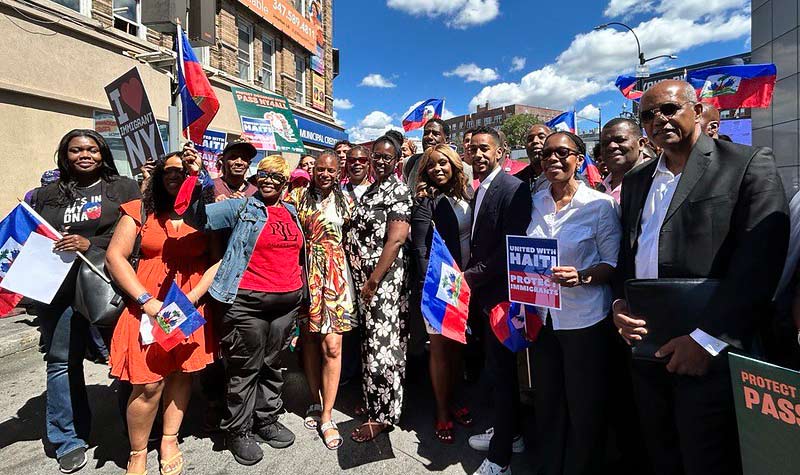
Brooklyn, NY – Yesterday, Brooklyn Borough President Antonio Reynoso hosted a rally in Flatbush’s Little Haiti alongside advocates, faith leaders, and elected officials in solidarity with Haitian immigrants. The rally took place days before the Trump administration initially sought to terminate Temporary Protected Status (TPS) for an estimated 500,000 Haitians who lack permanent legal status, a move that would revoke their work authorization and protection from deportation.

“In Brooklyn, when you come for one of us, you come for all of us,” said Brooklyn Borough President Antonio Reynoso. “Our neighbors from Haiti came here in need of refuge from an intense string of disaster, crisis, and political instability, and we stand proudly by their side in calling for an end to the Trump administration’s effort to revoke TPS for Haiti. TPS for Haiti has allowed thousands of Haitian immigrants to find a new beginning in our borough, and Brooklyn is better for it. The Haitian community will always have a home here.”

TPS allows immigrants from designated countries experiencing turmoil to legally live and work in the United States. Haiti was initially conferred TPS status in response to the catastrophic earthquake that devastated the country in January 2010, killing more than 300,000 people and displacing more than 1.5 million. Since then, TPS for Haiti has been redesignated and extended under multiple administrations because of additional natural disasters, public health crises, and political instability.

In February, the Department of Homeland Security announced it would terminate Haiti’s TPS status effective September 2, 2025. Following a lawsuit from the Haitian Evangelical Clergy Association, whose leadership spoke at today’s rally, the United States District Court for the Eastern District of New York temporarily extended TPS for Haitians until February 2026. TPS’s uncertain future has caused confusion and anxiety for TPS recipients who are now in legal limbo. With more than 150,000 Haitian residents in New York City, most of whom live in Flatbush, Brooklyn is particularly vulnerable to the economic and cultural impact of this decision. In neighborhoods like Little Haiti, Haitian immigrants have put down roots and built vibrant, multigenerational communities. The revocation of TPS threatens to split up families with mixed-legal status and upend local economies.

“Brooklyn’s Haitian community is deeply rooted and plays an integral part to the borough—from educators and healthcare professionals to small business owners and essential workers. Stripping TPS would jeopardize these contributions and destabilize countless lives,” said Congresswoman Yvette Clarke. “TPS holders often have U.S.-born children and interwoven family networks. Revoking their legal protections could fracture homes, schools, and community institutions, creating widespread hardship. Deportations would impact local economies—labor forces, neighborhoods, and small businesses would feel the strain. TPS holders contribute significantly through taxes, commerce, and community engagement, and sending them back into an unsafe and unstable environment could have disastrous consequences—becoming a life-or-death situation for many Haitians in Brooklyn and across this nation.”

“The cancellation of Temporary Protected Status for Haiti is another move in Donald Trump’s racist and xenophobic mass deportation agenda,” said New York City Comptroller Brad Lander. “This catastrophic decision strips more than 500,000 people across the country of work authorization and protection from deportation, including thousands in New York City—home to the second-largest population of Haitians in the U.S. While advocates continue to fight these terminations in court, it is our duty as elected officials to use every tool at our disposal to ensure that New Yorkers have access to the legal services and assistance needed to defend themselves against these cruel policies.”

“Brooklyn will never stay silent while our immigrant neighbors are under attack by the Trump administration. ICE is tearing our communities apart, and now more than ever, we must fight relentlessly to protect Haitian immigrants in this city. I’m proud to stand with the Brooklyn Borough President and fellow Brooklyn leaders in rejecting anti-immigrant policies and defending the dignity of every New Yorker,” said Council Member Chi Ossé.

“Ending TPS would rip apart Haitian families and devastate neighborhoods that rely on the workers who care for our loved ones in hospitals, build our homes, and support our small businesses. TPS is a legal, humanitarian program that allows people to live and work here with dignity. In fact, statistics show that TPS recipients are more likely to be employed than the general U.S. population, filling critical labor shortages in health care, construction, and service industries. These are people who did things the right way, and sending them back to Haiti, a country in crisis, would amount to a death sentence. We are stronger when we embrace our immigrant roots, not when we ignore them,” said Council Member Mercedes Narcisse.

“Our city is so strong, vibrant, and culturally impactful because of the immigrant communities that have made Brooklyn their own. That includes, in large part, Haitian immigrants who have thrived under temporary protective status—a protection that is meant to support those whose countries of origin are experiencing turmoil. Today, we are rallying in support of our Haitian neighbors and against the violence of the Trump administration’s deportation agenda. I will always fight for a Brooklyn that puts the needs of working people first and foremost. Threatening our immigrant communities hurts us all,” said Council Member Alexa Avilés.

“As the daughter of Haitian immigrants, I stand in full solidarity with our Haitian community against this cruel attempt to strip away Temporary Protected Status (TPS). TPS has allowed families to live with dignity, contribute to our economy, and strengthen neighborhoods like Little Haiti Brooklyn – home to one of the largest Haitian communities in the nation. Threatening hundreds of thousands of Haitians with deportation is not only inhumane; it is an attack on the cultural and economic fabric of New York City. I commend Borough President Reynoso for bringing us together in unity, and I will continue to fight alongside advocates and families to protect TPS and defend immigrant rights. We will not stand by as hundreds of thousands of Haitian communities are threatened with deportation!” said Assemblymember Rodneyse Bichotte Hermelyn.

“The Trump administration has taken action to roll back TPS protections for Haitian immigrants, many of who have been living in New York for decades. This cruel and heartless action will threaten hundreds of thousands of hardworking people. As the proud daughter of Haitian immigrants and chair of the Assembly Task Force on New Americans, I am proud to stand with Borough President Reynoso and my other colleagues to fight back against these actions,” said Assemblymember Phara Souffrant Forrest.

“New York City is a better place because of the cultural and economic contributions of our Haitian immigrant community. Haitian New Yorkers own business, provide essential healthcare services, and enrich the cultural tapestry of our city. Our neighbors deserve stability and safety. The Trump administration’s deplorable decision to end TPS for Haiti is meant to destabilize and attack our communities. We call on Congress to act immediately to provide permanent protections for all TPS holders, and fight back against Trump’s attacks,” said Murad Awawdeh, President & CEO, New York Immigration Coalition.

“HAFFD is proud to stand with Borough President Antonio Reynoso and our elected leaders to defend Haitian families. Protecting TPS is a matter of justice and humanity,” said Jocelyn McCalla, Executive Director of the Haitian American Foundation for Democracy. “As long as Haiti faces a crisis, we will continue to use our advocacy arm to ensure our community is heard and protected. Brooklyn is the heart of the Haitian diaspora — when we speak together, America must listen.”

“Behind every TPS designation are mothers, fathers, children, and grandparents who simply want the chance to live in peace, work with dignity, and build a future without fear. At HAUP, we see every day the sacrifices and contributions of TPS holders, neighbors who care for our elders, teach our children, and keep our city thriving. To stand with them is to stand for the very soul of New York,” said Elsie Saint Louis, CEO, Haitian Americans United for Progress (HAUP).

“The Haitian community needs solidarity, investment, and a genuine TPS commitment for a sustainable future. TPS is more than a policy — it is a lifeline for countless families who deserve safety, dignity, and the opportunity to pursue the American Dream. As Haitian Brooklynites, we must stand together in solidarity, ensuring our Haitian neighbors are protected, respected, and heard. We call on the American government to immediately reverse these life-altering actions and to prioritize policies that save lives, promote stability, and uphold our shared values of dignity and human rights,” said Porez Luxama, Executive Director of Life of Hope.

A 50 Year Tradition: Van Buren Street’s Block Party

0

by Pojanee Fleury
On August 24, 2025, Van Buren Street, stretching between Patchen Avenue and Malcolm X Boulevard, came alive with its annual block party—a beloved tradition that has been uniting neighbors for an incredible 50 years. This year’s event was no exception, creating a vibrant atmosphere where residents of all ages came together to celebrate their community. From kids laughing and playing games on the street to older neighbors exchanging warm hugs, the block party exemplified the true spirit of connection, unity, and the powerful bonds that have kept this neighborhood thriving for generations.


“You were the one that knocked on the door and let me know about my car, thank you so much!” one neighbor exclaimed, smiling warmly before introducing herself and sharing a heartfelt hug in gratitude. These kinds of moments were everywhere, proving that the block party was more than just an event—it was a time and space for neighbors to build meaningful connections and strengthen their relationships.


Rachel Hills, president of the 1615 Van Buren Street Block Association, shared her thoughts on the importance of the block party. “Everyone does their part to make sure the block is fun and exciting. Committee members take on different tasks, from coordinating the food to creating art stations. I organize the other activities, and we all come together to make it happen,” Hills explained. She emphasized how much the community values the event, calling it a cornerstone of their neighborhood. “The block party is a way the community comes together in ways that wouldn’t be possible otherwise. It’s really important to folks on the block, and it’s really important that it happens every year. It’s a key tradition.”


Anita Alston, treasurer of the 1618 Block Association, agreed, saying, “The block party has been going on every year for 50 years, maybe even longer!” She beamed with pride at how the block gathering has remained such a vital part of the community’s identity, bringing joy to everyone involved.


The event serves as a cherished tradition that reinforces the bonds between residents, fostering a deep sense of community and connection. It’s a celebration of togetherness, history, and neighborhood pride, where families, friends, and new neighbors come together to share food, laughter, and stories. From games for kids to live music performances and potluck-style meals, the block party offers something for everyone to enjoy. With each passing year, this special gathering continues to bring joy, strengthen friendships, and create lasting memories, ensuring that its legacy of unity and belonging will carry on for generations to come.
Photos by Pojanee Fleury

Putnam Avenue Block Party Brings Community Together

0

by Pojanee Fleury
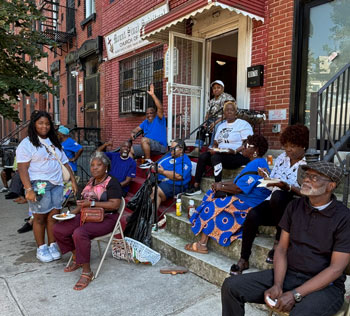
On August 23, 2025, residents of Putnam Avenue, between Broadway and Howard Avenue, gathered for their 2nd annual block party, celebrating community and strengthening neighborhood connections. Organized by the Mount Sinai Spiritual Church of God and members of the Putnam Howard Garden Block Association, the event showcased their collaborative efforts to bring the neighborhood together.


Pastor Deborah Potter and Church Leader Estella Knights shared that the church initially wanted to host a bookbag giveaway for the children on block and it was the Block Association led by Cammy, that had the idea to host a party where the whole block could take part in a Brooklyn tradition that brings people together in meaningful ways.


Children flocked to the bounce house and face-painting station and collected supply filled bookbags. The Brooklyn Hospital Center conducted health screenings and provided community health resources. Community business network, The Powerful Pioneers, provided holistic health support and information. Aromas of freshly grilled and homemade dishes filled the air as neighbors shared potluck favorites.

Putnam stoop


Cammy explained, “it is important we have this block party and we will continue to grow it and make it better each year…it is so important that we come together and stick together. We watch each other’s cars and look out for each other which helps keep the block safer.” He expressed his happiness seeing the community coming together, “I love this!”


Despite recent changes and new challenges in Brooklyn, Pastor Potter remains centered in faith leading a dedicated congregation, who are from different parts of the city. Pastor Potter explained she and her congregation are available to support community members. “I see the Church having a positive impact on the block. I just walked up and down the block meeting everyone. I let them know we are here, even if it is just to talk to talk. This is how we build community.”


This block party beautifully showcased the power of collaboration in uniting key stakeholders to create a sense of community that extends far beyond the neighborhood. It became a space where people from all walks of life came together, fostering connections and building meaningful relationships. The event not only brought neighbors closer but also provided an opportunity to uplift one another by sharing support, resources, and stories. From local businesses showcasing their offerings to organizations providing valuable information, the block party was a celebration of unity, diversity, and the potential we have when we work together to strengthen our communities.


The Putnam Howard Garden Block Association Block Party Committee is already making plans for next year’s event, with hopes to expand programming and include even more local vendors and resources.
Photos by Pojanee Fleury