Home Blog Page 37

Elizabeth Yeampierre: The Environmental Justice Warrior Who Leads UPROSE

0

Fern Gillespie
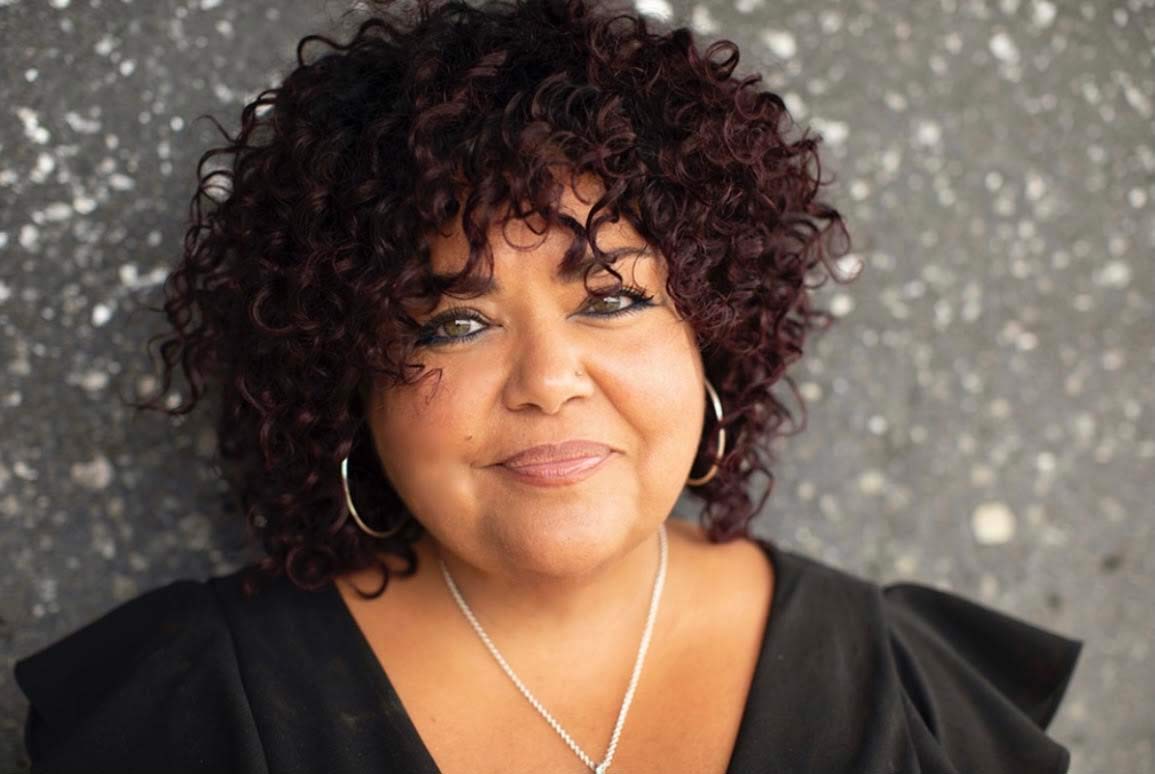
For almost 30 years, Elizabeth Yeampierre, an internationally recognized Puerto Rican attorney of Black and Indigenous ancestry, has been on the frontline advocating environmental justice for Black and Brown communities. As the executive director of UPROSE, Brooklyn’s oldest Puerto Rican community-based organization (established in 1966), Yeampierre has been advocate and trailblazer for community organizing sustainable development, environmental justice, community-led climate adaptation, multi-generation advocacy and community resiliency.


Yeampierre, a lifelong New Yorker who has lived in neighborhoods from the South Bronx to Brooklyn, holds a bachelor’s degree from Fordham and law degree from Northeastern University. Her expertise and impact on environmental justice has made her a popular featured speaker at local, national and international forums including Sage Paris 2015, 2016 GRI Amsterdam, White House Forum on Environmental Justice, Yale, Harvard, Cooper Union, Columbia, and universities, colleges, and conferences all over the country and spoke at the opening climate rally for Pope Francis at the National Mall, The Battle for Paradise at Cooper Union with Naomi Klein.

Her work is featured in several books, in addition, being featured in Latina Magazine, VOGUE, Vanity Fair, The Guardian, Grist, American Prospect, Al Jazeera, Huffington Post, Democracy Now, The Intercept, and a variety of media outlets throughout the United States, Latin America, and Europe.

She has operated in leadership roles with national environmental justice organizations and received multiple honors for her innovative advocacy for environmental justice for Black and Brown people. She was recently honored by Time Magazine with The Closers 2025, honoring 25 Black leaders working to end the racial and equity gap.

This summer, UPROSE had New York City’s first community LED solar project in collaboration with Working Power. Located in Sunset Park, the headquarters of UPROSE, the solar project will serve 200 families that have subscribed. The some of the proceeds will go back into the community. Members of the community will determine how the funds are reinvested to of climate change.

During Climate Week, UPROSE will host the event Climate Justice Lives Here in Sunset Park from September 22 – 26, 2025. It’s a free community-driven event on climate action, education, and advocacy. Special programs include the hip hop caucus discussing Katrina: 20 Years Later. A panel on how Caribbeans support each other from Haiti to Jamaica when there is an extreme weather event in the Caribbean.

A program on Full Fashion focusing on alternatives to inexpensive clothes laced with carcinogen that abuse the environment, workers and violate human rights. Instead, Full Fashion explores repurposing and recycling clothes into something elegant and beautiful, which will be featured in a fashion show. There’s singer Diana Assini and blessing of the Four Corners with medicine men and women from the Southwest.


Our Time Press spoke with Elizabeth Yeampierre about Climate Week and this new era of environmental justice.
OTP: People are coming from around the world to New York City’s Climate Week. Last year, UPROSE held their Climate Week event in Manhattan. Why was it important to bring your event Climate Justice Lives Here to Brooklyn?
EY:
Climate Week has become this corporate-led big green event in New York City. But, the city is surrounded by Black and Brown people who are living in the midst of environmental burdens and have solutions to climate change. We can’t be invisible in our own city. UPROSE thought it was important to remind people who are coming into New York that climate justice is in community, that the solutions are in community, that we are changing the landscape in community, that we’re putting down infrastructure, we’re passing legislation and we’re building leadership.

OTP: What is the major environmental justice challenge for Black and Latino communities in Brooklyn?
EY:
In Brooklyn, I think it’s a number of things. One is extreme heat. Also, poor air quality. You know, we’ve been having yellow skies from the burning in Canada. Then the lack of vision for looking at our significant maritime industrial areas and repurpose them to address our climate and economic needs so that we have great jobs. Instead of doing that what happens is that you see these sectors being turned into opportunities for the privileged. When you disrupt families and the connections they have in the neighborhood, you increase the chances that they’re not going to survive the extreme weather events.

OTP: The Trump Administration’s deregulation of the Environmental Protection Agency (EPA) was not only a major setback to the Climate Change movement, it was devastating to Black, Brown and poor communities who face hazardous pollutions daily. What impact has it had on UPROSE?

EY: All the funding and a lot of the support, legislation and regulations that came out of a legacy of the environmental justice movement were deregulated by January. Decades of work done by the environmental justice movement was deregulated. Now we’re in a very different position. Now what we’re doing is thinking about how do we take care of each other on the ground as if the federal government doesn’t exist because. We know that they’re going to remove FEMA and that those supports won’t be available. We know that they are investing in more fossil fuel extraction.

So, they are literally complicit in accelerating climate change. That they are moving away from the resources that existed for solutions that would address not only our environmental health, but our environmental future. So what do we do in a situation like that? Those of us who are descendants of extraction, colonialism and enslavement can’t just sit down and say, it’s all over for us. What it means is that we lean into each other, we lean into community and we try to figure out how to hold the line in the face of political disruption. That’s what we’re doing in Brooklyn and Sunset Park and that’s what the movement is going all over the country. We’re all working with each other, sharing resources, and holding the line because the lives of our people are at stake.

OTP: So, UPROSE and the environment justice movement had to readjust in terms of not depending on federal government grants or government programs?
EY:
We have to recalibrate. Think about as war. You know, our ancestors were people who didn’t get health care. Who lived out through the worst conditions. Who were mistreated on a regular basis. And they had the ability to imagine us. To do everything they needed so they could feed each other, support each other, take care of each other.

UPROSE is part of coalitions and movement spaces. We’re members and part of the leadership of the Climate Justice Alliance, which is a national organization of frontline leaders across the country. We’re also part of the New York City Environmental Justice Alliance, which is a citywide organization. On the state level, we are co-founders of NY Renews, a coalition of 400 group members across the state. We are all working with each other to support each other to make sure that we’ll be able to get through this.
For more information on getting involved with UPROSE or attending UPROSE programs and events, please visit www.uprose.org
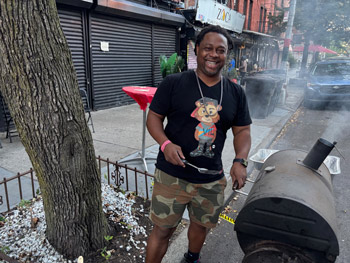
Yankee Boy Barber Shop’s Block Party Brings Community Together

0

by Pojanee Fleury
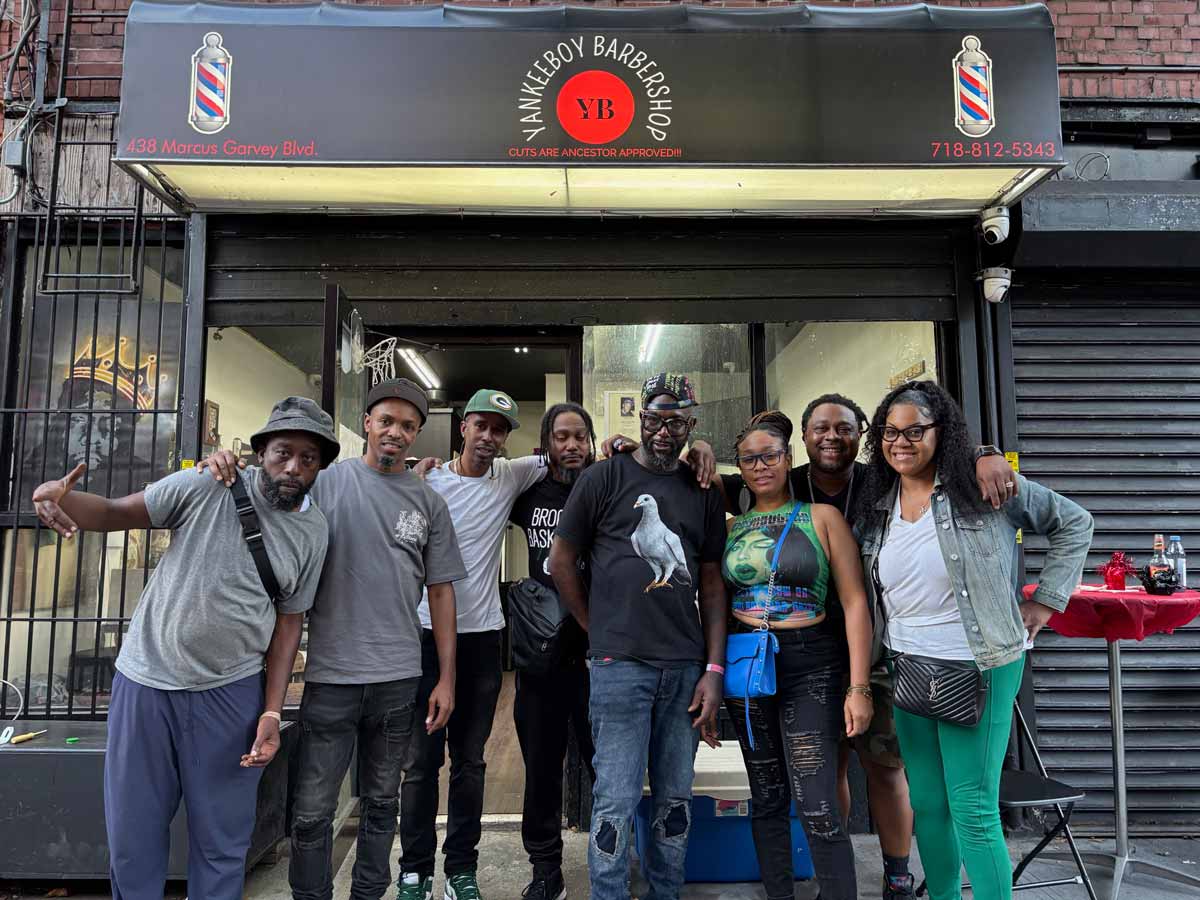
The stretch of Marcus Garvey Blvd between MacDonough Street and Decatur Street shut down for the block’s first party. What started as one barber’s vision to bring people together became a testament to the power of local initiative.

Mike Ife, the owner of Yankee Boy Barber Shop, explained that it began with wanting to celebrate a friend’s birthday that quickly transformed to a block wide party that everyone could come out to enjoy.

The aroma of grilled corn, jerk chicken, and fresh baked cookies filled the air as activities and games were set up for the children. Ife commented on the legacy he carries, growing up right around the corner from the barber shop he now operates, recalling fond memories of hanging out with friends and learning from the elders.


Yankee Boy’s motto is, “Cuts are Ancestor Approved.” It is clear that Ife and his fellow barbers pay homage to those that came before them, continuing to build and pass on wisdom to the youth. “As a barber, I am like a community counselor,” Ife explained.

He spoke passionately about the barbershop’s role as a safe space, a place where people from all walks of life could come together to share stories, seek advice, or enjoy a lively discussion. Ife shared that he and other barbers in the shop give cuts weekly at shelters and senior centers. Although a small stipend is provided, it is commendable that – as Ife put it, “we can’t forget about those that are in different stages in life, we all deserve to have a good cut and feel good about ourselves.”


For many in the neighborhood, Yankee Boy’s isn’t just a place to get a haircut—it’s a hub of connection and mutual support. Ife believes that creating this atmosphere is essential to fostering a sense of belonging and pride within the community.

“It’s bigger than just cutting hair,” he said, emphasizing the importance of preserving community. Whether it’s a conversation about local events or life advice passed down over generations, the barbershop thrives as a cultural centerpiece.

Ife talked about gentrification, sharing a positive shift in the neighborhood, “we can be outside now.” The comment referring to more police presence and less crime that used to grip this area of Brooklyn. The future of Brooklyn is bright, “we all have to do our part,” he said.
The block party felt like a celebration of resilience and unity.

Neighbors of all ages mingled together, enjoying music, food, and laughter that echoed down the street. Tables lined the sidewalks, selling everything from handmade jewelry to art that depicted the community’s rich history. It was a reminder that amidst change, the heart of the community continues to beat strong, fueled by the connections and traditions that make it unique.

The Organization Us Celebrates Its 60th Anniversary

0

By Dr. Segun Shabaka – Part I

On Sunday afternoon, September 7, the Organization Us celebrated the 60th anniversary of its founding. This historic event took place at the organization’s headquarters, The African American Cultural Center, in South Central Los Angeles, California. This community has been its home and the center of its work and struggle since its inception. The Organization Us was founded on September 7, 1965, when Dr. Maulana Karenga called its founding meeting with seven other brothers and sisters at his home. It is one of only a few Black Power organizations from the 1960s that remains intact and active while still unapologetic and unbudging in its Blackness. We have to ask ourselves why?

The answer is in the three characteristics that defines the Organization Us: Leadership, Doctrine and Organization. The leadership speaks to the central vision, values and work of Dr. Karenga and the leadership group called the executive circle; the doctrine is Kawaida, a philosophy of life, work and struggle; and the organization is the advocates(members) and their relations and practices directed towards “cultural revolution within and political revolution without, resulting in a radical transformation of self, society and the world”.

Seba Dr. Maulana Karenga, the organization’s founder and chair, was thanked by many throughout the celebration for the positive effects he, the Organization Us, the Nguzo Saba and Kawaida have had on their lives and the overall movement for African and human freedom and good. Having joined the Black Freedom Movement in the 1960’s, sixty years after he remains a force in local, national and international struggles of African people.

Dr. Karenga is currently the Chair of Us and the National Association of Kawaida Organizations(NAKO), the executive director of the African American Cultural Center and the Black Community Clergy and Labor Alliance(BCCLA).Moreover he also serves as professor and chair of the Department of Africana Studies at California State University, Long Beach.
A PowerPoint presentation on the organizations’ history and contributions to the local, national and global Pan-African struggle was given by Dr. Karenga with input from current and former members during and after the presentation.

Among their contributions that formed the foundation and framework of their transformative work and struggle are Dr. Karenga’s creating and the Us members’ teaching, practicing and promoting Kawaida philosophy and its guiding principles, The Nguzo Saba (Seven Principles – Umoja- Unity, Kujichagulia – Self-Determination, Ujima – Collective Work and Responsibility, Ujamaa – Cooperative Economics, Nia – Purpose, Kuumba – Creativity and Imani – Faith) and the Pan-African holiday Kwanzaa celebrated by millions of African peoples throughout the global African community on every continent, uniting African peoples in a way no other principles and practices do. It brings together African people from December 26 thru January 1 from all walks of life, faiths, cultural and religious backgrounds in every major African community from various corners of the world.

The Us organization was born out of fires of the Black Power phase (1965 to 1975)of the Black Freedom Movement of the 1960s after the Civil Rights phase (1955 to 1965) exhausted itself. Under Dr. Karenga’s leadership the Organization Us has played a major role, directly and/or indirectly, in the major movements over the last six decades, e.g.: all three Black Power Conferences (Dr. Karenga was the leading theorist and a principal organizer), the independent Black school movement(Council of Independent Black Institutions/CIBI) which used and taught the Nguzo Saba), The anti-Apartheid and African Liberation Movements, the Black Studies Movement (Dr. Karenga is one of the founding scholars of the discipline of Black Studies and wrote Introduction to Black Studies/IBS, one the most widely used text in the field), Black independent politics of the National Black Assembly, Ancient Egyptians Studies (The Organization Us initiated the call and hosted in Los Angeles the founding conference of the Association for the Study of Classical African Civilizations’ (ASCAC) 1984, giving it its name, logo, and writing and publishing its initial literature, and introducing a new field in Black Studies, Ma’atian Ethics.

In addition, Us has made important contributions to the development of African cultural festivals, rites of passage programs, the Reparations Movement, Black liberation theology etc.

Despite the revisionist history in circulation, some of the major Black Power organizations and leaders of that era that adopted Kawaida and the Nguzo Saba, which guided and aided them when they made their most profound and significant contributions to the Black Liberation Struggle, were: the Committee for a Unified Newark (CFUN) under Amiri Baraka; The East Cultural and Educational Center for People of African Descent, under the leader of Jitu Weusi (This writer was a part of the EAST organization almost from its beginning, first as a volunteer, then a teacher and administrator and later as its executive director until its demise); Ahidiana Institute, under Kalamu Ya Salaam; and, the Institute of Positive Education/IPE under Dr. Haki Madhubuti, (This year, Dr. Madhubuti and IPE is celebrating its 58 anniversary). These groups were the strongest Kawaida institution builders among many others.


What made these and many other Kawaida institution builders so unique was that they built powerful independent, self-determining and self-reliant institutions of service and struggle while following Kawaida’s model of drawing on the best of African history and culture as the central source of paradigms. In addition, each of these Kawaida based institutions had a profound effect on the local level with full time schools and daycares, coops, cultural institutions, music and concert venues, community development programs, newspapers, publishing houses and other services. And they also worked together in several organization structures under the Kawaida concept of “operational unity, unity without uniformity, and unity in principle, purpose and practice.” Some of these formations were the Congress of African People (CAP – a united front of Kawaida organizations), The African Liberation Support Committee (ALSC), the National Black Assembly, CIBI, among others.

New York Football

0

By Eddie Castro
The wait is finally over. This past weekend, the 2025-26 NFL season for both the Jets and Giants kicked off. Both franchises are looking to improve from their lackluster seasons a year ago in which both teams finished third and last place in their respective divisions. Both teams also elected to move on from their starting quarterbacks from last year in hopes of providing a fresh start. Now if you are a true genuine and realistic fan of either the Jets or Giants, you know going into this season, the playoffs are possibly a long shot. The objective for the New York Football teams is will the change made by both teams help them solidify a new culture moving forward?


The Giants began their season against a dangerous Washington commanders team lead by their 2nd-year quarterback Jaden Daniels. Quarterback Russell Wilson made his Giants debut in hopes of lifting a Giants team to more signature moments than they did last year. For the third straight year, Big Blue had a poor showing in Washington and were held without a touchdown for the third consecutive season opener.

Despite multiple opportunities to score, the Giants were only able to put up two field goals in a 21-6 defeat. Now it’s easy for fans to go on a rant after one game and say that perhaps Wilson, who without a doubt will be a first ballot Hall of Famer when he decides to hang it up, no longer has that magic he did in his Seattle days. The fact of the matter is, with how the team’s offensive line played yesterday, Giants General Manager Joe Schoen could make a call to Tom Brady himself, and they would not have much success.

Wilson was pressured by Washington’s defense all afternoon long. An offense that featured several dropped passes by receivers, tight ends and running backs, it made the game even longer for the team’s offense that only managed to put up a total offense of 231 yards (168 passing and 63 rushing). The Giants defense didn’t make things better as they gave a total of 220 rushing yards on 32 attempts.


As for the New York Jets, the team welcomed a familiar face as Aaron Rodgers returned to MetLife Stadium in Pittsburgh Steelers black and gold. In what was a back-and-forth affair for most of the game, Rodgers was able to get the best against his former team, dishing out 4 touchdowns in a 34-32 victory. There is some positive takeaways for the Jets despite the loss. New Head Coach Aaron Glenn repeatedly said he wanted to get the running game to be a part of the team’s identity. The team had a total of 394 offensive yards with 182 coming with the run. The Jets also had a new quarterback making his team debut in Justin Fields. In his first game as a Jet Fields was impressive completing 16 of 22 passes for 218 yards and threw a touchdown. He Also rushed for 48 yards and scored two touchdowns. A costly turnover and a few miscues contributed to the Jets not able to secure the win.


It’s just one game in a long season. There is a lot of football left to be played to see just what the Giants and Jets identity is going to be this year. For the Giants, a big concern is being able to protect Russell Wilson. The offense line seems completely lost without their line anchor Andrew Thomas, is working his way back from off-season foot surgery from last year. For the Jets, the question is can they be that consistent on the offense line and clean up the costly turnovers? We shall see what Week 2 holds for both New York teams.

Sports Notes: (Baseball) The Yankees wrap up a three-game set against the Detroit Tigers tonight. The team will head to Boston for a huge weekend three game set against the Red Sox. The Mets wrap up a three-game set against the Philadelphia Phillies tonight. The team will head back to Queens and welcome the Texas Rangers for a three-game set beginning tomorrow.

Grassroots to Global

Thousands join The Rev. Al Sharpton, National Action Network and Civil Rights Leaders on Wall Street to Challenge Trump DEI Rollback Campaigns

By Stacy M. Brown
Black Press

USA Senior National Correspondent
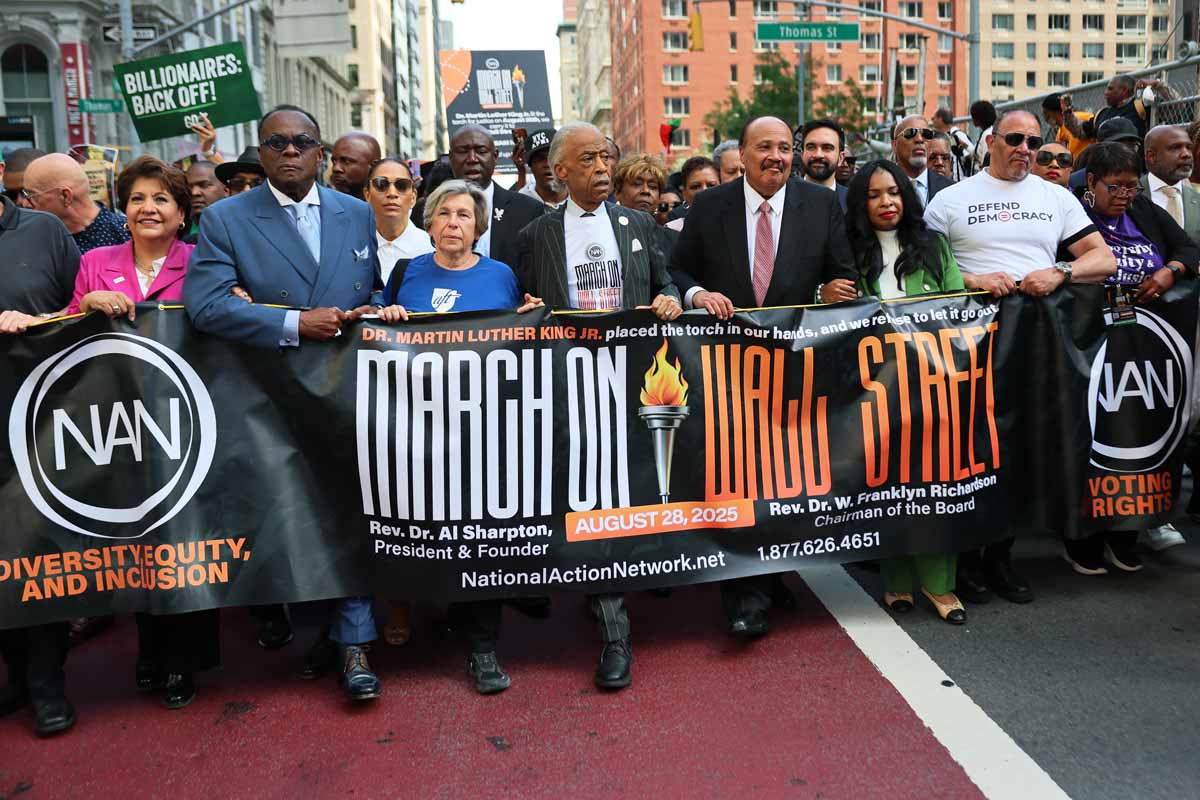
Sixty-two years to the day after Dr. Martin Luther King Jr. delivered his “I Have a Dream” speech, thousands poured into Lower Manhattan on Thursday, linking arms and voices in what was billed as the largest demonstration of its kind since Donald Trump returned to the White House.


Led by Rev. Al Sharpton and the National Action Network, the March on Wall Street drew national civil rights leaders, clergy, activists, and elected officials, all demanding economic justice, equity, and fair opportunity at a time when diversity, equity, and inclusion programs have been dismantled by the Trump administration.

The march began at Foley Square, paused at the African Burial Ground National Monument, and wound its way down Broadway to Whitehall Street. Participants spanned generations and professions — labor unions, fraternities and sororities, educators, and teens — all united by the call to defend rights secured in the 1960s and to push back against what they see as the biggest transfer of wealth in U.S. history.

NEW YORK, NEW YORK – AUGUST 28: Rev. Al Sharpton speaks as New York mayoral candidate Zohran Mamdani listens during the March on Wall Street on August 28, 2025 in New York City. Rev. Al Sharpton and National Action Network (NAN) lead a protest march on Wall Street, which began at Foley Square, to urge corporate America to resist the Trump administration’s campaign to roll back diversity, equity and inclusion (DEI) initiatives. The march comes on the anniversary of the Civil Rights-era March on Washington in 1963. (Photo by Michael M. Santiago/Getty Images)


Newark Mayor Ras Baraka, who was arrested earlier this year while protesting ICE, challenged fellow municipal leaders to act. “We are here because our ancestors demand that we be here, because the times demand that we be here, because every mayor in every city in America should be rising up right now as Donald Trump tries to send the National Guard into our communities — we are here as they create the biggest transference of wealth this country has ever seen,” Baraka declared.

The presence of Martin Luther King III and Andrea Waters King underscored the continuity of the movement. “It’s extraordinarily significant, but in the back of mind, I am thinking about how sad this is, that 62 years after Dad delivered that dream for our nation and world that we are in the position we are in,” King said.

“And the goal is to find ways to move this nation forward around economic inequality.” King also posted on social media: “We were proud to join @NationalAction and my good friend, @TheRevAl, for the #MarchOnWallStreet. On the 62nd anniversary of the #MarchOnWashington and in the financial capital of the world, we marched for economic justice and fair opportunities for ALL.”


Dr. Benjamin F. Chavis Jr., president and CEO of the National Newspaper Publishers Association, stood with Rev. Dr. Boise Kimber, president of the National Baptist Convention USA Inc., marking the moment’s deep historical ties. “It marked 62 years after the historic 1963 March on Washington for Jobs and Freedom, and we continue to march, we continue to speak out, and we continue to demand freedom, justice, equality, and equity,” Chavis said. “Thus, we join the Rev. Al Sharpton and the National Action Network in the March on Wall Street.

The Rev. Boise Kimber and I stood together, shoulder to shoulder, at the March on Wall Street. I was pleased to represent the Black Press of America under the auspices of the NNPA. In the words of publisher-leader Frederick Douglass, ‘Freedom is a constant struggle.’”
Rev. Dr. Christopher Davis, General Secretary at the National Baptist Convention, USA, Inc., drove home the financial realities confronting communities of faith.

“I don’t care the size of your church,” Davis said. “Whether you have 10,000 members or 10 members, you can’t do ministry without money, so we have to be concerned about the economic plight of the people that fill our pews.” Among those addressing the crowd were Michael Eric Dyson, Benjamin Crump, Melanie Campbell, Maya Wiley, and others, each pointing to the urgency of resisting what they described as attacks on democracy, workers, and Black communities.

“It means we continue the movement 62 years later, marching on Wall Street, raising the issues of income inequity, DEI, and the takeover of cities with Black mayors. The dream is alive,” Sharpton told the crowd.