
Home Blog Page 322

Post Traumatic Slave Syndrome

Anger, Self-Hatred and the Twisting of the Human Spirit

The following is part two of a series based on the lectures of Joy DeGruy (Nee Leary), M.S.W., that first ran in Our Time Press in January of 1999.
With the ending of Mental Health Month in May, and the reliving of the massacre in Tulsa, Oklahoma 100 years ago, we thought it appropriate to remind of the ongoing trauma African Americans have endured over the centuries.
It took aerial bombings to destroy Black Wall Street in Tulsa, but the minds of a people can be subject to ongoing violence by forgotten forces as deadly as fire and bullets. Here, Dr. DeGruy walks us through that process.


I had to take a look at African American behaviors and my focus was African American males. We know that African American males have the highest homicide rate. European males have the highest suicide rate. Let me explain to you what that means clinically. People who commit suicide are depressed about something. What does depression look like. They’re sad, loss of appetite, withdrawn, people start giving stuff away, sleep a lot, that’s a depressed person. They come into therapy, you’ve got to try and help them. Now you have a person who’s homicidal. He comes into therapy. Now why would a person be homicidal? Well they say here’s an anti-social personality, they act out, they’re compulsive. Eventually they’re labeled a sociopath. Guess what? You can’t cure a sociopath. So what can you do with them? You lock them up, it’s really simple. Prisons are a booming business and we’ve got the folks to put in there. Because they’re sociopaths, you can’t cure them, so you put them into institutions. When they go into therapy, they go to a white therapist, he says, “Homicidal? Got to go straight to the institution.” Whereas other youth who have these behaviors, they first go to treatment facilities where everybody is trying to help them. But the Black one with the same symptoms goes to a correction institution…


Afraid to Live
They’re misdiagnosing the whole thing. Here’s a true situation. Two young brothers are out in front of a high school. One is 19 and one is 16. The one that is 19 has pulled a gun on the one that is 16. The crowd thins out. The guy points the gun, pulls the trigger and it jams. To me, that’s the time for the other kid to run. Instead, the kid stands there and throws his hands back. So the guy hits the gun and pulls the trigger and it jams a second time. The 16 year old starts laughing. The 19-year-old tries it a third time and the gun jams again. The 16-year old said, “You think I’m afraid to die? I’m not afraid to die, I’m afraid to live.” The kid tried it a fourth time and the gun went off. To understand that behavior, I have to get into the psyche of a sixteen-year-old boy. How can it be that at 16 years old, he no longer wants to live? He can’t see a place in the world for himself and I’ll tell you why. We’re a man-object oriented system that says that you are what you are based on what you have. You are measured by your things. That’s why you have brothers walking around don’t have a home, don’t have a car, but they’ve got 50 gold chains. They’re thinking, “I’ve got to wear some worth, because I don’t have any worth.” So when you look at that what they’re saying is that I have to measure myself by things and then you tell me I can’t have them. You’ve barred every way that I have to get them and you tell me I’m nobody if I don’t have them. That’s what our society does to Black men. These young men don’t see a way. They can’t find a place to be somebody. To maintain a sense of dignity and worth. When I looked at that I realized that’s Post Traumatic Slave Syndrome. What I’m saying is that the injury of slavery was trans-generationally transmitted. We learned it. it’s knee-jerk, we figure it out. And every generation we give it to them because we pass on everything to the children. And the children begin to live out those things. It’s unconscious, I realize that it’s unconscious. And when I look at the brothers, I understand it’s a very, very different thing going on than what they believe. It’s one of the symptom of Post Traumatic Slave Syndrome.
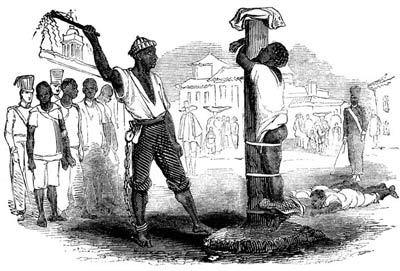

Post Traumatic Slave Syndrome
The fact that slavery went on for hundreds of years suggest the end result is not Post Traumatic Stress Disorder, it’s Post Traumatic Slave Syndrome. Socially learned and trans generationally impacted. So now what are some of those things? I had to look at this stuff. I had to figure out what it really was, what it looked like. We’ve all seen it by the way. When I come up with these things, it’s not going to be confusing, I just put a name on it. the first place to go is to the mirror. That’s the first place because I know Joy’s got it. Let me tell you what we go through and people don’t give us recognition for. There’s something called the Beck Anxiety Inventory. That’s is a stressor scale. When you move, there’s a stressor. When you get married, there’s a stressor. There are stressors for many things. They ought to put Black on it. Nobody has measured the stress of being Black. There is a stressor in America involved with being Black.


Racial Attitude Inventory
I want somebody to measure what happens to the blood chemistry and heart rhythm of a brother when a police car pulls up behind him. No one has measured that stressor. No one understands what that feels like. I’ve been in a car with a brother when that happens, and I’ve seen his entire body change. Everything changes. What is that stressor? Let’s look at anger. There is a process, it’s called the stages of Negressence. African Americans developed this scale. Racial attitude inventory. All of those things have been done. You haven’t heard about those things and neither have I. When I started doing my research, I started looking for scales that measured stuff about Black folks. I couldn’t find them anywhere. Not in any of the referee journals. Nowhere could I find any. But it was done years ago, but they couldn’t publish in journals. Our psychiatrists, psychologists, scientists, couldn’t publish because they were Black. So, they had to publish where they could, in obscure Black journals. I found the creators of the scales and they said it’s been here for years. Never been used as tool. The establishment says, “What is this, to help Black people? We don’t need that.” So, these scales were created. What they did was show the stages of our acculturation. In other words, there is something that happens to child when they realize they’re Black. There is a time when kids are walking around, they don’t know what’s going on, and then suddenly they get aware that they’re Black.

Rodney King, Personal Trauma
I remember the impact of the Rodney King situation with my son. Now, you and I, when we look at it say, “There it is again.” It’s nothing new. I used to live in South Central, and it was a regular thing to be pulled over by the police, just cause. I was seven months pregnant and they dragged my husband out of the car, put a gun to his head, had the SWAT team swing around with rifles over the cars, the little megaphones saying don’t move. If he would have sneezed… they run out and put a poster next to his face, say “Not him.” They rolled up their poster got in the cars and left. I could have had the baby right there. Right there. And my husband would have been dead. So, when we look at Rodney King it was business as usual to me but not for my son. He said, “Mommy, look! Aren’t those the policemen? Aren’t they supposed to protect us mommy? Will they do that to me mommy?” My son was traumatized by that because of the conflict internally to see something which created what is called “cognitive dissonance.” Very simply, cognitive dissonance is where I have a set of understandings, I’m then approached with a new set of understandings which create conflict. It was cognitive dissonance. My son could not reconcile what he saw, and the result was fear. That’s trauma. That’s injury. But they don’t measure that for my son.


Denial of Blackness
In “On Death and Dying” by Elisabeth Kubler-Ross, she speaks of the stages of grief when a person finds out they’re going to die. One of the first stages is denial. And we’ve got Black folks who deny they’re Black, don’t we? I meet Black folks and they’re Indian, and mixed with this and that. They can’t be Black because they’re in denial. Can you imagine a person going in for therapy because they’re having marital problems, and the white person sitting in front of them doesn’t know that they’ve got that big problem, that they ain’t Black? We (Black people) know it because we understand it. But that’s a family understanding that we have. The white person doesn’t know. They just say, “Oh, you’re not Black? Okay.” So denial is one of the phases because it’s real. This is what I call the stages of “Negression” or aculturation to being Black. You find out you’re Black, some folks go into denial on it. Other people go to another space with it. They get angry. It’s natural, there is a period of anger associated with this.


Forced to be Violent
In the movie “Sankofa”, you’ve got the slaves, you’ve got the Black overseers, you’ve got the mixed overseers, you’ve got the white overseer. There’s a couple with a baby on the way, about eight-and-a-half months pregnant. They’re trying to escape to freedom so that the baby can be born free. They get caught. The master, to make an example has one of the Black overseers beat this woman. I want you to walk through this with me. Because when he finishes his job overseeing and cracking the whip, he has to go have dinner with the rest of the people in the slave situation. That’s his job, everybody knows he has to do it because they’ve got a shotgun on him. He must do it because he’s a slave also. So, he starts beating the girl and they’ve got the gun trained on him, so he has to beat her to death. Now he lived with her, her family, he loved her. He loved her like he loved all the other children, but he has to beat her to death. After he beats her to death, all the slaves are there waiting for the master to go. They deliver the baby because she’s full term. So they deliver the baby in these tragic circumstances, he sees the woman rocking the baby, he comes in. “How’s the baby?” This is the man who beat the mother to death.
“You can’t come around right now. We know you did what you had to do but it’s a little hard. You just can’t come around for a couple of days.” Do you understand what he had to do with that? What did it do to his heart? What did he do with the anger? Where did it go? Where has it always gone, because it represents itself in an ailment that we know we tops the scales as African American males. What is it? Hypertension. That’s what we did with the anger. “Because I could not be overtly express it, it built up in me.” Then they say we’re so angry. Well don’t we have reason to be? Of course we have reason to be. That’s why they were scared of that Million Man March.


Control Group is in Africa
When I went to Africa I met with some women in Botswana. They’d start out the meeting laughing at us. “You believed them didn’t you? You thought you’d come up here and see us with swollen bellies and flies.” “You think lions are going to come in and chew us up.” They said, “You bought it, what white people told you about Africa. Just like we bought it when we were told we couldn’t be in your communities without being a drive by victim. Because that’s what they tell us.” One woman said she had studied in the United States and in her last year, she sent for her five-year-old daughter. The daughter comes over to be with her mother for that last year of college. One day she runs into the house crying, “Mommy, Mommy, they called me Black mommy. They called me Black.” Her mother looked at her and said, “And? You are Black, so why are you crying?” she said in that instant she realized what had happened to us. She called her mother on the phone and sent her daughter back the next day on the plane. She said, “I didn’t let her live a day in this country believing there was something wrong with her Blackness.” I said the difference between you and me is I didn’t have anyplace to send my daughter. You see, that’s what happened to us and it was complete. It was absolutely complete. As I began to look at those notions again, the real control group is in Africa, my control group by the way, and I’m going to tell you who they are. During my travel in Africa I ran into couple, Gilbert and Tamika, both descended from slaves. Gilbert said, “I’m going to take you to a village I’ve been helping for eight years.” he told me that slaves were enslaved in south Africa by the Dutch. They were taught Afrikaan, their names were changed to European names, Elizabeth, Robert, etc. They had no affiliation to their tribes. It’s a place called Onverwags, which in Afrikaans means “unexpected” When I went to the village I saw a carbon copy of African America. Same symptomology, increases in the divorce rate, drug and alcohol abuse, all the symptomologies. You see there is a specific behavior that follows the destruction of culture of these people, no matter where they are. They’re my control group.


Next week: Black Mothers, Protecting the Child, Therapy, Self-enhancement Program, Therapeutic Model, Strength of Positive Feedback
Risk of Multiple Sclerosis Increasing Among African Americans

By Fern Gillespie
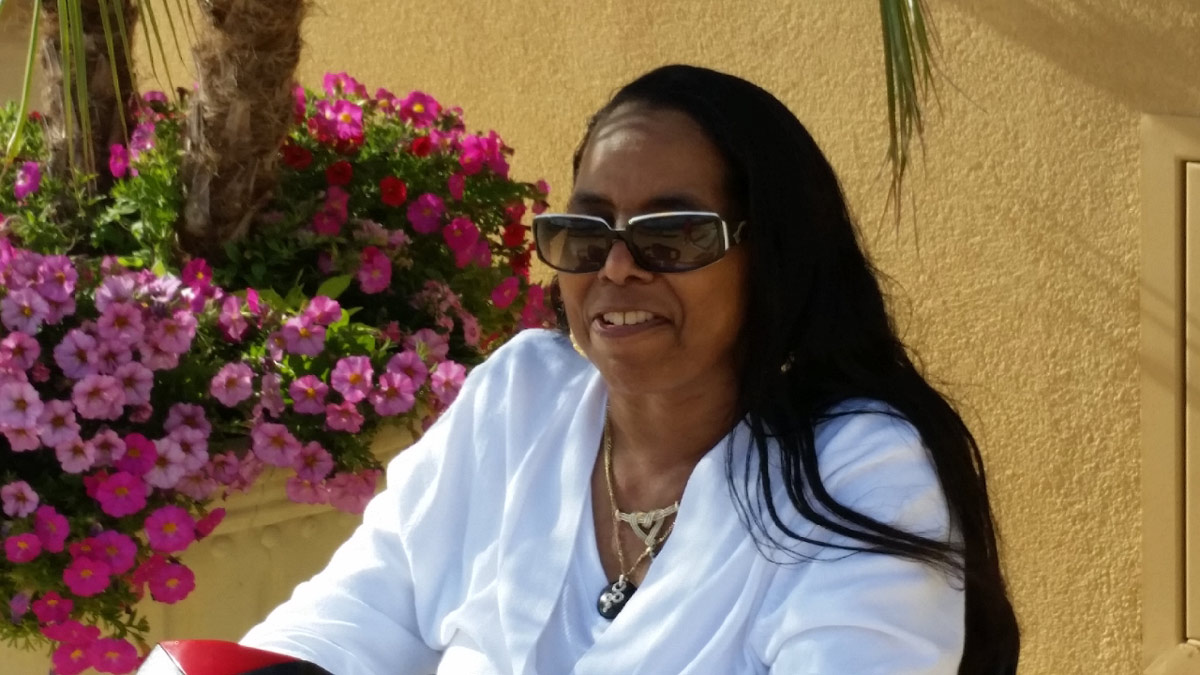
For many years, Dr. Michelle King-Huger was a noted educator working as an assistant principal in several Harlem public schools. Then, in 2007, her life began to crumble. She lost her husband to a heart ailment. By 2011, her continuing health crisis was diagnosed as progressive multiple sclerosis. She evolved from a cane to a walker to a wheelchair.
Recently, the Kaiser Permanente plan in Southern California reported that African Americans have a 47% increased risk of multiple sclerosis, while Hispanic Americans had a 50% lower risk and Asian Americans had an 80% lower risk of MS compared with white Americans. 


Black people with MS might also have more aggressive disease progression, greater disability and different symptoms. This includes more walking, balance, and coordination problems, more cognitive and visual symptoms, more frequent relapses with poorer recovery, and earlier disability onset.


Although she is wheelchair-bound with complex healthcare issues, Dr. King-Huger has continued to work. She has used her doctorate as an educator to pen two memoir advice books. Her first book was From D.I.V.A to Disabled: A Determined Individual with a Victorious Attitude focused on self-empowerment through times of medical crisis.

Balancing her MS healthcare routine with her passion for writing, Dr. King-Huger published America’s Battle Against the COVID-19 Pandemic and Social Injustice (Christian Faith Publishers) in 2021. It is a personal and professional memoir tracing the country’s tumultuous historical and unforgettable times from March to December 2020. “The coronavirus pandemic made the world stop in its tracks. The day-to-day routines that were considered a normal part of life were taken from us,” she said.  “So many people across our country and across the world now feel disabled and I wonder if this horrific experience will change the insight and perspective of man to show compassion for those who are less fortunate than others. I wanted to share my personal reflections from a cultural perspective. I use statistics, personal surveys, news coverage and encourage ideas for self-growth for the mind, body and soul thought-provoking words quotes and poetry from my Maya Angelo to Barack Obama to John F Kennedy to the Bible.”


The Multiple Sclerosis Society has become a frontline advocate for African Americans with MS. On June 15 and 16, the MS Society will hold the 2022 Black MS Experience Summit, an interactive, two-day virtual program to connect with others in the Black MS Community. The summit will feature leading scientific and healthcare experts. Topics for this year’s program include diagnosis, challenges to care, understanding clinical trials and studies, removing the stigma of mental health services, nurturing emotional and spiritual health, managing long-term outcomes, understanding treatment goals, and exploring complementary and alternative treatments. 


Montel Williams, Jennifer Holiday, Lola Falana and the late Richard Pryor are a few of the Black celebrities that have spoken out about living with MS. However, the medical industry has rarely conducted MS clinical trials on African Americans, so limited data is available on the impact of MS among Blacks. To respond to these challenges, the National African Americans with MS Registry (NAAMSR) invites African American patients with MS to join the registry.


“The National MS Society continues to be a driving force for MS research for the nearly 1 million people living with MS in the U.S.,” said Daphne Mack, Senior Manager, PR/Media for the Society. “For Black people, new research has shown MS is more prevalent and aggressive than previously thought so more participants in clinical trials are needed to find out why. This is why the Society’s Black MS Experience Summit is one way to connect people to resources and information unique to the needs of the Black community living with MS.”
Registration is free for the 2022 Black MS Experience Summit at nationalmssociety.org

The Legacy of Bed-Stuy’s Legendary “The East” is on Film

Fern Gillespie
In 1969, when the Black Arts Movement was emerging, educator-activist Jitu Weusi launched an Afro-centric cultural economic renaissance in Bedford Stuyvesant. It was the East. Jitu inspired a generation of young people. It had New York’s first state-certified Afro-centric school Uhuru Sasa Shule, a food co-op, newsmagazine, publisher, record label, restaurant, clothing shop and bookstore. The East hosted world-famous jazz musicians and poets at its highly sought-after performance venue including Max Roach, Roy Ayers, Betty Carter, Sun Ra, Randy Weston. Hugh Masekela and Amiri Baraka. It also served as an epicenter for political activists like the Black Panther Party and the Young Lords. The East also launched the International African Arts Festival, now in its 51st year.


The legacy of The East is showcased in the award-winning documentary The Sun Rises in The East, directed and produced by Bed-Stuy married couple Tayo Giwa and Cynthia Gordy Giwa, who are also the creators of Black-Owned Brooklyn, a publication and Instagram site that documents local Black business, history and culture.


“Jitu Weuisi and The East were concerned with tackling white supremacy at its psychological root,” said Tayo Giwa. “They were thinking about: How do you shape Black minds? How do you shape Black aspiration and belief in self? What role can education and culture play in our liberation? They were experimenting and taking risks, ultimately doing transformative work for Black people.” 


The film also examines the challenges that led to the organization’s eventual dissolution. The East officially closed in 1986. “Their legacy reverberates in present-day Bed-Stuy through the neighborhood’s strong sense of community,” said Cynthia Gordy Giwa. “It’s a thriving, independent Black business community that continues to this day with an unabashed pride in our diverse Black cultures.”


The International African Arts Festival 2022 will be July 1 -4 at Commodore Barry Park.

What’s Going On – 6/2

JUNE is filled with celebrations. It is African American Music Appreciation Month; Alzheimer’s And Brain Awareness Month, Caribbean American Heritage Month LGBT PRIDE Month and Soul Food Month. It welcomes JUNETEENTH on 19; Father’s Day, 20 and Summer Solstice, 21.

PRIMARIES IN AMERICA
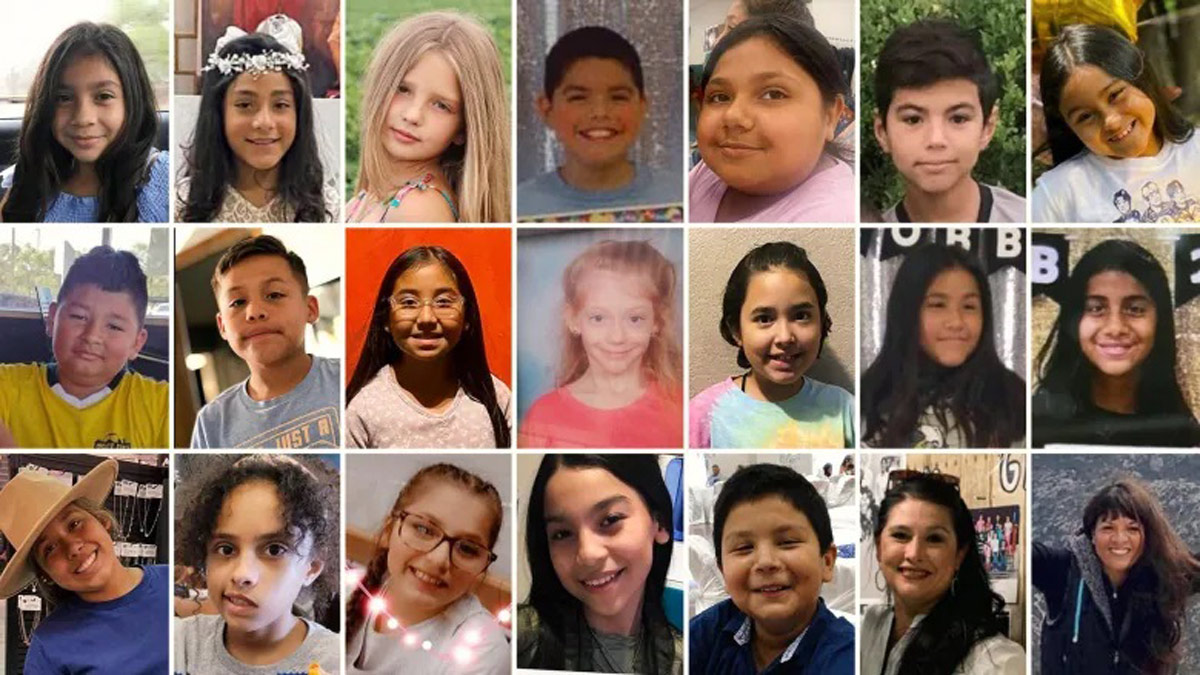
Last week’s primaries in Texas, Georgia, Alabama and Arkansas revealed that Trump is losing his Midas Touch with Republican voters. Trump and his followers symbolize a lot of the flaws in American political culture. The past three weeks in America in Buffalo, NY; Uvalde, Texas, and the church in California have been tragic and call attention to the nation reigning in on gun reform, for openers. Last week ended with a former US President greeting gun lovers at the National Rifle Association’s Convention, a few days after a massacre that took the lives of 19 elementary school kids and two teachers. Our nation is in a bad way. It’s in the midst of a nervous breakdown and has to be cured.

What will Americans vote for in November? The right to bear arms and own weapons of mass destruction? Denying a woman’s right to an abortion? Abrogating and diminishing voters’ rights– which is related to the redistricting maps all over the country. I thought that NYS was progressive before I started to understand that a man called a Master just gerrymandered the NY Congressional map, which favors Republicans and resembles a map submitted by a Republican group a few months ago. This reconfiguration of the congressional map translates to fewer NYS representatives. Is this NY or Georgia, Florida and Texas?

NYS POLITICAL MAP. CITYSTATE/NY MAGAZINE published a new list, ALBANY POWER 100. The Political Leaders at the Dawn of the Hochul Era. The following is an abbreviated list of most of the Black elitists. Andrea Stewart- Cousins, Senate Majority Leader, 2; Carl Heastie, Assembly Speaker, 3; Letitia James, 4; Crystal Peoples-Stokes, Assembly Majority Leader, 6; George Gresham, 1199 SEIU, 8; NYC Mayor Eric Adams, 11; Dr. Mary Bassett, NYS Health Commissioner, 16; Kyle Bragg, 32BJ SEIU, 21; Damian Williams, US Attorney Southern District, 25; Dr. Lester Young, Jr. Board of Regents Chancellor, 28; Hope Knight, Pres/CEO Empire State Development, 31; Adrienne Harris, Superintendent, State Dept. of Financial Services,34; Camille Joseph, Group VP, Charter Communications, 62; Brooklyn Senator Jabari Brisport, 63; Patrick Jenkins & Associates, 67; Hazel Dukes, President NAACP NYS Conference, 78; State Senator Samra Brouk, 80; Public Advocate and Gubernatorial hopeful Brooklynite Jumaane Williams, 92; and Antonio Delgado, Lieutenant Governor, 97.

Mayor Eric Adams jokingly hinted at his interest in a 2024 presidential run. Why not? It is a tradition for NYC Mayors like Bloomberg, Guiliani and deBlasio. He also put in his bid for NYC to host the 2024 Democratic Convention.

HARLEM/LAND USE
There is no longer a pause on construction activity in NYC. East and Central Harlem is no exception. The new Studio Museum in Harlem, on West 125 Street, is still under construction as is the building across the street between Malcolm X and Adam Clayton Powell Boulevards, which will be the National Urban League headquarters and a mixed-use office and residential building. Barbara Ann Teer’s National Black Theater building on Fifth, between 125th and 126th Streets, was demolished and will be developed into a mixed-use building, part residential, and part more expansive home for the National Black Theater. The completion date is 2024.

BUSINESS MATTERS
COMPASS residential real estate tech company is 10 years young and it made the 2022 Fortune 500 List. Compass is the largest independent brokerage in the nation, focusing on helping realtors expand their businesses. It operates an online platform for buying, selling and renting real estate.

The Crain’s NY Business Magazine published its NY Area’s Largest Minority -owned Companies List of 20, based on 2021 revenues. There was only one Black-owned business–the Bronx-based Cooperative Home Care Association Inc., a paraprofessional home care service. It made the list, ranking 12. I don’t know about the accuracy of this Crain’s list. Black construction and development companies enjoyed robust revenues last year. Oftentimes I wonder about the validity of these media lists

ARTS/CULTURE
The 2022 Tonys Awards for excellence in Theater will by held on June 12.
Musicals with Black protagonist have garnered lots of nominations like a “Strange Loop” written by African American Michael R. Jackson, about a Black queer writing a musical about a Black queer; and “MJ” as in the late great Michael “Man In the Mirror “Jackson. Think both Michaels will collect a few Tonys next week.

BOOK TALK: The Viola Davis book, FINDING ME, A MEMOIR, has dominated the NY Times Best Selling book list for three weeks. USA Today says, “Finding Me reads like Davis is sitting down for a one on one about her life warts and all.” An Oprah Book Club pick, Harper’s Bazaar says. It is one of the best books of 2022.

The National Association of Black Journalists will honor Audrey Edwards with an Outstanding Book Award for her edgy memoir, “Black and Free in Paris in the Trump Years,” at its Annual Convention this year in Las Vegas, August 3-7. NABJ holds a 2022 joint convention with the National Association of Hispanic Journalists.

NEWSMAKERS
RIP: Businessman and philanthropist Yves Michel passed away on May 25. Born in Haiti, he relocated to New York in 1962, and started driving a cab, for a while before buying his first taxi medallion. He married Harriet Richardson in 1968. The union produced two sons. Buying more medallions, Yves also purchased a building that eventually would house a 200-car garage. Y&H Enterprises was born! The business, a yellow cab fleet, and auto service company, prospered, creating scores of jobs for locals. His philanthropist outreach was Haiti-centric. The family was the centerpiece of his life. He was an American Dreamer.. He is survived by his wife Harriet, sons Christopher and Gregory, daughters-in-law, Valerie and Michelle, and four grandchildren Isabella, Dominique, Luc and Alexandra. Yves Michel’s Homegoing Arrangements: Visitation, Benta’s Funeral Home at 630 St. Nicholas Avenue, June 3, 2-4:30 pm. Memorial Service, The Riverside Church, 490 Riverside Drive, Harlem, on Saturday, June 4 at 11 am.

A Harlem-based media strategist, Victoria can be reached at victoria.horsford@aol.com

Uvalde is a result of a racist institution that prioritizes oppression over protection

By Candace McDuffie,
www.theroot.com
Every detail about how police delayed action from stopping a mass shooter in Uvalde, Texas on May 24 is more gut-wrenching than the last. When an 18-year-old terrorist stormed Robb Elementary School with a semi-automatic rifle last week, officers made it to the scene quickly. However, they failed to prevent innocent victims from losing their lives. The results of their immobility at Robb Elementary School? 21 people dead—19 children and 2 adults.


Uvalde officers waited an hour before entering the school instead of immediately going after the gunman responsible for the attack. They ran inside to save their own children and brought them to safety. They also threatened and arrested parents who were desperate to do the same thing. In the time law enforcement sat idly outside, more than 100 rounds of ammunition were fired.

Read More