Home Blog Page 181

The Love Songs of W.E.B. DuBois

The Love Songs of W.E.B. DuBois: A Novel by Honorée Fanonne Jeffers Harper Collins 790, pp.

By Dr. Brenda M. Greene

Poet, fiction writer, and essayist Honorée Fanonne Jeffers’s The Love Songs of W.E.B. DuBois (Harper Collins, 2021) is a multigenerational epic novel beginning in the early 18th century in a place called the Gold Coast in Africa, and continuing to the present.

In this debut novel, Jeffers uses the literature and scholarship of W.E.B. DuBois, sociologist, historian, and essayist, as a framework for the coming of age story of the protagonist Ailey Pearl Garfield whose roots are in Chicasetta, Georgia.

Jeffers intersperses passages from DuBois and “songs” which provide readers with origin stories that represent the complicated relationships of Ailey’s African and Cherokee ancestors.

W.E.B. DuBois spent more than seven decades advocating for improved race relations, civil rights, and peace, and researching the history of America and its relationship to Black people.

Jeffers’ use of W.E.B. DuBois’ work as a framework to tell the story of Ailey’s family and ancestors provides an historical, sociological, and political context for understanding the journey of Ailey’s family in America.


Readers encounter two narratives in this novel which is primarily set in central Georgia and represents the journey of Ailey’s family over three centuries. One narrative details the history of enslaved Africans and Indigenous people in the 18th and 19th century, and the second details the family dynamics of a middle class African American family from the mid through late 20th century.

The narratives are not contiguous, and readers move from back and forth through the 18th, 19th, and 20th centuries as they read the novel. These parallel narratives provide readers with an understanding of the intricate relationships between Blacks and Native Americans and the ways in which these past relationships shape the future of Ailey’s family.

As Ailey matures into a young woman, she is guided by dreams, family members, and teachers. The themes that emanate from her research include cultural memories and sorrow songs reflecting the loss of Africa, enslaved Black and Indigenous people, the sin of the intrusion of whites on the land, broken treaties, sexual abuse and the mistreatment of women.

In a song titled “Loss of Africa,” Jeffers writes, “We know of those taken from the place called Africa, captured by men who had transgressed against flesh for a long time. . . We know about the dark-dark folks who would never see home again.”

Jeffers’s portrayal of an enslaved girl named Beauty underscores the importance of memory. Beauty is given a new name after being taken from her parents. She decides that “she would take out her memories and wrap herself tightly in them. She was owned but her memories were not.”

Ailey is motivated to investigate her family origins after working with her mentor, the Scholar Dr. Oludara, who wants to compile a family history on her ancestor, the slave woman that her father had named her for. Dr. Oludara and Ailey’s Uncle Root, a well-regarded professor at a southern university, become her guides as she unravels the stories of her family.

Readers encounter scholars, writers, and activists such as W.E.B. DuBois, Booker T. Washington, Jessie Redmon Fauset, Zora Neale Hurston, Ida B. Wells-Barnett, and Malcolm X as Ailey uncovers the history and roots of her family and fully embraces DuBois’s concept of “double-consciousness, the sense of always looking at oneself through the eyes of others. . . his two-ness, an American, a Negro: two souls, two thoughts, two unreconciled strivings . . .”


Jeffers’s introduction of issues such as class, colorism, drug abuse, child molestation, sexual abuse and family trauma in this multilayered novel reminds readers that these are experiences encountered by all families regardless of class.

The middleclass status of Ailey does not protect her from the reality of these social issues and she struggles with them throughout the novel. In describing the death of sister for example, Ailey reflects on her mother’s response: “My mother didn’t feel it when her child died. There was no dream, no prescience in her spirit . . .”


The Love Songs of W.E.B. DuBois is reminiscence of Toni Morrison’s novel A Mercy, which brings together Anglo Dutch peoples, enslaved Africans, and Native Americans in a town in rural New York.

Jeffers, like Morrison, recounts their struggle to survive, the abuse of Africans and Native Americans, and the ways they resist and persist despite years of maltreatment and exploitation. Both Jeffers and Morrison have truly penned stories that have been distorted or omitted from American literature and history.


In a time when books are being banned, and there are increased efforts to erase the history and stories of Blacks and Indigenous people in America, Jeffers’ novel is an important literary text that expands the narratives of American literature from the perspective of a Black woman.

Toni Morrison tells us that the writer should create stories that are both political and irrevocably beautiful. The Love Songs of W.E.B. DuBois embodies these qualities.


Dr. Brenda M. Greene is Professor of English and Founder and Executive Director of the Center for Black Literature at Medgar Evers College, CUNY. To watch an interview with Dr. Greene and Honorée Fanonne Jeffers on The Love Songs of W.E.B. DuBois go to https://www.youtube.com/watch?v=a_Dtv45t0RA
Building Stability: Ensuring Homeownership Remains a Reality in New York for Black & Brown Families

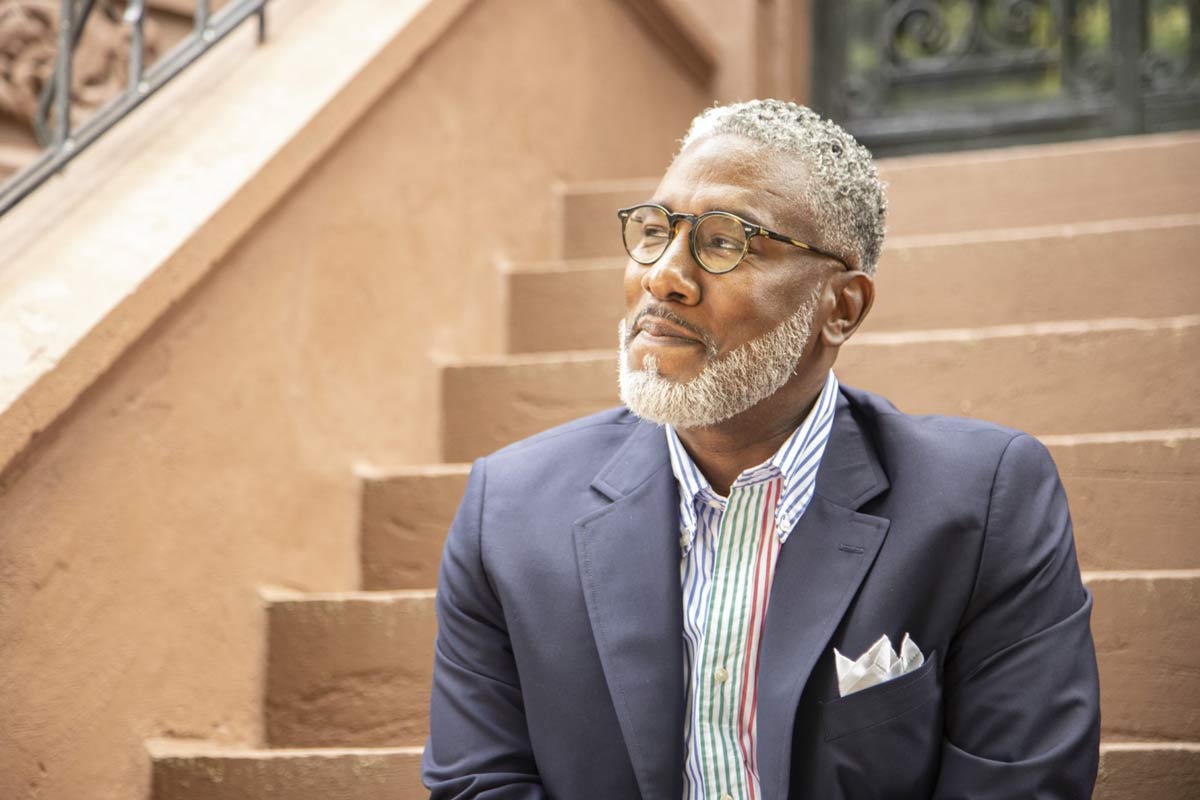
By Rev. Conrad Tillard
As the New York State Legislature reconvenes in Albany, the spotlight again falls on the state’s pressing housing crisis. Fueled by a confluence of factors such as limited availability, restrictive zoning regulations, stringent rent control laws, and escalating construction costs, this perennial issue has made it nearly impossible to keep up with the housing demand.
Amidst this heated debate, it’s crucial not to overlook the pivotal role of homeownership, especially within our Black and Brown communities. It’s equally vital to ensure that legislation while aiming to address our city and state housing challenges, doesn’t inadvertently place undue strain on first—and second-generation property owners in historically marginalized communities, burdening them with counterproductive laws and regulations.
This urgency led to a recent panel discussion I moderated at Antioch Baptist Church in the heart of Bedford Stuyvesant, Brooklyn. The event brought together African-American housing and development experts and non-profit leaders; all united in their mission to shed light on the pathways to—and barriers against—property ownership for African Americans in our community.


The challenges facing prospective Black and Brown homeowners are manifold, from systemic discrimination in mortgage lending, resulting in higher rejection rates and borrowing costs, to the lingering effects of redlining. These barriers not only hinder home acquisition and retention but also severely limit the ability of these communities to build generational wealth through property ownership. The financial implications are staggering, with an estimated collective loss exceeding $200 million for Black and Latino New Yorkers over the lifetime of their mortgages, according to the New York State Attorney General’s office.
Our panelists also critically examined the potential repercussions of legislation currently being debated in Albany, such as the so-called “Good Cause Eviction” bill, which fails to address our state’s housing supply shortage and would make the process of finding an affordable place to live even more difficult and expensive. Not to mention, tens of thousands of small property owners would be severely negatively impacted by Good Cause Eviction.
Many of New York’s small property owners are first- or second-generation Americans, and, in many cases, first- or second-generation property owners who poured their life’s savings into modest properties with dreams of building generational wealth for their families. But legislation passed in Albany over the past several years has resulted in a growing number of small property owners struggling to make ends meet.
Among our speakers was Lincoln Eccles, whose family’s story embodies the pursuit of the American Dream. His parents, Jamaican immigrants who arrived in the 1960s, worked tirelessly and saved up every penny to purchase and maintain a 118-year-old 14-unit property in Crown Heights, which Lincoln maintains today, and which supports his wife and three-year-old son. Yet, the Good Cause Eviction bill, with its arbitrary rent caps, threatens to dismantle the dreams of small property owners like Lincoln, pushing them towards financial insolvency or into the hands of speculative investors.


Lincoln’s family story is intimate but also shared. Neighborhoods of color throughout New York City have apartment building owners whose toeholds on stability are being threatened by policies that benefit those who have always benefited.
In the face of our state’s housing crisis, it’s imperative for lawmakers to heed the voices of those who have long anchored our communities but now risk being overshadowed by the interests of newcomers and ideologues. Policies like “Good Cause Eviction” risk leaving a trail of devastation for small property owners without addressing the underlying challenges of housing affordability and availability.
The path forward requires a nuanced understanding of the housing ecosystem and a commitment to solutions that bolster, rather than undermine, the prospects of homeownership for all New Yorkers. Only through inclusive dialogue and thoughtful policy-making can we hope to navigate out of this crisis, ensuring that the dream of property ownership remains accessible to every New Yorker, irrespective of their background.


Reverend Conrad Tillard is the Founder of Black Clergy for Economic Empowerment, a Baptist and Congregational Minister in Bedford Stuyvesant, and an Adjunct Professor at The City University of New York

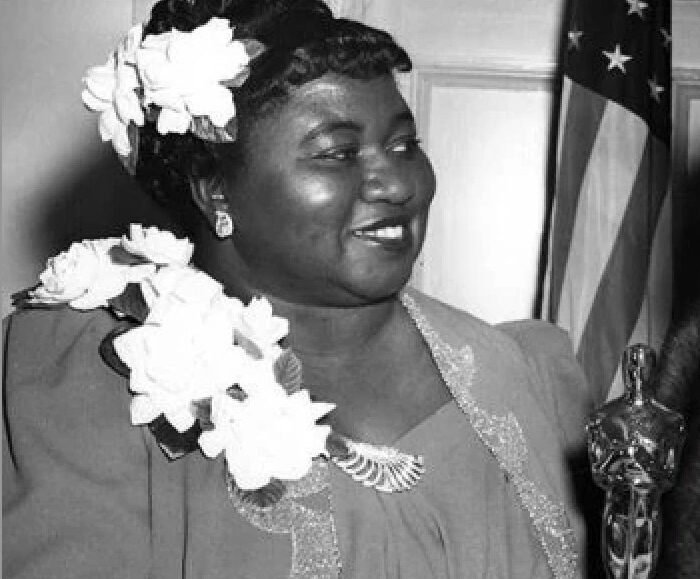
Hattie McDaniel: A Pioneer Who Sounded The Alarm About The Big Pay Gap!

By Lisa Durden
Hey y’all, it’s your girl Lisa Durden, and you know I had to kick off Women’s History Month with a spotlight on the queens who weren’t just making movies, but making moves! So, let’s talk about the incomparable Ms. Hattie McDaniel.

We all know her as the First Black Woman to snag that Oscar for Best Supporting Actress in ‘Gone With The Wind,’ but did y’all know she was also sounding the alarm about ‘The Big Pay Gap’ in Hollyweird? Yup. She did that! Let’s get into it!

What many may not know is, Hattie McDaniel wasn’t just a star; she was a social justice warrior, fighting against racial and gender discrimination in Tinseltown waaaay before it was popular. She was a trailblazer!

Born in 1895 in Wichita, Kansas, Hattie faced an uphill battle from the jump. At a time when Black actors and actresses were getting the short end of the proverbial stick, she pushed through with talent and tenacity.

Despite the odds, she landed roles that showcased her skills, including her iconic role as “Mammy” in “Gone with the Wind.”’


Although a looooot of Black folks criticized her for taking on those “demeaning” characters, labeling her an embarrassment to the race, it didn’t stop her! Hattie wasn’t backing down! She STOOD ON BUSINESS! She knew her worth, and she wasn’t about to let Hollywood play in her face. Even after winning that Oscar in 1940, the victory was bittersweet.

It was overshadowed by the harsh realities of racism, racial segregation, and gender discrimination that persisted within the industry. Sadly, her immense fame and box office draw did not translate to a bigger bank account.

She continued to deal with ‘The Big Pay Gap.’ Hattie wasn’t getting paid what she deserved. Black actresses like her were getting crumbs compared to their white counterparts. But Hattie did not stay silent. Although her complaints fell on deaf ears, she fearlessly spoke up loud and proud, demanding fair pay for Black women in Hollywood.

She wasn’t just fighting for herself; she was fighting for all women. Hattie went toe-to-toe with white, racist, studio bigwigs and gatekeepers, refusing to back down until she got what she deserved.

Although Hollywood wasn’t exactly rolling out the red carpet for Black women demanding equality, Hattie wasn’t about to let them silence her. She refused to accept this inequity silently! Recognizing the inherent injustice of unequal pay, she courageously advocated for fair compensation for Black women in Hollywood.

Her fight was not merely for personal gain, but was driven by a desire to challenge the systemic inequalities that pervaded the film industry. So, throughout her career, Ms. McDaniel negotiated tirelessly with studio executives and industry leaders, demanding equitable pay for Black actresses, but her demands were often met with hostility and stonewalling.

Despite Hattie’s immense pressure to conform to the status quo, she stood ten toes down in her pursuit of justice, refusing to compromise her principles for the sake of acceptance. YAAASSS SIS YAAASSS!


Beyond her contributions to the film industry, Hattie McDaniel’s impact transcended the silver screen. As a vocal advocate for Civil Rights and racial equality, she used her platform to amplify marginalized voices and challenge societal norms.

Her commitment to social justice reverberated far beyond Hollywood, inspiring countless individuals to join the fight for equality and inclusion.

So, as we reflect on Ms. McDaniel’s remarkable journey, let us not only celebrate her achievements but also heed the lessons of her legacy.

Let’s remember her as more than just a Hollywood icon. She was an activist, a trailblazer, a fighter, and a leader who paved the way for all women. Her perseverance and unwavering commitment helped pave the way for incremental progress, helping to gradually dismantle some of the barriers that hindered Black women’s advancement in Hollywood.

To be real clear, however…much work remains to be done, but Hattie McDaniel’s bravery endures as a testament to the power of resilience and determination in the face of adversity, which has inspired future generations of Black actresses like MoNique, Viola Davis, and Taraji P. Henson, who are still fighting to close ‘The Big Pay Gap,’ and they’re not backing down either! They are STANDING ON BUSINESS! Stay tuned for their stories in this four-part series, because we’re just getting started. #ClapForThat!

Lisa Durden is a prominent National Media Contributor and TV Personality, renowned for her appearances on prestigious platforms such as ABC 20/20 as an ABC News Contributor, Revolt TV’s ‘Revolt Black News,’ and Fox Soul’s ‘Being Black With Tammi Mac.’

Her contributions extend to CBS News, The Dr. Oz Show, and as an #APlusPanel Contributor on #TheOpinionZone for the former ‘Chasing News Series’ on the My9 Network. Renowned for her distinctive voice, Lisa Durden is not merely a commentator but a provocateur and truth-teller, challenging myths and reshaping narratives.

Her activism echoes through her storytelling, establishing her as a vocal Social Justice Journalist and thought leader, recognized by media outlets like Newsweek, Ark Republic, and Our Time Press. Lisa’s commitment to redefining the collective narrative resonates powerfully, making her a significant figure in today’s media landscape. #ClapForThat!STAY CONNECTED: Instagram: @lisardurden
Twitter: @Lisardurden Facebook: @LisaDurdenTVPersonality TikTok: @lisardurden

Hazel Dukes: Civil Rights Shero

By Fern Gillespie
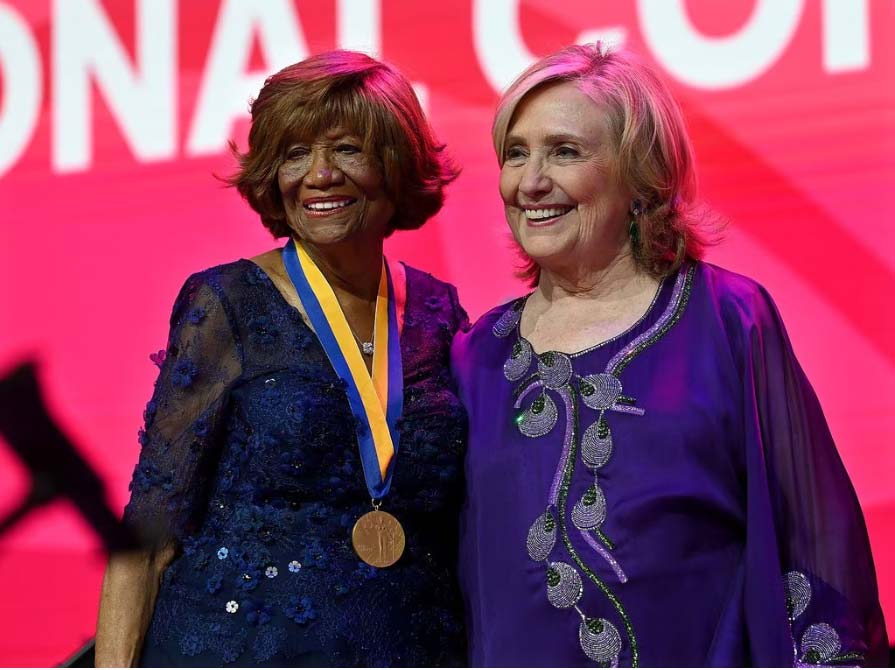
At this year’s New York State Association of Black, Puerto Rican, Hispanic & Asian Legislators in Albany, Governor Kathy Hochul announced that the State University of New York Black Leadership Institute will establish the Dr. Hazel Dukes Fellowship. It will name one exceptional individual from each cohort in honor of Dr. Hazel Dukes, a former SUNY Board of Trustees member.
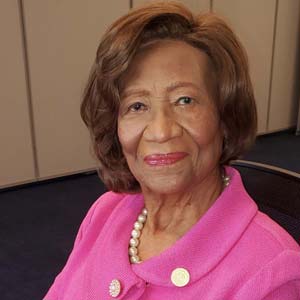
Dukes is a Civil Rights icon. When Dr. Hazel Dukes speaks out for racial justice and human rights, New York’s governors, mayors, senators, and congressional members listen. For over 50 years, the 91-year-old activist, educator, and organizer has held New York and national NAACP offices, from her long-term role as President of the New York State chapter to being a national NAACP Board Member to being the national NAACP President in 1989. Last year, she was awarded the historic NAACP Spingarn Medal for her legendary impact on Civil Rights.

Hazel Dukes


Established in 1914 by Joel E. Spingarn, Chairman of the NAACP Board of Directors, the prestigious Spingarn Medal is considered the highest or noblest achievement by a living African American in any honorable field. Some of the previous Spingarn Medal honorees include Dr. Charles Drew, Cicely Tyson, Earl G. Graves Sr., George Washington Carver, Harry Belafonte, Jackie Robinson, Jesse L. Jackson, Lena Horne, James Earl Jones, Gordon Parks, Maya Angelou, Martin Luther King, Jr., Myrlie Evers-Williams, Oprah Winfrey, Quincy Jones, Sidney Poitier, and W.E.B. DuBois.
“Dr. Dukes is a woman of profound strength and courage, who has served as an unwavering pillar in our community for more than fifty years,” announced Derrick Johnson, NAACP President & CEO. “Led by her fierce determination, she has improved the lives of countless Black Americans and New Yorkers while bringing about lasting change that will be felt in the Black community for generations to come.”
For Dr. Dukes, learning about the Spingarn Medal honor was an unforgettable experience. “I was absolutely excited and stunned. When you look at the history of the men and women who have received that award, to get into that company was just thrilling,” she told Our Time Press. “I couldn’t be more excited and proud of my accomplishments in the NAACP over the decades.”
The Spingarn Medal was presented to Dr. Dukes at the NAACP 2023 Convention by her friend and colleague Hillary Clinton, former First Lady, New York Senator, and Secretary of State. She had known the Clintons since he served as Arkansas governor. Their friendship grew through Bill Clinton’s presidency, persuading New Yorkers to support Hillary Clinton as a New York Senator, and assisting in Hillary Clinton’s presidential campaign.
“I’ve built a friendship with Hillary over the years. So, when they asked who I wanted, the first person that came to my mind was Hillary. Her office told me that the Secretary of State really wanted to do this,” Dr. Dukes recalled. The whole place was excited. That was the largest attendance of anybody receiving the Spingarn—even Colin Powell. I had Deltas, Links, and church people. They all came. It was some sight to see.”
Dr. Dukes was born in 1932 in Montgomery, Alabama, during Jim Crow. She attended Alabama State Teachers College and later moved to New York, earning a degree from Adelphi University. She continues to be disturbed by the racist politics practiced by conservatives. “I am saddened to see what former President Donald Trump is doing to this country. The division and the kind of things that he is saying to divide this country further,” she said. “What kind of a person has risen to President of the United States of America and just spits venom and hatred every day all day? In this country, it is not just black and white; it is America. It’s a democracy that we’ve got to fight to save.”


“I don’t remember the division being as open as it is now. So, all of us who care about America and democracy have to go out and vote so our voice can be heard and we can get these people out of office. Get people who have compassion and care about America. It’s the opportunity for people who want to live in harmony,” she said. “Every time the NAACP won a victory, it wasn’t just for Black folks. It was for America. You look at all the fights we’ve won. Everyone was included in it.”
In addition to the SUNY award announcement, Governor Hochul also shared that the next SUNY portrait competition will be held in honor of Dr. Dukes, and the winning portrait will be displayed in the H. Carl McCall SUNY building in Albany in recognition of her service.
“A lot of my work has been for education. My grandmother, who only went to the eighth grade, would point to my head and say to me, ‘If you get it up here, regardless of what they call you or say about you, can defend yourself,’” she said.
“I’ve always looked at Education as a way for people to get out of poverty and be able to stand and defend what they believe in. So, this is such a great honor that when I’m gone, it’s a legacy.”

Celebrating and Protecting Our Young Women

By Nayaba Arinde
Our Time Press

Possibly no better words can kick off March Women’s History Month than those penned by poet Maya Angelou’ in “Phenomenal Woman.” She wrote, “I’m a woman, phenomenally. Phenomenal woman, that’s me.”
The long-circulated narrative of the “strong Black woman,” although generally true, runs parallel with the reality that Black women are, and have been under attack on these shores since day one. Seen and treated as “lesser than”; scorned and abused by enslavers with — as Dr. Joy DeGruy taught –Post Traumatic Slave Syndrome passed down through Jim Crow, Reconstruction, the Civil Rights era to this very day. It shows up as a stark, mainstream-ingrained “concentrated disadvantage” against Black people, in general, but certainly women, in particular, feeling the brunt of having to rise up from under the bias.
Mothers making a dollar out of 15 cents to make a meal for the children, single-parenting households in a harsh society, holding down households, marriages, relationships, and families through social, political, and economic tidal waves. All this while becoming professionals, going to school, raising children, and becoming activists fighting big economic, social, and political issues. Warrior women, nonetheless.

Tamika Mallory, social justice leader, political activist


So, what does this mean for young girls and women striving to make their mark in 2024? Young girls and women growing up in a society dealing with all sorts of educational, economic and political, and social justice tribulations; there are the mental health issues, post-pandemic trauma, health issues like diabetes, asthma, and substance abuse?
“I believe that young women today – especially young women of color – face unique challenges, and have had enormous obstacles put in front of them over the last few years,” national youth and community advocate Tamika Mallory told Our Time Press. “They must endure an unyielding attack on the right to control their bodies, unprecedented poverty, and a concerted effort to block their paths to opportunities that we haven’t seen since Jim Crow.
“So while I know that we are exhausted, and that we — myself included — are struggling with voter apathy,” Mallory, co-founder of Until Freedom continued, “now is precisely the time to push forward. We have to vote like our lives depend on it – because they do.”
Speaking of a solution rooted in the political arena, current budget ‘asks’ by State Assemblywoman Stefani Zineman include, “Funding in this budget for the Task Force on Missing BIPOC Women and Girls – the bill was signed into the law,” she told Our Time Press. The Bed-Stuy elected added that other issues she was focusing on includes, “Eradicating Black Maternal Morbidity and demanding funding for Independent Birthing Centers; increasing wages and providing Support Services for Caregivers; Ending Hair, Weight, and Age Discrimination against women of color.”


Young Black women have much to reflect upon this Women’s History Month and beyond. “I guess these young women have to figure out how to successfully transition from being a teenager to a young adult, and have to figure out how to take care of themselves in this economy,” Queens resident Kassandra Williams, 25, told Our Time Press. “Within the past two decades, we have experienced a pandemic and a recession–I think, and now we are experiencing inflation. It is a lot for a young person to work through.”
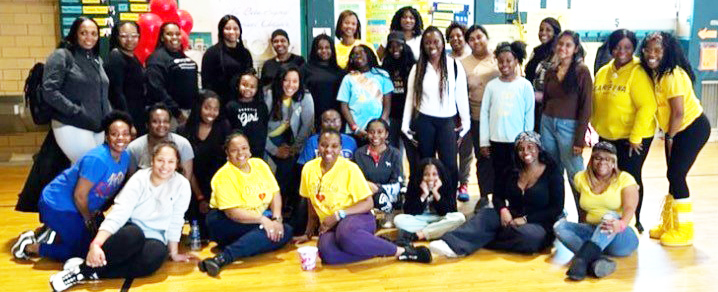
On March 9th, Sigma Gamma Rho Sorority, Inc., is holding their Annual Youth Symposium in Brooklyn. The Eta Nu Sigma Chapter hosts concurrently their Women’s Empowerment event, which is a series of workshops that focus on “women’s physical and mental health, and various additional topics that support continued success and an increase in the quality of life for women and their families.”
“The solutions to the biggest problems are that we need less ego, more execution and more partnerships across agencies,” Raven Robinson, CEO/founder Pr2Politics told Our Time Press.

SISTERS BUILDING SISTERS
Rosalyn McIntosh is a Childhood Trauma/Domestic Violence Coach who founded Broken To Blooming, and Sisters Building Sisters in Brooklyn, INC.
College student Tamia Jones, 18, is one of her mentees, she told Our Time Press, that navigating life and adulting is not easy.
“It is complicated financially, because we usually work part-time, and there’s never enough money to hold us because if you work certain jobs, they don’t pay you much, especially if you’re in retail. These types of jobs cut hours, so you don’t work so much, and if you don’t work, you don’t make a good amount of money. Mentally it’s stressful because we have to think about many things at once. We have to think about when assignments are due. Certain people like me also have procrastination problems, so it’s really hard for us to do things on time, so we have to work on ourselves.”
The New York City Technical College student added. “I feel like women in my age range in college deal with lots of seasonal depression also.”

Attending an in-person business strategy workshop this week, Ms. McIntosh told Our Time Press, “Some of the things stopping them from achieving their goals now: are depression, lack of self-love, childhood trauma, fear, and more. This was a business strategy workshop. I was taken aback. But, I help women work through their issues by showing them how to do the necessary work to help them embrace their traumas, because ‘Life Be LIFEing.’ I say this: get counseling from a licensed therapist; get a life coach; connect with friends and family.”

PROTECTING OUR YOUNG WOMEN IS KEY.
Then there is the glaring disparity in the media on reporting Black and missing people in the US. Currently, according to Derrica Wilson and Natalie Wilson’s Black and Missing Foundation (BAMFI) there are 153,374 African American, Asian, and Indian missing youths under the age of 18. The mainstream media seem reluctant to report on the issue. BAMFI says that it is because, “A lot of [Black and brown] children are initially classified as runaways, and as a result do not receive the Amber Alert.”
While 40% of missing people nationally are people with color, African Americans only make up 13% of the population.
Another startling statistic is Lancet Medical Journal stated that “Black women are murdered 6 times more often, on average, than their white peers.”
Their 2023 report also concludes that “Black women are murdered at younger ages and higher rates than other women of color.”
Their analysis determines that, “In the USA, Black women aged 25–44 years are disproportionately murdered compared with their white counterparts. Despite ongoing efforts to reduce racial and structural inequities, the result of these efforts remains unclear, particularly in light of the COVID-19 pandemic.”
The report continues, “Black women residing in the Midwest and Northeast were more likely to be killed with a firearm than Black women residing in any other area of the country.
This finding is a crucial initial step towards developing targeted solutions to reduce inequitable homicide rates among Black women.”
The racial inequities evidenced in the rates of homicide are a long-standing public health priority in the US, the report determines that some solutions lie in acknowledging causes like intimate partner violence; firearm legislation; and gun prevalence. Meanwhile, addressing “structural inequities, namely education, unemployment, economic status and wealth distribution, and home ownership; and pregnancy,” can lead to redressing the existing disparities.


The Eta Nu Sigma Chapter (Brooklyn, NY) of Sigma Gamma Rho Sorority, Inc., in partnership with Seven Roses Legacy Foundation (SRLF), told Our Time Press that they will be hosting their Annual Youth Symposium. It is held simultaneously on the second Saturday of March by Alumnae Chapters across the nation. The Youth Symposium is supported by undergraduate chapters and affiliates, and is “designed to highlight some of the prevalent concerns that negatively impact our youth today, such as education, career readiness, substance misuse, mental health awareness, low self-esteem, and suicide.”
There is so much hope and possibility.
Today’s young girls and women have absorbed many of the lessons of the past. They want to be educated on many levels, become independent business owners, political and community leaders, and effective influencers, advocates and activists.
Icons can be generational. Boomers, Gen Xers, Millennials and Gen Zers probably have different reference points for whom they see as high-achievers and urban legends too. But, certainly among the inspirational and transformational historic and current women are:
Africa’s Queen Idia to Yaa Asantewaa, to Winnie Mandela; to Africa-America’s Angela Davis, to Congresswoman Shirley Chisholm, Congresswoman Cori Bush, to Michelle Obama; and for the younger generations: from Issa Rae, to Rihanna, to Beyonce, to Coco Gauff, Yara Shahidi, Amanda Gorman, Marsai Martin, and Simone Biles.”
The Eta Nu Sigma Chapter (Brooklyn, NY) of Sigma Gamma Rho Sorority, Inc., event will be held on Saturday, March 9th, 2024 at P.S. / I.S. 109 – The Glenwood Academy, 1001 East 45th Street, in Brooklyn, 12-4pm.