Home Blog Page 170

Celebrate Poetry Month with Cave Canem, The Voice of Black Poetry

By Fern Gillespie
The words of Black poets have been entwined in American culture and history for over 100 years. During the early 20th Century, there were poets of the Harlem Renaissance like Langston Hughes, Countee Cullen, Zora Neal Hurston, James Weldon Johnson, Sterling Brown, Jessie Fauset, Paul Laurence Dunbar, Helene Johnson, Claude McKay and others from W.E.B. DuBois’ “Talented Tenth.”

The 1960s and 1970s were the height of the Black Arts Movement, which was described by founder Amiri Baraka to “create an art, a literature that would fight for black people’s liberation with as much intensity as Malcolm X our ‘Fire Prophet’ and the rest of the enraged masses who took to the streets.”

Baraka was joined by poets who led the movement like Jayne Cortez, Nikki Giovanni, Sonia Sanchez, Gil Scott-Heron, Maya Angelou, Ntozake Shange, Audre Lorde, Haki Madhubuti and Larry Neal.

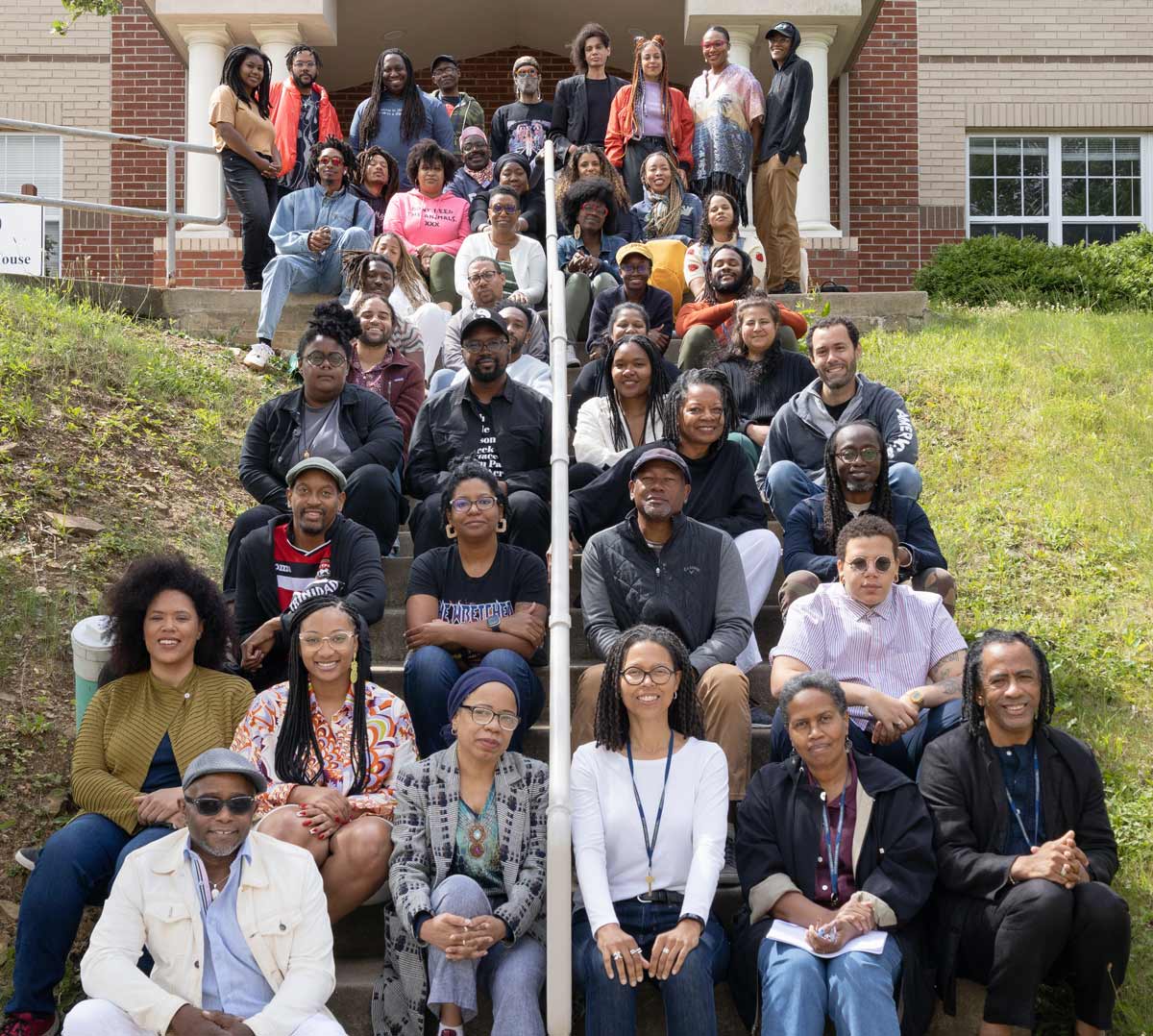
By 1996, a new Black poetry movement was emerging. Poet-scholars Toi Derricotte, an award-winning poet and current professor at the University of Pittsburgh partnered with Cornelius Eady, NAACP Image Award and Pulitzer Prize-nominated poet, who is the Chair of Excellence in the English Department at the University of Tennessee Knoxville.

They created a national Black cultural nonprofit Cave Canem, dedicated to nurturing a new generation of Black poets. Cave Canem, which holds weeklong annual poetry retreats, prizes and fellowships to help foster the growth of Black poets.

Today, Cave Canem, headquartered in Brooklyn, is renowned for having a key role in developing the voices and careers of some of the most acclaimed poets of the 21st century.

In recognition of Poetry Month, Our Time Press spoke with Cornelius Eady about the development and impact of Cave Canem in nurturing Black poets.

“Toi and I felt there was a need for a space where a Black poet could feel they could have their work seen and heard without the added complication of having to justify or defend being in that space. Or resort to silence as a defense mechanism.” he explained.

At Cave Canem’s annual week-long retreat for Black poets, writers from diverse poetic traditions are given the opportunity to study and create. “I think it’s not just the retreat–it’s the ways Cave Canem has learned and grown over the years as an organization –part of a positive change that poets want to be a part of,” he said. “Art as a counterbalance to all the ways this culture seems to want your silence.”

In a recent article, the New York Times listed some of the poetry luminaries that are part of Cave Canem.

Two U.S. poet laureates (Tracy K. Smith and Natasha Trethewey). Six Pulitzer Prize winners (Carl Phillips, Jericho Brown, Tyehimba Jess, Gregory Pardlo, along with Smith and Trethewey). Five National Book Award winners. Three MacArthur “genius” grant winners.

Twenty-four Guggenheim fellows. Six American Book Award winners. This also includes Cave Canem fellows or faculty members serving as poet laureates of cities and states. In addition, there’s Brooklyn resident Mahogany L. Browne, who became the first poet in residence at Lincoln Center.

“I think it’s wonderful that over the years–and we are running up to our 30th-so many of the poets from the workshop have gone on to have such successful careers.

We have had the joy and honor of meeting their work before the prizes arrived, and I think for the fellows who attend it’s a sense of community that you can’t find in say, being the only poet of color in an MFA program,” he said.

“It’s an energy that is carried back through the rest of the year-you KNOW, for certain, you’re not on your own anymore, that there are poets out there who “get” you and know where you are and are excited to know where your writing is headed. Many in Cave Canem see and feel the workshop -and all the fellows who have gone through it–as a family.”

This April, scholar-poet Elizabeth Alexander, president of the Andrew W. Mellon Foundation, presented Cave Canem with a $2.5 million funding award over 5 year period.

It was Cave Canem’s largest gift and was part of the Mellon Foundation’s Righting the Scales Toward Abundance grant program that provides resources for historically under-resourced artists and creative organizations to aid efforts in creation, conservation, and preservation.

Poets like Sonia Sanchez and Nikki Giovanni from the Black Arts movement are involved with Cave Canem. Eady believes that the Black Arts Movement continues to influence contemporary Black poets.

“The short answer is yes–the longer answer lies in the ways Black poets explore, push expand our voices–what CAN’T we write about these days?

I think it’s an exciting time to be a Black poet, and I certainly feel the Black Arts Movement helped to crack open that door,” said Eady. “I think it’s finally our time–I would add all Poets of Color here–I think readers are discovering just what they’ve been missing.”

For information on being a part of Cave Canem and also attending upcoming poetry events, check out the website at https://cavecanempoets.org

Arts & Culture Events, OTP Recommended!

May 7 (thru May 26): Brooklyn Academy of Music’s
47th DanceAfrica Immersive Begins

BAM’s DanceAfrica, the largest of its kind in the nation, celebrates the dynamic, rich tapestry of African arts and culture, in a month-long exploration of dance, music, film, art with a focus on Cameroon, and Brooklyn-Mother Continent cultural synergies. For a complete lineup of free and paid events, plus ticketing and registration information, visit BAM.org today. (See below for May 24-26 performance information.)

May 14: ASASE Yaa Cultural Arts Foundation Activates “Dream”
at Brooklyn Children’s Museum

The Asase Yaa Cultural Arts Foundation, Inc. (AYCAF) will hold its very first fundraising gala entitled “Dreams in Action: A Night of African-inspired Elegance” at the historic Brooklyn Children’s Museum in Crown Heights.

An institution in the community for more than 20 years, the organization’s impact on families and children is immeasurable. K. Osei Williams, AYCAF executive director, recently announced gala event details: high-energy music and dance performances by the Asase Yaa Youth Ensemble and Arkestra Africa; art installations of the Diaspora; an awards ceremony and after-party headlined by the renowned DJ Spinna.

Event honorees, noted locally and nationally for exceptional service, passionate commitment and contributions to the world of cultural arts, include Atiba T. Edwards, BCM’s president and CEO; Cheryl Todmann, founder and executive producer, The Stars of New York Dance; NYC First Deputy Mayor Sheena Wright, and award-winning actor Malik Yoba, founder and CEO, Yoba Development.

Each of these individuals has made significant contributions to the arts. The gala is supported by local and national sponsors. For more information: www.AsaseYaaEnt.org or call (646) 468-0710.

Ongoing (thru May 19): Lynn Nottage “Fabulation” Production at The Billie
Lynn’s Nottage’s “Fabulation or The Education of Undine” at the at The Billie Theatre, 1368 Harriet Ross Tubman Ave. Plot: Join Undine Barnes Calles, a bold and determined African American woman, as she navigates the aftermath of her husband’s sudden disappearance.

Production Cast and Crew: Directed by Martavius Parrish, Ms. Nottage’s play features actress Felicia Curry in the lead role through May 6 and Kedren A. Spencer assuming the lead for the remaining two weeks.

The supporting cast includes Stephanie Pope, Evander Duck Jr, Sharon Hope, Mariyea Jackson, Roland Lane, Tito Livas, Blake Russell, and Kimberlee Walker. Tickets $60. eventbrite.com/e/fabulation-or-the-re-education-of-undine-tickets-861921700007

May 24-May 26: BAM DanceAfrica Performances
Fri, May 24 at 7:30pm; Sat, May 25 at 2pm & 7pm; Sun, May 26 at 3pm
BAM 47th DANCEAFRICA overarching theme, and dance festival directed by Abdel R. Salaam is entitled Origin of Communities / A Calabash of Cultures.

The nation’s largest African dance festival returns with a panoramic exploration of Cameroon’s rich heritage, featuring Cie La Calebasse, on the Howard Gilman Opera House stage, with performances by The Billie’s Youth Arts Academy Dance Ensemble, DanceAfrica Spirit Walkers and Women of the Calabash at BAM’s Howard Gilman Opera House, Peter Jay Sharp Building, 30 Lafayette Ave., BK.
by Bernice Elizabeth Green

In Faith, She Made Up Her Mind

Alice W. Wiley Seay

by The Rev. Dr. Emma Jordan-Simpson
(Part III of Four)

by Rev. Dr. Emma Simpson-Jordan
On April 11, 1914, journalist N. Barnett Dodson described the ‘human rights’ meeting held at the Concord Baptist Church of Christ on Tuesday evening, March 31, 1914, to be the “largest and most enthusiastic meeting ever held in this city in the interest of the National Association for the Advancement of Colored People” (NAACP).

Chaired by Alice W. Wiley Seay, the speakers advancing a “New Abolition Movement” included the Honorable Moses E. Clapp, United States Senator from Minnesota, and Dr. W. E. B. DuBois, editor of the Crisis Magazine.

To convey the sense of the meeting’s importance, Dodson noted that the Rev. Dr. Charles S. Morris of the Bank Street Baptist Church in Norfolk, Virginia, who was on a visit to Philadelphia, heard about the meeting and immediately changed his plans to get to Brooklyn.


Speaker after speaker arose to call for an end to racial discrimination and mob violence, and to advance suffrage for Black people. Senator Clapp noted the opposition to Negroes in America fifty years after emancipation specifically targeted their progress and development.

White racial resentment had calcified into institutionalized racism.
Dr. DuBois declared the aims of the movement were not revolutionary because the NAACP was not seeking to make America something it did not claim to be.

On the contrary, because white supremacy was wresting power from citizens and concentrating it into “the hands of a few,” the NAACP aimed to make America be America, a true democracy, for all people.

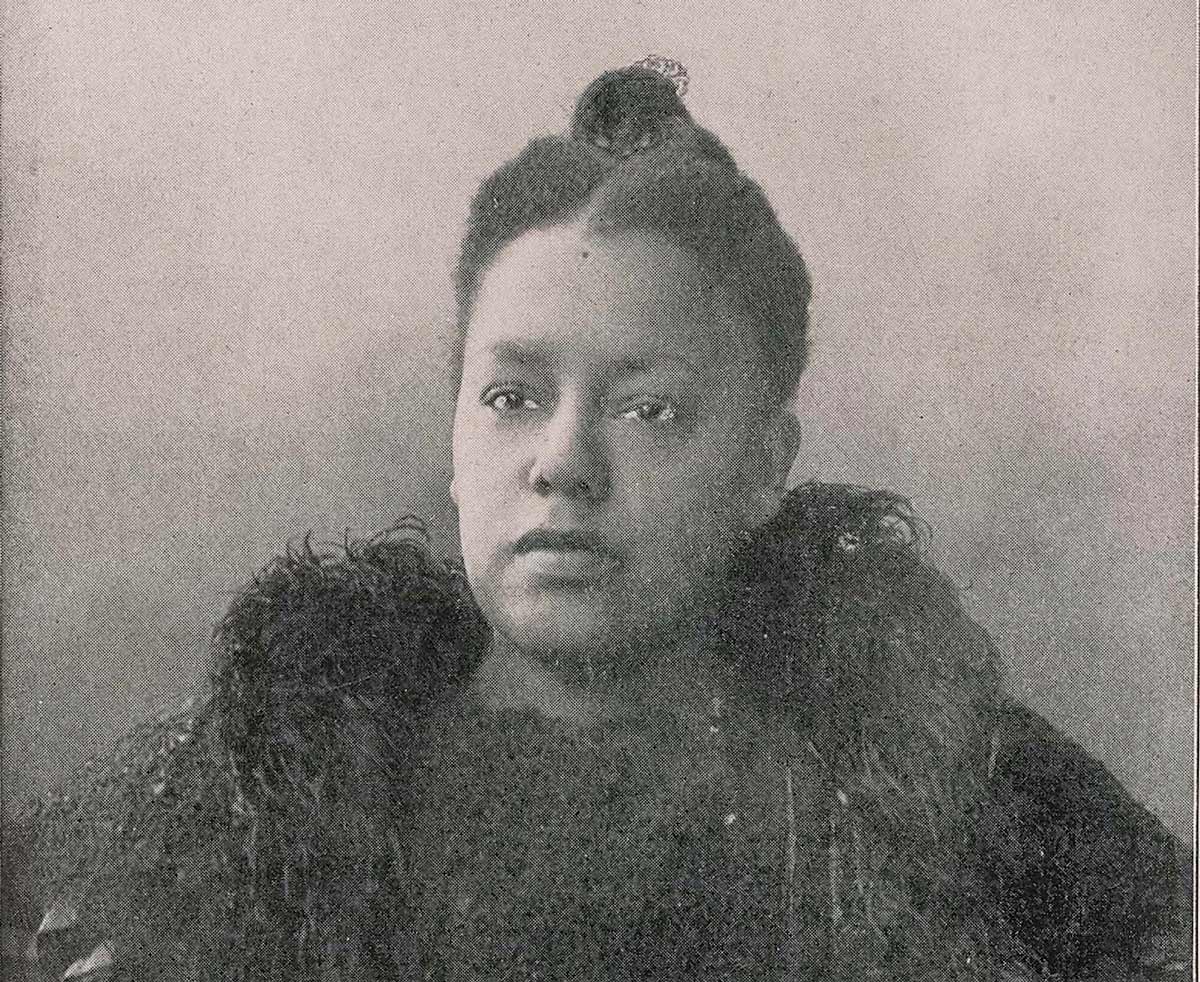
The organizing genius behind this meeting was Mrs. Alice W. Wiley Seay (1858-1937), a woman whose name remains unfamiliar to many, but whose story is being rediscovered by scholars as they examine the roles of Black women in the suffrage movement.
Alice was deeply connected to women’s groups across New York.

The Brooklyn NAACP benefited from her ability to organize women across race around the causes of her time – namely lynching and enfranchisement. She was known throughout the Eastern region as a compelling speaker.

Founder of the Empire State Federation of Women’s Clubs (the Federation) and the President of the Northeastern Federation of Women’s Clubs (NEFWC), Alice was trained in her church to lead on the human rights battlefield.

In 1901, Pastor William T. Dixon sent Alice as a delegate to the NEFWC, which was founded in 1896 by Mary H. Dickerson to address the “assault on the character of Black women.” She became its Vice President in 1903 and was eventually elected its President in 1905.

She was president of Concord’s Dorcas Home Missionary Society, which by 1911 was known as the leading women’s club numerically among colored women in Brooklyn because their care extended well beyond the church to include all who were in need.

She was active with the Concord Literary Circle (the first group to host Ida B. Wells when she fled Memphis, TN), and was the chair of the Concord Board of Deaconesses.

When Harriet Tubman was facing her last days, Alice organized the Federation in 1908 to rally women across the state to ensure ease and comfort for Tubman and to mentor and improve the lives of women and girls. In 1912, the women and girls of the Federation raised $142.00 ($4,572.28 in today’s dollars) for Tubman’s care.

They also mobilized thousands of women in some 28 clubs across the state to work for racial uplift, education, community care, and eventually, the right to vote.

Under Alice’s leadership, three thousand women attended the Federation’s 1910 annual meeting held at Concord. The Brooklyn Daily Eagle noted that the funds were given to “Harriet Tubman, commonly called the Moses of her race for having safely guided hundreds to safety before the civil war.

She is now very old and for some time has been ailing and the colored women decided that her last days should be as comfortable as possible for them to make it.”
Much has been accomplished in history because “the colored women decided” it was worth doing.

We gain important insight into their ability to make great strides for racial uplift against all odds when we understand that they were living out their discipleship. It did not matter if others said something could not be done because, as Alice said, “I made up my mind to spend and be spent, to wear out and not rust out, for the cause of Christ, the good of humanity and my race in particular.”

A Call from Spain, A Blueprint for Action

By Marlon Rice
For the entire month of April, we have been using this center section to highlight the triumphs, accomplishments and cohesiveness of the community in its work to apply environmental justice to Central Brooklyn.

From the partnership between the Magnolia Tree Earth Center and School District 16, to the work of Bridge Street Development with their Flower Bed Stuy program, we’ve touched on how regular people can be amazing catalysts for environmental change. And, even as we look to solve the environmental problems in our own enclaves, many of our problems are shared throughout neighborhoods and cities across the world.

Back in December, I received an email from Rosalie Le Grelle. Rosalie is a Creative Communications Fellow at the Human Impacts Institute. Their mission is to use arts and culture to inspire environmental action for social good.

Rosalie reached out to me because she was doing research on what inspires environmental justice action, what the impact of arts and culture have on this and if that impact can be measured.

The end goal for this research was to create useful tools like guidelines or toolkits to support environmental justice groups in better understanding and evaluating their impact in cities and neighborhoods where they work.

Rosalie asked if I’d be interested in being interviewed for the research. I looked the Institute up, and saw that they had a center in Williamsburg. Excited to connect to another environmental justice group in the community I accepted the offer.

We had a zoom call early on a Friday morning in December, and to my surprise Rosalie was actually doing her research from a place that wasn’t in the community at all.

She wasn’t even in America. Rosalie was reaching out from Barcelona, Spain!
We had an amazing conversation about the work of arts, culture and media in promoting environmental justice.

Rosalie had done her research on Brooklyn, and knew all too well the issues that this neighborhood faces. The conversation went well past the hour allotted. There was a real concern in Rosalie’s disposition, an authentic desire to help.

Roslaie’s research was centered around exploring how innovative and creative community-based methods can drive environmental justice action, and what the role of arts and culture can be to support this.

For the research, Rosalie first reviewed more than 150 articles, writing a summary of each article for cataloging purposes. Next, she reached out to a bunch of environmental justice groups in New York City, focusing on Brooklyn, in order to speak with the people who are on the ground doing the work. The goal of the conversations was to understand if there were any differences in what she had read compared to the expertise of the groups doing the work. And, if the research out there was in fact useful to on-the ground struggles, and if not, what could be done to bridge those gaps.
Rosalie also understood the limits she faced in her research.

The first limit being positionality. Rosalie is a white, European middle class woman. As such, her ability to understand the lived experiences of the Black community and to conduct environmental justice research as someone who has never been faced with experiences such as environmental racism before is a limit to the clarity of the research.

In her words, “I have never lived in an environmentally burdened area that limits my basic livelihood. Moreover, I am also limited in my ability to understand cultural references and nuances, even more as the interviews were done online.”
The second limit to her work is a limit that many of us are used to facing – Resources and Funding.

For this project, both were limited. Rosalie was the only person conducting this research, and she was doing it part-time from a location 3,287 miles away.

Her interview and literature review centered around three main questions. 1) What is driving environmental justice action? 2) What is the impact of arts and culture in driving environmental justice action? And, 3) How do we measure the impact of arts and culture?

In our communities, the driving forces behind environmental justice action are rooted in both beliefs and strategies. We look at our work in environmental justice as advocating for a holistic perspective and multi-level approach to driving change. Rosalie found that in her interviews participants stressed the significance of a shared vision for change, partnerships, and mutually reinforcing activities.

This again reinforces that our beliefs in environmental justice are rooted in our cultural belief system. However, participants were also clear that policy change on the local, state and federal levels would be a crucial driver for systemic change.

Culturally, we announce our belief systems and create calls for action using the arts. The arts and the work of educating and informing our communities go hand in hand. In her interviews, Rosalie found that we look to create spaces with common environmental justice values and norms for discussions and relations to foster community-building.

She also found an emphasis on culture preservation: protecting cultural heritage and diversity as a way to resist gentrification. This is a very nuanced and interesting association. Culture is environment. If you shift culture, you shift the environment in that community.

Overall, arts and culture have an undeniable importance for environmental justice action as it reaches emotions, which is crucial for behavioral change, and it brings people together, which is crucial for personal connections.

Art, though, doesn’t create change overnight. In her report, Rosalie states, “if we want to understand the influence of arts and culture, it is best to do assessments over the long term.

Given that arts and culture have an impact on shaping perspectives, values, and worldviews, it’s important to recognize that these changes unfold gradually. Therefore, short-term evaluations may not adequately capture the full extent of their effects.”

Submitted below, Rosalie’s conclusions drawn from both the interviews that she conducted with myself and other residents involved in environmental justice in New York City, in her own words.

  1. Under-funded and under-staffed
    It is very clear from our conversations that environmental justice groups are under-staffed and under-funded.

    This, of course, should not come as a surprise for you. But it is important to underline here as a crucial point so that organizations such as the Human Impacts Institute keep this in mind at all times: when drafting projects, when piloting and implementing them, recognizing the structural violence environmental justice groups face and how that results in a lack of resources. The low rate of responses to the survey underlines this as well.
  2. Change through culture building
    In most of the conversations I have had, participants highlighted that driving change involves building culture and creating new social structures, norms, behaviors, and values—essentially, shaping cultures.

    As discussed earlier, several barriers to driving action have been identified, including gentrification, retention issues, emotional invalidation, and more. Some of us have explored strategies in our discussions to overcome these limitations.

    What emerged from this, is the necessity for a cohesive and distinct message, a form of clear ‘branding’ for environmental justice. Strong enough to unite various stakeholders and revolutionary enough to challenge existing paradigms.

    From our conversations I understand environmental justice groups have a wide variety of messaging and communication techniques. Taking this into account with the rest of the research, there seems to be a need for streamlined approaches and frameworks. However, as mentioned in point 1., your limited capacity presents challenges in dedicating time and resources to this.
  3. Arts as a significant opportunity for strategy
    Most conversations highlighted the fact that arts and culture are perceived as valuable tools for driving environmental justice action. Most of your organizations’ work focuses mostly on culture building and does not incorporate the arts as a strategy to do so.

    The other organizations which do not regularly use arts & culture do however believe this aligns with their mission/theory of change to some extent.

    Again, time and money is a barrier here. Thus, a conclusion is that it would be beneficial to make connections with artists as well as provide expertise to develop impactful arts and culture projects.
  4. Amplification through ‘social amplifiers’
    Something interesting found in the literature, and which was also supported by your expertise, is that using mass media for climate change communication is not as effective as we might think. Instead, having personal conversations one-on-one is much better at making people really change their behaviors.

    This, along with how important social norms are in communities, made me rethink what really motivates people to take action for environmental justice. It seems that while big media platforms reach a lot of people, they might not be as good at making a real change in people as talking deeply with specific individuals about environmental issues.

    When referring to “specific individuals” in this context, I mean people who hold significance in their communities, have influence on social norms, or align with what we can describe as social amplifiers. It is interesting to talk about John Paul Lederach’s idea in relation to this. He talks about something called “critical yeast,” which is a small part of a community that can actually have a big impact on everyone else.

    It means that even if only a few people in a group are influential, they can help change how everyone in the group behaves. This suggests that focusing on those influential people, even if they are just a few, can really help make a big difference in getting more people engaged.
    This means that by working with the right people who can change what’s seen as normal, we can make a much bigger impact on environmental justice efforts.
  5. Experiential understanding
    Another thing we learned from your expertise is that the people most involved in environmental justice are those who have experienced it firsthand and those who feel deeply connected to their community and environment.

    As we mentioned earlier, research shows that emotions like anger, fear, hope, and worry are key factors in changing behaviors. One powerful way to create change is by making environmental issues personal to people. This means it’s really important for people to have real-life experiences with environmental justice—to learn by doing, feeling, and living it.
  6. Limited ability and interest in updating measuring techniques
    There’s a tendency to narrow the scope of measurement to meet the most important stakeholder needs, although there’s recognition of the value in sharing impacts and measurements with communities to foster engagement.

    It’s been noted that telling stories and sharing personal experiences, especially in one-on-one conversations, is really effective. But there are big challenges when it comes to measuring the outcomes.

    However, significant barriers exist concerning outcomes measurement, including issues such as diffuse reciprocity, where impacts are too widespread to be readily visible, and measurement mismatch, where existing methods fail to capture the full scope of impacts, alongside gaps in necessary expertise.

    Rosalie’s conclusions draw up a detailed strategy for every environmental justice organization in Central Brooklyn to use in heightening environmental awareness. Not just for Earth Month, but for every month, and every day.

Q&A: Eco-Scientist Gillian Bowser, PhD on her Pioneer Filmmaker Mom Pearl Bowser

From These Roots: Two Women, Shared Missions

Carolyn Butts, founder of Reel Sisters, contacted Our Time Press early last week to make sure we were keeping track of the tributes to the great filmmaker Pearl Bowser (June 25, 1931 in Harlem – September 14, 2023 in Brooklyn). We were on deadline amid Earth Month and other stories.

Yet, setting a page aside was not a stretch for Pearl, the former Brooklynite, who was known throughout the film world as the Godmother of Independent Black Filmmakers. She also was a friend to OTP publisher David Greaves’ stepmother Louise and father, William Greaves, called for decades the Dean of Independent Black Filmmakers.

The Greaves preceded Pearl in death. Carolyn put us together with Gillian Bowser, Mrs. Bowser’s eco-scientist daughter, an Associate Professor, Ecosystem Science & Sustainability at Colorado State University who came in to host the tributes.


Among Ms. Bowser’s specialties are studying and teaching the impact of Climate Change on communities and developing citizen scientists. We saw the mother-daughter connection immediately.

Within minutes, Carolyn connected us an Professor Bowser took the morning of the next day to write the answers to our questions.

We should note that Harlem-born Pearl Bowser who lived in Brooklyn most of her life until her death last fall, was a film scholar, author, archivist, educator, filmmaker, film preservationist and independent film distributor. In memoriam to her, Chazz Ebert wrote, that Mrs. Bowser brought a “ crucial spotlight to Black filmmakers” and was committed to “ensuring the history of African American filmmakers would not be lost to the ages.”

Mrs. Bowser preserved the histories, stories and thousands of reels produced by many Black filmmakers whose great works would have been forgotten, lost, or, for that matter, never enjoyed the stature of greatness.

What also is historically significant, she appears to have been “the first woman …” in every field in which she is credited as pioneering, earning experience from her own design, without benefit of career role models to follow. She followed her heart and her gut.

In the following Q&A Tribute to both women, Gillian shared her fond appreciation and respect for her “awesome” mother who she credits for blazing the trail for her successes in academia. As Mother’s Month approaches, we salute Pearl Bowser’s majesty, and Professor Gillian Bowser for taking the time to share her memories.

Bernice Elizabeth Green: In what ways did your mom influence your vision of the world?
Professor Gillian Bowser:
My mother grew up in Harlem and was raised, along with her six older brothers, by her mother. She and my father, LeRoy, were always deeply engaged in the community, so my sister Jora and I grew up marching with the Women Strike for Peace Movement and immersed in civil rights events, grassroots activism, and both local and national politics.

Everything we did, from tree planting in areas of urban blight to participating in town hall meetings, was always about addressing community issues and listening to community voices.

My mother certainly never overlooked a teachable moment, whether about the edible plants along beloved trails in the Shawangunk Mountains or about how to cook, behave, or apply oneself even in the face of adverse circumstances.

Most crucially, I learned from her the importance of being a lifelong learner, staying curious, following one’s instincts, working hard to gain fresh insights, and sharing one’s knowledge and encouraging others on their paths.

As the first in my family to earn a PhD, I stood on her shoulders to attain that goal. My father had passed away by then, but she was there with other family to celebrate.

Many of the women in my family also seem to be teachers. My aunts worked at Head Start, teaching pre-kindergarten students, and taught elementary school. Initially though, I never had a vision to be a teacher.

I wanted to be a medical illustrator after going to LaGuardia (then called the High School of Music and Art). At M&A, I was a member of the Science Club, and my interest snowballed from there. To this day, I integrate photography and illustration into my field work.

Gillian Bowser

OTP: In your role as Trustee of your mother’s voice and legacy, do you see that perhaps she was not given her full credit for influencing the global film world?
Gillian:
She developed the art of collecting and preserving Black film, and the legacies of Black filmmakers, before the need for doing so was adequately recognized.

Beyond her work as an archivist and historian, my mother’s legacy is mostly as a visionary distributor who gave voice to Black independent filmmakers, especially from Brooklyn.

It is of course hard to overstate the importance of that contribution. “The boom was really an echo” was her motto, reminding the community that Black filmmakers told the stories of Black communities through their own eyes and to Black audiences as far back as the early 1900s, beginning with Oscar Micheaux and the early race movies.

My mother’s mission was to remind us of the vital, ongoing need for Black filmmakers to tell Black stories on issues of importance to Black communities.

As a distributor, she gave voice to these stories by sharing them in public libraries, in film festivals on the international stage, and through encouraging young filmmakers to realize their own visions.

OTP: What can our mothers in Brooklyn (and beyond) learn from your mother and her work?
Gillian:
The community in Brooklyn still faces challenges like those prevalent when I was growing up: drugs (the opioid crisis today; crack back then), poverty, and ever-increasing income disparities, yet the definitions of community are more challenged today with increased income disparities in areas previously more united, necessitating visionary and creative methods for ensuring the community is heard.

Films in the Pearl Bowser Audiovisual Collection at the Smithsonian National Museum of African American History and Culture highlight these issues while documenting the importance and impact of the community coming together to make their voices heard.
My mom was an avid reader starting in childhood and would want to see a love of reading passed down to children today.

Finding community takes more effort in our high-tech world, as attention is fragmented by our small screens, but she understood the opportunity, power, and reward in being able to connect, and stay connected, across geographical divides.

Also, digitization of media in my mother’s collection at the Smithsonian is allowing the next generation to see rare archival footage, giving the community a real sense of all the complexities behind trying to tell stories and, to paraphrase the late Kathleen Collins, one of the first Black women to direct a feature film, to make the ordinary extraordinary!

OTP: What were some early memories growing up in your Brooklyn home?
Gillian:
The very first book that I remember is J.R.R. Tolkien’s The Hobbit and our favorite chapter was “Riddles in the Dark,” which my sister Jora and I would make my poor mother read repeatedly! I credit this chapter to my love of drawing (mostly dragons) which led me to LaGuardia and onward to science.

The Brooklyn Public Library’s Brooklyn Heights branch on Cadman Plaza is a memory. The 1962 library was recently demolished, and a new library was built to replace it. I visit the new branch location sometimes, which still houses the old bas-relief sculptures from the old façade and still love to work in the Rose Main Reading Room of the New York Public Library.

Mary Poppins! We saw that movie at the Duffield on Fulton Street in Downtown Brooklyn so many times that when we started singing along with the film; my mother got embarrassed! We also had a projector at home and on rainy days my mother would show old Looney Tunes cartoons to me, Jora, and our friends from the block. Several contained offensive depictions, which she would discuss.

My friends also remember that she screened D.W. Griffith’s controversial Civil War epic, The Birth of a Nation, when she deemed us about old enough to grasp it.

OTP: Do you recall the moment her awesomeness was revealed to, or discovered by, you.
Gillian:
I cannot remember a time when I was not in awe of my mother.
She was very tall, modern, and elegant, always active in the community, and forever sharing newfound knowledge. It was not until she was bedridden in her late eighties that she confessed to being a naturally reserved person who worked hard to stop being self-conscious about her stature.

She could do anything she put her mind to for family and community, from cooking huge, amazing soul food meals to wrangling audiences for screenings of Black films.
That was her magic ability — to pull people in and show them the extraordinary revealed in the ordinary lives and struggles of Black people, as told by Black filmmakers in a continuous line from the silent era to the present day.


More about Gillian Bowser:
Bowser has worked as a wildlife biologist and ecologist for the U.S. National Park Service in Yellowstone, Grand Tetons, Joshua Tree and Wrangell St. Elias, and was a Science and Diplomacy Fellow with the American Association for the Advancement of Science in 2011. She was also elected as a senior AAAS Fellow in 2023 and serves on the executive committee for the International Union of Biological Societies working with the U.S. National Academies of Science. Bowser earned her B.S. from Northwestern University, her M.S. from the University of Vermont, and her Ph.D. in Biology at the University of Missouri-St. Louis.
And, yes, we extended an invitation to Gillian to come home to Our Time Press– through the marvels of technology — where she can serve in the capacity of adviser to our efforts to expand community awareness of Climate Change and its affects on our lives.