Home Blog Page 110

Imhotep Gary Byrd and Stevie Wonder: A Wondrous Friendship and Music Collaboration

Fern Gillespie
Stevie Wonder’s powerful October concert tour “Sing Your Song! As We Fix Our Nation’s Broken Heart,” during the height of the 2024 Presidential Campaign, contained a special shout out to his longtime friend and music collaborator Imhotep Gary Byrd. It was a performance of the 1976 song “Village Ghetto Land,” a famed message song by the Wonder-Byrd connection, whose lyrics were penned by Byrd, New York’s legendary radio talk show host.


“I was so excited, but I couldn’t get over to the New York concert. Steve and I had spoken before. The funny thing was I got a text from Philadelphia, where he performed after Madison Square Garden, that said Steve has shouted me out at that particular concert,” Byrd told Our Time Press. “I was so honored that it was happening. I felt so blessed that he and I had collaborated on songs as Wonder-Byrd. That this particular song had stood the test of time. After decades, the song still had relevance.”


Byrd and Wonder first met as teens in the 1960s. Byrd was a radio personality at Buffalo’s famous WUFO, the home of legendary Black DJs like Eddie O’Jay, Frankie Crocker and Jerry Bledsoe. Wonder was in the early phase of his Motown career. “Steve and I met when I was 17 years-old and he was about 16 years old. We met in Buffalo’s War Memorial Auditorium, where he was doing a Motown show. He realized that I was young, and that he was young. So, we had a brief connection in that moment.” Byrd recalled. “He hadn’t done his breakthrough stuff yet. He was a teenager and was making that transition to what people would call his renaissance period.”


At age 19, Byrd became the youngest full-time radio personality in New York City. He left Buffalo for WWRL and created The Gary Byrd Experience (GBE) formulating his unique sound of mixing music and poetry live on the air. “Steve heard me. By that time in 1969-1970 he was living in New York,” said Byrd. “He is a radio aficionado. He loves radio. Proof being he owns radio station KJLH-FM in Los Angeles. Steve hears radio different. Because of his sight experience, he has inner vision, like he said on his album Inner Visions. He sees radio rather than just hear it.”


Wonder had tuned into the GBE on WWRL and heard Byrd’s poetry. “We had a poetic connection. He heard something in my writing that he liked. He invited me to the Apollo Theater where he was doing an engagement. I go to the Apollo theater and meet him backstage,” said Byrd. “At that point, he invited me to write something with him and he gave me three songs to work with. The way we work together is he creates a scatological framework over the music. Like scat singing. There might be a title that will come through.” This was the beginning of the Wonder-Byrd songwriting team and their first music collaboration was “Village Ghetto Land.”


In 1988, the song was featured in a global television special 70th Birthday Tribute to Nelson Mandela. “It was an internationally broadcast. This was before he was released from prison. That TV special was seen by 600 million people worldwide,” said Byrd. “George Michael, the pop star, actually sang “Village Ghetto Land.” We had no idea he was going to do this. So, we’re watching the special along with everybody on the planet who was watching it. George Michael had enough songs that he could pull from, but he literally sang “Village Ghetto Land” at that particular event.”


The TV special also featured Stevie Wonder. “Steve sang “Dark ‘N’ Lovely,” a Wonder-Byrd song that he and I had collaborated on the album, which is a tribute to South Africa,” he said. “So, I wound up having the experience of having two songs that I wrote in collaboration with Stevie in a special seen by 600 million people around the world.”


Richard Pryor spotlighted the Wonder-Byrd Black history song “Black Man” in 1977 on his NBC series. “They presented the song with a group of kids who were singing Black Man,” Byrd recalled. “I called Steve and I said turn on the TV. We bust out laughing because it was amazing to see it on the Richard Pryor Show.” The Richard Pryor Show is now on YouTube.

Wonder-Byrd has gained a reputation as musician-lyricist collaborators like Gamble and Huff and Holland Dozier Holland. In addition to “Village Ghetto Land,” “Black Man,” and Dark ‘N’ Lovely, other Wonder-Byrd collaborations have included “Misrepresented People” in Spike Lee’s movie “Bamboozled,” where Byrd appeared as a talk show host. The 1984 Black history song “The Crown,” where Byrd performs as Professor of the Rap to Wonder’s music, was a hit in Europe (it has over 1 million views on YouTube). Byrd performed “The Crown” in a concert tour with the Commodores for Motown records.

Imhotep Gary Byrd


Veteran KISS-FM and WBLS radio personality Ken Webb once told Byrd that he was a radio prodigy, because he began his career at age 15. “When Ken identified me as a radio prodigy, I saw the symbiosis between Steve as a music prodigy and myself as a radio, prodigy,” he said. “I was so focused on what I was doing that I did not see myself that way.”


Byrd’s work as a pioneer spoken word and rap artist had him inducted into the Hip Hop Hall of Fame. His work in “Black Man,” “The Crown,” “Soul Traveling with the Jimmy Castor Bunch” have been frequently sampled by rappers like Nas and Soul ll Soul. His work on Millie Jackson’s “I Cry” has been sampled by 50 Cent.


Although Byrd was a RCA record artist in the 1970s, through his work with Wonder, he achieved a lifelong goal of working with Motown Records. He would study Berry Gordy and Smokey Robinson. “I’m humbled because I know the story of my love for Motown Records,” he said. “Through my work with Steve, I became a Motown songwriter and later on a Motown recording artist with “The Crown.”


Both Wonder and Byrd are renowned for their social justice advocacy and creativity. In 2025, Byrd will be celebrating his 60th anniversary in radio. His first job was in Buffalo at age 15. Byrd is considered one of the longest running talk show hosts in New York. In 1984, Percy Sutton, Chairman of Inner City Broadcasting, invited him to host WLIB talk programming. In 2024, he marked 40 years as a WBLS and WLIB host talking to Black audiences about news and views. “Steve and I are kindred spirits, so to speak,” he said.


“At Motown, Steve grew up at one of the greatest music art schools of all time. His brilliance and genius on top of that took it to a level that is unprecedented in the music business,” said Byrd. “Then combine his level of social insights and commitment to justice and equality for all people. Those things make him an unique institution in the music industry.”

End Of an Era?

0

By Eddie Castro
There are just two weeks left in the 2024-25 NFL season. The season will officially end for the New York Jets in two weeks. The team currently has a win-loss record of 4-11, which puts them in third place in the AFC East division. Missing the playoffs yet again this year will now mark 14 straight seasons the Jets have done so, which sadly is the longest current playoff drought in ALL four major sports.

There were many high expectations for this current Jets team, but as we all know, in sports, sometimes talent does not equal chemistry. Moving forward, the franchise will undergo a complete makeover as owner Woody Johnson will search for a new General Manager and Head Coach. With new management expected to be in place, what does that mean for the future of quarterback Aaron Rodgers?


Let’s be honest, OTP Universe, the Aaron Rodgers experiment here in New York did not pan out the way Jets fans thought it would. The acquisition of Rodgers via trade from the Green Bay Packers was supposed to be a culture changer. His resume (Rodgers) speaks for Itself. He’s a 4-time NFL league MVP and a Super Bowl champion.

He has also been selected to the Pro-bowl 10 times in his soon to be Hall of Fame career. In year one with the Jets, Rodgers tore his Achilles just four plays into the 2023-24 season. This season, the 20-year Veteran’s play saw a significant decline and, therefore, has left questions regarding his future. These next two games could be his last in a Jets Gotham green uniform or perhaps the last games of his NFL career. Rodgers will be 42 next December.


Either way, if the Jets decide to retain Rodgers for the 2025 campaign or if he is cut or decides to retire, it will be a pretty penny for the organization. Now, let’s say Rodgers decides to hang up the cleats after 20 seasons, or he is cut off and released. It will be a cap hit of $49 million dollars. If he decides to return, the salary cap charge will be $23.5 million. The Jets would owe Rodgers a $2.5 base salary and a $35 million option bonus. The decision to retain or keep Rodgers comes down to a few things.

Will the new GM and head coach see him as a part of the planning? Two, does management feel he can still play at an elite level? The more important question is, does Rodgers think he can still compete at a high level? Regardless of what happens, the organization will have different leaders at the helm. A rebuilding process is more likely in the works. Hopefully, this process will finally get the Jets toward becoming a playoff-caliber franchise.

SPORTS NOTES: (FOOTBALL) There are two games left in the season for both the Jets and Giants. The Jets will head to Buffalo to play the Bills. The Giants will play the Colts. (BASKETBALL) The Knicks will battle the Washington Wizards on Monday night.

“Remains” of a History and a Scholar’s Gift, Remembered

New York’s Seventeenth-Century African Burial Ground in History

by Christopher Paul Moore

New York’s African Burial Ground is the nation’s earliest and largest known African American cemetery. It has been called one of the most important archaeological finds of our time. But it is more than that: though long hidden and much violated it remains the final resting-place of some of New York’s earliest African and African American pioneers. And it is an enduring testament to their history.

Christopher Paul Moore


The first known person of African descent to arrive on Manhattan Jan (Juan) Rodrigues, who was among the navigators, traders, pirates, and fishermen who traversed the Atlantic as free men, before and during the slavery era. Rodrigues, a free black sailor from Santo Domingo (Dominican Republic) arrived in 1613, setting up a trading post with the native Lenape people on Manhattan Island.


The first enslaved Africans arrived in New Amsterdam in 1625, as laborers for the Dutch West India Company (WIC). The WIC, whose profits were chiefly from commerce reliant upon slave labor (and later the slave trade), was then pursuing its interest in the fur trade, which had been cultivated by early traders like Rodrigues. Along with European merchants, traders, sailors, and farmers, these enslaved workers helped to establish the early colony.

Throughout the seventeenth and eighteenth centuries, Africans were an important part of the city’s population, reaching a peak of over 20 percent at the middle of the eighteenth century.


During Dutch rule, enslaved Africans were put to work building the fort, mill, and new stone houses. The African laborers, some with previous experience building colonies in South America, did much of the arduous work of building a European-style town in New Amsterdam. They cleared land for farms and shore areas for docks. Former Native American trails were broadened (BroadWay) to accommodate horse drawn wagons. Operating and working in the colony’s sawmills, the enslaved laborers provided lumber for shipbuilding and export back to Europe.


By l640, about 500 people lived in New Amsterdam, which was a community of shops, a few dozen homes, and several warehouses belonging to the WIC. Enslaved farm workers often oversaw the colony’s farms for absentee Dutch owners, planting, harvesting and managing the day-to-day operations. These farming skills would soon win something very valuable for some of New Amsterdam’s enslaved population-their freedom. During the worst fighting of the Dutch and Indian War, the first community of free blacks in the colonial United States was formed.


On February 25, 1644, eleven enslaved men were freed and given grants of farmland in the dangerous frontier territory north of New Amsterdam. Their wives were granted freedom also, but their children remained the enslaved property of the WIC. In time, they were able to buy the freedom of their children. The farms owned by the free blacks spanned the “Negro frontier” “land of the blacks,” the Central region of Manhattan extending eventually from what would later become Canal Street to 34th Street.


Freedom for these black farmers did not mean an end to slavery in New Amsterdam. Slave labor continued as a major element of the colony’s public works projects. In 1653, upon Governor Peter Stuyvesant’s orders, the colony’s enslaved workers helped to build New Amsterdam’s most famous fortification “The Wall” (Wall Street), which spanned Manhattan Island from the East River to the Hudson River.

In 1658, the same labor force constructed the region’s first major highway, connecting New Amsterdam with the island’s second largest and newly founded village in the north frontier (at 110 Street and the East River). The eleven-mile “road to New Haarlem” later became better known and remembered as the Boston Post Road.


Slavery was a chief concern of Governor Stuyvesant, who cultivated the distribution of slaves into Virginia, Maryland, and New England, but primarily throughout the Caribbean. Under Stuyvesant, the WIC encouraged English and French planters in Barbados, St. Christopher, and other islands to convert from tobacco and cotton to the more lucrative sugar production. Island by island, planters were shown how to consolidate their small island farms into large plantations, change to sugar, and invest in slave labor.

The WIC invested heavily in all aspects of the cane production providing credit, plant equipment, and enslaved African laborers. By the 1650’s, Barbados, the first successful model for the exploitation of slave labor in the Caribbean had revolutionized the demand for enslaved Africans into the West Indies. Stuyvesant worked diligently, from his base in New Amsterdam to Curacao, to repeat the process in other respective islands.


In 1664, the English conquered the Dutch colony, and New Amsterdam became New York. Named for James II, the Duke of York, who was the principle investor in the “Company of Royal Adventures Trading to Africa,” the English slave trading enterprise. The Duke soon afterward gave port privileges and warehouse priority in the New York colony to ships engaged in the slave trade.


The English imposed strict laws regarding slavery and rescinded many rights for free blacks, including the right to own land on Manhattan Island. During the period, New York’s African labor force – primarily skilled and semiskilled and mostly enslaved worked as carpenters, blacksmiths, printers, sailors, dock loaders, tailors, seamstresses, bakers, and servants.

Christopher Moore stands at the Schomburg’s “Cosmogram” floor mural. Langston Hughes’s “A Negro Speaks of Rivers” was recited at the Howard Dodson’s midnight ceremony of the dedication of the mural.


In 1711, a market place for the sale of slaves opened on a pier located at Wall Street and the East River. By legislative act of the Common Council (City Council) the market, known as the Meal Market, became the city’s official slave market where African men, women, and children were sold or rented on a daily or weekly basis. The market operated until 1762, though it was not the only place where slaves were bought and sold in Lower Manhattan, including the Merchant’s Coffee House, the Fly Market, and Proctor’s Vendue House. Records from colonial New York indicate the city was a major hub for the slave trade in North America.


Although the city’s slave population ranged between 15 to 20 percent, most slaves purchased through the New York market were redirected to other slave holding territories in the American South. Documents also note that the New York market sometimes received shipments of African children under the age of thirteen. Until the Civil War, the city’s economy, with investments in commodities like sugar, cotton, and tobacco was heavily dependent upon slavery.


Shut out of churchyards within the city, a burial ground for Africans developed on a plot of land outside of the city, owned in 1673 by Sara Van Borsum, a Dutch woman with a reputation as an Indian translator and owner of six slaves (five African and one Indian). Though the exact date of the cemetery’s founding is unknown, the Van Borsum family continued its tacit approval of its use until its closing in 1794.


As the enslaved population grew in New York so did the burial ground , eventually covering 6.6 acres, or about five city blocks. Evidence from the cemetery indicates that when possible, traditional practices were employed in laying deceased kin and loved ones to rest. However, harsh legal restrictions were applied too, as no more than twelve persons were permitted in funeral processions or at graveside services and interment was not allowed at night, the customary time for many African burial rituals. Enslaved blacks were required to have a written pass in order to travel more than a mile away from home. For many, that was about the distance from their Lower Manhattan homes to the cemetery.


Despite these restrictions, the African Burial Ground served as an important focus for African community identity. Archaeological excavations have shown that the dead were buried individually, most in wooden coffins, arms folded or placed at their sides and oriented with heads to the west. Bodies were buried in shrouds, fastened with brass straight pins, and were sometimes buried with items such as coins, shells, and beads.

Overtime, the Burial ground became densely crowded with burials stacked three and four deep in some places. Some archaeologists estimate that 20,000 men, women, and children were buried at the cemetery.


In 1795, the land of the African Burial Ground was subdivided and sold for house lots. Because it lay in a ravine, the land was leveled with as much as twenty-five feet of fill, ensuring the survival of many graves under the basements of later buildings.


In the twentieth century, the area where the African Burial Ground is located developed as New York’s government center. During these years the existence of the. African Burial Ground, though recorded on old maps, was effectively forgotten. In 1991 – 1992 archaeological excavation of the northern portion of the burial ground occurred as the site was being prepared for construction of a federal office building. The remains of 419 men, women, and children were excavated: nearly half of whom were children under twelve years of age. In 1999, nine intact burials (full or nearly complete human skeletons) were found on the southern edge of the historic ground during construction of the new sidewalk in front of the Tweed Building on Chambers Street. Unmarked beneath the bluestone sidewalk, thousands walk by or over the burials daily, unaware that much of the cemetery still exists under the neighborhood’s sidewalks, roadbeds, and buildings.


The African Burial Ground was designated a New York City Historic District and a National Landmark in 1993. Between 1991 and 2003, an analysis of the human remains was conducted at Howard University. On October 4, 2003, some ten thousand participants in the “Rites of Ancestral Return” helped reinter the ancestral remains (each in a hand-carved wooden coffin made in Ghana) on the preserved portion of the site.


Nearly 8,000 personal handwritten messages from the living to the African ancestors were also buried with the remains. In February 2006, by order of Pres. George W. Bush, the African Burial Ground was proclaimed a national monument.


On October 5, 2007, the African Burial Ground National Monument became the first National Monument dedicated to Africans of early New York and Americans of African descent. It is the newest National Monument in New York City, joining the Statue of Liberty, Governors Island, and Castle Clinton.


Christopher Moore, former resident of Fort Greene, represented Brooklyn as a NYC Landmarks Preservation historian and commissioner historian. He also was an author, historian, and research coordinator for the New York Public Library’s Schomburg Center for Research in Black Culture and curated several Schomburg Center exhibitions including Commemorating the African Burial Ground: A National Monument, Malcolm X: A Search for Truth, The Buffalo Soldiers, Ralph Bunche Centennial, and Lest We Forget: The Triumph Over Slavery, which was published as Jubilee: The Emergence of African American Culture by National Geographic.


A specialist in African American history, he wrote Fighting For America: Black Soldiers, The Unsung Heroes of World War II, and co-authored Slavery In New York, The Black New Yorkers: 400 Years of African American History, Standing In the Need of Prayer: African American Prayer Traditions, and Santa and Pete: A Novel of Christmas Past and Present. He also wrote and co-produced the History Channel’s award-winning television special The African Burial Ground: An American Discovery.


Moore, former journalist, was also a news editor for ABC Radio, National Black Network News, broke the story of the unearthing of the African Burial Ground in lower Manhattan in 1991. In 2007 the cemetery was made a National Monument by order of President George W. Bush.
He loved studying his roots, which he could trace back to the Lenape’s, the first occupants of Manahatta lands or what is now called New York City for many thousands of years. He co-founded The Lenape Center and New Amsterdam History Center, two non-profits that promote the preservation of the history and culture of New York City’s earliest communities.

  • Layout by Collwyn Cleveland

The Tubman Factor

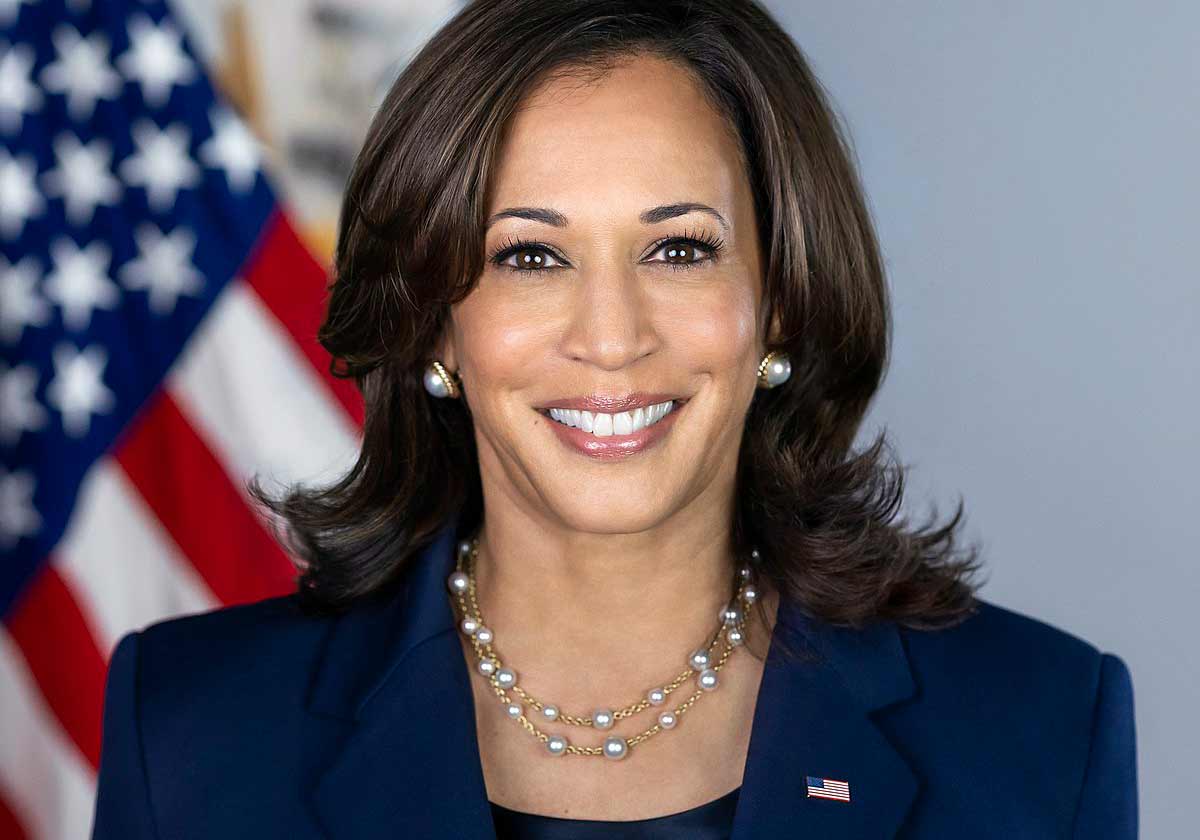
Vice President Kamala Harris’ positive messages this month encouraging the next generation of leaders to “stay in the fight” echoed Kwanzaa founder Maulana Karenga’s end-of-year reflections: “We are, each and all of us, always standing at the crossroads of history with our foremother Nana Harriet Tubman, embodying the struggles, hopes, aspirations, prayers, and promise of our people.

We must realize with her that freedom, dignity, self-determination, and all the great goods of life are shared goods, and we must achieve, secure, and enjoy them together ‘in and through righteous and relentless struggle’.” Harris delivered her first major remarks since conceding the election to Trump, and they were Tubman-fierce.


“In moments like this, the true test of our character is how resilient and persistent we are to pursue the future that we all can see,” Harris said during a speech in Maryland. “Do we throw up our hands, or do we roll up our sleeves?”


During the speech, Harris declined to include details about her next political move, which has been rumored to be either a run for California governor in 2026 or a presidential run in 2028. However, she did confirm that she would remain involved in politics.


“No one can walk away,” the vice president said. “We must stay in the fight because that is the responsibility, in my opinion, that comes with the privilege of being an American.”
Harris on Tuesday directed her message to younger voters, Black Information Network reported.


“This struggle is not new: It goes back nearly 250 years ago to Lexington and Concord, generation after generation,” Harris said. “It has been driven by those who love our country, cherish its ideals, and refuse to sit passive while our ideals are under assault.” -BG

Local State Representatives Preview Their Agendas for Upcoming Legislative Session

0

By Mary Alice Miller
The 2025 legislative session convenes on January 8. With Trump being inaugurated for a second time, voters will be watching to see how New York legislators protect progressive values while maintaining advocacy for their constituents.


“My legislative priorities for the upcoming Session in Albany, as always, are focused on the most pressing issues facing Assembly District 42: including protecting immigration rights, improving equitable education, boosting economic development, increasing health care access, protecting public safety, and more,” said Assemblywoman Rodneyse Bichotte Hermelyn.


Bichotte Hermelyn said, “While every issue is important, our City and State are facing several urgent, unprecedented crises that I’ve been laser-focused on addressing.”
As the MWBE Oversight Committee Chair, Bichotte Hermelyn’s major priority is extending the MWBE Program in 2025 (via Article 15-A) while continuously improving it through legislation.


“I’m working to ensure the MWBE Program is well-equipped to keep breaking barriers and building economic equality, following back-to-back, record-breaking Fiscal Years of MWBE success,” Bichotte Hermelyn said. “With recent court decisions dismantling DEI, we will keep strengthening the Program to safeguard New York and not go backward.”


New York is still facing a maternal mortality crisis, disproportionately affecting Black women, and it is a life-or-death epidemic. “Last year’s budget included several first-in-the-nation policies, like paid prenatal care leave, that I helped institute—and I will keep advancing new legislation to make motherhood safer alongside my colleagues in the Black Maternal Health Caucus,” said Bichotte Hermelyn.


Bichotte Hermelyn has sponsored legislation with Senator Leroy Comrie to address New York’s severe housing shortage and affordability issues in support of Mayor Adams’ “Axe the Tax for the Working Class” plan. It would eliminate city income taxes for more than 429,000 people and their dependents, while cutting taxes for another 152,000 more, to put 63 million dollars back in New Yorkers’ pockets.


As the NYS Assembly Majority Whip, Bichotte Hermelyn added that she is “responsible to ensure my colleagues are united on passing bills that are in our constituents’ best interests and uplift all New Yorkers.”


Senator Roxanne Persaud (19th Senatorial District) expressed three of her top priorities: Human Services COLA (Cost of Living Adjustment), a “new” year-round Youth Employment Immersion Program, and Right to Cancer Screening.


The Human Services COLA bill would cover a wider breadth of contracted human services workers eligible for the human Services Cost of Living Adjustment (COLA) by adding previously missing programs to the eligibility. “Unfortunately, the current human services COLA leaves out many human services workers and has held them at wages not conducive to their own health and wellbeing,” said Persaud. “It is important that all human services workers receive fair wages, and the human services COLA would assist in this goal.”


Establishing a new year-round Youth Employment Immersion Program would give young New Yorkers ages 16-24 who have not completed high school or college (and not necessarily college-tracked) education and employment readiness services and pay them a close to living wage.


The Right to Cancer Screening bill would expand preventative health care to patients with a personal or family history of ovarian cancer. “It is essential that cancer survivors be given the right to preventative health screening, considering they can be more vulnerable to getting the disease again,” said Persaud.


Assemblywoman Latrice Walker (D-55) has a top ten list of priorities for the next legislative session.
Second Look authorizes certain persons confined in institutions operated by the Department of Corrections and Community Supervision to apply for a sentence reduction.
Bill A1088 Subtracts Election Day worker’s pay, any income earned by election inspectors, poll clerks, or election coordinators, from the federal adjusted gross income.
Walker proposes imposing an excise tax on the sale of ammunition to be deposited into the gun violence impact fund and establishes the fund.


The Fair College Admissions Act would prohibit degree-granting institutions of higher education from giving preference to applicants based on such applicant’s familial relationship to an alumni of such institution.


The Financial Literacy for Children Aging Out of Foster Care bill establishes a program for financial transitional living services for foster children, establishes independent development savings accounts for foster children over the age of 16, and requires foster children to attend financial literacy and independent living classes.


The Family Miranda Act requires child protective services to orally and in writing disclose certain information to parents and caretakers who are the subject of a child protective services investigation. Such oral and written disclosure must contain certain information regarding the rights of the person under investigation.
The Democracy Preservation Act prohibits contributions by foreign-influenced business entities; requires certification.


Bill A6739B would increase the amount of residential solar tax credits.
The Consumer Litigation Funding bill would promote consumer protections related to consumer litigation funding transactions; provides for contract requirements, including that the contract contain a no penalty provision for the prepayment of the funded amount prior to the settlement of his or her case; makes related provisions.


Walker’s Voting in Detention bill relates to voting rights and access for incarcerated individuals; authorizes polling places to be available at correctional facilities and local facilities; requires such facilities to provide persons detained or confined in such facilities access to register to vote or apply for an absentee ballot; requires voting information to be included in the inmate handbook.