

Fern Gillespie
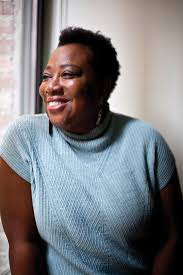
For Beverly Tillery, Interim Executive Director of Brooklyn Movement Center, the origin of her work in social justice organizing began over 30 years ago challenging the food deserts in Brooklyn. Since then, the Washington DC native has earned a national recognition as a social justice organizer in racial and economic justice, LGBTQ+ liberation, gender justice, human rights, and labor.
Prior to joining BMC, she served for nine years as the Executive Director of the New York City Anti-Violence Project (AVP), an organization that empowers LGBTQ communities to end all forms of violence through organizing and education and supports survivors through counseling and advocacy.
A former Deputy Director of Education and Public Affairs at Lambda Legal, she led national educational and advocacy campaigns on discrimination in employment, healthcare, and the criminal legal system, and to build support for marriage equality efforts nationally. Earlier in her career, she worked at Amnesty International, Service Employees International Union (SEIU) 1199 E-DC in Baltimore, MD and ACORN.
A former Johns Hopkins undergrad, she is a renown LGBTQ activist and lives with her partner and her 19-year-old daughter in Harlem. She recently spoke with Our Time Press about the importance of Brooklyn Movement Center and the impact of community organizing.
OTP: Why did you decide to join Brooklyn Movement Center as Interim Executive Director?
BT: Brooklyn Movement Center has been a really important force and voice. Not just in Brooklyn but across the city. This is a perfect opportunity to support the rebuilding of an organization that has been so important to the community. There are so many issues that the organization has worked on are unfortunately still there. Issues around gentrification and housing.
How do we keep the community affordable for the Black community that has such a rich history there? Issues of food justice and food insecurity. Issues in education and safety, childcare issues. Issues that connect to the Mayor’s agenda around affordability. How do we maintain a Bed Stuy in which the Black community can continue live and thrive and live full lives.
OTP: For over 30 years, you have been a frontline community organizer. Why is this work especially important in Black and Brown New York City communities?
BT: Community organizing is how communities can come together to demand that those who are making decisions are listening to our voices. That we have a place at the table. That we can shape the way the policies are impacting our communities. Community organizing gives power back to folks on the ground who are actually living the experiences that need to be highlighted.
They are central to all the decisions that are made to our neighborhoods. It’s really vital for people to get engaged in community organizing. To understand that collectively we might not have all the power in terms of financial resources, but we have the ability to shape policy and make decision makers listen to us. To hold them accountable when they are not listening to us.
OTP: You are a well-known LGBTQ activist, are you going to be involving that community at BMC?
BT: I think that the LGBTQ community is already involved in Brooklyn Movement Center. It’s an organization for everybody in the neighborhood. There are LGBTQ people living in Bed Stuy who care about all the things that or folks in Central Brooklyn care about. I am embracing and making sure there is space for LGBTQ voices at Brooklyn Movement Center. It has always understood that of acknowledging that all of us are impacted by oppression.
OTP: Are you still teaching a course on social justice at Wesleyan University?
BT: I co-teach a class at Wesleyan on “Theories of Social Change” with a former colleague who attended Wesleyan. It energizes me to have conversations with young people who are thinking about it and struggling with how do they make a difference in the world? So, we expose them to and introduce them to lots of different movement strategies and also lots of different movements. We take them down the path of studying and learning those movements.
And get them thinking about what are the things they want to change right now in our society and how would they go about building campaigns and tackling issues. What are some of the concrete things they can do and how do they learn from the lessons of the movements that have gone on before us. This is a long game. What we’re building now is not only going to affect their future, but will impact their children’s future, and the next generation, and the next generation.
OTP: Under this current anti-diversity administration, are grassroots organizing tactics changing?
BT: I think we’re going to find new ways of organizing and building power. What it takes to address the rise of authoritarianism, what we are experiencing right now in our country. We have to do in really local ways. It’s what I’m really thinking about and doing at the Brooklyn Movement Center. How that helps the larger movement around anti-authoritarianism.
We really need people in central Brooklyn, who are connected to each other, so they have the power to make change. It needs to be replicated in other communities and across the country. We need to sustain in the long big fight to take down the rise of authoritarianism. It’s much more in people’s faces that we are living in a time, in a situation, in which these issues are really life and death.
There are efforts to disenfranchise our communities. I’m talking about Black and brown communities, LGBTQ communities., immigrants, marginalized people. These are concerted and very organized efforts. That ultimately will result in the harming and trying to erase our communities.
OTP: Why should Black Central Brooklyn residents get involved with Brooklyn Movement Center?
BT: People are now saying what can we do about it and how can we plug-in? Where can I plug in in a way that feels meaningful and that doesn’t feel too good disconnected from my everyday life. We must remember that these larger efforts that are trying erase us right now started with small organizing in local communities that hammered on about anti-DEI work.
It started locally with people on their school boards, who felt that children were forced to learn these things. Also, local city councils. That’s how we have to build now to fight it and remember it’s been years in the making. Our work has to be really focused. Grass roots organizing about building power and gaining control over the institutions that make decisions about us on a local and national level.
We are looking for people who are interested in being involved in the Brooklyn Movement Center and live and work in Central Brooklyn. That care about the future of Brooklyn’s Black residents and care that people can afford to live in the community and have the resources to thrive and not just survive and be safe.
Brooklyn Movement Center will have community listening sessions in April and May. For more information, connect with Brooklyn Movement Center at www.brooklynmovementcenter.org and on Facebook and Instagram.