

by Wildtomorrow.org
Ecology and the environment aren’t the first things that we think of when reflecting on the life and legacy of Dr Martin Luther King Jr. However, an important part of Dr King’s legacy was to set in motion the beginnings of the environmental justice movement, and to raise awareness of the interconnectedness of all life on earth.
Dr King’s all-encompassing vision of justice was one where the nations and peoples of the planet are one. He saw social, economic and environmental injustices as interlinked – including poverty, racism, and environmental justice.
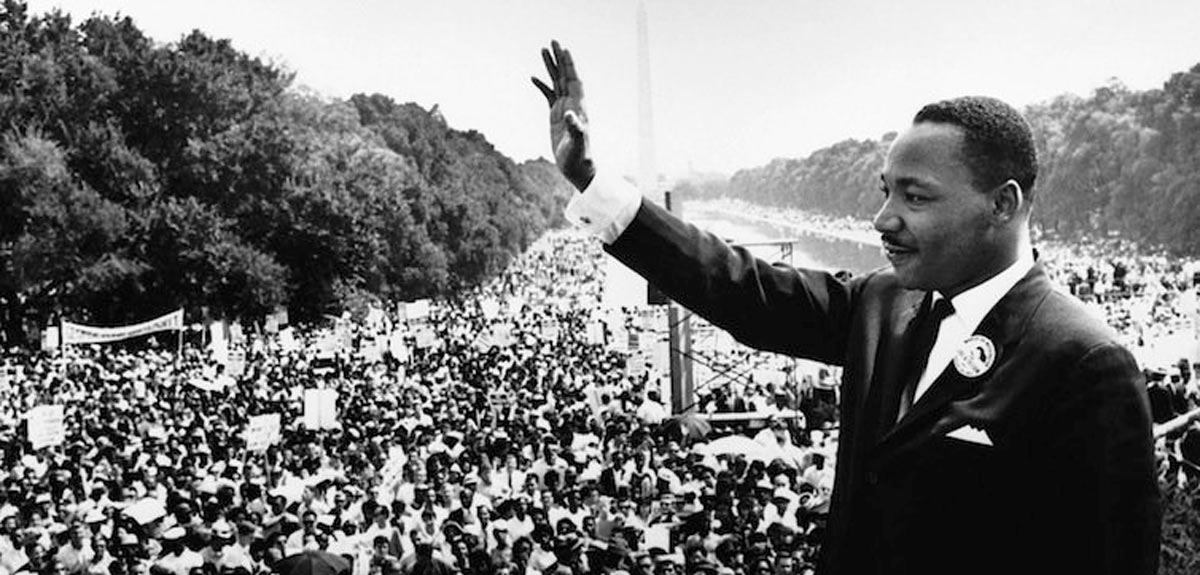
”All of these problems are tied together.” In Letter from Birmingham Jail, Dr King wrote, “We are caught in an inescapable network of mutuality, tied into a single garment of destiny. Whatever affects one directly, affects all indirectly.”
Dr King and the beginnings of the environmental justice movement
Environmental Justice is defined as “the fair treatment and meaningful involvement of all people regardless of race, color, sex, national origin, or income with respect to the development, implementation and enforcement of environmental laws, regulations, and policies.”
It is an issue that reverberates as strongly today as it did in the 1960s, from climate change and its disproportionate impact on people of color, to the battle led by indigenous peoples around the world to protect their forests and defend their land rights.
“ One cannot be concerned just with civil rights. It is very nice to drink milk at an unsegregated lunch counter—but not when there’s Strontium 90 in it.”
— Dr Martin Luther King, Jr.
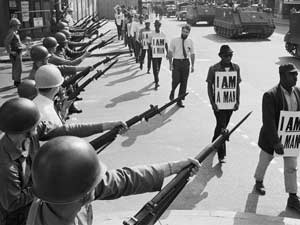
The first action in the environmental justice movement in the United States was the Memphis Sanitation Strike in 1968, a protest against unfair treatment and justice for sanitation workers in Memphis, Tennessee after two garbage collectors were crushed to death by a malfunctioning truck.
It was the first time African Americans mobilized nationally to oppose an issue of environmental injustice, and marked the beginning of this intersectional movement. Dr King addressed the crowd of approximately 25,000 people in person. It was the largest indoor gathering the civil rights movement had ever seen.
Speaking to this diverse crowd of labor and civil rights activists, and members of the black church, King spoke about the power of unity: “You are demonstrating that we can stick together. You are demonstrating that we are all tied in a single garment of destiny, and that if one black person suffers, if one black person is down, we are all down”.
Dr King’s overarching view of justice expressed itself on the social level as human solidarity. Racism and white supremacy are opposites of connectedness and unity. Dr King predicted the “inevitable decay of any system based on principles that are not in harmony with the moral laws of the universe.”
He believed that, “the universe is on the side of all that’s moving toward justice and dignity and goodwill and respect.” He was assassinated just a few days after his address to the crowd, on the evening of April 4, 1968.
With his life cut far too short, Dr King did not live to see the groundswell of 20 million Americans participating in Earth Day 1970, or the very first pictures of our fragile ‘blue marble’ planet earth from space, sent from the Apollo space mission.
Yet in his work and recorded speeches, we can hear echoes of his ecological & environmental consciousness: “The cities are gasping in polluted air and enduring contaminated water,” he warned in 1967.
He also opposed nuclear technology and the existential threat it posed to people and planet: “We’ve played havoc with the destiny of the world. Somewhere we must make it clear that we are concerned about the survival of the world.”