“One Borough, One City, One Dream” The NAACP-Brooklyn Branch Annual Freedom Fund Reception & Awards Ceremony
May 13, 2011 by admin
Filed under Other News
“ONE BOROUGH, ONE CITY, ONE DREAM” was the theme for The National Association for the Advancement of Colored People (NAACP) Brooklyn Branch, Fifth Annual Freedom Fund Reception Awards Ceremony on Wednesday, May 11 at the Brooklyn Public Library in the Dr. S. Stevan Dweck Center for Contemporary Culture, 10 Grand Army Plaza, Brooklyn.
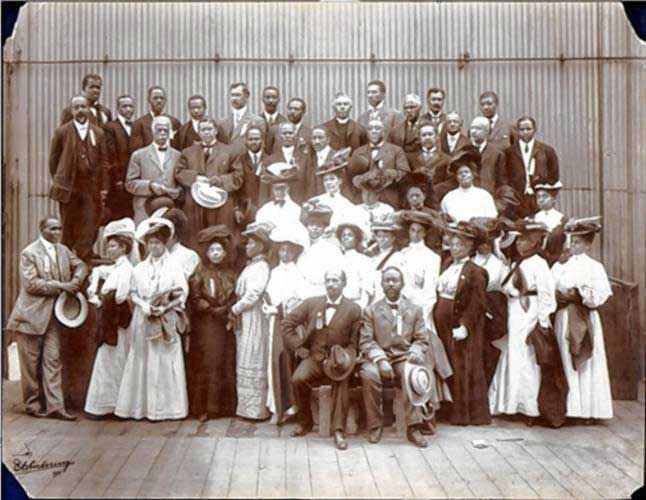
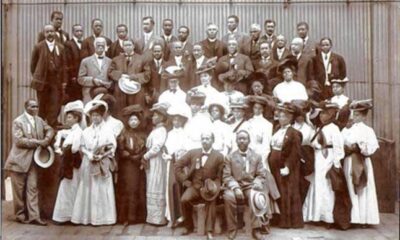
“The NAACP was founded by brave American citizens from many cultures, colors and creeds, nearly 100 years ago to bring freedom and equal rights and civil rights to Black Americans. The Brooklyn Branch continues to be blessed by the work of diverse members and supporters who share the vision of justice, compassion and economic opportunity,” said Karen Boykin-Towns, Brooklyn Branch President since 2005.
“Our founders courageously proved to us that they were powerful beyond measure. We must convey that courage to the next generation and beyond so that someday the vision will be achieved,” stated Boykin-Towns.
Freedom Fund Reception and Awards are being sponsored by: AARP, Citigroup, Con Edison, Council of School Administrators and Supervisors, Delta Airlines, Greater New York Hospital Association, Health First, International Brotherhood of Teamsters Local 237, Muss Development, New York State United Teachers, The Related Companies, LP, Rent-A-Center, SUNY Downstate Medical Center, Tioga Downs Racetrack LLC, V3 Hotels and OraSure Technologies, Inc. For further information please visit _www.brooklynnaacp.org or call 718-243-2040.

NAACP President Karen Boykin-Towns with Roland Brammer, Owner, Subway Franchise; and recipient of the Entrepreneurship Award.
Honorees:
Jacqueline A. Berrien, Chair, US Equal Employment Opportunity Commission;
Dr. Marcella Maxwell, Community Activist; LUCILLE ROSE LIVING LEGEND AWARD, Jacqui Williams-Fields, Principal, 99 Solutions; VALIANT SERVICE AWARD, Roland Brammer, Owner, Subway Franchise; ENTREPRENEURSHIP AWARD, Jailia McLean, Catherine McCauley High School, YOUNG LEADER AWARD; Lillian Rodriguez-Lopez , President, Hispanic Federation, FREEDOM STAR AWARD; LEGAL LEADERSHIP AWARD. Verizon LEADERSHIP IN COMMERCE & INDUSTRY AWARD; Jorel Moore, Franklin K. Lane High School YOUNG LEADER AWARD.
Pennsylvania NAACP, Students and Lawmakers Demand Halt to Education Cuts
May 1, 2011 by admin
Filed under City Politics
…Teachers and Lawmakers from around the State Calling for Education Over Incarceration
–
(Harrisburg, PA) – On Tuesday, April 26th, the NAACP Pennsylvania State Conference led the “Children’s March to Save Public Education”, a rally of students, teachers and legislators protesting Governor Tom Corbett’s proposed 2011-2012 budget. The budget would slash education funding by $1.2 billion, including 52% from higher education, while raising the state’s prison spending by nearly 11 percent and building three new prisons.
Governor Corbett’s budget would reduce funding for Pennsylvania colleges from $1.5 billion to $836 billion and shave $550 million from basic education funding, including $260 million from Pre-K, kindergarten, and class-size reduction programs. Meanwhile, the budget would increase prison spending by $186 million. On April 7th the national NAACP released a report called “Misplaced Priorities: Over Incarcerate, Under Educate, which urged lawmakers to downsize prisons and shift savings to education. The report received widespread bipartisan support for its endorsement of “smart on crime” policies.
“Governor Corbett proposes cutting $625 million from colleges and universities as he spends $600 million to build two new prisons,” stated NAACP President and CEO Benjamin Todd Jealous. “The governor’s budget betrays a lack of faith in the power of education and the promise of rehabilitation. Investing in human potential is ultimately what will narrow the achievement gap, grow our economy and rebuild our middle class. Today, children from around Pennsylvania are marching on the State Capitol in Harrisburg to remind legislators that they are the future of this state.”
“If we are going to find our way back to being first in the world and, leading other nations in adults with college degrees, we’ll have to stop leading the world in the number of adults and children that we incarcerate,” stated NAACP Pennsylvania State Conference President J. Whyatt Mondesire. “Governor Corbett’s budget callously deprives children and college students of the education resources they need, while ignoring the growing national call to reduce prison spending.”
The rally organizers expected the attendance to by students and community leaders from Pittsburgh, Philadelphia, York, Gettysburg, Reading, Allentown and other school districts around Pennsylvania. Speakers will include Mondesire, who is also president of the Philadelphia Unit of the NAACP; NAACP Director of Criminal Justice Programs Robert Rooks; State Representative and Chair of the Legislative Black Caucus Ronald G. Waters and students, teachers and education community leaders.
Docu-Series Breathes Life into Civil Rights-Era Cold Cases, New Meaning to Cry “No Justice, No Peace”
February 24, 2011 by admin
Filed under Top Stories
Beverly Terry
Last week, Investigation Discovery, partnering with the NAACP, hosted the premiere of their new reality three-part investigative docu-series, ‘The Injustice Files’ with narrator/host, film-maker Keith Beauchamp at the Schomburg Center for Research in Black Culture, Feb. 16th, 2011.
The atmosphere was abuzz with anticipation, hundreds of guests flocked to the Schomburg Center to view this monumental show. Keith Beauchamp — the force behind the recent ground-breaking documentary film The Untold Story of Emmet Louis Till — developed the idea with the ID channel out of his experience working on the Till documentary.
He told Our Time Press, “The Wharlest Jackson, Sr. story {“The Secrets of Natchez”} was one of the hardest cases I’ve ever had to work on during my career as an investigative film producer. It is a haunting story.”
In 1967, one month after taking a promotion at the Armstrong Tire and Rubber Factory in Natchez, Mississippi, Wharlest Jackson, father of five and treasurer for the local chapter of the NAACP, was murdered in a car bombing, one block away from his home. Hearing the explosion, Wharlest Jackson’s son rode his bike to the scene of the crime and unfortunately witnessed the results of this sophisticated murder plot.
Of special historic note, Mr. Jackson, Sr. was appointed to the NAACP Natchez chapter by Charles Evers, brother of civil rights leader Medgar Evers, NAACP field secretary who was assassinated four years earlier in Jackson, Mississippi, a 90-mile stretch from Natchez.
Mr. Jackson, Sr.’s remaining family members and everyone else involved in the reinvestigation of the case feel Mr. Jackson’s ascension to a position that was previously held for whites only was the “reason” for his murder. Wharlest Jackson, Jr., age 9 at the time of his father’s death. Forty-four years later, almost to the day of his father’s death (February 27), Wharlest Jr., now a civil rights activist, participated on the panel following the screening.
The two other surviving Jackson siblings were also in attendance for the docu-series.
Eldest daughter Debra Jackson Sylvester seemed pleased with the final cut of the episode detailing her father’s murder. She states, “Beauchamp and Investigation Discovery put love (into the effort).” It is not “thrown together,” she told us, as if it were a “Hollywood” movie.
The murder of Wharlest Jackson, Sr. launched one of the biggest FBI cases in the civil rights era. NAACP President Hazel Dukes spoke highly of Jackson’s determination, stating, “Here we are today in 2011 still crying out for justice for those who gave their lives to be treated and just to be (respected) as human beings.”
Mrs. Sylvester told this reporter, “The FBI dropped the ball in the 60’s; they really let us down by closing their investigation and turning the case back over to the local authorities.”
With the agency’s Civil Rights-Era Cold Case File Initiative packed with 110 mysteries, the FBI is now hoping the series will draw out new leads on racists who danced with the devil from onlookers, witnesses and even their relatives and children.
FBI Unit Chief Cynthia M. Deitle, a consultant on the show stated, “I understand the disappointment the Jackson family must feel for the FBI for dropping the ball back when the investigation first began.” The agency’s promotional materials are poignant. In one sepia-toned image, Beaucham sits in front of what could be an old country courthouse with a clock against the wall. In another, it looks as though he could be in prison. Both are reminders of a past that haunts and tethers us to an American tragedy and acts of domestic terrorism.
The cards and flyers read: “110 unsolved civil rights murders; 110 grieving families’. 110 reasons to keep looking for justice.” Deitle and Beauchamp acknowledge that these cases are the tip of the iceberg of “secrets” frozen in time and hidden in towns across the nation, including Brooklyn, New York, where Beauchamp is a Fort Greene resident.
Wharlest Jackson, Jr., the victim’s only son stated, “Keith, CBS and Investigation Discovery did an honorable job with the show.” He also concurred that Mr. Beauchamp, ID and CBS put heart, soul and dedication into the project, a memorial to his father. Henry Schleiff, President and CEO of Investigation Discovery said, “Even though (these tragedies occurred more than 40 years ago), we will not forget.” He also spoke very highly of the Jackson family, calling them “courageous.”
The series, now presented in three parts, may turn out to be the Civil Rights America’s Most Wanted – something undoubtedly Investigation Discovery would like to see. But its importance to all Americans can not be understated. And the producer’s decision to screen the docu-series not only in the heart of Black America, but in the towns where these tragedies took place reveal, too, how far we’ve come in this technological and visual world, where entertainment can impact reality.
Wharlest Jackson, Jr. and his siblings are strong in their conviction that the series and their work in telling their father’s story will spark interest nationwide in bringing forth new evidence in the Cold Case Initiative so that families of these victims can gain closure.
For Wharlest Jackson, Sr., time has not passed; there will be no peace if there’s no justice. For Wharlest, Jr., too much time has passed, but the faith in the story will always be told.
So Beauchamp is to be applauded for having a screening at Harlem’s Schomburg venue, the institution that holds the largest collection of African-American and African Diaspora information in the world.
The second episode in The Injustice Files series airs tomorrow night, February 25, on Time-Warner channel 23 in New York City. The third will be broadcast next Friday, March 4. Episode descriptions are below:
Episode Guide
The Ghosts of Bogalusa – Friday, February 25 at 9PM ET
The first two African-American police officers in Bogalusa, Louisiana were gunned down while on patrol. Deputy Sheriff Oneal Moore died instantly, but Deputy Sheriff David Creed Rogers was able to call in a description of the pick-up truck used in the drive-by shooting.
He Walked Alone – Friday, March 4 at 9PM ET
William Lewis Moore was an activist who planned a peaceful protest — a solo Freedom Walk from Chattanooga, Tennessee to Jackson, Mississippi to hand deliver a letter to the Governor of Mississippi urging for full human rights to African Americans. Despite friends, family and law enforcement warning him about the dangers of the journey, Moore started his walk, which ended when his body was found on the side of a road in Alabama.
(Photojournalist Beverly Terry’s work can be seen in the new group-show, “Harlem Views, Diasporan Visions: The New Harlem Renaissance Photographers,” currently on exhibition at the Schomburg Center for Research in Black Culture through June 30. She also is the underground reporter for examiner.com, and a recurring contributor to Our Time Press.)
NAACP Raises Alarm Over Growing Cases of AIDS in African-American Communities: Poverty, Lack of Health Care Causes Disproportionate Rate Amongst African-Americans
December 2, 2010 by admin
Filed under Uncategorized
Washington- In observance of World AIDS Day, December 1st, the NAACP stands united in the global fight against HIV and AIDS. The World Health Organization established World AIDS Day in 1988 to provide national AIDS programs, faith organizations, community organizations and individuals with an opportunity to raise awareness and focus attention on the global AIDS epidemic.
NAACP chapters and branches across the country, including California, New York, Michigan, Colorado, Georgia, Tennessee, Florida and Texas will use World AIDS Day 2010 as a day to highlight the AIDS issue in their communities and will host a number of community events including community-wide forums, education sessions and free screenings. In addition, the NAACP is working to mobilize pastors in states with the highest concentration of HIV-infected African-Americans to have open discussions about the HIV epidemic and direct parishioners to services in their communities.
HIV and AIDS has hit African-Americans the hardest, shattering families and destroying lives. The Centers for Disease Control and Prevention (CDC) cite the reasons for the racial disparity as not just related to race, but rather to barriers faced by many African-Americans. These barriers include poverty, access to health care and the social stigma associated with HIV/AIDS.
“We must not forget the devastating effects HIV/AIDS has on communities of color across this country,” stated NAACP President and CEO Benjamin Todd Jealous. “That is why the NAACP has partnered with a number of national organizations and our local units to put a stop to the ‘forgotten epidemic’. The NAACP is committed to being a major force behind the education of communities and a strong advocate for better health services and HIV/AIDS testing. Knowledge is the first step to better health and access to services is critical if we are to overcome this crisis,” concluded Jealous.
Even though Blacks account for about 13 percent of the US population, they are almost half (49 percent) of the people living with HIV and AIDS. African-Americans represent 51 percent of the 42,655 (including children) new HIV/AIDS diagnoses and 48 percent of the 551,932 persons, including children, living with HIV. AIDS is the leading cause of death among Black women ages 25-34 and the second leading cause of death in Black men ages 35-44 years. 1 in 30 Black women and 1 in 16 Black men will be infected with HIV in their lifetime.
“It is staggering to think that a group of people that makes up only 13 percent of the country’s population includes over half of the newly diagnosed HIV-infected individuals each year,” stated Roslyn M. Brock, NAACP Chairman of the National Board of Directors. “The uneven distribution of HIV infections indicates that there are specific challenges faced by the African-American community that are resulting in an astronomical increase in the rate at which African-Americans contract the HIV virus,” concluded Brock.
The NAACP is also a partner with the Act Against AIDS Leadership Initiative (AAALI) (Centers for Disease Control and Prevention), the Department of Health and Human Services’ Office of Minority Health and Gilead Sciences.
Founded in 1909, the NAACP is the nation’s oldest and largest civil rights organization. Its members throughout the United States and the world are the premier advocates for civil rights in their communities, conducting voter mobilization and monitoring equal opportunity in the public and private sectors.
Lena Horne Passes Late Sunday Night
May 10, 2010 by admin
Filed under Uncategorized
Singer, dancer and actress Lena Horne died at New York-Presbyterian Hospital on Sunday night, a hospital spokeswoman said. Horne was 92.
She was one of the first African-Americans to sign a long-term movie contract with a major Hollywood studio when she joined MGM in 1942.
Horne’s expressive voice made her a singing star after Hollywood failed to give her roles that might have made her a big screen starlet.
Horne complained she was used as “window dressing” in white films, mostly limited to singing performances that could be easily edited out for play in southern theaters.
The light-complected Horne refused to go along with studio plans to promote her as a Latin American.
She later said she did not want to be “an imitation of a white woman.”
Her childhood was nomadic as she traveled with her actress mother, but much of her time growing up was spent in Brooklyn, New York, where she was born in 1917.
Horne was 16 when she began her show business career as a dancer at Harlem’s Cotton Club. She later became a singer there, playing to packed houses of white patrons, with band leaders Cab Calloway and Duke Ellington.
She toured as a featured singer with a white band in 1940, a first for an African-American, according to her official biography.
Her first film role came in 1938 in “The Duke is Tops,” but her next movie didn’t come along for another four years.
She was given a screen test by MGM and signed to a movie contract after a studio scout saw her performing in a New York club.
“I think the black boy that cleaned the shoes and me were the only two black people except the maids who were there working for the stars,” Horne said in a CNN interview. “And it was very lonely, and I wasn’t very happy.”
Still, Horne said she was grateful that her World War II-era films — including “Cabin in the Sky” and “Stormy Weather” — were seen by black and white soldiers.
“But after I realized I would only go so far, I went on the stage,” Horne said.
With only subservient roles available for a black actress in Hollywood in the 1940s, Horne turned to recording top-selling songs.
Horne said performing for live audiences was what she loved most.
“I’m always happy when I’m surrounded by people to react and feel and touch,” she said.
She has a son and daughter from a first marriage that ended in 1944.
Horne married again in 1947 to Lennie Hayton, who was then MGM’s music director.
She was an active supporter of the Rev. Dr. Martin Luther King Jr.’s civil rights movement. Horne was there when King delivered his “I Have a Dream” speech on the Lincoln Memorial steps in 1963.
(From: NOLA.Tv – New Orleans innovative web based News, Entertainment and Local television broadcasting.)
LENA HORNE, SINGER, ACTRESS AND CIVIL RIGHTS ACTIVIST, DIES AT 92
HORNE WAS AWARDED NAACP’S SPINGARN MEDAL FOR AFRICAN AMERICAN ACHIEVEMENT IN 1983, NAACP IMAGE AWARD IN 1999
WASHINGTON DC – The NAACP is saddened by the loss of singer, actress and civil rights activist Lena Horne. Horne died on May 9 at the age of 92.
“We mourn the passing of Lena Horne, an outstanding, groundbreaking entertainer and a staunch civil rights activist who stood on the side of justice and equality,” said NAACP President and CEO Benjamin Todd Jealous. “Lena Horne won the hearts of millions of Americans of all backgrounds as a glamorous and graceful actress and singer. She courageously broke many color barriers and fought valiantly to bring down the institutionalized racism that plagues our society and prevents all Americans from an equal opportunity to pursue the American dream.”
An accomplished singer and actress, Horne became the first black performer to sign a long-term contract with a major Hollywood studio, signing with MGM in 1943, but became disenchanted with Hollywood by the mid-1950s. She increased her focus on her singing career, solidifying herself as a premiere nightclub performer and starring in several musicals. Horne later returned to acting, appearing on several television shows such as Kraft Music Hall, The Ed Sullivan Show, The Dean Martin Show and The Bell Telephone Hour. She later co-starred with prominent actors Harry Belafonte and Tony Bennett in Harry and Lena and Tony and Lena, and starred in the classic African American musical The Wiz. The singer also performed on dozens of albums featuring the likes of Belafonte, Sammy Davis, Jr., Joe Williams, and Gábor Szabó, and received an NAACP Image Award in 1999 for Outstanding Jazz Artist.
In addition to her legacy as an entertainer, Horne was also known for her advocacy and contributions to social justice. At an early age, Horne displayed a passion for civil rights, and she first became a member of the NAACP as a student at Atlanta’s Washington High School. Later, while singing for troops during World War II, she refused to perform “for segregated audiences or for groups in which German POWs were seated in front of African American servicemen.” She was in attendance at an NAACP rally with Field Secretary Medgar Evers in Jackson, Mississippi on the weekend before Evers was assassinated, and spoke and performed at the March on Washington on behalf of the NAACP, SNCC and the National Council of Negro Women.
“Lena Horne’s spirit and willingness to stand for what is just transcended her accomplishments in the arts, and we are extremely grateful for her commitment to civil rights and the mission of the NAACP,” said NAACP Chairman Roslyn M. Brock. “Her long-standing relationship with the NAACP dates back to high school, while her service to the Association as a member and public advocate was invaluable. Lena Horne was an excellent example of someone who used her platform as an entertainer to advocate for equal rights for African Americans and give a voice to the voiceless, and she will be missed” added Brock.
Founded in 1909, the NAACP is the nation’s oldest and largest civil