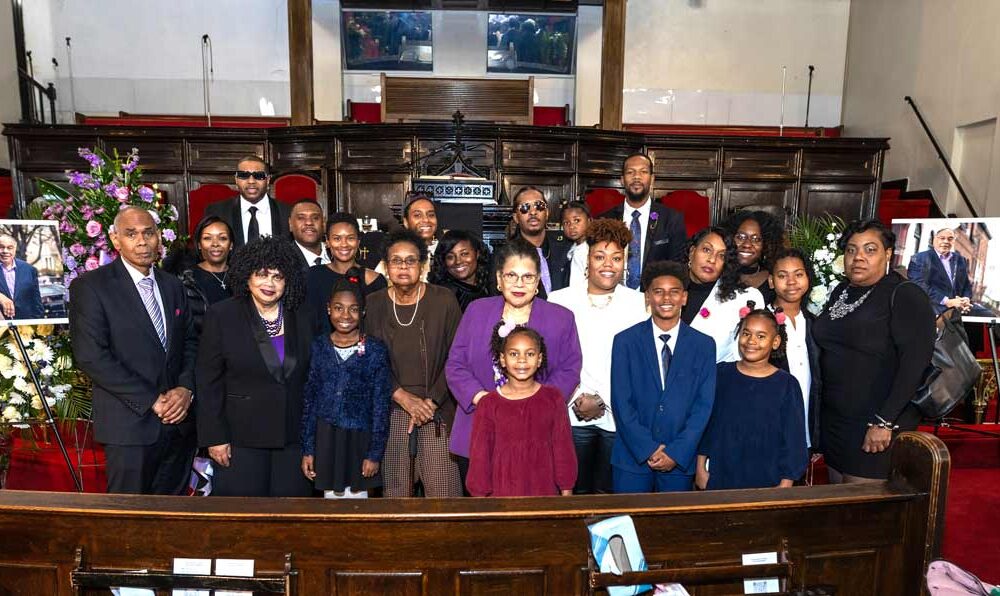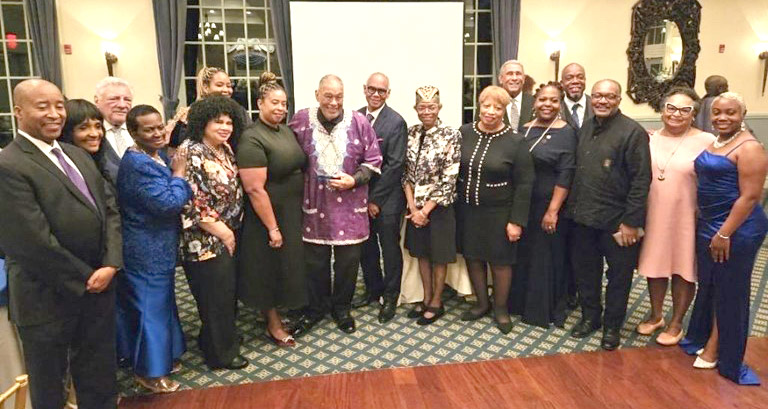

Guidance was given to the graduates from Markowitz, who said: “Never be in debt, always be on time, only by listening can you truly understand and when you believe in yourself all things are possible.”
Bloomberg expressed his pleasure and gratitude to witness a diverse group of graduates and collective family members accepting their graduation diplomas. “I’ve been to a number of commencements this spring, but I’m quite certain that this is the first one where the graduates include three sets of husbands and wives, two sisters, a father and his daughter, and a mother and her son, all receiving degrees on the same day. He further related the significance of the graduates’ achievement beyond the academic realm: ”You’re living proof that families that study together, stay together!”
Speaking to the assemblage of New Yorkers who hailed from different areas of the globe, in particular the Caribbean and South America, Comptroller John Liu an immigrant of Taiwanese heritage who has attained a distinct notable political career and dedicated service to the residents of New York said “The immigrant that comes to New York continues to make the city a great place.”
“I challenge you to do all the best that you can and you can make a difference in the world,” said Councilman Al Vann, one of the only living founders of Medgar Evers College. “ You have always had the innate ability to succeed through your heritage, and now you’ve acquired the tools to continue.”
The keynote speaker of the ceremonies was noted activist and attorney Thomas N. Todd. “You’re reaping the harvest of seeds planted by someone else who gave their life, whose tears were shed,” said Todd. “You’re standing on someone else’s shoulders; Mama’s, Daddy’s and the community.” He went on to discuss the significance of the civil rights movement in facilitating the opportunities for minorities to achieve scholarly goals saying: “Today, you’re completing a chapter in the book but you have not accomplished the book, it is your prologue but not your conclusion. As Medgar graduates, you’ve learned to dig a little deeper and stand a little taller for that is a part of what a graduate of Medgar assumes.”
Build Atlantic yards in Bedford-Stuyvesant
If developer Forest City Ratner (FCR) wants to prefabricate all planned 16 high-rise buildings in his $4.9 billion Atlantic Yards project tat’s fine with me as long as most of the factory work stays in Brooklyn.
And a good place to start looking for a site to build modules components of the skyscrapers that will be trucked and bolted together on the 22-acre site starting at the Flatbush/Atlantic avenues intersection is in Bedford-Stuyvesant.
It’s an idea that developer Bruce Ratner should consider after announcing recently he might start the housing portion of the arena/housing project with the world’s largest prefabricated or modular dwelling at 34 stories – 30 percent of which will be affordable.
Modular building provides plenty of jobs in America’s rural areas as many single-family homes are now built that way. If this technology can be perfected in large-scale buildings, other developers will follow suit, and there is a chance to revive the city’s sagging manufacturing base.
The only sour note in Ratner’s announcement was that he was looking to locate the factory in Long Island City Queens, which would take jobs out of Brooklyn.
So I called Ratner spokesperson Joe DePlasco, who said the company, is also looking at sites in Brooklyn. A good place to start is northwest Bed-Stuy, which is currently zoned for manufacturing.
Another good spot would be in and around the Brooklyn Navy Yard – also zoned for manufacturing
James Caldwell, president of Brooklyn United for Innovative Development (BUILD), one of the signatories of the Atlantic Yards Community Benefits Agreement (CBA) also hailed the move.
“If it creates jobs in manufacturing it will be a throwback to a different era with a new twist,” said Caldwell, whose non-profit organization is funded by Ratner.
Caldwell noted that it’s very tough for people of color to get into construction unions under the current economic climate.
“It (building part of the project in factories) might be an easier way for people of color to get into the unions,” he said.
Caldwell said since signing the CBA, BUILD has put about 350 people to work either through Ratner or on other Ratner projects throughout the city.
“We’re working on an employment plan for when the arena is built to provide about 1,200 jobs and even more when the affordable housing is built,” he said. “There will be a lot of permanent jobs and small business opportunities at the arena, particularly in customer service and hospitality-type jobs.”
The announcement came as the mostly wealthier and white opponents of the project continue to decry it. Interestingly, some of these people have made opposing the plan a cottage industry and have already benefited from the project.
Caldwell said he finds it interesting that opponent bloggers never even try to tell both sides of the story, and continue to demonize anyone that tries to see both sides of the coin.
“I was just at Cataldo’s Restaurant and Pizzeria on Dean Street and Vanderbilt Avenue and the owner told me how he is doing a great business from arena construction workers,” said Caldwell.
“The bloggers and people against the project don’t talk or write about the positive economic impact the arena has already had in the area,” he added.
If developer Forest City Ratner (FCR) wants to prefabricate all planned 16 high-rise buildings in his $4.9 billion Atlantic Yards project tat’s fine with me as long as most of the factory work stays in Brooklyn. And a good place to start looking for a site to build modules components of the skyscrapers that will be trucked and bolted together on the 22-acre site starting at the Flatbush/Atlantic avenues intersection is in Bedford-Stuyvesant. It’s an idea that developer Bruce Ratner should consider after announcing recently he might start the housing portion of the arena/housing project with the world’s largest prefabricated or modular dwelling at 34 stories – 30 percent of which will be affordable. Modular building provides plenty of jobs in America’s rural areas as many single-family homes are now built that way. If this technology can be perfected in large-scale buildings, other developers will follow suit, and there is a chance to revive the city’s sagging manufacturing base. The only sour note in Ratner’s announcement was that he was looking to locate the factory in Long Island City Queens, which would take jobs out of Brooklyn. So I called Ratner spokesperson Joe DePlasco, who said the company, is also looking at sites in Brooklyn. A good place to start is northwest Bed-Stuy, which is currently zoned for manufacturing. Another good spot would be in and around the Brooklyn Navy Yard – also zoned for manufacturing James Caldwell, president of Brooklyn United for Innovative Development (BUILD), one of the signatories of the Atlantic Yards Community Benefits Agreement (CBA) also hailed the move. “If it creates jobs in manufacturing it will be a throwback to a different era with a new twist,” said Caldwell, whose non-profit organization is funded by Ratner. Caldwell noted that it’s very tough for people of color to get into construction unions under the current economic climate. “It (building part of the project in factories) might be an easier way for people of color to get into the unions,” he said.
Caldwell said since signing the CBA, BUILD has put about 350 people to work either through Ratner or on other Ratner projects throughout the city. “We’re working on an employment plan for when the arena is built to provide about 1,200 jobs and even more when the affordable housing is built,” he said. “There will be a lot of permanent jobs and small business opportunities at the arena, particularly in customer service and hospitality-type jobs.” The announcement came as the mostly wealthier and white opponents of the project continue to decry it. Interestingly, some of these people have made opposing the plan a cottage industry and have already benefited from the project. Caldwell said he finds it interesting that opponent bloggers never even try to tell both sides of the story, and continue to demonize anyone that tries to see both sides of the coin. “I was just at Cataldo’s Restaurant and Pizzeria on Dean Street and Vanderbilt Avenue and the owner told me how he is doing a great business from arena construction workers,” said Caldwell. “The bloggers and people against the project don’t talk or write about the positive economic impact the arena has already had in the area,” he added.
Tags: 22-acre site, affordable, against the project, Atlantaic Yards project, Atlantic yards COmmunity Benefits Agreement(CBA), bedford-stuyvesant, benefited, brooklyn, Bruce Ratner, chances, coin, contruction unions, cottage industry, demonize, economic climate, employement plan, factory, Flatbush/Atlantic avenues intersection, Forest City ratner, get into the unions, hospitality-type jobs, HOusing project, James Caldwell, long island city queens, manufaturing, medgar evers college, modules components, non-profit organization, northwest bed-stuy, people of color, permanent jobs, positive economic impact, president of Brooklyn United for INNovative Development(BUILD), provides plenty of jobs in America, Ratner, ratner spokesperson joe beplasco, ratner's announcement, signatories, single-family homes, skyscrapers, small business opportunities, techonology, the bloggers, the Brooklyn Navy Yard, the city's sagging manufacturing base, the housing portion, the moatly wealthier anf white opponents of the project, world's largest prefabricated or modular
“This is Mathew Goldstein, the Chair of CUNY, trying to take control of Medgar Evers” said councilman Charles Barron at a city Hall steps press conference called by the The Medgar Evers College Coalition for Academic Excellence and Mission Integrity.
“He hired a puppet to do the work he couldn’t do, previously, as chair of the Higher Education Committee for the last eight years.” Which is, according to Barron, to turn Medgar Evers into their vision of what a CUNY school should be.
“Medgar Evers serves Black people prodominantly, Medgar evers was created by a community effort and Medgar Evers is going to maintain that, irrespective of Goldstein’s and Murchison’s manipulations.”
The MEC Coalition) is calling last Tuesday’s press conference and public hearing a double victory. The press conference was called to demand a change in leadership at the predominately Black institution of higher learning.
The press conference preceded a City Council legislative hearing on Examining the Academic Impact of CUNY’s Institutes and Centers on Ethnic Studies(sponsored by the City Council’s Higher Education Committee). The hearing’s focus was on the political and cultural impact of CUNY centers and institutes on ethnic studies within a university system that services many diverse student groups. It turned into a spirited session when NYC Council Member Charles Barron, outraged, walked out, stating that the lack of an African-American presence on the CUNY panel was racist.
All-White CUNY Panel Prompts Barron Walkout, James Questioning
City Council Members heard from the CUNY panel first, which was represented by Julia Wrigley, Associate University Provost, Anthony Rini, University Director, and directors from the Dominican Studies Institute, the Center for Puerto Rican Studies, and the Italian American Institute.
At the end of the CUNY panel presentation, Council Member Ydanis Rodriquez, NYC Chair of the Higher Education Committee, asked university officials whether there were any programs or centers related to CUNY’s African American constituency. CUNY panel members responded that they were not aware of any.
Incensed by the response, Barron pointed out that there were in fact two executive directors present at the hearing who represented African American constituents: the Center for Black Literature and the Center for Law and Social Justice. He then demanded to know why there were no African-Americans on the CUNY panel. At that point he called the hearing insulting and then dramatically walked out, followed by several other members of the City Council. After the stir, NYC Council Member Letitia James further highlighted Barron’s observation on the panel’s lack of representation of African American people. She followed with a series of critical questions related to the process for establishing and removing centers, the responsibilities of center directors, and the funding models for the more than 100 centers and institutes within CUNY.
As writers and educators who have participated in literary programs at Medgar Evers College, we have viewed from afar its situation with deep concern. Medgar Evers College has long been known for its tradition and legacy of providing an educational and cultural haven for the preservation, study and celebration of the heritage, arts and traditions of Black people throughout our country and the world. Those who find it necessary to advocate on behalf of preserving this legacy and mission have the right to do so. The practice of active engagement in a cause based on one’s principles is to be celebrated not denigrated. This practice of activism forms the bedrock of our institutions of higher education.
Professor Ragland’s insinuation in the Amsterdam News that this struggle to maintain the mission and integrity of Medgar Evers College is all about Dr. Greene’ s teaching schedule is bizarre to say the least. Dr. Greene’s work as the founder of the Center for Black Literature, as the Director of the National Black Writers Conference and as an educator who has demonstrated her professional commitment to Medgar Evers College and the community throughout her career is well documented. The critical issues of leadership which have been cited by the many involved in the struggle to preserve Medgar Evers College’s mission are broad and demand attention
There must be a resolution to this situation. Medgar Wiley Evers died advocating for the civil rights of Black citizens throughout this country. The mission of a college named in honor of his legacy and founded on the principles of activism and engagement must be preserved. We commend the broad constituency of educators, students, clergy, elected officials and community citizens from across the city of New York for their courage, conviction, commitment, tenacity and willingness to advocate for a resolution to the events and actions which have negatively impacted on a College built on a foundation and tradition grounded in the struggle for social justice. This is democracy in action and should be respected.
Amiri Baraka, Writer/ Activist/ Prof. Emeritus, SUNY Stonybrook, N Y
Marita Golden, Writer
Haki Madhubuti, Poet/ the Ida B. Wells-Barnett Professor at DePaul University and Founder &Publisher of Third World Press
Kevin Powell, Activist/ Writer
Ishmael Reed, Writer/ Prof. Emeritus, University of California, Berkeley
Quincy Troupe, Poet/ Writer, Editor, Black Renaissance Noir
Sonia Sanchez, Poet/Writer/Activist/ Professor Emeritus, Temple University
Danny Simmons, Artist/ Writer, Chairman RUSH Philanthropic Foundation, NYSCA Chairman, Crown Heights Resident
Cornel West, University Professor, Princeton University
John Edgar Wideman, Writer/ ASA Messer Professor, Africana Studies and Literary Arts, Brown University
Tags: arts and traditions of black people, cultural, deep concern, demand attention, Dr.Greene, educational, heritage, medgar evers college, the civil rights of Black citizens, The Directorof the National Black Writers Conference, the founder of center for Black Literature
Wednesday, December 8, 2010
Whereas, the faculty of Medgar Evers College has attempted unsuccessfully to engage the administration (Office of the President and Provost) into collegial dialogue regarding the affairs of the College, and Whereas, the faculty of Medgar Evers College has observed and obtained evidence of the egregious acts by the Office of the President and Provost listed below, to wit
1. Administration, as represented by the Offices of the President and Provost demonstrate poor or questionable leadership decisions with regard to effective governance as ratified by the faculty and PSC, ex.:
· President’s failure to Chair Personnel and Budget Committee as required by College’s governance plan (this committee is chaired by President as defined by Governance Plan and oversees reappointments, appointments, promotions and tenure)
· Irregularities in protocols for College Wide Personnel & Budget Committee
· Provost’s confrontational and dictatorial style with faculty, students and staff
· Dissemination of notices of non reappointment to faculty, staff and CLTs via security guard, email, and visits to classrooms and offices.
· Questionable non reappointments of faculty and College Lab Technicians. (CLTs perform highly skilled tasks such as lab work, computer work and provide support for administrative and academic units. CLTs follow a tenure track).
· Irregularities in the process by which faculty and staff reviews were voted on in personnel committees.
· No announced Master plan or direction for MEC, after an entire year. The college-wide assessment report and recommendations were never shared.
· Removal of Chair of Education for spurious and unsubstantiated reasons. (Per PSC Contract, Chairs in CUNY are elected by faculty not appointed by President and Provost). Chair of Education had been elected by faculty in department for 3 year term.
· Citing of “budget” as rationale for reduction of services but hiring of additional administrators and consultants.
· Lack of transparency and lack of communication with respect to the search for the Provost.
· Provost’s statement that a reduction in adjunct costs will provide OTPS for faculty.
· President and Provost more concerned with initiatives such as getting an athletic field than with providing support for resources to support student instruction, tutoring, and scholarships and faculty hires and professional development.
2. Administration, as represented by the Offices of the President and Provost demonstrate a discrepancy between their declared student-centered philosophy and activities that undermine and mitigate against student success by removing support mechanisms and faculty resources integral to student success. Data reveal that MEC student satisfaction with academic support services is substantially lower than CUNY average. Removal of support mechanisms and faculty resources include:
· Elimination of Writing Center.
· Elimination of Center for Teaching and Learning.
· Reduction of tutors in Learning Center budget.
· Reduction of staff in College’s library.
· Reduction of staff in Student Computer Lab.
· Reduction of resources and research opportunities for Psych Lab.
· Blocking of funding supporting faculty/student research and the mission of the College.
· Refusal to fill faculty positions in academic departments (yet hired high level administrators).
· Ending the position of NCATE Coordinator while Department is involved in Accreditation activities.
· Elimination of the position of Pre-Med Advisor in January 2010. Numerous MEC students have been accepted to Medical schools over the years, some to MD/PhD program, because of the work of the pre-professional advisor. When students confronted Provost re: this, he stated that “to his knowledge there was never anyone who had the title of pre-med advisor at MEC, and that students could not have a letter from a pre-med committee nor a pre- med advisor since the school never had neither one.” This is a direct misrepresentation of the facts; the College has had a pre-professional advisor since 1975.
· Withdrawing of reassigned time for Coordination of Writing. The composition classes in the English Department are service courses that serve close to 2,000 students (70+ sections) per semester. The Coordinator is responsible for developing common midterm and final exams; norming sessions; cross-grading sessions; faculty development workshops; orientation for new faculty; securing grants and serving as liaison to other CUNY colleges. Coordinators in all CUNY campuses have reassigned time.
3. Poor Leadership and Management Skills of the President, contributing to poor morale, questionable legal activities, and institutional demoralization, as evidenced by
· Rigid viewpoint and inability to entertain or appreciate alternative perspectives
· Poor relationships with elected officials ( demonstrates a dismissive attitude, and has portrayed elected officials as “interfering,” and having “too much influence in the College”)
· Questionable appointments of additional administrators in midst of a severe fiscal crisis:
· Lack of Diversity in President’s Administrative Senior Leadership Team (all Vice Presidents are males.)
· Failure to meet with senior faculty and student leaders – only responded after CUNY Central and elected officials’ intervention
· Inability & failure to hold College Council meetings (cancelled two meetings in Fall and failed to get quorum in Spring at three meetings in 2009-2010 AY. Has only held one meeting in current year and subsequent meeting cancelled because of failure to document membership of council and thus did not have a quorum.)
· Holding of Town Hall meeting for faculty during last week in May -few faculty present.
· Holding governance plan meeting in summer when faculty and students are on leave.
· Holding of Retreat in summer without key administrators, e.g, Deans.
· Lack of Understanding of Funding and Grant Initiatives
· Leadership team’s lack of understanding of the nature and process for obtaining multiple streams of funding from public and private sources;
· Leadership’s team blocking of funding opportunities and funding obtained- Nu Leadership, NIH grant and STEP grant, SPCD Programs
4. Poor Leadership and Insensitivity of the Provost:
· Irrational and explosive behavior that is unbecoming of an academic leader.
· Questionable non reappointments of faculty and College Lab Technicians (CLTs) (reasons for non-reappointment were not provided to Chairs)
· Blocking of funding supporting faculty/student research and the mission of the College
· Lack of respect for the academic knowledge and expertise of faculty (disparaging and reductive attitude towards faculty scholarship, leadership and counsel in matters of academic affairs)
· Removal of support mechanisms and faculty resources integral to student success, e.g., the Writing Center and Center for Teaching and Learning.
· Accusations that faculty are responsible for low retention rates and performance of students when most recent data indicate that student satisfaction with faculty is higher than CUNY average with respect to quality of course performance, ability of faculty to communicate clearly and frequency of faculty feedback on course performance.
5. Administration, as represented by the Offices of the President and Provost, demonstrates a lack of commitment to the “community-oriented” mission of Medgar Evers College and to Central Brooklyn and its residents, as evidenced by:
· Lack of institutional memory.
· Continual statements referencing the need to change the mission without demonstrating an understanding of the special niche of Medgar Evers and the integral nature of Medgar Evers College to all community entities.
· Disregard for relationship and value of the Centers to the mission of MEC
· Eviction of Center for NuLeadership
· Disregard for role of Center for NuLeadership in serving as advocate and resource for formerly incarcerated individuals in college and community.
· Refusal to recognize Center for NuLeadership as Center in College although the Center is highly regarded in CUNY and nationally, has been functioning as a critical Center for the last six years and was formerly approved by the College’s governing body.
· Ignoring of Harry Belafonte’s offer to work with President in resolving Nu Leadership issues.
· Removal of Carver ATM machines & substitution of Citibank ATMs. Issue of Carver Bank’s removal from campus still not resolved.
· Lack of an understanding of the value of a comprehensive college for students.
· Pays “lip service” to support of Medgar Evers College’s Preparatory School. Despite awards and accolades from College Board, Department of Education and President Obama, the Administration has withdrawn support for the Medgar College Preparatory School’s Dual Enrollment Program.
· Use of questionable and erroneous data as a justification for changing the mission
· Attempt to change the venue of commencement and cancel Jazzy Jazz series without consultation and understanding of the importance of these programs to students and the community. (Reinstitution of these programs only after student and community protest).
· Lack of awareness of the importance of Medgar Evers’s role in helping to sustain Black institutions that support and serve the students and residents of Central Brooklyn.
THEREFORE, BE IT RESOLVED, that the Faculty of Medgar Evers College do affirm a VOTE OF NO CONFIDENCE in the current Administration, and specifically, in the Office of the President, Dr. William A. Pollard, and in the Office of the Provost, Dr. Howard Johnson.
A vote of no confidence by the faculty signals to the college leadership and CUNY Board that there is a major lack of confidence in the leadership of the college and that actions must be taken.
Tags: administrative office, Budget Committee, Center for Teaching and Learning, Chair of Education, Chair Personnel, College library, College Wide Personnel, Coordination of Writing, Dr. Howard Johnson, English Department, faculty, Governance Plan, Harry Belafonte, Leadership and Management Skills, Learning Center, medgar evers college, NCATE Coordinator, Nu Leadership, Office of the President and Provost, President's Administrative Senior Leadership Team, Psych Lab, Student Computer Lab, unsuccessful, Writing Center
After months of chafing under the administration of President William Pollard, the Faculty of Medgar Evers College issued a resolution Wednesday evening detailing the reasons for their vote of no confidence in the leadership of the President and Provost of the school.
“This was expected and long overdue.” Said Councilman Charles Barron when told of the vote. ”He has gone against the faculty and the community. Elected officials were trying to get him to understand that this is a community institution. This is not a regular college, this is a college that the community gave birth to.”
Councilman Al Vann said that “As a founder and longtime supporter of MEC I’m deeply disturbed that there were actions taken and decisions made and such confusion exists that the faculty found it necessary to issue a vote of no confidence.”
Vann said that he wanted the elected officials to come together and meet with faculty to and speak about how they arrived at the decision and also meet with President Pollard and his staff to discuss “this very unusual occurrence. Not unprecedented, but rare.”
The councilman noted that the chancellor and other stakeholders had to be consulted as well, “So that together we can determine what is just and right in the interest of Medgar Evers College.”
We were able to contact the press office at MEC but there was not enough time for them to issue a statement before we went to press. The faculty resolution is on page 3. We were told there would be a response from MEC administration in time for next week’s issue.
Wednesday, December 8, 2010
Whereas, the faculty of Medgar Evers College has attempted unsuccessfully to engage the administration (Office of the President and Provost) into collegial dialogue regarding the affairs of the College, and Whereas, the faculty of Medgar Evers College has observed and obtained evidence of the egregious acts by the Office of the President and Provost listed below, to wit
1. Administration, as represented by the Offices of the President and Provost demonstrate poor or questionable leadership decisions with regard to effective governance as ratified by the faculty and PSC, ex.:
· President’s failure to Chair Personnel and Budget Committee as required by College’s governance plan (this committee is chaired by President as defined by Governance Plan and oversees reappointments, appointments, promotions and tenure)
· Irregularities in protocols for College Wide Personnel & Budget Committee
· Provost’s confrontational and dictatorial style with faculty, students and staff
· Dissemination of notices of non reappointment to faculty, staff and CLTs via security guard, email, and visits to classrooms and offices.
· Questionable non reappointments of faculty and College Lab Technicians. (CLTs perform highly skilled tasks such as lab work, computer work and provide support for administrative and academic units. CLTs follow a tenure track).
· Irregularities in the process by which faculty and staff reviews were voted on in personnel committees.
· No announced Master plan or direction for MEC, after an entire year. The college-wide assessment report and recommendations were never shared.
· Removal of Chair of Education for spurious and unsubstantiated reasons. (Per PSC Contract, Chairs in CUNY are elected by faculty not appointed by President and Provost). Chair of Education had been elected by faculty in department for 3 year term.
· Citing of “budget” as rationale for reduction of services but hiring of additional administrators and consultants.
· Lack of transparency and lack of communication with respect to the search for the Provost.
· Provost’s statement that a reduction in adjunct costs will provide OTPS for faculty.
· President and Provost more concerned with initiatives such as getting an athletic field than with providing support for resources to support student instruction, tutoring, and scholarships and faculty hires and professional development.
2. Administration, as represented by the Offices of the President and Provost demonstrate a discrepancy between their declared student-centered philosophy and activities that undermine and mitigate against student success by removing support mechanisms and faculty resources integral to student success. Data reveal that MEC student satisfaction with academic support services is substantially lower than CUNY average. Removal of support mechanisms and faculty resources include:
· Elimination of Writing Center.
· Elimination of Center for Teaching and Learning.
· Reduction of tutors in Learning Center budget.
· Reduction of staff in College’s library.
· Reduction of staff in Student Computer Lab.
· Reduction of resources and research opportunities for Psych Lab.
· Blocking of funding supporting faculty/student research and the mission of the College.
· Refusal to fill faculty positions in academic departments (yet hired high level administrators).
· Ending the position of NCATE Coordinator while Department is involved in Accreditation activities.
· Elimination of the position of Pre-Med Advisor in January 2010. Numerous MEC students have been accepted to Medical schools over the years, some to MD/PhD program, because of the work of the pre-professional advisor. When students confronted Provost re: this, he stated that “to his knowledge there was never anyone who had the title of pre-med advisor at MEC, and that students could not have a letter from a pre-med committee nor a pre- med advisor since the school never had neither one.” This is a direct misrepresentation of the facts; the College has had a pre-professional advisor since 1975.
· Withdrawing of reassigned time for Coordination of Writing. The composition classes in the English Department are service courses that serve close to 2,000 students (70+ sections) per semester. The Coordinator is responsible for developing common midterm and final exams; norming sessions; cross-grading sessions; faculty development workshops; orientation for new faculty; securing grants and serving as liaison to other CUNY colleges. Coordinators in all CUNY campuses have reassigned time.
3. Poor Leadership and Management Skills of the President, contributing to poor morale, questionable legal activities, and institutional demoralization, as evidenced by
· Rigid viewpoint and inability to entertain or appreciate alternative perspectives
· Poor relationships with elected officials ( demonstrates a dismissive attitude, and has portrayed elected officials as “interfering,” and having “too much influence in the College”)
· Questionable appointments of additional administrators in midst of a severe fiscal crisis:
· Lack of Diversity in President’s Administrative Senior Leadership Team (all Vice Presidents are males.)
· Failure to meet with senior faculty and student leaders – only responded after CUNY Central and elected officials’ intervention
· Inability & failure to hold College Council meetings (cancelled two meetings in Fall and failed to get quorum in Spring at three meetings in 2009-2010 AY. Has only held one meeting in current year and subsequent meeting cancelled because of failure to document membership of council and thus did not have a quorum.)
· Holding of Town Hall meeting for faculty during last week in May -few faculty present.
· Holding governance plan meeting in summer when faculty and students are on leave.
· Holding of Retreat in summer without key administrators, e.g, Deans.
· Lack of Understanding of Funding and Grant Initiatives
· Leadership team’s lack of understanding of the nature and process for obtaining multiple streams of funding from public and private sources;
· Leadership’s team blocking of funding opportunities and funding obtained- Nu Leadership, NIH grant and STEP grant, SPCD Programs
4. Poor Leadership and Insensitivity of the Provost:
· Irrational and explosive behavior that is unbecoming of an academic leader.
· Questionable non reappointments of faculty and College Lab Technicians (CLTs) (reasons for non-reappointment were not provided to Chairs)
· Blocking of funding supporting faculty/student research and the mission of the College
· Lack of respect for the academic knowledge and expertise of faculty (disparaging and reductive attitude towards faculty scholarship, leadership and counsel in matters of academic affairs)
· Removal of support mechanisms and faculty resources integral to student success, e.g., the Writing Center and Center for Teaching and Learning.
· Accusations that faculty are responsible for low retention rates and performance of students when most recent data indicate that student satisfaction with faculty is higher than CUNY average with respect to quality of course performance, ability of faculty to communicate clearly and frequency of faculty feedback on course performance.
5. Administration, as represented by the Offices of the President and Provost, demonstrates a lack of commitment to the “community-oriented” mission of Medgar Evers College and to Central Brooklyn and its residents, as evidenced by:
· Lack of institutional memory.
· Continual statements referencing the need to change the mission without demonstrating an understanding of the special niche of Medgar Evers and the integral nature of Medgar Evers College to all community entities.
· Disregard for relationship and value of the Centers to the mission of MEC
· Eviction of Center for NuLeadership
· Disregard for role of Center for NuLeadership in serving as advocate and resource for formerly incarcerated individuals in college and community.
· Refusal to recognize Center for NuLeadership as Center in College although the Center is highly regarded in CUNY and nationally, has been functioning as a critical Center for the last six years and was formerly approved by the College’s governing body.
· Ignoring of Harry Belafonte’s offer to work with President in resolving Nu Leadership issues.
· Removal of Carver ATM machines & substitution of Citibank ATMs. Issue of Carver Bank’s removal from campus still not resolved.
· Lack of an understanding of the value of a comprehensive college for students.
· Pays “lip service” to support of Medgar Evers College’s Preparatory School. Despite awards and accolades from College Board, Department of Education and President Obama, the Administration has withdrawn support for the Medgar College Preparatory School’s Dual Enrollment Program.
· Use of questionable and erroneous data as a justification for changing the mission
· Attempt to change the venue of commencement and cancel Jazzy Jazz series without consultation and understanding of the importance of these programs to students and the community. (Reinstitution of these programs only after student and community protest).
· Lack of awareness of the importance of Medgar Evers’s role in helping to sustain Black institutions that support and serve the students and residents of Central Brooklyn.
THEREFORE, BE IT RESOLVED, that the Faculty of Medgar Evers College do affirm a VOTE OF NO CONFIDENCE in the current Administration, and specifically, in the Office of the President, Dr. William A. Pollard, and in the Office of the Provost, Dr. Howard Johnson.
A vote of no confidence by the faculty signals to the college leadership and CUNY Board that there is a major lack of confidence in the leadership of the college and that actions must be taken.
Dr. and Mrs. Pollard, let me start off by expressing my sincere sense of gratitude and privilege in sharing this evening with you, the alumni, elected officials, particularly all the Caribbeans in the room. I am honored to be gained this honor in the name of a man I’ve known, shared many precious moments with, although they were not long. Not enduring.
The work that I do takes me into the midst of the criminal culture. In this country which possesses the largest prison population in the world, over two million. Most of the young men and women who languish in those prisons are men and women of color.
I’ve had occasion to consider Nelson Mandela. I had interviewed him for a film that I had done, and it was just two days ago we did the final edit and it will be released soon. It’s going its way through the festival routine and will be released soon. The film is called Sing your Song, based on a quote by a man whom I revered and who was my mentor, Paul Robeson. Mr. Robeson came to visit myself and a group of young artists at the American Negro Theater at the Schomburg Library and he came to see us perform in a play called Juno and the Paycock written by the great Irish playwright Sean O’Casey. In the group was Ossie Davis, Ruby Dee and Sidney Poitier, all young people not knowing quite where we were going to wind up, but we knew where we wanted to go.
Paul came to visit us and spend time. From that moment to the end of his life, I served him and revered him, he was my mentor. When he came to see me after my first performance, he smiled and he said, “When they hear you sing your song, they’ll want to know who you are”.
I did not know what a metaphor was until one day I woke up and found the whole world singing “Day-O.” (Audience laughs and starts to sing a few bars.)
But you’ve heard nothing until you’ve stood and watched 50,000 Japanese singing it.
It was through moments like that, that I understood the power of the metaphor. If you sing your song, they will want to know who you are.
Thank you again Paul, Mr. Robeson, for what you did for my heart and soul and sense of purpose.
….
On Nelson Mandela’s first visit to America I was anointed with the privilege of arranging every aspect of what he would do and who he would meet during his stay in America. As an agent for the ANC, as a worker for the African National Congress. The first place he stopped when he came here, and I met him at the airport, wasn’t even on the schedule. It was Boys and Girls High. It wasn’t on the schedule and I knew that Oliver Tambo and others had looked at the schedule and approved it, but I have to make a stop, I said I had made a promise to a couple of students that I would take you by there, and the first stop was Boys and Girls High.
In our discussion we came to the subject of the young and whether or not we had fulfilled the promise in the goals of acceptance. And it was a serious thing because he says, “had we done the things we were supposed to do, perhaps our young people would not be so lost”.
Somewhere along the line, we blinked. Somewhere along the line, we got caught up in the immediacy of our successes, and did not keep our eye on the long-term goal. And in that space the corruptors stepped in and grabbed at us, keeping us from what we were trying to achieve. Now we find ourselves here today in the midst of one of the greatest crises of my lifetime. I don’t know of any time more critical than this very moment is. We are just a few steps away from the Fascists. A few steps away from totalitarianism. If they succeed, there will be no place for us to go to find retreat. It will be a doomsday scenario.
The Tea Party? It’s no question what they say, it’s about race. It’s about race.
You can fill the airways, fill the newspapers, with your elusive talk about issues that don’t hardly exist, but it’s all about race. And I no longer participate in the wasteful debate about whether or not Barack Obama has made or not made the right decision, what’s infinitely more important is what we’re failing to do. It’s where we are and what we have not done and are not doing that is making the difference. And it started long before Barack Obama. You go to Katrina and take a look at the hundreds of thousands of Black people in anguish in that place, where was America’s Black voice? Where was the ardor of Black citizens rising up to say all will be well, we will prevail. We failed and we continue to fail because the people of Katrina still languish in misery and pain while we all sit and wine and dine, frustrated in the comfortable lives we’re living. We have failed. In that failure sits the reason Barack Obama has not moved further forward. Of course. I have a lot of complaints and I can take you to the mat on what he should be doing, but more importantly, what I have to keep in mind is that Barack Obama is ours.
I remember also another mentor, a woman, Eleanor Roosevelt. I sat with Mrs. Roosevelt one night because she wanted to do something for Africa in a most profound way, not just in title, but in substance. She cuddled and befriended and helped inspire dozens and dozens and dozens of young African revolutionaries who came to this country to find hope and to find promise. While she was at the United Nations writing the Charter of the Universal Declaration of Human Rights which is quoted so often today, in her midst are large numbers of young Africans aspiring to overcome colonialists. And through her I got to meet Winnie (Mandela). She once told me the story, which is not said by a lot of people, about A. Philip Randolph. And how she wanted Franklin Delano Roosevelt to meet this man. And when she got him into the White House, Franklin Roosevelt invited him into the Oval Office and opened him to say anything on his mind and in his heart. And A. Philip Randolph seized the moment brilliantly. As he talked on, giving room for the president to say what he wanted, but the president encouraged him to speak even more. He said all he needed to say, or wanted to say or could say at that time, about how Blacks were treated, about what’s going on with Black workers, et cetera, et cetera, et cetera. At the end of the conversation, waiting for the coffee, Franklin Delano Roosevelt had a box of cigars and he was passing them around the room. He offered A. Philip to take one, and they proceeded to light up, the president said I have one response to what you told me. I heard everything you said about the conditions of Negro people and the way in which the nation struggles with itself, and you’re right, I do have a bully pulpit, and a place from which to speak and do things, but I tell you, as much as I understand that and know what I should do for you, I have request of you, that is that you go out and make me do it.”
The importance of that remark, and I understood it because not too many months later what A. Philip Randolph did to call the first national railway strike, and that strike turned America around. Franklin Delano Roosevelt could then say to Congress, the nation does not move unless we settle the grievances with our people, with our nation. Huge advances were made as a result of that act. In that quiet conversation after dinner. I look at Barack Obama and I say, “We’re not making enough noise in our streets. We’re not giving you enough to run on. The election when we voted for you, that political and emotional power has not been revealing itself Those who are making the most noise are getting your attention. The Tea Party. All that they do, all this stuff that they do bouncing around the room. It’s all distractions. Black people are just not speaking loud enough in our battle. Pushing the agenda, making our presence respected at the table. Doing what he has to do. We have failed, and are still failing. And it is up to us to change that paradigm, change that fact”.
After we had finished filming I came back to America, and the first thing I saw on television was a little Black child five years old down in Florida, St. Petersburg, being cruelly thrown across the desk in her classroom with three white police officers standing over her. And this child, with terror on her face, was being handcuffed by these white police officers. Five years old. And I was absolutely stunned at the great moral decay in this nation when you have a 5-year-old Black child across a desk in this day and age. And what was her charge? She was unruly in the classroom. What kind of unruly could a 5-year-old Black child be to cause police officers to step in the classroom to handcuff her and shackle her, take her to the police station and they didn’t even have a ordinance on the book to book her. I looked at that and I decided it was a kind of vision from a far greater power that was sending me a message. A wake-up. So what I did was I called a gathering of the elders. Everybody that I knew, for whom I’ve done millions of favors, raised money for their elections and all that, I said I’m calling in my chits. Come with me down to Atlanta and let’s talk about the plight of our children. And they all showed up. Farrakhan, Cornel West, Charlie Rangel, you name it, they were there. Two hundred and eighty sat in that room in Atlanta on the patronage of Andy Young and Marion Wright Edelman. And we said let’s talk about our children. Let’s talk about what’s happening to them. And Marion Wright Edelman got up and said, “We’re looking at our new slavery. Our children, from the cradle to the penitentiary, by the hundreds are being incarcerated and punished and we are not awake to this fact.” When she told me that, she said, Farrakhan said his thing and everybody else talked. I looked around the room and understood how burdened these people are. Not so much with themselves with the causes they were pursuing, they were burdened with the maintenance of their positions of privilege. And I said there is something missing. These are my comrades. My allies. These are the people I walked with in the struggle and I love each and every one. But something’s missing.
So I called down to Alabama. The Black farmers that I had known from the days of the Movement. I called and said I’ve got a few hundred kids coming from around the country and we need to have some space. Would you house us and feed us and he said yes. These wonderful Black farmers. And we went down to Texas, Alabama. These kids, Crips, Bloods, from all over America. Milwaukee, Chicago, Detroit, Birmingham, they showed up. The first question out of their mouths when we convened was, “What’s the agenda Mr. B?” I said, “The agenda is you. The agenda is to find the agenda. All what you been thinking. All over this nation has experienced something happening with people. Something happening in the community. Where did we miss the boat”? What was Nelson Mandela talking about? Where did we blink? How has it come to this? Well I tell you, he somewhat pontifical, patronizing pontifical and paternalistic that just drives some people up the wall, I know drives me up the wall, I don’t need to hear anymore. I said let’s sit down and find out what you need As we got through talking over the two days, and we found out they didn’t even know each other. They had personal stuff on square one. Let’s talk to each other, let’s really come to grips. And while we’re at it, a point was raised by a visitor, a Mexican guy by the name of Amil Juantez, he said Blacks and Browns are murdering one another and we don’t even know why. And we stand distant from one another. Let’s heal this impasse. I’m in Northern California to sit with the Gladiators, talk with the Mexican gangs and let’s have a chit-chat.
So Bloods, Crips, Gladiators talked to one another and found they had a common enemy that they didn’t even recognize or know it. that was sending them to this mutual destruction. And as the meeting went on we said wait a minute. This was not about what happened to the Native Americans— there was thirty-seven million of them at one time. Genocide took them away and we don’t even know them. So we were invited by Onondagans to visit the Indian reservation, to sit among tribal leaders and young people and discuss the issues of Native Americans. And from there we went on down to Okenoochie, among white folks from Virginia, and from Tennessee and from Kentucky. These white kids came down to a retreat at Alex Haley’s farm in Tennessee. These white kids sat with these Black kids and the Indian kids and Hispanic kids. One last time we went to Southern California, among the Pacific Rim. All the people of Asia, the most complicated culture on the face of the earth. We look at Asians in a monolithic way when you get past that monolithic concept, you discover Thailand, very different from Indochina, very different from Cambodia, very different from Vietnam, very different from the Philippines, very different from China and on and on. All speaking different languages and all killing one another in Southern California.
So we decided to start a movement called The Gathering. What we did was to sing this song from village to village, hamlet to hamlet, and see if we can have an awakening. See if we can find a general. Because while we were on this train, I said I want to show you something. I got film out of the archives, and I showed them John Lewis at seventeen years of age, and he’s talking to chickens in the backyard trying to be like Dr. King. I showed them Julian Bond, 17. I showed them Diane Nash, 18, and with child. I showed them a litany of leaders. Who were all in their teens, who had taken the forefront of the struggle in this country and reshaped America. Dr. King was 24 when I met him. I was 26. By the time he got on the marches, he was 26 and I was 28 when he called me and he said, “Listen, let’s come together”. In this service everybody was young. Very, very young. Very bright. And very courageous. And shaped America. Now I come to my point.
As I look to where these men and women are incarcerated to provide penance and work their way out of the lockup, overcome the forces arrayed against them what we did all over the country is that we began to create new programs for inmates to have college educations.
Up in Hudson, New York, lost in the side of a mountain, is Sing Sing prison. In Sing Sing prison, we graduated over two hundred incarcerated men. And we watched interest grow in our program. Forty-two have been released. The return-to-prison rate in the general population is roughly 68%. Out of our program who have been released, not one has gone back. Eight have gone on to get master’s. In trying to reach out to these prisons where I spend most of my time, spend a lot of my time upstate, and I’m amazed at the genius that sits at these places. Never to be tapped. Never to have longevity of life.
Any man or woman who has come from that horror and decided they wanted something more decent in life. That person has a very, very special place in my heart and in my attention. At Sing Sing at a graduation, 38 graduated in that class, the most recent class. When I walked in the room, the scene of family members (Black and Brown), I saw a little patch of white. I wanted to see who that family member was. He came over and introduced himself and said, “Mr. Belafonte, I’ve long wanted to meet you. My name is Warren Buffet.” I said, “Well, Mr. Buffet, I want to tell you the truth. I’ve long wanted to meet you. He had brought his grandson because he had become deeply committed to restructuring the prisons and revitalizing new paradigms, new ways to look at how we treat the largest prison population in the world.
He talked about how in California, it is the fastest and biggest-growing industry in that state. The prison industrial complex. They have these laborers locked up in these places, and for a fee these institutions provide detention.
The horror story goes on and on and I won’t waste your time with statistics, you can tap into your computers and Google and look if you really want to know.
Now I come to the moment and what my real purpose is here today. I was invited to come to Medgar Evers, I really wanted the opportunity. For Betty Shabazz, she and I talked all the time. We talked, exchanged ideas. I’ve been around here. I’ve been around here so quiet, not even the mice knew. I’d sit in on a class. I’ve been around. This is the first time I’ve stood out publicly. Invited by the hierarchy. And standing here tonight is not without its challenge. Because something was said to me by a group of students who are here, who are trying to find a solution to the emergency of the moment. I decided not to get caught up in an emotional moment, I would use this platform to say what I’m about to say. And I’ll make it as short as possible.
You have on this campus an organization called the Center for NuLeadership. A program of solutions. Several members of that group are well-known to me, because they were down in Alabama, they walked in Northern California, they were up at the Onondagan, they were everywhere and I’ve watched these young men from Brooklyn come to the meetings and give us fierce debating, great logic, wonderful analysis and they stand strong and I revere them, and respect them, and when they speak to me, I do not dismiss them. And I know what they say is rooted in validity. And in mystery. And I set out on a mission to make a difference this time, I want to respond to it. I had not heard from the president of the college and I’m not quite sure what position he is in, the institution is in, I’ve heard your grievance and I declare that all I can promise is that a spotlight will be put on what you’ve said. And I’d love an opportunity to sit with you Mr. Pollard and to have a civil debate, and bring these kids together and let’s see what this great college is.
I respect the burdens on young men like yourself and your wives. Trying to run institutions, it’s an awesome task. Things are being thrown at you at a rapid pace. It’s hard to keep up with it. And sometimes you don’t hear the voice outside. You don’t hear from the stranger. You don’t hear something from outside the box. And you allow programs to continue to perpetuate things that are familiar and are really easy and the way they should be. I think as we found at Mercy College and prisons across America, universities are a part of the prison program, only at great reward to those inmates who had reached out to be touched, and many of them have come out to do wonderful, wonderful things.
Now that I’ve extended my stay on your welcome to come to Medgar Evers and be a part of an ongoing debate to put this institution not only on the interests of what’s happened to what’s been said by these, ah, “ex-cons”, these young people who had already been in prison and who are now here seeking to find their way. Let’s see if we cannot open up a space to bring you or to help maybe escorting your way into this institution and take it on to the next level.
When I looked and saw the crown on the head of the Nubian Queen, I said Medgar Evers is doing another thing altogether. I’ve spent most of my life in “our space.” I’ve learned at eighty-four years of age I could be in the South of France, or somewhere in the Caribbean, living in a lovely home with people I know who live there.
I’ve been there so often and had it not been for the hands extended to me, and the friendships extended to me, had it not been for Paul Robeson and Dr. W.E.B. DuBois, sitting here in Brooklyn at his house. Had not all these people who took the time out from their places, I would not be here. I feel I have to pass that on.
As I leave I say “God help Barack Obama”. When I saw the proud lady who stood here and said get out and vote in November, and walked away in her strong walking stick way, I said, “God, what a spirit.”
I’m around. You’ll be hearing from me from time to time. Because I’m pushing myself on you, I’m being forced. Sing your song. I’ve been to the mountaintop. I know who I am. I’ve gotten more applause than you could ever hope for, sometimes too much. But it does not blind me to the bigger truth. And that is, I asked Paul, what does one do with this power? He said “find service.” I’m here tonight at Medgar Evers College. In your presence Dr. Pollard, so say, “I’m here to serve.”
Dr. and Mrs. Pollard, let me start off by expressing my sincere sense of gratitude and privilege in sharing this evening with you, the alumni, elected officials, particularly all the Caribbeans in the room. I am honored to be gained this honor in the name of a man I’ve known, shared many precious moments with, although they were not long. Not enduring. The work that I do takes me into the midst of the criminal culture. In this country which possesses the largest prison population in the world, over two million. Most of the young men and women who languish in those prisons are men and women of color. I’ve had occasion to consider Nelson Mandela. I had interviewed him for a film that I had done, and it was just two days ago we did the final edit and it will be released soon. It’s going its way through the festival routine and will be released soon. The film is called Sing your Song, based on a quote by a man whom I revered and who was my mentor, Paul Robeson. Mr. Robeson came to visit myself and a group of young artists at the American Negro Theater at the Schomburg Library and he came to see us perform in a play called Juno and the Paycock written by the great Irish playwright Sean O’Casey. In the group was Ossie Davis, Ruby Dee and Sidney Poitier, all young people not knowing quite where we were going to wind up, but we knew where we wanted to go. Paul came to visit us and spend time. From that moment to the end of his life, I served him and revered him, he was my mentor. When he came to see me after my first performance, he smiled and he said, “When they hear you sing your song, they’ll want to know who you are”. I did not know what a metaphor was until one day I woke up and found the whole world singing “Day-O.” (Audience laughs and starts to sing a few bars.)But you’ve heard nothing until you’ve stood and watched 50,000 Japanese singing it.It was through moments like that, that I understood the power of the metaphor. If you sing your song, they will want to know who you are.Thank you again Paul, Mr. Robeson, for what you did for my heart and soul and sense of purpose.….On Nelson Mandela’s first visit to America I was anointed with the privilege of arranging every aspect of what he would do and who he would meet during his stay in America. As an agent for the ANC, as a worker for the African National Congress. The first place he stopped when he came here, and I met him at the airport, wasn’t even on the schedule. It was Boys and Girls High. It wasn’t on the schedule and I knew that Oliver Tambo and others had looked at the schedule and approved it, but I have to make a stop, I said I had made a promise to a couple of students that I would take you by there, and the first stop was Boys and Girls High. In our discussion we came to the subject of the young and whether or not we had fulfilled the promise in the goals of acceptance. And it was a serious thing because he says, “had we done the things we were supposed to do, perhaps our young people would not be so lost”. Somewhere along the line, we blinked. Somewhere along the line, we got caught up in the immediacy of our successes, and did not keep our eye on the long-term goal. And in that space the corruptors stepped in and grabbed at us, keeping us from what we were trying to achieve. Now we find ourselves here today in the midst of one of the greatest crises of my lifetime. I don’t know of any time more critical than this very moment is. We are just a few steps away from the Fascists. A few steps away from totalitarianism. If they succeed, there will be no place for us to go to find retreat. It will be a doomsday scenario.The Tea Party? It’s no question what they say, it’s about race. It’s about race. You can fill the airways, fill the newspapers, with your elusive talk about issues that don’t hardly exist, but it’s all about race. And I no longer participate in the wasteful debate about whether or not Barack Obama has made or not made the right decision, what’s infinitely more important is what we’re failing to do. It’s where we are and what we have not done and are not doing that is making the difference. And it started long before Barack Obama. You go to Katrina and take a look at the hundreds of thousands of Black people in anguish in that place, where was America’s Black voice? Where was the ardor of Black citizens rising up to say all will be well, we will prevail. We failed and we continue to fail because the people of Katrina still languish in misery and pain while we all sit and wine and dine, frustrated in the comfortable lives we’re living. We have failed. In that failure sits the reason Barack Obama has not moved further forward. Of course. I have a lot of complaints and I can take you to the mat on what he should be doing, but more importantly, what I have to keep in mind is that Barack Obama is ours.I remember also another mentor, a woman, Eleanor Roosevelt. I sat with Mrs. Roosevelt one night because she wanted to do something for Africa in a most profound way, not just in title, but in substance. She cuddled and befriended and helped inspire dozens and dozens and dozens of young African revolutionaries who came to this country to find hope and to find promise. While she was at the United Nations writing the Charter of the Universal Declaration of Human Rights which is quoted so often today, in her midst are large numbers of young Africans aspiring to overcome colonialists. And through her I got to meet Winnie (Mandela). She once told me the story, which is not said by a lot of people, about A. Philip Randolph. And how she wanted Franklin Delano Roosevelt to meet this man. And when she got him into the White House, Franklin Roosevelt invited him into the Oval Office and opened him to say anything on his mind and in his heart. And A. Philip Randolph seized the moment brilliantly. As he talked on, giving room for the president to say what he wanted, but the president encouraged him to speak even more. He said all he needed to say, or wanted to say or could say at that time, about how Blacks were treated, about what’s going on with Black workers, et cetera, et cetera, et cetera. At the end of the conversation, waiting for the coffee, Franklin Delano Roosevelt had a box of cigars and he was passing them around the room. He offered A. Philip to take one, and they proceeded to light up, the president said I have one response to what you told me. I heard everything you said about the conditions of Negro people and the way in which the nation struggles with itself, and you’re right, I do have a bully pulpit, and a place from which to speak and do things, but I tell you, as much as I understand that and know what I should do for you, I have request of you, that is that you go out and make me do it.”
The importance of that remark, and I understood it because not too many months later what A. Philip Randolph did to call the first national railway strike, and that strike turned America around. Franklin Delano Roosevelt could then say to Congress, the nation does not move unless we settle the grievances with our people, with our nation. Huge advances were made as a result of that act. In that quiet conversation after dinner. I look at Barack Obama and I say, “We’re not making enough noise in our streets. We’re not giving you enough to run on. The election when we voted for you, that political and emotional power has not been revealing itself Those who are making the most noise are getting your attention. The Tea Party. All that they do, all this stuff that they do bouncing around the room. It’s all distractions. Black people are just not speaking loud enough in our battle. Pushing the agenda, making our presence respected at the table. Doing what he has to do. We have failed, and are still failing. And it is up to us to change that paradigm, change that fact”.After we had finished filming I came back to America, and the first thing I saw on television was a little Black child five years old down in Florida, St. Petersburg, being cruelly thrown across the desk in her classroom with three white police officers standing over her. And this child, with terror on her face, was being handcuffed by these white police officers. Five years old. And I was absolutely stunned at the great moral decay in this nation when you have a 5-year-old Black child across a desk in this day and age. And what was her charge? She was unruly in the classroom. What kind of unruly could a 5-year-old Black child be to cause police officers to step in the classroom to handcuff her and shackle her, take her to the police station and they didn’t even have a ordinance on the book to book her. I looked at that and I decided it was a kind of vision from a far greater power that was sending me a message. A wake-up. So what I did was I called a gathering of the elders. Everybody that I knew, for whom I’ve done millions of favors, raised money for their elections and all that, I said I’m calling in my chits. Come with me down to Atlanta and let’s talk about the plight of our children. And they all showed up. Farrakhan, Cornel West, Charlie Rangel, you name it, they were there. Two hundred and eighty sat in that room in Atlanta on the patronage of Andy Young and Marion Wright Edelman. And we said let’s talk about our children. Let’s talk about what’s happening to them. And Marion Wright Edelman got up and said, “We’re looking at our new slavery. Our children, from the cradle to the penitentiary, by the hundreds are being incarcerated and punished and we are not awake to this fact.” When she told me that, she said, Farrakhan said his thing and everybody else talked. I looked around the room and understood how burdened these people are. Not so much with themselves with the causes they were pursuing, they were burdened with the maintenance of their positions of privilege. And I said there is something missing. These are my comrades. My allies. These are the people I walked with in the struggle and I love each and every one. But something’s missing. So I called down to Alabama. The Black farmers that I had known from the days of the Movement. I called and said I’ve got a few hundred kids coming from around the country and we need to have some space. Would you house us and feed us and he said yes. These wonderful Black farmers. And we went down to Texas, Alabama. These kids, Crips, Bloods, from all over America. Milwaukee, Chicago, Detroit, Birmingham, they showed up. The first question out of their mouths when we convened was, “What’s the agenda Mr. B?” I said, “The agenda is you. The agenda is to find the agenda. All what you been thinking. All over this nation has experienced something happening with people. Something happening in the community. Where did we miss the boat”? What was Nelson Mandela talking about? Where did we blink? How has it come to this? Well I tell you, he somewhat pontifical, patronizing pontifical and paternalistic that just drives some people up the wall, I know drives me up the wall, I don’t need to hear anymore. I said let’s sit down and find out what you need As we got through talking over the two days, and we found out they didn’t even know each other. They had personal stuff on square one. Let’s talk to each other, let’s really come to grips. And while we’re at it, a point was raised by a visitor, a Mexican guy by the name of Amil Juantez, he said Blacks and Browns are murdering one another and we don’t even know why. And we stand distant from one another. Let’s heal this impasse. I’m in Northern California to sit with the Gladiators, talk with the Mexican gangs and let’s have a chit-chat. So Bloods, Crips, Gladiators talked to one another and found they had a common enemy that they didn’t even recognize or know it. that was sending them to this mutual destruction. And as the meeting went on we said wait a minute. This was not about what happened to the Native Americans— there was thirty-seven million of them at one time. Genocide took them away and we don’t even know them. So we were invited by Onondagans to visit the Indian reservation, to sit among tribal leaders and young people and discuss the issues of Native Americans. And from there we went on down to Okenoochie, among white folks from Virginia, and from Tennessee and from Kentucky. These white kids came down to a retreat at Alex Haley’s farm in Tennessee. These white kids sat with these Black kids and the Indian kids and Hispanic kids. One last time we went to Southern California, among the Pacific Rim. All the people of Asia, the most complicated culture on the face of the earth. We look at Asians in a monolithic way when you get past that monolithic concept, you discover Thailand, very different from Indochina, very different from Cambodia, very different from Vietnam, very different from the Philippines, very different from China and on and on. All speaking different languages and all killing one another in Southern California. So we decided to start a movement called The Gathering. What we did was to sing this song from village to village, hamlet to hamlet, and see if we can have an awakening. See if we can find a general. Because while we were on this train, I said I want to show you something. I got film out of the archives, and I showed them John Lewis at seventeen years of age, and he’s talking to chickens in the backyard trying to be like Dr. King. I showed them Julian Bond, 17. I showed them Diane Nash, 18, and with child. I showed them a litany of leaders. Who were all in their teens, who had taken the forefront of the struggle in this country and reshaped America. Dr. King was 24 when I met him. I was 26. By the time he got on the marches, he was 26 and I was 28 when he called me and he said, “Listen, let’s come together”. In this service everybody was young. Very, very young. Very bright. And very courageous. And shaped America. Now I come to my point.As I look to where these men and women are incarcerated to provide penance and work their way out of the lockup, overcome the forces arrayed against them what we did all over the country is that we began to create new programs for inmates to have college educations. Up in Hudson, New York, lost in the side of a mountain, is Sing Sing prison. In Sing Sing prison, we graduated over two hundred incarcerated men. And we watched interest grow in our program. Forty-two have been released. The return-to-prison rate in the general population is roughly 68%. Out of our program who have been released, not one has gone back. Eight have gone on to get master’s. In trying to reach out to these prisons where I spend most of my time, spend a lot of my time upstate, and I’m amazed at the genius that sits at these places. Never to be tapped. Never to have longevity of life. Any man or woman who has come from that horror and decided they wanted something more decent in life. That person has a very, very special place in my heart and in my attention. At Sing Sing at a graduation, 38 graduated in that class, the most recent class. When I walked in the room, the scene of family members (Black and Brown), I saw a little patch of white. I wanted to see who that family member was. He came over and introduced himself and said, “Mr. Belafonte, I’ve long wanted to meet you. My name is Warren Buffet.” I said, “Well, Mr. Buffet, I want to tell you the truth. I’ve long wanted to meet you. He had brought his grandson because he had become deeply committed to restructuring the prisons and revitalizing new paradigms, new ways to look at how we treat the largest prison population in the world. He talked about how in California, it is the fastest and biggest-growing industry in that state. The prison industrial complex. They have these laborers locked up in these places, and for a fee these institutions provide detention.The horror story goes on and on and I won’t waste your time with statistics, you can tap into your computers and Google and look if you really want to know.Now I come to the moment and what my real purpose is here today. I was invited to come to Medgar Evers, I really wanted the opportunity. For Betty Shabazz, she and I talked all the time. We talked, exchanged ideas. I’ve been around here. I’ve been around here so quiet, not even the mice knew. I’d sit in on a class. I’ve been around. This is the first time I’ve stood out publicly. Invited by the hierarchy. And standing here tonight is not without its challenge. Because something was said to me by a group of students who are here, who are trying to find a solution to the emergency of the moment. I decided not to get caught up in an emotional moment, I would use this platform to say what I’m about to say. And I’ll make it as short as possible.You have on this campus an organization called the Center for NuLeadership. A program of solutions. Several members of that group are well-known to me, because they were down in Alabama, they walked in Northern California, they were up at the Onondagan, they were everywhere and I’ve watched these young men from Brooklyn come to the meetings and give us fierce debating, great logic, wonderful analysis and they stand strong and I revere them, and respect them, and when they speak to me, I do not dismiss them. And I know what they say is rooted in validity. And in mystery. And I set out on a mission to make a difference this time, I want to respond to it. I had not heard from the president of the college and I’m not quite sure what position he is in, the institution is in, I’ve heard your grievance and I declare that all I can promise is that a spotlight will be put on what you’ve said. And I’d love an opportunity to sit with you Mr. Pollard and to have a civil debate, and bring these kids together and let’s see what this great college is. I respect the burdens on young men like yourself and your wives. Trying to run institutions, it’s an awesome task. Things are being thrown at you at a rapid pace. It’s hard to keep up with it. And sometimes you don’t hear the voice outside. You don’t hear from the stranger. You don’t hear something from outside the box. And you allow programs to continue to perpetuate things that are familiar and are really easy and the way they should be. I think as we found at Mercy College and prisons across America, universities are a part of the prison program, only at great reward to those inmates who had reached out to be touched, and many of them have come out to do wonderful, wonderful things. Now that I’ve extended my stay on your welcome to come to Medgar Evers and be a part of an ongoing debate to put this institution not only on the interests of what’s happened to what’s been said by these, ah, “ex-cons”, these young people who had already been in prison and who are now here seeking to find their way. Let’s see if we cannot open up a space to bring you or to help maybe escorting your way into this institution and take it on to the next level.When I looked and saw the crown on the head of the Nubian Queen, I said Medgar Evers is doing another thing altogether. I’ve spent most of my life in “our space.” I’ve learned at eighty-four years of age I could be in the South of France, or somewhere in the Caribbean, living in a lovely home with people I know who live there. I’ve been there so often and had it not been for the hands extended to me, and the friendships extended to me, had it not been for Paul Robeson and Dr. W.E.B. DuBois, sitting here in Brooklyn at his house. Had not all these people who took the time out from their places, I would not be here. I feel I have to pass that on. As I leave I say “God help Barack Obama”. When I saw the proud lady who stood here and said get out and vote in November, and walked away in her strong walking stick way, I said, “God, what a spirit.” I’m around. You’ll be hearing from me from time to time. Because I’m pushing myself on you, I’m being forced. Sing your song. I’ve been to the mountaintop. I know who I am. I’ve gotten more applause than you could ever hope for, sometimes too much. But it does not blind me to the bigger truth. And that is, I asked Paul, what does one do with this power? He said “find service.” I’m here tonight at Medgar Evers College. In your presence Dr. Pollard, so say, “I’m here to serve.”
Tags: A. Philip Randolph, Alex Haley, American Negro Theater, Belafonte's new film, Bloods, Boys and Girls High School, Brack Obama, Center for NuLeadership, Charlie Rangel, Charter of the Universal Declaration of Human Rights, Cornel West, criminal culture, Crips, Daine Nash, Day-O, Dr. Pollard, Eleanor Rooselvelt, Franklin Delano Roosevelt, Harry Belafonte, Julian Bond, Juno and the Paycock, Marion Wright Edelman, medgar evers college, Mercy College, Native Americans, Nelson Mandela, Okenoochie, Oliver Tambo, Onondagans, Ossie Davis, Pacific Rim, Rev. Dr. Martin Luther King Jr., Ruby Dee, Sean O'Casey, Sidney Poitier, Sing Sing Prison, Southern California, Tea Party, The Gathering, United Nations, Virginia Tennessee
Medgar Evers College of the City University of New York (CUNY) was named after a slain civil rights hero and Black leader who spent his life fighting for the rights of all people to be included in the economic, social, political and educational mainstream of American society without bias or prejudice. The college that bears his name was founded to provide higher educational opportunities to the underserved urban populations of Central Brooklyn and beyond. Since its inception, Medgar Evers College (MEC) has been true to that mission. One of the ways it fulfills its mission is in the creation of centers within the college, which concentrate on specific population groups or academic disciplines: for example: the Center for Women’s Development or the Center for Black Literature.
One of the centers at MEC, the six-year-old Center for NuLeadership on Urban Solutions, has been singled out for attack, severe criticism and special treatment. Ironically, and perhaps coincidentally, this center focuses on the population of students who have been formerly incarcerated but are now seeking to turn their lives around through the acquisition of a college education. For the past several weeks, there has been a continuing controversy between the Center for NuLeadership and the college’s newly appointed senior management staff, led by President William L. Pollard, Vice President Lloyd Blanchard and Provost Howard L. Johnson, over the legitimacy of the Center for NuLeadership and its funding. President Pollard referenced these issues in the July 8th issue of Our Time Press. It is imperative that we clarify and provide background information on these issues.
In “Summer News from Medgar Evers College,” Dr. Pollard writes about a funding grant proposal submitted by the Center for NuLeadership in January and the fact that “Provost Johnson received the [funding] proposal in May 2010 and raised in writing a series of questions reflecting the college’s legitimate concerns.” To be clear, there was no grant proposal submitted in January. The Center for NuLeadership was solicited by the New York State Division of Criminal Justice Services to begin a series of negotiations on a Court 2 College grant that would provide formerly incarcerated people with an opportunity to attend college. The proposal to which President Pollard is referring, is a draft proposal and the Center for NuLeadership attempted to meet with the president for several months to discuss the proposal. Furthermore, the Center for NuLeadership was provided with the provost’s questions related to the proposal on the same day that President Pollard sent a message re: nonresponse to questions on the proposal to the college community.
The college’s senior management team has used the request for authorization of the proposal as a basis for questioning the legitimacy and status of the Center for NuLeadership. The funding proposal has nothing to do with our application to be approved as a center. By mixing the two, the president has given the impression that the Center for NuLeadership is unwilling to cooperate with the provost. Nothing is further from the truth.
In April 2009, at the request of MEC’s former president, Dr. Edison O. Jackson, the Center for NuLeadership – with the assistance of the college’s legal counsel – submitted a formal written proposal to be recognized as a center within the college. The proposal was presented to the Medgar Evers College Council, the highest governing body within the college, and approved by a unanimous vote. The College Council instructed the former Provost to forward the proposal, with their recommendation for approval, to the CUNY Office of Academic Affairs, for final ratification by the CUNY Board of Trustees. This was never done. Provost Johnson, with the approval of senior management, has still refused to forward the approved proposal. Instead, he has drafted a series of questions and demanded that the Center for NuLeadership answer them before he forwards the proposal.
Simply put, the provost has decided to supersede the authority of the College Council and CUNY Central by disregarding the established CUNY guidelines for the establishment of centers and creating his own prerequisites for approval. The Center for NuLeadership has no objection to answering the provost’s questions, and will. However, it firmly maintains that the proposal should not be subjected to any additional prerequisites or requirements not asked of other centers, nor should its application be held hostage pending answers to these additional requirements. The College Council, not the provost, is the governing body of the college. It has already voted approval of the proposal. The provost cannot now impose further requirements and ignore the College Council’s mandate.
For over six years, the Center for NuLeadership has operated at Medgar Evers College with absolutely no problems. We were assigned an account with the Research Foundation of the City University of New York (RF), in the name of the Center for NuLeadership on Urban Solutions, for purposes of funding, payroll and other expenses. We have received extensive funding opportunities for the college and have always been self-sufficient in covering the costs of our staff, operations and programs. There has never been any question or issue with any of our grant proposals. We have always followed CUNY rules and regulations to the letter and have always complied with any and all of the “legitimate concerns” of the college to secure approval for these funds.
While the controversy focuses on the Center for NuLeadership, its outcome has broad implications for all of the Centers in the college and for the relationship between the College and the Central Brooklyn community. The centers were established to serve both the College and Central Brooklyn Community. When the college interferes with the governance and programmatic issues of the centers, this negatively impacts the community. Will the new managers of the college adhere to and respect the rules governing the college or will they continue to attempt to create their own rules, or change the college’s rules when those rules do not suit their purposes?
Based upon our six-year history at Medgar Evers, there are no reasons why the Center for NuLeadership’s proposal should not be sent to the CUNY Office of Academic Affairs immediately. There are no prerequisites involved. Sending our proposal to CUNY does not require approval of anyone at the college beyond the approvals already secured. Finally, there are no reasons why the president and the provost should not welcome the work that the Center for NuLeadership is doing as opposed to trying to curtail it.
Dr. Divine Pryor, Executive Director
Center for NuLeadership on Urban Solutions
Mr. Eddie Ellis, Deputy Director
Center for NuLeadership on Urban Solutions
Do you Know Dr. William Pollard?
Dr. William Pollard is the newly appointed President of Medgar Evers College. His actions have been brought to our attention several times during the past year and I think the community needs to contemplate his dismissal.
It was brought to our attention in February that Pollard secretly moved the MEC student graduation to BAM and away from the campus and our community. The students staged a one-day protest and suddenly Dr. Pollard had a change of heart. Recently, Dr. Pollard cancelled a million dollar program to bring young Black male ex-offenders to Medgar Evers College and expressed his dislike for the cliental and personnel.
At the recent graduation (June 5th, 2010) he limited the remarks of all local elected officials to two minutes. What an Insult! Dr. Pollard must not realize that this college came into existence as a result of community protest. The community (elected officials as a part) had fought for this college and we would not let any outsider change the direction of Medgar Evers College.
The final insult of Dr. Pollard was the cancellation of the annual Jazzy Jazz Festival, a 14-year old institution started by the Late Dr. Mary Umolu. This program brought music to our community every Friday night during the long hot summer.
But because of constant community pressure, the MEC Administration has relented and the Jazzy Jazz Festival will begin its 14th year on Friday, July 16th, 2010. Let’s have a great community turnout and we will keep you updated on our negotiations with MEC Administrators including its infamous President Dr. William Pollard.
By Jitu Weusi
Tags: BAM, Black male ex-offenders, community, Dr. William Pollard, graduation, jazz festival, Jazzy-Jazz Festival, MEC, medgar evers college, President of Medgar Evers College, protest
Next Page »