Task Force Issues Partisan Redistricting Maps

February 3, 2012 by  
Filed under Top Stories

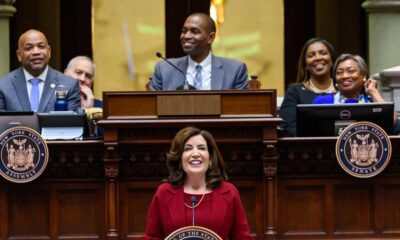
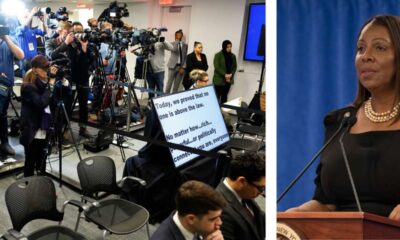
The NYS Legislative Task Force on Demographic Research and Reapportionment (LATFOR) has issued its proposed NYS Assembly and Senate maps. The maps, widely viewed as contorted, have joined criticism from all across the state. The shapes of some districts, the elimination of others, a 63rd Senate district, and the placement of sitting legislators in the same district have inspired citizens to attend public hearings and at least one rally in protest.
LATFOR is controlled by Senate Republicans and a Democratic Assembly. The Senate Republicans decided to place a 63rd Democratic Senate seat in the Capital region near Albany, instead of in New York City where there has been an increase in population over the past 10 years. That proposed Capital region Senate seat is being challenged because it is viewed as a ploy for Senate Republications to retain their 32-29 seat majority despite a decline in population upstate.
The proposed maps are also viewed as shortchanging NYC because Senate districts in the city are more than 3% larger than the average district size. Every district what the Westchester however, is more than 4.5% smaller than the average sized district. With such a wide spread in population size per district, the average Senate vote by cast upstate weighs 7.3% more than the average vote in New York City and surrounding regions.
There are some notable features of the GOP Senate proposal. The district formerly held by disgraced indicted former Sen. Carl Kruger has been eliminated. That district, covering Brighton Beach, Bergen Beach, and Mill Basin, would be split between State Senators John Sampson (D) and Marty Golden (R). New York City Councilman Lew Fidler and Brighton Beach attorney David Storobin are currently campaigning for Kruger’s seat and vowed to continue to do so even though the seat may be eliminated by year’s end.
State Sen. Eric Adams home was drawn out of his district by one block and placed in Sen. Velmanette Montgomery’s district, leaving Adams district with no incumbent. State Sen. Kevin Parker’s district has been pushed into Park Slope. The Borough Park and Midwood sections of Parker’s district have been formed into a new district that would concentrate Orthodox and Russian Jewish votes while creating a new Republican seat for those conservative voters.
The senate district currently held by Diane’s Savino is one of the LATFOR’s most oddly drawn districts. It would retain a large segment of Staten Island’s North Shore plus two separate pieces in Brooklyn. This district would most certainly be challenged because the NYS Constitution mandates that districts should be “compact” and consist of “contiguous territory.” Districts “shall contain as nearly as may be an equal number of inhabitants.”
For senate districts in Queens currently held by Democrats would be merged into two, pitting incumbents Michael Gianaris against Jose Peralta and Toby Ann Stavisky against first-term Tony Avella. The merger of Stavisky’s and Avella’s districts was purportedly done in order to create an Asian- majority district in Flushing.
LATFOR’s plan would create three Asian-majority districts – two in Queens and one in the Sunset Park section of Brooklyn.
LATFOR has been holding public hearings on the proposed maps this week in every NYC borough and next week at various other locations around the state.
Although Gov. Andrew Cuomo has pledged to veto any “partisan” redistricting proposal, it remains to be seen if he will veto or negotiate with the legislature. A veto would take the matter out of legislator’s hands and place it in the courts.
Senate Democrats have already filed suit challenging the GOP increase of seats from 62 to 63 and the placement of that seat of state rather than in New York City that grew faster than any other part of the state. There are also lawsuits currently in the courts challenging the time delay in New York State’s redistricting process.
LATFOR is scheduled to issue NYC Congressional maps in March which will add tension to an already contentious process because the state is losing two congressional seats.
Last week U.S. District Court Judge Gary Sharpe ruled that New York State Congressional primary will be held on June 26. The new date will have New York State in compliance with the federal military and overseas voter empowerment act, ensuring that absentee ballots from overseas military personnel will be sent and received in time. The law requires that ballots be sent out no less than 45 days before a general election for a federal position. Ballots for a primary to determine which candidates will be on that ballot must be sent 35 days before that deadline.
The federal ruling does not apply to New York’s state legislative primaries which are generally scheduled for the second Tuesday in September. The Republican presidential primary must take place on April 24. While assembly Democrats recommended the June 26 primary date, Senate Republicans are feeling pressure to hold the state legislative primary on the same date as the congressional primary as a cost-saving measure. Primaries for state offices are currently scheduled for September 11.

Eye on the Politics of the Atlantic Yards Project

January 26, 2012 by  
Filed under Uncategorized

For all the good that they do, occasionally, local elected officials do something that makes you want to say, “Hmmm?” Last Sunday, State Senator Eric Adams teamed with Assemblymen Hakeem Jeffries and Karim Camara to call “Foul” over “Failure of Barclay Arena Developer to Score on Community Givebacks.” Claiming that “many of the community benefits promised by the developers — including job creation, a public safety plan and the inclusion of affordable housing – have failed to materialize,” the trio announced “their plans to introduce legislation that establishes a subsidiary corporation for Atlantic Yards oversight and development.” The group calls on Kenneth Adams, president of the Empire State development Corporation, to “implement oversight changes in the Atlantic Yards development project” which “will ensure transparency and accountability to protect public resources invested in the project.”
State Senator Velmanette Montgomery, a staunch critic of the Atlantic Yards development as it was proposed and funded, was not invited to the presser. Neither were Assembly members James Brennan or Joan Millman. Montgomery is the Senate sponsor of the bill; Brennan and Millman are co-sponsors of the Assembly bill. Oddly, Adams has not yet co-sponsored the Senate bill.
Where was the concern expressed this week by Adams, Jeffries, and Camara during five years of displacements, eminent domain law suits, and skepticism from other elected officials and community members over Forest City Ratner’s inflated job and affordable housing estimates. Why is legislation calling for “changes in the governance of the Atlantic Yards Project, the development that includes Barclay Arena, future home of the New York Nets” being announced now?
Adams said, “We have been extremely patient with this project. This has been a difficult project that has uprooted this community. We have been patient and attempted to come to a meeting of the minds. I don’t think you can find three more elected officials who have attempted to be a voice of reason around this project. If we are saying we are fed up, then clearly the developer has gone too far.”
“I supported this project in 2006, much to the chagrin of many of the advocates and neighborhood groups who were in opposition from the very beginning,” said Camara. “I did not support this because of the basketball arena. $225 million in City funds and $100 million plus was not supposed to be for basketball. It was a public interest that was supposed to be adhered to — 14-15,000 construction jobs, 10,000 permanent jobs – yet we have not seen anything close to that number. All we continue to get are false promises.”
Incidentally, Camara received campaign donations in 2006 from individuals close to Forest City Ratner developer Bruce Ratner — Michael Ratner, Bruce Ratner’s brother ($1,000) and Karen Ranucci, Michael’s wife ($2,500). In 2009, Camara received $3,000 from Bruce Ratner himself and an additional $3,000 from Pamela Lipkin, known to be Bruce’s girlfriend. In 2006, Karen Ranucci gave $3,500 to Adams’ campaign; Michael Ratner gave $1,500.
Over the years, Jeffries has not received campaign contributions from Bruce Ratner or his immediate family members. Jefries statement at the presser might explain why. “This project was approved before Sen. Adams and myself were in office, and perhaps a few months after Assemblyman Camara had come into office. My only official act as it relates to this project – I wasn’t even sworn in at the time – was to write a letter to Speaker Silver urging him to suspend the PACV vote because there was inadequate information that the project would actually deliver the benefits that were intended,” Jeffries said. “I expressed a great deal of skepticism from the very beginning. Unfortunately we were not in office at the time to take part in the negotiations that took place prior to the PACV vote in December of 2006.”
Adams added that he “was never supportive of the community benefits agreement. I don’t believe developers should sit down with handpicked community members and decide how they’re going to shape a project. I am in support of government using the bodies that are in place to make sure developers do their jobs. This should have never circumvented the city Council. He (Ratner) should have never been given a sweetheart deal getting this project the way he did.”
The expressed frustration seems to be about jobs, something critics have been concerned about for years. “Our goal was to see jobs and housing come to this community, to bring in apprenticeship programs for young people who live in this area. Their tax dollars went into this project,” said Adams. He anticipated “prosperity and growth. We saw just the opposite. We are not happy with that. As legislators we are saying enough is enough.”
“There should be an accounting, particularly of the jobs. What I find most distressing is there are existing members of the Carpenters Union who I represent who put their names on the list and can’t get on the site. That was the reason why I supported this project, so that we can create much-needed jobs. There was supposed to be a pre-apprentice program. They were supposed to get training. They were supposed to get a skill. Not just have a job for the duration of construction but have a career. Those promises have not been fulfilled,” said Camara. “All we have is a basketball arena.”
“This is a project that has promised much and has delivered little. At the onset of this project, there were over 14,000 jobs that were promised. Less than 100 people from this community have received meaningful employment. There were 2,000 units of affordable housing that were promised. We haven’t seen a single unit of affordable housing. There were businesses – women and minority owned companies – that were promised an opportunity at economic success. The women and minority owned businesses that have gotten contracts appears to be few and far between,” Jeffries said. “It was supposed to be a field of dreams; it has turned into a graveyard of broken promises. It didn’t have to be this way. This should have been a meaningful public/private partnership.”
With $200 million in city funds and $100 million in state funding already committed, a waiver of the land use process, zoning changes, displacements, numerous lawsuits, a stadium that is half built, and an extended timeline of up to 25 additional years in which to complete 16 buildings of affordable housing, Adams believes now is the time to promote legislation to provide structural oversight to the project.
The bill in question is S1597/A1820, first introduced in 2010. It authorizes the Urban Development Corporation to create a subsidiary corporation for the purpose of the future planning, design, and oversight of the Atlantic Yards land use improvement and civic project. The purpose of this bill is to establish a project oversight entity, to supervise the Atlantic Yards Project in order to create increased accountability and oversight in the project’s governance.
This is a second iteration of legislation to provide oversight. The first, the Atlantic Yards Development Trust bill introduced in 2009 was designed to supervise the Atlantic Yards Project in order to create increased accountability and oversight in the project’s governance. It was killed by indicted former State Senator Pedro Espada during the two years of Democratic control of the Senate.
The current version of the bill was introduced during the 2011 legislative session. A vote was taken on June 24 at the end of the Assembly legislative session in the dead of the night. Although it passed, the Senate was unable to vote on it because it had concluded its legislative session a couple of hours prior to the Assembly vote.
Now that Governor Cuomo’s State of the State Address has officially kicked off the current legislative session, the bill has been re-introduced by Senator Montgomery and Assemblyman Jeffries. Created by the legislature, the bill would create a subsidiary corporation under the Empire State Development Corporation (ESDC), but authority to compel implementation rests with the governor. Behind the scenes, it is hoped that Governor Cuomo would add oversight of Atlantic Yards to his budget.
“We are not asking anything different than what other communities have gotten. The Brooklyn Bridge project had subsidiary corporation. The Moynihan Station project had a subsidiary corporation. The World Trade Center had a subsidiary. Queens West retail and housing project had a subsidiary corporation,” said Jeffries. “Why is our community being treated differently? We are here today to demand that the Empire State Development Corporation step in, step up and do their job.”
Adams pointed out that “we have a new governor that understands the importance of employment. He is moving the state in a new direction that is built on employment.” Jeffries added, “We are going to continue to forcefully advocate with Gov. Cuomo the importance of this bill. The pathway to success is through support of this administration.”
“This is a litmus test for our new governor. One of the major problems we have had historically is that too many people have used taxpayers dollars to give promises and did not deliver. (The governor) is against that. This is a perfect opportunity. This developer (FCR) has become a poster child of how we will not do business with taxpayer’s dollars,” said Adams. “And now we need to send a very clear and strong message.”

Center for Law and Social Justice Continues Protection of Redistricting Minority Voting Strength

January 21, 2012 by  
Filed under Other News

The Center for Law and Social Justice (CLSJ)is scrutinizing the decision by the NYS Legislative Task Force on Demographic Research and Reapportionment (LATFOR) to increase the number of New York State Senate seats to 63 based on methodology used in 2002 after the 2000 census. The average number represented by State Senators will increase by 1,284 to 307,356 per Senate district. Based on requirements in the NYS Constitution, the number of Assembly seats will remain 150, but will increase by 2,579 for a total of 129,089 per district.
Dr. Esmeralda Simmons states the Center for Law and Social Justice is “now observing the battle of the experts.”
According to Dr. Simmons, “The Senate Republicans have hired an attorney who says his interpretation of the New York State Constitution calls for 63 Senate seats.” Alternatively, “Another well-known expert who has been one of the champions of creating people of color districts of New York state by the name of Todd Breitbart has also put forth his interpretation of the New York State Constitution regarding how many Senate seats are to be drawn or how many Senate seats the data demand to be drawn,” Dr. Simmons said. “His interpretation, and one that is cheered on by the Senate Democrats, says that the constitutional formula calls for 62 Senate seats.”
Dr. Simmons outlined CLSJ’s response. “At this point in time the Center for Law and Social Justice is waiting to see what LATFOR actually draws —Whether they draw 63 or 62. I am pretty sure that Senate Republicans will draw 63 – and what those 63 districts look like in terms of protecting minority voting strength,” she said. “If they draw 63 Senate seats and there is not an increase in the number of Senate seats in communities of color then there is going to be a serious problem. Even if there isn’t an increase, there will still be litigation that will probably follow about which interpretation is correct.”
Explaining the political nature of this redistricting process, Dr. Simmons said, “Under general circumstances, if this were a completely objective nonpolitical process, the smaller the district and the greater number of districts usually equates to a greater number of seats that can be wielded by minority voting strength. However this is not an objective circumstance. This is a circumstance that is anything but apolitical. It is extremely partisan. There is no objective interpretation that has been put forth by LATFOR at this point. I am sure that this will all wind up in federal court.”
Dr. Simmons said the Center for Law and Social Justice has successfully intervened in the Favors case in the Eastern District of New York. Favors is a voting rights case that challenged the fact that redistricting has not as of yet occurred. “We were the first group to successfully intervene in that case and we intend to be a vanguard for voting rights for people of color in New York City, particularly people of African dissent,” said Dr. Simmons.
“We will respond to LATFOR’s maps and we will be in court when this entire issue is being argued,” Dr. Simmons said. “We will be able to put forward a position that looks at the circumstances as they are. Our colleagues in the Unity Map — the Asian American Legal Defense and Education Fund (AALDEF), Latino Justice PRLDEF, National Institute for Latino Policy (NILP) — have also intervened in the Favors case.”
The groups that collaborated on the Unity Map have come out with a congressional plan, and a second Senate map which supersedes their first Senate map. Their second Senate map includes 62 districts but does not include the prison data.
Since LATFOR is now following the law regarding the Prisoner Adjustment Act, they have released the prisoner adjustment data. “But, by the time they released it practically everyone engaged in the process had drawn maps,” said Dr. Simmons. “The real question that some people are asking is ‘are we going to draw a new set of maps with the prison data and 63 Senate seats?’ At this point in time, the Center intends to see what LATFOR proposes and then act accordingly. We will take whatever steps are necessary to make sure that the record is clear as to the best possible solution for people of color in New York City.”

Disabled Women at Lexington Ave. Shelter Face Deferred Dreams and Violations

January 14, 2012 by  
Filed under featured, Top Stories

Maria Antonellis found herself transferred to a “punishment shelter” after a series of mishaps at the BRC Women’s Shelter at 85 Lexington Ave.
Each week she was required to see her case manager to sign an Independent Living Plan (ILP). Because her case worker did not keep regularly scheduled appointments, Maria was issued an undated “violation” for failure to keep her appointments.
She was given a warning stating a second violation would lead to her being “Next Stepped,” and transferred to a “punishment shelter” with an 8pm curfew, and where there is a 2-roll a-month allotment of toilet paper and none in the bathrooms.
Despite living with a heart murmur and osteoporosis, using her own initiative Maria found a job. After working a couple of weeks, Maria found herself displaced by students at a nursing school and unemployed. Homeless shelter clients are required to save 60% of their earnings via Postal money order. “I was working 8 days, and got two checks. Next thing you know, they are looking for my 60%,” said Maria. In total, Maria earned approximately $300. After paying back loans from friends, she had no money. Maria offered to give 60% of her EBT payment ($32.40), which the shelter accepted.
Maria was given a second “violation” and at 9pm that evening, Maria was ordered out of the shelter and given 15 minutes to leave and no carfare. She was told to go to Plaza Next Step Women’s Shelter at 555 W 174th St. in Manhattan. She went to a fair hearing on Sept. 28 where her violation was rescinded the same day. 85 Lexington was ordered to allow Maria to return. Each time Maria called, she was told there were no beds available.
Barbara Gonzalez walks with a cane after having surgery on her foot due to a car accident a few months ago. She needs additional surgery on her foot as well as surgery on her back. As a result of her various conditions, Barbara needs to take medication. Protocol at 85 Lexington is during intake on list of the client’s medications is generated. Barbara takes medication for high blood pressure, diabetes, asthma, migraines, irritable bowel syndrome, and pain in her foot and back. She says clients are allowed to keep their medications with them unless they are controlled substances. Barbara says one day someone went into her locker without consent. She suspects it was shelter staff that entered her locker because clients are required to use shelter locks that staff has recorded the combinations. The next day shelter staff demanded a search of Barbara’s locker and pocketbook. Barbara’s medication was confiscated. According to Barbara, when staff returned her medication bottles three weeks later, some of the pills are missing. During that time, Barbara had no access to her medication.
Barbara says shelter staff accused her of taking drugs. She was given a urine test which came out positive. Barbara says, “According to them, I was positive for every drug known to man. I have never taken drugs in my life. My medications may give a false positive.” Barbara says she rarely takes the medication because after she does so she needs to rest and there is no place to rest at the shelter. “Ms. Calloway, the director accused me of using drugs and being in a methadone program. I asked, ’OK, where did you get this information?’” When Barbara demanded the source of the information and threatened to sue, staff retracted the charge of a positive urine test and returned her meditation. Barbara took her prescribed pills to her friend’s house and never brought them back to the shelter. When she needs a pain medication she goes to a friend’s house 2 buses and 40 minutes away and takes it there. “I only go when the pain becomes unbearable,” said Barbara. “They promised me an apology letter, but I have never received it.”
In addition, Barbara receives $22 from public assistance every two weeks. The shelter is demanding 60% to hold as savings. Barbara says this is impossible because the co-pay or one of the medications is $10.
Since these incidents have occurred, Barbara has been moved from the medical dorm. “They say the medical room does not exist. It does exist; they call it the CCP room” where clients are allowed to stay all day as long as they are dressed by 11 AM.
Margie Roldan is completely blind, has MS, lupus and has had a disk removed from her spine. Margie said during her stay at 85 Lexington she was constantly harassed by staff who did not believe she is blind. One day, she was given a 2 hour notice that she had to leave 85 Lexington shelter and go to Susan’s Place, a specialized shelter in the Bronx. She had 4 suitcases and $2,984 in cash. She had called the facility prior to leaving 85 Lexington and asked if she could be accepted with her 4 suitcases. “The people had no idea who I was. They had no transfer papers for me,” said Margie.
According to Margie she was being transferred because 85 Lexington was not suitable for her based on her disability. Yet she had been at 85 Lexington for 15 months. 85 Lexington staff offered to take Margie to Susan’s Place in their van, but refused to take her 4 suitcases. She was forced to take a cab to Susan’s Place, but because they had no documentation of Margie, she was not accepted at that time. to a hotel, where she spent 4 days at a cost of $150 per day. Margie had to pay someone to stay with her because the hotel would not allow her to stay there by herself. For three days Margie took a cab from the hotel to Susan’s Place at a cost of $60 each way. Each time she was turned away because documentation Ms. Calloway gave Margie was an inadequate blank form with Margie’s name on it. 85 Lexington was forced to allow Margie to return where she stayed for a week until the transfer to Susan’s Place was finalized.

Judge Rules Law Against Prison Gerrymandering Must Stand

December 9, 2011 by  
Filed under Uncategorized

Judge Eugene P. Devine issued a major blow to Senate Republicans who wished to usurp state law and continue present gerrymandering to their upstate benefit. In a decision issued last Friday, Judge Devine decided New York State’s prisoner allocation law must stand.
State law required that “prisoners be identified and counted, for the purposes of creating lines for the state assembly and Senate seats, in the census block containing the inmate’s address prior to his or her incarceration.” It also requires that the State Department of Correctional Services (DOCCS) report to LATFOR inmates’ residential addresses prior to incarceration, if available, instead of the locations of their respective correctional facilities for redistricting purposes. In the event that the inmates prior residential addresses are unknown, were outside the state, or the inmates were confined to Federal institutions, LATFOR “shall consider those persons to have been counted at an address unknown and persons at such unknown address shall not be included in such dataset” to be used to join new legislative districts.
Judge Devine noted that “despite the inherent difficulty in ascertaining consistent prisoner data, the Census Bureau recognized that Congress had required that prisoners be counted in ‘permanent home of record,’ a term which was not clearly defined.” The court found that merely highlighting the difficulties attendant in attempting to collect prisoner residential data did not preclude the current statutory requirement which requires that inmates be counted at that last known address rather than at their correctional facility.
The U.S. Census Bureau acknowledged this was a nationwide issue. In March 2010, Census Bureau Director Robert Groves stated that the Census Bureau counts individuals at their “usual residence” and that, for inmates in particular, “states were free to decide the manner in which prisoners were counted, namely, at the prisons, at their pre-inquest nation addresses, or altogether removed from ‘redistricting formula’ where residential information was unavailable.”
The judge rebutted plaintiff’s argument by stating that “though inmates may be physically found in the locations of their respective correctional facilities at the time the census is conducted, there is nothing in the record to indicate that such inmates have any actual permanency in these locations or have any intent to remain. In fact it is undisputed that inmates are transferred among states correctional facilities at the discretion of DOCCS.” Judge Devine wrote, “There is no evidence that inmates have substantial ties to the communities in which they are in voluntarily and temporarily the located.”
The court acknowledged that the legislature’s enactment of the Prisoner Adjustment Act (PAA) carried an “exceedingly strong presumption of constitutionality,” and that while this presumption is debatable, the Senate Republicans had “a heavy burden of demonstrating unconstitutionality beyond a reasonable doubt.” Judge Devine found that burden unmet.
Plaintiffs alleged that the PAA statute “exacerbates the weight of vote differential between upstate and downstate counties that already exists because even with the total population being counted, there remains the disparate presence in downstate counties of ineligible voters and traditionally lower voter turnout rates,” which the judge was not convinced had any impact on LATFOR’s mandate to create legislative districts which are substantially equal in population.
The judge pointed to a memorandum in support of the legislation which stated that unlike college student and military personnel, inmates do not use local “schools hospitals or other public facilities.”
The judge was not convinced of Senate Republican’s claim of “partisan gerrymandering” in which they alleged that the state law is “the product of a power play by Democratic lawmakers to usurp the strength of the Republican Party, its voters, and elected representatives.” Even if a decision could be made on such a claim, Judge Devine wrote, the court found there was nothing in the record demonstrating that the law constitutes a breach of the legislator’s obligation to substantially comply with the federal and state constitutions.
“Today’s decision by Judge Devine is a victory for fundamental fairness and equal representation. The court affirmed the legality of counting incarcerated individuals in their home communities for the purposes of redrawing district lines, rather than the districts where they are in prison,” said Attorney General Schneiderman. “As a lawmaker, I fought to end the practice of prison-based gerrymandering that distorted the democratic process and undermined the principle of ‘one person, one vote.’ This decision affirms and applies a fair standard to the drawing of state legislative districts and makes it easier for counties to do the same by providing them with an accurate data set.”
Assemblyman Hakeem Jeffries, co-sponsor of the Prisoner Adjustment Act of 2010 said, “I am gratified that the court arrived at the right decision. Last year’s historic legislation ended the injustice of prison-based gerrymandering in New York State. For the purpose of redistricting, counting people in their home communities is fair and one of the core tenets of our democracy. I congratulate Attorney General Eric Schneiderman and the tireless work of his office to ensure that the principle of ‘one person, one vote’ was upheld.”
Senator John Sampson said, “Last week a state court delivered a strong rebuke to Senate Republicans who were trying to circumvent state redistricting laws. The ruling is a clear victory for democracy and equal representation.”
Sen. Kevin Parker – “This is a huge victory, not just for Assemblyman Hakim Jeffries and Sen. Eric Adams who passed that law that was signed by governor Patterson. It is also a huge victory for our communities. We have literally thousands — mostly men —of people in prison who come from communities particularly in Brooklyn. The vast majority of those folks are coming from about seven communities in New York city. Four of them happen to be in Brooklyn. This is going to have a significant impact on the concentration of our votes and our ability to get resources to deal with some of our social service needs that we are going to have in our communities. It’s a big victory and I want to congratulate everybody who has been involved in the struggle. It’s been almost a 20 year struggle to get this legislation passed and to win the court case. It’s a huge victory.
“I think it’s a great victory for our communities and for our representation,” said Congresswoman Yvette Clarke. “We still have to remain vigilant. For too long we have been exploited through a system that was unfair and discriminatory. For upstate districts to claim individuals who happened to be there by virtue of being incarcerated as part of their population meant that in communities downstate in districts like mine, we basically we’re losing the resources we needed to reintegrate them into our communities, to help them and to help our communities maintain strength and posture because all of the resources commensurate with redistricting went into these upstate counties where these individuals were being detained. I think the wisdom of the courts was clear; they understood what this meant for communities in the 11th Congressional District where those who are incarcerated reside. It will enable us to do the types of things in preparation of the return of these individuals to civil society. They are going to come back to where they live and we need to make sure they have housing, healthcare, education, and all the other important reintegration services they need to become productive members of our civil society. It’s a victory for us.”
Kirsten Foy, Director of Community Affairs in the Public Advocate’s office: It’s another victory for common sense. The fact that we had to go through the legislative process in the first place to ensure that people’s rights were protected what’s nonsensical. But we did it. I think the fact that we had to go to court to uphold the legislative process was ridiculous. It was necessary. Prisoners being counted where they are housed as prisoners as opposed to where they come from is it twofold insult to the community. One, it says that we are benefiting financially off of you; we are going to commodify you. But at the same time it said to the community, we’ll going to suck every resource that you have – the human resources, financial resources, and we’ll going to displace those resources and use them for communities that have absolutely nothing to do with the people being housed in prisons. It’s unfortunate that we had to go through it though.”

Occupy Movement Comes to “Foreclosure Ground Zero” In East New York

December 9, 2011 by  
Filed under featured

Rain did not deter 500 “Occupy Our Homes” protesters who marched the streets of East New York on Tuesday. The group took a tour of foreclosed homes in the area and supported one family who “liberated” a foreclosed home on Vermont Avenue. Chants ranged from, “All day, all week, Occupy East New York,” “We are the 99%,” “the people united will never be defeated,” “Banks got bailed out, we got sold out,” “get up, get down, there’s revolution in this town.”
The crowd flowed from the sidewalks to the streets, at times blocking traffic. As the drivers drove by, they honked in solidarity. Inspector Jeffrey Maddrey, commanding officer of the 75th Precinct, was there to supervise his officers who were patient and respectful throughout the entire peaceful march.
Organizers distributed copies of Occupy Wall Street’s official newspaper, and hand-outs that allege NYC is warehousing property. One flyer depicted a section of 11207 between New Lots, Warwick, Linden Boulevard, and Van Sinderen pinpointing 45 pre-foreclosed homes.
Kendall Jackman said she is a victim of foreclosure. Her landlady took out two subprime mortgages totaling $775,000, more than 2 ½ times the value of the home. In January 2009, her neighbor and her were served with local foreclosure papers. For two years she did not pay the mortgage. Her home was an ATM for her and her family and their new home. September 21, 2009, Jackman had to enter a homeless shelter, where she remains. “I am stuck in the system along with 47,000 other people, including 19,000 children.”
One homeless man said there are more abandoned buildings than homeless people in New York City. He said he is here to deliver a message to the banks, our governor, and our mayor that we are taking back our houses. “We are not going to stop until we occupy every home in New York City.”
Councilmember Ydanis Rodriguez said, “I heard today that Mayor Bloomberg has a headache because he doesn’t know what to do about this movement. The eviction from (Zuccotti) Park was the best thing because now the movement is getting more color. I am so proud of the organizers who started occupying on September 17. White, Black, Asian, Latino, workingclass and middleclass are all sending a message to the 1%. We are fed up. We will take no more.” Councilmember Barron declared, “Evict Bloomberg. Evict Cuomo. We are today here in East New York declaring East New York a liberation zone.”

“It is no mistake that we are here East New York. ENY has become ground zero for every predatory lender and criminal offender. Not one has gone to jail; not one has been arrested,” said Bertha Lewis. “Guess what? We are the people who are taking back East New York.”
One young person said, “We are the youth of this movement. We are here in East New York with 1,000 people taking back homes. We are not the only ones. This is happening across the country. Occupations across the nation are taking back homes for the people that deserve them. We will not stop. This fight has just begun.”
A protester said, “We are here to show the bankers we care about our community.” Yet another said, “We are grassroots. Bottom up, not top down.”
Ryan Gibbs from Picture the Homeless said he is formerly street homeless. “One of the many difficulties of street homelessness is while being out there, you are constantly being harassed by the police. You are not able to just sit and have a rest from daily stresses of homelessness,” said Gibbs. “The problem with homelessness is people get so desperate they are willing to risk arrest in order to get off the streets. What we need is real affordable housing now.”
One member of New York Communities for Change said she was among 6,000 people who wrote J.P. Morgan asking that her loan be restructured. She said both she and her husband lost their incomes because the banks ruined the housing and construction markets.
Quincy, a young man who was being foreclosed on the day of the march, broke down in tears as he told of being deceived into signing away his deed, while still owing $475,000 on his mortgage.
Another woman was moved to join the protest and tell her story. She bought her house in 1997 in Queens Village, with an $80,000 down payment. She worked two jobs all her life. She said she would pay 2 to 3 months mortgage when she went on vacation. She paid for her son’s private school education, and then he joined the military. He spent four years in Kuwait, and another four years in Iraq where he died during a special assignment. Her mortgage was originally $1500 a month. It was switched from bank to bank. Now her mortgage is $3800. “How am I going to do it?” she asked. “How many families are suffering like me?”
Alfredo Carrasquillo moved his wife and young children into a foreclosed home on Vermont Street. “There are countless homeless people in the streets including myself and my family. We are here to fight back and let the government and the big banks know they are not going to take advantage of our communities anymore.
Carrasquillo’s wife said they have been moving their children from place to place. “I just want a place for my children,” she said.
“The real criminals are the banks and Wall Street who are foreclosing these homes and leaving people homeless. We have had a lot of support from Occupy Wall Street,” said Carrasquillo. “Why is it that communities have to suffer while the rich get richer? Ultimately, when we start that dialogue within our communities then we can start addressing it.”

Brooklyn Health Care System in Crisis

December 1, 2011 by  
Filed under featured

Brooklyn’s health care system is in crisis. Several local hospitals — Interfaith Medical Center, Wyckoff Heights Medical Center, Brookdale University Hospital and Medical Center, Kingsbrook Jewish Medical Center and Brooklyn Hospital Center — are in extreme debt. Brookdale, Interfaith and Wyckoff are in eminent danger of financial collapse. Earlier this year, Gov. Cuomo convened the Brooklyn Work Group to devise recommendations for the restructuring of Brooklyn’s hospital system as part of an effort to overhaul the state’s Medicaid system. In a proactive strategy to have Brooklyn speak for itself, Sen. John Sampson convened the Brooklyn Healthcare Working Group in collaboration with the Borough President’s Office and the Department of Health.
“This past March amidst a budget crisis in Albany, we faced a crisis of our own here in Brooklyn,” said Sen. Sampson. “At the risk was our most vulnerable population: those in need of quality healthcare whose Brooklyn health care system was failing.”
Brooklyn Healthcare Working Group, a coalition of health care providers, administrators, advocates and stakeholders, came together “to take a hard and honest look at the direction in which Brooklyn’s health care system is headed and how we (collectively) right the way,” said Sampson. They held two health care summits at Borough Hall and numerous subcommittee meetings. The purpose was “to restore the credibility of the Brooklyn health care network by brainstorming for new strategies to address an ailing system”, Sampson said. “There needs to be a strong infrastructure capable of providing care to more than 2.5 million residents of Kings County.”
The report proposes three top priorities: increase the capacity of our primary care infrastructure so that Brooklyn residents visit doctors not the emergency room for primary care; an active coordinated care model that would streamline collaboration and partnership among providers across Brooklyn; and to ensure that community-based organizations that offer wellness resources to Brooklyn residents are strategically integrated into our health care network as well as engaging the community. “Implementing these recommendations will go a long way to alleviating some of the long-standing issues that Brooklyn health care has,” said Sampson. “Hospitals are seen as community institutions. If one hospital fails, there will be a ripple affect felt across the entire borough which may take years and billions of dollars to correct.”
Explaining why he convened the Brooklyn Healthcare Working Group consisting of Brooklyn health service providers, Sampson said, “We cannot have organizations that don’t know much about our community and our health care system in Brooklyn to make certain recommendations. We need to be pro-active.”
Deputy Borough President Yvonne Graham said, “We are very confident that these recommendations can make our institutions more streamlined and sustainable while ensuring the highest quality health care for all our residents. It is our hope that the state’s Medicaid redesign team will take the recommendations in this report seriously and work to create a health care system that, along with being financially viable, also offers quality health care services to each and every Brooklynite.” Graham is leaving her position as Deputy Borough President to join the Cuomo Administration as Associate Commissioner with the New York State Department of Health, serving in the Office of Health Disparities Prevention.
Ngozi Moses, Executive Director of Brooklyn Perinatal Network, served on the Emergency Room Overuse Team sub-committee. “There was a need for a more sensible approach to financing health care in poor communities like north and central Brooklyn,” said Moses. “Voluntary safety net hospitals are crumbling under the pressure of sustained over-use and a very poor care mix of residents mainly consisting of Medicaid, which pays about 40% less than it costs to deliver a service, the uninsured, self-pay, and no way-to-pay people, and the wealthier newcomers who still go back to Manhattan to receive and pay for their services so that their money is not invested into the health care system in Brooklyn.”
Moses said 83,000 admissions, 325,000 ER visits, 760,000 clinic visits were provided in one year by the five hospitals that are now the center of the Brooklyn study.
Moses has an emphatic rejection of one proposal floated by Stephen Berger, an investment banker Cuomo appointed to head his Brooklyn Work Group. A recent NY Times article reported that central Brooklyn hospitals were called “toxic assets” that needed a government bailout funded by taxpayers first and then transferring these now-clean assets to private investment bankers who would make a profit on health care. “That is one of the recommendations we have to make sure does not even get to the governor’s office,” Moses said. There is a fear that turning hospitals over to private investors would encourage the elimination of “toxic people” in order to make a profit.
“We are asking the public to join forces with the Save Our Health care Safety Net and elected officials to demand that the state Health Department and the governor recognize the need for the safety health care network in Brooklyn,” said Moses. “Policies should be developed to protect facilities in low-income communities, include accountability and transparency in public funding, develop programs to target funds don’t go to financially vulnerable service providers and health care institutions, and to protect those institutions from the usual across-the-board cuts of Medicaid.” Specifically, she urges support for changes in the distribution of charity care money, almost $900 million annually, so that the money follows the low-income patients to the providers that serve them. “Right now the formula does not do that and many hospitals that do not serve majority poor people get it. Currently, the proposal regarding charity care money is before the Medicaid Review Committee,” said Moses.
In some areas of Brooklyn there are only 11 full-time primary care physicians for a population of approximately 80,000 individuals. Mark Krocansky, past President of the New York State Academy of Family Physicians, a group of 4300 physicians, medical residents, and medical residents said, “We train young residents in Brooklyn in medical school and other institutions and we try to keep them in Brooklyn. Some of them are international medical school grads. Others are students who have incurred big debt in college and medical school and cannot afford to practice in Brooklyn so they go to more lucrative areas where the salaries are higher. The system rewards specialists. We have to devise a system to train more family and primary care physicians and get them to stay in the community.”
Brooklyn Multiservice Family Health Center President and CEO Harvey Lawrence said, “Everybody is entitled to health care. The hospitals and the health care network in Brooklyn are critical not just to keep people well, but to keep them alive.”
Sen. Sampson recommends that anyone concerned about access to quality health care regardless of ability to pay, should contact their elected officials who will carry the message to the Berger Commission. In addition, he recommends reaching out to the Department of Health to encourage serious consideration of the Brooklyn Health care Working Group’s policy recommendations.

Post-Acquittal, Assemblyman William Boyland, Jr. Focuses on Community Development

November 25, 2011 by  
Filed under Uncategorized

Assemblyman William Boyland, Jr. has now emerged after a grueling federal trial that demanded a lot of his time and energy. Since he has been acquitted, Boyland is energized. He has been developing new initiatives for the 55th Assembly District. Boyland sat down with Our Time Press for an exclusive interview.

OTP: How are you feeling now that the trial is over?

Boyland: We knew there was no truth to it. I couldn’t wait to tell my side of the story.
We represent a neighborhood that has been underserved by health care for quite some time. We have always been advocates for bringing quality healthcare to the neighborhoods of East New York, Brownsville, Bed-Stuy and East Flatbush.
Even with the prior administration at Brookdale, it had been lacking simple things like infrastructure issues. The seniors needed a place to sit when they came into the lobby. That was a major issue. The relationship between the hospital and the neighborhood was always an issue. Now there is a big issue with the unions there. The first people they always reach out to other local elected officials and representatives to get the word out to the community on what’s happening. They have a benefits issue where the union workers benefits are not being paid. They reach out to us. We’ll always get first line of defense in the relationship between the hospital and the community. That’s all that was.

OTP: The community doesn’t realize that statewide, one of the major responsibilities of elected officials is to make sure that within the annual budget there is funding for vital services.

Boyland: Moving forward post-acquittal, what’s next is to educate folks on what’s happening. You can write newsletters and speak out at certain town halls at community meetings, but to actually know what is going on from you are left officials day-to-day in Albany, I don’t think folks know a lot about.
What we try to do around this time of year — November, December, into February and early March — is try to get the word out about what’s going on with the budget and the process. A lot of times, that information does not disseminate all over the district. This is why I’m pretty happy about what happened at the [Anti-Violence Brownsville] town hall the other night. I think it was the first step to communicating and bringing all our services together. You have my office. You have the Brownsville Partnership right across the street, the community board, Council member Mealy’s office, Sen. Sampson’s office. There are several social service and nonprofit groups in the neighborhood. The information isn’t shared.

OTP: You elected officials are going to start having joint town halls?

Boyland: Yes. We’re going to start in January. Sampson, Mealy and myself, along with the nonprofits and local social service groups will come together and bring our resources. A lot of times we are all doing the same work, but the information is not disseminated in the same way. We are all coming together to basically look at rebuilding the infrastructure of our community. This is the basic problem. You have budget on the state level not working as well as the budget to the federal level, as has been the case for the last three or four years. The state budget is in the deficit. Local initiatives have not been able to be disseminated back into the community. We are looking to come together to make sure that the different community centers, after-school programs and healthcare organizations economically look at what is going on in our district.
We can have rallies and town halls, but it is the local elected who have the power to bring resources together to do exactly what everyone is screaming about – better services at the schools and better protection. The police only work if we knock on their doors to make sure we all holding them accountable for what is happening at [PS] 298 or 150 or 332 or talk to the PSA’s about what’s going on in housing. We need to look at these things, and work on improving it. There is no more room for looking at it after something happens. We had to get in front of it.

OTP: What kind of initiatives do you envision for dealing with the gangs who are fighting building to building?

Boyland: We need more mentoring, but we also have the infrastructure needs. We need to put more resources in the schools for a singer or dancer or poet to express themselves. That’s the problem; they have no outlet. Our athletes don’t have an opportunity to feel safe while developing their skills. The academia is not there after 3:30. There is no after school in a lot of cases. The Beacon programs are doing a great job, but bottom line, I think a lot of the problem is economic. Money isn’t there.
This happened in the 80s. We were hit hard by the same kind of deficits and recessions. During the crack epidemic, things were a lot worse than they are now. It took over the city. But today, it almost seems like the way they make money is shooting each other. It’s terrible.
Getting on the ground is important for finding out exactly what the needs are. We have been talking with the DA’s office and with the kids in a lot of the local groups in the area. The problem is economic. They want to make money and support themselves. A lot of them are in single-parent households; mom is either unemployed or underemployed. There is no money coming into the home. We need to face these issues.

OTP: Shouldn’t there also be values? There is a problem with the pimping of the little girls. The older dudes say, “I have to make my money.” What they’re doing is sex trafficking the little girls.
Boyland: It’s an economic issue. If there is a husband/father and wife/mother in the home to put food on the table, the values are set there to make the nuclear family that we all remember. That’s not happening right now. We are about to lose a generation because the parenting is not there.
I represent Brownsville, but I hear about what is going on all over the city. It’s an economic issue: one all over the country. Focusing on our community, the infrastructure has weakened over the years. I am talking about basic stuff. When I was a teen, Pitkin Avenue was thriving. It wasn’t until the 90s recession, that businesses started to leave. We can’t sit back and think that the Pitkin Avenue BID is going to bring that back. They need incentives. It would mean more businesses all over Belmont Avenue and Mother Gaston.
Our office is working right now with the city to bring tax breaks to businesses to bring them back to the neighborhood. Our dollar in our neighborhood is very loyal. We have to work on sustaining businesses to give people something to be proud of once again.

OTP: Are you looking to bring tax credits to the buildings that are not being utilized, or underutilized, like the bank building on Pitkin Avenue or the overgrown public school on Blake Avenue and Rockaway?

Boyland: Yes, tax credits in order to rebuild and sustain businesses that are already there. We have plans for those buildings, as well as Howard Avenue, Fulton Street, Broadway, Ralph Avenue, Rockaway Avenue. These are once-thriving retail and commercial areas. It’s not happening anymore. Businesses need incentives to stay open. I am working with my counterparts in government to make sure we bring sustainable business back into the neighborhood.

OTP: Right now, businesses such as hospitals purchase supplies as mundane as light bulbs and toilet paper from outside the district. Would you consider bringing those types of businesses into the district?

Boyland: That is the goal. Right now, no one is holding them accountable for that dollar. At one time, people were coming from all over the city to shop on Pitkin Avenue. We need to replicate that in Brownsville. It will happen with the help of my colleagues in government, community leaders and church leaders. We have a vision for leadership in this community.

OTP: What do you say about the fight to maintain public housing? We don’t want another Cabrini Green to happen here.

Boyland: It’s an economic issue. And it’s about giving the kids something to do. We are big education fans; it is something no one can take from you. We also need that to leverage support services for them.

OTP: What about the quality of life around homeless shelters?

Boyland: We have to focus and make sure we are not inundated. Around Junius Street, the police are overwhelmed because there is always an issue. It is insane that a shelter would be put on Herkimer Street, a quiet residential block. City Hall is not going to listen to one person, but as a collective neighborhood say, “We don’t want this here. Listen to our pleas about sustaining our neighborhoods.”
There should be a system or a process in place for shelter placements. The issue is a lot bigger than the actual placement of a homeless facility. Look at the prison system. A lot of folks there are coming from the zip codes. Where are they going to live?

OTP: Is there anything else you would like to tell the people?

Boyland: I am looking forward to this next year and a half to make sure that a lot of initiatives will be put forward. You will hear a lot more as we go forward. We are very enthusiastic about making the 55th Assembly District a better place.

Brownsville Anti-Violence Town Hall Attracts Standing-Room-Only Crowd

November 25, 2011 by  
Filed under Uncategorized

Brownsville Anti-Violence Town Hall Attracts Standing-Room-Only Crowd

Anyone who has a loving connection to Brownsville was compelled to attend the State of Emergency Town Hall meeting at First Baptist Church in Brownsville last Friday. Hosted by KISS-FM and Tony Herbert in collaboration with WPIX Channel 11, the 1200-seat church was filled with concerned community activists, elected officials, and representatives of local community organizations. The event was held in the aftermath of the Pitkin Avenue rooftop shooting of Zurana Horton, mother of 12 who died shielding her children from a hail of bullets.

KISS-FM Open Line co-hosts Bob Slade and Bob Pickett and WPIX news correspondent Mike Gilliam asked heated questions that generated serious answers. At times, the meeting was contentious.
Slade asked, “What was the tipping point [that led to the town hall]? Community activist Deirdre Olivera-Douglas said, “It wasn’t just Zurana Horton. We have lost so many people to violence. It’s been going on for 20 to 30 years, the wars between the different projects. We are not savages. We are taxpayers. There are things we are entitled to as a community.”

Pickett asked, “Why we killing each other?” Olivera-Douglas believes the problem is frustration. “A lot of us don’t know where to go what to do to make the situation better.”
“To what extent can we place the blame on absentee fathers were not taking control of their sons who are causing violence?” asked Pickett. Olivera-Douglas said, “Absentee fathers are a big problem in our community. I know some strong brothers who are there for their children. Brothers need to be involved in their children’s lives. There are some things that a woman cannot teach a male child.” Pickett recommended that children should not be out on the streets after nine o’clock.

Brooklyn Blizzard’s founder Anthony Newerls disagreed. “I didn’t have a father in the household. But when you have an old-school mother, she becomes the mother and father. Sometimes the father in the household is the problem.” Newerls described “mentoring young males to live right, then they go home and see a negative element; a negative father in the home drinking, smoking, selling drugs, that is part of the problem here in Brownsville, Brooklyn.” Newerls did remind the audience that some of the greatest people in world came out of Brownsville.

Gilliam asked to first focus on a plan to solve the problem. Newerls said funding is needed. He compared the recent hate crimes in Midwood to Brownsville. “We have Black-on-Black hate crimes in Brownsville every day. We need resources to do programs ourselves.” Lance Goodwin of Trucked Out SUV said “It’s going to take the community to save the community.”

Mr. Tannis from the Pitkin Avenue BID said he has seen gangs who think they own the block. “None of them own a block; none of them pay taxes on a block. What do they have to show for the senseless killings? Nothing.”
Slade and Pickett called for black men to patrol the community. Pickett said “We spend so much money on junk, we should fund our own street patrols.” Herbert responded by saying, “It is not begging when something is supposed to be earmarked. Our taxes are supposed to come back to the community.”

All the elected officials representing Brownsville were in attendance: Congresswoman Yvette Clarke, State Sen. John Sampson, Assemblyman William Boyland, and Councilwoman Darlene Mealy.
Mealy said as a young person she started a block association in response to shootings in her neighborhood. She also initiated three basketball teams funded from her own paycheck because she felt “Our children need to be off the streets.” Mealy said the Hasidic community and the 71st Precinct came to her office with a proposal for a street patrol. As a result, they received funding for bullet proof vests. Mealy asked, “What organization in Brownsville came and said ‘We want to be police patrol?’ We have to make sure that we know what we want.” Mealy said cameras are in Brownsville housing because the Tenant Associations came to her and asked for them.

Congresswoman Yvette Clarke said we all know our neighbors. We know what’s happening in our communities. That young one who was acting up, we say ‘Oh, that’s cute. When they turn 15, we act like we don’t know them. The challenge for us is to get our dignity back. As long as my community is ailing, as long as there’s something unwholesome, then the challenge is for me as a representative to go to Washington and say, ‘I need for this situation to be changed.’”

Clarke informed the audience of a recent vote in the House of Representatives that would make it legal to carry a concealed weapon throughout the United States. “There is a whole bunch of wickedness going on. In the midst of that, we are so caught up, that our situation becomes compounded.”

“When we lose respect for our neighbors, when we don’t even know who they are, when they are so beneath us we just ignore them, when we hear babies crying and women crying, we don’t have anything to say? We have some issues. There are the brothers and sisters who have PTSD, (Post Traumatic Stress Disorder) just like in war. There are some mental health issues in our community that we are not dealing with,” said Clarke. “We have got to be able to identify the areas in which we can assist one another. Our obligation to each other is important.”

Hero Mom Zurana Horton Laid to Rest

November 5, 2011 by  
Filed under Top Stories

Rev. Al Sharpton: Zurana Horton Died Standing Up to Protect Her Children


Family, friends, and community joined together to celebrate the life of Zurana Horton, hero mom who risked her own life to save children from gun shots on Pitkin Avenue.
Cornerstone Church was packed with mourners, and Zurana’s mother Denise Peace Horton, father Keith Horton, and sister Asia Horton Harvin sat proudly while embracing Zurana’s children.

Leaders of several anti-violence groups attended Zurana Horton’s home going, including Tony Herbert, Rev. Taharka Robinson, Erica Ford, Mike Tucker, and Geoffrey Davis.
Tamika Malory, executive director of the National Action Network introduced Rev. Al Sharpton. Malory said, “Zurana Horton was a shero. Her life was about a struggle to protect our communities, our elders, and our youth. This young woman who loved her family is a symbol to be as bold and courageous as she was.”
Rev. Al Sharpton gave a strongly worded eulogy in which he asked Zurana to give greetings to Harriet Tubman, Coretta Scott King, and other Black women who gave their lives for their people while they were here.
Below are excerpts from Rev. Sharpton’s eulogy.
“Tonight we are here for an occasion that we allow too often. I thought it was one of the worst examples of violence I had seen. There were many that were already out there that do this work every day. They didn’t need a phone call. Erica Ford. A.T. Mitchell. Tony Herbert. Mike Tucker. All of these people are out there every day when there are no cameras. The reason you don’t know them is because they are not supported. They are not funded. They are ignored. It is not attractive to the media to save our lives. It doesn’t get ratings to tell gang members that they can be more than a hoodlum and thug. They stand in danger’s way every day. I come with them tonight because we know what happened with Zurana. But if it were not for the Mike Tucker’s and the Tony Herbert’s and the Erica Ford’s and the A.T. Mitchell’s, we don’t know how many more we would have had.
“What amazes me is we live in a city that debates about taxing millionaires but has no problem cutting youth funds and anti-violence programs. No problem cutting afterschool programs. No problem cutting things that would give these children a basis to expand their minds. But if you want to touch millionaires, there are all kinds of debates.
When children are given no support system and violence is romanticized, we live in a time when the music, film, and leisure industry tell our children that manhood is based on not who you can help with who you can hurt. And you want to be the baddest gangster, rather than a scientist, or a banker or an artist. Where will they learn that from if you cut the funds from those that can teach it to them?
“I grew up in Brownsville. When I grew up in Brownsville they had a thing called Manpower training. They had Model Cities. They had Neighborhood Youth Corps. We didn’t make a whole lot of money but we learned how to do something. More important, we learned we were expected to be something. We had gangs then – Tomahawks, Jolly Stompers. We didn’t have a culture of killing each other. We had community leaders that cared about us.
“Adam Clayton Powell put those programs through Congress. Shirley Chisholm fought to maintain those programs. How can in the 70s we get more funds for young people than we can in the 21st century? We have more elected officials and get less done. We are caught up on our titles, rather than our functions. Who cares what title you have if you can’t do anything? Who cares what committee you chair while children are shooting at each other? You can’t unlock the resources and you don’t have the courage to stand up downtown and represent those that sent you down there. If this doesn’t make you speak up, you need to come home, sit down, and shut up.
“We are condemning the violence. We’ve been marching against the violence. Then you have eight folk indicted, with police bringing guns in. Then you have police indicted for fixing tickets, and 300 cops march demanding they have the right to do it, like they are victims. We are living in the middle of being under siege from the cops and robbers.
“Somebody better bring some sanity to this.
“This woman did what many of you who claim to be leaders in this city won’t do. She put herself in the way. She could have ducked. She could have hid. She could have said, ‘It’s dangerous.’ But she saw her children and others in danger. She did what not enough of you elected, and you preachers, and you leaders do. She put herself in the way.
“This woman is a hero.
“It’s been a long time since we’ve seen somebody choose danger. It ought to be a challenge to all of us who don’t stand up because we are afraid.
“In her name, it is time for us to stop this. Young men and women choose which building if their turf and they don’t have the deed to either one. Rather than marking the turf, we ought to own the turf. We ought to be teaching them how to own real estate. You don’t have to surf as long as we have to pay the rent.
“People are making profits off of our self-destruction. I don’t care how bad it is, there is no excuse for us to be killing each other. There is no excuse for us to be shooting each other. There is no excuse for us to be selling to each other.
“We must challenge the young folk. That’s why I respect Tony Herbert and the others who go in the streets. We need to occupy some of these housing developments. We need to have a no violence zone. We need to shut this down. We need to be a father to the young men and help raise them. If their parents won’t raise them we need to help raise them.
“[It is] time for us to get in the way. It may be dangerous, but we have to get in the way.
“She didn’t have funding she didn’t have an organization she didn’t have a title. No one did a profile of her in a magazine. She wasn’t on the evening news. She just had the courage. Somewhere in that flashing moment, she said to herself, ‘Maybe if I can save my child, she can never life I may not live. Maybe if I can help get in the way, I can spare someone.’ She did something we should never let this borough or this city forget. If we walk out of here tonight still misbehaving, and not ready to go to the streets with those who already there, then she has made the sacrifice for nothing.
“We need these programs to be supported, but we need to come out to the street and take charge in our communities. We need to quit looking for everybody else to do for us what we need to be doing for ourselves. We need to start turning this time around. Superman ain’t coming. But you and I can turn this around, kid by kid, building by building, block by block.
“We ought to be ashamed that she demonstrated more courage that many of us.
“I say to her family, through your sorrow you should be proud. And you should know, you made a hero. As her children grow, tell them their mother was a hero.”

Next Page »